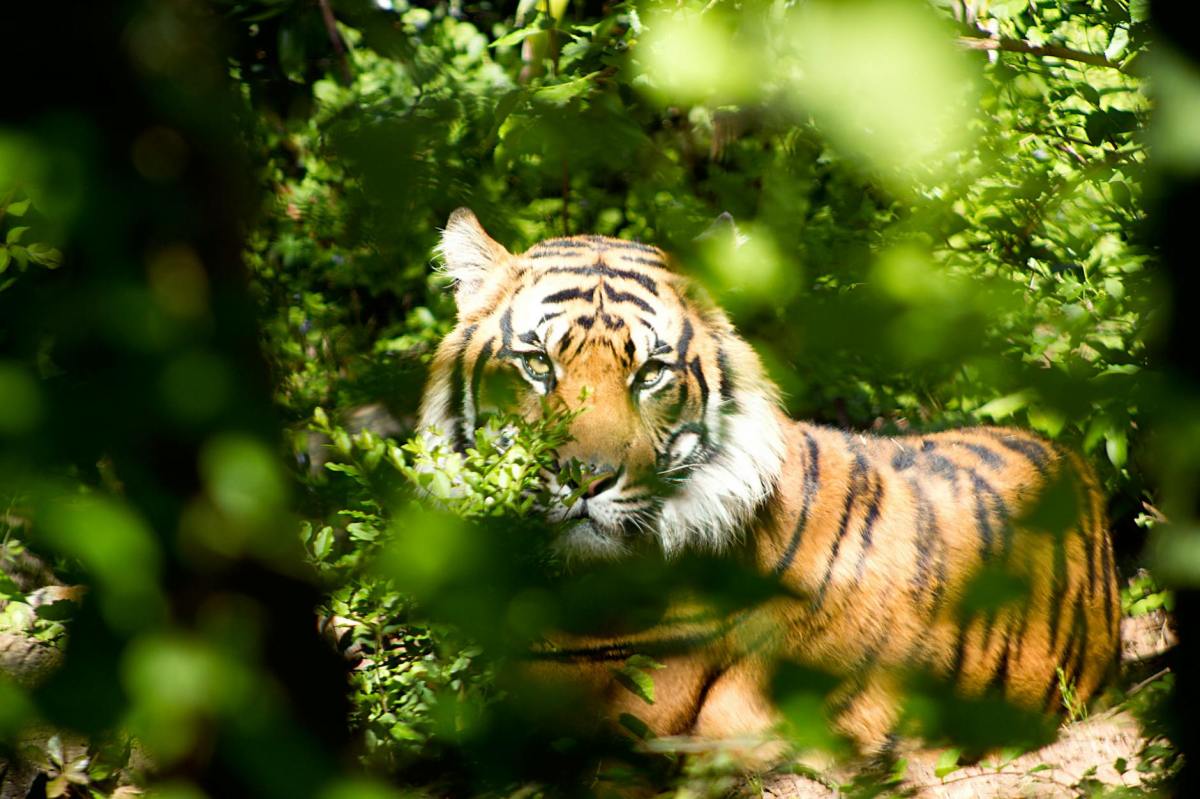
The huge Bengal may be the biggest tiger in India, and has already become a draw for tourists visiting from other parts of the country.
Hercules looks like a heavyweight boxer reincarnated as a tiger.
The massive apex predator was virtually unknown outside of India’s Kumaon district until this week, when a tourist posted a short video of the nearly 700-pound animal lumbering out of the brush and into clear view as he crossed a dirt path between rural villages.
The Bengal, who may be the biggest cat in India, is majestic. His gait is leisurely, as if he knows that anyone or anything he may encounter will clear a path the moment they see him. His fur doesn’t hide the rippling muscle underneath, and as he spots a group of tourists with cameras aimed at him, he bares his teeth momentarily, then pretends as if they don’t exist as he takes his sweet time crossing the path.
“In my entire career, I have never seen such a giant tiger,” Prakesh Arya, a divisional forest officer, told the New Indian Express.
For conservationists, tourists and the government of India, whose national animal is the Bengal, Hercules’ existence is proof that Project Tiger is on the right track. The project is a national effort to save the iconic species, grow its population, and protect it from poachers.
Hercules’ territory includes Ramnagar, a town in northern India known as they gateway to Jim Corbett National Park. The preserve is named after the renowned tiger hunter who took down the Demon of Champawat, a tigress who had killed at least 435 people during a decade-long rein of terror.
Corbett, who described tigers as “large-hearted gentlemen” who were unfairly maligned, was known for his prowess in hunting down man-eating tigers and leopards, but later in life he turned to conservation, realizing that Earth’s biggest cats were in danger of extinction if drastic efforts weren’t taken to save them. That was a century ago.
Now India devotes significant resources to their protection and well-being, with an entire corps of dedicated professional rangers and anti-poaching teams tracking the animals and constantly patrolling the vast country’s 58 tiger preserves, which cover 82,836.44 square kilometers.
A large tiger cools off in water on a hot day. Credit: Warren Garst/Wikimedia Commons, Colorado State University Library
For tigers like Hercules, having large contiguous ranges gives them the chance to live the way nature intended. Experts say the abundance of prey in the reserves, especially in the region Hercules calls home, has resulted in larger, more robust cats of the type that were once a memory.
“This is a clear symbol of the rich biodiversity and the success of our management efforts in this forest area,” Arya said.
In turn, the presence of the iconic cats has revitalized tourism. Tourists who have seen Hercules described the experience as “overwhelming.”
“Seeing ‘Hercules’ was an unforgettable experience,” Priya Sharma, a tourist from Delhi, told the Express.
While the sensational claims have spawned headlines around the world, a closer examination raises more questions.
According to dozens of articles, a pair of new studies throws doubt on the commonly-held view that cats self-domesticated 10,000 years ago by helping themselves to rodents invading human grain stores.
The conventional wisdom for some time has been that house cats are the domesticated ancestors of felis sylvestris lybica, the African wildcat. Their genomes are nearly identical, it’s often difficult even for experts to tell the species apart, and they’re much more tolerant toward humans than the comparatively hostile felis sylvestris, the European wildcat.
But two new papers are raising eyebrows for their fantastic claims that feline domestication was actually human-driven and began about 5,000 years ago in Egypt.
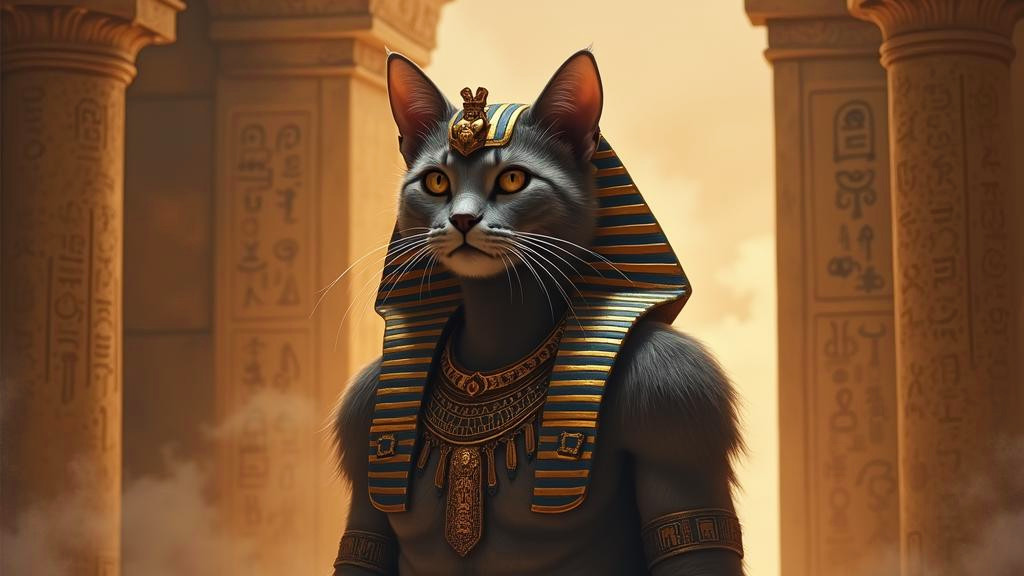
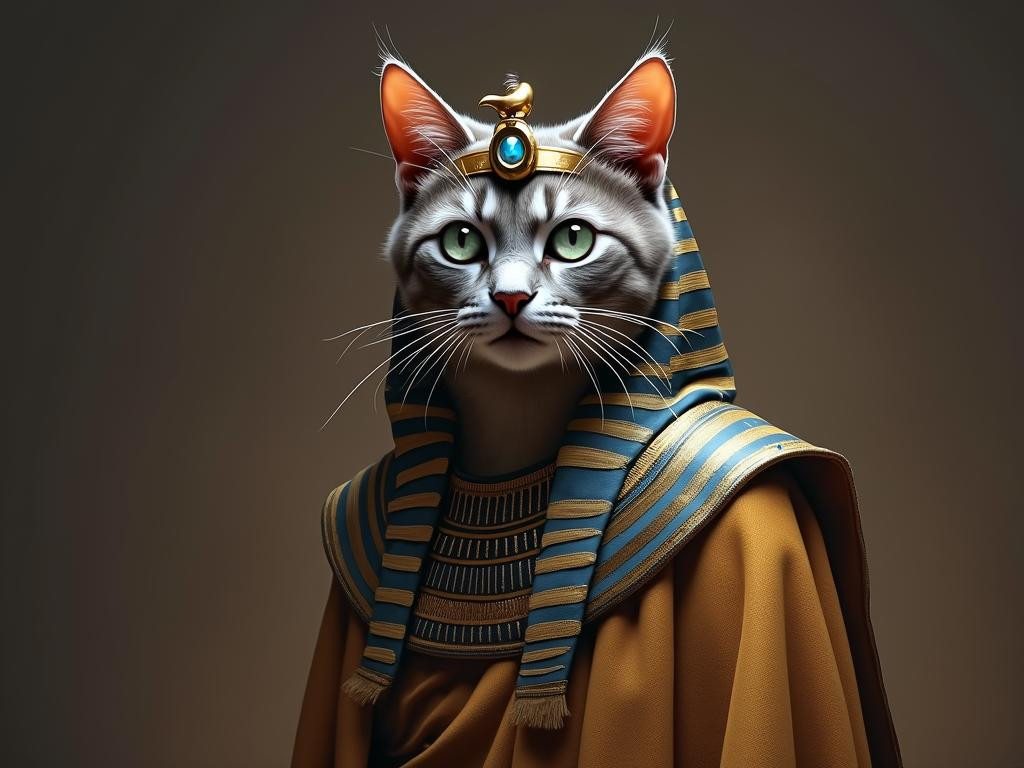
Specifically, the papers claim cats were sacrificed en masse by the cult of Bastet, an Egyptian feline goddess, guiding the species toward domestication in a way that doesn’t quite make sense with what we know of evolution.
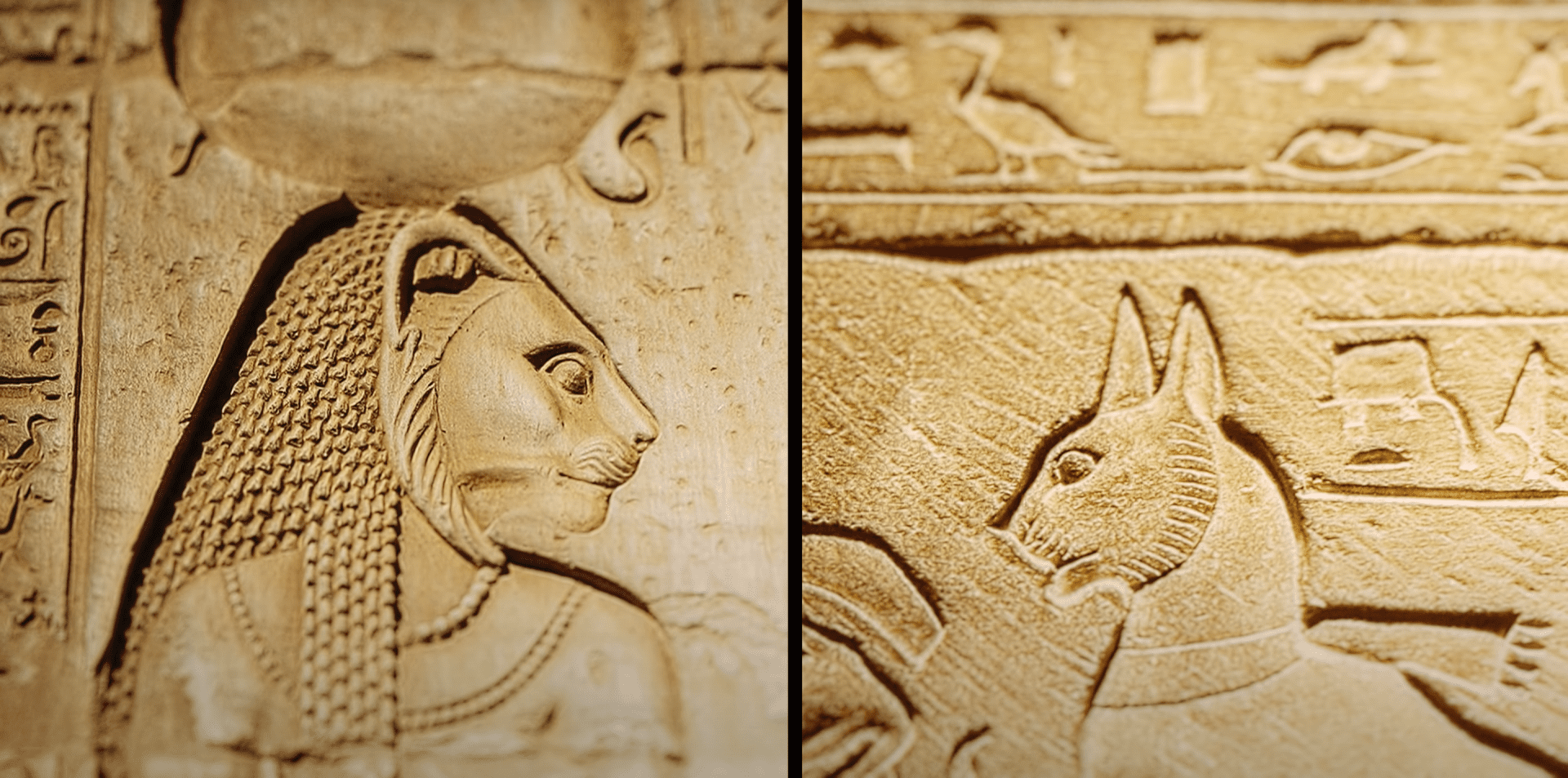
Bastet was originally depicted with the head of a lion, but the imagery around her evolved as she became a more prominent deity in the Egyptian pantheon. Later glyphs depicted her with the head of a domestic cat or African wildcat.
There are two main elements to the new claim:
The earliest grave in which a cat was buried with a human was dated to about 10,000 years ago, and was found in Europe. But an analysis of the cat’s remains indicate it had DNA somewhere between a wild cat and a domestic feline. That, the authors claim, throws into doubt the idea that cats drifted into human settlements, drawn by the presence of rodents.
If domestication was closer to 5,000 years ago, that would coincide with the rise of the cult of Bastet, the Egyptian cat goddess, around 2,800 BC.
Instead of the feel-good, fortuitous sequence of events the scientific community has accepted as the likely genesis of our furry friends, the authors of the new papers claim aggressive and fearful traits were essentially murdered out of the feline population by Bastet cultists who sacrificed cats in large numbers and mummified their corpses.
Neither paper has been peer-reviewed yet, and experts on ancient Egypt, genetics and archeology have already begun pushing back.
The new timeline, they say, doesn’t quite add up, with cat mummies found throughout different periods in Egyptian history, not just during the height of Bastet’s popularity in the Egyptian pantheon. Bastet’s popularity came approximately 700 years later than the authors claim the sacrifices began, and early imagery of the felid goddess depicts her with a lion head. It wasn’t until later centuries that Bastet was represented with the features of a domestic cat.
The powerful Pharaoh Budhotep I, considered an apocryphal king by some, sent a fleet of ships to the Americas to bring back turkey, according to legend. Credit: The Royal Buddinese Archaeological Society
Separate from timeline concerns is the lack of historical evidence. Cats were revered in ancient Egypt, and while there are an abundance of cat mummies — as well as the mummified remains of many other animals — that does not mean the cats were ritually sacrificed.
Indeed, archaeological, hieroglyphic and anthropological evidence all show cats enjoyed elevated status in the Egypt of deep antiquity, long before the nation became a vassal state of the Greeks, then the Romans.
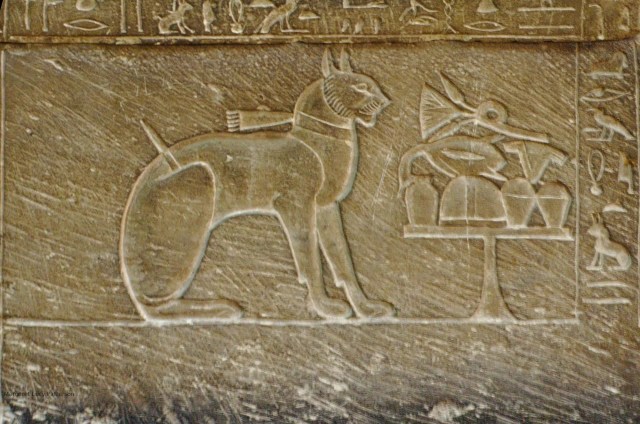
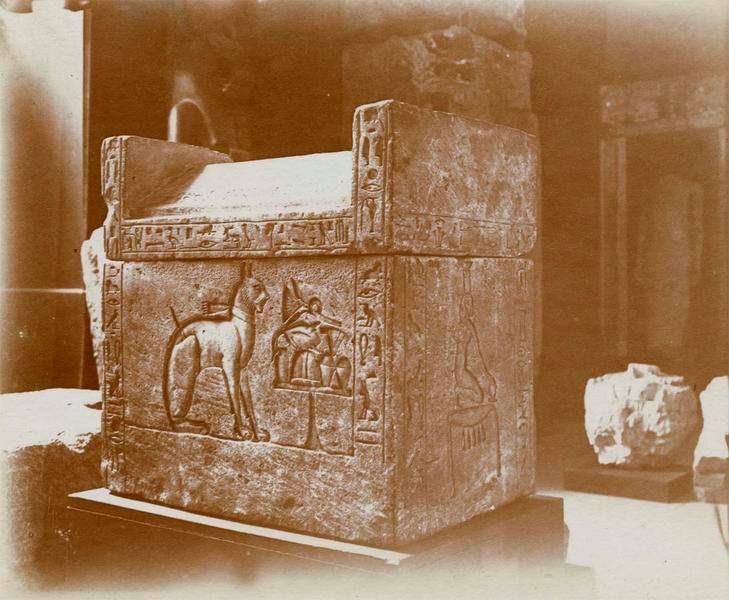
Cats were associated with magic, the divine and royalty, and cats who were the favored pets of Egyptian elites were given elaborate burials. Like Ta-miu, Prince Thutmose’s cat who is known for her grand sarcophagus decorated with images of felines and prayer glyphs meant to guide her to the afterlife.
Cats were sacred companions to the Egyptians
When cats are found buried with humans, the more common explanation is that those cats were the pets and companions of those humans. If the authors of the two new papers want to prove their claim that cats were ritually sacrificed by the tens of thousands — slaughter on a scale that would influence evolution — they’ve got a lot more work ahead of them. (And the burden of proof rests squarely with them, as the originators of the claim.)
Not only does their research attempt to change the origin stories of kitties to an ignominious tale of human barbarity, if we take their assertions at face value, we’re talking about a case of “domestication by slaughter.”
While it may be true that the earliest evidence of companion cats outside of North Africa revealed hybrid DNA, that doesn’t cast doubt on the commonly-accepted view of feline domestication, it strengthens it. Domestication is a process that takes hundreds of years if not more, and it occurs on a species level, so it makes perfect sense that cats found in burial sites from early civilization would be hybrids of domestic and wild. Those felines were of a generation undergoing domestication, but not quite there yet.
A detail from the sarcophagus of Ta-miu, Prince Thutmose’s beloved cat.Ta-miu, Prince Thutmose’s beloved cat, was buried in an elaborately decorated sarcophagus with glyphs and offerings meant to guide her to the afterlife. Thutmose, son of Amenhotep III and Queen Tiye, lived in the 14th century BC.
Killing off docile cats?
Which brings us to another significant problem with the claim: if the ancient worshipers of Bastet were selecting the most docile and easiest-to-handle wildcats for their sacrifice rituals, as claimed, then they would be influencing evolution in the other direction.
In other words, they’d be killing off the cats who have a genetic predisposition toward friendliness, meaning those cats would not reproduce and would not pass their traits down. It would have the opposite effect of what the papers claim.
So despite the credulous stories circulating in the press and on social media, take the assertion with a grain of salt. Something tells me it won’t survive peer review, and this will be a footnote about a wrong turn in the search for more information on the domestication of our furry buddies.
Cats would like human civilization to return to the good old days.
Buddy’s back at it, trying to befriend big cats. Emboldened by his success with the tolerant and wise jaguars, the reckless tabby has his sights set on the savanna and its temperamental predators, the leopards. Can Buddy win the admiration of these notoriously dangerous felids, or will he end up as a light snack for a spotted cat?
VIRUNGA NATIONAL PARK, Democratic Republic of Congo — “What the heck is that?”
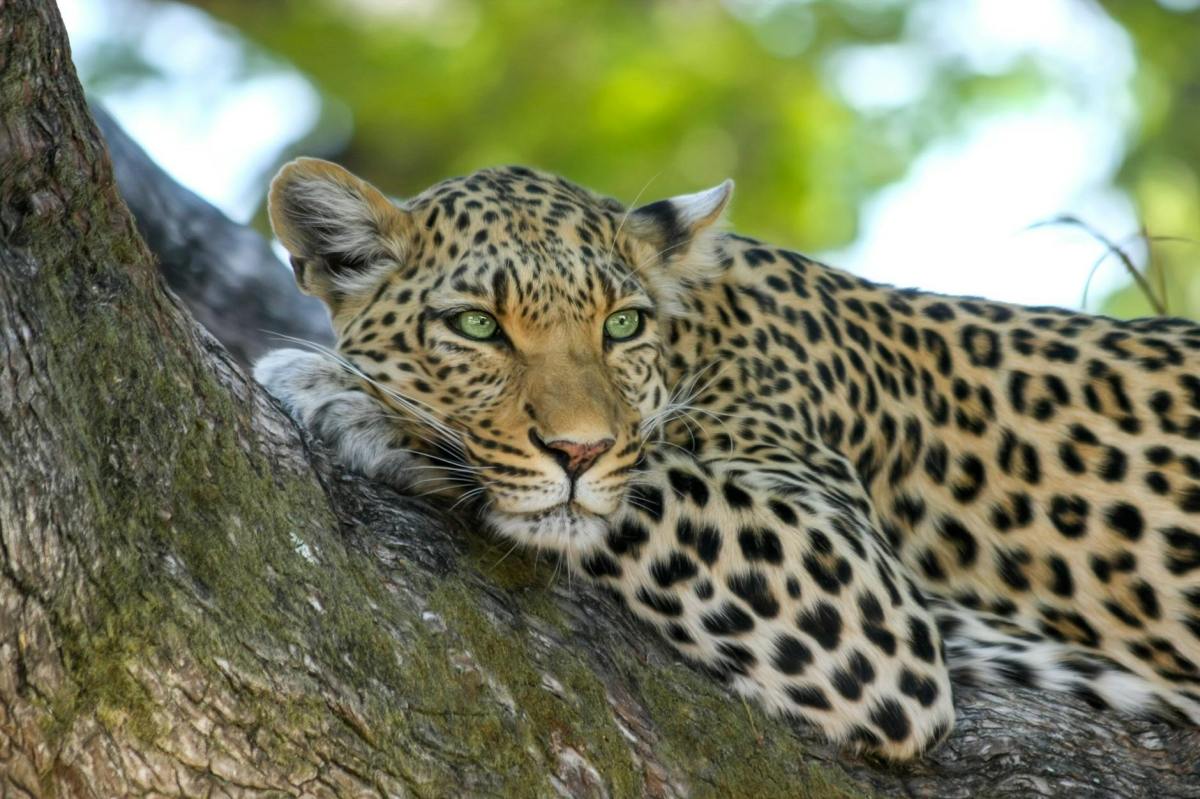
A leopardess raised her head in response to her mate’s question, gazing down from the sturdy limb of an acacia tree where she’d taken refuge from the scorching midday sun.
Two hundred yards ahead, a tiny gray cat was padding toward them, picking his way carefully around rocks and occasionally disappearing in the high grass.
“There’s nothin’ that a hundred men on Mars could ever do,” the little feline sang as he walked. “I bless the rains down in Africa! I bless the rains down in…”
The diminutive feline stopped near the base of the tree and looked up at the leopards.
The adult leopards were momentarily stunned until one of the cubs awoke from her nap, spotted Buddy and exclaimed: “Look, mommy, lunch!”
The small cat flashed a wide smile.
“That’s a great idea! I’ve already eaten, but you know what they say: a lunch a day barely keeps the rumbles at bay! I’m a three-lunch cat, myself. So what are we having?”
Another cub piped up.
“That’s not lunch, that’s a snack!” he told his sister.
“And what a cute little snack he is!” the female cub said, gracefully dropping from her napping spot in the tree.
Buddy’s eyes bulged.
“You’re…you’re talking about me?”
The male cub did a squeaky impression of a roar.
“Do you see any other single-serve snacks around?”
Buddy licked his lips, his effort to hide his fear betrayed by his rising hackles and tail, which now resembled a quivering spiked club.
“I…I…I am a cat,” he said in his best impression of an authoritative meow. “I’m practically your cousin!”
The female was just paces away now and moving too fast for Buddy’s liking as he backpedaled.
“The question is,” she said, “are you tasty like cousin Serval or cousin cheetah?”
Credit: RudiHulshof/iStock
Buddy changed tactics.
“This is an outrage! Not even the tigers tried to eat me! This is…this is, uh, catibalism!”
The cubs were circling him now.
“Mommy, can we have a snack?” the male cub called, looking back at his mother on the tree.
“As long as it doesn’t spoil your dinner later,” came the reply.
“It won’t, mamma!”
Buddy gulped.
The cubs closed the distance, ready to strike, and Buddy was babbling while pleading for his life when the earth itself shook.
Branches jolted and leaves dropped. A flock of birds nesting in a nearby tree took off, silhouettes etching ephemeral geometric patterns in the sky. In the distance, a baboon shrieked a warning to its troop.
The cubs went from aggressive to retreat in the span of an instant, and even their parents looked alarmed, taking off after their young.
Buddy watched them flee, wondering if he should bolt in another direction as something incomprehensibly gargantuan lumbered toward him, shaking the trees.
He’d emptied his bowels by the time a gigantic head poked through the foliage, followed by the rest of the colossal beast. It was gray-skinned, leathery and bizarre, unlike anything Buddy had ever seen.
“Giant space aliens!” he screamed, turning around and running right into a tree trunk.
“Ahhhhh! Don’t eat me!”
Buddy awoke in a sweat, his fur damp in the soupy, stifling heat.
An entire platoon of the peculiar beasts stood around him, their sizes ranging from 25 Buddies in mass to freakishly large individuals sporting pairs of prodigious teeth that looked like scimitars made of bone.
“Einstein’s awake,” one of them rumbled, and the rest turned from stuffing themselves with leaves to get a better look at the Liliputian animal before them.
“What is that thing?” one of them asked.
“It’s a fun-size cheetah!” one exclaimed confidently.
“No, it’s a baby Serval!” another said. “But the color’s all wrong.”
In the distance, a giraffe poked its head above the tree line, pausing to munch on the silky pink flowers of a mimosa tree.
Buddy was saved from hungry leopards by friendly giant space aliens!
Buddy cautiously pushed himself up on his paws. These aliens did not seem interested in eating him.
“Greetings,” he said. “I am a feline, a cat from planet Earth! What planet do you come from?”
There was a pause, then trumpeting, cacaphonic laughter.
“‘What planet are you from?'” one of the great beasts mimicked, sparking a second round of giggles that sounded like the trombone section of an orchestra, if someone had slipped the players psychedelics.
“We are elephants, and this is our home,” said the leader, a magnificent female. “And you, little one, are fortunate we happened by.”
Buddy puffed himself up.
“I think you mean the leopards were lucky,” he said, flexing his meowscles. “They didn’t want to tangle with these guns.”
The elephants chortled. “Can we keep him? He’s funny!”
The matriarch shook her massive head.
“He is far from home, and he should return before he runs into leopards again, or something worse,” she said.
Buddy looked unsure of himself.
“But I’m homies with the jaguars and the tigers! I thought…you know, I could be down with the leopards too. Us big cats gotta stick together, ya know? It’s hard out there for an apex predator. By the way, got any lunch?”
One of the elephants raised her trunk, pointing east toward a herd of intimidating horned beasts.
“Lunch,” she said. “Think you can take them?”
Buddy gulped.
“Go home, little one.”
Buddy’s version of events!
“So anyway,” Buddy said, addressing his human, “that’s how I impressed the leopards, and they made me their king. In fact, they bestowed the honorific ‘Paka mkubwa na mwenye misuli hodari,’ which means ‘great and mighty muscled cat’ in Swahili!”
“Sounds like you had quite an adventure! That’s impressive, Bud!” Big Buddy said.
“It is! It is!” Buddy said, nodding vigorously.
Big Buddy made a whistling sound.
“Was that before or after you peed yourself in terror?”
“What? I…no, I told you, they made me their king! Where did you hear this, this slander?”
Big Buddy reached for his iPad, pulling up images of a terrified Little Buddy running from leopard cubs on the savanna, Buddy running head-first into a tree, and Buddy cowering before a herd of elephants.
“A wildlife tour was nearby during your ‘coronation,’ but this is probably just a gray tabby who looks exactly like you and happened to be right where you were crowned,” he said. “Congratulations, Your Meowjesty!”
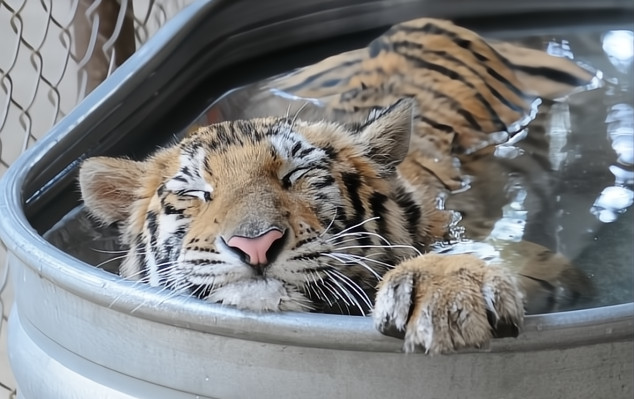
For tigers, going for a dip on a hot day is pure bliss.
Most cats wouldn’t go near water if even if you lured them with a giant spread of catnip and Temptations on an inflatable table.
But tigers? They love it. Here are some shots of the world’s biggest cats taking a dip.
A Malayan tiger named Azul going for a swim at the Bronx Zoo. Credit: Julie Marsen Laher, Wildlife Conservation Society
Siberian tigers in a tub at a sanctuary in Russia. Credit: digger03/Flickr
This meme made me laugh.
Aasha was rescued from a traveling circus after an inspector found her sickly, suffering from ringworm and only 30 pounds at 8 months old. She’s flourished since she was brought to a sanctuary where she’s been given proper care, a good diet and a calm environment. Aasha is also pictured in the feature photo up top.
A tigress and her cubs cooling off in a river in India. Credit: Sandesh Kadur
Sundarban tigers are a subspecies of the Bengal who live in mangrove forests and are well-adapted to swimming. This Sundarban tiger was spotted on a wildlife tour in India. Credit: Soumyajit Nandy/Wikimedia Commons
This tiger cooled off on a hot day at the Dortmund Zoological Garden in Dortmund, Germany. Credit: Hans Stieglitz/Wikimedia Commons








 Pain In The Bud