The find is extraordinary, allowing scientists to directly study the extinct cat’s musculature, fur, head shape, and even its claws and whiskers.
A team in Russia stumbled on the find of the century when they located the stunningly well-preserved remains of a saber-toothed kitten in Siberia.
The kitten, which was found near the Badyarikha River in northeastern Siberia, was about three weeks old when it died, scientists estimate.
Unlike typical finds — a fang here, a mandible or partial skeleton there — this specimen still had its fur, claws, whiskers and muscles, which means scientists have already learned more about the species, Homotherium latidens, than they have with almost any other long-extinct animal.
Images of the extinct cub’s paws compared to (D), the paw of a 3-week-old lion cub pictured on the bottom right. The Homotherium paw is thicker but less elongated. Credit: Borissiak Paleontological Institute, Russian Academy of Sciences, Moscow, Russia
While the saber-toothed cub is a true felid, it boasts adaptations unlike any surviving member of the panthera genus.
It has wide paws wrapped in heavy fur, a short tail and a stockier, lower-to-the-ground build than modern lions and tigers. Those adaptations, scientists believe, made it easier for Homotherium latidens to traverse environments with ice and heavy snow.
Its head shape is slightly different, with smaller ears than modern big cats, and its neck is enormous, more than twice as thick as the neck of a comparable three-week-old lion cub which was used for comparison. Likewise, its mouth is capable of opening significantly wider, although the team did not compare it to the jaguar, which has the widest-opening jaw among extant felids.
A photograph of the cub, top, and a scan revealing facial, ear and neck structure, below. Credit: Borissiak Paleontological Institute, Russian Academy of Sciences, Moscow, Russia
The frigid, arid clime of Siberia made it possible for the cub’s body to endure for so long. The team that made the discovery conducted radiocarbon dating that puts the cat at between 35,000 and 37,000 years old, according to reports.
It’s not clear how the cub died, although its species went extinct about 10,000 years ago, likely as a direct result of fewer prey animals in the frigid zones it occupied. Additional bones belonging to the rear of the cub skeleton were encased in a large cube of ice immediately next to the intact upper body.
The cub’s remains were recovered in 2020, but the results of the research team’s analysis were just released on Nov. 14 and published in the journal Nature. The paper’s authors have a lot more to share about the species’ physical characteristics, they noted in the text, and plan to follow up soon with a second paper going into more detail about what they learned from the cat’s intact musculature.
Top image: An artist’s impression of an adult member of homotherium.
Credit: Borissiak Paleontological Institute, Russian Academy of Sciences, Moscow, Russia
Unfortunately, Lord Fluffybutt III did not make the list.
U.S. News and World Report compiled a list of the top cat names in America by looking at pet insurance registrations, and a bunch of familiar names topped the list.
Luna is the current most popular name for female cats, followed by Bella, while Milo edged out Oliver for the most popular male cat names. The data is current for the year 2024, the report said.
While other lists use different ways of calculating the top names, including registrations on pet-related sites and listings on PetFinder, the U.S. News list closely mirrors the others.
The name “Buddy” was named “most badass” for the 27th year in a row, since pet insurance companies began keeping statistics. (Okay, we made that up, but it’s probably true.)
The famous feline embraces the role of a beloved tiger in a reboot of the Academy Award-winning film. Critics praised the casting, noting Buddy’s strong resemblance to Richard Parker.
LOS ANGELES — Buddy the Cat will star as the main antagonist in an upcoming remake of Life of Pi, Variety reported on Monday.
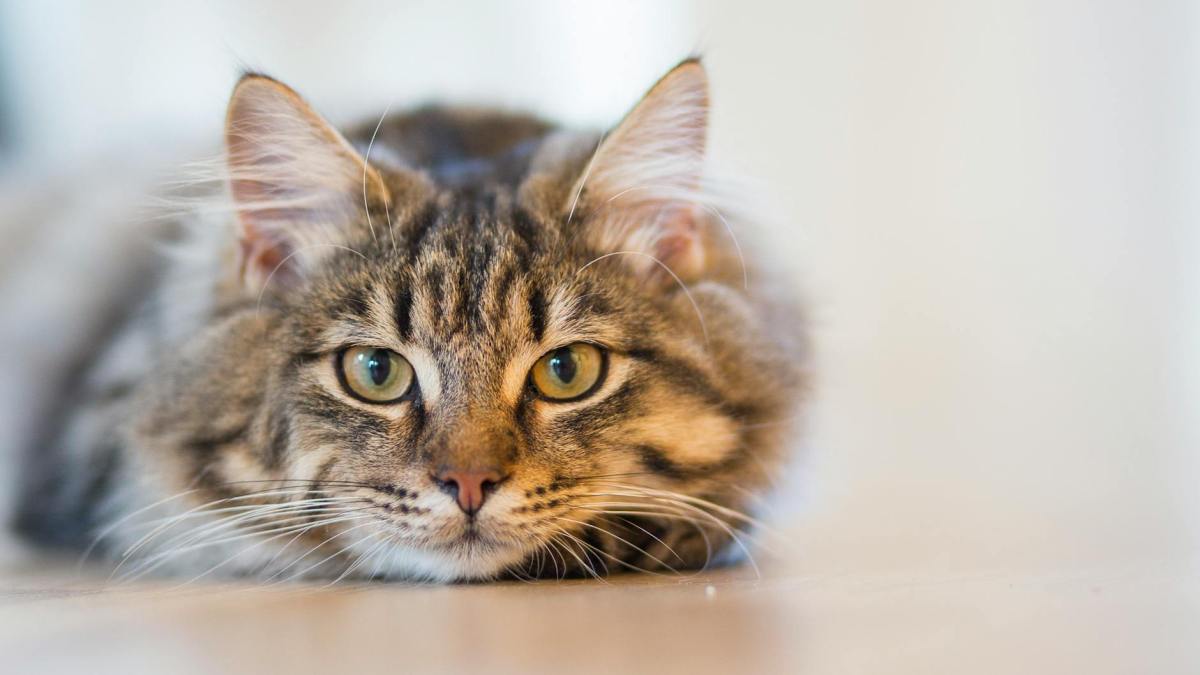
The silver tabby cat will pad into the role of Richard Parker, a Bengal tiger who finds himself sharing a small boat with a teenage boy named Pi after they survive a storm that sinks their ship.
Alone, hungry and scared, Pi and Richard Parker must learn to trust each other as they drift west with no land in sight.
In one memorable scene from the 2012 original, a gluttonous Richard Parker hoards hundreds of fish while refusing to share with Pi.
“A lot of people think Richard’s being greedy,” Buddy said, “but put yourself in his paws. You can’t get turkey out there. Pi isn’t exactly volunteering to open cans of the good stuff. It’s a cat eat fish world.”
(Above: Buddy the Cat as Richard Parker is “indistinguishable” from the original character, the movie’s casting director says.)
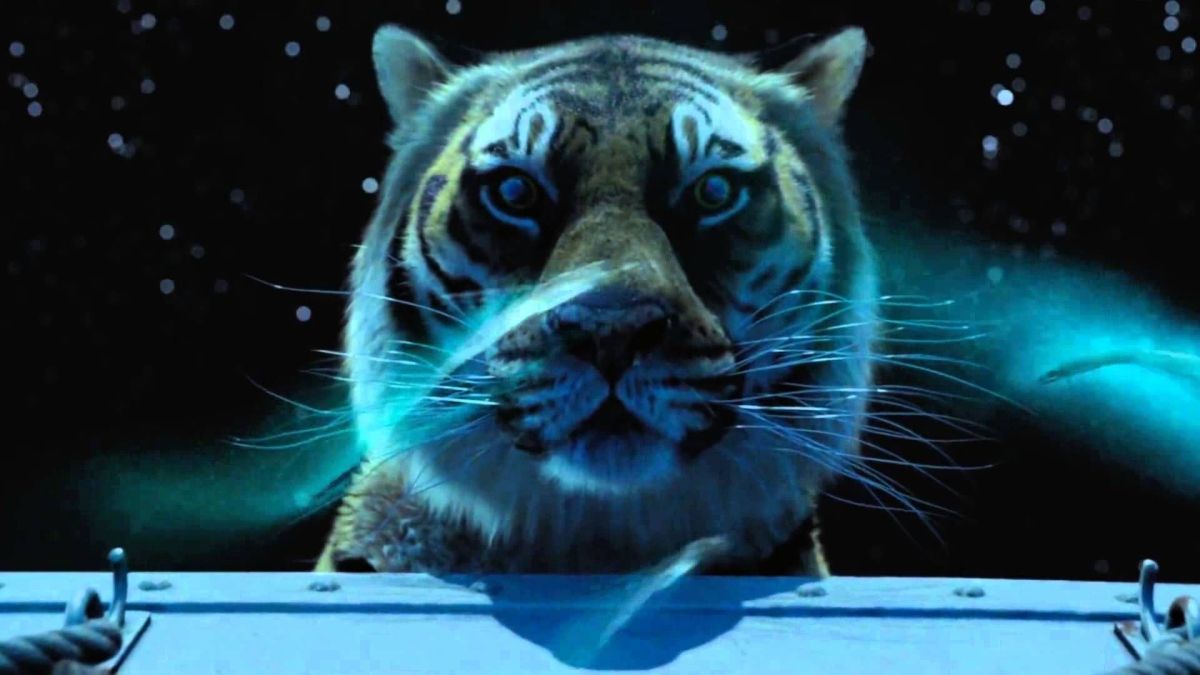
One of the most memorable sequences involves the duo drifting toward an island paradise under the stars as the ocean glows a bioluminiscent blue. The scene takes on a trippy quality as boy and tiger hallucinate tasty, juicy fish paddling lazily through the night air.
“As an actor, you embrace the challenge of imagining all these scrumptious, decadent fish and, you know, your stomach just rumbles,” Buddy told an interviewer.
The silver tabby said the film is helping him grow as an actor.
“When my agent sent me the script, I thought ‘Life of Pie?’ You know, I like pie. Shepherd’s pie, chicken pot pie, paella, steak and guiness pie,” he said. “So to prepare for the role, I ate a lot of pie.”
It’s International Cat Day, which means you should totally do awesome stuff for your cat.
Hello there, PITB readers! I have taken over the blog from my inept human on this most auspicious of days, International Cat Day, to offer some great suggestions on how to honor your feline overlord!
Let’s get right into it, shall we?
10) Human snacks: Let’s be serious here for a moment. I’m sick of getting the same old crunchy treats, meaty sticks, soft Buddy Biscuits, Churus and party mix. I want cheese! I want filet mignon! I want roast turkey! I want a cheeseburger! Day after day we have to sit here, our mouths watering as you humans stuff your faces with all sorts of food we would love to eat. Well, today’s the day. Start cookin’, servants!
Yes! More cheese, hold the lettuce and tomatoes. Credit: Juan Santos/Pexels
9) Roombas. That’s right. It’s 2024 and I still don’t have a Roomba. I’m very angry about that. When do I get my mighty steed? Let it be today!
8) Catnip and silvervine. Sure, we get these on other days, but this day absolutely must not go by without you giving us at least a few doses of the good stuff. Hurry up! I need to get my fix!
7) Sweet cat drip that shows you’re owned by a cat. My Big Buddy just got two t-shirts. One shows a roaring jaguar with the word “Savage,” because I am savage, and the other is a kitty samurai with a cool sword. Aside from the fact that this is premium drip, everyone will know that you answer to a fluffy, benevolent overlord back home. That’s what’s important.
The drip.
6) A throne. I’ve wanted a throne since I was a kitten. It doesn’t need to be an Iron Throne with the melted swords of everyone I’ve conquered, a la Game of Thrones. It can be something humble, made of gilded metal, velvet cushions and maybe a lion crest or cool tiger heads on the paw rests. I’m not picky as long as it looks awesome. What’s important is the symbolism and comfort.
5) Hire a mariachi band to parade through the streets hoisting an image of your cat, performing songs in your feline overlord’s honor. This is another humble offering that says “I serve a cat, and I’m proud of it!” When people ask what the hell is going on, hand them Cuban cigars and say “We are celebrating el jefe!” They’ll know who you mean.
“We sing of the great, wise, handsome and meowscular Buddy the Cat!”
4) Hire a portraitist to paint your kitty. Again, it doesn’t have to be extravagant. As a humble cat, I don’t mind being portrayed as a naval commodore, a king, a great warrior of world renown, or a massive tiger. The important thing is that it looks cool and you hang the picture above the couch in the living room. Get on it, human.
3) Massages. Schedule them throughout the day, sprinkling them around naps and meal times. Do you know how satisfying it is to enjoy a nice massage after Food O’Clock? I like to have my chin rubbed and the top of my head scratched while being told what a good, handsome, awesome, amazing, handsome, meowscular feline I am.
2) Toys. Not just for Christmas, you know. In fact, go ahead and consider this Kitty Christmas In Summer. Wand toys, track toys, new boxes, those little plastic ring things from milk gallon containers, stuffed animals that we can hunt and murder like the apex predators we are. You don’t have to wrap them, just bend the knee and present them as tribute. You’ll have our thanks, and our favor.
1)Hang out with us! It really is that simple. The most important thing you can do on International Cat Day is spend time with your cat! Many of the above suggestions fall under this category, including playing with us, giving us massages and reading epic poems you’ve composed about us. Personally I like settling down to nap on top of my Big Buddy after a massage. There’s something about having my chin scratched that makes me start yawning, and there’s no better place to nap than on my human, where it’s safe and there’s body heat and he can’t get up to use the bathroom because it would disturb me. That’s love.
I hope these suggestions are helpful! I’ve tried to list really easy, basic, humble stuff, but if you feel like constructing a 426-room cardboard box castle, well, I won’t stop you. In fact, that would be pretty cool. But like I said, the most important thing is that we get to hang out with you. And eat filet mignon.
Rumors of big cats in the UK countryside have persisted for years, with witness claims from all over the country. The latest reported sighting was in northern England.
People who really want to believe big cats are running around the British countryside are ecstatic with the news that a DNA sample from a dead sheep reportedly tested positive for panthera DNA.
The DNA sample was swabbed from a freshly-killed sheep carcass “at an undisclosed upland location” in Cumbria, northwest England, a witness told BBC Wildlife. It’s exactly the kind of countryside where people have been reporting big cat sightings for years, although the sightings aren’t confined to that area, with other witnesses claiming they’ve seen large felids as far as the UK’s southern coast.
Sharon Larkin-Snowden, who lives nearby, told a big cat enthusiast podcaster that she disturbed the “big cat” while it was feeding. The startled felid took off and jumped a stone wall, leaving the partially-eaten sheep, Larkin-Snowden said.
“I assumed at first it was a sheepdog, but then I did a double take and realised it was a black cat,” she said. “It was big – the size of a German shepherd dog.”
“I could really go for a Chinese! Anyone else wanna go for a Chinese?”
A swab was collected — the details are sketchy on who did the collecting and when exactly they submitted the sample — and sent to the University of Warwick’s Robin Allaby, a professor of life sciences.
Allaby, whose specialty is studying the genetics and evolution of domesticated plants, began offering a DNA testing service for the public some 12 years ago in response to the persistent rumors of big cats in the countryside. In the past samples have yielded DNA from foxes and other animals, but Allaby says this one matched the genetic profile of a big cat, although he cannot say which species.
It’s not unusual for a DNA sample to match to a genus, in this case panthera, but not to a specific species if the sample was degraded or only partial.
Rick Minter, who has made a career of tracking alleged big cat sightings across the UK, says he believes the mystery cat is a leopard. Leopards and jaguars are the only two big cats who have true melanistic color morphs — meaning some of them have virtually all-black coats — and Minter says he believes it’s more likely the former.
Neither are native to the UK or Europe: Leopards range from Africa to Asia, while jaguars range from south to Central America, with some populations edging slightly into the US.
Britain’s big cat enthusiasts say they believe pumas are among the wild cats living in Credit: Jean Paul Montanaro/Pexels
Why isn’t a DNA match evidence of big cats in the UK?
If the lab results say the sample came from a big cat and that result is consistent with the witness account, what’s the problem?
Chain of custody, for one. We don’t know anything about who took the sample, where it was taken, the time elapsed between the kill and the sample swab, or who may have handled it before it reached Allaby.
In fact, we don’t know if there was a dead sheep to begin with.
If I were a prankster living in the UK, for example, and was friendly with a keeper at a local zoo, I could have the keeper swab an animal, bag it and hand it over to me. There are dozens of conceivable ways a person could obtain a sample even if they don’t know someone who works in a zoo.
“So we left the sheep there at the edge of the field and made sure the lady saw us before we buggered off over the fence. Next day, we was in all the papers! A right laugh that was, mate.”
The problem is the provenance of the sample and what happens to it between the time it’s collected and ends up in the hands of a scientist like Allaby.
This is why chain of custody is paramount in criminal trials, and why there must be a complete record of who handled samples from collection in the field to the lab. Even in the absence of foul play, an improperly handled sample can be contaminated and render test results meaningless.
It’s not a matter of trust, it’s the simple fact that extraordinary claims require extraordary evidence, as Carl Sagan was fond of saying. Short of capturing one of these animals or getting clear, indisputable footage, any other claimed proof has to be ironclad.
Speaking of footage, that’s another issue. It’s extremely difficult to believe that a breeding population of big cats can exist in the UK countryside for years or even decades without a single definitive photo or video. The UK’s rural areas may not be blanketed by CCTV cameras like London, but they’re not the Amazon either. People live, work and farm in those regions, cameras are more ubiquitous than ever, and farmers take steps to protect their livestock, including installing cameras.
Big cats don’t just feed and vanish into the mist. They mark trees with their claws and urine, they leave distinct pug marks, they leave distinctive bite marks on their prey, and they make noise. To paraphrase one naturalist, when big cats are living nearby, you know it. Even if you don’t see them, signs of their presence are ubiquitous.
To accept the claims of tigers, leopards and pumas gallavanting in the fields around small towns and villages, we’d have to suspend disbelief or conclude that these are some sort of previously unknown ghost cats who can fade in and out of the physical plane.
I’m not a skeptic to be a killjoy. If big cats really were running around the UK, that would be a hell of a story. But we’d still need convincing evidence, and this isn’t it.