Did you know Buddy the Cat invented the George Foreman Grill and diffused the Cuban missile crisis? Me either!
I was looking through some of my old files the other day when I came upon this forgotten radio broadcast, which provides just a taste of Buddy’s heroics and adventures:
Of course I live with the little guy, so it’s easy to forget how accomplished he actually is. In addition to serving a term as president of the Americats, Buddy has won multiple gold medals at the Olympics, led the New York Yankees to a World Series championship, single-handedly took on the meowfia, and holds the Guinness World Record for most stylishly executed nap.
To me he’s just my Buddy, my fluffy little friend who likes to hang out, meows a lot, and enjoys purring and making biscuits while I rub his head and tell him what a cool dude he is.
Still, it’s nice to know that if I need him to take on evil robots or win a competitive eating contest, he’s got that covered too.
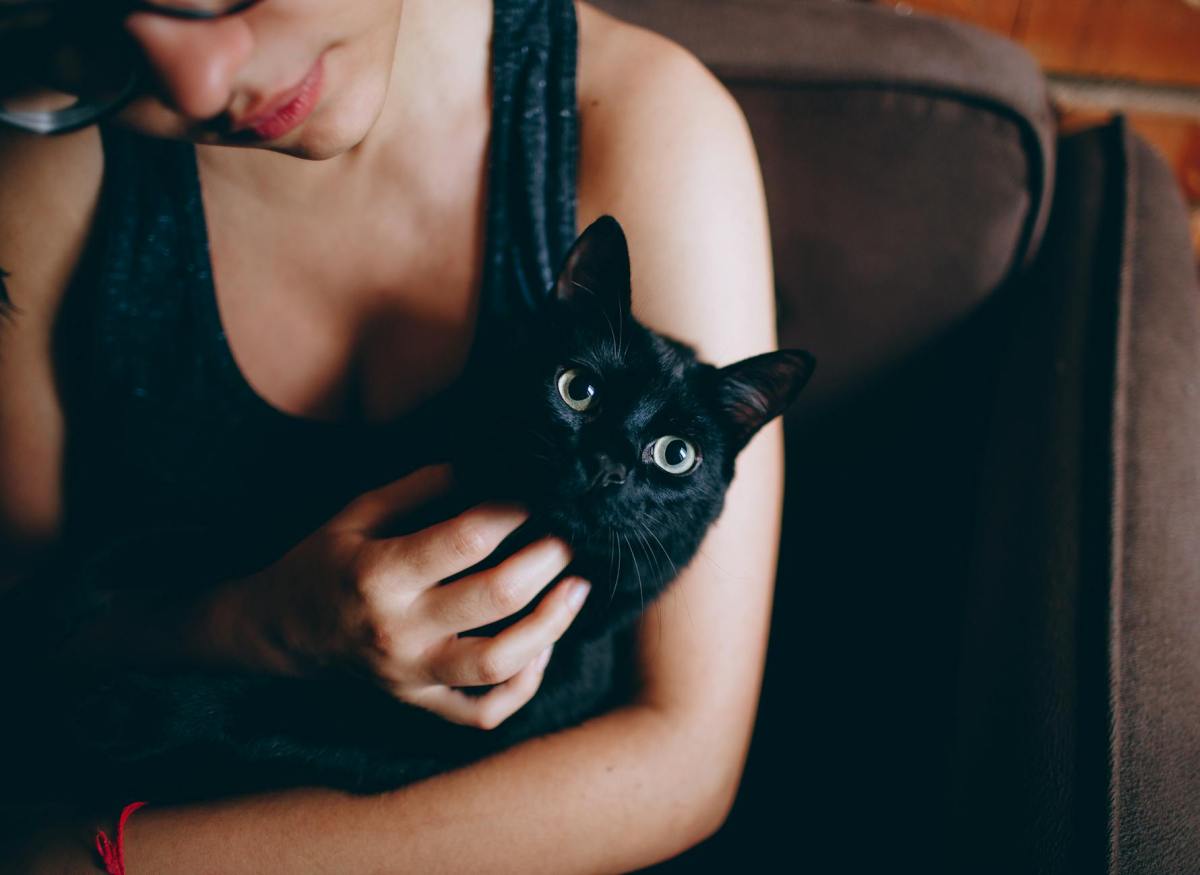
A Virginia man created National Black Cat Appreciation Day, a celebration of melanistic house panthers, in honor of his late sister, who loved her 20-year-old black cat named Sinbad.
Happy National Black Cat Appreciation Day!
A few years after the death of his 33-year-old sister, June, Wayne Morris wanted to do something in her honor. June adored her black cat, Sinbad, who died at 20 years old, just two months after she passed.
So the Virginia man teamed up with Rikki’s Refuge, a sanctuary where he volunteered, and created National Black Cat Appreciation Day in 2011. Morris chose the day of June’s passing, August 17, in her memory, and that first year marked it by holding a fundraiser for Rikki’s Refuge.
Morris was delighted by black cats as well. He often posted about Norman and Batman, his own melanistic miniature panthers, advocated for the adoption of black felines, and painted whimsical scenes of cats, which were auctioned to raise money for Rikki’s.
Morris often posted about his cats, including Batman, seen here. Credit: Wayne Morris
Wayne Morris founded National Black Cat Day.
Morris also liked to show off his other black cat, Norman. Credit: Wayne Morris
Morris painted scenes involving black cats, which were auctioned off to raise money for feline rescues. Credit: Wayne Morris
Batman. Credit: Wayne Morris
(Above, clockwise from top left: Batman, Wayne Morris, Norman, Batman again, and one of Morris’s paintings.)
Wayne Morris died in 2022, but the day he founded has continued to grow in popularity. In the 14 years since its inaugural celebration, National Black Cat Appreciation Day has spread via fundraisers for shelters across the country, as well as sites within the online catosphere, like this one.
Morris was motivated beyond honoring his sister and raising money for his favorite rescue. Black cats — also affectionately known as voids — have suffered unfortunate reputational damage over the centuries.
Melanistic felines are actually considered good luck in Japan, China and most of Asia, where they can be found in temples and their likenesses are used as maneki neko, the ubiquitous “lucky cats” in homes and businesses. (Black maneki neko are said to ward off evil spirits, diseases and people with bad intentions, while the golden cat statues are associated with wealth and the white neko are thought to bring good health.)
But in much of the western world they’re associated with bad luck, “evil” forces in folklore, and they’ve been invoked in outbursts of moral panic over things like witchcraft.
Big cats can be voids too, like this stunning black jaguar in Scotland’s Edinburgh Zoo. Credit: Wikimedia Commons
A black cat — or a statue of one — was said to be involved in Satanic rituals in Spain by Konrad van Marburg, an inquisitor known for his brutal zealotry. While the effect of that accusation has been exaggerated for years in internet discussions and posts (Pope Gregory IX’s papal bull dealt with a small area of Germany and did not declare that black cats were Satanic), it naturally comes up in superstitions about the animals.
A 2020 study of 8,000 adoptions found black cats were less likely to be adopted and more likely to be euthanized. That study and others found there was “scant evidence” for the dramatic margins suggested by anecdotal accounts circulating online and in some publications, but confirmed the problem is real. Research also suggests that negative perceptions of black cats isn’t correlated to religious preferences, but is tied to general belief in the supernatural.
Interestingly, additional research has hinted at a decidedly more modern and petty reason people may hesitate to adopt black cats: they think voids are more difficult to photograph, which is an issue for people who want to show their pets off online. (We’ve written about that particular hang-up before, and noted it’s possible to take beautiful photographs of voids by being mindful of factors like lighting and contrast between fur color and the background.)
Regardless, the combined effect of the superstitions and negative associations has harmed black-coated felines, and National Black Cat Appreciation Day is also an attempt to push back and show people that black cats are just, well, cats.
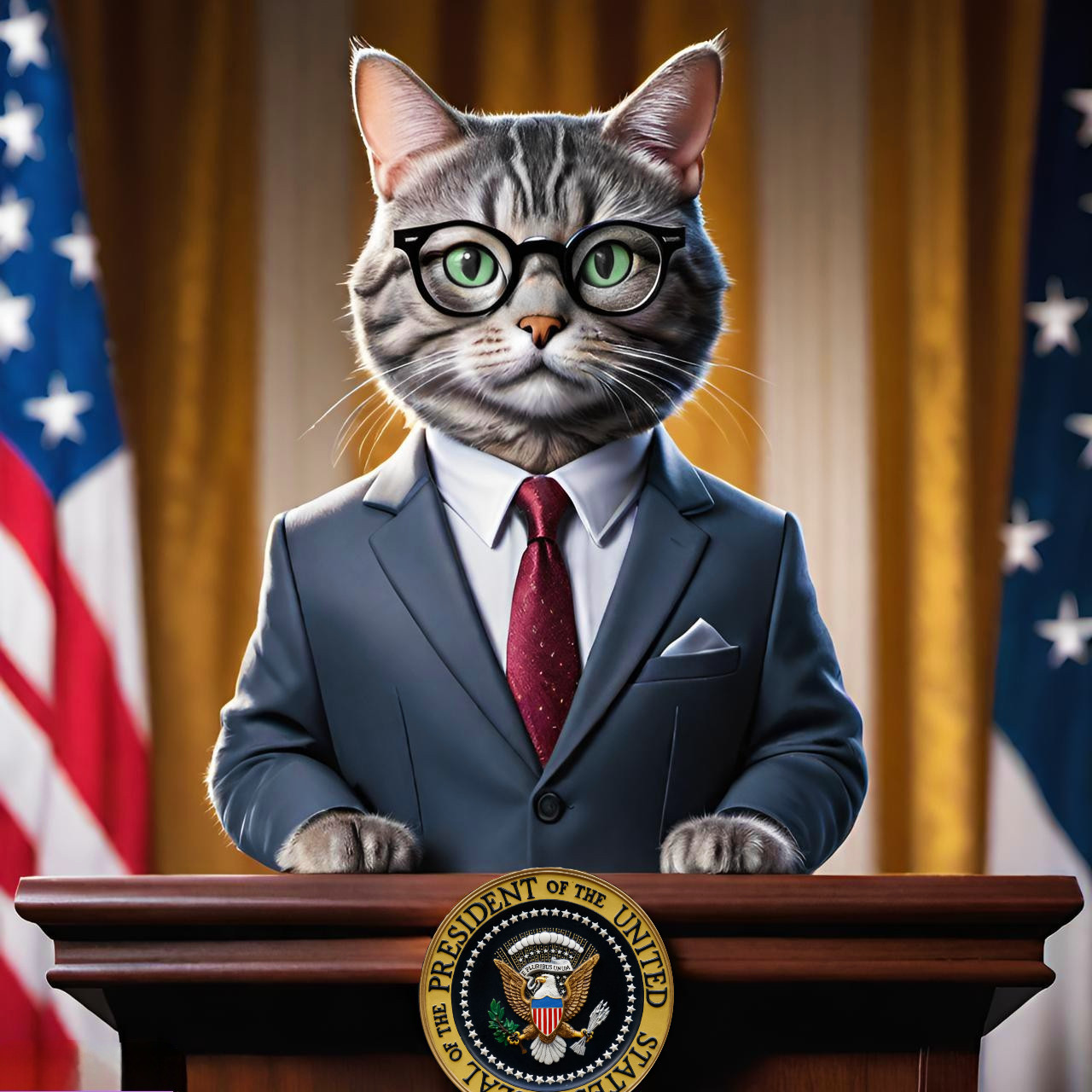
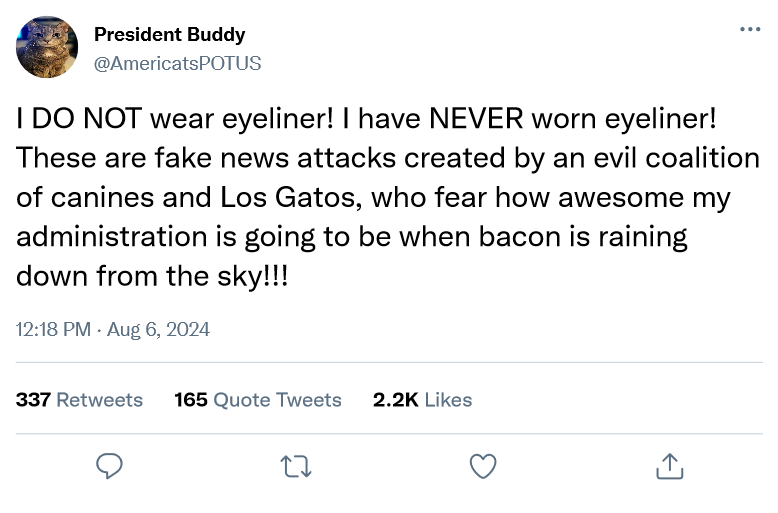
Despite repeated denials, Buddy the Cat has been dogged by allegations that he wears eyeliner as he campaigns to once again enter the White House as president of the Americats.
NEW YORK — As he crosses the country in his bid to win a second term as president of the Americats, Buddy the Cat has outlined his policy vision, including banning dogs from parks and making bacon one of the major food groups.
But to his frustration, there’s one topic he can’t seem to shake.
“Mr. President,” one reporter asked during a campaign stop in Skokie, Ill., “why do you wear eyeliner?”
Buddy hammered a paw onto the podium before taking a breath and composing himself.
“I don’t wear eyeliner, okay? Next question.”
Buddy the Cat has been accused of wearing eyeliner to accentuate his bright green eyes.
A Washington bureau chief from CNN (Cat News Network) was called on by the Buddy campaign’s spokescat.
“Mr. President, what would you say to those voters who are convinced you wear eyeliner, and how does your use of eyeliner align with the American Heartland values you claim to champion?”
Buddy’s paws held the podium in a death grip.
“I. Do not. Wear. Eyeliner!” he said, emphasizing each syllable. “My coat pattern has natural dark lines around my eyes. I don’t wear makeup, okay? Can we let this go already?”
Someone coughed in the back of the room, and the CNN staffer took the microphone back.
“So guyliner then,” she said declaratively.
“Not guyliner either! Does anyone have a question about my campaign or the great ideas we have for the country?”
Americat Purrsident Buddy announces sanctions on canines during a press conference on Oct. 30, 2019.
A journalist from Spyglass Magazine in New York spoke up.
“Yes, Mr. President, you said you’d make it a priority on day one to ban all canines from public parks.”
“Yes, that’s right,” Buddy said, nodding. “They’ve had the parks for decades. It’s our turn.”
The reporter looked down at her notes, then back up at Buddy.
“Do you think a politician who wears eyeliner is the right cat to confront the canine species on this topic?” she asked as steam began jetting out of Buddy’s ears. “Shouldn’t the message come from a feline who doesn’t wear cosmetics?”
The room fell silent until a journalist in the back called out: “Perhaps you can share your makeup tips with the country?”
The camera feed cut off just as former President Buddy leapt off the podium toward the press corps. For a few seconds yowling could be heard over the feed before it cut out entirely, replaced by a static message saying the network was experiencing technical difficulties.
While a press release from the Buddy campaign claimed the candidate was “merely hugging his favorite member of the media,” the hashtag #BuddyWearsEyeliner went viral on Meower, with more than 32,000 meows about the former president’s alleged use of the cosmetic.
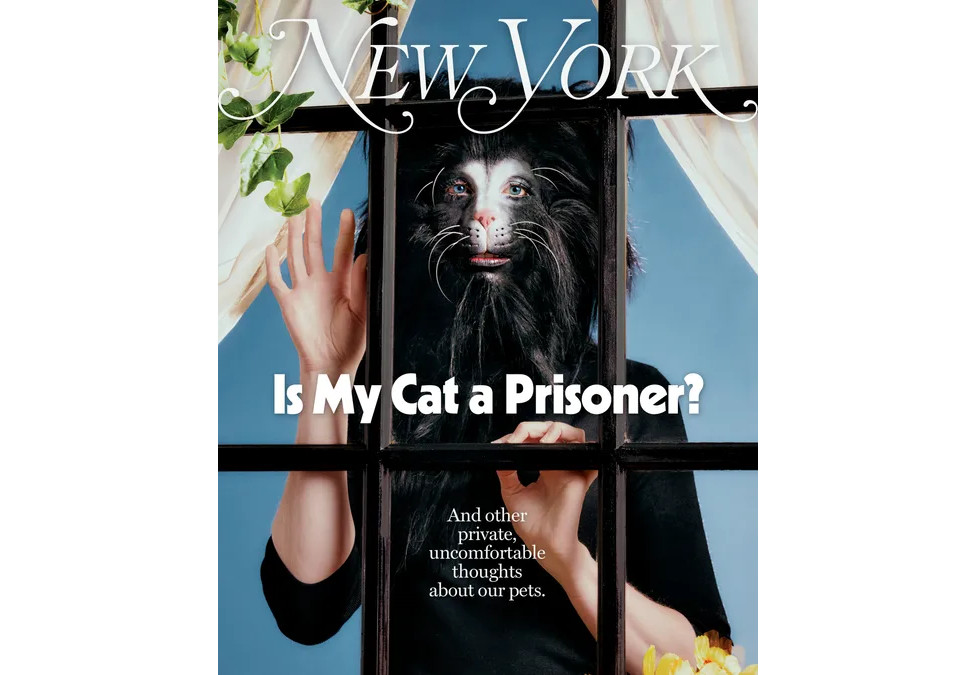
New York magazine’s article included difficult-to-read details about the severe neglect of a pet cat, and didn’t offer any reassurances that the forsaken feline was okay.
Happy Thursday! Before we get into today’s cat news, I’d like to share my current Google News search string, which has helped me keep my sanity over the last few weeks. It’s simple:
“cat -doja -vance -shot”
And voila, no more stories about Doja Cat, fewer blood pressure-raising articles about people who think shooting felines is a sport, and you’re mercifully saved from the 17,457th “think piece” about JD Vance and cat ladies.
The “relatable” column about severely neglecting a cat
New York magazine’s editors knew they were wading into a minefield with this week’s pet ethics issue, and the author of a story about neglecting her cat knew it too, which is why she took the preventative step of using a nom de plume.
In a column titled “Why Do I Hate My Pet After Having A Baby?” (later softened by the editors to “Why Did I Stop Loving My Cat When I Had A Baby?”), “Audrey” writes about severely neglecting her cat, Lucky, after having her first child.
She not only developed what she calls a “postpartum loathing” of Lucky, she admits to not feeding the poor feline for so long that Lucky ate plants out of desperation, then predictably threw up. The forsaken feline began eliminating on the floor because her litterbox was not being scooped. She lost “at least one tooth” and because even water was denied her, she had to drink out of the toilet. The life-threatening neglect and emotional abuse lasted months.
“If I treated a human the way I treated my cat, I would be in prison for years,” Audrey admits, describing Lucky’s own descent into depression as the cat became the scapegoat for all of Audrey’s negative feelings.
Cats (and dogs) understand a lot more than we give them credit for, especially when it comes to our emotional states, to which they are hyper-attuned because they are directly impacted. We’re talking about animals who have been companions to humans for 10,000 and 30,000 years, respectively. Not only does their companionship predate human civilization and the concept of recorded history, they have evolved to intuitively read human facial expressions and body language. They can even smell our pheromones, which means they’re often consciously aware of our moods before we are.
I’ll never forget what my brother said to me a few weeks after I adopted Bud, upon meeting the little guy for the first time: “You’re his whole world.” I’ve tried to make that world as loving, safe and fun for my cat as I can, because he deserves it. He’s given me back so much in return.
Adopting comes with responsibility. It’s not just about meeting an innocent animal’s basic needs, like food and water. It’s about providing our four-legged friends with good lives and never taking our bad days out on them.
“Audrey” says she tried to get rid of Lucky, leaving the windows of her home open, and because the original version of the story dealt almost exclusively with the author’s mental health, readers were disturbed by the lack of any follow-up on Lucky’s situation.
The negative reaction was so strong that New York’s editors took the unusual step of attaching a note to the story claiming they “confirmed the welfare of the cat prior to publishing the story.”
That didn’t satisfy the magazine’s critics, who accused them of behaving “callously” by presenting the author’s abuse of Lucky as a “relatable” symptom of post-partum depression.
“Why are you ignoring one of the most controversial articles you’ve ever published instead of addressing it?” one reader wrote. “It’s not going to just go away – we will not forget … The people will not stop until that cat is safe and loved, and your publication is held responsible.”
Insisting the magazine’s editors be “held responsible” is a bit much, and I’m not a fan of censorship. The bigger issue is the lack of concern for the cat even in retrospect, and the attempt to normalize postpartum animal abuse, as if it’s just a thing people do. It feels like a missed opportunity to explore why such things happen, and to examine the problem with compassion for all involved, human and animal.
Buddy the Cat’s Le Handsome Club is now open to le handsome cats
This is really just an excuse to show off my latest poster promoting PITB, but readers will recognize the concept of Le Handsome Club from earlier satirical stories about the Budster.
Le Handsome Club: The club for le handsome cats!
I’ve written before about “real Buddy” and “cartoon Buddy,” which is the version of him that exists in PITB’s world of absurd satire. Cartoon Buddy is real Buddy with his quirks, narcissistic qualities and amusing lunacy dialed up to 11.
Someone once asked me how to write a children’s book because they want to write one about their pets. Since I’ve never written a children’s book I wasn’t much help, but I did share the basic process for Buddesian hijinks: Imagine a situation, then imagine how Bud would respond to it if he could speak.
So yes, Le Handsome Club. I could definitely see my cat, who thinks he’s Catdonis and Arnold Schwarzenegger rolled into one, founding a club for really, really, ridiculously good looking cats, to paraphrase Ben Stiller’s Zoolander.
Are we doing right by our furry friends? The latest issue of New York magazine takes a deep dive into the concept of pet “ownership” and the ethics of keeping animals in our homes.
Almost the entirety of New York magazine is devoted this week to what its editors call “an exhaustive exploration of the ethics of pet ownership.”
There are also articles about what veterinarians really think of “pet owners,” whether runaway dogs deserve to be free, and even a story asking whether the word “owner” is appropriate to begin with. (You’ll notice PITB almost always avoids that word, unless we’re quoting others. I refer to myself as Buddy’s servant and his caretaker, words that feel more honest than owner.)
The stories are worth reading. Some are free for a limited time, others can be read as part of the weekly article limit. And if you can afford it, supporting a magazine or two during these brutal times for the publishing industry is a good way to help quality publications survive, so we’re not all drowning in a sea of clickbait garbage tuned for algorithms instead of human readers.
Regular readers of this blog are likely familiar with the story of Bud’s one and only “escape” as a kitten. When I found him, this cat who hates being picked up leapt into my arms, holding onto me like a terrified toddler, and his relief was palpable as I felt him purring into my neck. We were both relieved.
He’s had the opportunity to leave since, but he won’t. He’s got a good thing going here, living like a little king with his personal servant. He gets tons of attention, he’s allowed to do pretty much anything he wants as long as it isn’t dangerous for him, and he loves his Big Buddy.
I know he does from the way he approaches me, purring and meowing happily as he bunts his forehead against mine. I know it from the way he makes biscuits on me and falls asleep in my lap, feeling content and secure. And I know it from his refusal to leave my side the two times I was so sick I could barely move.
He’s got his own site, awesome retrowave logos and online admirers, but Buddy only cares about the snacks.
We shouldn’t feel guilty for giving cats a home.
I think we tend to forget that as domesticated animals, cats don’t have a natural habitat. The process of domestication made them friendlier, more trusting and more capable of reading human body language, facial expressions and tone of voice.
But those changes came at a cost, as they always do in domestication. Felis catus looks like its wild relatives and retains many of the amazing abilities of wild cats, but compared to them the species has lost a step. Domestic cats are not as quick or agile, they’re too trusting, and they’re not well suited to providing for themselves. The statistics on life expectancy reflect that, with ferals and strays living short, miserable lives.
Although it’s usually very difficult to tell a domestic cat from felis lybica, the wildcat species seen here, there are major differences in their respective survival abilities and instincts. Credit: Wikimedia Commons
So if felis catus has a habitat, it’s our living rooms. When our ancestors welcomed them into human settlements ten thousand years ago, they formed an indelible bond and made a pact, even if they didn’t realize it at the time.
Consider it a debt we owe for the survival of our species, when nascent civilization would have likely been snuffed out were it not for cats protecting the grain stores over long, cold winters.
Without cats, rodents would have eaten their way through the season’s rations, starving out the early settlers before the next harvest. The great agriculture experiment would have been over as quickly as it began with people returning to the nomadic life of hunter-gatherers, and it’s likely that everything after — from the first cities, to the birth of western civilization in Greece, to the remarkable achievement of putting a human being on another world — would have been jeopardized or taken radically different paths otherwise.
So you can thank your cat for your house, your car, the medicine that keeps you tip top, all the comforts of modern civilization, and all the stories and songs of humanity. Without cats and their heroic willingness to eat their way into our good graces, we wouldn’t have gotten here. Thank them often. You can’t go wrong with treats.







 Pain In The Bud