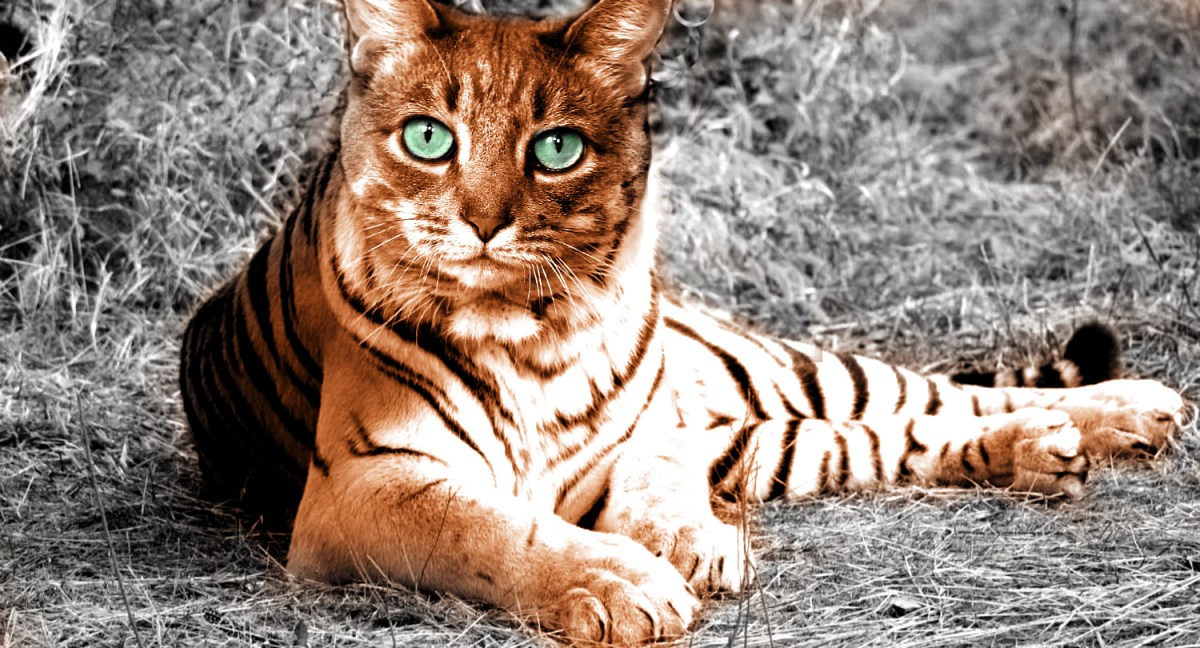

Wordless Wednesday: The Buddinese Tiger
Buddy lets his meowscles do the talking.
Buddy lets his meowscles do the talking.
A comedy, a remarkable documentary, a classic and a surprise hit make the list for the best cat-centric movies.
Keanu (2016): Jordan Peele stars as Rell, a man who is despondent after he’s dumped by his girlfriend. When a kitten shows up on his front step, Rell takes the little guy in and his life is suddenly transformed. He’s enamored with the kitten, whom he names Keanu, can’t stop talking about him, and even begins photographing him in dioramas based on famous films.
But tragedy strikes when drug dealers ransack Rell’s home, mistaking it for the small-time drug dealer’s home next door, and take Keanu. Rell and his cousin, Clarence (Keegan Michael-Key) embark on a quest to get Keanu back no matter what it takes, even if it means posing as a pair of contract killers to infiltrate the criminal world where Keanu’s been taken. It’s every bit as absurd as you’d imagine — but it’s also very, very funny. “Actually, we’re in the market right now for a gangsta pet,” is not a line I’d expect to hear in a movie, but in Keanu it works.

Flow (2024): Even the hype of Golden Globe awards and Oscar nominations can’t take away from the powerful impression Flow makes. By now most of us are probably familiar with it through clips or trailers, but they don’t do justice to the beauty of director Gints Zilbalodis’ world, nor how naturally expressive his protagonist, Cat, is.
The animators put in an extraordinary amount of effort into understanding and perfectly replicating every feline behavioral quirk, every hackled coat and curiously bent tail. They accomplish the same with Cat’s companions, including a Labrador, a secretarybird, a lemur and a capybara. And while we’re dazzled by the visuals and energetic narrative, Zilbalodis poses a thematic question as the flood waters take the animals through the ruins of human civilization: without people, the world will go on. What would a world without humans look like? Cat and his companions tell us one story while the environment tells us another, and the result is greater than the sum of its parts.

Tiger: A Spy In The Jungle (2008): What makes this documentary so special is that it was filmed over three years in an Indian tiger preserve, and the filmmakers not only disguised cameras as rocks and tree stumps, they trained elephants how to carry “trunk cams,” achieving shots which no human cameraman could ever hope to get without spooking the subjects of the film.
Tigers don’t hunt elephants because they’re simply too big. Unlike lions, they’re not feeding a whole pride, and they don’t hunt cooperatively. It’s just not worth the effort required to take down the giant, majestic beasts. As a result, tigers and elephants not only tolerate each other, they mostly ignore each other’s presence.

That allowed the team to get unprecedented shots of an iron-willed tigress raising a litter of four cubs by herself. We see their dens, we watch the cubs play, and we witness the incredible prowess of the mother, who according to narrator David Attenborough has a remarkable 80 percent success rate while hunting. That’s pretty much unheard of.
With four young mouths to feed in addition to herself, the tigress is determined, and also supremely skilled. The whole jungle erupts in a cacophony of shrieks and alarm calls the instant a single animal gets a whiff of the tigress’ presence, but that still doesn’t stop her from achieving her goal.
Still, the odds are against all four cubs making it, with dangers like adult leopards, sickness and hunger. Through Spy In The Jungle, we get to see the entire journey, from the newborn cubs to the confident juveniles on the cusp of adulthood. There’s no better tiger documentary anywhere.

The Jungle Book (2016): With so many Disney cash-grabs in the form of live-action remakes of classics that did not need to be remade, it’s easy to dismiss The Jungle Book. The thing is, this movie has heart. Neel Sethi is an earnest Mowgli, Idris Elba voices the infamous tiger Shere Khan, and to balance out the felid villainy with some heroism, Sir Ben Kingsley voices Bagheera, the noble leopard who discovers baby Mowgli in the jungle and protects him as his wolf friends raise the boy. Lupita Nyong’o as the wolf matriarch Raksha, Bill Murray as the honey-obsessed bear Baloo and Christopher Walken as orangutan King Louie round out a great cast.
Little Buddy’s special Valentine’s Day message!
Whether you’re staying home on Valentine’s Day or spending it with your longtime significant other, there’s reason to celebrate with this special Valentine’s Day message from Little Buddy.
Lounging like the Fabio of cats, locking onto the camera with his soulful green eyes, Buddy embodies the romantic aspect of the holiday.

Already a major heartthrob to felines all over the world, Buddy is guaranteed to set human hearts fluttering as well with his meowscular good looks and remarkable charm.
Gaze upon this Adonis of Cats, ye mighty, and tremble!

And finally, if you already have enough little buddies in your life, Buddy the Cupid will help you find your significant other…for a nominal fee of canned turkey pate and only during hours not designated for nap time, of course.
Happy Valentine’s Day!
The cat survived but her personality has radically changed from loving and affectionate to distant and wary, her human said.
A councilman in a rural UK village resigned from his post and is the subject of renewed police scrutiny after allegedly trying to blow up a neighbor’s cat twice in 2023.
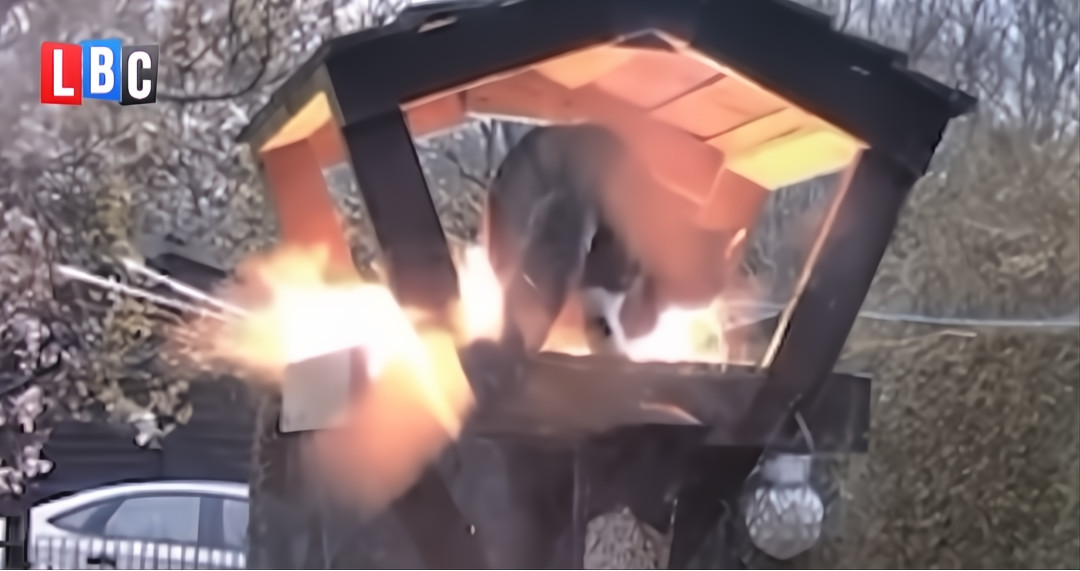
Councillor James Garnor was reportedly trying to stop the cat from climbing into a bird feeder, and decided the best way to do it was to rig the feeder with explosives and lure the curious feline in, according to a report on UK broadcaster LBC’s website.
Garnor was apparently so amused by his handiwork that he distributed video of the incidents to his friends. The footage shows a cat named Suki leaping onto the bird feeder on April 9, 2023, and nibbling on some of the bird feed before the explosive detonated. An injured Suki took off immediately and ran home.
She “came home one day missing her whiskers on her face – they looked like they’d been dissolved – so I put a post in my local community page on Facebook… just to warn people in case there was something she’d rolled in that had dissolved them,” said Suki’s human, a woman named Nikki.

“But somebody contacted me to tell me it wasn’t what I thought it was, that somebody had actually blown my cat up – and that it was my neighbour and local councillor. It made me feel physically sick.”
After she received the video, Nikki filed a complaint with local police, who elected not to arrest Garnor. However, after a second video surfaced with a clearer view of Garnor’s alleged actions, police responded to the public outcry and said they were reviewing the case again.
Per LBC, which broke the story:
“The incident is one of at least two occasions that cats in Whittlebury, Northamptonshire, were allegedly targeted by Councillor James Garnor in 2023 using remote-detonated explosives.”
It’s not clear if the new video shows a second attempt, or a different angle on the first. Garnor “was dealt with using anti-social behavior legislation,” a type of civil admonishment usually associated with things like noise complaints, littering and damaging public property, not trying to kill an animal.

Garnor resigned from his post on Feb. 7, and the council distanced itself from him, saying its members “understand the concerns raised by the community and want to assure everyone that we take all matters of animal welfare seriously.”
That hasn’t mollified people living in the small community, who are wondering why police didn’t press charges the first time they were presented with evidence of the attempt on Suki’s life.
“You can clearly see the videos have been slowed down [and] edited. It’s very set-up: the animal has been enticed on the bird table with food whilst said individual was sitting there with the detonator waiting for [the cat] to appear,” a neighbor told LBC. “He is a member of our parish council, so it makes you worry what decisions are being made there by the individual… he has offered no apology [and] shown no remorse.”
In the meantime, Suki has been permanently impacted by the incidents. The tabby was affectionate and friendly, Nikki said, wrapping her little body “like a scarf around your neck.”
“Now she very rarely comes near you, and if she does, she’s got her claws out – she hisses, she growls,” Nikki added. “She’s not the loving cat she used to be – and I don’t blame her… the change in her happened pretty much overnight.”
Some friendly felines boast five-star ratings in their listings, beating out top restaurants, hotels and nightclubs for highest-rated tourist attractions in their cities.
People have been listing their cats as tourist attractions on Google Maps, drawing five-star reviews from feline fans who come bearing snacks.
Titan the orange tabby, an absolute unit of a chonky cat who lives in Athens and is regularly fed by admirers, as well as “friendly neighborhood cats” in cities like Sydney, Australia, are earning ratings that most restaurateurs would envy.
“Visitors are evaluating a cat’s overall behaviour: enthusiastic purring, chonkiness, politeness and general adorability,” a story in The Guardian notes.
Titan, who likes to hang out in the ruins of the Acropolis, is the venerated subject of hundreds of glowing reviews on Google Maps.
“If there was a king in Athens, it would be him,” one reviewer declared, while another was laconic but no less enthralled: “HE IS GLORIOUS!”
In Sydney, where listing affable cats has become a trend, a moggie simply known as “friendly orange cat” had 117 reviews and a 4.9 rating before someone, presumably the cat’s caretaker, removed the listing.

Perhaps they were concerned F.O.C. was in danger of becoming the next Gacek, a famous chonkster in Poland who was the highest-rated tourist attraction in Szczecin, a city of almost 400,000.
Gacek had his own little house on the street complete with a bed, blankets, a spot where admirers could leave treats, and a note asking them to hold off on feeding him directly because he was gaining too much weight.
While Gacek’s popularity never waned, and in fact increased with each new press story or Youtube video about him, his humans made him an indoor-only cat after too many people ignored their pleas not to feed him. There were also a handful of incidents involving people who tried to take him, which was another factor in the decision to move him inside. It’s a reminder that there are dangers that come with publicly listing cats.

That said, Buddy is enamored with this idea. He envisions a Google Maps listing headlined: “MAGNIFICENT Cat In New York!” and a court of sorts where he can lounge on a gilded throne with red velvet cushions while “supplicants” line up to pay tribute to him in Tempations and Sheba Meaty Sticks.
“Your Grace, it is my life’s honor to greet your esteemed personage and to tell you that I have always been…”
“Yes, yes! What are those, crunchies? Leave them at the base of the steps to my dais and move along, there’s a whole crowd of people here who want to lavish snacks on me. Did anyone here bring any of those soft Blue turkey treats? Well, step forward! Lay ’em on me!”
It really is his dream: to get attention and an endless supply of snacks without having to actually do anything. He could spend the entire day lounging and napping, and people will simply bring him food and give him head scratches when he wants them.
Although, now that I think about it, I’m not sure how that’s really different than the arrangement he has now.
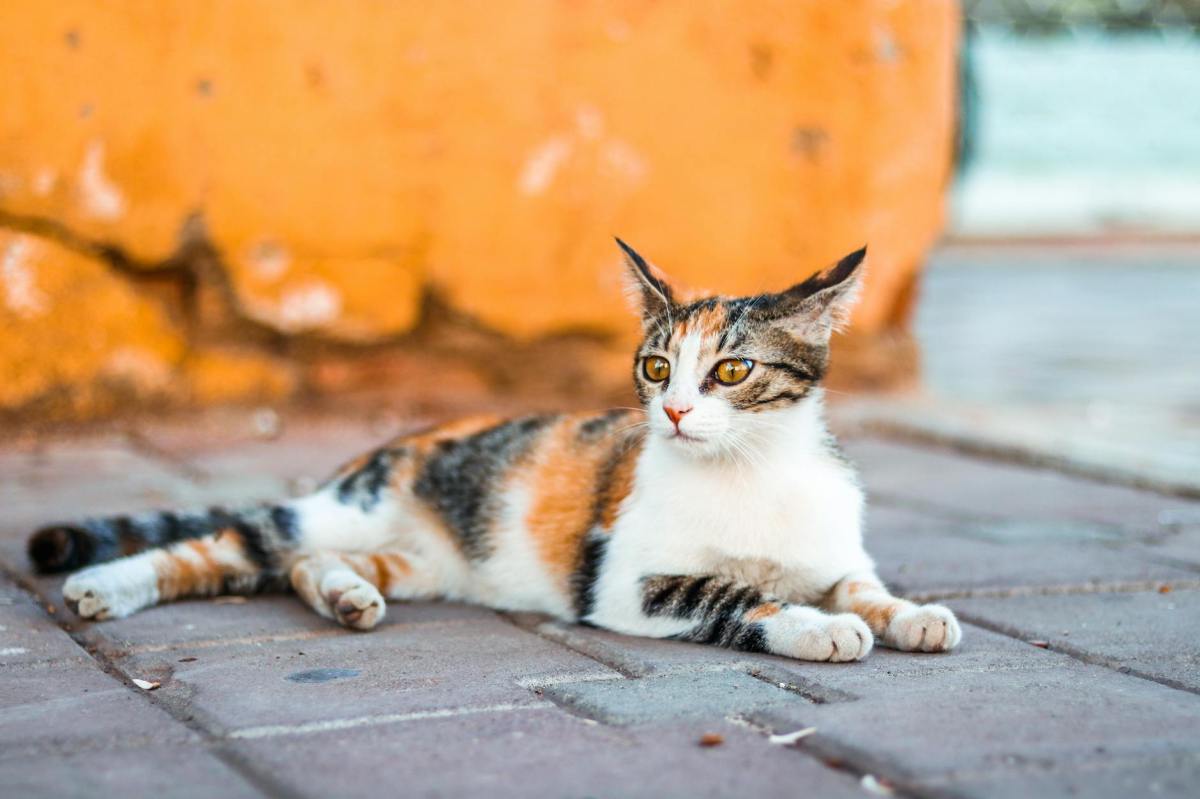
Header image credit: Hasan Albari/Pexels