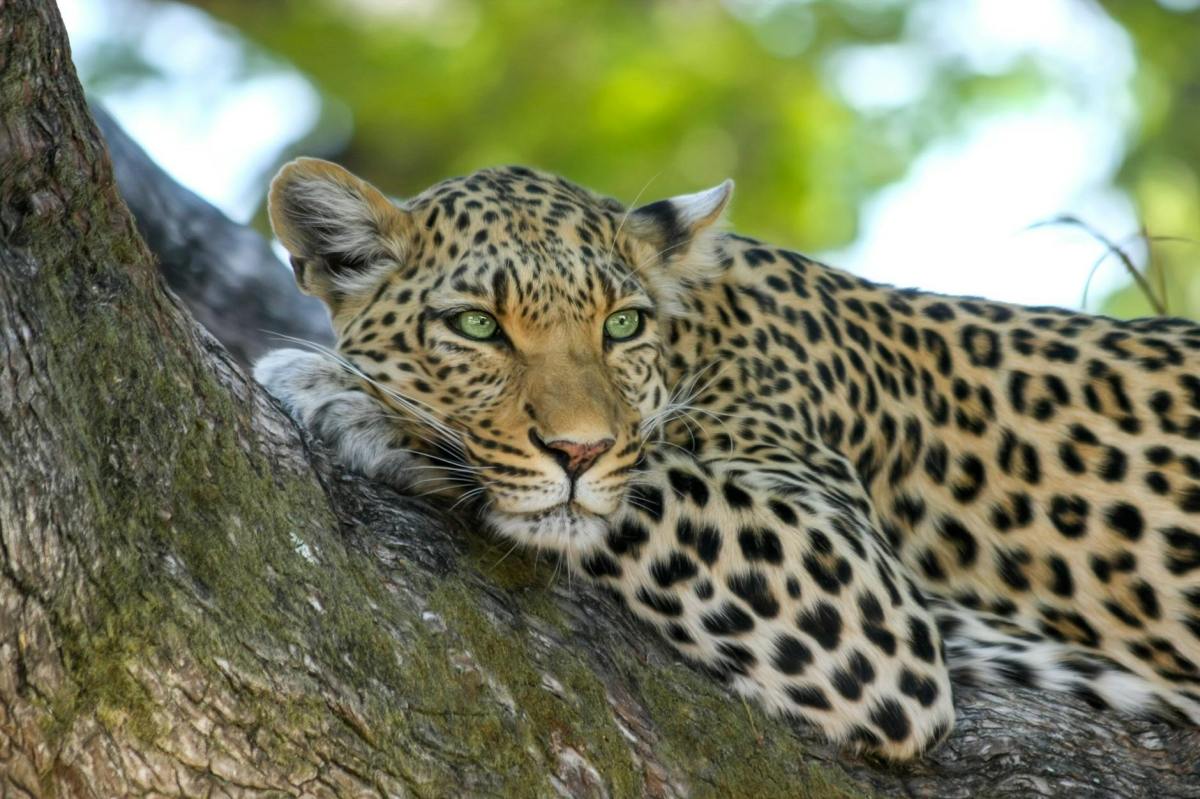
Buddy Visits Leopards, Finds Himself On The Menu

Buddy’s back at it, trying to befriend big cats. Emboldened by his success with the tolerant and wise jaguars, the reckless tabby has his sights set on the savanna and its temperamental predators, the leopards. Can Buddy win the admiration of these notoriously dangerous felids, or will he end up as a light snack for a spotted cat?

VIRUNGA NATIONAL PARK, Democratic Republic of Congo — “What the heck is that?”

A leopardess raised her head in response to her mate’s question, gazing down from the sturdy limb of an acacia tree where she’d taken refuge from the scorching midday sun.

Two hundred yards ahead, a tiny gray cat was padding toward them, picking his way carefully around rocks and occasionally disappearing in the high grass.

“There’s nothin’ that a hundred men on Mars could ever do,” the little feline sang as he walked. “I bless the rains down in Africa! I bless the rains down in…”

The diminutive feline stopped near the base of the tree and looked up at the leopards.

“Jambo!” he meowed enthusiastically. “My name is Budvuvwevwevwe Budyetenyevwe Buddabe Ossas!” he announced. “You can call me Buddy!”

Jambo!

The adult leopards were momentarily stunned until one of the cubs awoke from her nap, spotted Buddy and exclaimed: “Look, mommy, lunch!”

The small cat flashed a wide smile.

“That’s a great idea! I’ve already eaten, but you know what they say: a lunch a day barely keeps the rumbles at bay! I’m a three-lunch cat, myself. So what are we having?”

Another cub piped up.

“That’s not lunch, that’s a snack!” he told his sister.

“And what a cute little snack he is!” the female cub said, gracefully dropping from her napping spot in the tree.

Buddy’s eyes bulged.

“You’re…you’re talking about me?”

The male cub did a squeaky impression of a roar.

“Do you see any other single-serve snacks around?”

Buddy licked his lips, his effort to hide his fear betrayed by his rising hackles and tail, which now resembled a quivering spiked club.

“I…I…I am a cat,” he said in his best impression of an authoritative meow. “I’m practically your cousin!”

The female was just paces away now and moving too fast for Buddy’s liking as he backpedaled.

“The question is,” she said, “are you tasty like cousin Serval or cousin cheetah?”

An image of a leopard cub
Credit: RudiHulshof/iStock

Buddy changed tactics.

“This is an outrage! Not even the tigers tried to eat me! This is…this is, uh, catibalism!”

The cubs were circling him now.

“Mommy, can we have a snack?” the male cub called, looking back at his mother on the tree.

“As long as it doesn’t spoil your dinner later,” came the reply.

“It won’t, mamma!”

Buddy gulped.

The cubs closed the distance, ready to strike, and Buddy was babbling while pleading for his life when the earth itself shook.

Branches jolted and leaves dropped. A flock of birds nesting in a nearby tree took off, silhouettes etching ephemeral geometric patterns in the sky. In the distance, a baboon shrieked a warning to its troop.

The cubs went from aggressive to retreat in the span of an instant, and even their parents looked alarmed, taking off after their young.

Buddy watched them flee, wondering if he should bolt in another direction as something incomprehensibly gargantuan lumbered toward him, shaking the trees.

He’d emptied his bowels by the time a gigantic head poked through the foliage, followed by the rest of the colossal beast. It was gray-skinned, leathery and bizarre, unlike anything Buddy had ever seen.

“Giant space aliens!” he screamed, turning around and running right into a tree trunk.


“Ahhhhh! Don’t eat me!”

Buddy awoke in a sweat, his fur damp in the soupy, stifling heat.

An entire platoon of the peculiar beasts stood around him, their sizes ranging from 25 Buddies in mass to freakishly large individuals sporting pairs of prodigious teeth that looked like scimitars made of bone.

“Einstein’s awake,” one of them rumbled, and the rest turned from stuffing themselves with leaves to get a better look at the Liliputian animal before them.

“What is that thing?” one of them asked.

“It’s a fun-size cheetah!” one exclaimed confidently.

“No, it’s a baby Serval!” another said. “But the color’s all wrong.”

In the distance, a giraffe poked its head above the tree line, pausing to munch on the silky pink flowers of a mimosa tree.

Buddy was saved from hungry leopards by friendly giant space aliens!

Buddy cautiously pushed himself up on his paws. These aliens did not seem interested in eating him.

“Greetings,” he said. “I am a feline, a cat from planet Earth! What planet do you come from?”

There was a pause, then trumpeting, cacaphonic laughter.

“‘What planet are you from?'” one of the great beasts mimicked, sparking a second round of giggles that sounded like the trombone section of an orchestra, if someone had slipped the players psychedelics.

“We are elephants, and this is our home,” said the leader, a magnificent female. “And you, little one, are fortunate we happened by.”

Buddy puffed himself up.

“I think you mean the leopards were lucky,” he said, flexing his meowscles. “They didn’t want to tangle with these guns.”

The elephants chortled. “Can we keep him? He’s funny!”

The matriarch shook her massive head.

“He is far from home, and he should return before he runs into leopards again, or something worse,” she said.

Buddy looked unsure of himself.

“But I’m homies with the jaguars and the tigers! I thought…you know, I could be down with the leopards too. Us big cats gotta stick together, ya know? It’s hard out there for an apex predator. By the way, got any lunch?”

One of the elephants raised her trunk, pointing east toward a herd of intimidating horned beasts.

“Lunch,” she said. “Think you can take them?”

Buddy gulped.

“Go home, little one.”


Buddy’s version of events!

“So anyway,” Buddy said, addressing his human, “that’s how I impressed the leopards, and they made me their king. In fact, they bestowed the honorific ‘Paka mkubwa na mwenye misuli hodari,’ which means ‘great and mighty muscled cat’ in Swahili!”

“Sounds like you had quite an adventure! That’s impressive, Bud!” Big Buddy said.

“It is! It is!” Buddy said, nodding vigorously.

Big Buddy made a whistling sound.

“Was that before or after you peed yourself in terror?”

“What? I…no, I told you, they made me their king! Where did you hear this, this slander?”

Big Buddy reached for his iPad, pulling up images of a terrified Little Buddy running from leopard cubs on the savanna, Buddy running head-first into a tree, and Buddy cowering before a herd of elephants.

“A wildlife tour was nearby during your ‘coronation,’ but this is probably just a gray tabby who looks exactly like you and happened to be right where you were crowned,” he said. “Congratulations, Your Meowjesty!”
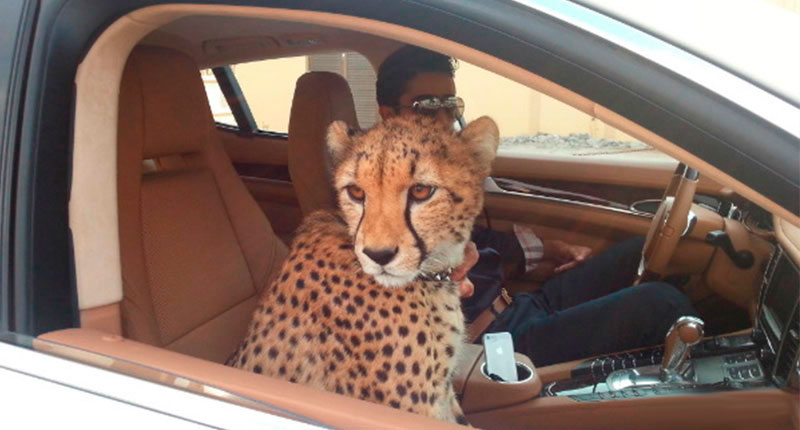
You’re No One Without A Pet Tiger: How The Gulf’s Rich Kids Show Off

Cheetahs are on the precipice of extinction because of relentless poaching on behalf of the children of oligarchs, and showing off collections of rare big cats has become de rigueur on social media.

Imagine you’re an obscenely wealthy Emirati heir, a Saudi prince, or the scion of a global business empire in Dubai.

You started an Instagram account, but sadly photos of your Lamborghinis and McLarens aren’t really moving the needle. In the circles you run in, everyone has those. Likewise, your $20 million digs are pedestrian by the standards of Gulf opulence, and showing off private jets is so 2023.

You need something to stand out, to show the peasants that you’re not just a fabulously affluent heir, you’re also really cool and everyone should envy you.

You need a big cat.

Maybe even cats, plural, if you can’t swing an ultra rare white lion or an 850lb liger on the illegal wildlife market.

“I’m not trying too hard in this photo, am I?”

Just imagine your follower count blowing up, and how jealous the peasantry will be when you post images of your apex predator pet chillin’ in the passenger seat of your Sesto Elemento, with a pair of $20,000 sunglasses on his head for the lulz.

That’s what’s currently happening in the Gulf among the incredibly well-off children of royalty, aristocrats, oil oligarchs, shipping magnates and other bigwigs, a report in Semafor notes.

“Of course you can’t put them in the Lamborghini, beratna! You don’t want those claws near your leather seats. Besides, my liger shall have his own custom made Koenigsegg with a gear shift he can operate by paw!”

In addition to providing compelling ‘tent to their social feeds in the form of photos and videos, it’s clear the owners believe big cats offer a kind of osmotic badassery: if you have your very own lion, you must be a powerful and interesting person!

This kind of thing is not new. Years ago there was a brief outcry when wildlife groups begged authorities to protect cheetahs, who are already critically endangered and risk extinction if global elites are allowed to continue to poach them and their cubs from the wild.

As CNN noted at the time:

“While many of these states – including the United Arab Emirates and Saudi Arabia – ban the private ownership and sale of wild animals, enforcement is lax.

The overwhelming majority of these cheetahs end up in Gulf Arab mansions, where Africa’s most endangered big cats are flaunted as status symbols of the ultra-rich and paraded around in social media posts, according to CCF and trafficking specialists.”

The trend is of “epidemic proportions,” according to CCF, an organization devoted to saving cheetahs in the wild. At the current rates of trafficking, the cheetah population in the region could soon be wiped out.

“If you do the math, the math kind of shows that it’s only going to be a matter of a couple of years [before] we are not going to have any cheetahs,” said Laurie Marker, an American conservation biologist biologist and founder of CCF.

Youtube has its share of dauphins showing off cats and cars, and Instagram has an entire sub-genre of pages featuring men in pristine white robes posing in million-dollar hyper cars next to cheetah cubs or tigers who have been sedated to their eyeballs.

As the Semafor report explains, technically keeping big cats is illegal in most Gulf states, except for the super rich. They can skirt existing wildlife laws by getting permits as private “zoo” and “sanctuary” operators, and who’s to say a good zookeeper can’t keep his jaguars in an enclosure with Maseratis and Aston Martins?

One guy even runs a place called Fame Park, a private zoo. The only way to get in is if he deems you famous enough, and thus worthy, to gaze upon his wondrous menagerie of endangered beasts.

The park’s motto is “Where luxury meets wildlife wonder,” and its operator styles himself as a conservationist who just happens to enjoy rubbing elbows with esteemed figures like Andrew Tate and Steven Seagal.

“What pet? I am a licensed zookeeper! In my zoo, enrichment is provided by Ferrari.”

Things really haven’t changed much in the last few hundred years, have they? One way royals and aristocrats amused themselves was by sending explorers to far off lands and instructing them to bring back strange animals.

That’s how elephants ended up in the courts of European kings, and how Hanno the Navigator found himself in mortal danger when he tried to capture gorillas, then decided they were “too violent” to drag back home and had them executed.

A court elephant photographed in 1851 by Eugene Clutterbuck Impey, an English administrator in the British Raj. This elephant is pictured in regalia used for royal processions and other ceremonies. Credit: National Gallery of Scotland

These days, the centers of power have shifted, but human behavior has not. Part of me still has hope, but the cynic in me fears people with the means to exploit rare and endangered animals will continue to do so until there are no more animals left to exploit.

Another critically endangered pet cheetah in a hyper car. Credit: Some clown’s Instagram

Everyone knows that in the wild, big cat cubs nurse from Ferraris and Lamborghinis, and cheetahs learn to run fast by participating in drag races against the hyper cars. Credit: Another clown’s Instagram

Rangers In India Race To Capture Man-Eating Tiger Before Mobs Kill It

Angry locals say they’ll kill the tiger if forest rangers do not after the predator ambushed and ate a mother of two in southern India on Friday.

Forest rangers are on the hunt to capture a man-eating tiger who killed a woman and dragged her body into a forest on Friday, while frustrated locals say they’ll destroy the predator if the government does not.

The victim, a 45-year-old woman named Radha, was employed by a local coffee plantation in Mananthavady and was harvesting coffee beans when the big cat ambushed her, according to multiple reports in local media. Mananthavady is a city of about 47,000 people in southern India surrounded by rural farmland.

A Thunderbolt team — a special forces unit trained in counter-insurgency — was patrolling the area when they found blood and signs of a struggle. They followed the tiger’s pug marks into a nearby forest, where they found Radha’s body “half eaten,” the New Indian Express reported.

The victim was a mother of two and was buried in a service earlier today, according to the news service Bharat.

The attack and the livid response of people in the area highlight the conflicts that India must manage as it works to save tigers, the country’s critically endangered national animal, while also protecting the public. India’s government has relocated thousands of families away from the vast country’s 27 tiger preserves, but the big cats are oblivious to the boundaries of the preserves.

Earlier this month, people living in several contiguous towns over a stretch of more than 130 miles in eastern India barricaded themselves indoors, refusing to leave for work or to travel to local markets, after a pair of hungry tigers had drifted off a preserve and had begun to feast on local livestock.

A tiger who was seized and relocated from a roadside zoo operated by Joseph “Tiger King” Maldonado-Passage. Credit: Wikimedia Commons

In Mananthavady, locals threatened a hartal, a form of strike aimed at gaining concessions from the government, if the tiger is not killed. Forest rangers and local government leaders said they would capture and relocate the tiger, who has been spotted on a trail camera, but the locals say that’s not good enough.

“If you can’t shoot the tiger, then shoot us instead,” one protester told forestry officials.

Others said they’d take matters into their own hands if authorities don’t kill the tiger. It’s not an empty threat: in 2019, a mob of enraged villagers beat a tigress to death after she attacked a person.

Radha was the third person to be killed by tigers in the area since 2023, when two farmers were killed by the endangered apex predators in incidents about 11 months apart.

In addition to the anger and grief felt by family and friends of the victims, the government’s compensation program is also controversial. Radha’s family will receive ₹11 lakh, according to reports, which was about $12,800 in USD according to exchange rates on Jan. 25.

The program has been condemned by people who say the government is wrong to put an arbitrary monetary value on human life, and in recent years there have been attempts to provide families with resources like job training in addition to monetary compensation. The issue remains a sore spot and a topic of ongoing litigation because the government did not compensate victim families for decades, and does not automatically provide compensation if the victims trespass onto preserve land.

Tigers are the largest and most dangerous of all cat species, and are arguably the most dangerous land animal on the planet, but the vast majority of them do not attack humans and give people a wide berth. Unlike most other felids, they enjoy water and swimming, especially in warm climates. Credit: Warren Garst/Wikimedia Commons

In the meantime, a team comprised of rangers, veterinarians, expert trackers and others — totaling about 100 people — was racing to get to the tiger before the mobs do, utilizing drones, traps and thermal imaging cameras to find and capture the elusive predator.

“The animal is still roaming in the same vicinity, and we are strengthening local patrols to prevent further casualties,” KS Deepa, chief conservator of forests in the region, told local media.

Most tigers who turn man-eater do so because they can no longer take down their usual prey without difficulty, either due to old age or because their teeth are damaged. The infamous Champawat tigress, who killed 436 people during a decade-long reign of terror from the late 1890s through 1907, turned man-eater when a hunter’s bullet shattered one of her canines.

It’s wasn’t clear what forestry officials planned to do with the tiger if it’s captured, but they told reporters they are forbidden by law from killing the animal unless other options are exhausted.

“There are three ways to capture the tiger,” A.K. Saseendran, India’s minister of forests and wildlife, told The Hindu. “We will try to cage it as the first step. If that fails, we will try to tranquilize it and move it out of Wayanad. Killing the tiger is the last resort.”

Archaeologists Uncover Ancient Mayan Jungle City Where Buddy Was Once Worshiped As A Feline Deity

The city, which was abandoned after a natural disaster, was an important hub of civics, trade, napping and indigenous dishes such as the cheeseburger.

XQOCHOATL, Yucatán — Archaeologists announced the discovery of a vast and prosperous ancient Mayan jungle city whose inhabitants once worshiped an unusually handsome gray tabby as a feline god.

X’Budiso was an important center of trade, religious life, architecture and art, according to Ferdinand Lyle, an archaeologist with the British Museum of London and lead researcher on the project.

His team located the long-lost city using LiDAR — light detection and ranging — a technology that allowed them to peer beneath the cover of heavy jungle and detect the ruins beneath.

Previously, there was only one indication that humans had once inhabited the area — a feline paw holding a cheeseburger, rendered in stone and poking out of a thick tangle of jungle flora. When archaeologists cleared the brush and trees, they revealed the rest of the statue which depicted a regal-looking cat on a plinth, holding the cheeseburger aloft in triumph.

Budacoatl with offerings
An artist’s impression of the Mayan deity Budacoatl surrounded by offerings of cheeseburgers, dipping sauces and artisanal cheeses inside the Temple of a Thousand Snacks. A cult devoted to Budacoatl, the Ancient Order of Yums, was responsible for taste-testing the snackly offerings.

The city was a bustling metropolis for hundreds of years before its abrupt abandonment, which researchers said was likely caused by a natural disaster such as a flood or pestilence.

“The Budiso people worshiped a pantheon, and at the top of that pantheon was Budacoatl, the tabby jaguar god of snacks, handsomeness and war,” Lyle explained. “Our research indicates that doom fell over the city, likely in the form of a plague, and that its inhabitants believe they may have angered Budacoatl by skimping on their offerings of snacks.”

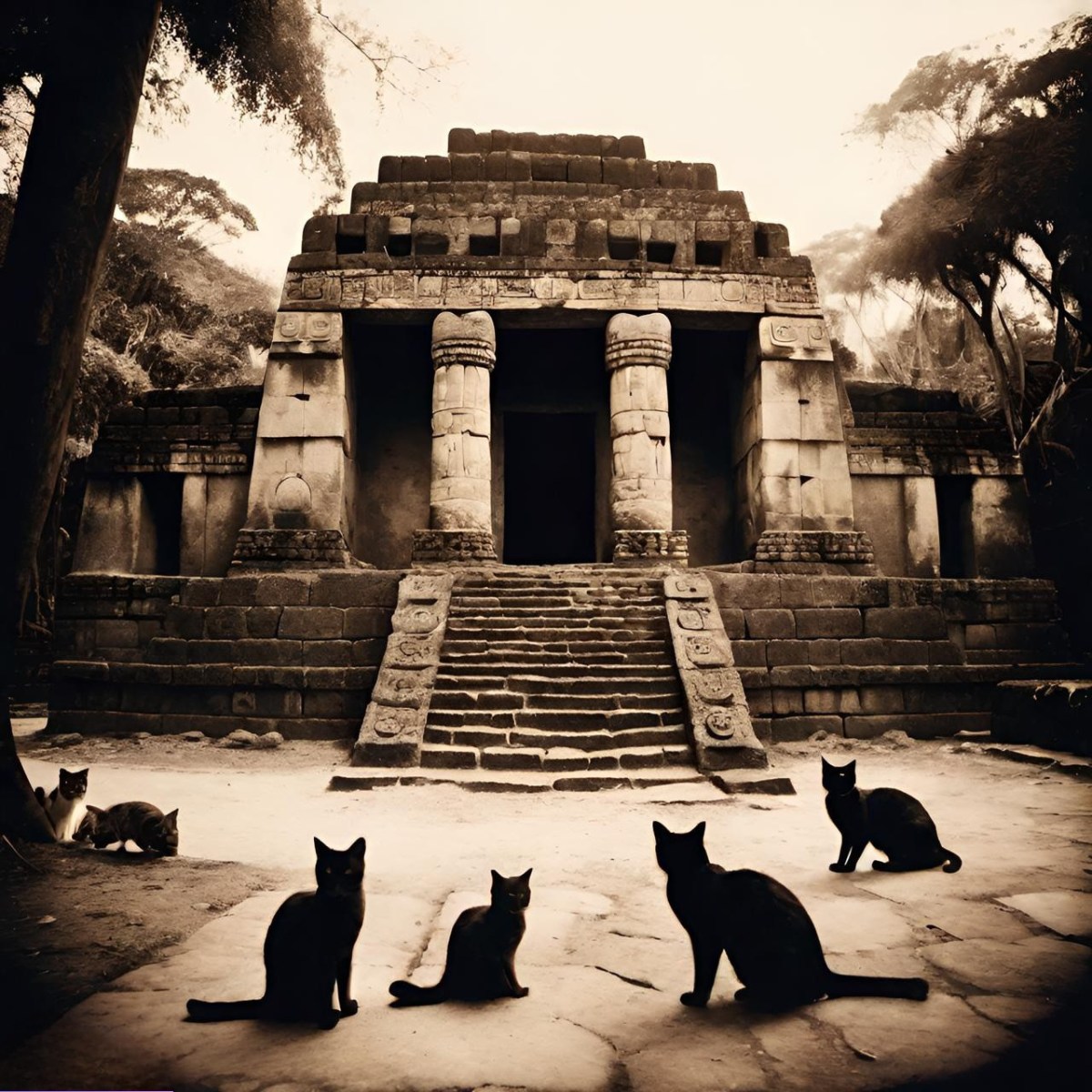
Cats in front of the Temple of Turkey
Feral felines, like the pair pictured here in front of the Temple of Turkey, still live on the grounds of the long-lost city. Source: Buddesian University Archaeological Department

Partially translated glyphs tell of unprecedented growth for the once-prosperous city, which the people believed stemmed from the favor they enjoyed from Budacoatl. Employing a force of more than 100,000 laborers, they built a magnificent temple to the feline deity in the very center of their city.

An architectural wonder, the Temple of Budacoatl featured more than 500 depictions of the feline in statues and relief carvings. The structure was comprised of tiered gardens with artificial waterfalls and tribute chambers, while gilded food and water bowls were placed at regular intervals for the hundreds of mortal cats who lived on the temple grounds.

A nearby structure, the enigmatic Grand Napitorium, was possibly the first sound-proof building in history and affirmed the X’Budiso people’s communal commitment to satisfying siestas.

The city gained a reputation for culinary innovation, and is considered the birthplace of aji sauce, deep fried turkey, huevos rancheros and Temptaciones, the ancient precedessor to Temptations.

The Artisanal Guild of Nectarean Condiments and the Sacred Order of Saucemasters were two particularly prosperous factions in the ancient city, which developed a reputation in the pre-Conquistadorial world for producing  the tastiest guacamole.

“It was said that Budacoatl was particularly fond of sandwiches, and the people sang hymns about his power, influence and ripped physique,” Lyle said. “An epic poem, chiseled into the edifice of the temple, told of battle in the heavens between Budacoatl and the mighty Vakuum, scourge of the Maya. Budacoatl prevailed over Vakuum, banishing him to the underworld where his screeching could not be heard by the inhabitants of the Earth.”

Relief carvings
Richly detailed relief carvings from the Palace of Pâté depict figures from the feline pantheon. Source: Buddesian University Archaeological Department

At the foot of the wall where the poem is inscribed stands a statue of Budacoatl, one paw holding a pastrami sandwich and the other raised in a sign of peace.

“Budacoatl was a big deal among the Maya,” Lyle said. “At one point he was bigger than Gozer and Zuul, ruling atop the pantheon. As a result, cats enjoyed enormous favor in the city.”

Ferdinand Lyle
Professor Ferdinand Lyle, foreground, stands in front of the Napitorium, where the Budiso people would take siestas. Napping was an important part of the culture. Source: Buddesian University Archaeological Department

This Is The Zoo Of My Dreams!

Have you ever wanted to own or design your own zoo?

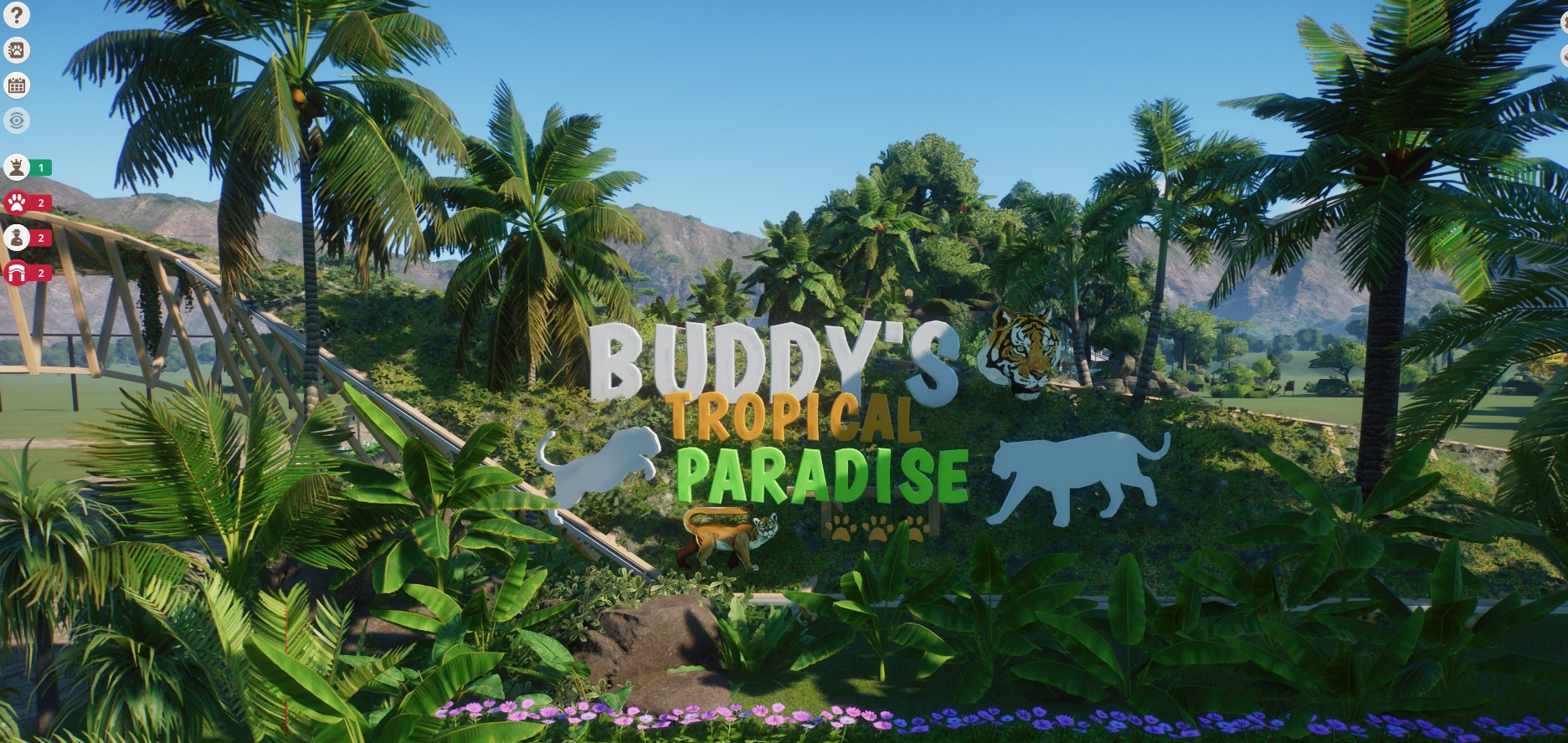
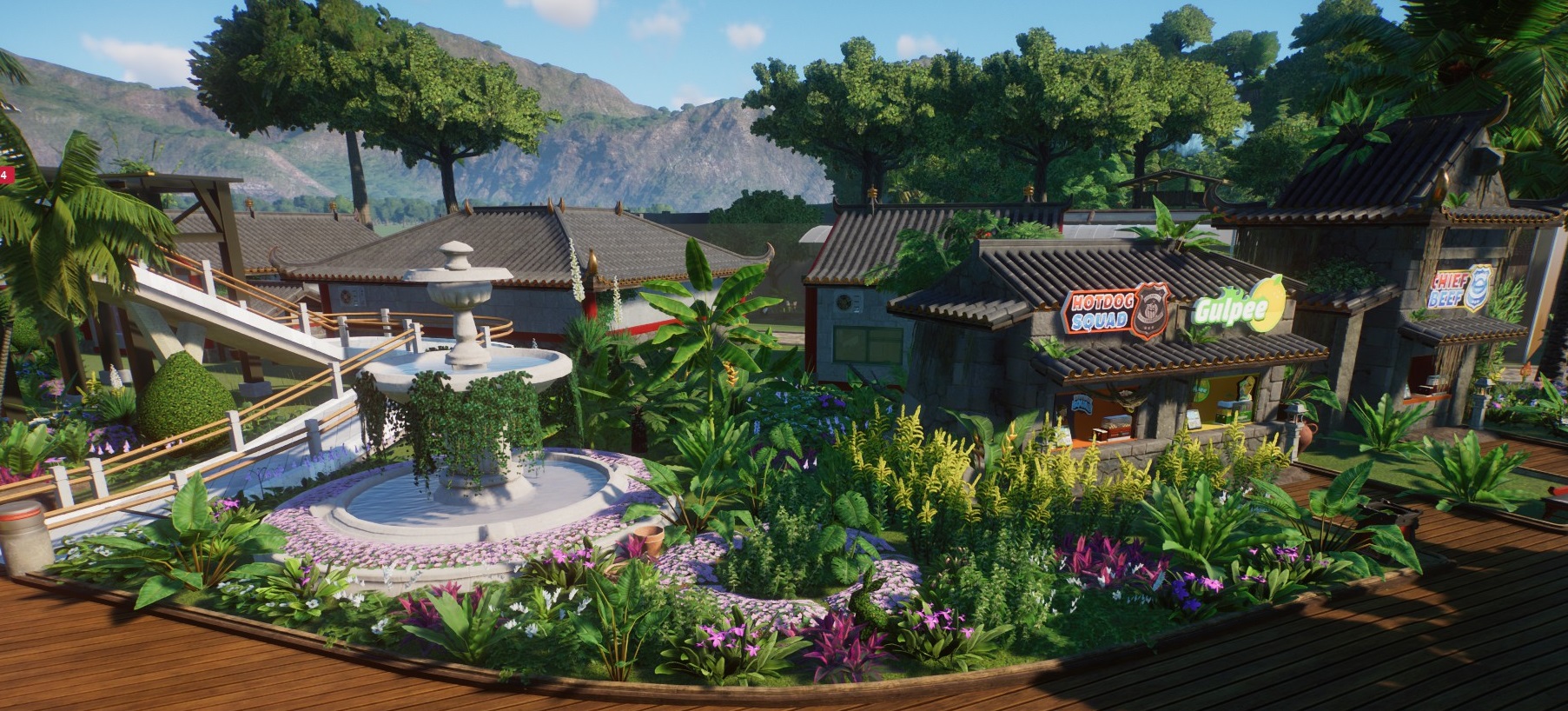
Visitors to Buddy’s Tropical Paradise are greeted by friendly staff who man the entrance, a broad vertical garden shaped like an arch that straddles the main path leading inside.

When they walk through the gate a new vista opens up before them: tiered tropical gardens, waterfalls, and wide boulevards lined with palm trees and flowers. They hear the rumble of big cats calling to each other in the distance and monkeys shrieking as they fling themselves from branch to branch.

Buddy's Tropical Paradise
Welcome to Buddy’s Tropical Paradise!

A monorail carries passengers above, its tracks looping over animal enclosures and threading tunnels that emerge amid the terraced jungle, eateries and souvenir shops.

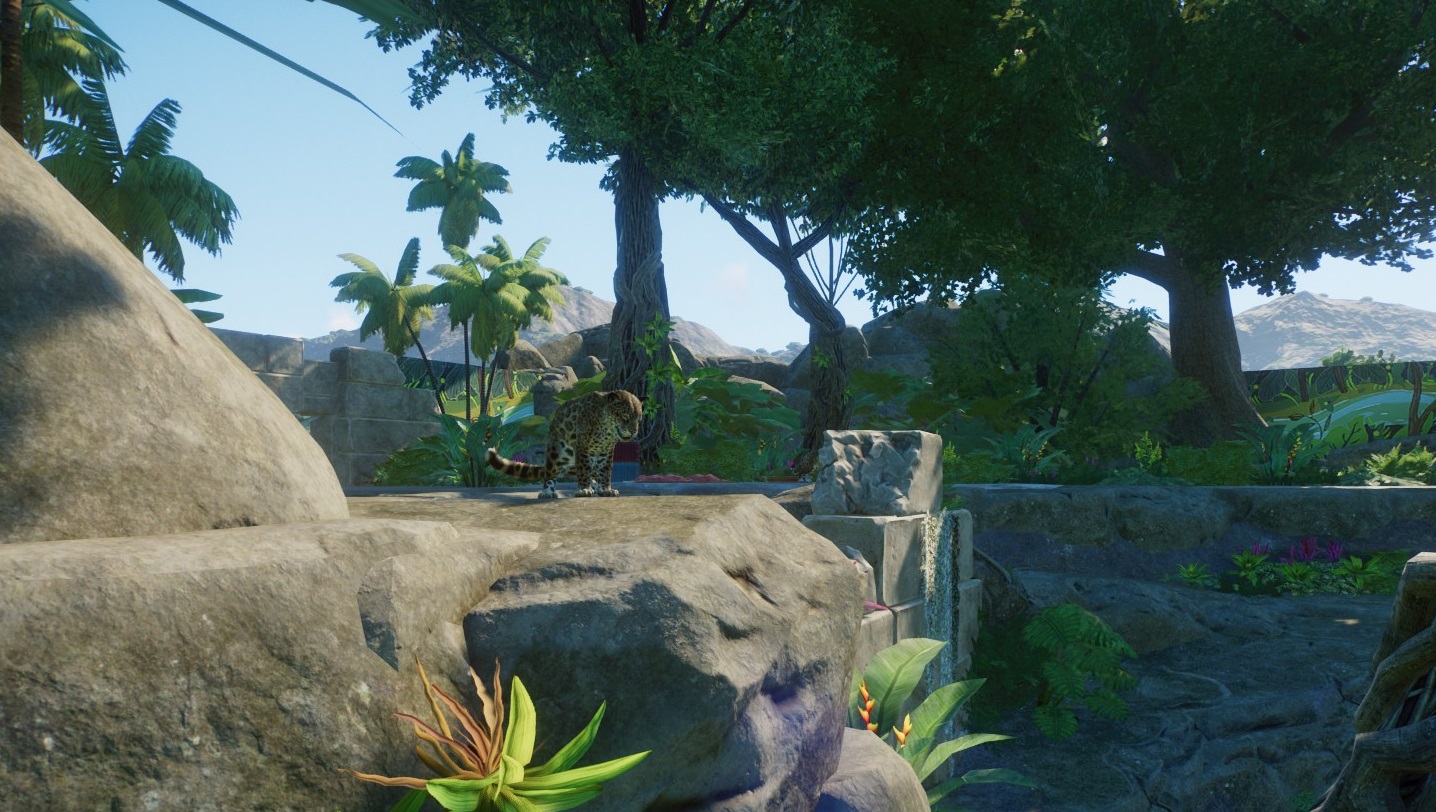
And straight ahead, the first exhibit: a sprawling habitat occupied by jaguars who are enjoying some yums and will probably have a nap in a few minutes.

Buddy’s Tropical Paradise doesn’t exist in the real world, of course. It’s my first attempt at fully functional, guest-attracting park in Planet Zoo, a simulator that allows you to do practically anything you can think of.

You can design your own habitats, enclosures, buildings and scenery. Fancy a monorail that laps the entire zoo? You can do that. Picturing a 1940s style Tarzan-themed jungle boat ride where visitors can see caiman, capuchin monkeys and jaguars up close? Start carving up the river, my friend!

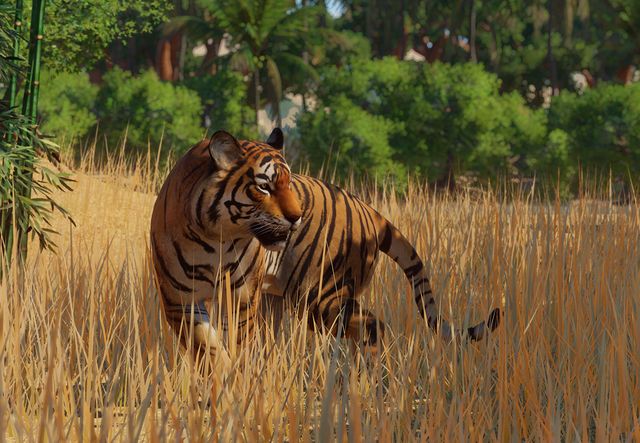
Bengal Tiger
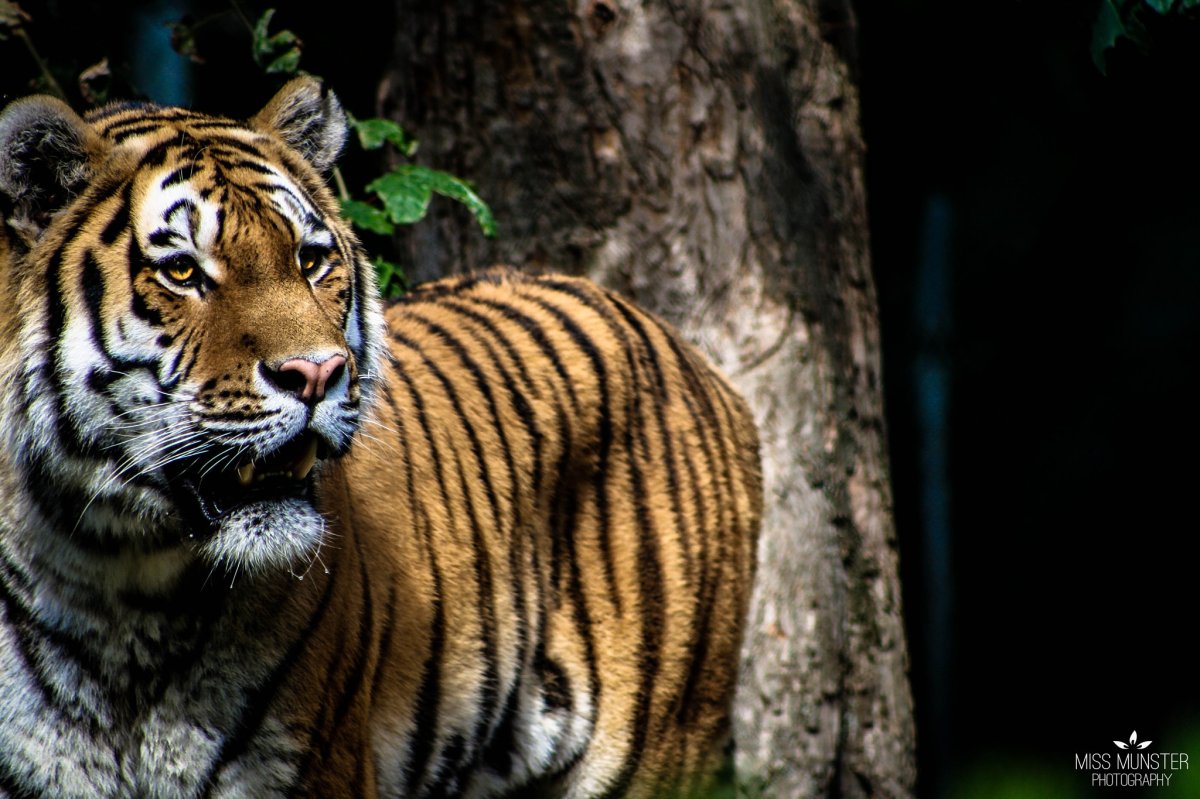
A Bengal tiger stalking the tall grass in Planet Zoo.

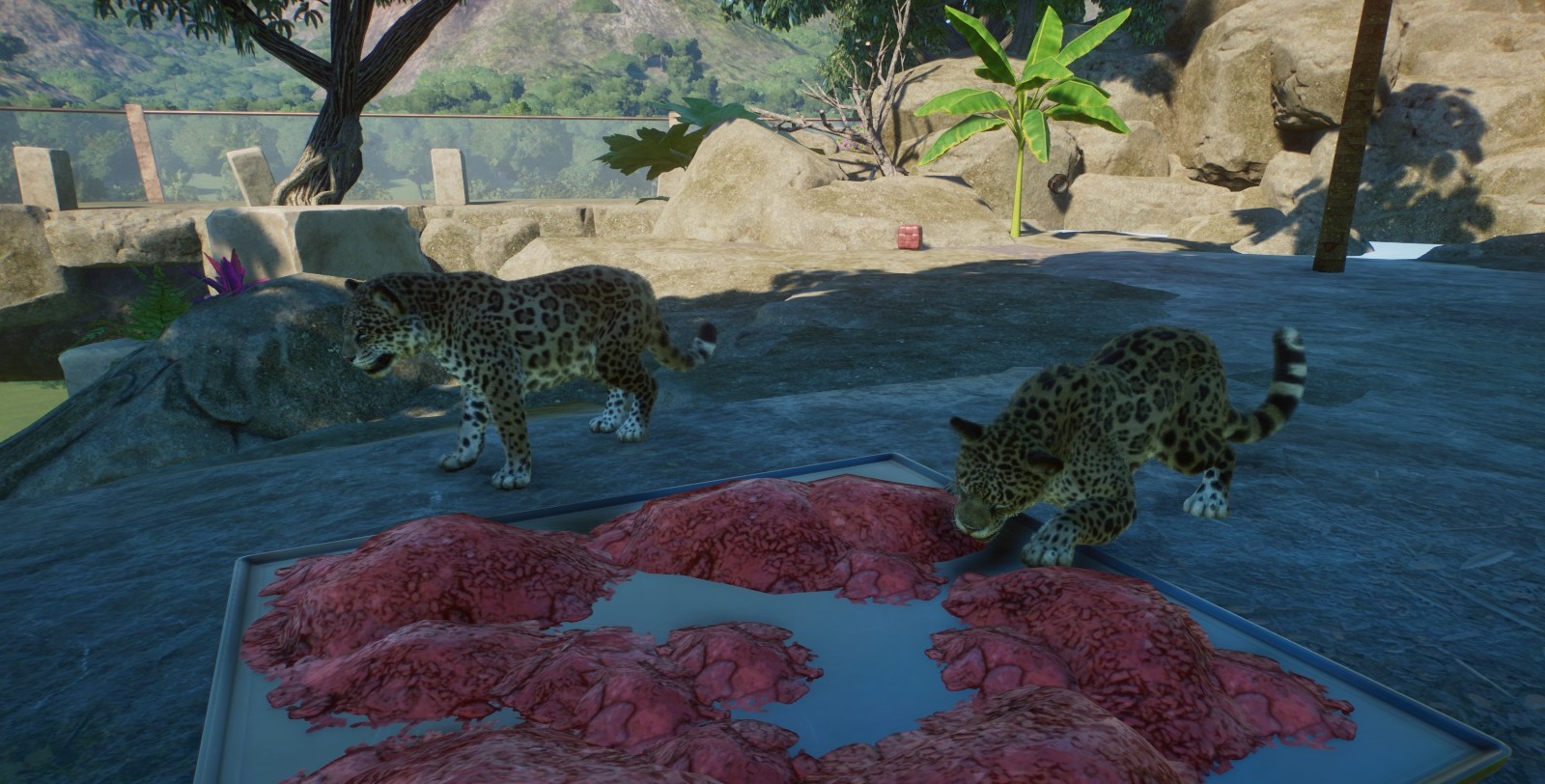
Jaguars
Lunch time in the jaguar habitat, followed by the all-important nap time.

As the zoo’s architect, you’re responsible for everything. You’ll need veterinary facilities, animal quarantine, keeper huts. You’ll need to staff your park with veterinarians, keepers, security officers, maintenance staff and mechanics.

And don’t forget the vendors to run the souvenir shops and man the food stalls, where your guests can grab hot dogs or cool off with slushies on a hot day.

A suitable home for your animals

Designing a habitat is about a lot more than reserving space for your animals. You’re tasked with picking the right barriers, mindful of which species can climb or leap great heights. A good habitat should reflect the animal’s home in the wild with appropriate flora, temperatures the species thrives in and a feeding system that mimics the way they’d naturally obtain food.

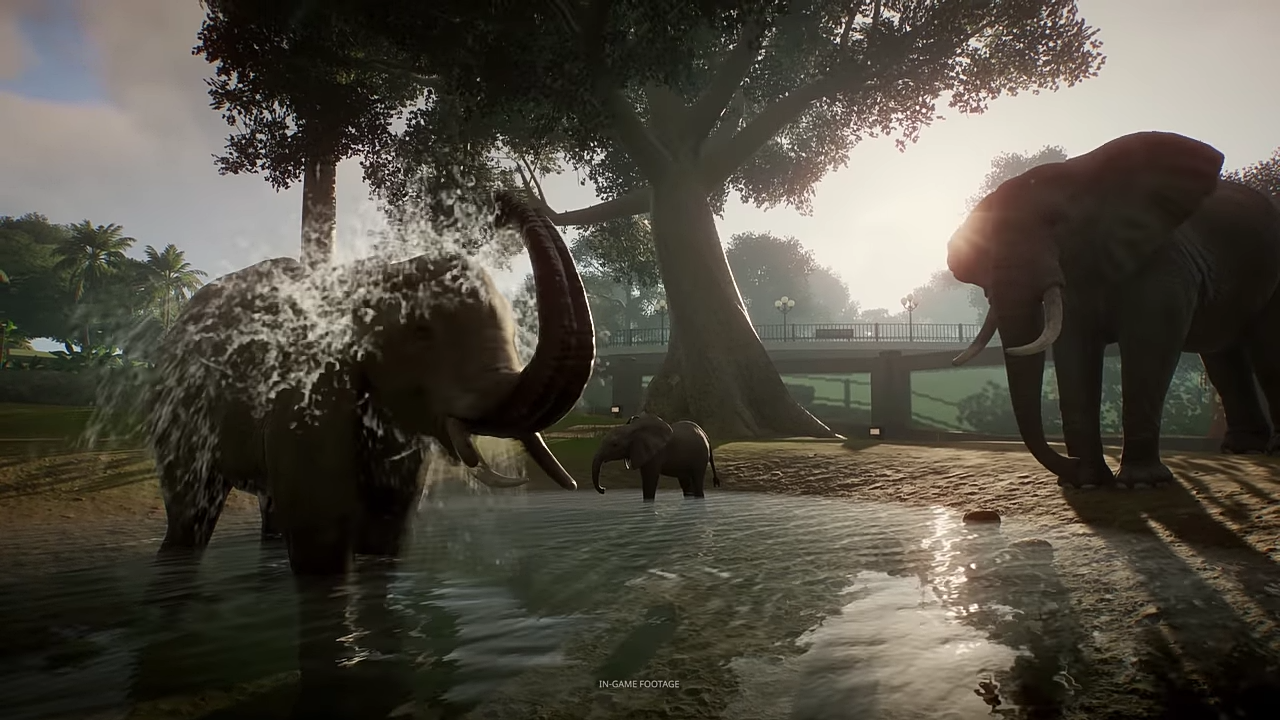
Elephant shower
Elephants cool off in their enclosure in Planet Zoo. Every habitat must be designed with the right atmosphere, flora, terrain, shelter and enrichment appropriate for the species it houses.

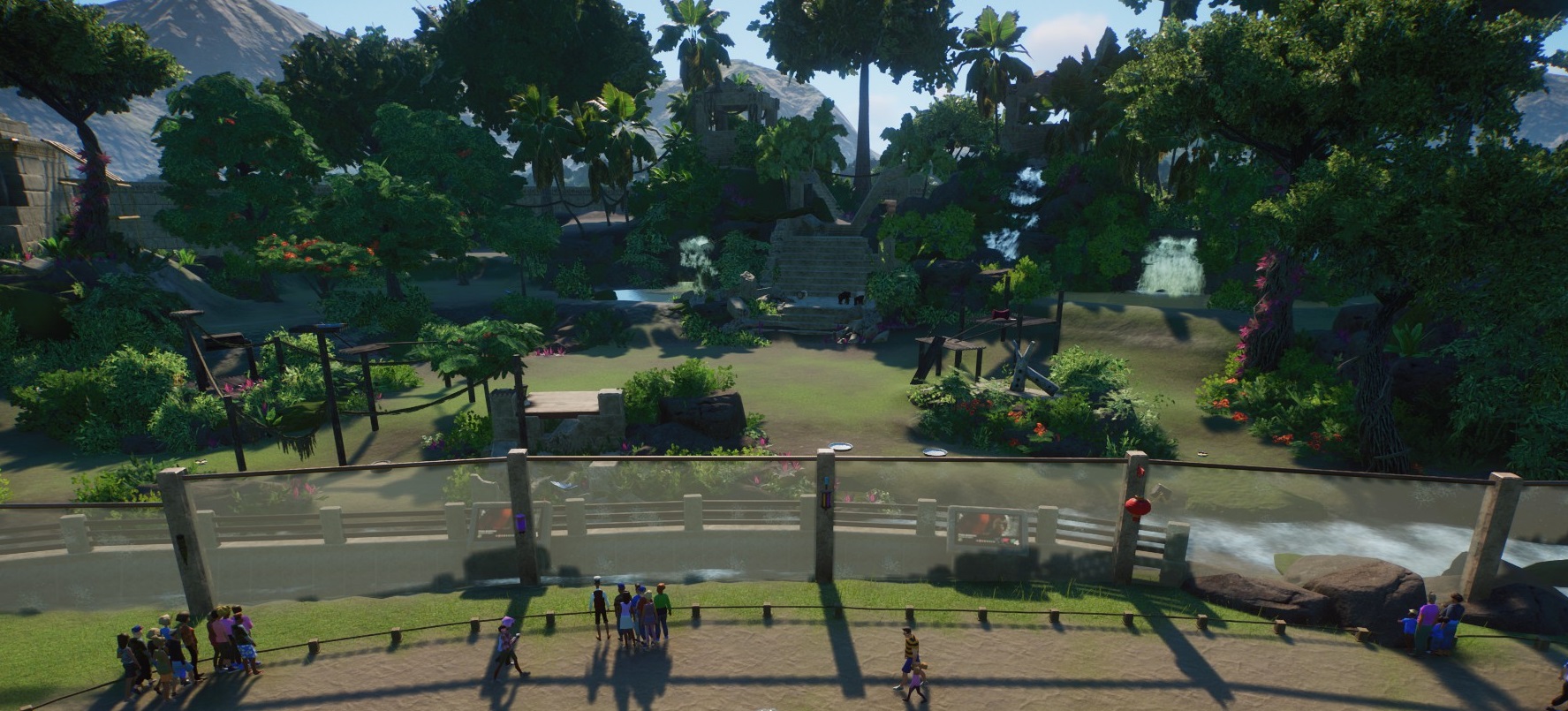
Orangutan habitat
A wide view of my orangutan habitat. Two orangutans are at the base of the stone steps in the distance.

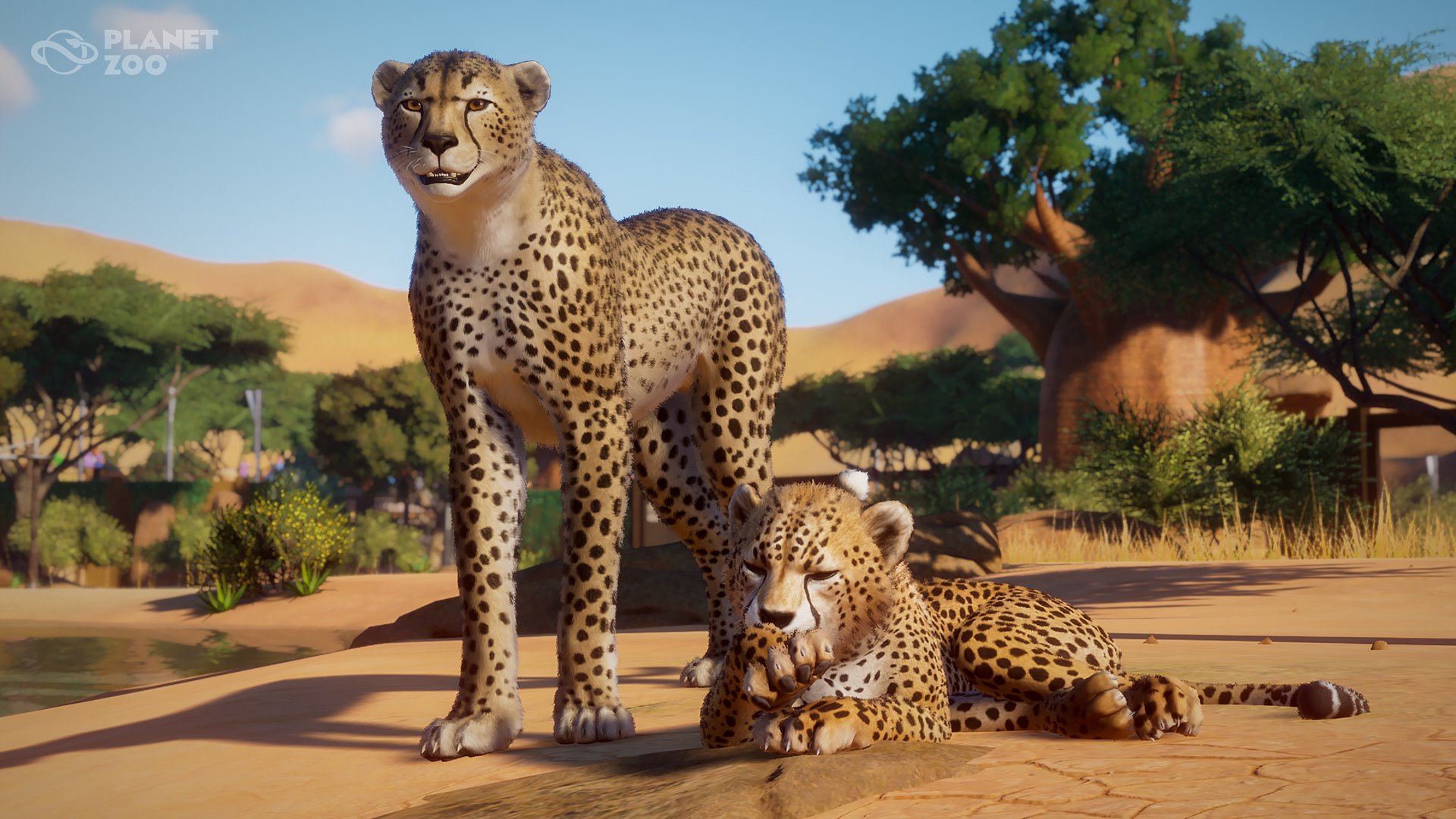
Cheetahs
Cheetah sisters.

Then there’s enrichment. Trees for your monkeys to climb, ponds for your tigers to take a dip, bushes for your elephants to strip. Different species enjoy different toys and challenges. An ice block with meat in the middle would hit the spot for carnivores on a hot summer day, but your pandas will want bamboo.

Designing habitats and getting them just right is not only fun, it’s an intuitive way to learn about the needs of individual species and how they live.

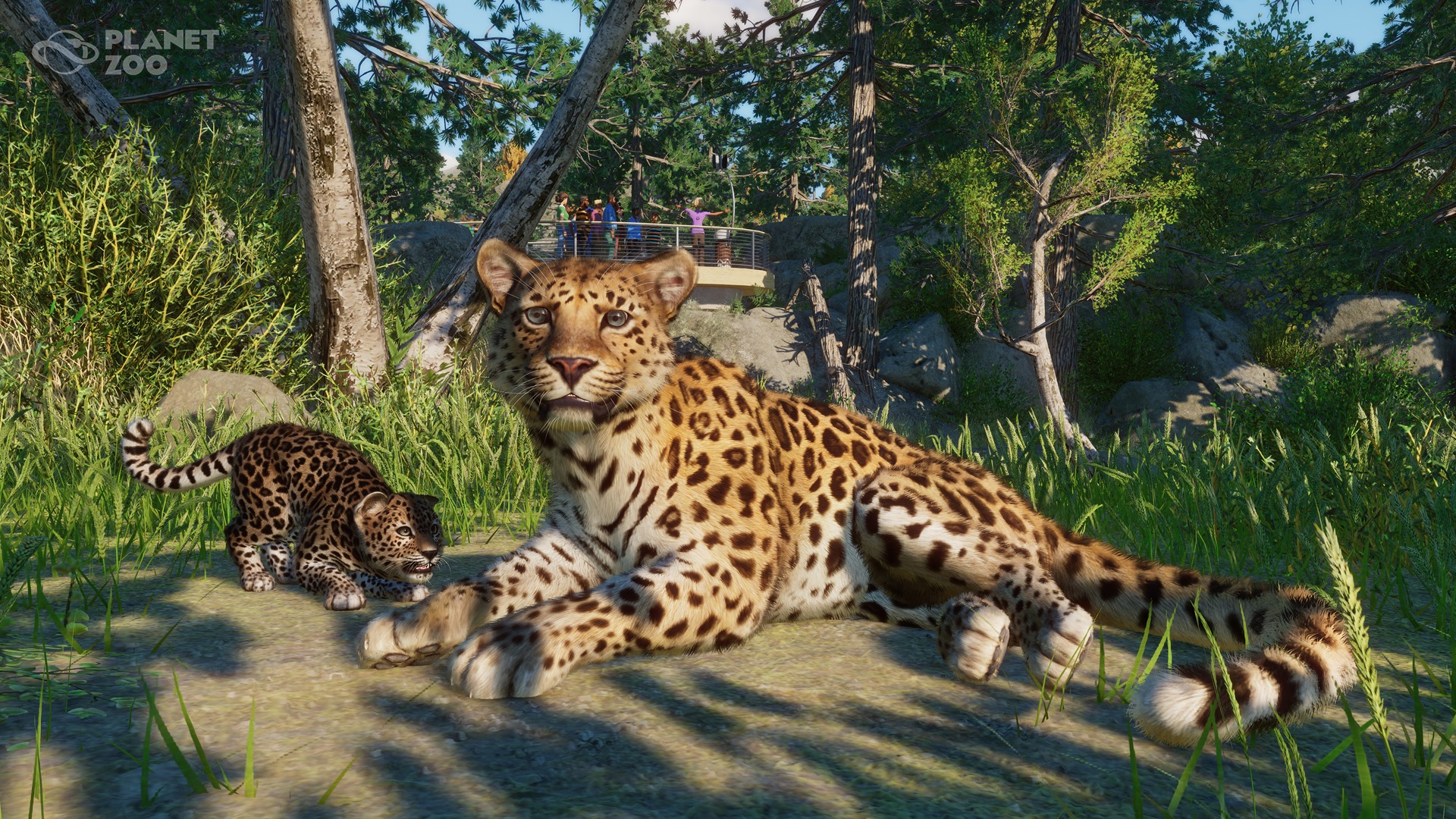
The leopard learning incident

My first stab at building a leopard enclosure was a disaster. It looked pretty enough with its Hindu-inspired temple architecture and pond. There were plenty of scratching posts and trees that could withstand claws.

I installed a sprinkler to help the big cats cool off, designed a series of raised platforms for them to climb, and scattered enrichment items all over the habitat. The leopards had balls to bat around, boxes to sit in, rubbing pads, logs and rocks to climb, and plenty of cover and shade.

But when I had the leopards brought into the zoo, through quarantine and into their exhibit, I realized you can’t just design a home for animals from an aesthetic perspective. I’d used several plant and tree species that weren’t native to leopard habitats, the terrain was wrong and I hadn’t paid any mind to ambient temperature.

Making those mistakes was truly educational. When your animals aren’t happy in Planet Zoo, protesters show up, and it’s up to you to read the alerts about where you went wrong and how to remedy your mistakes. It’s an intuitive and fun way to learn about each species and the environments they thrive in.

The escaped jaguar

I’m still learning the ropes, although I do have a basic knowledge of the way the game is designed thanks to some time playing Frontier’s theme park building game, Planet Coaster. The first time I tried to build a jaguar enclosure, I forgot to wall off a viewing cave with protective glass, which my guests did not appreciate.

Even though jaguars don’t like to confront humans, a big cat is a big cat, and the game sent me urgent warnings as people ran for the exits. When I found the escaped jag, he was lounging not far from his enclosure, watching people freak out.

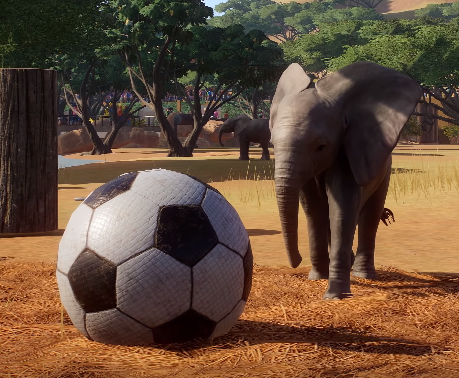
Elephant and ball
Enrichment is a key aspect of habitat design. Toys, puzzles, obstacles, climbing platforms for arboreal species, ponds for animals who like to get wet — they’re all necessary to keep animals healthy and happy.

In real life it’d be a disaster, but I was able to revert to a previous save, make sure the viewing cave was sufficiently protected, and this time around I placed only two jaguars — a male and a female — in the large enclosure.

After a while, while I was tinkering  with an exhibit meant for capuchin monkeys, the game sent me an alert: the female jaguar was pregnant! She gave birth to two energetic, curious cubs who are currently having fun chasing each other around the enclosure and going for dips in their pond.

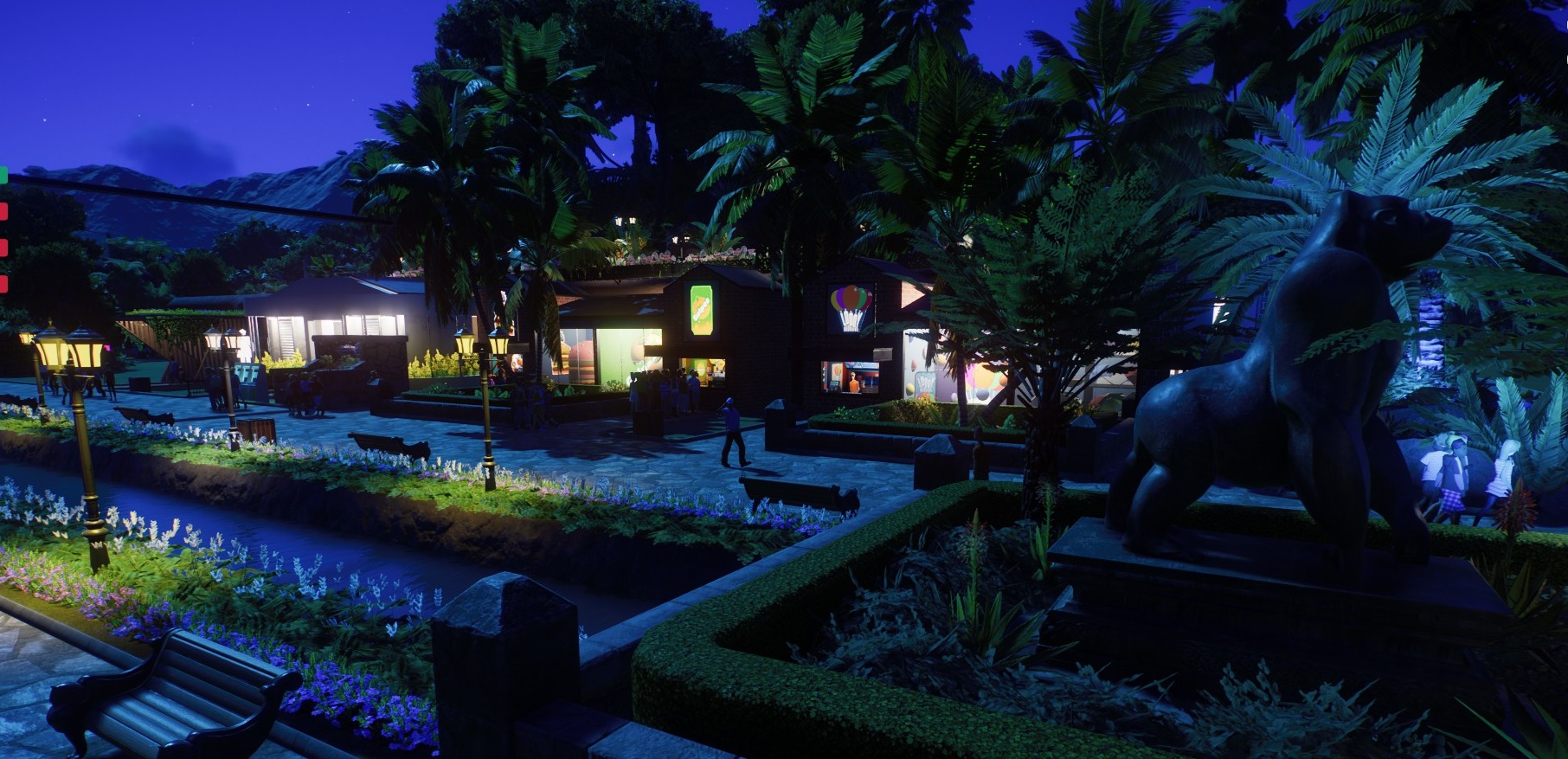
Night view
Part of the main boulevard in Buddy’s Tropical Paradise, viewed at night. Players are responsible for everything you see here — lighting, shops, flowers and plants, benches, waste baskets and more.

Asian section
Shops and a monorail station in an unfinished Asia-themed area of the zoo.

As in real life, the game has you source animals from an international pool, with information on breeding and genetics so you can contribute to conservation. When you adopt animals, their first stop is the veterinary facilities for examination, then quarantine. When they pass quarantine, you can have your staff release them into their enclosures.

It took me several hours to familiarize myself with the basics, design an entrance and a main boulevard for the guests, create some tiered gardens with eateries and shops, and get my jaguar and orangutan exhibits up and running.

My monorail currently runs out of track a quarter of the way through the park, and my river boat ride looks pretty cool, with dense jungle, towering trees and the ruins of Mayan temples not far from shore, but completing it will require appropriate barriers to keep the animals in as well as building out more scenery.

Jaguar habitat
A jaguar in her habitat.

I’ve got my sights set on an elephant exhibit next. It will be necessarily huge, so it’s good to reserve the land early and plan smaller exhibits and facilities around it. I’d also like to put the elephants, lions, zebra, giraffes etc into one Africa-themed section of the park, while the tigers, giant pandas and snow monkeys will be housed in an Asia-themed section, with buildings that reflect the architectural styles of countries like Japan and China.

There are also aquatic exhibits, animals for your own reptile house and aviaries. Those enclosures are more complex than the relatively straightforward orangutan exhibit, for example, so I’ll have to spend some time figuring out what makes a good home for peacocks, sharks and komodo dragons.

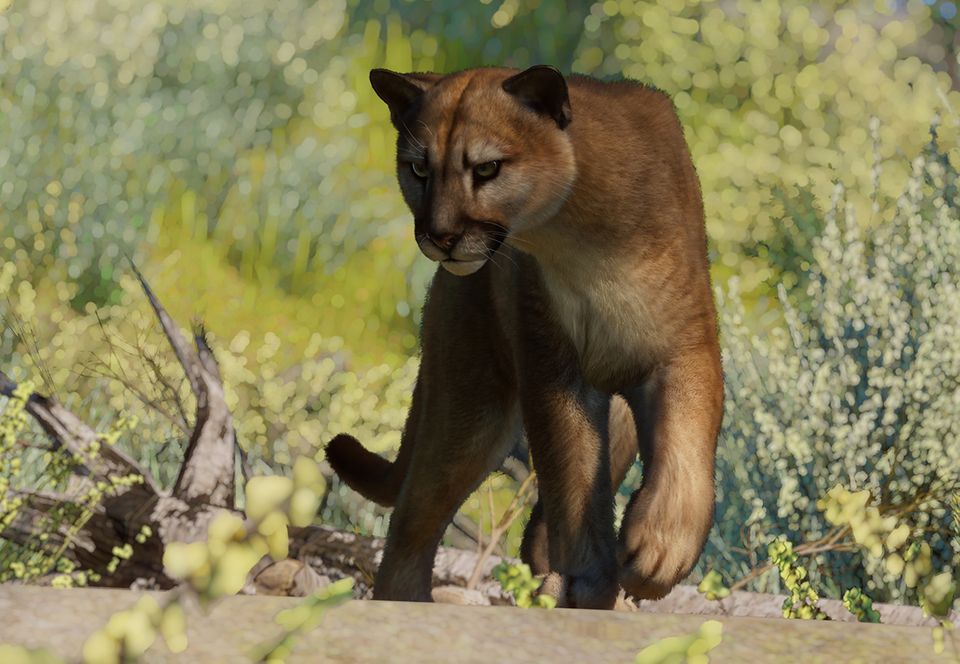
So far I’ve resisted the temptation to make one giant felid park, with snow leopards, pumas and cheetahs joining the tigers, lions, jaguars and others. Of course I did name it Buddy’s Tropical Paradise, so I may be forced down the all-cat road if Bud gets his say.

Cougar

Planet Zoo is not a traditional video game. There are no winners or losers, and there’s no “end state” unless you intentionally include one.

It’s more relaxing and much slower-paced than your typical game, and it’s a great feeling when you’ve managed to take something from your imagination and perfect the design. When you want to check your progress or just admire your own work, you can set the camera to follow guests and watch as people stroll through your zoo, taking in the sights and sounds.

In that sense it’s more like a virtual model train set or living diorama. You can load up the game and tinker with your zoo when you’ve got a spare 15 minutes, or spend a few hours getting absorbed in the finer details of how to keep pangolin and red pandas happy.

Planet Zoo is appropriate for all ages, although its depth and complexity would probably be a lot for younger kids. In that case, it’s probably best to have an adult guide them so they understand the game is built on interlocking systems: exhibits need power and water, shops need staff, veterinary surgeries need veterinarians and so on.

It’ll have enormous appeal to kids who enjoy Lego, Minecraft and other building games, so if you’ve got a little builder in your life, this could be a good fit. But make no mistake, there’s a lot here for adults to enjoy too.

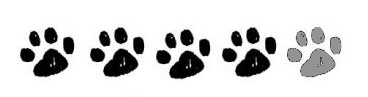
PITB verdict: Four out of five paws!

Paw Rating

The only thing keeping Planet Zoo back from a five-paw rating is the DLC (downloadable content) scheme, which requires users to pay extra for certain “packs” containing extra animals, scenery pieces and scenarios. That’s a problem plaguing the larger video game industry, but if you wait for a sale, the normally $44.95 game can be had for as low as $11.24 on Steam. DLC is likewise discounted. Steam’s summer sale is a great opportunity to get games like this for a fraction of their normal price. This year’s summer sale is scheduled for June 27, though it’s possible Planet Zoo could be put on sale before then as well.