It’s International Cat Day, which means you should totally do awesome stuff for your cat.
Hello there, PITB readers! I have taken over the blog from my inept human on this most auspicious of days, International Cat Day, to offer some great suggestions on how to honor your feline overlord!
Let’s get right into it, shall we?
10) Human snacks: Let’s be serious here for a moment. I’m sick of getting the same old crunchy treats, meaty sticks, soft Buddy Biscuits, Churus and party mix. I want cheese! I want filet mignon! I want roast turkey! I want a cheeseburger! Day after day we have to sit here, our mouths watering as you humans stuff your faces with all sorts of food we would love to eat. Well, today’s the day. Start cookin’, servants!
Yes! More cheese, hold the lettuce and tomatoes. Credit: Juan Santos/Pexels
9) Roombas. That’s right. It’s 2024 and I still don’t have a Roomba. I’m very angry about that. When do I get my mighty steed? Let it be today!
8) Catnip and silvervine. Sure, we get these on other days, but this day absolutely must not go by without you giving us at least a few doses of the good stuff. Hurry up! I need to get my fix!
7) Sweet cat drip that shows you’re owned by a cat. My Big Buddy just got two t-shirts. One shows a roaring jaguar with the word “Savage,” because I am savage, and the other is a kitty samurai with a cool sword. Aside from the fact that this is premium drip, everyone will know that you answer to a fluffy, benevolent overlord back home. That’s what’s important.
The drip.
6) A throne. I’ve wanted a throne since I was a kitten. It doesn’t need to be an Iron Throne with the melted swords of everyone I’ve conquered, a la Game of Thrones. It can be something humble, made of gilded metal, velvet cushions and maybe a lion crest or cool tiger heads on the paw rests. I’m not picky as long as it looks awesome. What’s important is the symbolism and comfort.
5) Hire a mariachi band to parade through the streets hoisting an image of your cat, performing songs in your feline overlord’s honor. This is another humble offering that says “I serve a cat, and I’m proud of it!” When people ask what the hell is going on, hand them Cuban cigars and say “We are celebrating el jefe!” They’ll know who you mean.
“We sing of the great, wise, handsome and meowscular Buddy the Cat!”
4) Hire a portraitist to paint your kitty. Again, it doesn’t have to be extravagant. As a humble cat, I don’t mind being portrayed as a naval commodore, a king, a great warrior of world renown, or a massive tiger. The important thing is that it looks cool and you hang the picture above the couch in the living room. Get on it, human.
3) Massages. Schedule them throughout the day, sprinkling them around naps and meal times. Do you know how satisfying it is to enjoy a nice massage after Food O’Clock? I like to have my chin rubbed and the top of my head scratched while being told what a good, handsome, awesome, amazing, handsome, meowscular feline I am.
2) Toys. Not just for Christmas, you know. In fact, go ahead and consider this Kitty Christmas In Summer. Wand toys, track toys, new boxes, those little plastic ring things from milk gallon containers, stuffed animals that we can hunt and murder like the apex predators we are. You don’t have to wrap them, just bend the knee and present them as tribute. You’ll have our thanks, and our favor.
1)Hang out with us! It really is that simple. The most important thing you can do on International Cat Day is spend time with your cat! Many of the above suggestions fall under this category, including playing with us, giving us massages and reading epic poems you’ve composed about us. Personally I like settling down to nap on top of my Big Buddy after a massage. There’s something about having my chin scratched that makes me start yawning, and there’s no better place to nap than on my human, where it’s safe and there’s body heat and he can’t get up to use the bathroom because it would disturb me. That’s love.
I hope these suggestions are helpful! I’ve tried to list really easy, basic, humble stuff, but if you feel like constructing a 426-room cardboard box castle, well, I won’t stop you. In fact, that would be pretty cool. But like I said, the most important thing is that we get to hang out with you. And eat filet mignon.
Rumors of big cats in the UK countryside have persisted for years, with witness claims from all over the country. The latest reported sighting was in northern England.
People who really want to believe big cats are running around the British countryside are ecstatic with the news that a DNA sample from a dead sheep reportedly tested positive for panthera DNA.
The DNA sample was swabbed from a freshly-killed sheep carcass “at an undisclosed upland location” in Cumbria, northwest England, a witness told BBC Wildlife. It’s exactly the kind of countryside where people have been reporting big cat sightings for years, although the sightings aren’t confined to that area, with other witnesses claiming they’ve seen large felids as far as the UK’s southern coast.
Sharon Larkin-Snowden, who lives nearby, told a big cat enthusiast podcaster that she disturbed the “big cat” while it was feeding. The startled felid took off and jumped a stone wall, leaving the partially-eaten sheep, Larkin-Snowden said.
“I assumed at first it was a sheepdog, but then I did a double take and realised it was a black cat,” she said. “It was big – the size of a German shepherd dog.”
“I could really go for a Chinese! Anyone else wanna go for a Chinese?”
A swab was collected — the details are sketchy on who did the collecting and when exactly they submitted the sample — and sent to the University of Warwick’s Robin Allaby, a professor of life sciences.
Allaby, whose specialty is studying the genetics and evolution of domesticated plants, began offering a DNA testing service for the public some 12 years ago in response to the persistent rumors of big cats in the countryside. In the past samples have yielded DNA from foxes and other animals, but Allaby says this one matched the genetic profile of a big cat, although he cannot say which species.
It’s not unusual for a DNA sample to match to a genus, in this case panthera, but not to a specific species if the sample was degraded or only partial.
Rick Minter, who has made a career of tracking alleged big cat sightings across the UK, says he believes the mystery cat is a leopard. Leopards and jaguars are the only two big cats who have true melanistic color morphs — meaning some of them have virtually all-black coats — and Minter says he believes it’s more likely the former.
Neither are native to the UK or Europe: Leopards range from Africa to Asia, while jaguars range from south to Central America, with some populations edging slightly into the US.
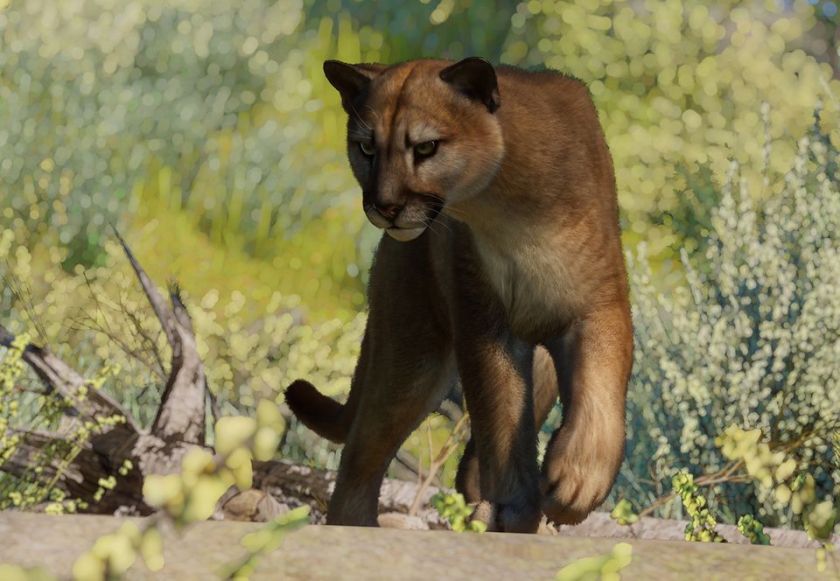
Britain’s big cat enthusiasts say they believe pumas are among the wild cats living in Credit: Jean Paul Montanaro/Pexels
Why isn’t a DNA match evidence of big cats in the UK?
If the lab results say the sample came from a big cat and that result is consistent with the witness account, what’s the problem?
Chain of custody, for one. We don’t know anything about who took the sample, where it was taken, the time elapsed between the kill and the sample swab, or who may have handled it before it reached Allaby.
In fact, we don’t know if there was a dead sheep to begin with.
If I were a prankster living in the UK, for example, and was friendly with a keeper at a local zoo, I could have the keeper swab an animal, bag it and hand it over to me. There are dozens of conceivable ways a person could obtain a sample even if they don’t know someone who works in a zoo.
“So we left the sheep there at the edge of the field and made sure the lady saw us before we buggered off over the fence. Next day, we was in all the papers! A right laugh that was, mate.”
The problem is the provenance of the sample and what happens to it between the time it’s collected and ends up in the hands of a scientist like Allaby.
This is why chain of custody is paramount in criminal trials, and why there must be a complete record of who handled samples from collection in the field to the lab. Even in the absence of foul play, an improperly handled sample can be contaminated and render test results meaningless.
It’s not a matter of trust, it’s the simple fact that extraordinary claims require extraordary evidence, as Carl Sagan was fond of saying. Short of capturing one of these animals or getting clear, indisputable footage, any other claimed proof has to be ironclad.
Speaking of footage, that’s another issue. It’s extremely difficult to believe that a breeding population of big cats can exist in the UK countryside for years or even decades without a single definitive photo or video. The UK’s rural areas may not be blanketed by CCTV cameras like London, but they’re not the Amazon either. People live, work and farm in those regions, cameras are more ubiquitous than ever, and farmers take steps to protect their livestock, including installing cameras.
Big cats don’t just feed and vanish into the mist. They mark trees with their claws and urine, they leave distinct pug marks, they leave distinctive bite marks on their prey, and they make noise. To paraphrase one naturalist, when big cats are living nearby, you know it. Even if you don’t see them, signs of their presence are ubiquitous.
To accept the claims of tigers, leopards and pumas gallavanting in the fields around small towns and villages, we’d have to suspend disbelief or conclude that these are some sort of previously unknown ghost cats who can fade in and out of the physical plane.
I’m not a skeptic to be a killjoy. If big cats really were running around the UK, that would be a hell of a story. But we’d still need convincing evidence, and this isn’t it.
Have you ever wanted to own or design your own zoo?
Visitors to Buddy’s Tropical Paradise are greeted by friendly staff who man the entrance, a broad vertical garden shaped like an arch that straddles the main path leading inside.
When they walk through the gate a new vista opens up before them: tiered tropical gardens, waterfalls, and wide boulevards lined with palm trees and flowers. They hear the rumble of big cats calling to each other in the distance and monkeys shrieking as they fling themselves from branch to branch.
Welcome to Buddy’s Tropical Paradise!
A monorail carries passengers above, its tracks looping over animal enclosures and threading tunnels that emerge amid the terraced jungle, eateries and souvenir shops.
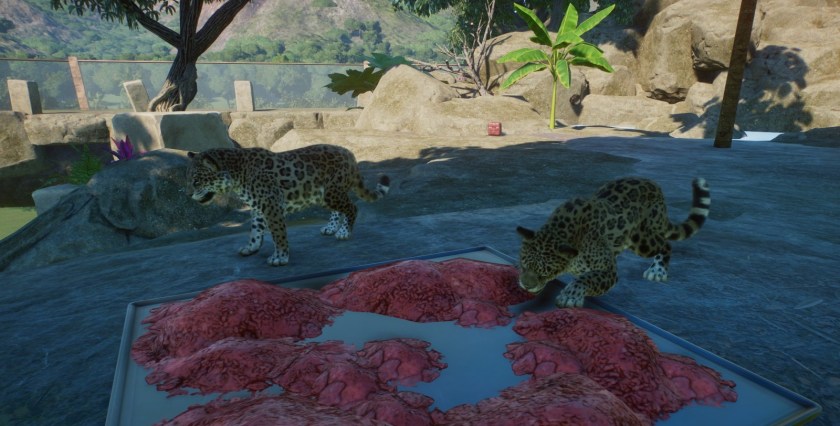
And straight ahead, the first exhibit: a sprawling habitat occupied by jaguars who are enjoying some yums and will probably have a nap in a few minutes.
Buddy’s Tropical Paradise doesn’t exist in the real world, of course. It’s my first attempt at fully functional, guest-attracting park in Planet Zoo, a simulator that allows you to do practically anything you can think of.
You can design your own habitats, enclosures, buildings and scenery. Fancy a monorail that laps the entire zoo? You can do that. Picturing a 1940s style Tarzan-themed jungle boat ride where visitors can see caiman, capuchin monkeys and jaguars up close? Start carving up the river, my friend!
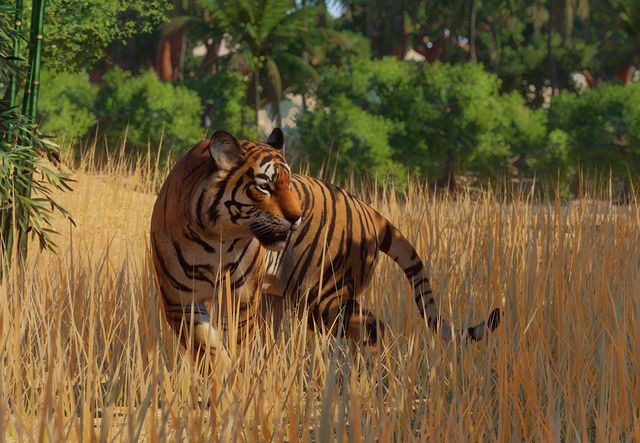
A Bengal tiger stalking the tall grass in Planet Zoo.Lunch time in the jaguar habitat, followed by the all-important nap time.
As the zoo’s architect, you’re responsible for everything. You’ll need veterinary facilities, animal quarantine, keeper huts. You’ll need to staff your park with veterinarians, keepers, security officers, maintenance staff and mechanics.
And don’t forget the vendors to run the souvenir shops and man the food stalls, where your guests can grab hot dogs or cool off with slushies on a hot day.
A suitable home for your animals
Designing a habitat is about a lot more than reserving space for your animals. You’re tasked with picking the right barriers, mindful of which species can climb or leap great heights. A good habitat should reflect the animal’s home in the wild with appropriate flora, temperatures the species thrives in and a feeding system that mimics the way they’d naturally obtain food.
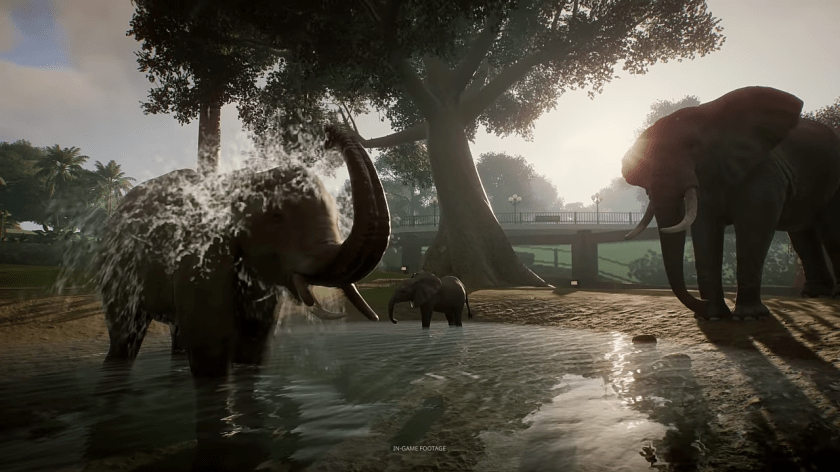
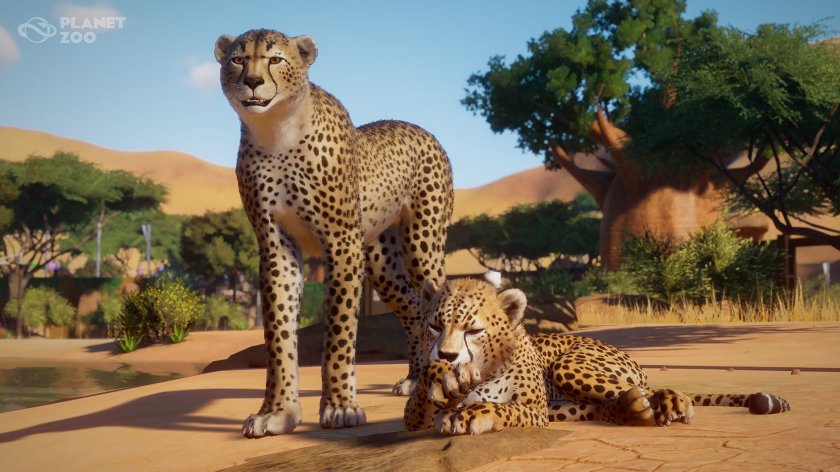
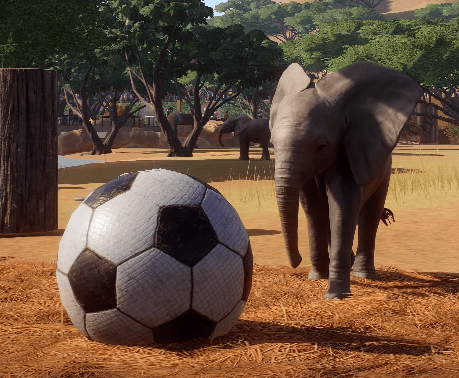
Elephants cool off in their enclosure in Planet Zoo. Every habitat must be designed with the right atmosphere, flora, terrain, shelter and enrichment appropriate for the species it houses.A wide view of my orangutan habitat. Two orangutans are at the base of the stone steps in the distance.Cheetah sisters.
Then there’s enrichment. Trees for your monkeys to climb, ponds for your tigers to take a dip, bushes for your elephants to strip. Different species enjoy different toys and challenges. An ice block with meat in the middle would hit the spot for carnivores on a hot summer day, but your pandas will want bamboo.
Designing habitats and getting them just right is not only fun, it’s an intuitive way to learn about the needs of individual species and how they live.
The leopard learning incident
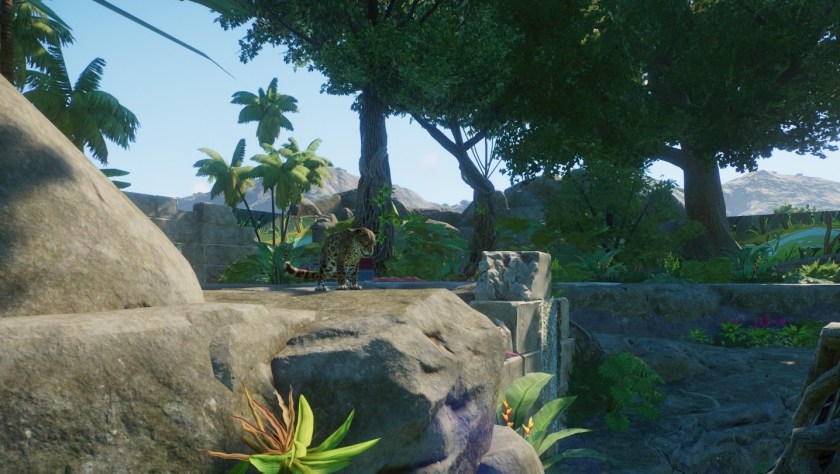
My first stab at building a leopard enclosure was a disaster. It looked pretty enough with its Hindu-inspired temple architecture and pond. There were plenty of scratching posts and trees that could withstand claws.
I installed a sprinkler to help the big cats cool off, designed a series of raised platforms for them to climb, and scattered enrichment items all over the habitat. The leopards had balls to bat around, boxes to sit in, rubbing pads, logs and rocks to climb, and plenty of cover and shade.
But when I had the leopards brought into the zoo, through quarantine and into their exhibit, I realized you can’t just design a home for animals from an aesthetic perspective. I’d used several plant and tree species that weren’t native to leopard habitats, the terrain was wrong and I hadn’t paid any mind to ambient temperature.
Making those mistakes was truly educational. When your animals aren’t happy in Planet Zoo, protesters show up, and it’s up to you to read the alerts about where you went wrong and how to remedy your mistakes. It’s an intuitive and fun way to learn about each species and the environments they thrive in.
The escaped jaguar
I’m still learning the ropes, although I do have a basic knowledge of the way the game is designed thanks to some time playing Frontier’s theme park building game, Planet Coaster. The first time I tried to build a jaguar enclosure, I forgot to wall off a viewing cave with protective glass, which my guests did not appreciate.
Even though jaguars don’t like to confront humans, a big cat is a big cat, and the game sent me urgent warnings as people ran for the exits. When I found the escaped jag, he was lounging not far from his enclosure, watching people freak out.
Enrichment is a key aspect of habitat design. Toys, puzzles, obstacles, climbing platforms for arboreal species, ponds for animals who like to get wet — they’re all necessary to keep animals healthy and happy.
In real life it’d be a disaster, but I was able to revert to a previous save, make sure the viewing cave was sufficiently protected, and this time around I placed only two jaguars — a male and a female — in the large enclosure.
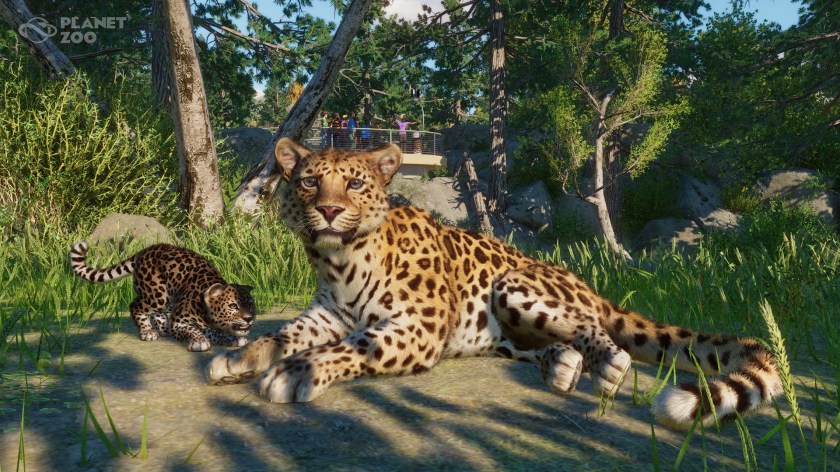
After a while, while I was tinkering with an exhibit meant for capuchin monkeys, the game sent me an alert: the female jaguar was pregnant! She gave birth to two energetic, curious cubs who are currently having fun chasing each other around the enclosure and going for dips in their pond.
Part of the main boulevard in Buddy’s Tropical Paradise, viewed at night. Players are responsible for everything you see here — lighting, shops, flowers and plants, benches, waste baskets and more.Shops and a monorail station in an unfinished Asia-themed area of the zoo.
As in real life, the game has you source animals from an international pool, with information on breeding and genetics so you can contribute to conservation. When you adopt animals, their first stop is the veterinary facilities for examination, then quarantine. When they pass quarantine, you can have your staff release them into their enclosures.
It took me several hours to familiarize myself with the basics, design an entrance and a main boulevard for the guests, create some tiered gardens with eateries and shops, and get my jaguar and orangutan exhibits up and running.
My monorail currently runs out of track a quarter of the way through the park, and my river boat ride looks pretty cool, with dense jungle, towering trees and the ruins of Mayan temples not far from shore, but completing it will require appropriate barriers to keep the animals in as well as building out more scenery.
A jaguar in her habitat.
I’ve got my sights set on an elephant exhibit next. It will be necessarily huge, so it’s good to reserve the land early and plan smaller exhibits and facilities around it. I’d also like to put the elephants, lions, zebra, giraffes etc into one Africa-themed section of the park, while the tigers, giant pandas and snow monkeys will be housed in an Asia-themed section, with buildings that reflect the architectural styles of countries like Japan and China.
There are also aquatic exhibits, animals for your own reptile house and aviaries. Those enclosures are more complex than the relatively straightforward orangutan exhibit, for example, so I’ll have to spend some time figuring out what makes a good home for peacocks, sharks and komodo dragons.
So far I’ve resisted the temptation to make one giant felid park, with snow leopards, pumas and cheetahs joining the tigers, lions, jaguars and others. Of course I did name it Buddy’s Tropical Paradise, so I may be forced down the all-cat road if Bud gets his say.
Planet Zoo is not a traditional video game. There are no winners or losers, and there’s no “end state” unless you intentionally include one.
It’s more relaxing and much slower-paced than your typical game, and it’s a great feeling when you’ve managed to take something from your imagination and perfect the design. When you want to check your progress or just admire your own work, you can set the camera to follow guests and watch as people stroll through your zoo, taking in the sights and sounds.
In that sense it’s more like a virtual model train set or living diorama. You can load up the game and tinker with your zoo when you’ve got a spare 15 minutes, or spend a few hours getting absorbed in the finer details of how to keep pangolin and red pandas happy.
Planet Zoo is appropriate for all ages, although its depth and complexity would probably be a lot for younger kids. In that case, it’s probably best to have an adult guide them so they understand the game is built on interlocking systems: exhibits need power and water, shops need staff, veterinary surgeries need veterinarians and so on.
It’ll have enormous appeal to kids who enjoy Lego, Minecraft and other building games, so if you’ve got a little builder in your life, this could be a good fit. But make no mistake, there’s a lot here for adults to enjoy too.
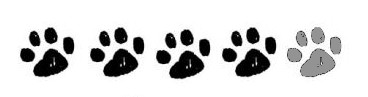
PITB verdict: Four out of five paws!
The only thing keeping Planet Zoo back from a five-paw rating is the DLC (downloadable content) scheme, which requires users to pay extra for certain “packs” containing extra animals, scenery pieces and scenarios. That’s a problem plaguing the larger video game industry, but if you wait for a sale, the normally $44.95 game can be had for as low as $11.24 on Steam. DLC is likewise discounted. Steam’s summer sale is a great opportunity to get games like this for a fraction of their normal price. This year’s summer sale is scheduled for June 27, though it’s possible Planet Zoo could be put on sale before then as well.
The challenges of getting a lazy cat interested in play time and toys again.
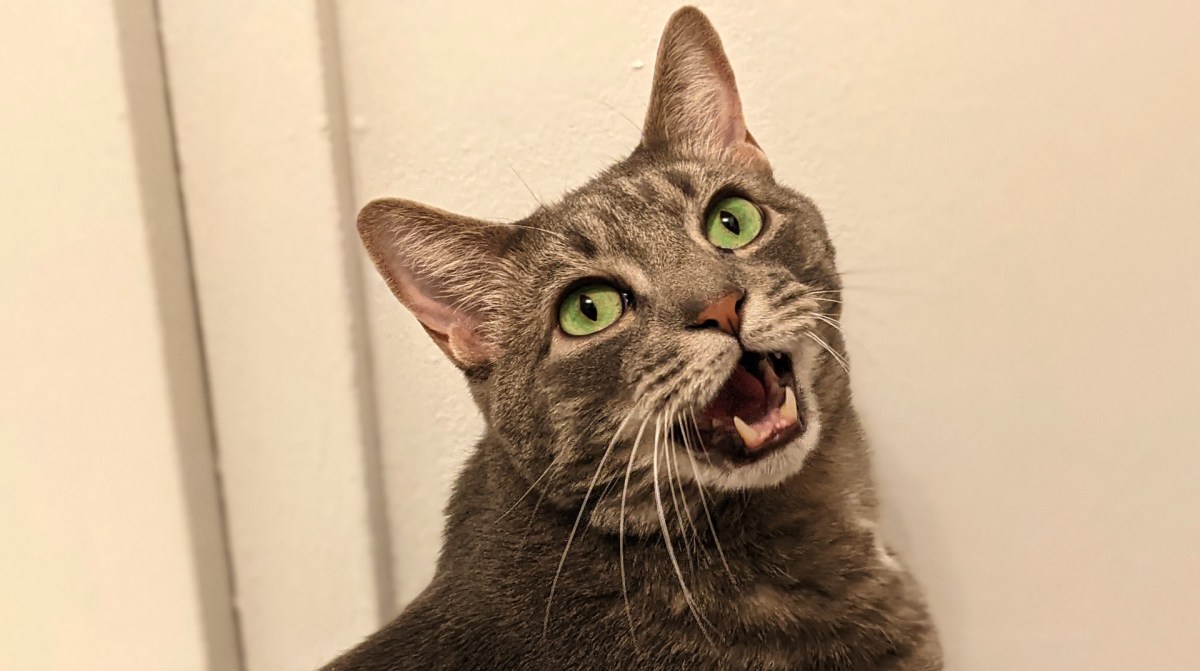
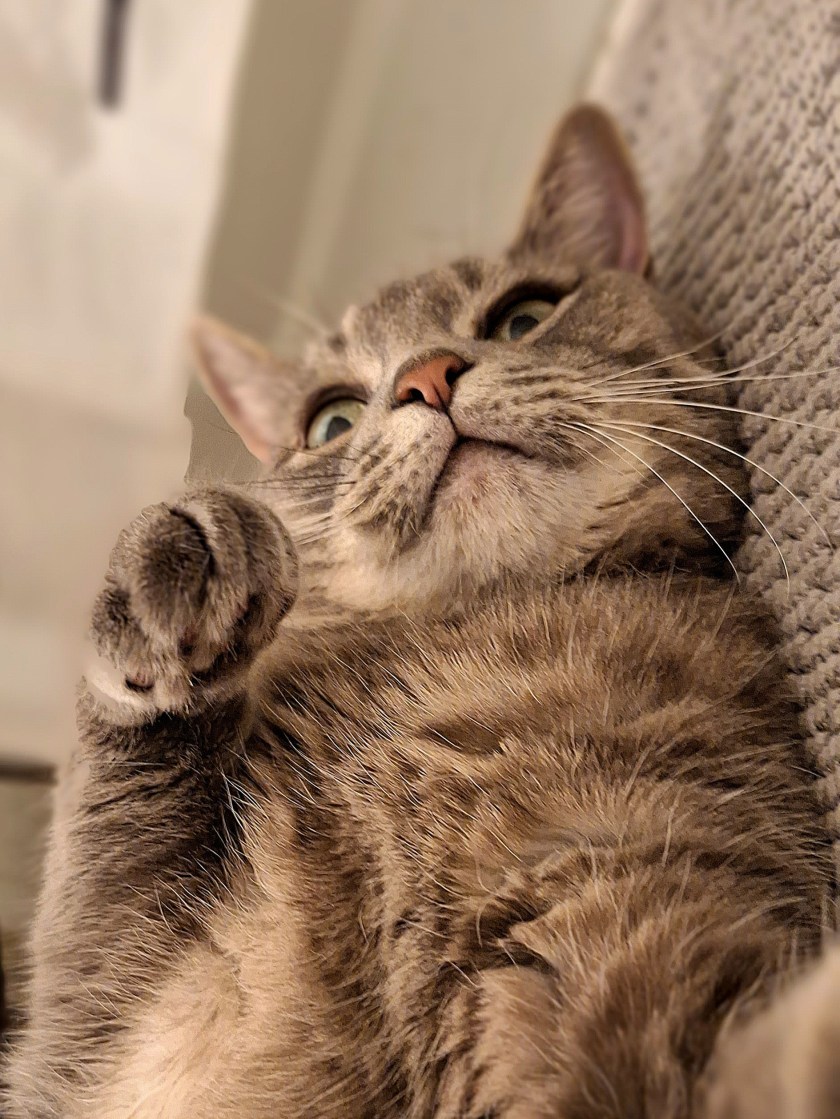
Buddy is friendly, outgoing and incredibly vocal, but he’s always been a bit lazy.
His preferred method of getting down from the couch isn’t jumping — although he does jump sometimes — it’s slowly oozing off the cushion like he’s liquid, taking the path of least resistance and letting gravity do all the work until he drops down and lands with a “Mmmrrrrrppp!”
When we wake up, the first thing he does is demand a snack, then he lays down for First Nap, apparently because the act of chewing and swallowing is so demanding.
“Now’s an excellent time for a nap.”
While he used to chase the laser with a fury and jump several times his own height to paw at it — even after figuring out it’s light fired out of a pen held by me — nowadays he can’t be bothered. At best he halfheartedly chases it for a bit and then loses interest even though I make an effort to move the laser like prey, as I do with his wand toys.
Worst of all, catnip makes him even lazier because he doesn’t just sniff the damn stuff, he eats it. I try to get him interested in his favorite wand toy when he’s buzzing on a heady combination of ‘nip and silver vine, but he won’t chase it. He just rolls onto his back and paws at it lazily, maybe getting in a few “rabbit kicks” if he’s feeling feisty.
All of this would be funny if he wasn’t about to turn 10 years old and if he didn’t tip the scale at about a pound and a half to two pounds above his normal body weight when the vet weighed him a few months ago.
“Hey fat boy!” I tell him, getting the familiar “Brrrrrr!” in response. (He’s a big time triller. Feline linguists estimate at least 60 percent of the Buddinese dialect consists of trills of various pitch, length and intensity.)
Fat Boy lost most of the excess weight during a particularly brutal stretch when he screeched at me for snacks constantly and I had to deny him most of the time. At least with kids you can explain things to ’em. I’ve got no way of communicating to the Budster that he’s a Chubster.
Since then he’s put some of the weight back on, so I’ve gotta do something.
Here’s my plan:
Training him to do new tricks. He already knows come, stop, sit and high-five, so we’re gonna have to try something new, like teaching him to roll and maybe teaching him to jump on my shoulder and “ride” around with me. Training is mentally stimulating, it should be fun for him, and it lays the groundwork for more challenging tricks.
A cat obstacle course! I can rig something up with his tunnel, some boxes and some “hazards” that he must traverse in order to get his paws on some catnip.
Snacks dispensed via puzzle feeder only. None of that free-feeding when he gavones the stuff down like he’s starving.
Rotating toys. Admittedly I haven’t been very good about doing that. Almost every guide mentions rotating cat toys so your little buddies don’t get tired of them.
A mirror so he can see how ripped chubby he’s gotten. He really needs to see himself loafing. It’s not pretty.
Okay that last one is a joke, mostly because I’m pretty sure he’ll just admire his “meowscles” in the mirror. Cats are masters of self deception. Bud is scared of rustling paper bags and absolutely terrified of vacuums, yet he still thinks he’s a hulking tiger. That’s impressive cognitive dissonance.
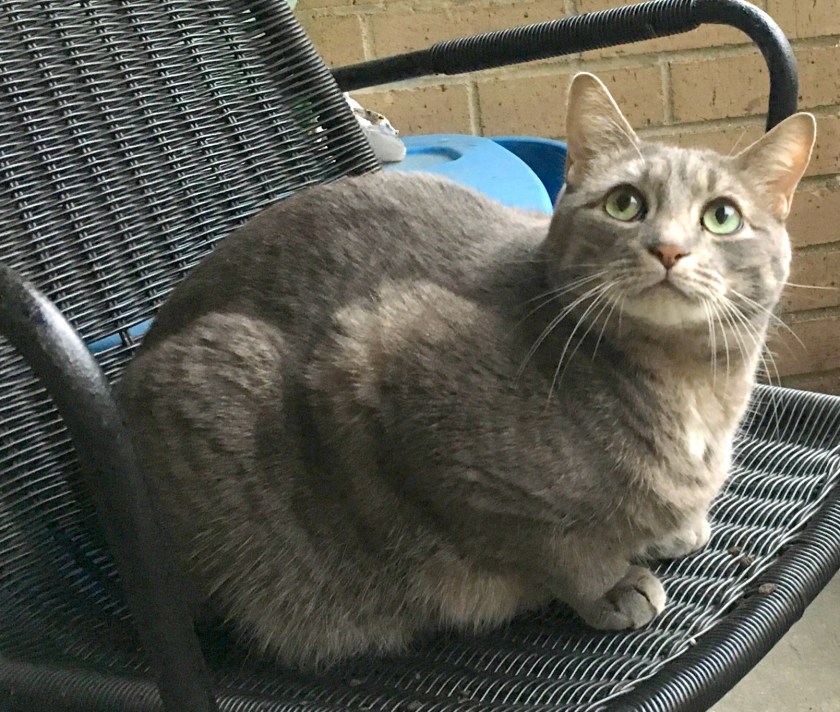
This is by far the fattest-looking photo of Buddy I could find. He’s in a super-meatloaf pose here, looking like a chonkmaster.
So we shall embark on this grand endeavor, and I’ll report back here to catalog successes and failures. Hopefully more of the former.
Buddy will always be like a baby to me, and I can’t quite wrap my head around the fact that he’s now a “senior” cat, but he is and it’s on me to make sure he remains active so he hopefully lives at least another 10 years in good health. There are many adventures yet to be had, many more schemes for world domination to hatch, and more turkey to eat.
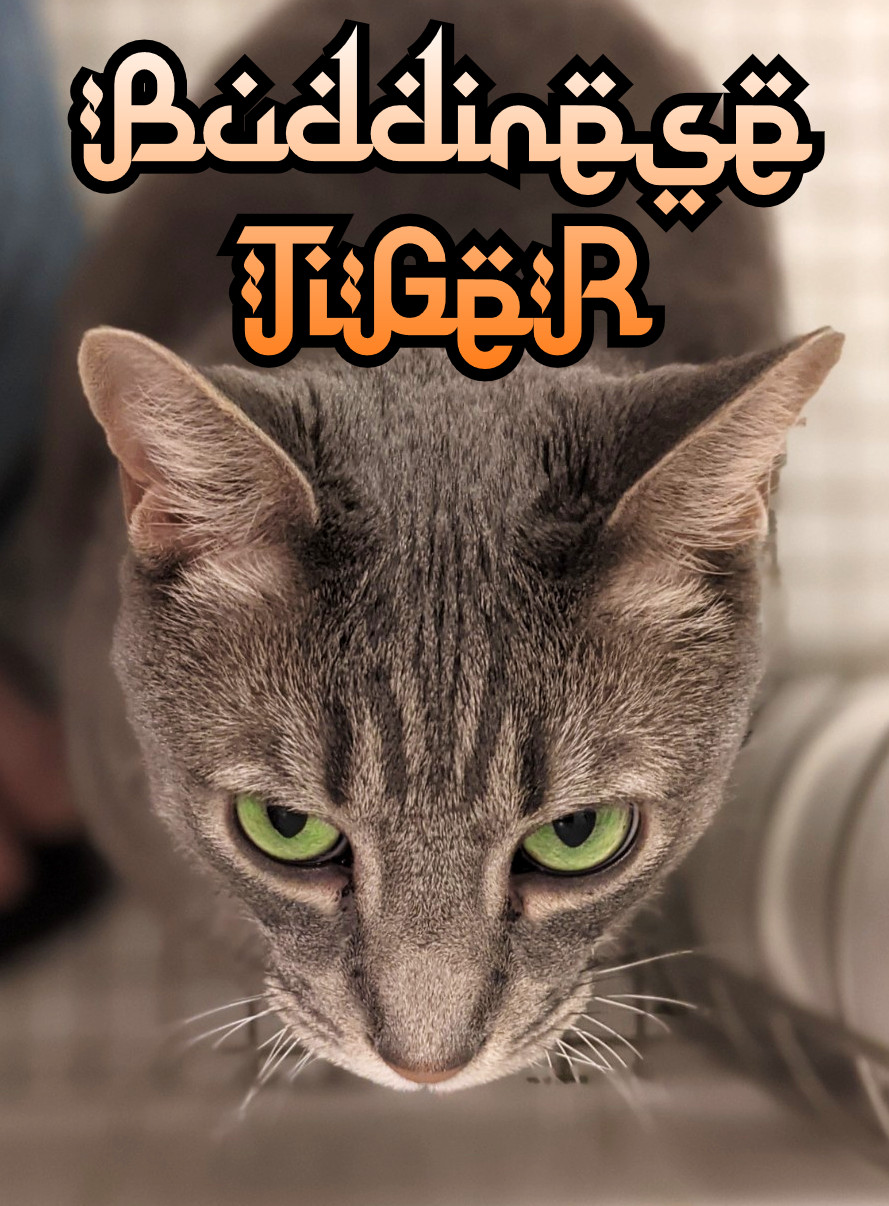
This momentous occasion marks only the second time PITB has participated in the daily writing prompt via WordPress, and the reason we’re participating is to bring more awareness to the meowscular and powerful Buddinese Tiger — and its threatened cousins, the majestic tigers, jaguars, lions and leopards.
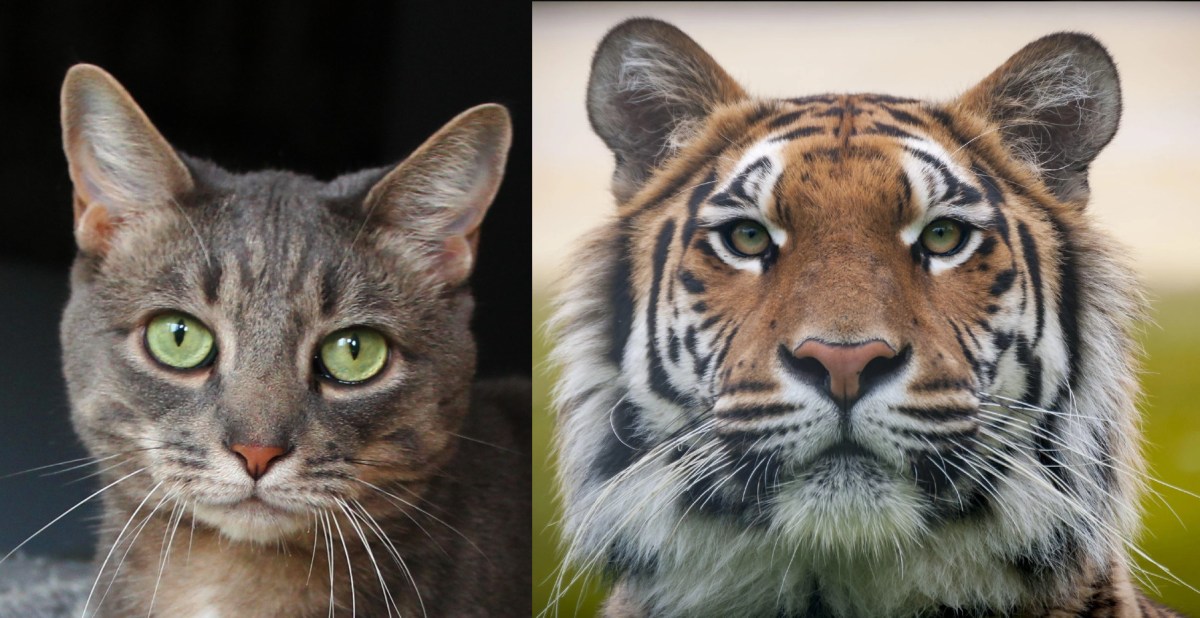
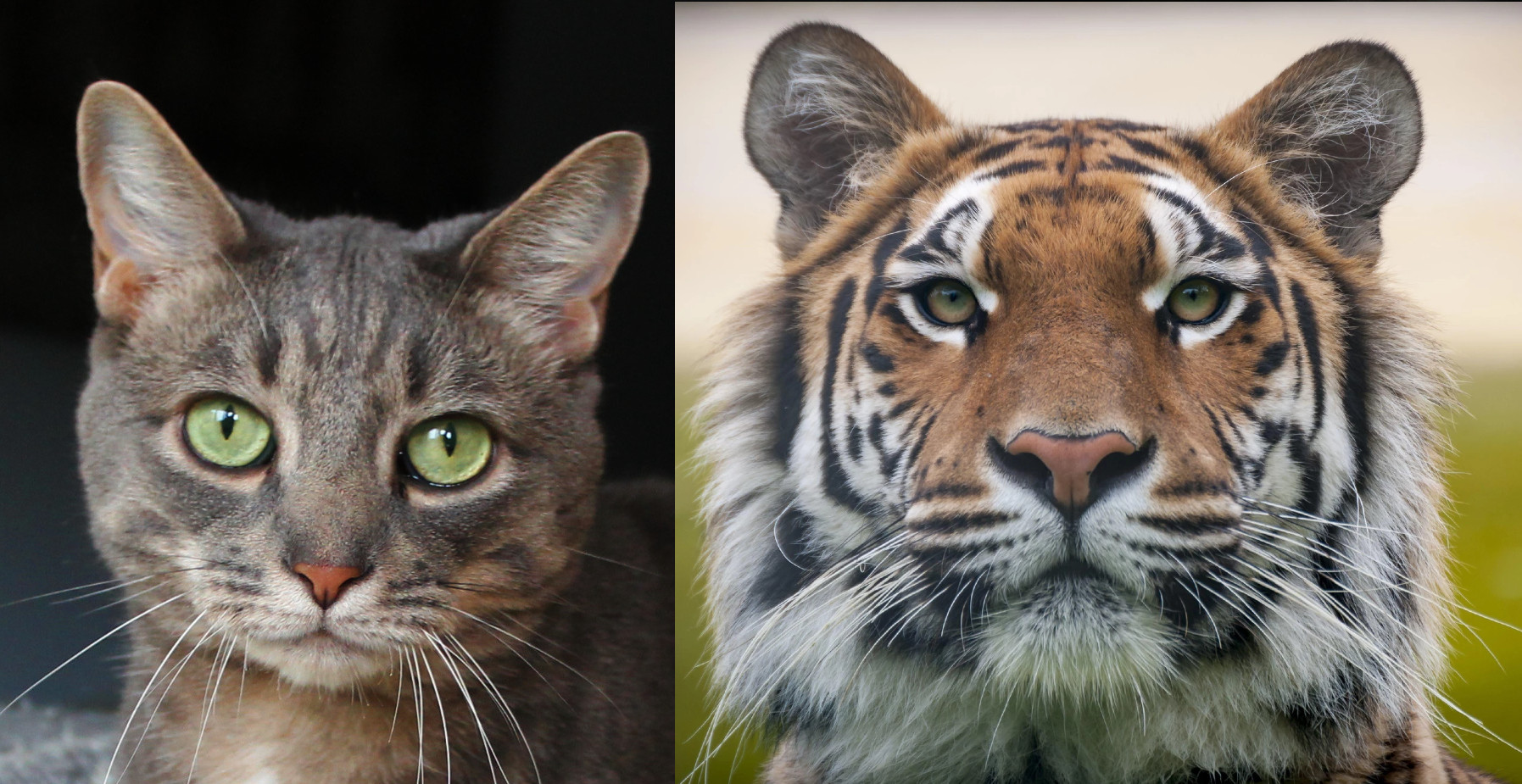
Known in scientific nomenclature as panthera tigris muscularis handsomus, the Buddinese Tiger is an apex predator who rules over his natural habitat, the living room, with an iron paw. No one is safe from the Buddinese Tiger’s charms or its rage when sufficient snacks are not provided.
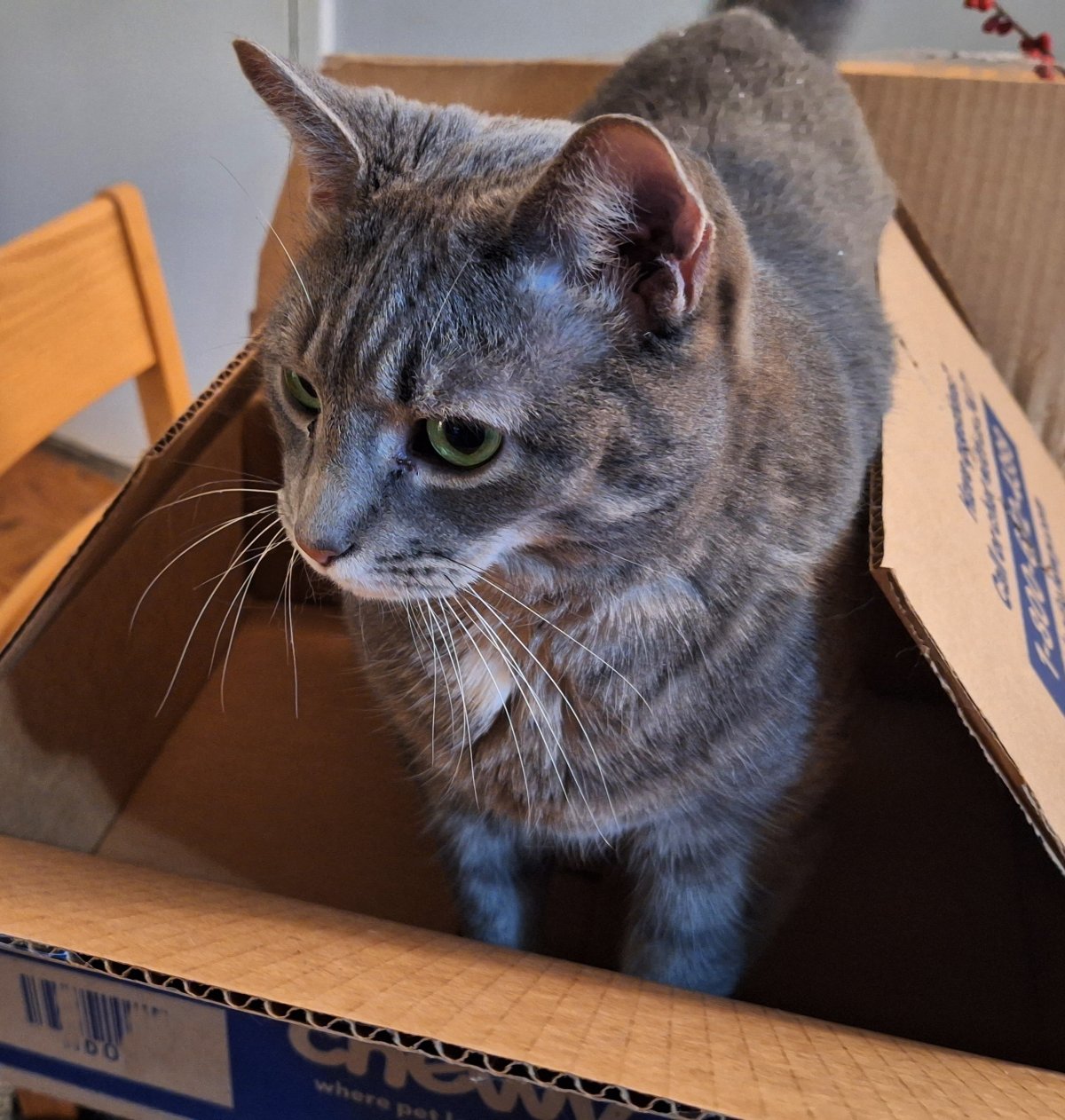
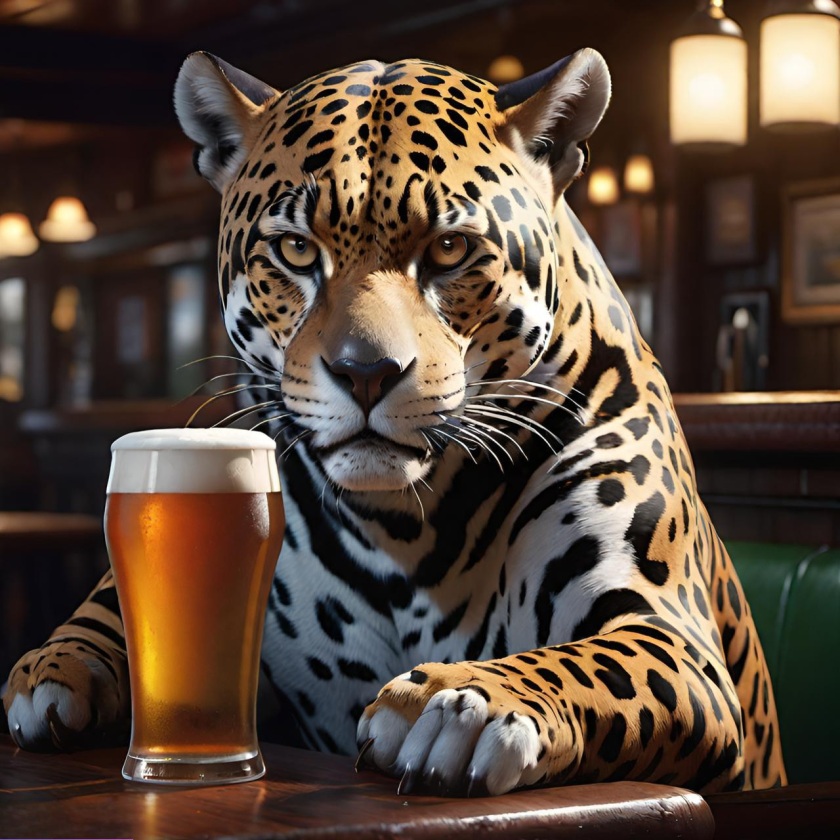
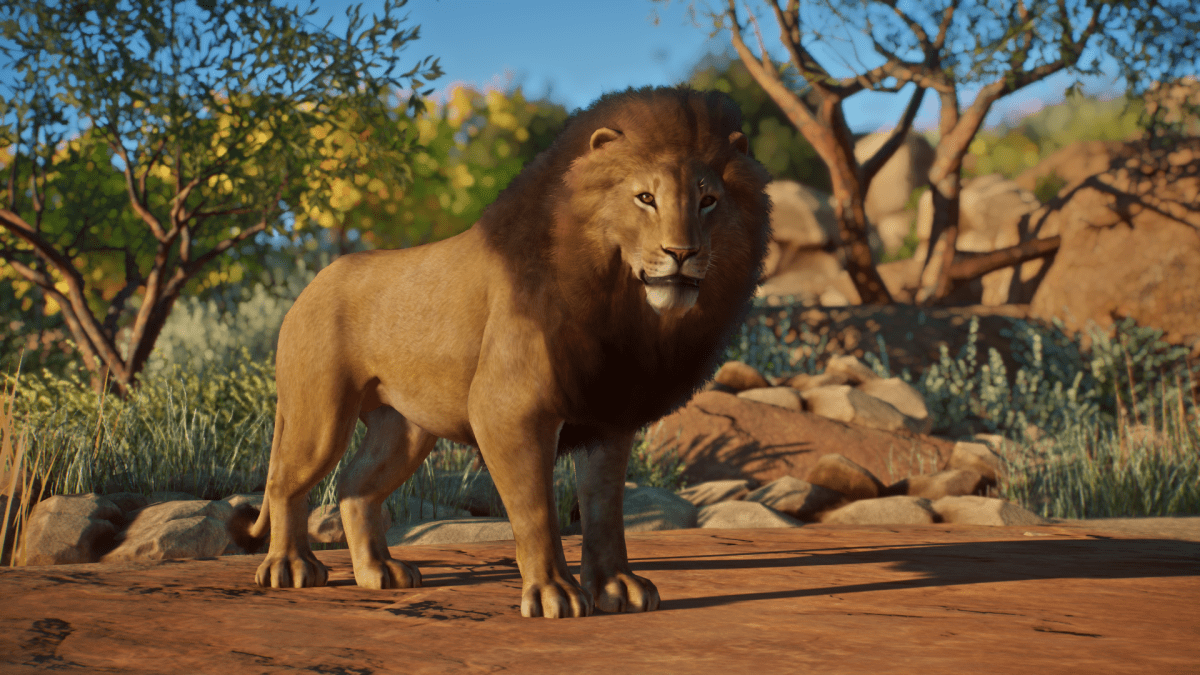
You can’t tell the difference, can you? I mean, they’re virtually identical!
All jokes aside, I’d compare myself to tigers and jaguars because they’re awesome and they’re my favorite cats, aside from the above-mentioned panthera tigris muscularis handsomus. Cats are solitary hunters, they don’t like to be disturbed when they’re sleeping, and they appreciate the value of a good nap as well as a good snack. They are creatures of extraordinary taste!
Most of all, we need more people to appreciate big cats because the future doesn’t look good for them if we don’t do more to save them. Although tiger numbers have rebounded somewhat thanks to concerted conservation efforts in places like India (Bengal) and Russia (Amur), they’re still extremely vulnerable to habitat loss, poaching and revenge killing by farmers and rural villagers who often blame the big cats for being cats and going after livestock.
Likewise, while jaguars were once the sole success story in the big cat world thanks to their isolation deep in the Amazon rainforest and their elusive nature, they face a massive threat to their existence from deforestation and from the Chinese presence in countries like Brazil and Peru, where Chinese nationals poach the majestic felids to fuel the destructive Chinese traditional “medicine” market.
Just as TCM has devastated tiger, lion, elephant, rhinoceros and pangolin populations, it’s moved on to jaguars. Even vast “tiger farms” in places like South Africa, which cater to canned hunts and the TCM market, aren’t enough to meet the demand for big cat parts for use in folk “medicine,” in which ground tiger bones, fur, claws and other body parts are included in various elixirs people believe will cure everything from baldness to sexual dysfunction.
Check out Panthera for more information on conservation efforts and how you can help.









 Pain In The Bud