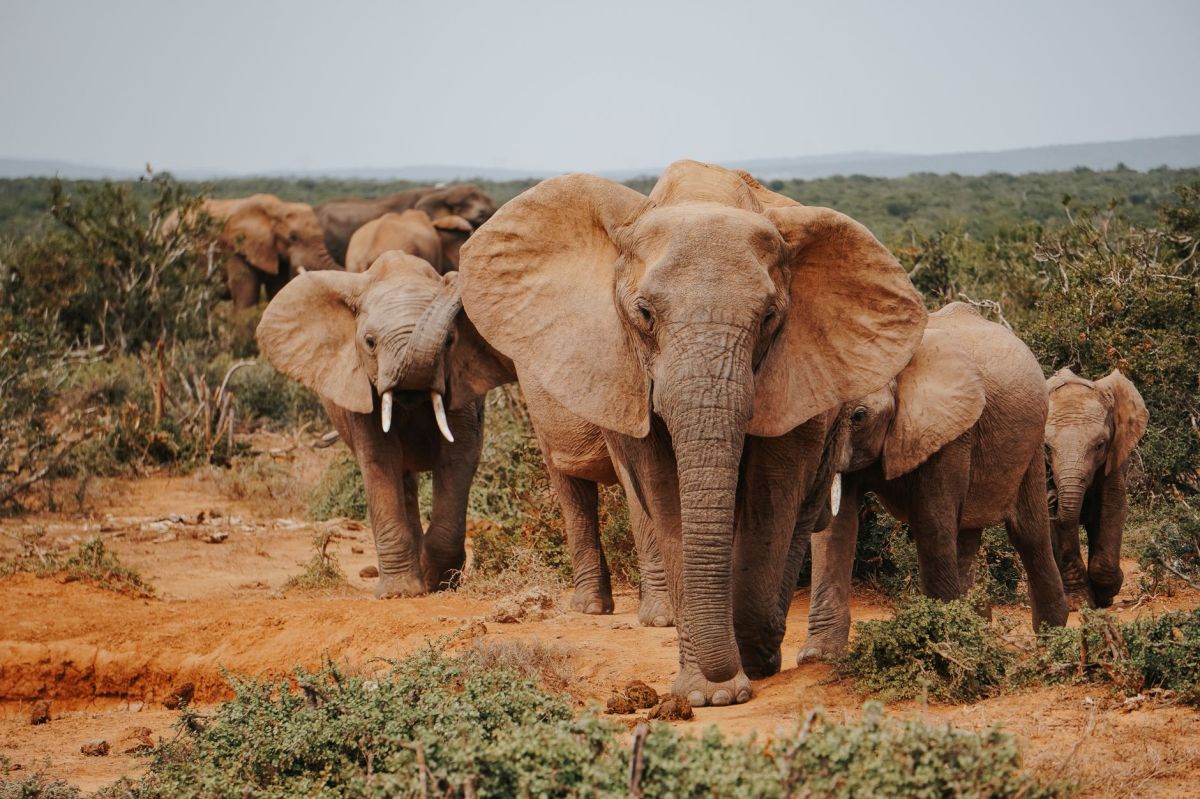
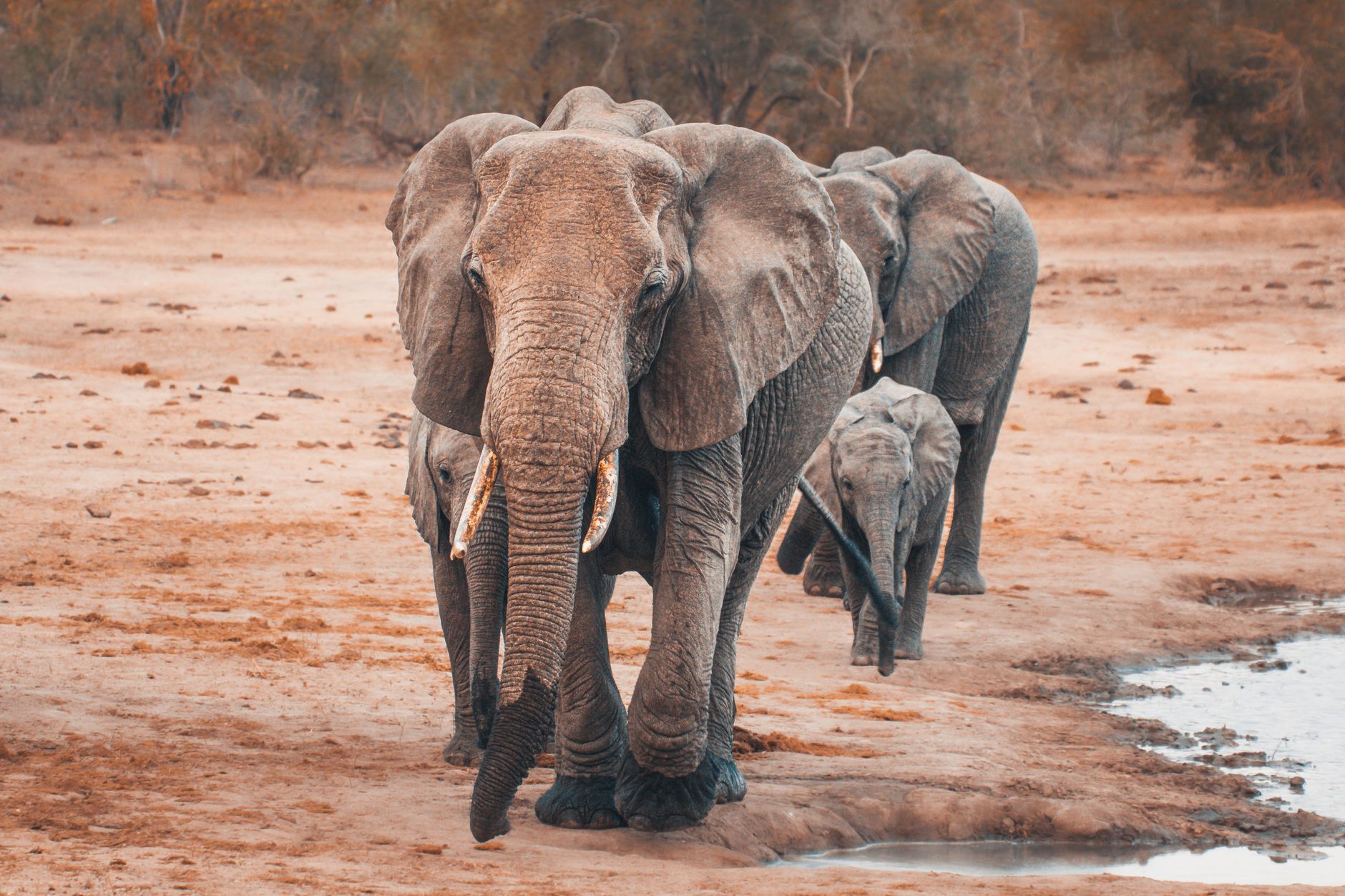
A poacher looking to kill a rhinoceros for its horn was trampled by elephants, whose fury was so great that they reduced him to “a very large bloodstain around the clothing he was in,” South African parks officials said.
Two men illegally entered Kruger National Park on Sept. 11 and walked six kilometers into the Pafuri area, a section on the far north end of the park that features diverse wildlife between two major water sources, the Limpopo and Luvuvhu rivers.
The men were tracking rhinos and were carrying high-powered rifles and an axe, SANParks spokesman JP Louw said. They did not realize that a herd of elephants was moving parallel to the rhinos toward the same water source, and when one of the poachers raised his rifle to line up a shot, the infuriated elephants charged him.
The surviving poacher ran in another direction. When he made it home and reported his partner was missing, he told police he heard the man screaming. He’s been arrested and faces charges of attempted poaching and illegally entering the park.
Rangers found the tracks left by the men and followed them to the site where the elephants charged. They had trampled the poacher so thoroughly that there was little left besides his pulped body and the remains of his clothes, authorities said.
Rangers also found a dead buffalo, which they believe the men killed before their fatal encounter with the elephants.
Rhinoceros horns can fetch about $13,500 from middlemen in South Africa, who then smuggle them into China where they can command as much as 20 times that amount. The demand comes from the traditional Chinese “medicine” market, where animal parts like horns and big cat bones are used in folk elixirs. People believe the elixirs can grant a range of supernatural powers, from immortality to restored “chi energy,” and some elixirs are sold as remedies for everything from common colds to viruses, gastrointestinal issues and baldness.
Traditional Chinese “medicine” is based on concepts invented in deep antiquity and targets a system of “meridians,” pathways said to exist in the body that practitioners claim are the conduits for chi energy.
Chi energy and meridians are both inventions of the human imagination, but what is real is the impact on animals. Poaching has had dramatic impacts on animals like elephants, rhinos, tigers, leopards, lions and pangolins. More recently, because authorities in Africa and India have gone to greater lengths to protect their surviving wild animal populations, Chinese poachers have turned their efforts toward South America and the Amazon jungle. In recent years jaguar poaching has skyrocketed to fulfill demand from China.
In a dramatic example from October of 2025, fishermen in Brazil rescued a severely wounded jaguar who had been shot by poachers and had made a desperate escape into the Amazon river. The fisherman found the wounded big cat bleeding and barely clinging to a piece of debris.
That jaguar’s story had a happy ending: veterinarians were able to save him despite 30 lead fragments embedded in his head and neck among other injuries, and he was released back into the wild after he recovered. Sadly, most jaguars who are targeted by poachers do not survive.
Instances of poachers killed by elephants aren’t novel either. In another incident in Kruger National Park, a poacher was trampled by an elephant, then eaten by a pride of lions.
“Elephants are extremely intelligent and, as people say, they never forget,” Louw said. The elephants knew what a man raising a rifle means “and may well have witnessed poachers before sneaking up on rhinos and went to protect them.”