Of Cats And Books

A look at the strange and wonderful world of rare books where, of course, you’ll also find cats.

I’ve always liked the idea of antiquarian bookshops.

I am almost completely ignorant on the subject, mostly because chasing after extremely rare print volumes is the domain of people with a lot of expendable income. The most valuable books in my possession are an original 1939 first edition print of Will Durant’s The Life of Greece, and two novels signed by their authors. Their value is sentimental, not monetary.

But I like the general romanticized image of the antiquarian bookseller: an older man or woman in tweed ensconced in a cozy shop in Manhattan, with every shelf filled with dusty volumes and every surface covered by globes, astrolabes and other curiosities. There’s one of those tight winding staircases with wrought iron railings leading to a loft for access to the highest shelves, the music is from a vinyl collection of light jazz, and it’s always raining outside.

A doted-on shop cat dozes on a red leather armchair, tail twitching from some nightmare in which it’s slightly less adorable than it thinks it is.

Collectors in damp trenchcoats drop in, asking after 17th-century occult tomes, grimoires, and Voynich-esque manuscripts with engravings of impossible creatures, trees with visual organs and arcane rituals. Bibliophiles ask after leatherbound collections of classics like Don Quixote, and the occasionally curious passerby peeks in, surprised that such shops still exist in the age of the internet.

It turns out that’s not too far from the truth, especially the bits about the internet and, of course, the cats.
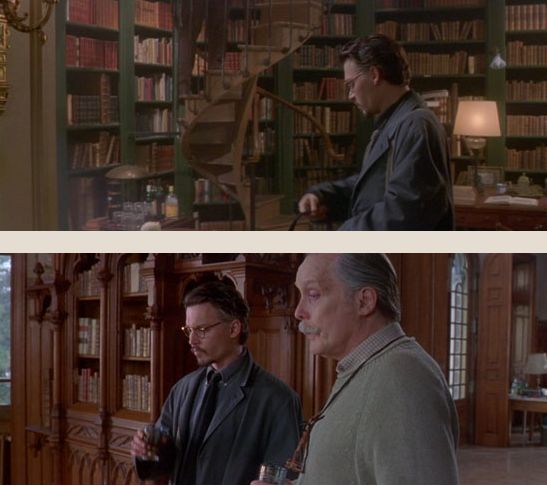
Johnny Depp is constantly smoking and drinking red wine while handling priceless old books in 1999’s The Ninth Gate. Notice the winding staircase in the rare book shop in the top screenshot.

The Booksellers is a documentary that screened in festivals in late 2019 before heading straight to video when the pandemic brought the world to a screeching halt.

It’s an inside look at the annual New York Book Fair and the small world of antiquarian and rare booksellers in New York, a shrinking constellation of people mostly descended from, or formerly apprenticed to, the booksellers of old before Barnes and Noble and Jeff Bezos laid waste to that sector of retail.

Before network TV, cable TV, dial-up internet, broadband, Kindles, iPads and smartphones turned us into a media-gorging — yet paradoxically less literate — society, New York was home to more than 500 bookshops, including generalists and specialists who catered to people with particular and peculiar interests. Now it’s home to fewer than 80, according to the documentary.

When the booksellers were asked about the way the internet has impacted their trade, their weary sighs reminded me of my older colleagues from my brief time experiencing the end of the “good old days” of newspapering, before the internet destroyed or compromised every publishing income stream and delivered us to this moment. This dystopian time when entire swaths of the country have become news deserts, Elon Musk in all his wisdom asserts that Twitter accounts run by anonymous trolls in Belarus are just as reliable — even more trustworthy, in fact — than those liars in legacy media, and corporate raiders are stripping the last handful of newspapers down to assets they can auction off.
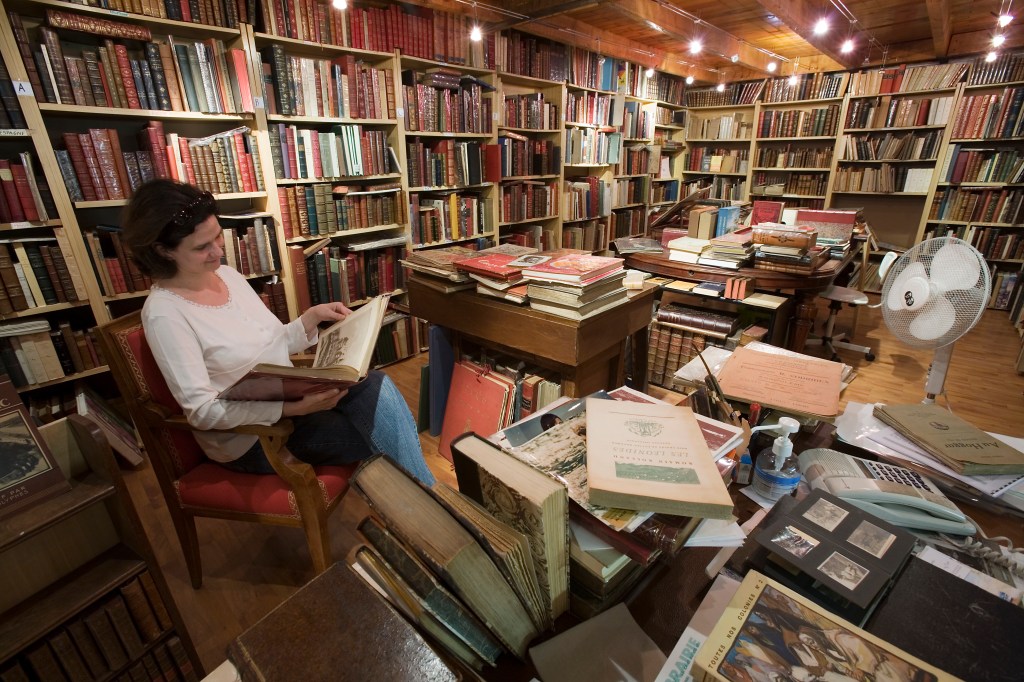
A rare book shop in Paris. Credit: Wikimedia Commons

Not all of it’s bad. One rare book dealer laments the fact that “the thrill of the hunt” is gone, meaning it no longer takes years to track down some obscure volume because you can hop online and find it in a few clicks. I get that, but nostalgia for that sort of thing is the ultimate in looking back through rose-colored glasses. Plenty of us could wax nostalgic about the days when we’d hear a song on the radio and have to hum the damn thing to record store clerks, but we’re forgetting about the considerable frustration involved. Given the choice between “fun” ignorance and access to information, I’ll always choose the latter.

As for the cats, it’s not a surprise when many of the book dealers interviewed for the film identify themselves as cat lovers or idly scratch their feline friends while showing off their vast personal collections. Antiquarian bookshops tend to be warm, quiet, gently-lit spaces, perfect napping spots for cats who guard old books from rodents.

If you’re interested in watching The Booksellers, you can find it on Amazon Prime video, or better yet, just click below:

Header image credit: A. Savin/Wikimedia Commons
The Story Of Orangey, Audrey Hepburn’s Cat In Breakfast At Tiffany’s, Plus: Why Do People Steal Cats?

Orangey the Cat enjoyed a suspiciously prolific career as Hollywood’s top feline actor for almost two decades. What’s the story behind the iconic moggie?

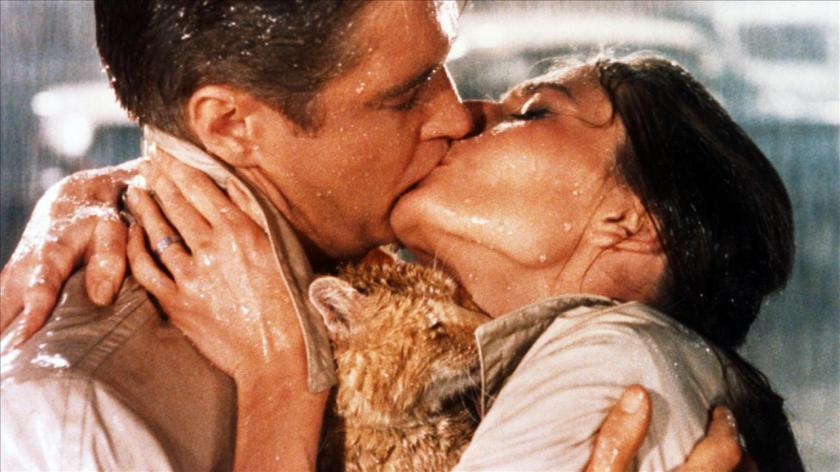
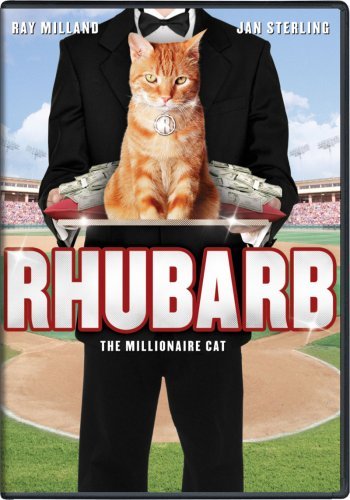
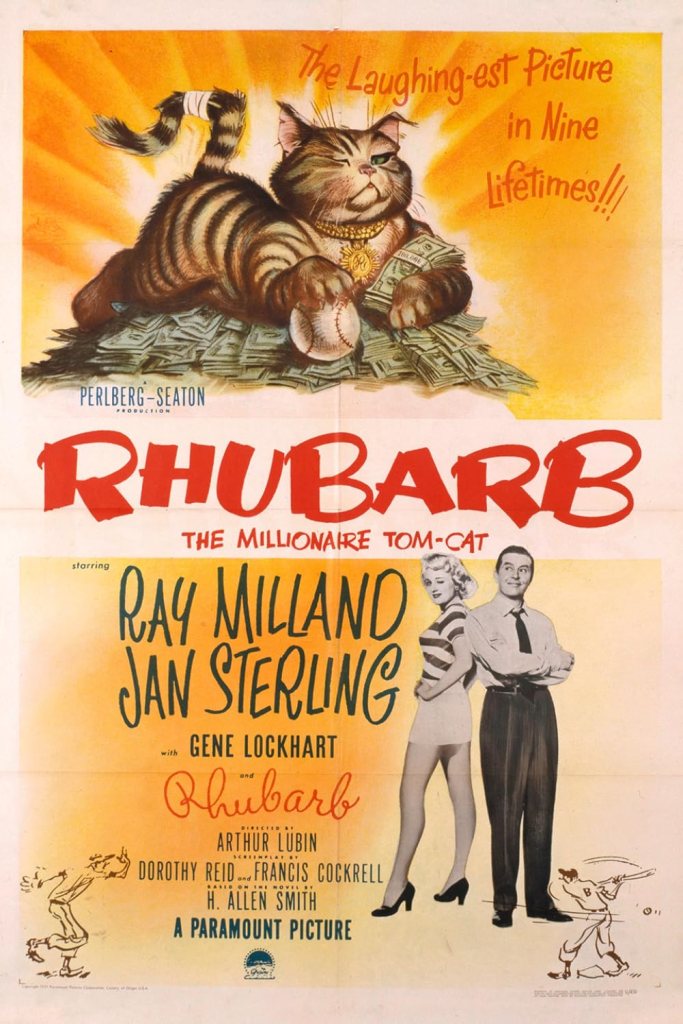
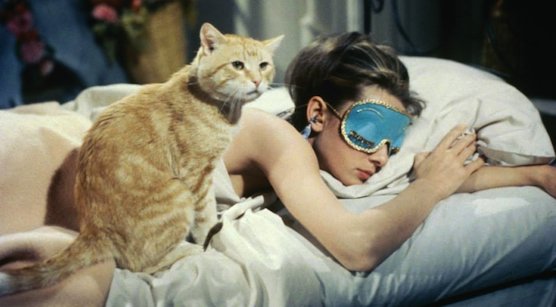
Orangey, the cat who famously belonged to Audrey Hepburn’s character in Breakfast at Tiffany’s, had an impressive and improbable film career beginning with 1951’s Rhubarb and ending with roles in TV series like Green Acres and The Flying Nun almost two decades later.

A new story in The Guardian charts Orangey’s film career and attempts to reconcile conflicting information about the famed feline. At least two cats played Orangey in Breakfast at Tiffany’s, while potentially dozens were used for Rhubarb, a comedy about a cat who inherits his wealthy late owner’s fortune and assets, including a baseball team.

“Watching the cat performances both within the movies and across the different titles certainly lends credence to the idea that Orangey was more a cat type, provided by trainer Frank Inn, than a specific animal,” The Guardian’s Jesse Hassenger writes.

Orangey had a prolific career in film and TV, one that would have been very difficult for a single cat to manage due to the number of appearances and the unlikely length of his tenure as Hollywood’s top cat.

In fact, color mattered less than resemblance because most of Orangey’s appearances were in black and white, so it’s possible Orangey wasn’t always Orange. (Later performances were filmed in color and some films were subsequently colorized.)

Using more than one cat for a role is pretty standard in Hollywood films that feature felines. Keanu, the 2016 Key and Peele comedy about an eponymous kitten who is stolen by drug dealers, cycled through several kittens as the pace of production was simply too slow compared to the rapid growth of real life kittens. In 2024’s A Quiet Place: Day One, two very similar-looking cats, Nico and Schnitzel, shared the role of Frodo, the cancer-stricken protagonist’s emotional support animal.


Why do people steal cats?

In early 2023, more than 50 cats in and around Kent, England, were abducted and returned with patches of fur shaved off.

At first people suspected the perpetrators were engaged in some bizarre form of animal cruelty — and some later copycats, for lack of a better word, across the UK may have been motivated to cause distress — but authorities later said they believe the catnappers were checking to see if the felines were spayed or neutered.

If they weren’t, those cats were kept for breeding, while the others were dropped off where they were found.

A cat shaved during spay/neuter surgery. Credit: jp_the_man/reddit

That rash of disappearances and other cases of car abductions factored into a staggering report from the Royal Kennel Club’s lost pets database: of the 25,000 pets reported missing in the UK between January 2023 and June 2024, more than 20,000 were cats.

Those cases and others are highlighted in a report from The Telegraph published on Thursday detailing the increase in reports of stolen felines. While the actual number of police reports are unknown due to discrepancies in the way such cases are classified by police, data from the Kennel Club and microchip companies, as well as anecdotes, indicate a concerning spike in cat theft even as the UK has mandated microchips for every pet cat.

Some, like the recent case involving an Amazon delivery driver, are crimes of opportunity. They’re spur-of-the-moment decisions by people who encounter cats they might want for themselves or people close to them.

Others, like the mass pet thefts in Kent, could have ties to larger organized crime operations.

And some are attempts to make a quick quid by petty thieves who count on the emotional bond between plpeople and their animals to demand ransom for the four legged family members, like one couple who abducted a woman’s cat and ransomed her for the equivalent of a few hundred dollars.

That woman, who was identified only by the pseudonym Helen in the story, said she was torn between getting her cat back and encouraging the people who took him.

“I was worried the same thing would just keep happening,” she told the newspaper. “It’s not something you want to encourage – paying to get your cat back – in case they do it again.”

Predator: Badlands Is An Epic, Surprisingly Funny Adventure, And Even Has A Breakout Character Named Bud

Badlands is a romp through a vividly realized alien world filled with danger. It’s also a film with heart.

Hollywood pumps out so much disappointing content, especially in the age of streaming, that it’s easy to become disillusioned with movies altogether.

But every once in a while there’s a film that reminds you how much fun movies can be, hitting all the right emotional notes while taking you completely out of this world for two blissful hours.

Predator: Badlands is that kind of movie. Unexpectedly funny and poignant, it also delivers the kind of action audiences have come to expect from the Predator franchise — and then some.

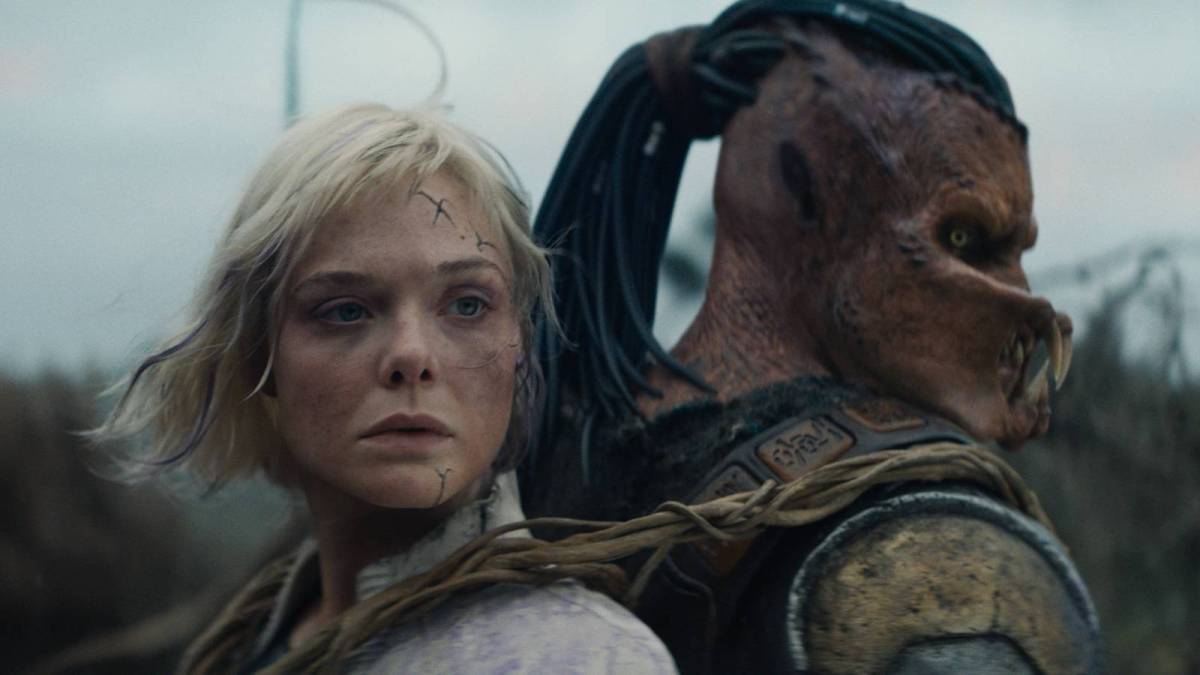
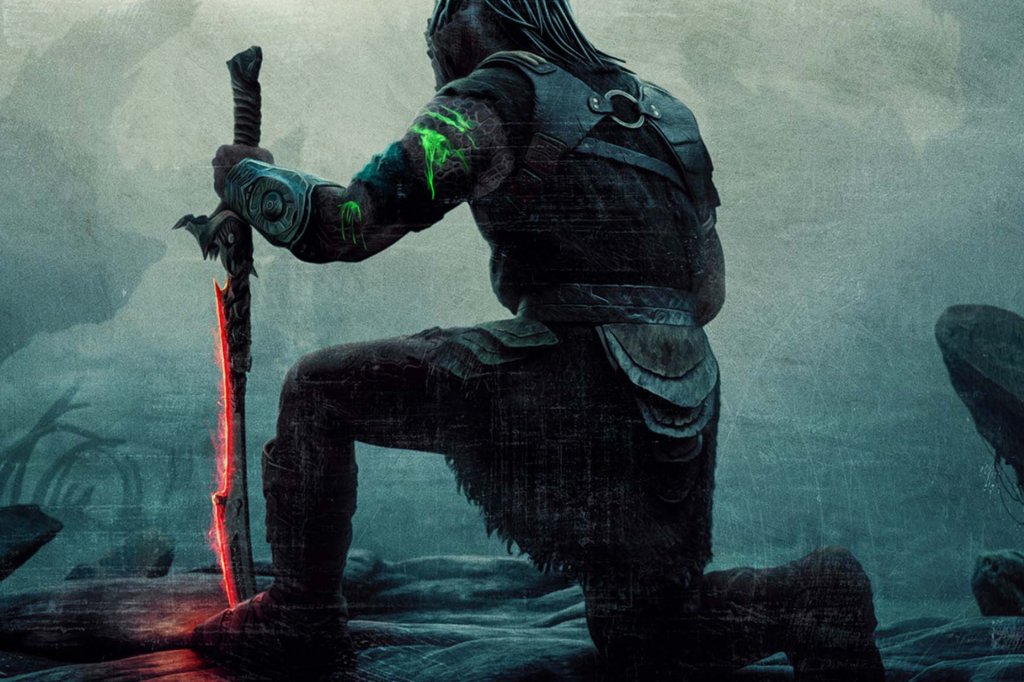
The biggest change here is that, for the first time, a Yautja (the alien species we call the Predators) is the protagonist.

Njohrr is a Yautja clan leader who believes Dek is not strong enough to earn his place in the clan.

Dek isn’t just any Yautja. He’s a youngster who is horribly wronged in the opening minutes of the film and sent to Genna, a place his species calls the “death planet” because virtually every form of life there is monstrous and spectacularly lethal.

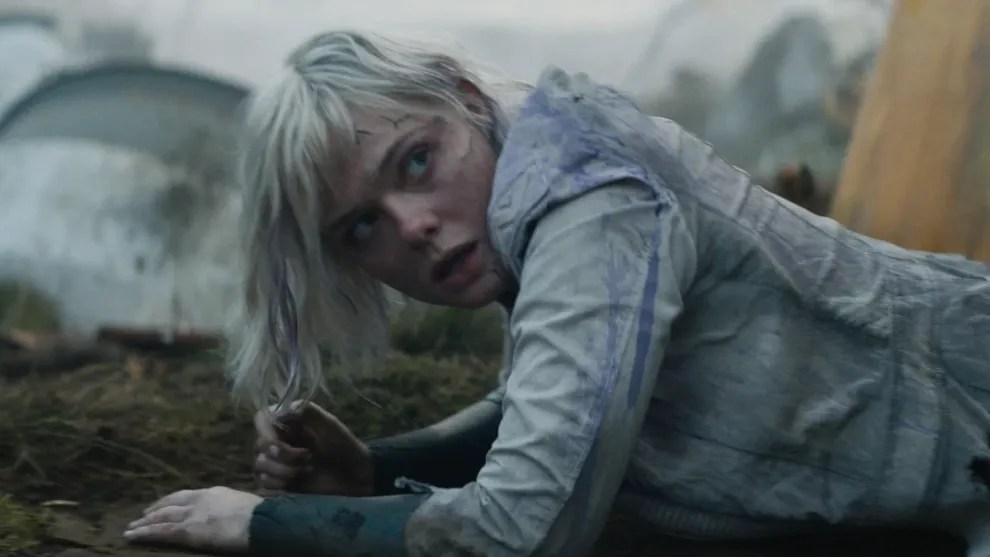
His own death is a foregone conclusion on the brutal world until he meets two unlikely allies: Thia, a damaged synthetic (android) built by the notorious Weyland-Yutani corporation, and Bud.

Bud steals the show, but I wouldn’t dream of robbing anyone of the pleasure of experiencing Bud the way writer/director Dan Trachtenberg intended, so I will say no more.

Elle Fanning and Dimitrius Schuster-Koloamatangi play Thia and Dek, respectively. Fanning adds a human element as she and Dek team up initially for survival, then out of loyalty to each other.

Badlands has a lot of heart and a script that knows just when to slice the tension. In one quiet scene after surviving an encounter with a particularly nasty creature, Thia (an energetic Elle Fanning) raves about the experience and the excitement of accompanying Dek and Bud on a hunt.

“The Dynamic Trio! Remember when we went down the tree? That monster’s mouth? I mean… Uggh. Didn’t smell great, didn’t smell great, but we got him. We got him! Thank you, seriously, for that experience. Truly amazing. Thrilling! Truly thrilling.

“What was your favorite part?” she asks the young Yautja.

“When my sword pierced the creature’s skull and its blood ran down my face,” Dek deadpans.

Dek is not invincible, and he’s without the vast majority of his arsenal, with only his trusty heat sword to defend against the hyper-aggressive fauna of Genna.

This is Trachtenberg’s second Predator film, and Badlands exists because he proved there was life still left in the franchise with 2022’s Prey.

That movie was unfortunately streamed direct to Hulu without a theatrical release, as were several big time films that year, because of a resurgent COVID wave. (Remember the Delta variant?)

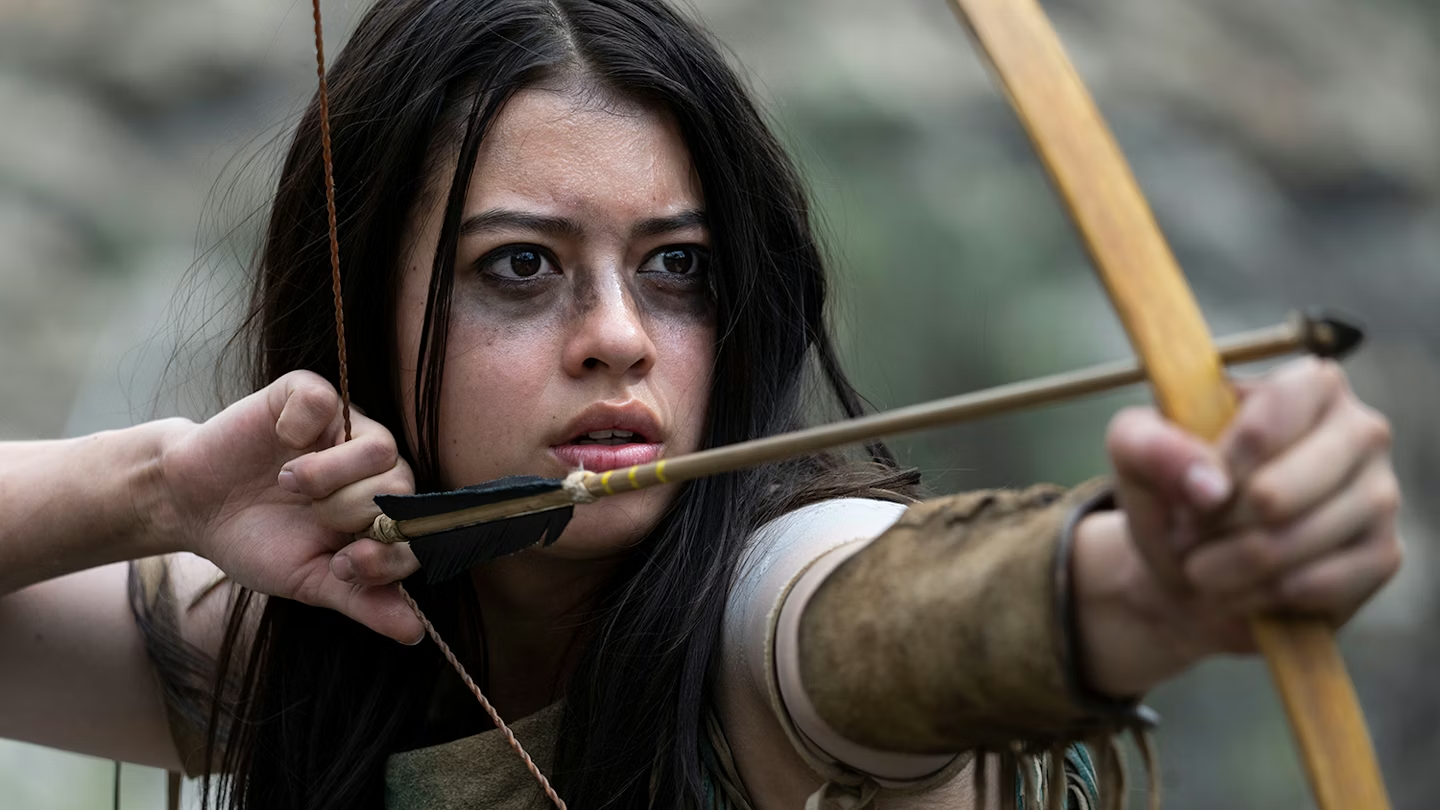
But critics and audiences, including your humble Buddesian correspondents, found a lot to like in the story of Naru (Amber Midthunder), a young Comanche woman living on the Great Plains in 1719. After encountering a Yautja, Naru warns her tribe that a mysterious and dangerous creature is stalking their lands, but they laugh at her and accuse her of telling tall tales — until they see the Yautja for themselves, at which point they don’t find it amusing anymore.

Midthunder was fantastic, and Prey balanced its historical setting with stunning action sequences and quiet character moments.

Amber Midthunder as Naru in 2022’s Prey.

In earlier installments, including Prey, the Yautja were always the antagonists. We knew they were a warrior culture, that they followed an honor code and possessed fantastically advanced technology, but for the most part the Yautja remained a blank slate aside from some non-canonical media (mostly novelizations, comics and games) that attempted to expand the universe.

Badlands demystifies the Yautja somewhat out of necessity, which is always a dangerous gamble (just ask the xenomorph of Alien fame, which lost its mystique half a dozen sequels ago), but significantly raises the emotional stakes.

Dek isn’t invincible. Circumstances have robbed him of most of his arsenal, he’s thrown into a perilous and unfamiliar world, and he’s haunted by the fresh memories of the tragedy that sets off the events of the film.

That makes it easy for the audience to identify with and root for Dek, despite the difficulty of conveying emotions with alien facial features. Dimitrius Schuster-Koloamatangi deserves credit not only for imbuing Dek with physicality, but also for getting the most he can out of the Yautja youngster’s brooding body language, howls of frustration and slowly dawning realization that he can choose his own path in life.

It may take a planet teeming with horrors to make an underdog of a Yautja, but Badlands succeeds on that count.

Predator: Badlands set a record for the franchise with a $40 million opening weekend, and pulled in $184 million total at the box office. It was made available for streaming this week. With the financial success, and the positive reviews from critics and fans alike, it’s possible we’ll see Dek, Thia and Bud continue their adventures in a sequel.

Buddy’s Cat Café Celebrates 2 Years Of Offering Customers The Chance To Lavish Affection And Treats On Buddy

Buddy’s Cat Café and Catnip Lounge has become a neighborhood fixture where feline lovers can enjoy their favorite caffeinated beverages while lavishing snacks and catnip on Buddy himself.

NEW YORK — When Buddy’s Cat Café and Catnip Lounge first opened its doors in late 2023, skeptics were quick to predict its demise.

“A cat cafe featuring only one cat sounds more like the selfish plot of the proprietor feline and less like a legitimate cat cafe experience,” the New York Times sniffed, while the New York Post derided the venture as “one chubby cat’s ludicrous scheme to gorge on endless snacks and catnip while customers line up to shower him with affection.”

Two years later, with a 4.8 out of 5 rating on Google and hundreds of regulars, Buddy’s Cat Café has not only been a success, it’s inspired other felines to open their own single-cat locations.

Mrs. Nakamura watches her students interact with Buddy, affectionately known to them as Badi-chan.

Mrs. Tomoko Nakamura, a teacher at the Japanese Academy of Manhattan, has been taking her class to Buddy’s since the cafe opened.

“Badi-chan very handsome and charming,” Mrs. Nakamura said, smiling as her students giggled and offered an array of crunchy treats to the lounging feline. “All my students love him!”

Sisters Dierdre and Stephanie Sullivan are regulars who say they take their kids to Buddy’s almost weekly.

“Madisyn, Skyelarr and Jaxon just love little Buddy,” Stephanie Sullivan said, calling other cat cafes “a tragedeigh in comparison.”

Buddy and friends during a Tabletop Tuesdays gathering at Buddy’s Cat Café and Catnip Lounge.

Since its opening, Buddy’s has featured an array of themed nights that cater to regulars with shared interests.

On Saturdays a lively crowd of people wearing perms, neon clothes and big shoulder pads flock to the cafe for Retro 80s Night. Sunday crowds gather to watch football with Buddy on the big screen TV, and Tabletop Tuesdays cater to miniature wargamers, with Buddy and his regulars continuing long-running campaigns in Dungeons and Dragons and Warhammer 40K.

One of the most popular themed nights is Freestyle Fridays, when local rappers and hip hop heads gather to spit bars, smoke blunts and collaborate on beats.

DJ Rashid, center, jubilantly hoists Buddy while the others cheer on a recent Freestyle Friday at Buddy’s Cat Cafe.
Buddy after indulging in too much catnip on Freestyle Friday.

Da Ill Collektah, a local underground emcee, rolls catnip blunts for the tabby proprietor so he can fully participate in the levity.

“Oh, that’s good ish!” Buddy said on a recent Friday as he exhaled a nimbus cloud of ‘nip smoke to cheers from the assembled hip hop heads.

“Watch out!” beatsmith Biggity Biggity Bryce exclaimed. “Buddy gonna bless us with a fiyah freestyle!”

Lysander The Lyrical Destroyer, a Brooklyn emcee and longtime “associate” of Buddy, said no other cat cafe could hope to compete.

“Buddy’s cafe got the freshest jams, the livest atmosphere, and the bang bang boogie don’t stop the boogie,” he noted. “But most of all, it’s got Buddy.”

New Crime-Comedy ‘Caught Stealing’ Stars A NY Cat Named Bud

A bartender gets more than he bargained for when he agrees to watch his neighbor’s cat in the new comedic crime flick Caught Stealing.

In Caught Stealing, the newest film from director Darren Aronofsky, a seedy guy named Russ (Matt Smith) asks his neighbor Hank (Austin Butler) to watch his cat for a few days while he’s out of town.

The cat is not only a handsome little fellow, he’s got a spiffy name: Bud.

The problem? Russ has seriously pissed off New York’s criminal element, and Hank is unaware a category five shitstorm is about to make landfall. No matter how many beatings he takes from gangsters who mistake him for his neighbor, the Lower East Side bartender takes his cat-sitting duties seriously.

“Bud remains central to the action,” the New York Times notes. “His skeptical gazes punctuate scenes and his presence endears the audience to Hank, who goes out of his way to protect the somewhat ornery creature when the going gets rough.”

Tonic and his co-star, Austin Butler. Credit: Melissa Millett

Alas, Caught Stealing‘s Bud is not our Bud, although that’s probably for the better. Our Bud would drive the on-set catering crew mad with his turkey-related demands, and he’d run off camera to hide behind my legs during fight scenes.

Instead, Bud is played by a pro, a cat named Tonic who has appeared in the remake of Stephen King’s Pet Sematary and the horror flick Thanksgiving.

Aronofsky tells the Times about the on-set cat wrangling, noting felines are usually “not very notorious for their collaboration skills.”

Still, Charlie Huston, who wrote the book the movie’s based on as well as the screenplay, said the team didn’t take any shortcuts with Bud.

“I don’t feel like we made it as easy for ourselves as some people would have wanted,” Huston told the Times. “I remember a lot of conversations about, ‘Do we have to have the [expletive] cat in this scene?’”

The fact that they did keep him squarely in the action is testament to Tonic. Before the little guy got the role, the team had it narrowed down to him and one other cat. Tonic made the decision easy for them.

“It was just such a no-brainer because the other cat was fine, but Tonic was such a rock star on Day 1 and that was without prep,” Huston said.

Tonic with trainer Melissa Millett. Credit: Melissa Millett

Tonic is so accustomed to performing in live events and movie appearances, he was ready to show off his skills — and to get his paws on his rewards.

“The second he came out of his crate,” trainer Melissa Millett said, “he looked like he thought he was the king of the world and he was ready for all the chicken.”