Buddy the Cat’s female admirers, both feline and human, say he is a sexy beast.
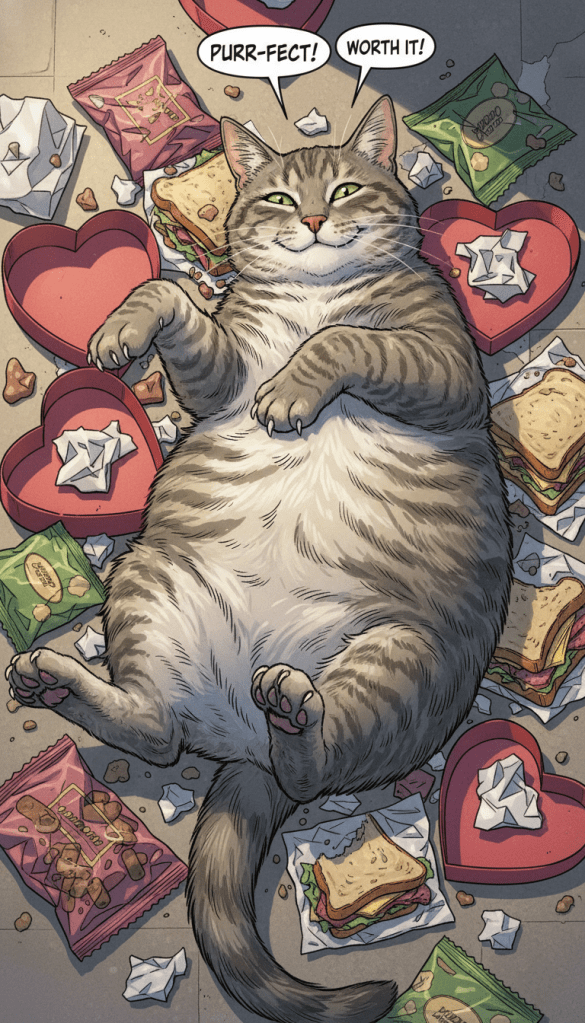
NEW YORK — For the third night in a row, Buddy the Cat rolled onto his back, belched thunderously, and settled down for a restful nap surrounded by the devoured remnants of treats and snacks gifted to him for Valentine’s Day.
“It’s wonderful to be so loved that hundreds of Valentines Day packages are deliv…ooh, bacon-flavored crunchies!” Buddy said, breaking his train of thought after discovering six or seven of the little treats under a pile of opened and discarded packages.
“Where was I?” the bloated feline asked, blinking. “Oh yeah. It’s such a great feeling to have so many admirers that … mmmm, sandwich … every day brings new …* burp *! … gifts of food to sample and … oh, I love turkey gravy!”
The chubby tabby has been the recipient of countless Valentine’s Day gifts this year, reflecting his considerable popularity among females, both feline and human. He’s been eating his way through them with enthusiasm since the packages began arriving.
Witnesses report the well-fed feline was unable to complete a sentence without getting distracted and stopping to shovel food into his mouth mid-sentence.
“He only stops eating when he falls asleep,” one witness told PITB. “At this rate, his human will have to roll him around like a boulder because, frankly, I’m not sure anyone makes a cat carrier with material strong enough to lift him without ripping apart.”
As of press time, Buddy had fallen asleep with a sloppy hand-written note taped to his forehead, asking visitors to leave Valentine’s Day gifts in one of the 27 provided baskets.
I expected something truly extravagant when a reader wrote to Slate’s advice column to say she was considering doing something “wildly elitist” involving her cat.
What could it be? I wondered. Pure gold or silver eating and drinking bowls, a la Choupette? A fashionable $600 pet stroller like the young, childless women of Tokyo favor for their felines? Feeding premium meat from the butcher exclusively to her cat?
None of the above, it turns out. The allegedly “wildly elitist” thing this woman was deliberating was simply paying a veterinarian to have dental work done on her cat, with costs estimated at between $800 and $2,000, depending on the extent of the kitty’s cavities.
To make matters even stranger, the letter writer says the cost won’t be a financial hardship for her family. Their cat is only three years old, she notes, and the family has had him since he was found on the street as a kitten.
“I guess I didn’t think that part of taking him in would entail thousands of dollars to keep him alive at this stage of the game,” she wrote. “At what point do people draw the line on what it costs to save a cat’s life?”
Credit: Wikimedia Commons
The writer was essentially looking for “permission” to have the cat put down, for Slate’s advice columnist to virtually pat her on the head, say “There, there!” and agree that taking care of your own cat is “wildly elitist.”
Thankfully, Slate columnist Athena Valentine was having none of it, telling the woman seeking advice that “when you adopt an animal, you take financial responsibility.” Spending money on veterinary care when needed, Valentine noted, is “exactly what you signed up for” by adopting the little guy. A cat who, by the way, could easily live another decade at least.
“If you do not want to pay for your cat’s treatment, please surrender him to a rescue that will,” Valentine wrote. “The rescue will raise the funds you do not want to part with to pay for his teeth and will then adopt him out to a new home that understands the responsibilities of pet ownership. I also advise you to not adopt any more animals until you’re fully ready to accept the financial obligations that come with it.”
Cheers to Valentine for not taking the bait.
Do your feline overlords use their own beds?
One of the first things I bought for Bud, along with his litter box, bowls and toys, was a bed. It’s nothing extravagant, but it does look pretty comfortable.
He has never used it.
Or rather, he lounged on it a handful of times when he was a kitten, but he claimed my bed as his own. He was very clear on the new ownership situation, and generously allowed me to continue sleeping on my his bed as long as I accepted the fact that he would use me as a pillow, which he has been doing for more than a decade now.
A Newsweek story details the efforts of a woman who bought her cat a new bed, hoping he’d let her sleep at night, only for the feline overlord to drag his new bed onto her bed. Essentially, she bought him a new pillow.
Do cats ever do what we want them to? That’s a rhetorical question, by the way.
A cat whose fantasy soccer team ranked 222 out of 13 million players
At The Athletic, Conor Schmidt writes about creating a fantasy football (soccer) team for his cat, and letting the little guy choose who to draft and trade by writing the names of players on a dry erase board and putting treats next to each name. The first treat his cat goes for is the one whose associated player is dealt or drafted.
He says his cat reached an astonishing world ranking of 222 out of almost 13 million players on the same platform worldwide, which means either the little dude has incredible luck, or he’s a genius who knows a lot more than he lets on.
Maybe I should register a fantasy basketball or baseball team for Buddy, smear turkey gravy next to players’ names, and see how he does.
Orangey the Cat enjoyed a suspiciously prolific career as Hollywood’s top feline actor for almost two decades. What’s the story behind the iconic moggie?
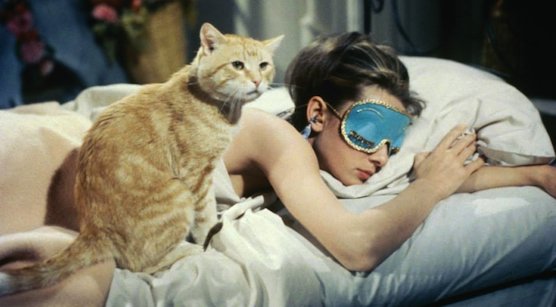
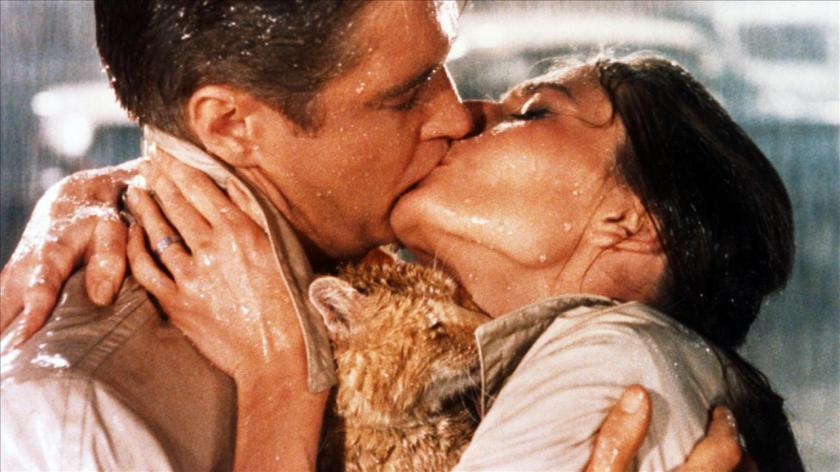
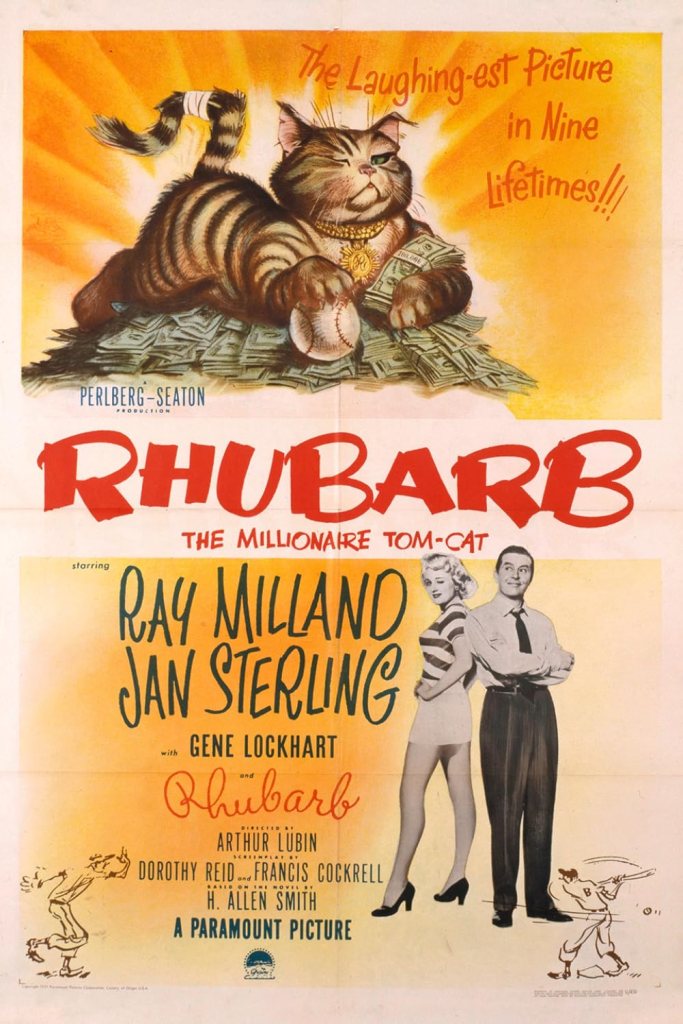
Orangey, the cat who famously belonged to Audrey Hepburn’s character in Breakfast at Tiffany’s, had an impressive and improbable film career beginning with 1951’s Rhubarb and ending with roles in TV series like Green Acres and The Flying Nun almost two decades later.
A new story in The Guardian charts Orangey’s film career and attempts to reconcile conflicting information about the famed feline. At least two cats played Orangey in Breakfast at Tiffany’s, while potentially dozens were used for Rhubarb, a comedy about a cat who inherits his wealthy late owner’s fortune and assets, including a baseball team.
“Watching the cat performances both within the movies and across the different titles certainly lends credence to the idea that Orangey was more a cat type, provided by trainer Frank Inn, than a specific animal,” The Guardian’s Jesse Hassenger writes.
Orangey had a prolific career in film and TV, one that would have been very difficult for a single cat to manage due to the number of appearances and the unlikely length of his tenure as Hollywood’s top cat.
In fact, color mattered less than resemblance because most of Orangey’s appearances were in black and white, so it’s possible Orangey wasn’t always Orange. (Later performances were filmed in color and some films were subsequently colorized.)
Using more than one cat for a role is pretty standard in Hollywood films that feature felines. Keanu, the 2016 Key and Peele comedy about an eponymous kitten who is stolen by drug dealers, cycled through several kittens as the pace of production was simply too slow compared to the rapid growth of real life kittens. In 2024’s A Quiet Place: Day One, two very similar-looking cats, Nico and Schnitzel, shared the role of Frodo, the cancer-stricken protagonist’s emotional support animal.
Why do people steal cats?
In early 2023, more than 50 cats in and around Kent, England, were abducted and returned with patches of fur shaved off.
At first people suspected the perpetrators were engaged in some bizarre form of animal cruelty — and some later copycats, for lack of a better word, across the UK may have been motivated to cause distress — but authorities later said they believe the catnappers were checking to see if the felines were spayed or neutered.
If they weren’t, those cats were kept for breeding, while the others were dropped off where they were found.
A cat shaved during spay/neuter surgery. Credit: jp_the_man/reddit
That rash of disappearances and other cases of car abductions factored into a staggering report from the Royal Kennel Club’s lost pets database: of the 25,000 pets reported missing in the UK between January 2023 and June 2024, more than 20,000 were cats.
Those cases and others are highlighted in a report from The Telegraph published on Thursday detailing the increase in reports of stolen felines. While the actual number of police reports are unknown due to discrepancies in the way such cases are classified by police, data from the Kennel Club and microchip companies, as well as anecdotes, indicate a concerning spike in cat theft even as the UK has mandated microchips for every pet cat.
Some, like the recent case involving an Amazon delivery driver, are crimes of opportunity. They’re spur-of-the-moment decisions by people who encounter cats they might want for themselves or people close to them.
Others, like the mass pet thefts in Kent, could have ties to larger organized crime operations.
And some are attempts to make a quick quid by petty thieves who count on the emotional bond between plpeople and their animals to demand ransom for the four legged family members, like one couple who abducted a woman’s cat and ransomed her for the equivalent of a few hundred dollars.
That woman, who was identified only by the pseudonym Helen in the story, said she was torn between getting her cat back and encouraging the people who took him.
“I was worried the same thing would just keep happening,” she told the newspaper. “It’s not something you want to encourage – paying to get your cat back – in case they do it again.”
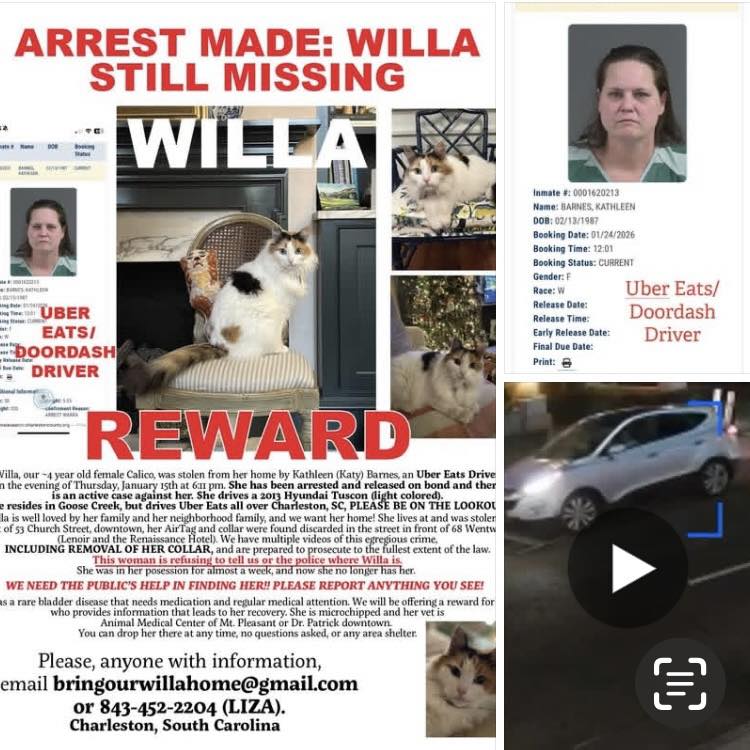
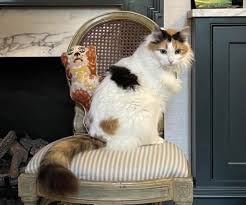
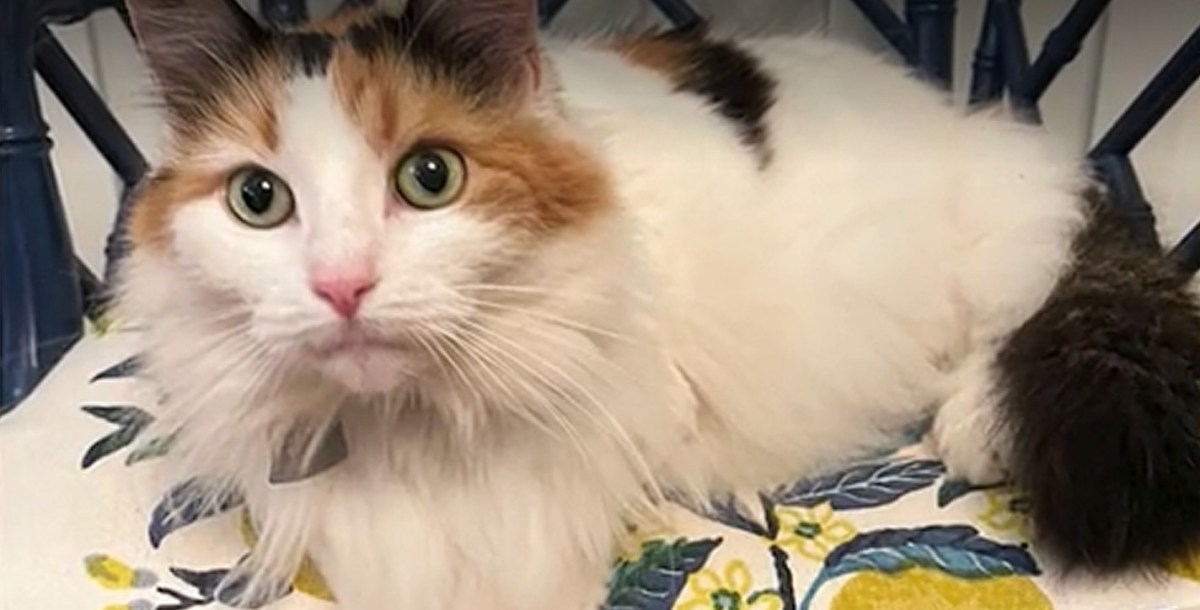
The family has pleaded for the return of four-year-old Willa, but the the woman accused of taking her has not cooperated and the Calico has now been missing for two weeks.
Despite an arrest, a criminal charge hanging over her head and widespread scorn from locals, a delivery driver has “refused to speak about” what she did with a Charleston family’s cat after allegedly stealing the Calico.
A story in Charleston’s Post and Courier details the herculean efforts by a family to get their cat back after 38-year-old Kathleen “Katy” Barnes allegedly stole the feline on Jan. 15, shortly after receiving a $15 tip for delivering Greek food on the same street.
When the Layfield family returned home that day, four-year-old Willa was nowhere to be found. The Layfields checked their security camera footage, which last showed Willa about 45 minutes before the family returned home but did not show her disappearance.
Since the extent of Willa’s outdoor activities involved straying no further than a few feet from the home, and mostly consisted of her sitting on the family’s front porch, the Layfields were worried and went to bed for an “uneasy” and “restless night,” per the Post Courier. When Willa’s AirTag pinged at 4 am near the Lindy Renaissance hotel about a mile away, Daniel Layfield got out of bed and rushed to the location. The device had been tossed in the street along with Willa’s collar.
The family has been relentless in tracking down information about Willa’s disappearance and getting access to surveillance camera footage from neighbors and local businesses, which is how they found footage of Barnes allegedly taking Willa (spotted on a neighbor’s cameras), then additional footage of her SUV stopping in front of the Lindy Renaissance hotel.
In video the Layfields pulled from a nearby gym’s surveillance cameras, Willa is seen on the dash of Barnes’ silver SUV. Barnes grabs her, removes the collar and AirTag, and tosses both out of the car before driving off again.
The Layfield family has also appealed to Barnes through statements to the press.
“Please let us know where she is,” Daniel Layfield said per the Post Courier, “if you have any compassion for animals and people.”
Charleston police deserve credit for taking the case seriously, going above and beyond what most departments would do in similar cases. They were able to secure a warrant to search Barnes’ home in Goose Creek, SC, but did not find Willa.
And this week they arrested Barnes for a second time, charging her with littering for disposing of Willa’s collar and AirTag, according to the Post-Courier.
It was the second time in about a week that police kept Barnes in overnight lockup, likely to send a message that they will not forget about the case. The Layfields have also enlisted the help of people who live in Barnes’ Goose Creek neighborhood, asking them to keep a lockout for the Calico, who has distinct markings.
This case is reminiscent of the theft of Feefee, a cat belonging to the Ishak family of Everett, Washington. Fefee was taken in the summer of 2024 by an Amazon Flex driver, and like the Layfields, the Ishaks had solid footage they were able to provide to the police, which led them to identify and track down the woman who took their cat.
That woman also refused to cooperate with police or tell the family what she did with their cat, despite their pleas and assurances that they weren’t interested in anything other than getting Feefee back.
Like the Layfield family, the Ishak family’s cat was well loved by the entire family, especially the kids, so Ray Ishak took the next several days off work and began driving around in an increasing radius, looking for the vehicle the Amazon contractor had been driving in the footage.
He found Feefee a few days later, scared and cowering in the bushes near the driver’s apartment. The driver had allegedly dumped the cat instead of returning her to the family, despite initially agreeing to bring her to the local police department.
In both cases, the families did everything right in their efforts to recover their four-legged family members.
They posted to social media, posted flyers, rallied support, and asked others to help spread the word. They reached out to local media, sent copies of the footage, then made themselves available for interviews and to plead for the return of their cats.
They also filed reports with the police and complained to the corporations — Amazon in the Washington case and Uber in the South Carolina case.
While Amazon is notoriously slow to respond to incidents like this and has repeatedly infuriated victims by treating the thefts as customer service issues, Uber said it contacted the driver and tried to persuade her to hand over the cat. While Barnes can’t technically be fired, as she’s a gig worker, the company said she will no longer be allowed to contract for Uber Eats.
“What’s been reported by the Layfields is extremely concerning,” Uber’s team wrote. “We removed the driver’s access to the Uber app and are working with law enforcement to support their investigation. We hope Willa is safe and reunited with her family.”
Unfortunately Willa’s been missing for two weeks now, and like most of the US, the normally temperate Charleston has been in a deep freeze, with temperatures plummeting below zero.
Because South Carolina views pets as property, as many states do, the worth of Willa’s life is pegged at a few hundred dollars at most, and she’s treated in the eyes of the law as an object.
That means the most severe charge the police could arrest Barnes for is petty larceny, a misdemeanor that carries a penalty of up to 30 days in county jail and a fine, if she’s convicted.
It is important to note that despite the footage, the charges are an allegation, and Barnes remains legally innocent pending a possible conviction.
But because the charge is just a misdemeanor, there is no pressure for her to cooperate and help the family get Willa back. (Or return her, if she still has the cat in her possession.)
Historically, pet theft has been associated with two primary motivations: thieves target breed cats and dogs because they believe they can make easy money selling them, whole others use stolen pets as bait or “training” for the violently conditioned dogs used in dogfighting. Some also target pedrigree pets to breed them.
In both these cases, and others that have been in the news recently, the thefts were crimes of opportunity, not pre-planned, and the cats were moggies. In addition, the cats were spayed/neutered. That rules out monetary gain by reselling or breeding. It also stretches credibility to believe gig workers are somehow more likely to be involved in dog fighting.
This is something new, a category of theft that may have began in earnest during the COVID era, when people felt isolated and shelters were literally being emptied due to the dramatic uptick in adoptions. Unable to find a companion animal through normal channels, some people stole pets for themselves.
But the shortage was short-lived, shelters and rescues are back in the familiar situation of having too many animals, and there’s no impediment to someone simply adopting a cat or dog instead of inflicting trauma on the animal and its family.
We hope the Layfields receive good news soon, and Willa is returned to the warmth and love she’s known with them.
Under South Carolina law pets are considered property, and the maximum penalty for stealing someone’s beloved animal amounts to a slap on the wrist.
Another day, another story about a delivery driver stealing a cat.
This time it happened in Charleston, South Carolina, and while local police worked quickly to identify the woman behind the wheel and arrest her, the feline is still missing.
Daniel and Liza Layfield said they knew something was wrong on Jan. 15 when an AirTag attached to their cat’s collar showed she was several blocks away. After checking their own security camera footage and video captured by other cameras on the street, they saw a local food delivery driver stop her car, scoop up four-year-old Willa, then drive off with her.
The woman tossed Willa’s collar and AirTag nearby. Thankfully, police took the matter seriously and the local community helped spread the word, leading to a quick arrest.
The family is relying on help from the community to find Willa.
But there are two problems that are common to these thefts of opportunity: Willa is still missing, and the most severe charge police could lodge against the suspect is petty larceny. That’s a misdemeanor that carries light penalties (a fine and up to 30 days in county jail) on conviction. That’s not a deterrent.
We wrote about this problem just last week, when the quick recovery of a cat stolen by an Amazon delivery driver in the UK illustrated the difference a stronger law makes.
Stealing a pet in the UK can land the thief in prison for up to five years in addition to fines. Police are more likely to devote resources when the law gives them appropriate charges to file, and five years in prison would make most people think twice about impulsively stealing a family’s well-loved pet.
By contrast, most US states treat pets as property, meaning courts do not take into account their sentimental value, bond with their people, or trauma to animal and human when someone steals a pet. South Carolina is among those states: in that state’s penal code, petty larceny is a charge that applies when someone steals property worth less than $2,000.
The suspect, a DoorDash/Uber Eats driver, has not been helpful in the Layfield family’s efforts to find their feline family member. In the meantime, the family hopes a $1,000 reward will prompt someone to come forward, or that Willa turns up at a local shelter and has her microchip scanned.
“We want to find Willa, we want to know where she is. It’s going to be 20 degrees for the next several days,” Liza Layfield told the local NBC affiliate. “The idea of her being loose and on the run is horrific.”
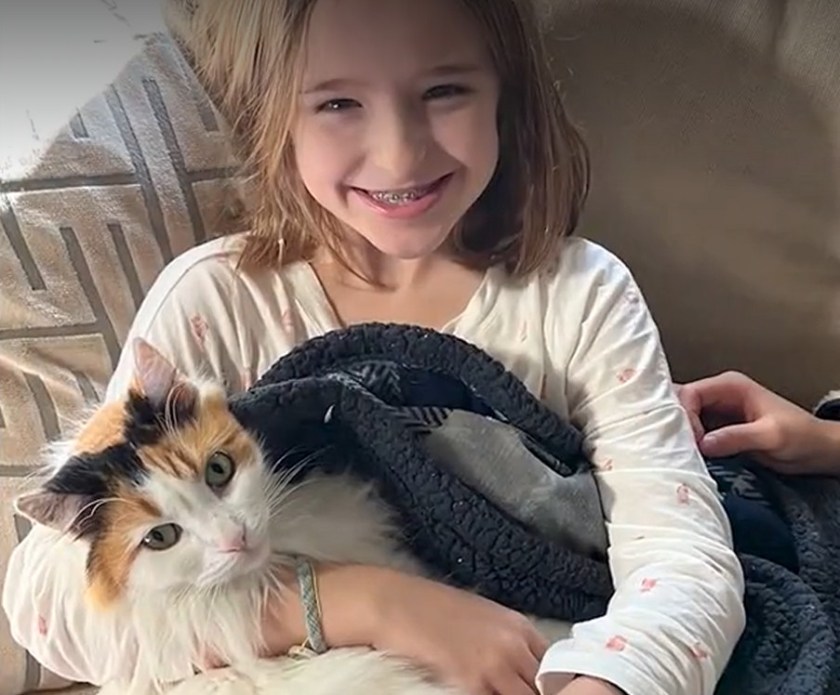
The Layfields’ daughter holding Willa, who has been missing since she was stolen on Jan. 15 by an Uber Eats/DoorDash driver.


 Pain In The Bud