We’ve made enormous mistakes in our reconstructions of prehistoric creatures, including dinosaurs and mammals. Would paleontologists of the future misinterpret the clues our civilization leaves behind?
Imagine if, far in the future, humanity has spread across a healthy swath of space, colonizing worlds across dozens of light years.
Academics at a prominent science institute, looking to learn more about the humble beginnings of our species, fund a scientific expedition to Old Earth, where radiation and toxicity have finally declined to a point which allows teams to poke through the ruins of our civilization.
As they piece together clues from the rubble, they find references to companion animals who have been domesticated while their wild counterparts continued on.
What does a cat look like? they wonder. Then they find the bones, beginning with a handful of incomplete skeletons…
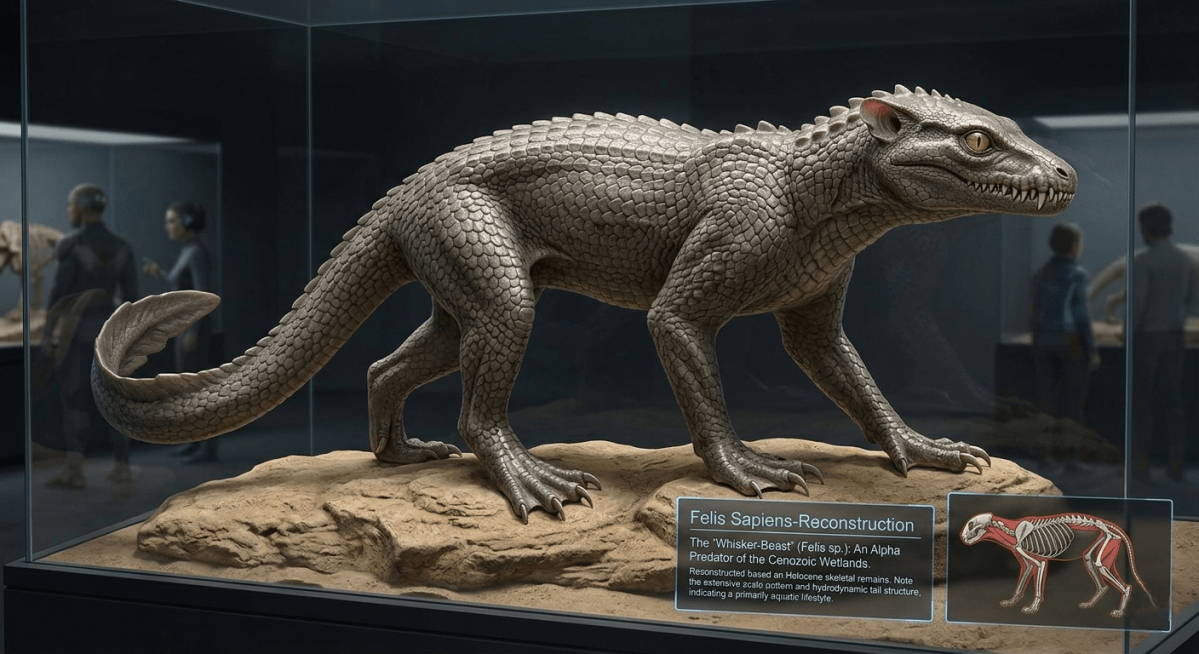
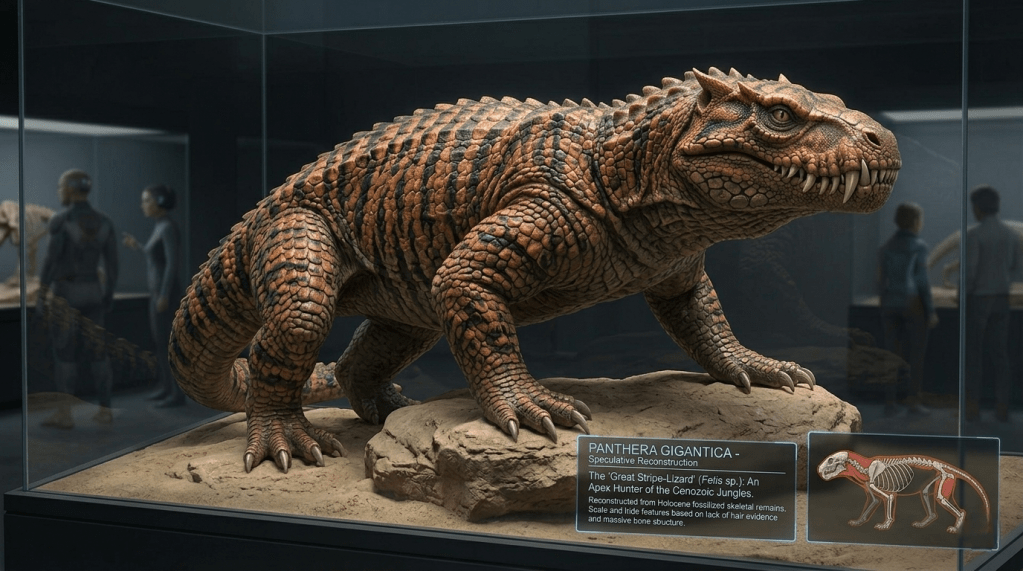
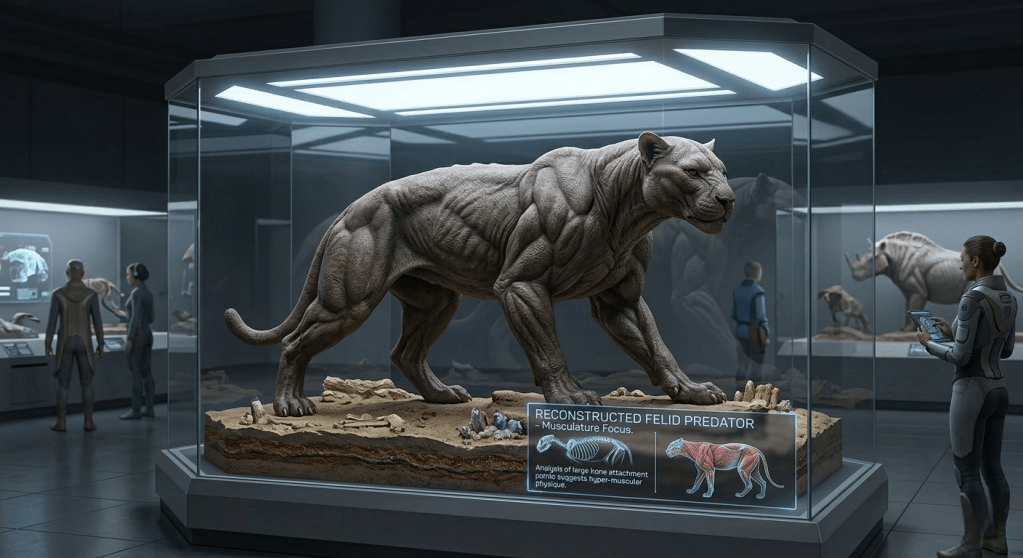
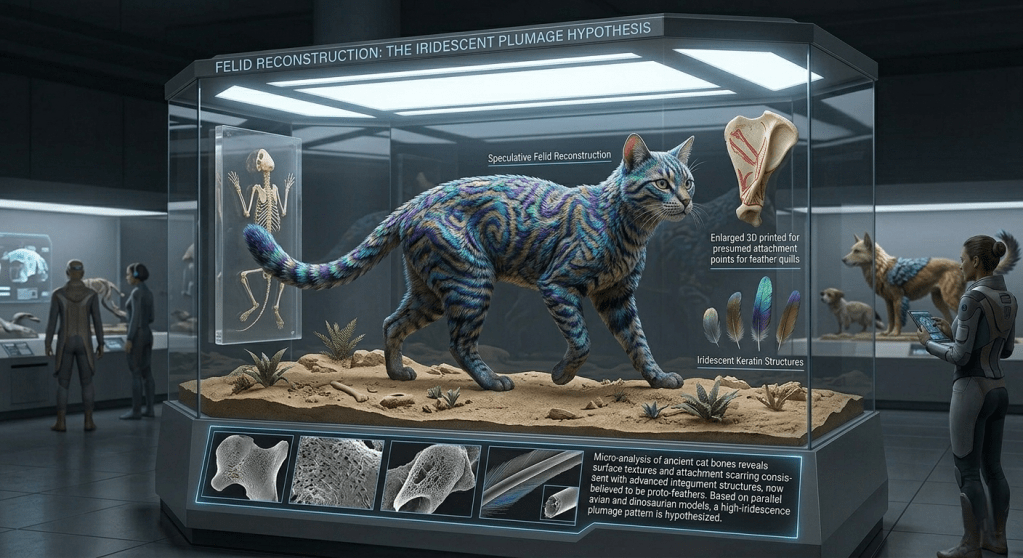
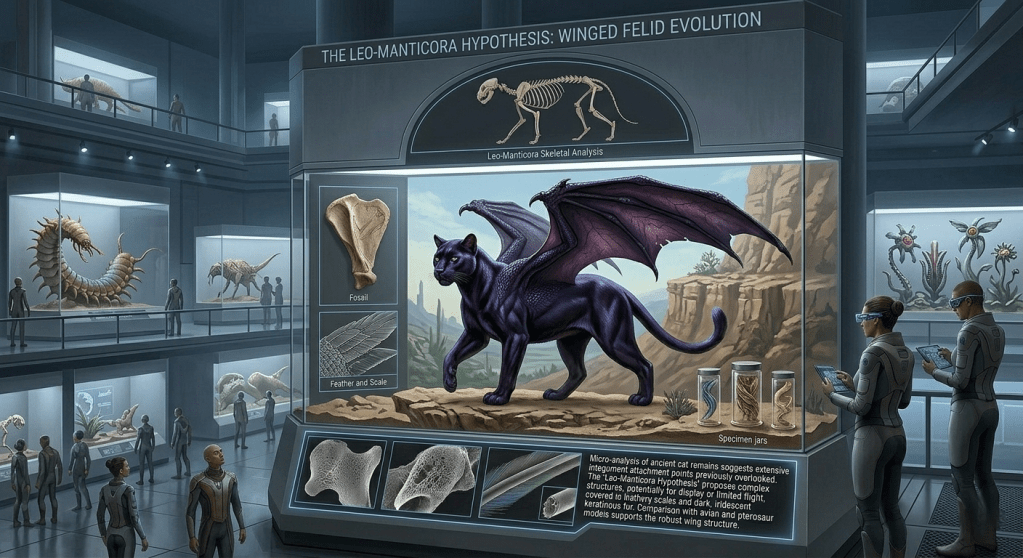
Critics have long argued that our depictions of dinosaurs are like skeletons wrapped in flesh, with modern representations doing a poor job of representing complete animals. What if the paleontologists and historians of the future mistranslate a word like “fur” or don’t realize the skeletons of cats are the same furry creatures that were human companions?A tiger imagined as a semi-aquatic animal with scales instead of fur, and a skull interpreted in much the same way we interpret dinosaur skulls. “Surviving texts make clear the tiger was comfortable in water, and like its distant cousin the crocodile, would remain mostly submerged, looking for opportunities to ambush prey.”No fur, just musculature, as if an anatomy book of animals is one of the few texts to survive in hard copy.A cat with magnificent plumage: “Research shows felines engaged in elaborate mating rituals, using their vivid colors and patterns to demonstrate virility to females in heat.”Finally, a winged cat. Outlandish? Maybe. But what if of the scraps of mythology to survive is a statue of a manticore, or paleontologists discover the bones of a cat species mingled with those of a large bird that died alongside it in a tar pit? In our time we’ve accidentally invented entire species of dinosaurs by mistakenly matching skulls from one species onto the spines of others, or wildly misinterpreting clues in the body plans of new and unfamiliar creatures.
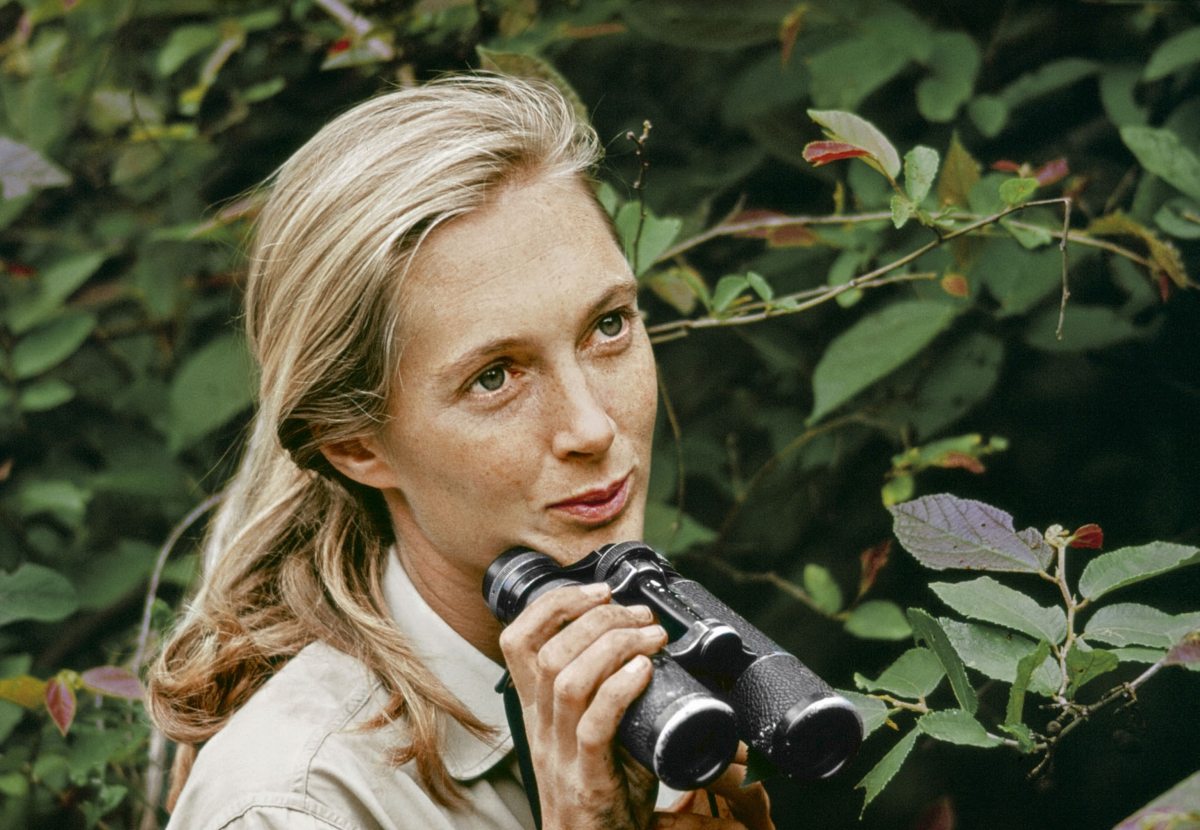
Goodall spent the better part of seven decades with the chimpanzees of Tanzania. Her discoveries were so profound, they forced the scientific community to reevaluate what separates humanity from other animals.
As I’m sure most of you have heard, Jane Goodall passed away Wednesday of natural causes. She was 91.
Goodall’s work was revolutionary and her career was extraordinary. It’s difficult to imagine now, but when Goodall first pitched camp in Tanzania’s Gombe Stream National Park in July of 1960, the scientific community knew virtually nothing about great apes.
Goodall wasn’t exactly welcomed with open arms. Being female and photogenic were the first two strikes against her in the eyes of the establishment.
She was self-taught, didn’t have a degree (she later earned a doctorate at Cambridge), and perhaps her biggest “sins” involved empathy and an attitude more buttoned-up scientists saw as anthropomorphizing the animals.
Goodall with a Gombe chimpanzee. Credit: Wikimedia Commons
Goodall gave the chimps names (a no-no at the time among scientists), carefully observed and recorded their family trees, worked out the obtuse — to human eyes– social hierarchy of primate troops, and witnessed behavior that no one had ever seen before.
She saw friendship, love and loyalty among the chimpanzees, witnessed a bitter war between the Gombe troop and a splinter group, followed families over generations, and saw one chimp die of a broken heart after his mother passed away. (I recommend Goodall’s 1990 book, Through A Window: Thirty Years With The Chimpanzees of Gombe, and the 2002 follow-up, My Life With Chimpanzees, for anyone who wants to read more.)
Her first major contribution, in October of 1960, not only fundamentally challenged our assumptions about animals, it forced us to change the way we regard our own species.
Goodall, observing the chimpanzees from a distance despite the rain that day, watched as a male she named David Graybeard repeatedly dipped blades of grass into the Earth. Curious, Goodall approached the site after Graybeard left, grabbed a few blades of grass and imitated what she’d seen the chimp doing.
She was astonished when she pulled the grass out and the strands were covered in termites. David Graybeard had been eating. He was using a tool to eat!
Goodall at Gombe in the early 1970s. The primatologist secured unprecedented access to the chimpanzees by gaining their trust. Credit: Wikimedia Commons
The discovery was huge because scientists believed tool use was, at the time, limited to mankind. We build and use tools, animals don’t, the thinking went.
When Goodall reported her findings to her mentor, anthropologist Louis Leakey, his prompt response indicated the gravity of her discovery: “Now we must redefine ‘tool,’ redefine ‘man,’ or accept chimpanzees as humans.”
Goodall never stopped working with the chimpanzees of Gombe, and today her formerly humble camp has become a permanent compound where researchers — all inspired by Goodall’s story — continue to study our genetic relatives.
But in her later years, Goodall became known for her activism just as much as her work as a scientist. She traveled constantly, engaging audiences on the subjects of animal conservation, respect for nature and understanding our place in the natural order. It’s a job that has become more necessary than ever as relentless human expansion, habitat fragmentation and human behavior push thousands of species toward extinction.
Credit: The Jane Goodall Institute
We lost Frans de Waal, the famous primatologist, in 2024. Now we’ve lost Goodall, and Sir David Attenborough is less than six months shy of his 100th birthday. We’re going to need people to pick up where they left off, and the job is much more difficult than it looks, requiring expertise, charisma and the ability to connect with audiences who know little about the subject matter.
But that’s a problem for another time. For now, let’s remember Jane and appreciate all she’s done over the span of an incredible life and career.
Buddy the Cat wants his human to provide him with alternatives to his long-desired Roomba. Nothing fancy, of course.
Sept. 1, 2025 (11 A.B., or After Buddy) To: Big Buddy From: Little Buddy
Dear Buddy the Larger,
Since you have failed to secure a Roomba as my personal steed, as per my repeated demands, I have commissioned several other ideas for my personal conveyance.
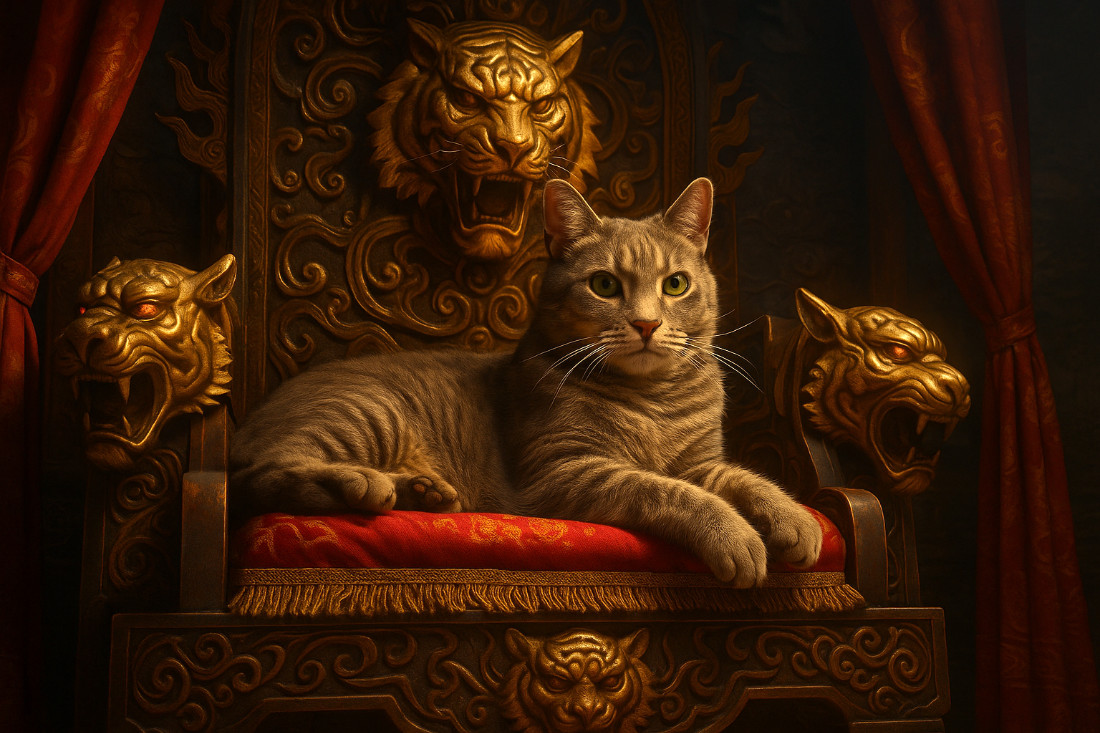
Please find the enclosed image of a less complex, human-powered method of mobility fitting my station and status as an awesome feline. I have also attached an image of an appropriate seat designated for my use: humble yet regal, comfortable yet authoritative, offering supplicants the chance to to approach my feline personage while also clearly delineating the difference in power between myself, on my raised dais, and the lowly humans who seek my favor.
Note the dog pelt as a carpet beneath my throne…er, I mean my chair. Any dog who seeks an audience will be reminded that I’m, like, a jaguar and stuff, and they’d better be sufficiently deferential and pay tribute with delicious gifts.
Your friend and master,
Buddy
This design eschews all the complex and expensive machinery of a Roomba for good, old-fashioned human labor. I will require six Royal Buddy Guards: four to carry me at normal times, and six to carry me after I’ve feasted. I told the concept artist not to go too crazy with the ornamentation. Nothing too ostentatious, as you can see.
This design, inspired by Kublai Khan’s court in Khanbaliq (Cambulac), his winter capital. Unfortunately I couldn’t find much about the throne in his summer capital, Xanadu, but I have commissioned a designer to cook up something appropriate and will forward that to you shortly as well.
As you can see, nothing particularly fancy here, just good, sturdy, common sense necessities. I’m sure you’ll get right on it.
It’s the first time a mountain lion has been spotted in New York since 2011. Authorities aren’t sure if the cat is an escaped — and illegal — pet, or if it made an epic journey from the west coast.
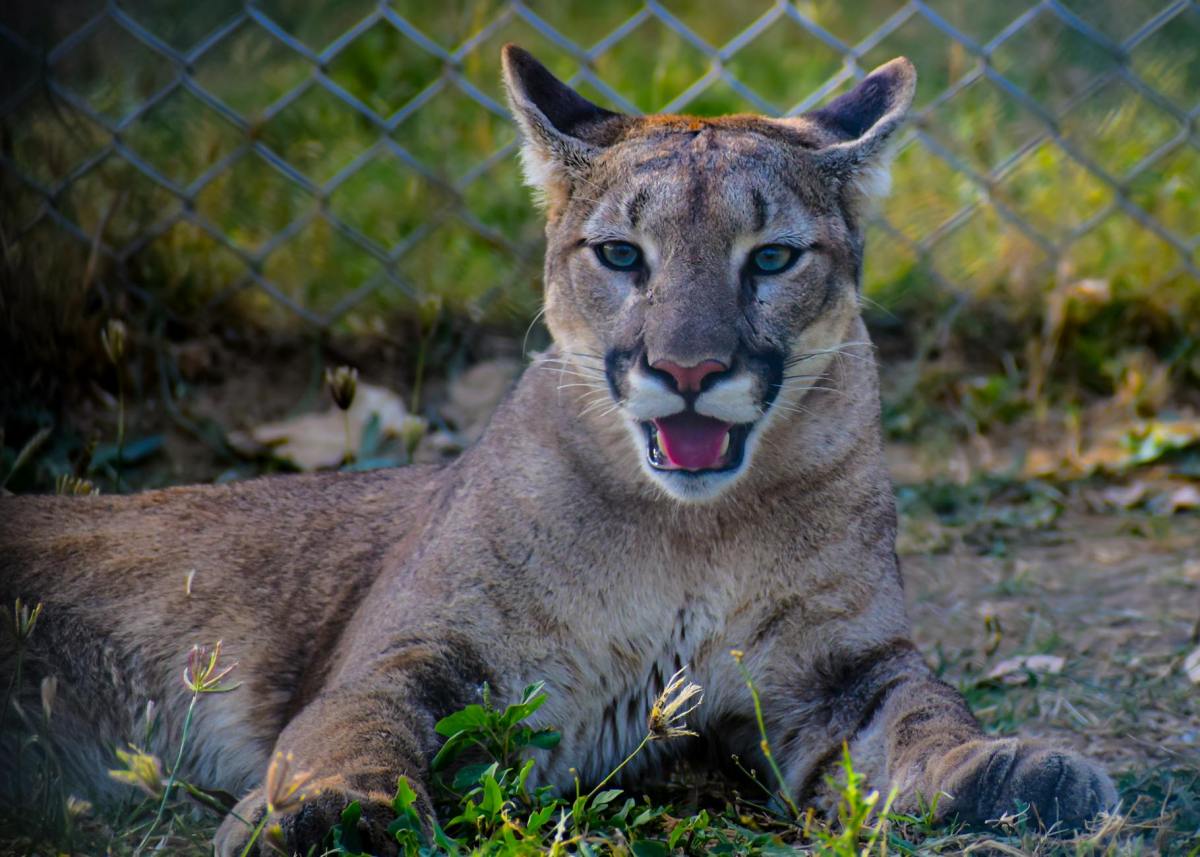
For the first time in 14 years, there’s a puma on the loose in New York.
The wild cat was spotted on a Rochester woman’s Ring doorbell camera padding along the sidewalk in front of her home at about 4 am on Wednesday morning.
A representative from the state Department of Environmental Conservation cautiously said the agency is working on confirming the species of cat in the footage.
But the feline’s size, gait and tail are dead giveaways, despite the dark footage and fleeting glimpse: it’s a puma.
In the brief clip, the wild feline walks past a tree, giving the DEC an important context clue. Michael Palermo, a wildlife manager with the department, said his team measured the tree, allowing them to closely estimate the animal’s size by comparing the footage to their measurements.
“If, in fact, it is some large cat, we would want to question, how did it get here? It’s not impossible for a wild cougar to travel to New York; it’s happened before,” Palermo said. “Was it a captive one that may have been legal as a licensed facility, and if so, did it escape? We still need to do some work to verify anything like that.”
While pumas were once native to New York and thrived in the forested mountains of regions like the Catskills (“cat creek” in Dutch), the last verified sighting in New York was in 2011. That cougar crossed through the Empire State after an epic journey from the west coast, a stronghold for the species.
Some people who posted to a Rochester community group on Facebook are already freaking out, and pumas are widely misunderstood, so it’s important to note the facts:
Pumas are not African lions, are not closely related to them and do not behave like them
They’re not aggressive toward people. In fact, they try to stay away from humans and will go out of their way to avoid confrontation
The exceptions are when people threaten a puma’s cubs or corner the animal, giving it no opportunity to escape
Americans are 150 times more likely to be struck by lightning than killed by a puma. There are only 27 reported cases of people killed by pumas in more than a century. By contrast, an estimated 4,300 to 10,000 Americans have been killed by dogs in that same time span. (Higher estimates include people who did not die immediately from dog bites, and people who died of infections or complications from bites.)
While some people and media reports erroneously call pumas “big cats,” they are not members of the panthera genus. They are felines more closely related to domestic cats and small wildcats. Accordingly, pumas can purr and meow, but they cannot roar
Pumas are also known as mountain lions, cougars, panthers, painters, screamers, catamounts, pangui, onca parda, cuguacuarana, katalgar, chimbica, shunta-haska, fire cats, California lions, ghost cats, and red tigers, among many other names.
In fact, the species has more names than any other animal. That’s because it’s adaptable with a historically wide and varied range. There are some 40 names for pumas in English and more than 80 in Spanish, Portuguese and the languages of indigenous Native American tribes.
The species is officially known as puma concolor, or “puma of one color” thanks to its typically biege fur that, unlike tigers, jaguars, leopards and even house cats, does not have stripes, spots or rosettes.
While it’s extremely unlikely the mystery cougar would pose a threat to people, Rochester police — who have fielded several reports of sightings in recent days — advise locals to keep their pets indoors and to exercise caution while walking their dogs.
Update: The DEC has officially confirmed the cat is a puma, although it was obvious from the footage.
In the meantime, a Rochester man says he saw the wild cat — and people running away from it — on Wednesday night.
Although that sighting has not been substantiated by authorities, it does illustrate the need to educate the public about these animals.
“You know, a mountain lion, it be ‘rawr.’ They be crawling and… serious,” Curtis Jones told WHAM, an ABC affiliate in Rochester.
“I am going to keep this bat right here, man, just in case,” he told a TV reporter. “I am going to protect us, I ain’t going to let nothing happen to us, nothing. OK?”
Let’s hope common sense somehow finds its way into the Facebook algorithm amid all the misinformation as the locals discuss the sightings online.
If you’re from the area, we beg you: please do not attack, shoot or chase after the puma with a baseball bat. The animal does not consider you food, is not a danger to you, and is probably scared and hungry.
That deserves special emphasis if, as the DEC’s staff have said, the puma is more likely an escaped captive than a long-wandering traveler from the western US.
Jones said he saw the puma “slithering” and hear it “rawr,” but it’s worth noting, again, that pumas are members of the genus felinae, meaning they’re genetically and behaviorally much closer to house cats and can meow and purr, but cannot roar. Despite their size, mountain lions are not true “big cats.”
As for Jones, we hope him and his neighbors give the cat a wide berth and let the authorities safely capture it, have a veterinarian evaluate, and figure out where it belongs.
“I don’t play with lions, I don’t play with tigers, bears, nothing in the wild, I don’t play with those, I promise you,” Jones told the station. “I don’t even do rollercoasters. I’m good.”
While the sensational claims have spawned headlines around the world, a closer examination raises more questions.
According to dozens of articles, a pair of new studies throws doubt on the commonly-held view that cats self-domesticated 10,000 years ago by helping themselves to rodents invading human grain stores.
The conventional wisdom for some time has been that house cats are the domesticated ancestors of felis sylvestris lybica, the African wildcat. Their genomes are nearly identical, it’s often difficult even for experts to tell the species apart, and they’re much more tolerant toward humans than the comparatively hostile felis sylvestris, the European wildcat.
But two new papers are raising eyebrows for their fantastic claims that feline domestication was actually human-driven and began about 5,000 years ago in Egypt.
Specifically, the papers claim cats were sacrificed en masse by the cult of Bastet, an Egyptian feline goddess, guiding the species toward domestication in a way that doesn’t quite make sense with what we know of evolution.
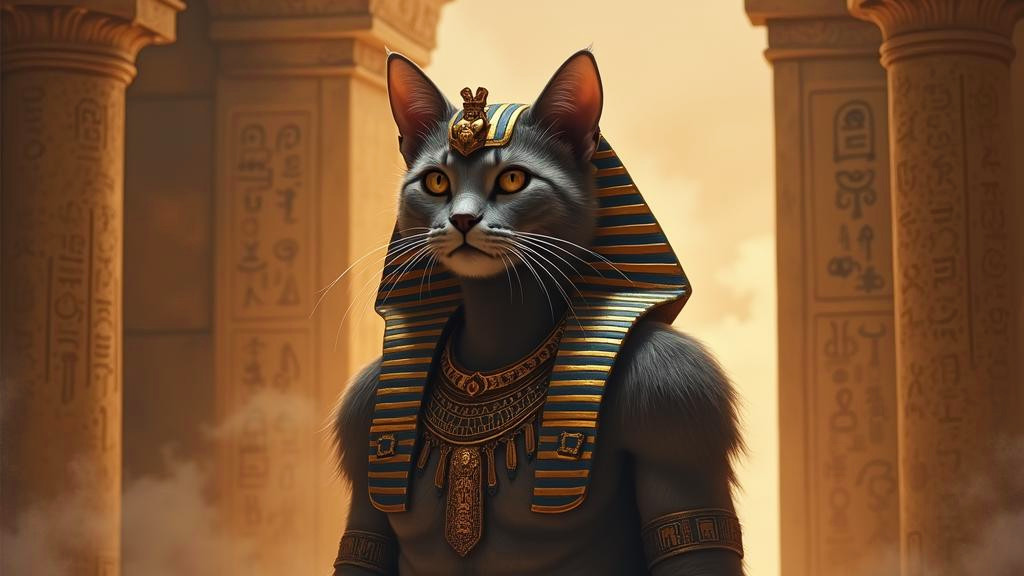
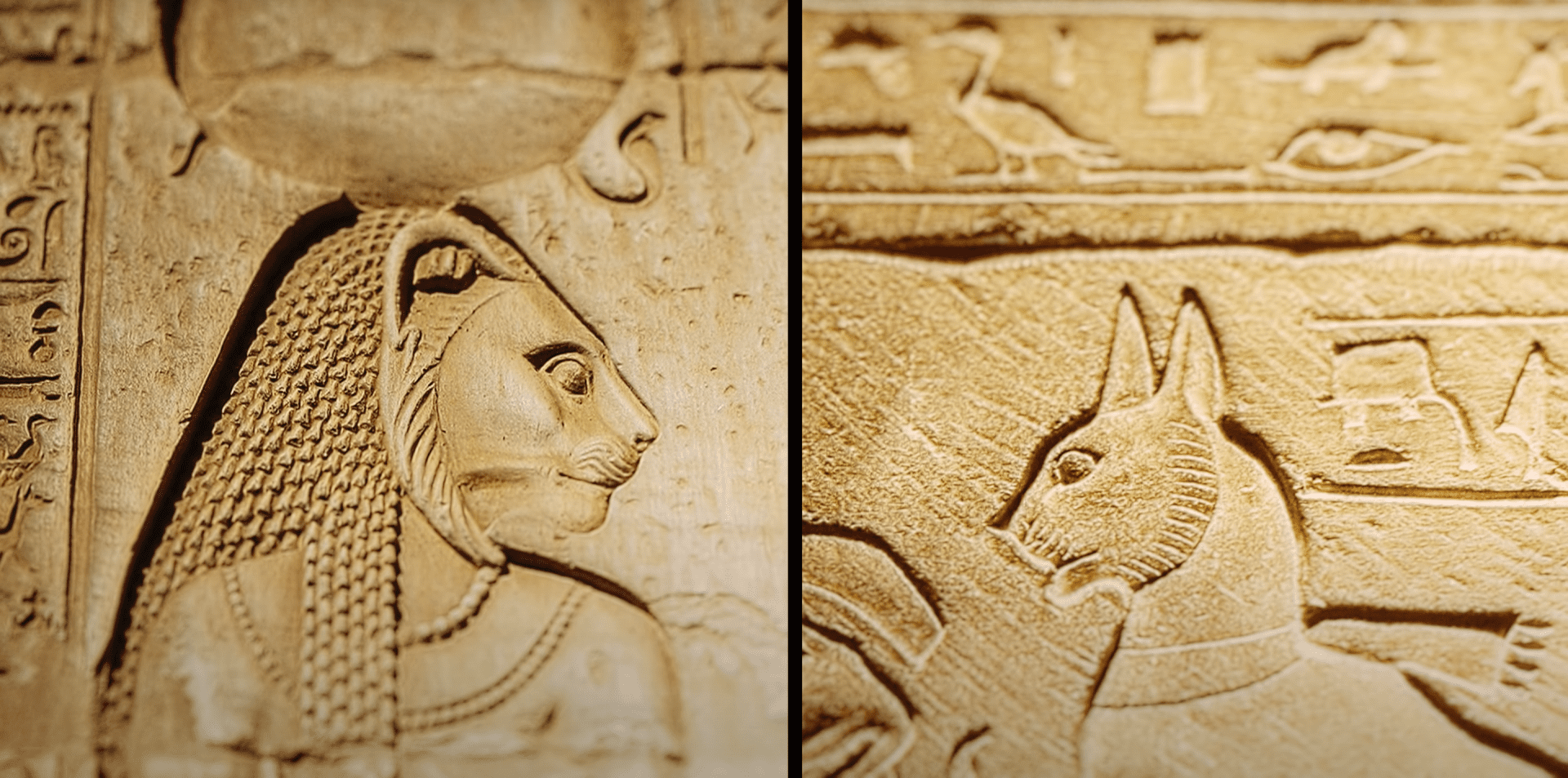
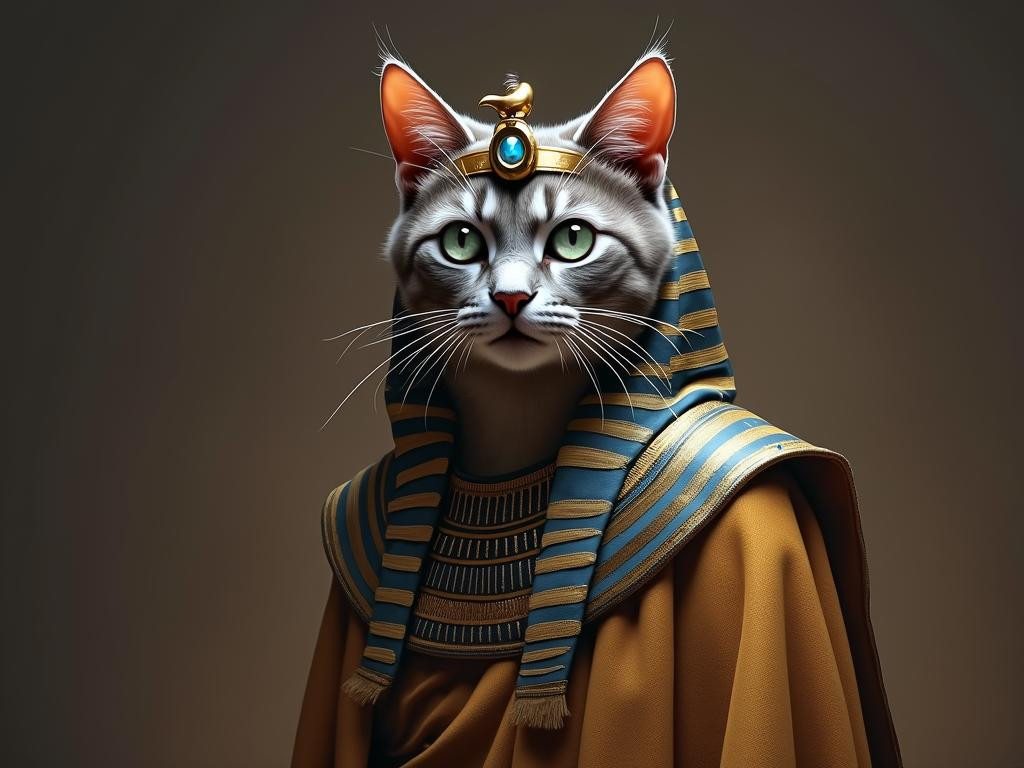
Bastet was originally depicted with the head of a lion, but the imagery around her evolved as she became a more prominent deity in the Egyptian pantheon. Later glyphs depicted her with the head of a domestic cat or African wildcat.
There are two main elements to the new claim:
The earliest grave in which a cat was buried with a human was dated to about 10,000 years ago, and was found in Europe. But an analysis of the cat’s remains indicate it had DNA somewhere between a wild cat and a domestic feline. That, the authors claim, throws into doubt the idea that cats drifted into human settlements, drawn by the presence of rodents.
If domestication was closer to 5,000 years ago, that would coincide with the rise of the cult of Bastet, the Egyptian cat goddess, around 2,800 BC.
Instead of the feel-good, fortuitous sequence of events the scientific community has accepted as the likely genesis of our furry friends, the authors of the new papers claim aggressive and fearful traits were essentially murdered out of the feline population by Bastet cultists who sacrificed cats in large numbers and mummified their corpses.
Neither paper has been peer-reviewed yet, and experts on ancient Egypt, genetics and archeology have already begun pushing back.
The new timeline, they say, doesn’t quite add up, with cat mummies found throughout different periods in Egyptian history, not just during the height of Bastet’s popularity in the Egyptian pantheon. Bastet’s popularity came approximately 700 years later than the authors claim the sacrifices began, and early imagery of the felid goddess depicts her with a lion head. It wasn’t until later centuries that Bastet was represented with the features of a domestic cat.
The powerful Pharaoh Budhotep I, considered an apocryphal king by some, sent a fleet of ships to the Americas to bring back turkey, according to legend. Credit: The Royal Buddinese Archaeological Society
Separate from timeline concerns is the lack of historical evidence. Cats were revered in ancient Egypt, and while there are an abundance of cat mummies — as well as the mummified remains of many other animals — that does not mean the cats were ritually sacrificed.
Indeed, archaeological, hieroglyphic and anthropological evidence all show cats enjoyed elevated status in the Egypt of deep antiquity, long before the nation became a vassal state of the Greeks, then the Romans.
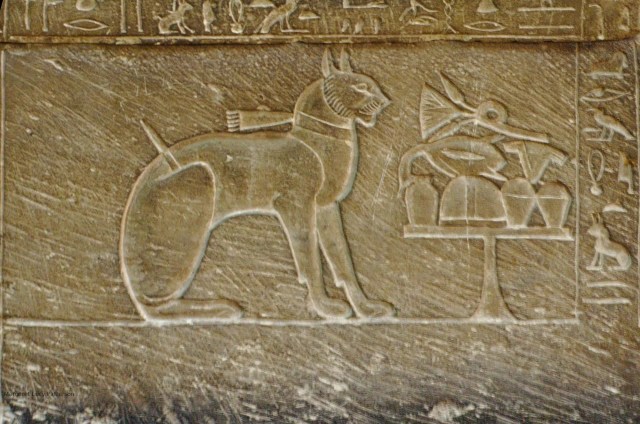
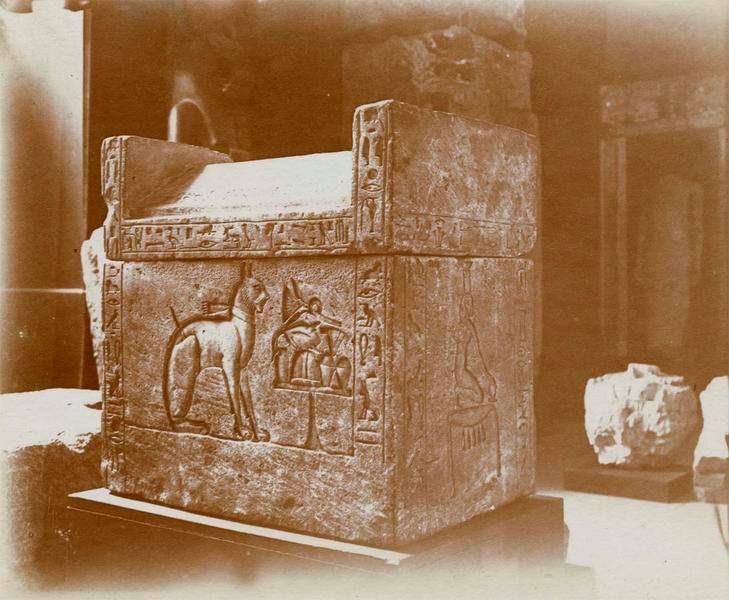
Cats were associated with magic, the divine and royalty, and cats who were the favored pets of Egyptian elites were given elaborate burials. Like Ta-miu, Prince Thutmose’s cat who is known for her grand sarcophagus decorated with images of felines and prayer glyphs meant to guide her to the afterlife.
Cats were sacred companions to the Egyptians
When cats are found buried with humans, the more common explanation is that those cats were the pets and companions of those humans. If the authors of the two new papers want to prove their claim that cats were ritually sacrificed by the tens of thousands — slaughter on a scale that would influence evolution — they’ve got a lot more work ahead of them. (And the burden of proof rests squarely with them, as the originators of the claim.)
Not only does their research attempt to change the origin stories of kitties to an ignominious tale of human barbarity, if we take their assertions at face value, we’re talking about a case of “domestication by slaughter.”
While it may be true that the earliest evidence of companion cats outside of North Africa revealed hybrid DNA, that doesn’t cast doubt on the commonly-accepted view of feline domestication, it strengthens it. Domestication is a process that takes hundreds of years if not more, and it occurs on a species level, so it makes perfect sense that cats found in burial sites from early civilization would be hybrids of domestic and wild. Those felines were of a generation undergoing domestication, but not quite there yet.
A detail from the sarcophagus of Ta-miu, Prince Thutmose’s beloved cat.Ta-miu, Prince Thutmose’s beloved cat, was buried in an elaborately decorated sarcophagus with glyphs and offerings meant to guide her to the afterlife. Thutmose, son of Amenhotep III and Queen Tiye, lived in the 14th century BC.
Killing off docile cats?
Which brings us to another significant problem with the claim: if the ancient worshipers of Bastet were selecting the most docile and easiest-to-handle wildcats for their sacrifice rituals, as claimed, then they would be influencing evolution in the other direction.
In other words, they’d be killing off the cats who have a genetic predisposition toward friendliness, meaning those cats would not reproduce and would not pass their traits down. It would have the opposite effect of what the papers claim.
So despite the credulous stories circulating in the press and on social media, take the assertion with a grain of salt. Something tells me it won’t survive peer review, and this will be a footnote about a wrong turn in the search for more information on the domestication of our furry buddies.
Cats would like human civilization to return to the good old days.





 Pain In The Bud