Saber-Toothed Cats Were Fearsome But Had A Major Disadvantage, New Research Shows

Their greatest strength was also their greatest weakness, which is why modern big cats have smaller, sturdier teeth.

Saber-toothed cats — an umbrella term for a wide variety of felid species with massive, scimitar-like teeth — are some of the most terrifying prehistoric predators, carnivorousness incarnate.

But it turns out the teeth that give them their name and their fearsome reputation were also their greatest weakness.

The problem? While the oversized upper canines were optimal for delivering kill bites and tearing into flesh, they could break if the teeth met bone with force.

“Slicing and crushing are basically the two main things a carnivorous mammal’s teeth can do,” said Narimane Chatar, a postdoc at UC Berkeley studying carnivores. “But for saber-toothed animals, there’s a clear trade off. Those upper canines were extremely efficient but also break very easily.”

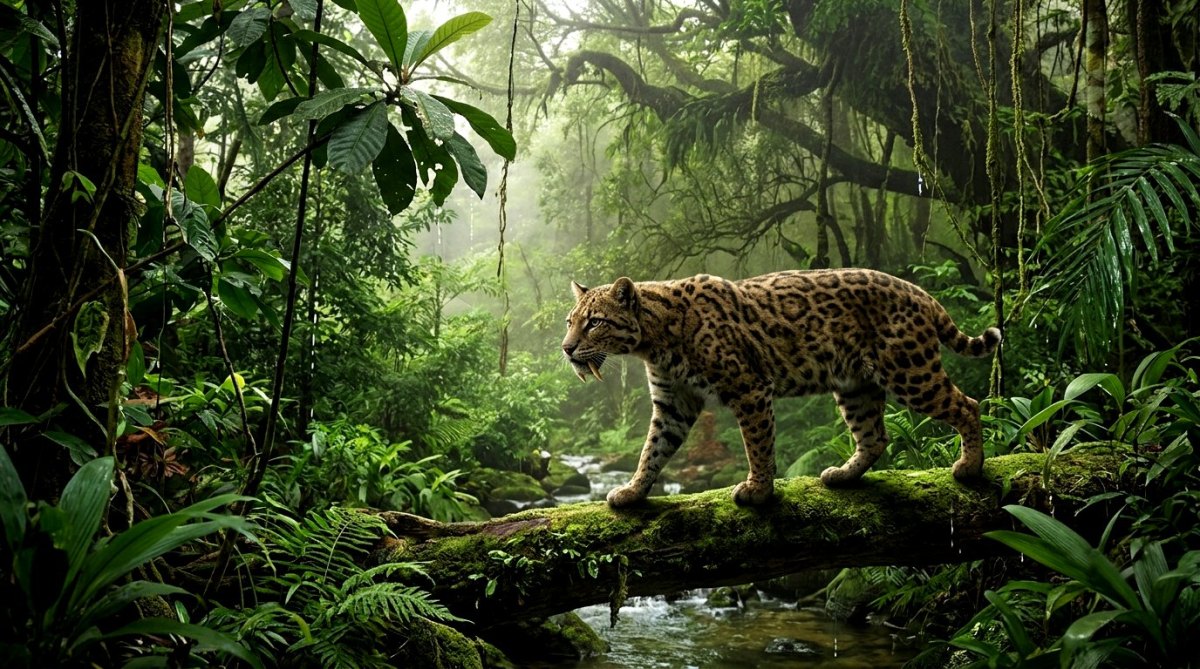
As experts on extant big cats are well aware, a hypercarnivore with broken or damaged fangs can struggle to take down their typical prey. That’s what often turns tigers, leopards and lions into man-eaters. (Interestingly, there are no documented accounts of man-hunting jaguars. Jaguar attacks on humans are exceedingly rare, and while they have killed humans, there’s no jaguar equivalent of the Chamapawat Tiger or the Leopard of Rudraprayag.)
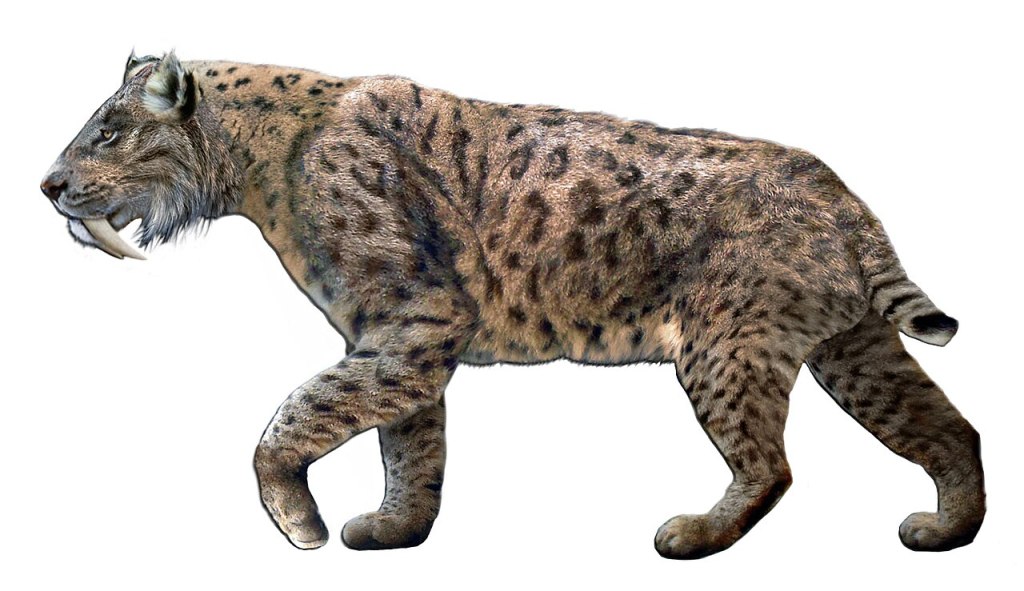
A reconstruction of Smilodon, commonly known as the saber-toothed tiger, although it’s not closely related to modern tigers.
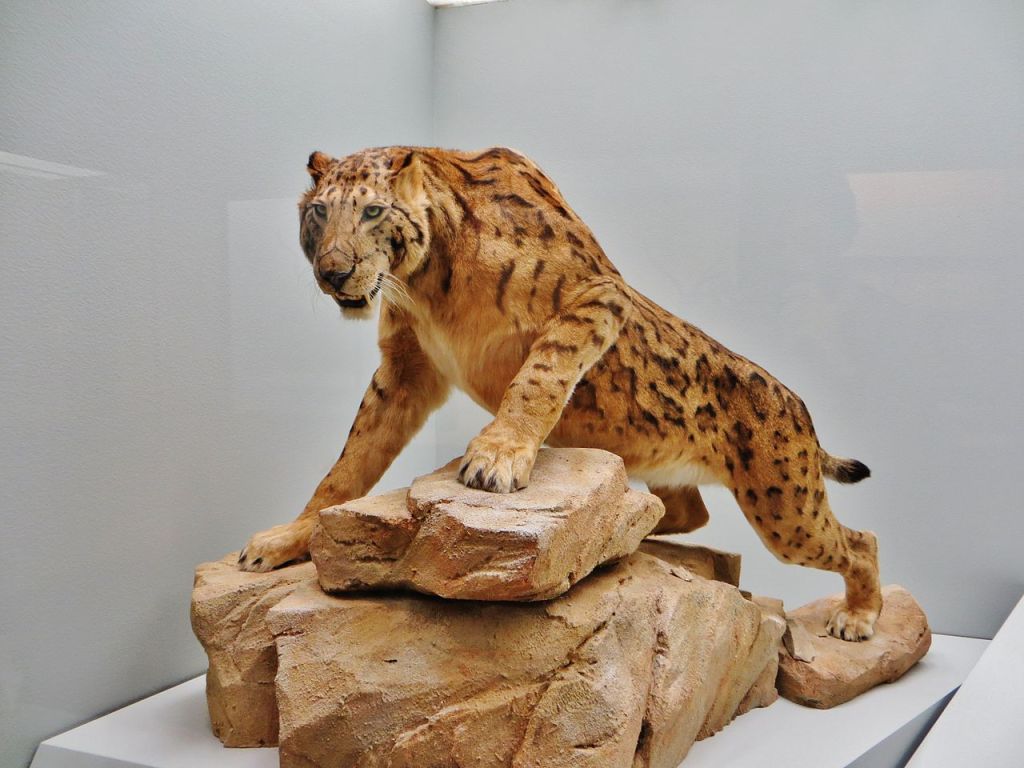
A reconstruction of Megantereon, a saber-toothed cat that went extinct as late as 350,000 years ago.

During her research, Chatar found the skull and teeth of a saber-toothed cat in Berkeley’s archives and realized it was not the same species associated with saber-toothed cats in the Americas.

Although Smilodon and Homotherium are the most well-known species, “there was a crazy variety of saber-toothed cats,” Chatar said.

Her research has confirmed the prehistoric cat’s sword-like fangs were double-edged, literally and figuratively. Per UC Berkeley:

In simulations, 3D-printed saber teeth from various species proved ideal at penetrating a gel with the consistency of flesh but fractured easily against simulated bone. In the former tests, Smilodon came out on top. In the latter, Smilodon fared the worst.

Smilodon lived in the Americas and went extinct about 8,200 years ago. Los Angeles’ La Brea Tar Pits have yielded a number of preserved skeletal remains, making Smilodon and its three sub-species among the best-known prehistoric felids.

Smilodon and Megantereon images via Wikimedia Commons.
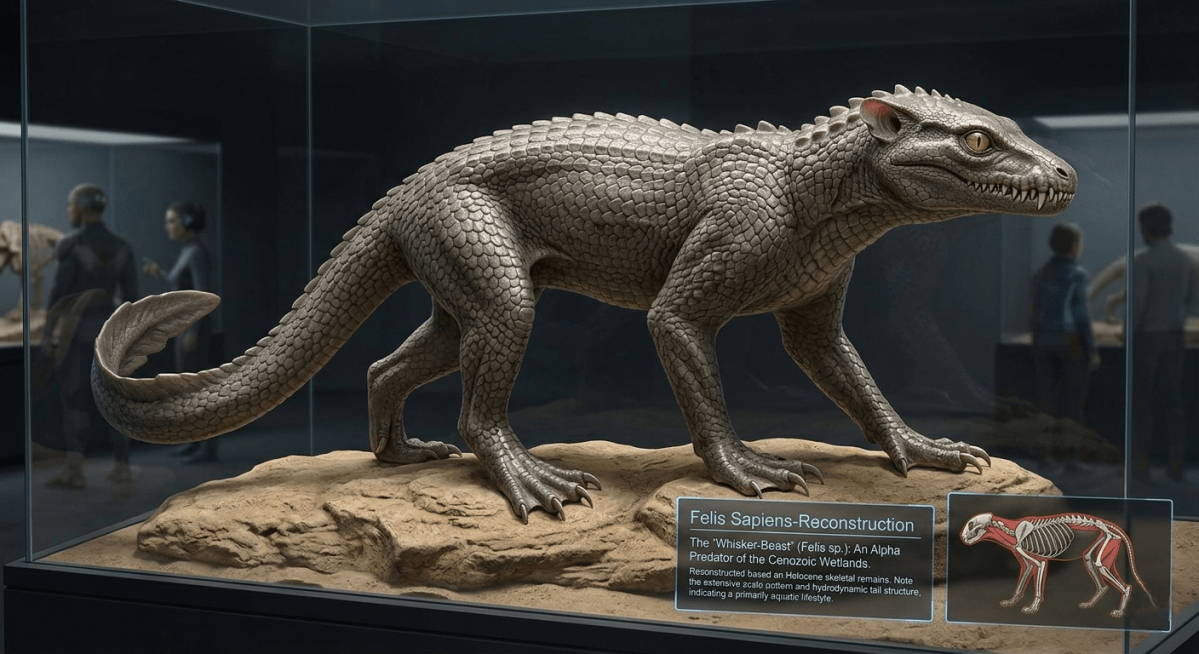
If Paleontologists Of The Far Future Tried To Reconstruct Cats

We’ve made enormous mistakes in our reconstructions of prehistoric creatures, including dinosaurs and mammals. Would paleontologists of the future misinterpret the clues our civilization leaves behind?

Imagine if, far in the future, humanity has spread across a healthy swath of space, colonizing worlds across dozens of light years.

Academics at a prominent science institute, looking to learn more about the humble beginnings of our species, fund a scientific expedition to Old Earth, where radiation and toxicity have finally declined to a point which allows teams to poke through the ruins of our civilization.

As they piece together clues from the rubble, they find references to companion animals who have been domesticated while their wild counterparts continued on.

What does a cat look like? they wonder. Then they find the bones, beginning with a handful of incomplete skeletons…

Critics have long argued that our depictions of dinosaurs are like skeletons wrapped in flesh, with modern representations doing a poor job of representing complete animals. What if the paleontologists and historians of the future mistranslate a word like “fur” or don’t realize the skeletons of cats are the same furry creatures that were human companions?
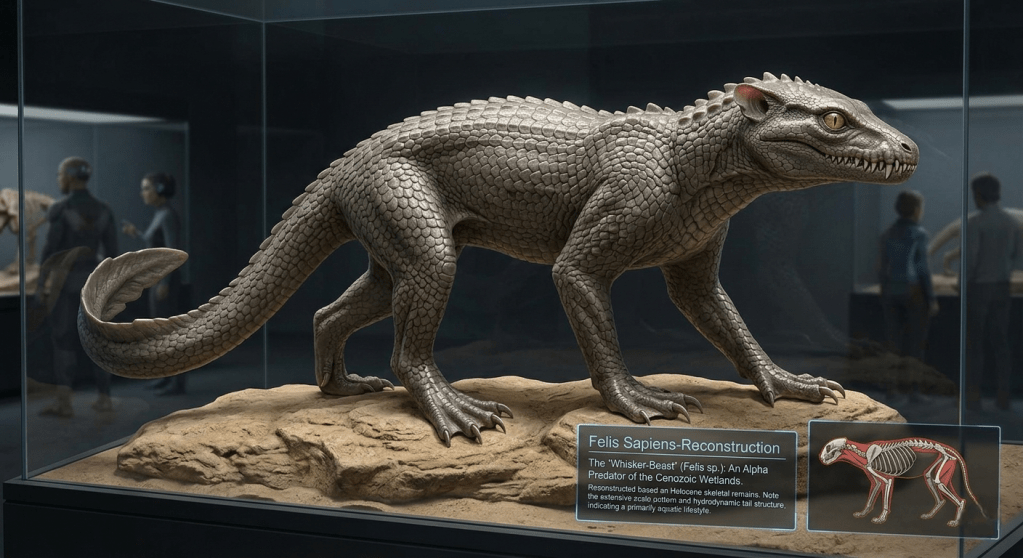
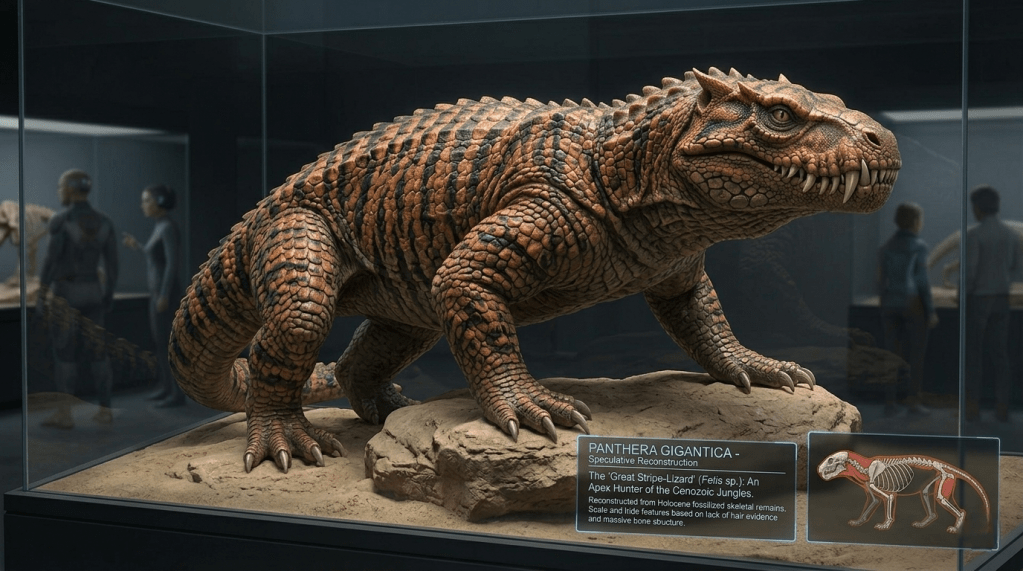
A tiger imagined as a semi-aquatic animal with scales instead of fur, and a skull interpreted in much the same way we interpret dinosaur skulls. “Surviving texts make clear the tiger was comfortable in water, and like its distant cousin the crocodile, would remain mostly submerged, looking for opportunities to ambush prey.”
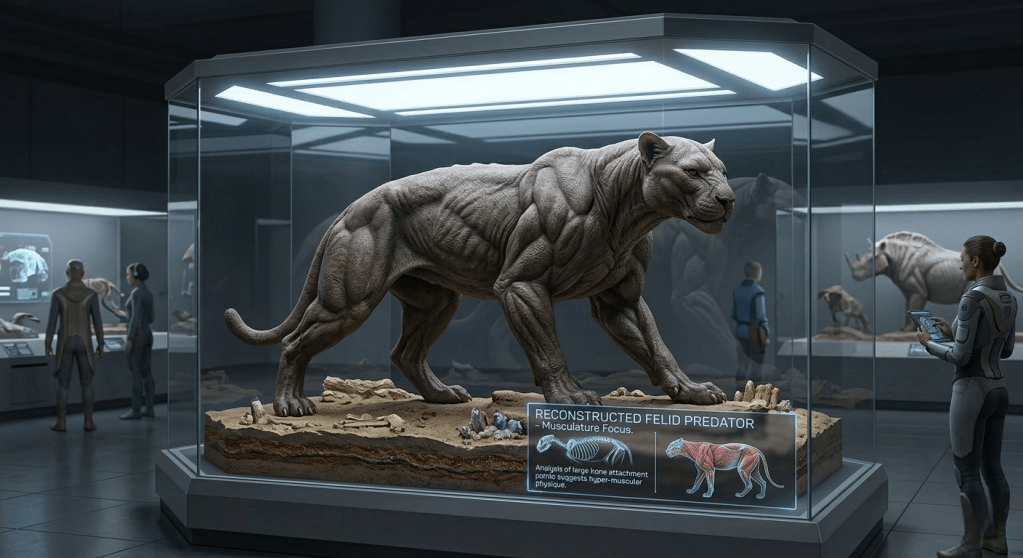
No fur, just musculature, as if an anatomy book of animals is one of the few texts to survive in hard copy.
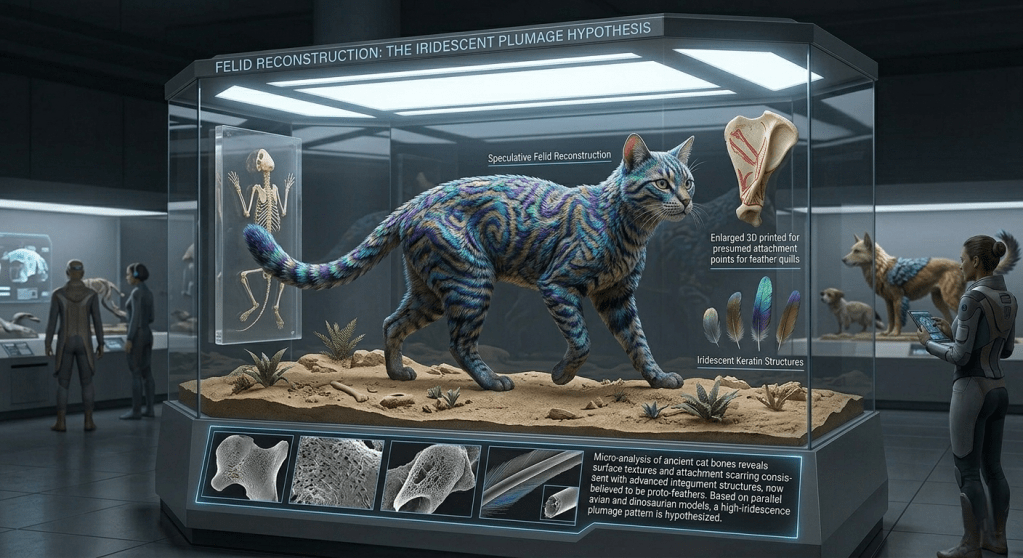
A cat with magnificent plumage: “Research shows felines engaged in elaborate mating rituals, using their vivid colors and patterns to demonstrate virility to females in heat.”
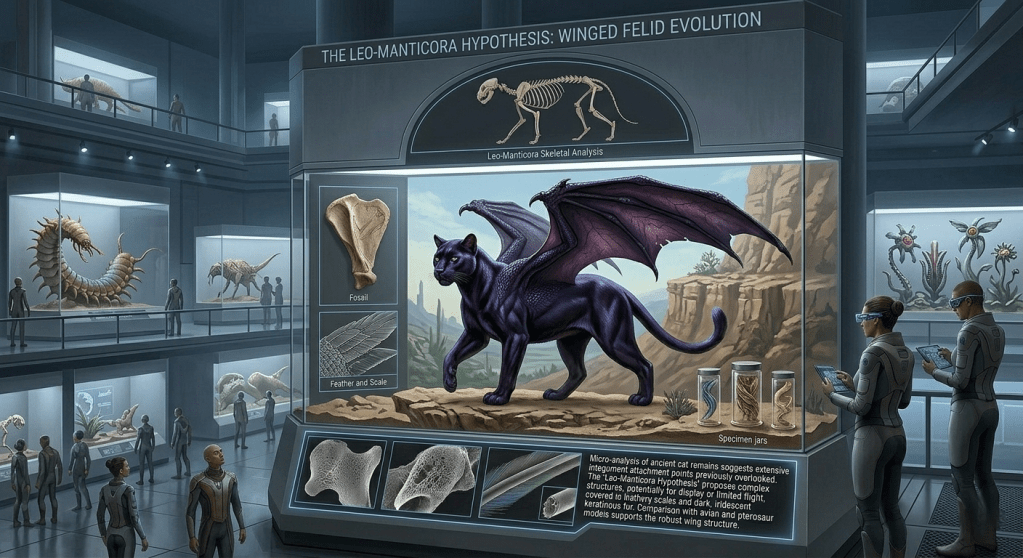
Finally, a winged cat. Outlandish? Maybe. But what if of the scraps of mythology to survive is a statue of a manticore, or paleontologists discover the bones of a cat species mingled with those of a large bird that died alongside it in a tar pit? In our time we’ve accidentally invented entire species of dinosaurs by mistakenly matching skulls from one species onto the spines of others, or wildly misinterpreting clues in the body plans of new and unfamiliar creatures.