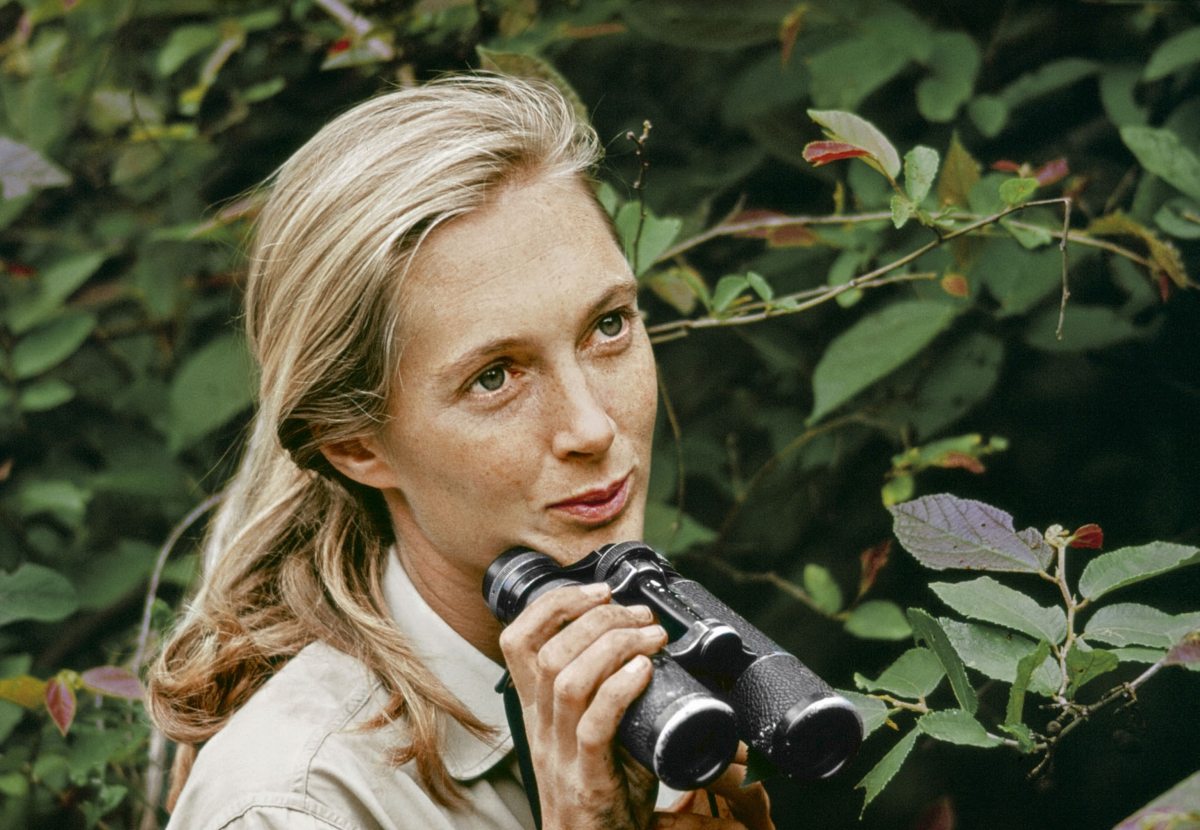
Jane Goodall Forever Changed Our Understanding Of Animals

Goodall spent the better part of seven decades with the chimpanzees of Tanzania. Her discoveries were so profound, they forced the scientific community to reevaluate what separates humanity from other animals.

As I’m sure most of you have heard, Jane Goodall passed away Wednesday of natural causes. She was 91.

Goodall’s work was revolutionary and her career was extraordinary. It’s difficult to imagine now, but when Goodall first pitched camp in Tanzania’s Gombe Stream National Park in July of 1960, the scientific community knew virtually nothing about great apes.

Goodall wasn’t exactly welcomed with open arms. Being female and photogenic were the first two strikes against her in the eyes of the establishment.

She was self-taught, didn’t have a degree (she later earned a doctorate at Cambridge), and perhaps her biggest “sins” involved empathy and an attitude more buttoned-up scientists saw as anthropomorphizing the animals.

Goodall with a Gombe chimpanzee. Credit: Wikimedia Commons

Goodall gave the chimps names (a no-no at the time among scientists), carefully observed and recorded their family trees, worked out the obtuse — to human eyes– social hierarchy of primate troops, and witnessed behavior that no one had ever seen before.

She saw friendship, love and loyalty among the chimpanzees, witnessed a bitter war between the Gombe troop and a splinter group, followed families over generations, and saw one chimp die of a broken heart after his mother passed away. (I recommend Goodall’s 1990 book, Through A Window: Thirty Years With The Chimpanzees of Gombe, and the 2002 follow-up, My Life With Chimpanzees, for anyone who wants to read more.)

Her first major contribution, in October of 1960, not only fundamentally challenged our assumptions about animals, it forced us to change the way we regard our own species.

Goodall, observing the chimpanzees from a distance despite the rain that day, watched as a male she named David Graybeard repeatedly dipped blades of grass into the Earth. Curious, Goodall approached the site after Graybeard left, grabbed a few blades of grass and imitated what she’d seen the chimp doing.

She was astonished when she pulled the grass out and the strands were covered in termites. David Graybeard had been eating. He was using a tool to eat!

Goodall at Gombe in the early 1970s. The primatologist secured unprecedented access to the chimpanzees by gaining their trust. Credit: Wikimedia Commons

The discovery was huge because scientists believed tool use was, at the time, limited to mankind. We build and use tools, animals don’t, the thinking went.

When Goodall reported her findings to her mentor, anthropologist Louis Leakey, his prompt response indicated the gravity of her discovery: “Now we must redefine ‘tool,’ redefine ‘man,’ or accept chimpanzees as humans.”

Goodall never stopped working with the chimpanzees of Gombe, and today her formerly humble camp has become a permanent compound where researchers — all inspired by Goodall’s story — continue to study our genetic relatives.

But in her later years, Goodall became known for her activism just as much as her work as a scientist. She traveled constantly, engaging audiences on the subjects of animal conservation, respect for nature and understanding our place in the natural order. It’s a job that has become more necessary than ever as relentless human expansion, habitat fragmentation and human behavior push thousands of species toward extinction.

Credit: The Jane Goodall Institute

We lost Frans de Waal, the famous primatologist, in 2024. Now we’ve lost Goodall, and Sir David Attenborough is less than six months shy of his 100th birthday. We’re going to need people to pick up where they left off, and the job is much more difficult than it looks, requiring expertise, charisma and the ability to connect with audiences who know little about the subject matter.

But that’s a problem for another time. For now, let’s remember Jane and appreciate all she’s done over the span of an incredible life and career.
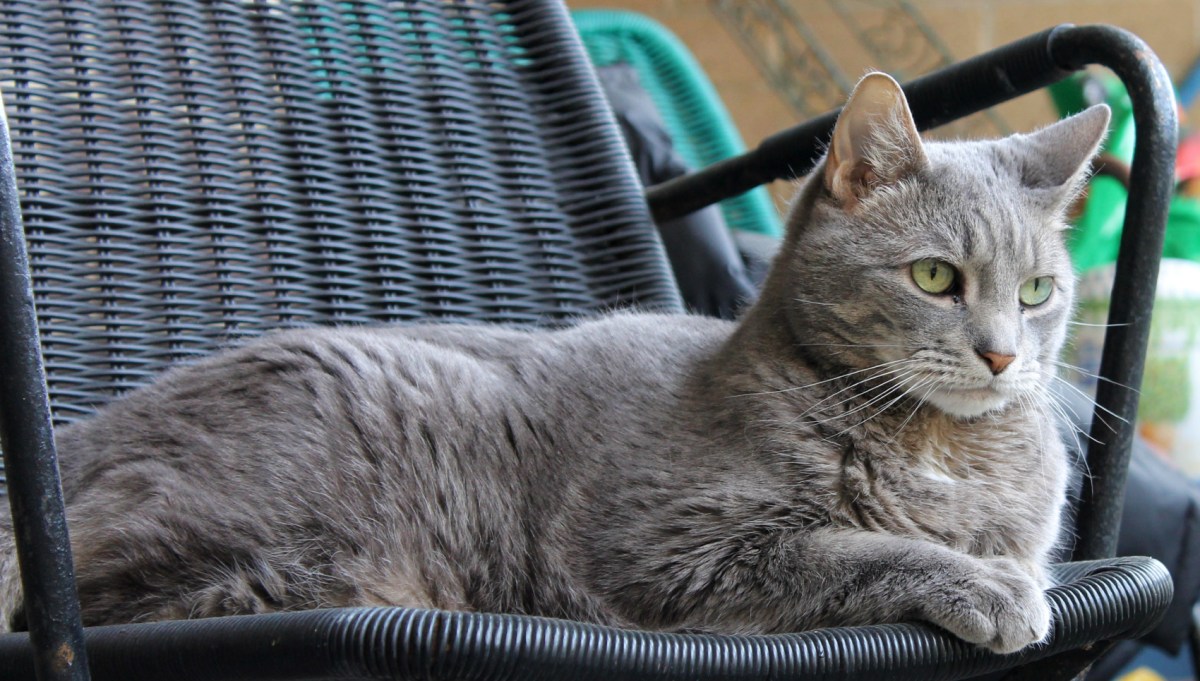
Dear Buddy: Why Should Us Cats Stay Indoors?

Buddy claims he’s a tiguar, not a domestic cat, and says allowing him outside is tantamount to Queen Daenerys allowing her dragons to roam the countryside in Game of Thrones.

Dear Buddy,

Dude. Everyone’s getting so uptight lately about making sure we stay inside. We’re predators! We should be running our neighborhoods, but no, our humans want to “protect” us.

As a famously fierce and ripped feline, what’s your take?

Frustrated in Fallbsurg

Dear Frustrated,

I empathize with you, I really do, but the way it was explained to me is that I’m a terrifying cat with huge meowscles, and by keeping me indoors, my human is protecting dogs, humans and other lower life forms from my potential wrath.

“Do they let tigers and jaguars run around New York?” Big Buddy asked me.

“Uh, no, I guess they don’t,” I said.

“Of course not. And that’s exactly why we can’t have you roaming the neighborhood. Think of the quandary Daenerys Targaryen had in Game of Thrones when her dragons were feasting on livestock from the farms of her subjects!”

And he’s right. A Buddy on the loose would cause all sorts of panic and other problems. I don’t want to be responsible for what happens when a bunch of humans freak out and go recklessly running in every direction, terrified I’m going to catch them.

If it takes sacrifice on my part to keep people comfortable, then I’m willing to endure the hardship of living indoors with a servant who heeds my every beck and call. It’s just the honorable thing to do.

Your friend,
Buddy

Buddy the Tiguar


Dear Buddy,

Hey, pal! How have you been?

Friendly in Florida

Hey Friendly,

I’ve been handsome, how have you been?

Buddy


Dear Buddy,

You’re not a tiger! Or a jaguar! You’re a chubby, sedentary, spoiled house cat with an enabler of a human who encourages your delusions of being a powerful big cat!

Just stop already, it’s embarrassing!

Cringing In Connecticut

Dear Cringing,

First of all, I am a tiger/jaguar, or a tiguar if you will. I just haven’t hit my growth spurt yet. My human assures me it’s gonna happen.

I also asked my human if it’s true that he’s “an enabler” who encourages my supposed delusions. His response: “That’s absurd. Who’s a big, bad cat? You are, aren’t you? Yes, you are!”

So obviously you’re a hater and soon you’ll see me prowling the jungle with David Attenborough talking about how dangerous I am! Just wait!

Buddy the Badass

The Best Movies About Cats

A comedy, a remarkable documentary, a classic and a surprise hit make the list for the best cat-centric movies.

Keanu (2016): Jordan Peele stars as Rell, a man who is despondent after he’s dumped by his girlfriend. When a kitten shows up on his front step, Rell takes the little guy in and his life is suddenly transformed. He’s enamored with the kitten, whom he names Keanu, can’t stop talking about him, and even begins photographing him in dioramas based on famous films.

But tragedy strikes when drug dealers ransack Rell’s home, mistaking it for the small-time drug dealer’s home next door, and take Keanu. Rell and his cousin, Clarence (Keegan Michael-Key) embark on a quest to get Keanu back no matter what it takes, even if it means posing as a pair of contract killers to infiltrate the criminal world where Keanu’s been taken. It’s every bit as absurd as you’d imagine — but it’s also very, very funny. “Actually, we’re in the market right now for a gangsta pet,” is not a line I’d expect to hear in a movie, but in Keanu it works.

Flow is the surprise hit of the awards season.

Flow (2024): Even the hype of Golden Globe awards and Oscar nominations can’t take away from the powerful impression Flow makes. By now most of us are probably familiar with it through clips or trailers, but they don’t do justice to the beauty of director Gints Zilbalodis’ world, nor how naturally expressive his protagonist, Cat, is.

The animators put in an extraordinary amount of effort into understanding and perfectly replicating every feline behavioral quirk, every hackled coat and curiously bent tail. They accomplish the same with Cat’s companions, including a Labrador, a secretarybird, a lemur and a capybara. And while we’re dazzled by the visuals and energetic narrative, Zilbalodis poses a thematic question as the flood waters take the animals through the ruins of human civilization: without people, the world will go on. What would a world without humans look like? Cat and his companions tell us one story while the environment tells us another, and the result is greater than the sum of its parts.

Tiger: Spy In The Jungle

Tiger: A Spy In The Jungle (2008): What makes this documentary so special is that it was filmed over three years in an Indian tiger preserve, and the filmmakers not only disguised cameras as rocks and tree stumps, they trained elephants how to carry “trunk cams,” achieving shots which no human cameraman could ever hope to get without spooking the subjects of the film.

Tigers don’t hunt elephants because they’re simply too big. Unlike lions, they’re not feeding a whole pride, and they don’t hunt cooperatively. It’s just not worth the effort required to take down the giant, majestic beasts. As a result, tigers and elephants not only tolerate each other, they mostly ignore each other’s presence.

One of the cubs stares curiously at a camera disguised as a rock in Tiger: Spy In The Jungle

That allowed the team to get unprecedented shots of an iron-willed tigress raising a litter of four cubs by herself. We see their dens, we watch the cubs play, and we witness the incredible prowess of the mother, who according to narrator David Attenborough has a remarkable 80 percent success rate while hunting. That’s pretty much unheard of.

With four young mouths to feed in addition to herself, the tigress is determined, and also supremely skilled. The whole jungle erupts in a cacophony of shrieks and alarm calls the instant a single animal gets a whiff of the tigress’ presence, but that still doesn’t stop her from achieving her goal.

Still, the odds are against all four cubs making it, with dangers like adult leopards, sickness and hunger. Through Spy In The Jungle, we get to see the entire journey, from the newborn cubs to the confident juveniles on the cusp of adulthood. There’s no better tiger documentary anywhere.

Shere Khan, right, makes an intimidating villain in The Jungle Book (2016)

The Jungle Book (2016): With so many Disney cash-grabs in the form of live-action remakes of classics that did not need to be remade, it’s easy to dismiss The Jungle Book. The thing is, this movie has heart. Neel Sethi is an earnest Mowgli, Idris Elba voices the infamous tiger Shere Khan, and to balance out the felid villainy with some heroism, Sir Ben Kingsley voices Bagheera, the noble leopard who discovers baby Mowgli in the jungle and protects him as his wolf friends raise the boy. Lupita Nyong’o as the wolf matriarch Raksha, Bill Murray as the honey-obsessed bear Baloo and Christopher Walken as orangutan King Louie round out a great cast.

WATCH: New Buddy Wildlife Documentary Premieres On PITB!

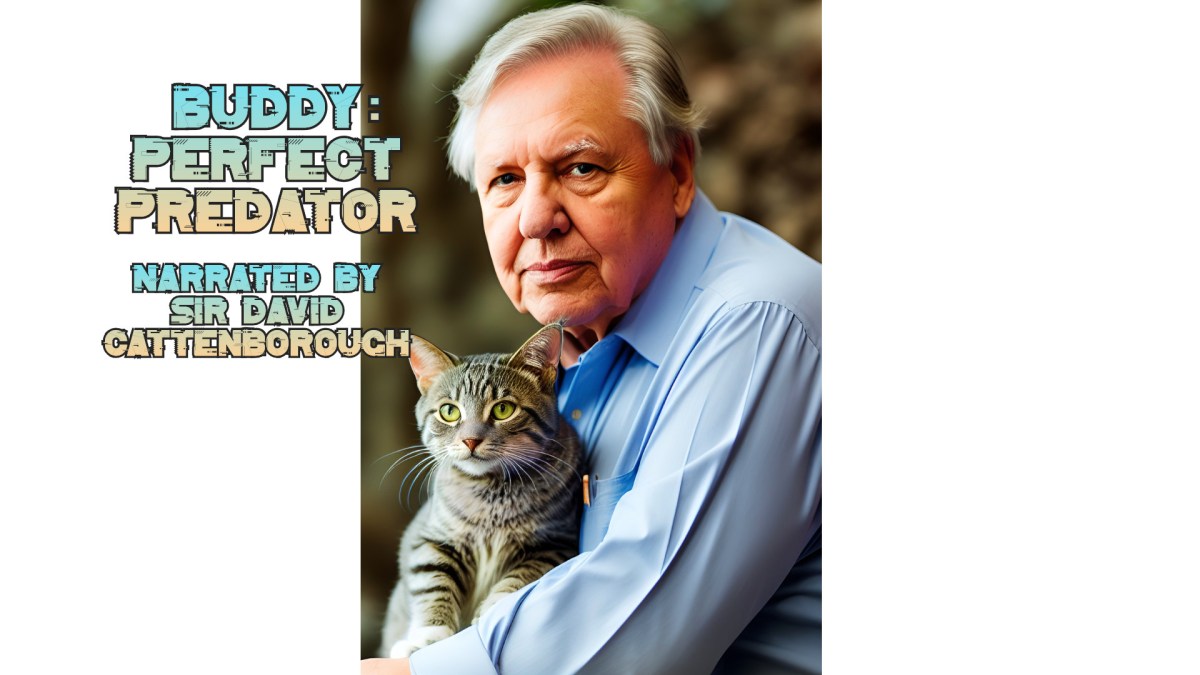
Watch the premiere of Buddy: Perfect Predator exclusively streaming NOW on PITB!

It’s here!

The long-awaited documentary feature: “Buddy: Perfect Predator” has arrived on PITB.

Join Sir David Cattenborough and his intrepid crew of wildlife videographers as they follow the elusive Buddinese tiger through the dense undergrowth and dangerous terrain of its natural habitat in suburban New York.

Watch never-before-seen footage of the silver-furred Buddy stalking his prey, lounging, sleeping and eating, and follow a tense encounter between the Buddy and a red laser dot.

“I’m extremely proud of the work we’ve done here, and I believe our audience will be thrilled to learn more about this little-known creature, who shares so many qualities with tigers, lions, jaguars and leopards,” Cattenborough said.

“We fell in love with the silver-furred Buddy as we kept our cameras trained on him, and we think our audiences will find him just as charming as we did,” the British naturalist said. “He’s such a good boy!”

(Please ensure your sound is enabled or wear headphones to hear the narration and the atmospheric sounds.)

About this video:

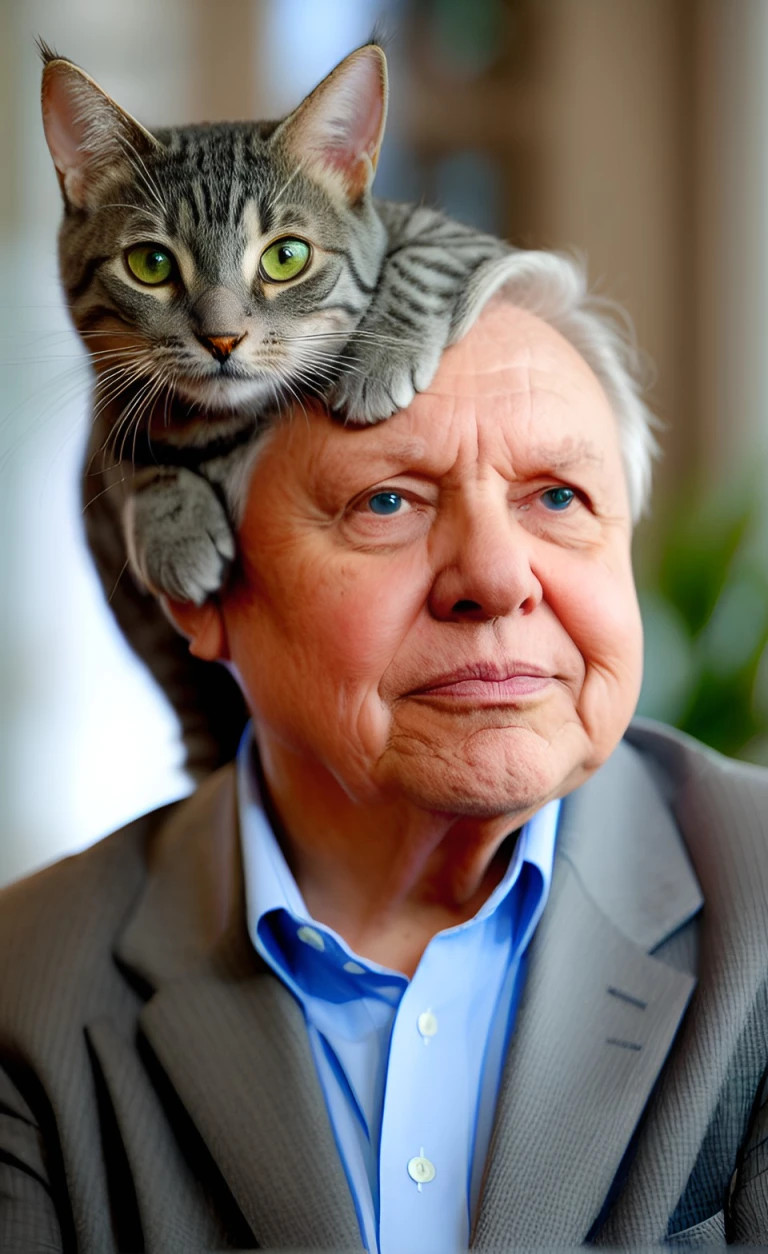
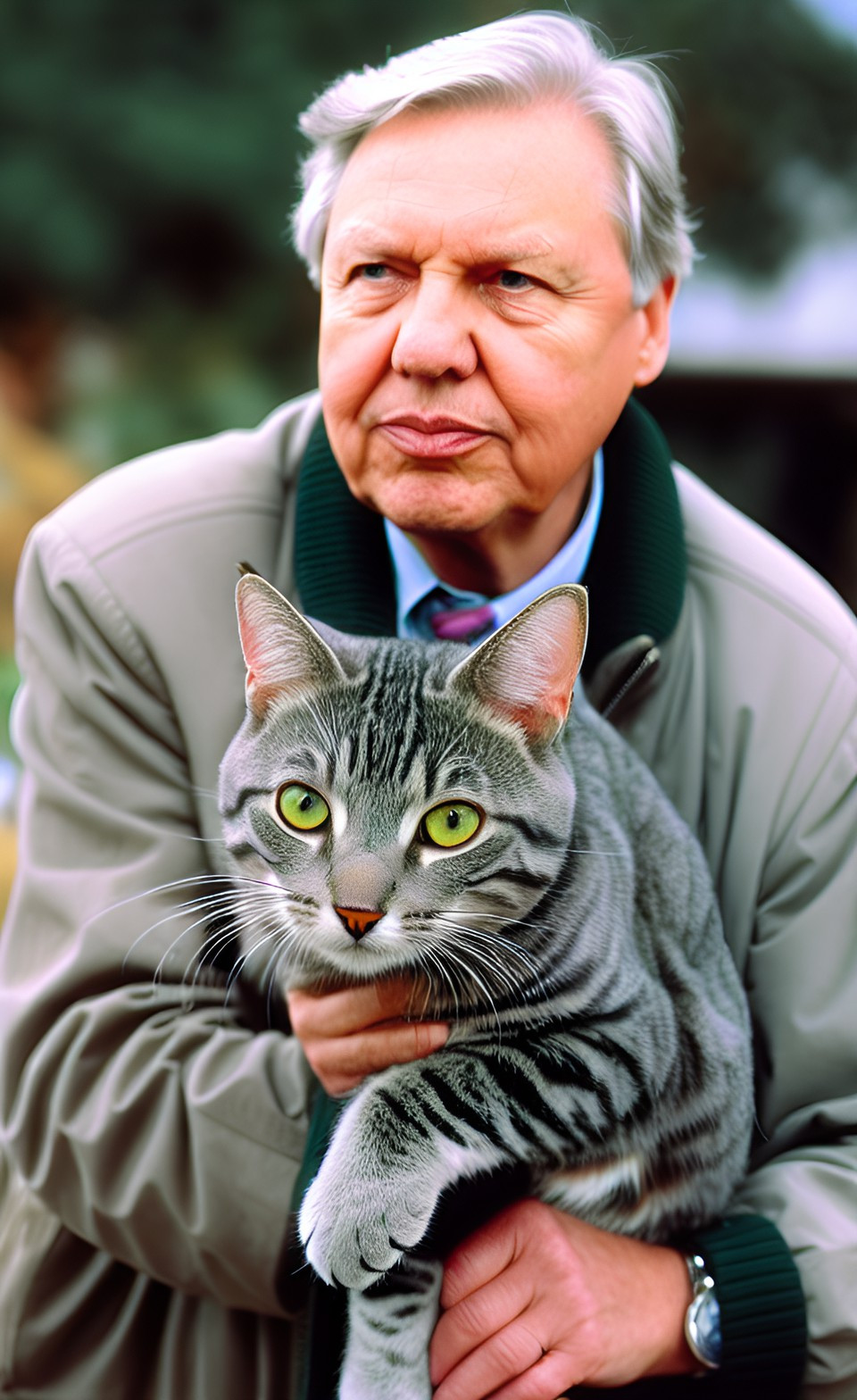
This story was made possible with the use of artificial intelligence tools. To create the images of Sir David Attenborough with Buddy, we used a natural language processing AI trained to output realistic-looking images and Pixlr to refine the images in post. To create the narration, we assembled samples of Attenborough speaking and trained a vocal synthesis AI, based on brand new technology, to mimic Attenborough’s unique pronunciation, cadence and rhythm, then layered the audio with a background of various nature sounds and incidental sounds, such as a tiger roaring.

Just a year ago it would not have been possible to generate images like this or faithfully recreate Attenborough’s famous narrative style, proving AI not only allows users to achieve things that were previously impossible, but has been making major leaps forward in short periods of time.

We believe AI, when properly used, can be a great instrument in the creative toolbox.

Finally, a thank you to Buddy for being a good sport about having cameras in his face. Great job, Bud!

Cattenborough and Buddy
Sir David Cattenborough with Buddy the Cat.

Sir David Cattenborough’s Newest Documentary Reveals The Elusive Silver-Furred Buddy

The naturalist is excited to unveil his most striking documentary yet.

NEW YORK — All those hours trudging through the dense undergrowth of New York living rooms, hoping for a glance of an elusive feline, have finally paid off.

Speaking to reporters about his newest nature special, Sir David Cattenborough said he and his crew spent more than 200 hours in the natural habitat of the silver-furred Buddy.

Also known as the Buddinese tiger, the silver-furred Buddy is “native to the living rooms of New York” and, with his meowscular physique, “is the apex predator of his environment.”

“What a fascinating animal!” Cattenborough exclaimed.

The famous naturalist, conservationist and documentary narrator accompanied a camera crew into the thick jungles amid couches, pillows and carpets, where they observed the silver-furred Buddy at a safe distance as the fierce feline went about sleeping, eating and lounging.

Cattenborough and Buddy
Sir David Cattenborough with Buddy the Cat.

Speaking excitedly in his familiar whimsical cadence, Cattenborough described the documentary crew’s luck in catching the Buddy on a hunt, when he ruthlessly brought down a red laser dot.

“People ask me, ‘Sir David, what makes the Buddy any different from other tigers and lions? Isn’t it basically the same animal?’ While they’re all famously fierce felids who strike fear into the hearts of other creatures, there are differences as well,” Cattenborough explained. “Thanks to the hard work of our dedicated crew, we’re able to bring our audience along as we take the closest look yet at this most elusive and fascinating beast.”

The new documentary, “Buddy: The Perfect Predator,” will be available to stream exclusively on Pain In The Bud, and was made possible by a grant from the Buddinese Foundation for Greater Buddesian Understanding, with additional financial support from the Coalition for Meowscular and Ripped Cats. Look for it this week on PITB!

Cattenborough and Bud
Sir David Cattenborough was able to earn the trust of a silver-furred Buddy.