We’ve made enormous mistakes in our reconstructions of prehistoric creatures, including dinosaurs and mammals. Would paleontologists of the future misinterpret the clues our civilization leaves behind?
Imagine if, far in the future, humanity has spread across a healthy swath of space, colonizing worlds across dozens of light years.
Academics at a prominent science institute, looking to learn more about the humble beginnings of our species, fund a scientific expedition to Old Earth, where radiation and toxicity have finally declined to a point which allows teams to poke through the ruins of our civilization.
As they piece together clues from the rubble, they find references to companion animals who have been domesticated while their wild counterparts continued on.
What does a cat look like? they wonder. Then they find the bones, beginning with a handful of incomplete skeletons…
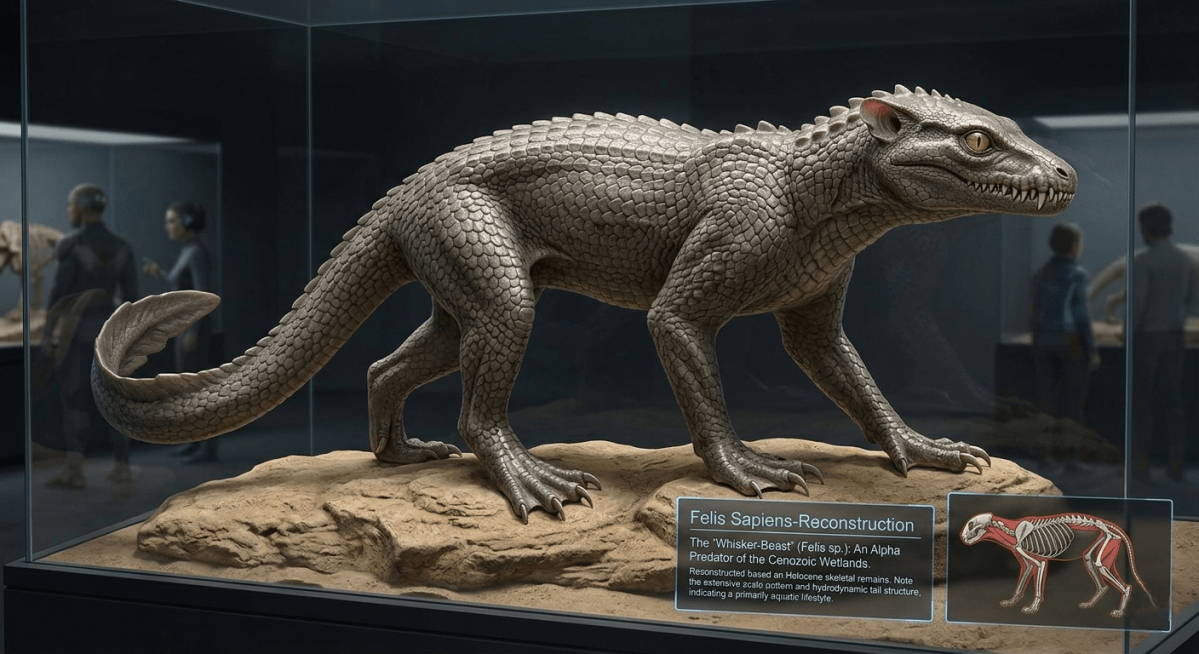
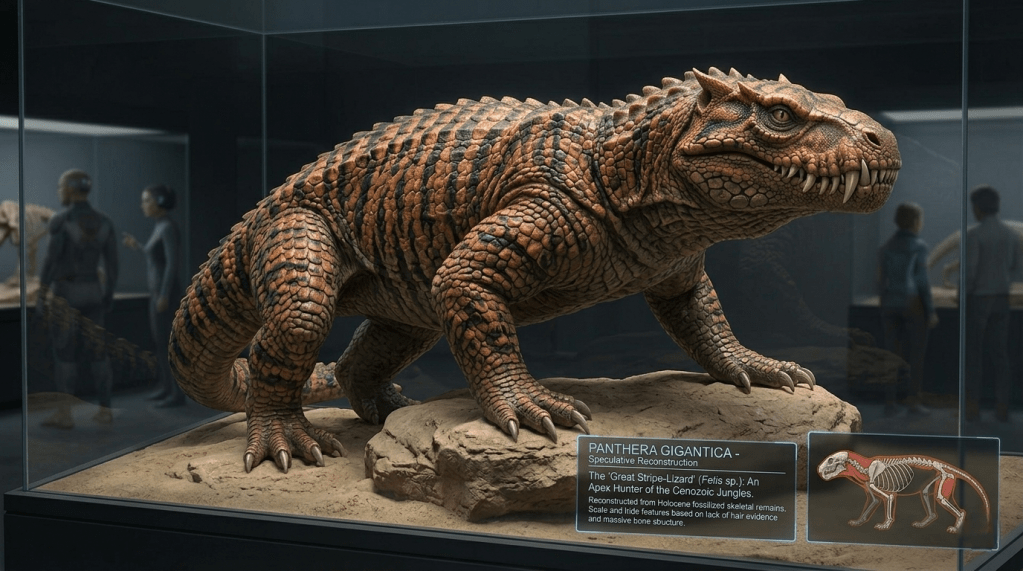
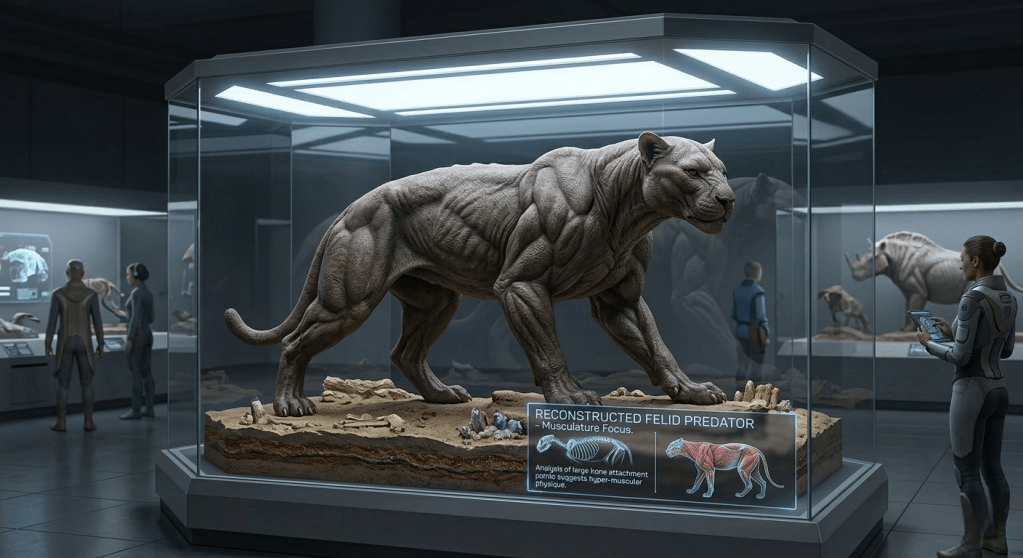
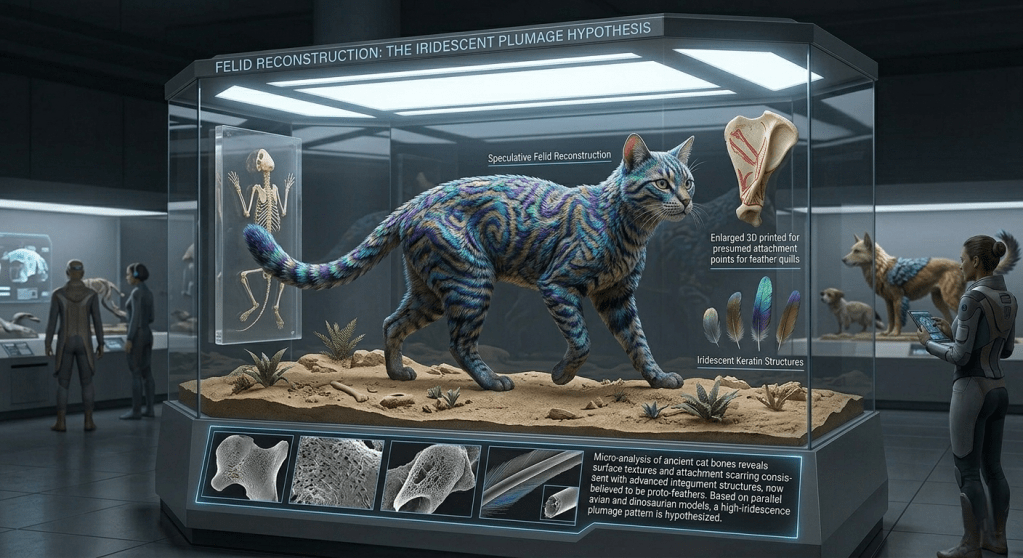
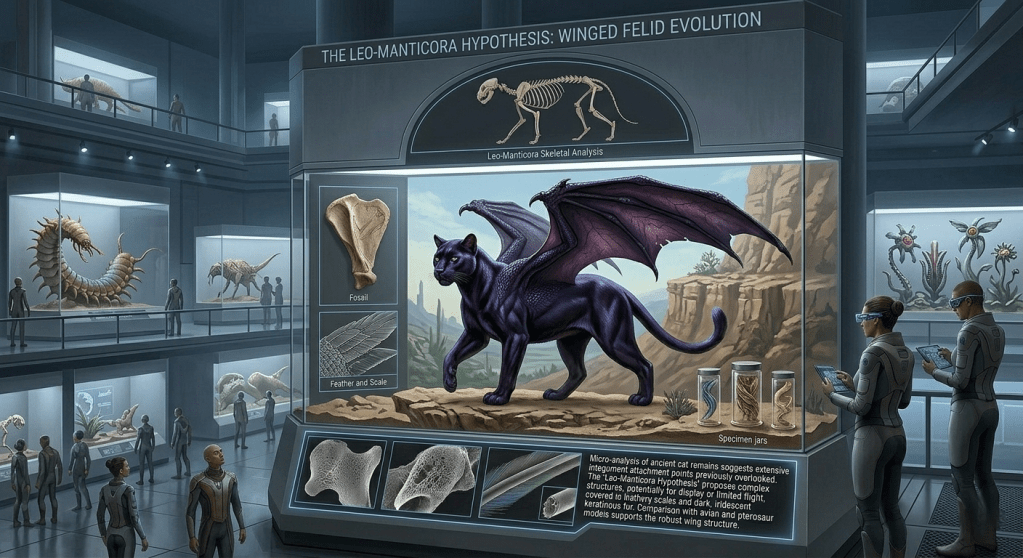
Critics have long argued that our depictions of dinosaurs are like skeletons wrapped in flesh, with modern representations doing a poor job of representing complete animals. What if the paleontologists and historians of the future mistranslate a word like “fur” or don’t realize the skeletons of cats are the same furry creatures that were human companions?A tiger imagined as a semi-aquatic animal with scales instead of fur, and a skull interpreted in much the same way we interpret dinosaur skulls. “Surviving texts make clear the tiger was comfortable in water, and like its distant cousin the crocodile, would remain mostly submerged, looking for opportunities to ambush prey.”No fur, just musculature, as if an anatomy book of animals is one of the few texts to survive in hard copy.A cat with magnificent plumage: “Research shows felines engaged in elaborate mating rituals, using their vivid colors and patterns to demonstrate virility to females in heat.”Finally, a winged cat. Outlandish? Maybe. But what if of the scraps of mythology to survive is a statue of a manticore, or paleontologists discover the bones of a cat species mingled with those of a large bird that died alongside it in a tar pit? In our time we’ve accidentally invented entire species of dinosaurs by mistakenly matching skulls from one species onto the spines of others, or wildly misinterpreting clues in the body plans of new and unfamiliar creatures.
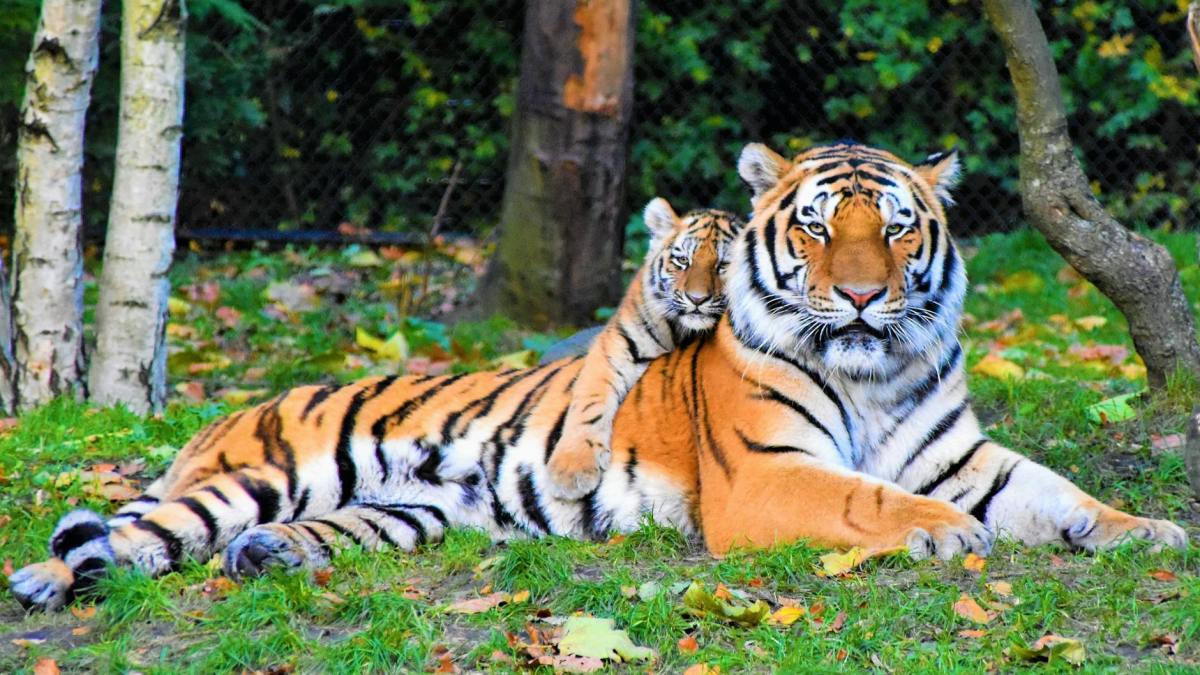
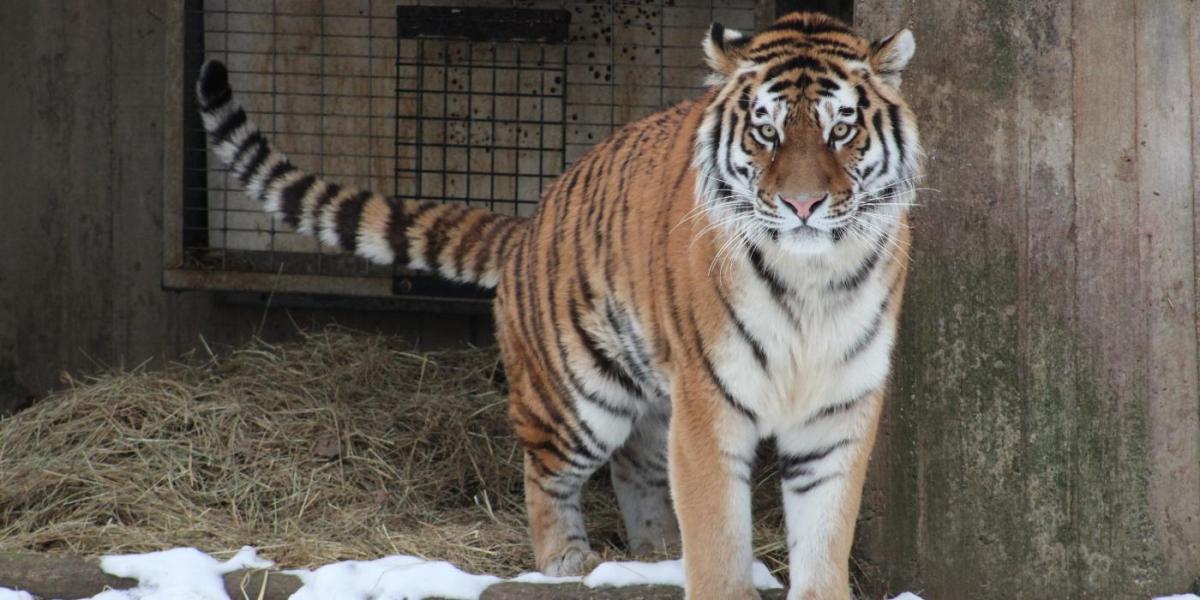
Today we’re admiring photos of the majestic Amur (Siberian) tiger, a species that has been pulled back from the brink of extinction thanks to the hard work of conservationists.
The Amur tiger, panthera tigris altaica, is the largest subspecies of the largest cat in the world.
Click an image in the gallery to view a higher resolution version:
All images in the gallery above via Wikimedia Commons. Header image via Pexels.
After learning that wildcats — including jaguars, tigers and ocelots — love Calvin Klein’s Obsession for Men, Buddy the Cat explores the world of colognes to find one that drives domestic kitties crazy.
Earlier we wrote about the accidental discovery that ocelots respond enthusiastically to Calvin Klein’s Obsession for Men. Subsequent experiments proved jaguars and tigers are particularly fond of the scent as well.
Then a reader’s comment posed a question so obvious, we’re ashamed we didn’t think of it ourselves: do domestic kitties like colognes?
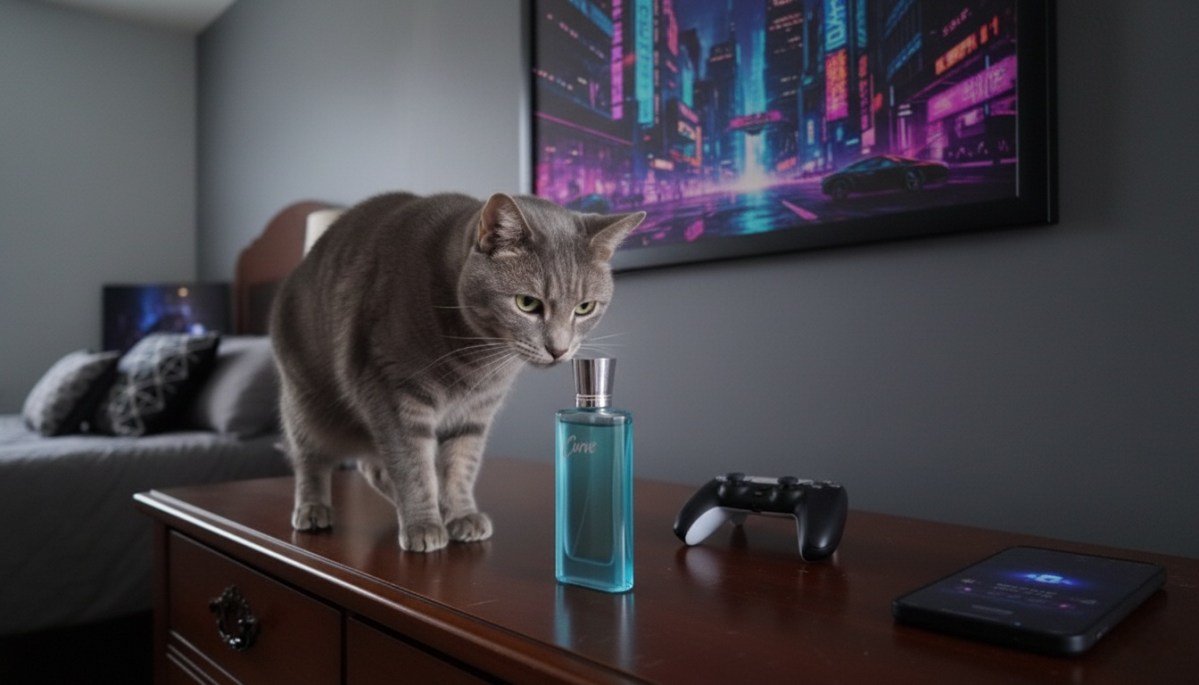
To find out, we asked Buddy the Cat, aka Little Buddy, to evaluate several fragrances. He’s taken the assignment seriously and provided thoughtful analysis, giving us just a hint of what it’s like to have an incredibly keen feline sense of smell.
Dolce and Gabbana Pour Homme
“The first ecstatic whiff takes me back to kittenhood. Days napping in the sun and chasing flies. Fresh cut grass and fragrant foliage. I was so deep into my reverie that the base notes nearly bowled me over when they arrived suddenly in their regal glories, like a king’s entourage without a herald. Rich cedar and musk evoke hours spent luxuriating in the potent funk of my human’s sneakers. Quiet woods and spices, like a litter box a day after feasting on rabbit, gently whisper of naps. Buddy likes this one!”
Cool Water by Davidoff
“Its initial briny hints conjure impressions of a dock at low tide, fish baking in the sun while a graybeard captain lights his pipe. Through confident middle notes, its warm embrace gently tugs you inward, like an antiquarian beckoning you inside a rare book shop with a rodent infestation. Aged leather book bindings and dark oak react provocatively with the paw-licking intensity of decadent mouse urine. Meowgnificent!”
Jaguar by Jaguar
“A carnival of candy for the nose, like accompanying your human to the bathroom post-Chipotle! The first hints arrive furtively, like a disguised aristocrat casting nervous glances as he makes a beeline for a brothel. Then it asserts itself in force: an army of jaguars advancing in the moonlight, their meowscles rippling in the silver mist, scent-marking in unison! Musk, civetone, ammonia. Pheromonic bliss!”
Drakkar Noir by Guy Laroche
“Powerful but restrained, like a certain silver tabby in his carrier, a single spritz of this magnificent scent conjures memories of halcyon days as a young feline. Mid notes whisper of woods and spices, a grove of wild catnip undulating in a summer breeze. Underneath it all is an unshakable foundation of warmth, like being swaddled in my human’s t-shirt after it’s been worn on a humid 97 degree day.”
Tyrannosaurus Rex by Zoologist
“Bergamot and verdant iridescence arrive as our olfactory escorts, ushering us in to a delectably frisky gourmand accord. It’s as if we’re drifting on chocolate seas with vanilla currents playfully nudging us to shore where beefy undertones await. Umami! Steaks sizzle, beckoning our noses toward the grill, stomachs rumbling. A most delicious scent!”
So there you have it. T Rex emerges as the winner in this round, but can it compare to mainstays by Yves Saint Laurent and Giorgio Armani? Only Buddy can tell us. Tune in next time as we accompany the Budster on an aromatic journey!
“Oh my God, this is my job every day!” Charlie Shaw says of his position as a big cat keeper at one of America’s most well-known and well-funded zoos.
If you’ve ever wondered what it’s like to work with big cats, WTOP has a new interview with Charlie Shaw, a big cat keeper at the Smithsonian National Zoo.
Hint: it involves a lot of meat, physical enrichment, olfactory enrichment, and checking on the felids to make sure they’re healthy.
Shaw starts his day by feeding the hungry apex predators, including Damai, a 16-year-old tiger who wants all the snacks, and Vostok, a fast-growing young Amur tiger who doesn’t know a genetically-compatible mate is arriving in short order, and he’ll get to be a dad if things go well.
The genetic matches are carefully made to avoid inbreeding and give the species the best chance to recover.
“Tigers are critically endangered,” Shaw told WTOP. “What we want to do is make sure the gene pool itself is still very diverse.”
Vostok loves to swim. Credit: Charlie Shaw/Smithsonian National Zoo
Shaw says he’s working his dream job.
“You walk in and the tigers all chuff at you, or the lions roar. And you’re like, ‘Oh, my God, this is my job every day!’”
THAT story
I’m aware of it, and I think every person concerned about the welfare of cats should at least know it’s happening.
But it’s also extremely distressing. I actually had nightmares the night after I read it. So I’m offering a strong warning here: think about it before you click the story. The report is by CNN, so there are no gory images and the reporters aren’t trying to make anyone uncomfortable, but the reality of it is bad enough.
For everyone who doesn’t want to know the more upsetting details, the essence of it is that there’s a network of people making “content” of themselves torturing and killing cats, and a rapidly growing audience of people who pay thousands of dollars to “sponsor” the horrific content.
They have “menus” set up where people can select the cat they want to see tortured and specify the ways in which the cat should be hurt and killed. CNN, citing a group of vigilantes trying to dismantle the networks, says people pay up to $1,300 for the “service.” Collectively, the torturers and their audience refer to themselves as “cat lovers.”
The Chinese government, to no one’s surprise, does not care. There are no criminal penalties for what the content producers are doing, and the government hasn’t responded to complaints from concerned people or media networks.
I might address it in the future, but for now I don’t even know what to say. I was away when I read it, and it made me really want to hug Bud and make sure he’s never out of my care. Ever.
The huge Bengal may be the biggest tiger in India, and has already become a draw for tourists visiting from other parts of the country.
Hercules looks like a heavyweight boxer reincarnated as a tiger.
The massive apex predator was virtually unknown outside of India’s Kumaon district until this week, when a tourist posted a short video of the nearly 700-pound animal lumbering out of the brush and into clear view as he crossed a dirt path between rural villages.
The Bengal, who may be the biggest cat in India, is majestic. His gait is leisurely, as if he knows that anyone or anything he may encounter will clear a path the moment they see him. His fur doesn’t hide the rippling muscle underneath, and as he spots a group of tourists with cameras aimed at him, he bares his teeth momentarily, then pretends as if they don’t exist as he takes his sweet time crossing the path.
“In my entire career, I have never seen such a giant tiger,” Prakesh Arya, a divisional forest officer, told the New Indian Express.
For conservationists, tourists and the government of India, whose national animal is the Bengal, Hercules’ existence is proof that Project Tiger is on the right track. The project is a national effort to save the iconic species, grow its population, and protect it from poachers.
Hercules’ territory includes Ramnagar, a town in northern India known as they gateway to Jim Corbett National Park. The preserve is named after the renowned tiger hunter who took down the Demon of Champawat, a tigress who had killed at least 435 people during a decade-long rein of terror.
Corbett, who described tigers as “large-hearted gentlemen” who were unfairly maligned, was known for his prowess in hunting down man-eating tigers and leopards, but later in life he turned to conservation, realizing that Earth’s biggest cats were in danger of extinction if drastic efforts weren’t taken to save them. That was a century ago.
Now India devotes significant resources to their protection and well-being, with an entire corps of dedicated professional rangers and anti-poaching teams tracking the animals and constantly patrolling the vast country’s 58 tiger preserves, which cover 82,836.44 square kilometers.
A large tiger cools off in water on a hot day. Credit: Warren Garst/Wikimedia Commons, Colorado State University Library
For tigers like Hercules, having large contiguous ranges gives them the chance to live the way nature intended. Experts say the abundance of prey in the reserves, especially in the region Hercules calls home, has resulted in larger, more robust cats of the type that were once a memory.
“This is a clear symbol of the rich biodiversity and the success of our management efforts in this forest area,” Arya said.
In turn, the presence of the iconic cats has revitalized tourism. Tourists who have seen Hercules described the experience as “overwhelming.”
“Seeing ‘Hercules’ was an unforgettable experience,” Priya Sharma, a tourist from Delhi, told the Express.







 Pain In The Bud