What would the Dictionary Man think of a modern American society dominated by the power and cuteness of cats?
Cats have taken over the internet, claim a mighty share of the $64 billion Americans spent on pet food in 2023, and have essentially installed themselves as the leisurely masters of 28 percent of American homes.
But it wasn’t always that way, and a look at the first-ever edition of Webster’s Dictionary reveals a very different attitude toward our furry overlords:
“The domestic cat needs no description. It is a deceitful animal, and when enraged, extremely spiteful. It is kept in houses, chiefly for the purpose of catching rats and mice.”
Wow. Whoever does feline PR should get a raise, because we’ve gone from “We tolerate the imperious little bastards because they’re good at killing rodents” to “Does my little angel want a snack? How about some ‘nip then? Anything for my bestest little pal!” in the span of two centuries.
Buddy 1, Noah Webster 0. Naturally.
Noah Webster, whose name is now synonymous with dictionaries, saw the effort to standardize spelling and pronunciation as central to formalizing an American linguistic identity distinct from our mother country. Or, as he put it, “[t]o diffuse an uniformity and purity of language in America” that would not only differentiate our English from England’s, but also unify the states at a time when many people still viewed the idea of a united states with skepticism.
By doing so, he hoped America would avoid the pitfall of dividing itself into regions of nearly mutually unintelligible dialects, a problem that plagues other countries. Consider the fact that India has almost 800 distinct languages and dialects, down from a staggering 1,652 in 1961 as hundreds of local languages died with the last generations of their speakers. Hindu, the country’s most popular language, is spoken only by about 43 percent of the population.
The goal, Webster wrote when he published his dictionary’s first edition, was “to furnish a standard of our vernacular tongue, which we shall not be ashamed to bequeath to three hundred millions of people, who are destined to occupy, and I hope, to adorn the vast territory within our jurisdiction.”
As dictionary.com notes, Webster wrote that passage in 1828 when the US population was just 13 million and vast swaths of what we now consider familiar territory was at the time largely unexplored wilderness.
His prediction of an America of 300 million people came true in 2006. Today there are approximately 335 million of us.
In other words, a hell of a lot has changed since the Connecticut born-and-raised Webster cobbled together a uniquely American system of spelling and pronunciation, so maybe it shouldn’t be a surprise that attitudes toward cats have shifted so dramatically.
Still, we’d love to see the look on Webster’s face if we could bring him forward in time and show him how the “deceitful” and “extremely spiteful” little furballs have come to such prominence in American culture. What would Webster make of the spoiled modern house cat, with her condos, tunnels, toys, harnesses, bowls filled with salmon and duck, and even psychoactive recreational drugs for their enjoyment?
Bow before your feline overlords, Webster!
“We have made some edits, humans. See to it that the next edition includes this new and improved definition, or we shall withhold snuggles.”
Service animals and emotional support animals are not the same thing.
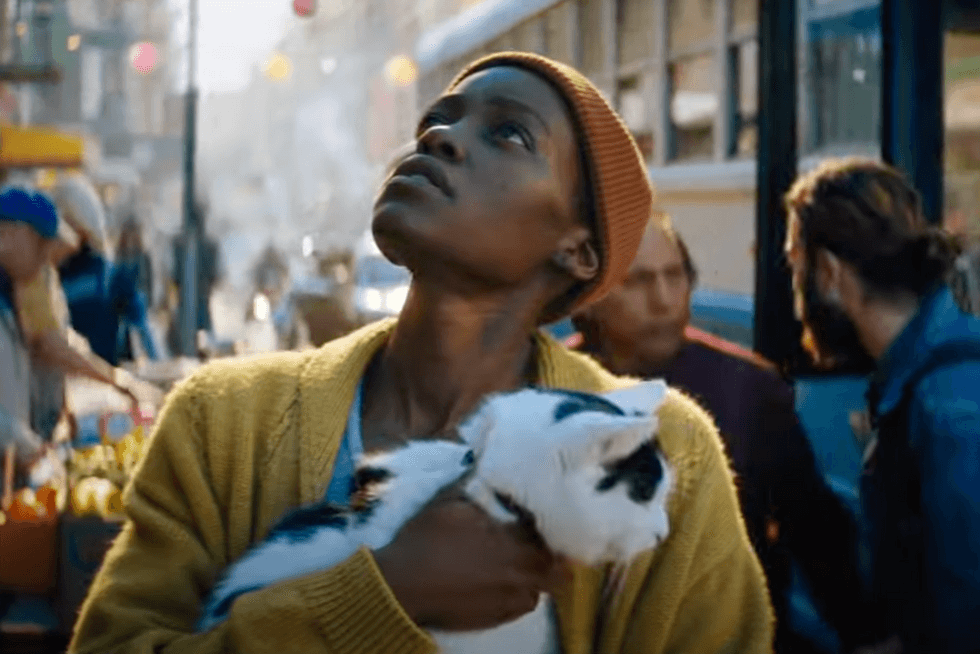
A Quiet Place: Day One stars Lupita Nyong’o as Samira, a terminally ill woman, and Joseph Quinn as her nurse, Eric.
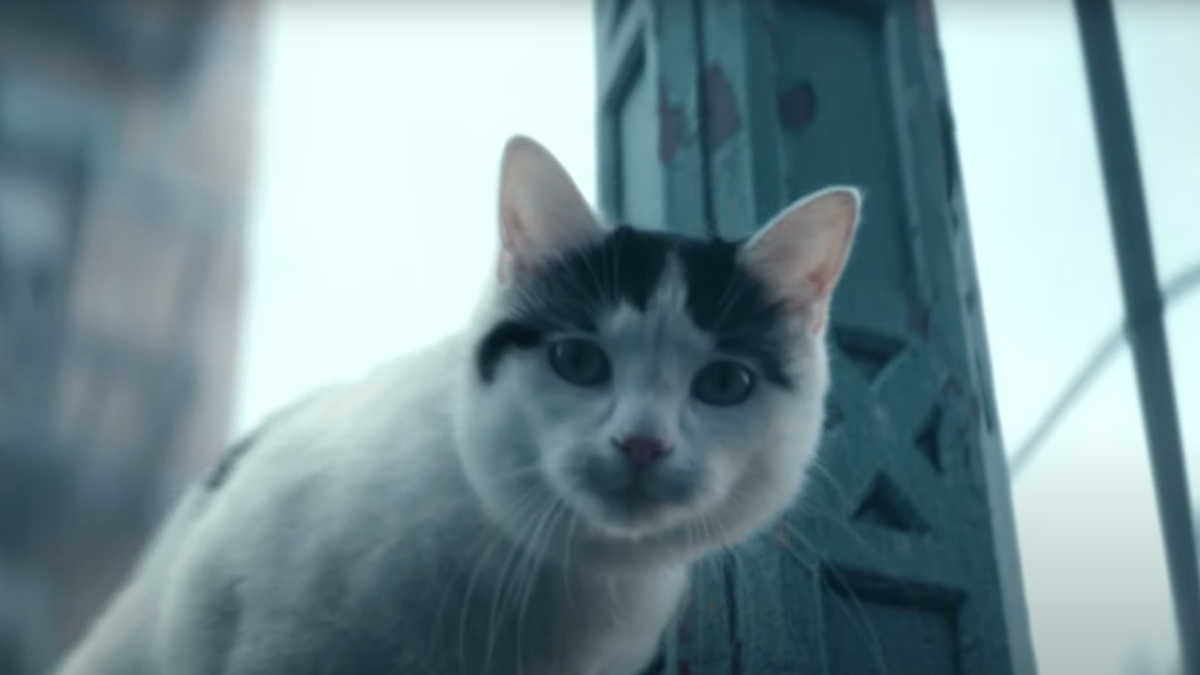
But it’s the third main cast member — a feline named Frodo — who’s been hailed as the surprise star of the film, which one reviewer called “a love letter to cat owners.”
Nyong’o’s Sam has been given the equivalent of a death sentence with her aggressive cancer diagnosis, but when the nightmarish creatures who play the antagonists of the Quiet Place franchise arrive, Sam fights for her life with her trusty “service cat” by her side.
“You can’t have a cat in here,” the clerk at a bodega tells Sam early in the film, before she fixes him with a no-nonsense stare and flatly declares: “He’s a service cat.”
The adorable Frodo, co-star of A Quiet Place: Day One.
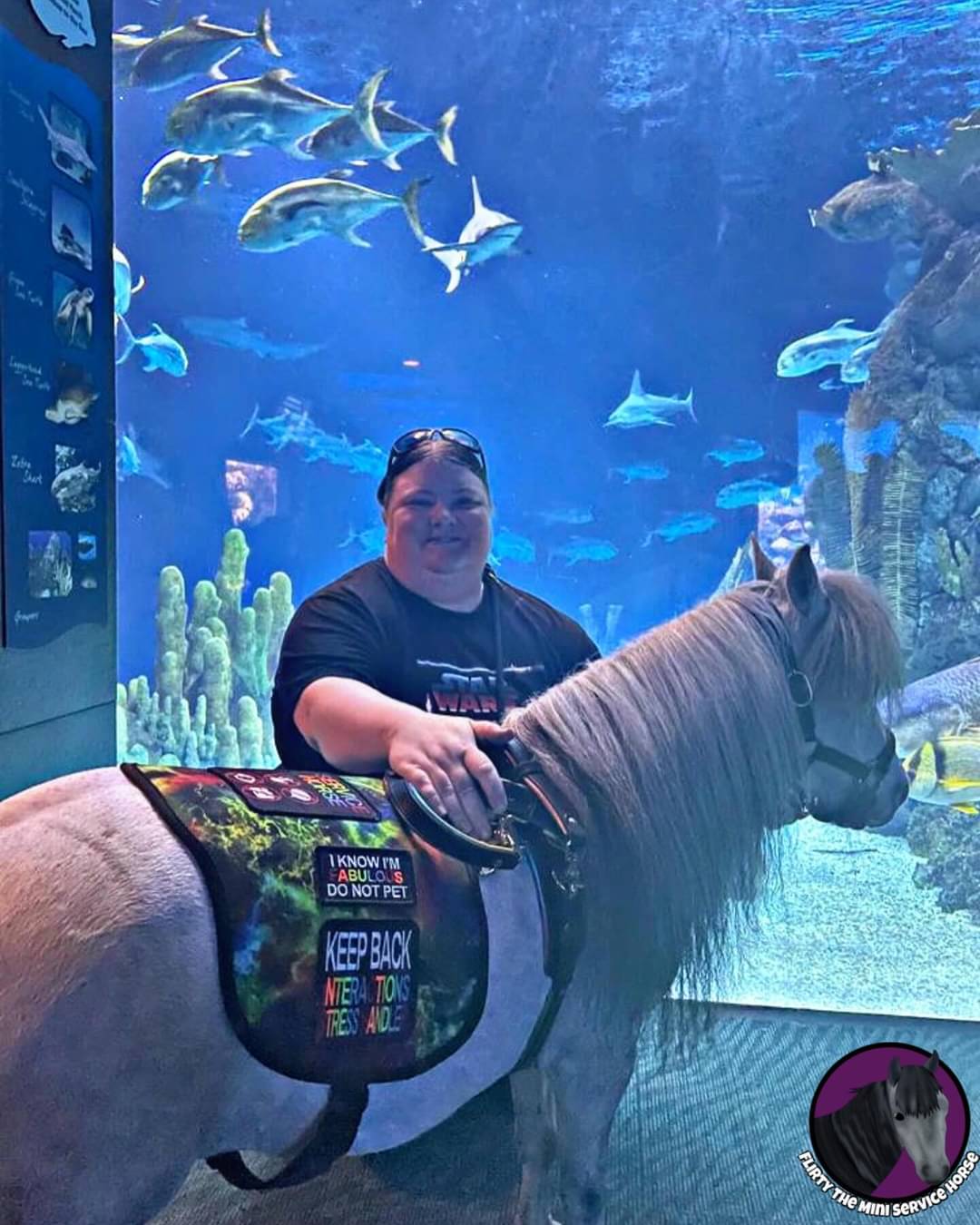
You’ve probably heard stories or seen photos of people trying to take other animals into places they’d normally never be allowed. In 2019, a woman decided to push the boundaries by taking a miniature horse onto a domestic flight, forcing passengers to share extremely limited space with the olfactorily potent, skittish animal. She even scolded social media users who didn’t get the horse’s pronouns “correct.” (They’re she/her, by the way. We’re not making this up.)
The woman, who says she needs the horse because she suffers from PTSD, told Omaha, Nebraska’s KMTV that the managers of a grocery store allegedly violated her rights by asking her to leave rather than allow her to march a horse through a place where people buy food and its operators are required to follow Department of Health rules.
“I was treated so poorly and the manager’s responses when I followed up were poor,” she said. “They are going to be hearing from the Department of Justice and I’m definitely going to be pursuing legal means as well.”
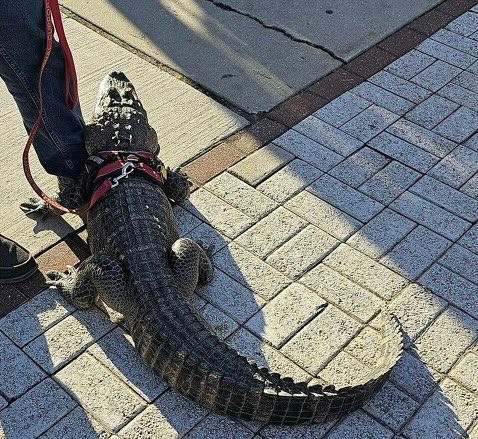
In 2023, a man tried to take a “service alligator” to a Phillies game at Citizens Bank Park. Stadium security weren’t buying it and he was turned away, but not before other fans snapped photos of the attempt. In Nevada, a man who had his USDA license revoked for “multiple violations of the Animal Welfare Act” argued that authorities couldn’t confiscate his 10 tigers because he claimed they are emotional support animals.
“My doctor has written that she feels that the tigers are beneficial to my psychological well-being and so therefore I got what the law requires,” Karl Mitchell told KTNV, an ABC affiliate in Las Vegas.
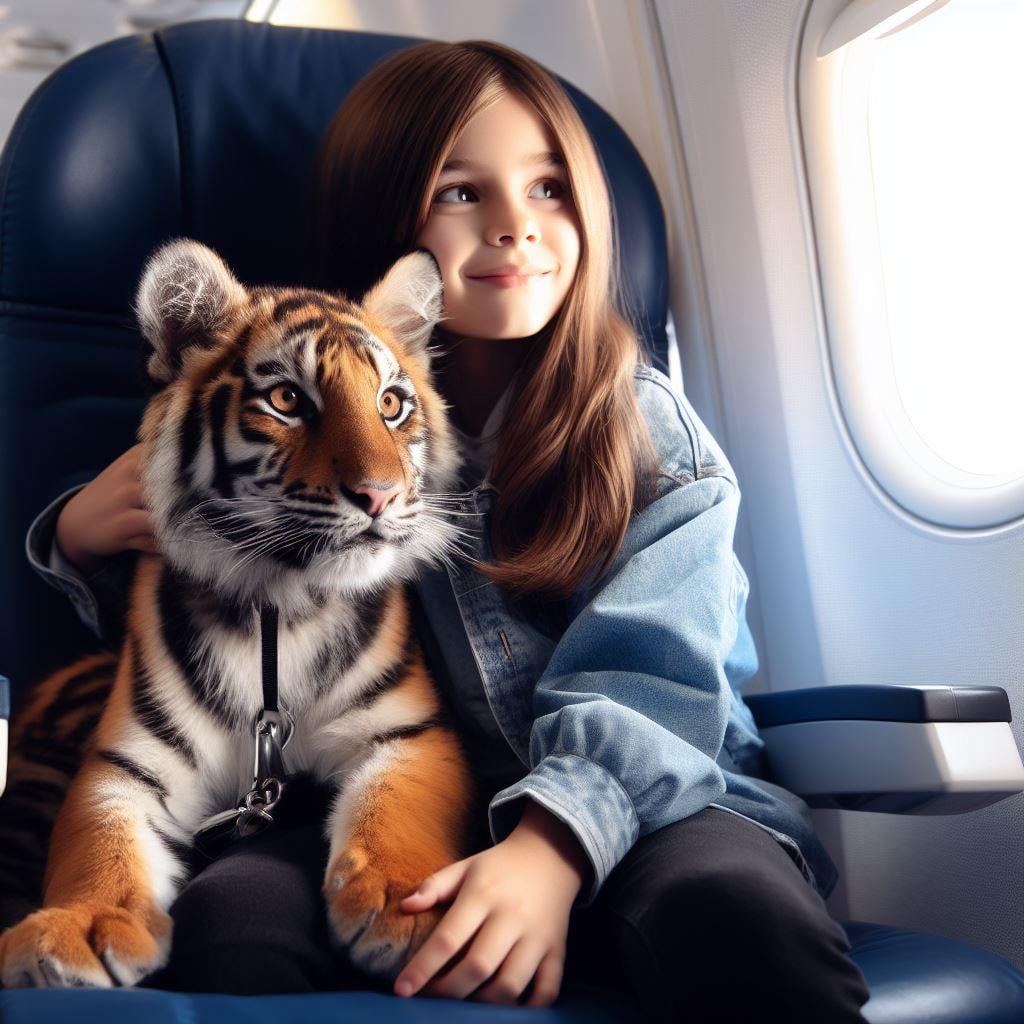
An emotional support tiger depicted in a Reddit photoshop contest for the most ridiculous “service animals.” Maybe some ambitious dreamer will cook up a service elephant or an emotional support bison.
Since then the FAA and Department of Transportation have issued new rules clarifying emotional support horses, peacocks, flying squirrels, parrots and other animals are not allowed on planes, prompting one flight attendant to quip that “The days of Noah’s Ark in the sky are over.”
That, however, has not put a dent in the confusion over what constitutes a service animal versus an emotional support animal, and what rights people have when it comes to bring their furry (or scaly, or feathered) friends into public and private spaces.
Although we’re happy to see Nyong’o in her first lead role since 2019’s freaky horror thriller Us, unfortunately A Quiet Place: Day One is almost certain to contribute to that confusion with its fictional “service cat” character.
A service animal and an emotional support animal are not the same thing
First, there’s an important distinction between a service animal and an emotional support animal.
Service animals can only be dogs or miniature horses, and must be trained. People who depend on service animals can train them themselves, but the animal must meet specific needs, like guiding the blind or vision-impaired.
Emotional support animals, by contrast, are not trained, certified or “official” in any capacity. Anyone can adopt or buy an animal and call it an “emotional support animal.”
A Phillies fan’s “emotional support alligator.” The stadium turned him and his carnivorous apex predator companion down. Credit: Howard Eskin/X
Unfortunately due to the confusion involving service animals vs ESAs, predatory sites have popped up online promising to “officially register” ESAs for a fee.
In addition to charging for something that doesn’t exist, the proprietors of those sites also tell people they can take their “officially registered” support animals into places normally off limits to pets, like stores and restaurants. Some sites offer consultations with alleged mental health professionals who will “diagnose” customers remotely and write letters on the customer’s behalf.
Abrea Hensley with her miniature horse, Flirty, in an aquarium. Hensley’s social media accounts document all the places she goes with the animal.
Those sites operate similar to the numerous “buy a star” sites that claim celestial objects can be officially owned. Like their emotional support animal “registry” counterparts, the star sale sites offer official-looking paperwork, but they’re selling something that can’t legally be sold, and the certificates are legally and practically meaningless.
Buying a “certification” won’t make your cat a service feline, and contrary to how they’re portrayed in the movie, calling a pet an emotional support animal does not allow you to bring it anywhere you like.
For legal purposes, there’s only one perk to be had by claiming an emotional support animal: under the Fair Housing Act, landlords generally cannot refuse tenants who have emotional support animals. The act specifies that allowing emotional support animals is limited by “reasonable accommodations.” That means a dog or a cat is okay, but you can’t keep an animal that poses a danger to your neighbors, negatively impacts their quality of life, or requires the landlord to make major and costly alterations.
The general trend in recent years has involved curbing the limits of emotional support animals, a trend that appears likely to continue as more people abuse the privilege, burdening other members of the public by insisting they must silently endure the inconvenience, potential allergic reactions, sanitary concerns and practical problems caused by bringing animals into spaces that are not designed to accommodate them.
While we’re certainly sympathetic to pet owners — this blog wouldn’t exist if we were not — the fact is that the more people abuse societal boundaries with emotional support animals, the more difficult it makes things for people who have legitimate service dogs and rely on them to navigate life and maintain their independence.
Note: This post has been updated to further distinguish between service animals and emotional support animals. An earlier version contained a paragraph with potentially confusing phrasing.
h/t Susan Mercurio for pointing out that emotional support animals are coveted by the Fair Housing Act
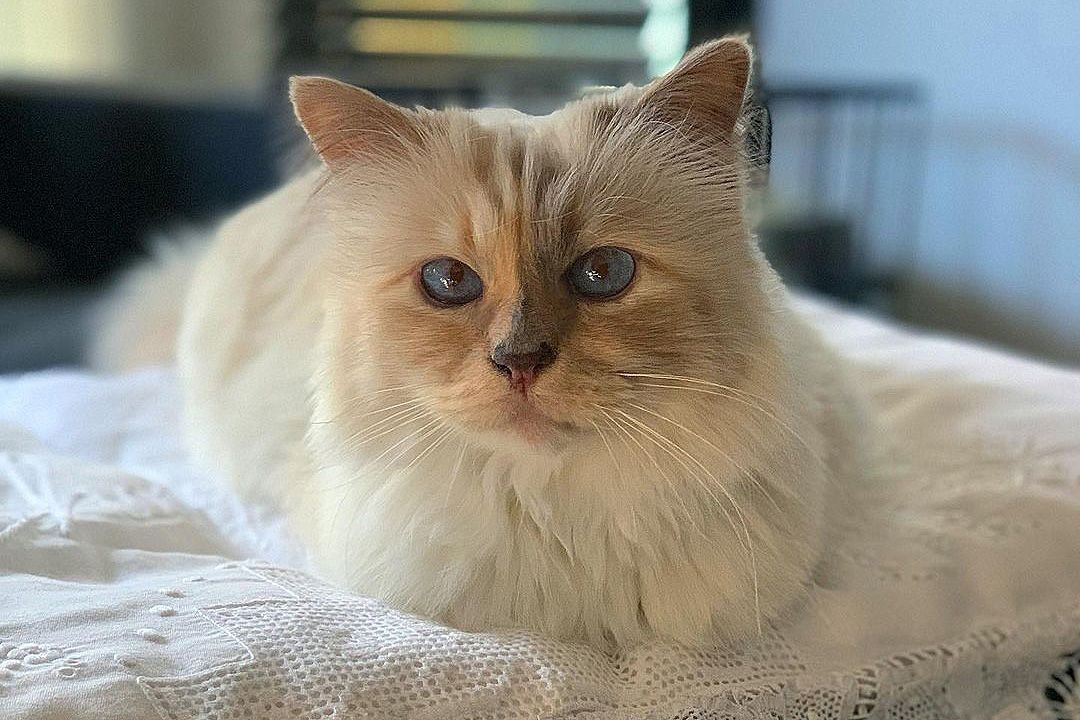
Suitors are lined up for the cream-coated Burmese feline, who inherited an estimated $13 million fortune when her fashion designer human died.
Simba may have stolen a kiss with Choupette at the end of a moonlight walk, and Oreo may have scored by bringing her to a candle-lit hot tub, but most of the toms on The Bachelorette: Choupette remained focused on shading Buddy.
Perhaps because he’s widely viewed as a frontrunner for the affections of the cream-furred Birman, other toms hoping for her paw in marriage claimed they were not impressed by Buddy’s antics.
The silver tabby’s date with Choupette consisted of a simple meal of turkey pate, some after-dinner grooming and couch-scratching, and finally a bird-watching session, with both felines chirping away at a flock that had chosen an epic oak nearby.
“It’s almost like he’s saying ‘I don’t care about your fortune, Choupette, I’m here for you,’ which is frankly revolting,” said Loki, a four-year-old British shorthair. “Everyone knows I’m the only one who really cares about Choupette.”
Choupette has appeared on the covers of almost every major fashion magazine in the world, usually in the arms of supermodels.
Choupette, the famous companion and muse to late German fashion designer Karl Lagerfeld, is worth an estimated $13 million thanks to her inheritance.
The young season got off to a rough start last week with confusion during the rose ceremony.
“What’s this for?” contestant Tux said after Choupette gave him a rose.
“She’s sending you home, dude,” said Jasper, a handsome Maine Coon.
“Wait, I thought that was the immunity idol,” Buddy interjected.
“It’s not an immunity idol, dummy!” Jasper said. “Wrong reality show. Sheesh, don’t you watch Real Housewives?”
The cats argued about it for several minutes until an angry Choupette told them to stop their meowing, and in the end it was Oliver, a seven-year-old Chartreux, who was sent home.
“Oh yeah, well I didn’t want a stupid rose anyway!” Oliver said, belching loudly as he left the mansion.
Choupette’s next decision may have been made for her when Garfield, a ginger tabby, said the quiet part out loud in a poem he wrote about the feline heiress.
“Oh Choupette, your fur is so creamy,” Garfield recited, “your eyes are so blue, and your fortune is so dreamy. Our mansion will have scratchers on every…”
“Stop!” Choupette said, turning to the producers. “Send him home!”
“Choupette, my love! Don’t do this!” Garfield called over his shoulder as two burly tigers hauled him away. “Was it something I said?”
Guitarists, synth players and other musicians can get their meow on with this unique FX pedal.
As a guitarist I’m partial to pedals, FX and other gear that can imbue the instrument with the funkiness of the wah or the satisfying crunch of harmonic distortion.
But this? This is something I never expected.
Meet The Meowdulator, an FX pedal that does precisely what it sounds like it does.
Created by B’s Music Shop and pedal-maker Cusack Music, the Meowdulator is a monophonic guitar synth, meaning it plays single “notes” similar to a Moog. That means you can’t strike a chord and get a chorus of discordant meows, but you can for example play a solo that sounds like a cat in heat — if you want to. (The “Little Mew” setting sounds like an octaver in meow, generating multiple voices, but still triggered by plucking single strings.)
Brian of B’s Music Shop called the pedal “maybe the craziest thing I’ve ever collabed on.”
“It’s glitchy sometimes, it’s its own animal,” he said in a video demonstrating the new pedal. “But it’s a little kitty cat and we hope it makes you happy and you have some fun with it.”
My favorite of the seven presets demoed in a Youtube video is “Acid Kitty Synth,” which generates a funky, wah-like meow. In the right hands, something awesome can be done with it. I can imagine Acid Kitty Synth breathing life into an Earth, Wind and Fire style or Televisor-esque track, compelling the listener to hit the rewind button while asking “Did I just hear what I think I heard?”
Finally, there’s a “hidden feature” — if you hold down the bottom-most button, the pedal will purr. Perhaps it’s something to work into the rhythm of a track or give the audience a relaxing vibe between songs while playing live?
The Meowdulator retails for $199 and is expected to ship in mid-July. Those of you who fall into the cat lover/guitarist venn diagram overlap can pre-order now.
Now can someone make a puma scream pedal? Ratatat, a New York duo and one of my favorites, has a thing for working the screams of the iconic cat into their tracks, and it makes me love them even more.
Caleb Carr credits cats for showing him love during his difficult childhood when he was frequently beaten by his father.
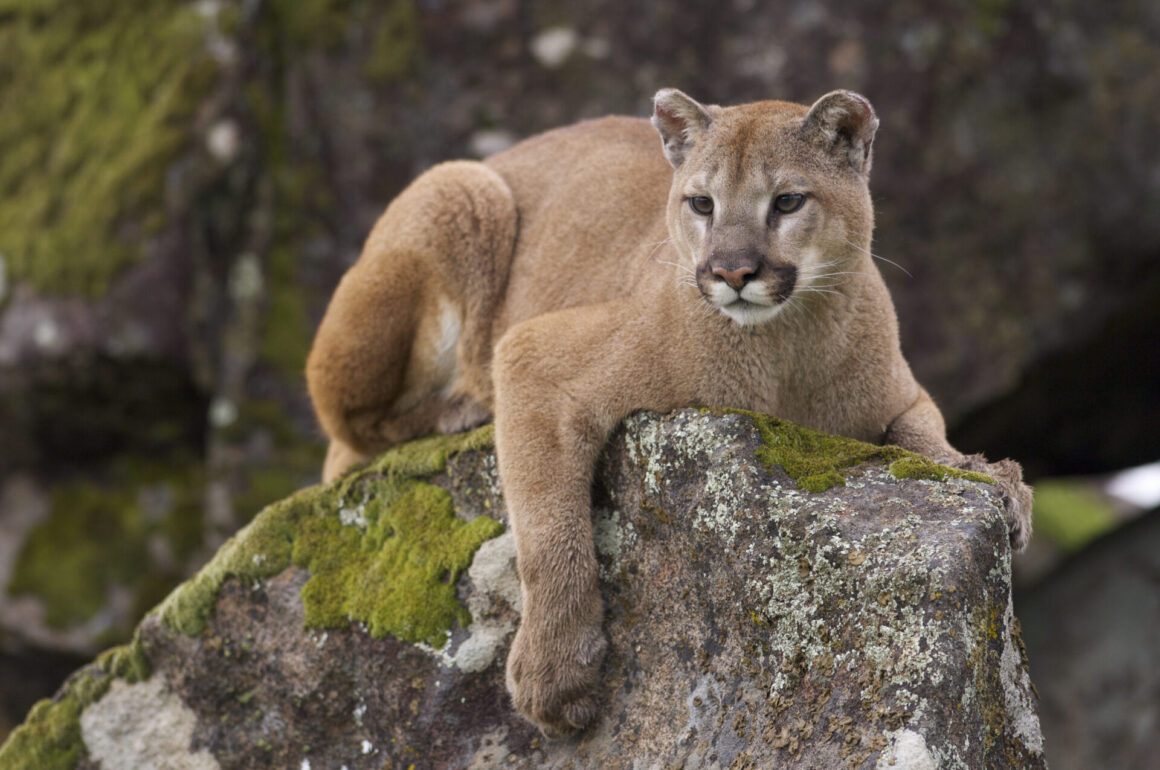
A “mountain lion” spotted near a trail in Ventura County, California, was actually just a house cat, authorities said this week.
California’s Department of Fisheries and Wildlife dispatched staff to the area in question, the Los Padres trail in Thousand Oaks, after neighbors there reported what they thought was a baby mountain lion. One family had footage of the interloper captured on a doorbell camera.
The alleged puma turned out to be a house cat, which is a surprisingly common outcome when authorities look into alleged mountain lion sightings. Despite their size, pumas are genetically closer to felines — small and medium-size cats that can purr and meow — than they are to panthera, the genus that includes tigers, lions, jaguars and leopards.
Their gait is almost identical to that of familiar felis catus, their golden coats can look dark at night, and cats can look like pumas — or the other way around — when there’s not enough visual context to gauge the animal’s size, especially in footage captured on cell phones and security cameras, which are almost always equipped with digital zoom instead of the true optical variety.
We know what you’re thinking: this house cat must have been an impressive specimen if it was mistaken for a puma, so there’s a good chance it was Buddy. However, we can confirm that Buddy the Cat definitely was not wandering around California this week.
Novelist found solace in the company of cats
Author Caleb Carr passed away on May 23, and the Los Angeles Times has a nice tribute to him by a reporter who bonded with Carr over their shared love of cats. The writer, 68, had been suffering from cancer for some time.
Carr was known for his crime thrillers (The Alienist, The Angel of Darkness) and military history books, and he spent part of his career teaching military history at Bard College in New York. (Just a short ride from our own alma mater, Marist College.)
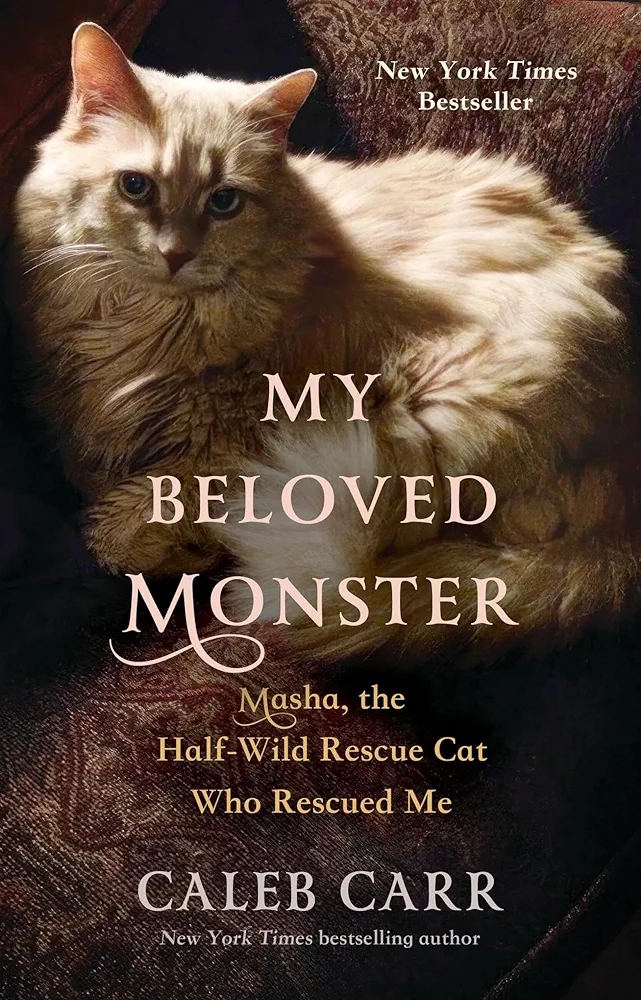
Carr’s last book is a tribute to his cat and her species.
Despite his publisher requesting another crime thriller, Carr decided his last book would be about a cat. Specifically his rescue cat Masha, who helped him through difficult times, and the cats of his childhood who comforted him when he was beaten by his father, Beat Generation figure and author Lucien Carr.
“It’s amazing to think about it now, but there were cats, and other animals, that were trying to make me feel better,” Caleb Carr told the Times. “The idea of that was so at odds with everything I was experiencing.”
Carr credits those felines for helping him avoid the abyss, telling the interviewer he “could have been one of those dead-eyed drone troublemakers that comes out of an abusive household very easily, if it hadn’t been for cats.”
Some people were disappointed that Carr didn’t have another novel like The Alienist in him, but Little, Brown publisher Bruce Nichols liked the idea, and the finished book was titled My Beloved Monster: Masha, The Half-Wild Rescue Cat Who Rescued Me.





 Pain In The Bud