Cat Food Loaded With Carcinogens, Heavy Metals, Microplastics And Herbicides, Investigation Finds

β€œLead was found in 99%, cadmium in 96% and arsenic in 94% of cat food samples across 62 brands,” the Clean Label Project said.

A new investigation found cat food is packed with pollutants and toxins that are lethal to our furry little friends.

Almost no brand was left untouched in the investigation by the Clean Label Project.

“The investigation tested 100 top-selling cat foods for more than 122 contaminants, including lead, arsenic, cadmium, mercury, pesticides, herbicides and phthalates, the plastic chemicals linked to an increased risk of death in humans,” CNN reports. “Lead was found in 99%, cadmium in 96% and arsenic in 94% of cat food samples across 62 brands. Contamination varied by product type β€” wet, dry, and air- or freeze-dried β€” and the type of protein, such as poultry, beef or fish.”

What’s especially worrying is that many of the most prominent contaminants are directly linked to the most common and lethal health problems in cats, including kidney disease and liver damage. Kidney disease affects more than four in 10 cats ages 10 and older, and four out of five cats age 15 and older, according to Cornell University’s College of Veterinary Medicine.

The numbers are seriously concerning and, although caretakers have long known pet food manufacturers cut corners, often loading their products with fillers and the lowest grade meat available, the new investigation paints a picture far worse than most of us imagined.
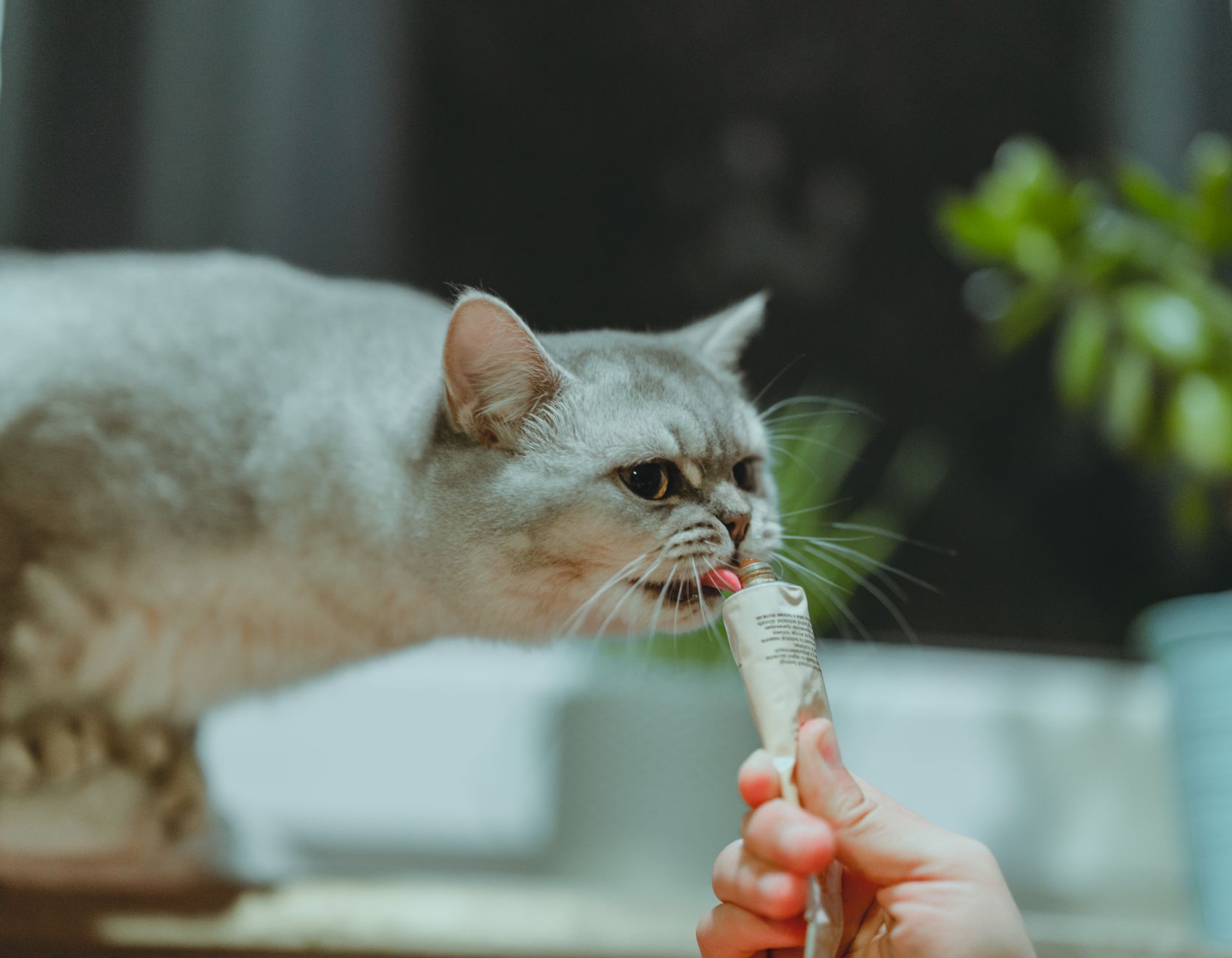
A gray cat licking a tube of pet treat held by a person.
The Clean Label Project cat food investigation raises serious questions about the damage pet food is doing to our beloved little buddies. Credit: by Anjie Qiu/Pexels

Compounding the problem is the fact that government regulations on contaminants, like many laws dealing with animals, were designed for farm animals. At about eight to 12 pounds, cats are significantly smaller than the animals regulators had in mind, meaning their bodies are less able to filter out toxins and they absorb significantly more than farm animals or adult humans.

Seafood is especially dangerous. Per CNN:

“Mercury levels were about 18 times higher and cadmium levels about 2.5 times higher in fish- or seafood-based cat foods than in foods made with other proteins. Wet versions of seafood products contained the most mercury β€” nearly 28 times as much as wet foods made with other meats, especially poultry.”

This is horror movie stuff, directly contributing to the early deaths of countless pets, grief over their short lives, and an unquantifiable amount of money spent on veterinary care for food we’re told is healthy but instead contains toxins directly linked to chronic and frequently fatal health problems.
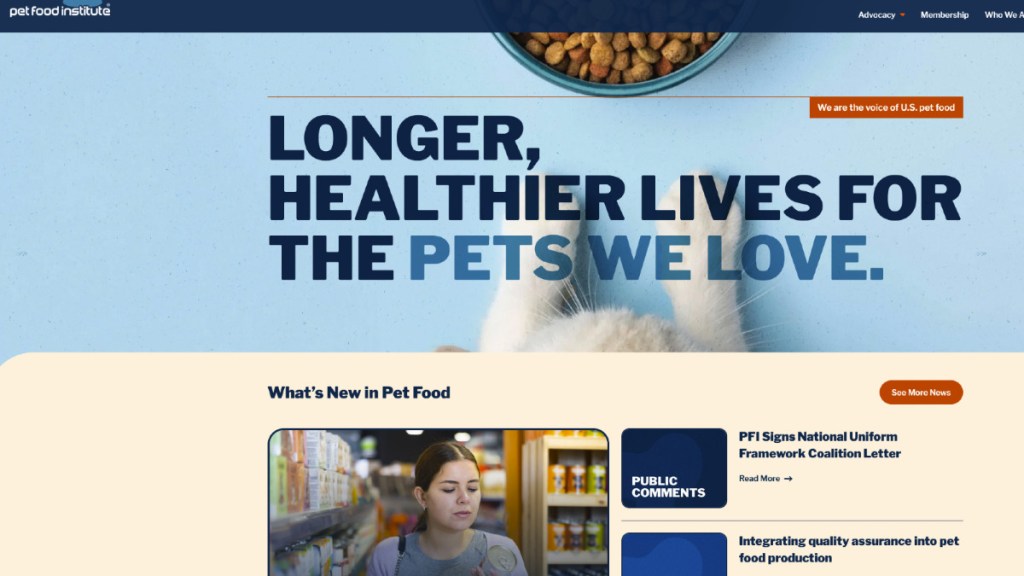
The Pet Food Institute describe itself as “the voice of US pet food.”

Despite the major concerns raised by the Clean Label Project’s investigation and the inevitable anger of people who love their cats, the pet food industry isn’t just denying the findings, it’s sticking to its claims that manufacturers care about their customers and the animals they love.

After touting “testing protocols,” manufacturing “verification” and “science-based preventative controls,” Pet Food Institute CEO Elise Fennig told CNN the industry’s products are “safe, nutritious, and consistent.”

β€œCat owners should feel confident that the food they feed their pets is safe and produced according to rigorous regulatory and quality standards,” said Fennig, whose previous roles include executive positions at the American Frozen Food Institute, the National Confectioners Association, and the Frozen Potato Products Institute, industry groups that push the narrative that ultraprocessed foods made at industrial scale are healthy staples of American diets.

So we have someone with a degree in public relations telling us that despite laboratory tests revealing horrific contaminants and toxins in cat food, we should all just relax and “feel confident” that the products are “safe” and nutritious” — not because she’s able to offer any evidence in support of those claims, but because she says so.

Well, Elise, I don’t feel confident, especially because experts CNN contacted, who are unaffiliated with the research, said it looks rigorous and well-executed.

You know what would make me feel better? If you and the top executives at pet food companies were willing to eat human-grade food with the same level of contaminants for six months or a year.

If your products are as “safe, nutritious and consistent” as you claim they are, let’s see you eat food laced with arsenic, cadmium and lead for six months, then release the results of your bloodwork and physicals. Then we’ll see, won’t we?

Otherwise it seems as if you’re shitting on us from great heights and telling us it’s raining gold.
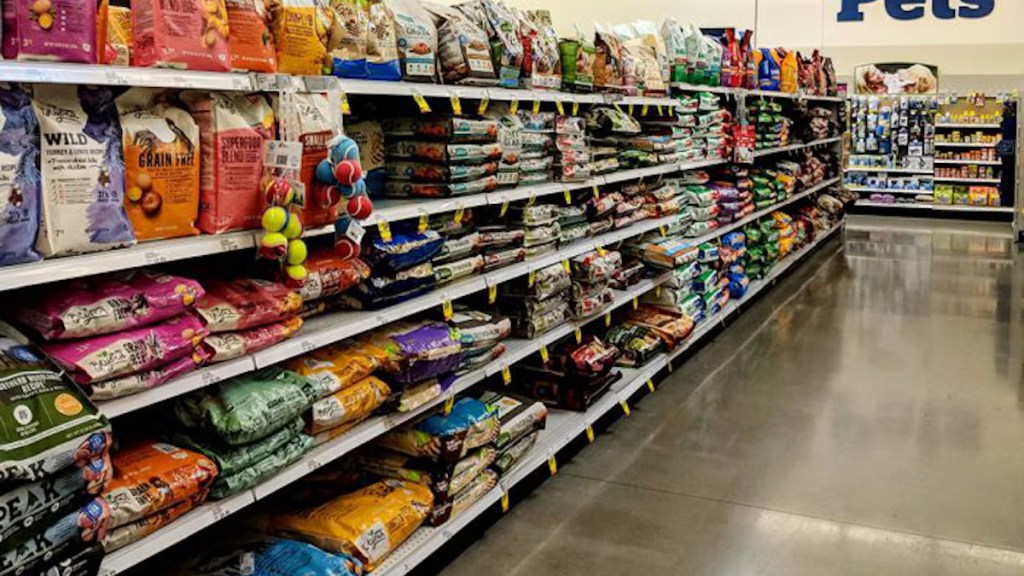
A pet supply aisle featuring various brands of dog and cat food bags on shelves, with colorful packaging and pet toys on display.
The investigation involved laboratory testing of 100 of the top cat food brands

The apparent ubiquity of contaminants and toxins also raises the question: is any brand of commercial cat food safe? Should caretakers give up entirely on pet food and learn to prepare meals for their felines?

It will be interesting to see where this goes and if the industry can be forced to correct its course through things like consumer pressure and class action lawsuits. The vet bills are one thing, but robbing us of years with our little pals, and seriously harming their quality of life, is especially disturbing.

Expect no help from the government on this. Our “leaders” are too busy enriching themselves with insider trading, stacking the decks in favor of incumbents and riling the electorate with culture war nonsense. They can’t even be bothered to ban food dyes (relying on voluntary measures and asking manufacturers to police themselves instead) identified as primary culprits driving unprecedented rates of cancer, so there’s no reason to believe they’ll care about animals.

We’re alone in this, except hopefully for animal welfare organizations and other nonprofits dedicated to pets. That means it’s on us to apply pressure and make sure we don’t relent until we can trust the food we’re feeding our beloved buddies isn’t killing them.
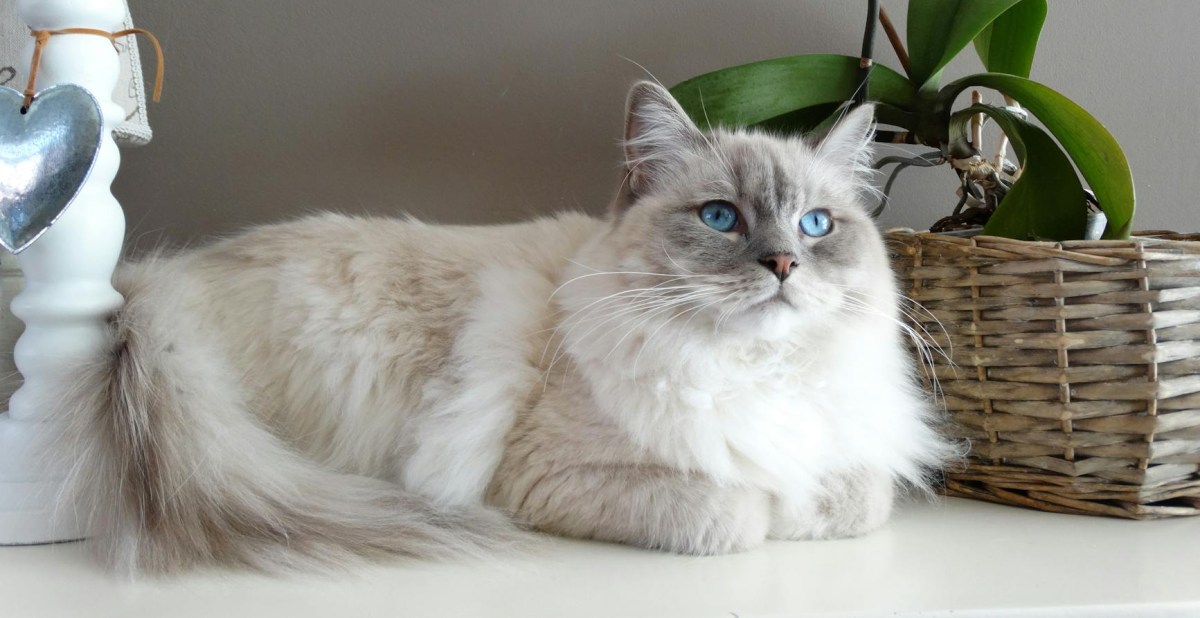
The First Edition Of Webster’s Dictionary From 1828 Says Cats Are ‘Deceitful’ And ‘Extremely Spiteful’

What would the Dictionary Man think of a modern American society dominated by the power and cuteness of cats?

Cats have taken over the internet, claim a mighty share of the $64 billion Americans spent on pet food in 2023, and have essentially installed themselves as the leisurely masters of 28 percent of American homes.

But it wasn’t always that way, and a look at the first-ever edition of Webster’s Dictionary reveals a very different attitude toward our furry overlords:

“The domesticΒ catΒ needs no description. It is a deceitful animal, and when enraged, extremely spiteful. It is kept in houses, chiefly for the purpose of catching rats and mice.”

Wow. Whoever does feline PR should get a raise, because we’ve gone from “We tolerate the imperious little bastards because they’re good at killing rodents” to “Does my little angel want a snack? How about some ‘nip then? Anything for my bestest little pal!” in the span of two centuries.

Buddy to Noah Webster: Bow!
Buddy 1, Noah Webster 0. Naturally.

Noah Webster, whose name is now synonymous with dictionaries, saw the effort to standardize spelling and pronunciation as central to formalizing an American linguistic identity distinct from our mother country. Or, as he put it, “[t]o diffuse an uniformity and purity of language in America” that would not only differentiate our English from England’s, but also unify the states at a time when many people still viewed the idea of a united states with skepticism.

By doing so, he hoped America would avoid the pitfall of dividing itself into regions of nearly mutually unintelligible dialects, a problem that plagues other countries. Consider the fact that India has almost 800 distinct languages and dialects, down from a staggering 1,652 in 1961 as hundreds of local languages died with the last generations of their speakers. Hindu, the country’s most popular language, is spoken only by about 43 percent of the population.

The goal, Webster wrote when he published his dictionary’s first edition, was “to furnish a standard of our vernacular tongue, which we shall not be ashamed to bequeath to three hundred millions of people, who are destined to occupy, and I hope, to adorn the vast territory within our jurisdiction.”

As dictionary.com notes, Webster wrote that passage in 1828 when the US population was just 13 million and vast swaths of what we now consider familiar territory was at the time largely unexplored wilderness.

His prediction of an America of 300 million people came true in 2006. Today there are approximately 335 million of us.

In other words, a hell of a lot has changed since the Connecticut born-and-raised Webster cobbled together a uniquely American system of spelling and pronunciation, so maybe it shouldn’t be a surprise that attitudes toward cats have shifted so dramatically.

Still, we’d love to see the look on Webster’s face if we could bring him forward in time and show him how the “deceitful” and “extremely spiteful” little furballs have come to such prominence in American culture. What would Webster make of the spoiled modern house cat, with her condos, tunnels, toys, harnesses, bowls filled with salmon and duck, and even psychoactive recreational drugs for their enjoyment?

Bow before your feline overlords, Webster!

Editor Cat Says
“We have made some edits, humans. See to it that the next edition includes this new and improved definition, or we shall withhold snuggles.”

Temptations Releases ‘Tasty Human’ Flavor Treats For Halloween

From the makers of kitty crack: “Human” flavored kitty crack!

I’ve never been more grateful that I’ve weaned Buddy off of Temptations.

The treats, which are famously irresistible to cats thanks to some strange alchemy that definitely isn’t healthy for them, now come in Tasty Human flavor in a new promotion for Halloween. (They’re heavy on corn and other fillers, as usual, but the meat ingredients in Tasty Human flavor come from chicken, liver and beef. Apparently we taste like KFC and burgers.)

The commercial spots are clever and humorous.

“I read that if our cats were bigger, they’d try to eat us!” a man whispers as ominous music plays and his cute cat grooms himself in the background. “So this Halloween, I’m gonna keep him satisfied with these.”

The man tosses a nervous look over his shoulder at his cat as the music swells with a horror movie-style orchestral stab, then he shakes the bag.

I won’t be buying any.

The popular cat treats are made by Mars, the almost $40 billion pet food and candy multinational that has had its own significant controversies, particularly with the use of slave labor in sourcing particular ingredients. Many of its pet food brands, such as Whiskas, are loaded with cheap carbohydrates and use by-product meal as their primary protein sources.

But I stopped feeding the Budster Temptations before I knew any of that, and for an entirely different reason: The little guy turned into a full-fledged kitty crack addict when he ate them.

Like any cat, Bud loves his treats, but when I fed him Temptations he had a one-track mind: The first thing he’d do in the morning was follow me to the kitchen, sit in front of the treat cabinet and meow incessantly for his precious Temps. It got to the point where he was turning his nose up at wet food he’d always liked and pestering me for Temptations instead. He was going full-on Gollum from Lord of the Rings.

I weaned him off once, stupidly folded less than a year later when I bought a bag for him on impulse (we were out of treats and the grocery store did not have any other kind), and had to wean him off the kitty crack a second time when he returned to his cracktastic ways.

Nowadays the little dude gets natural treats with non by-product meat as the main ingredients, and he behaves like a normal cat: He still loves his snacks, but he doesn’t ignore his wet food and howl at me for kitty crack.

tl;dr: Serve the Temps at your own risk. πŸ™‚