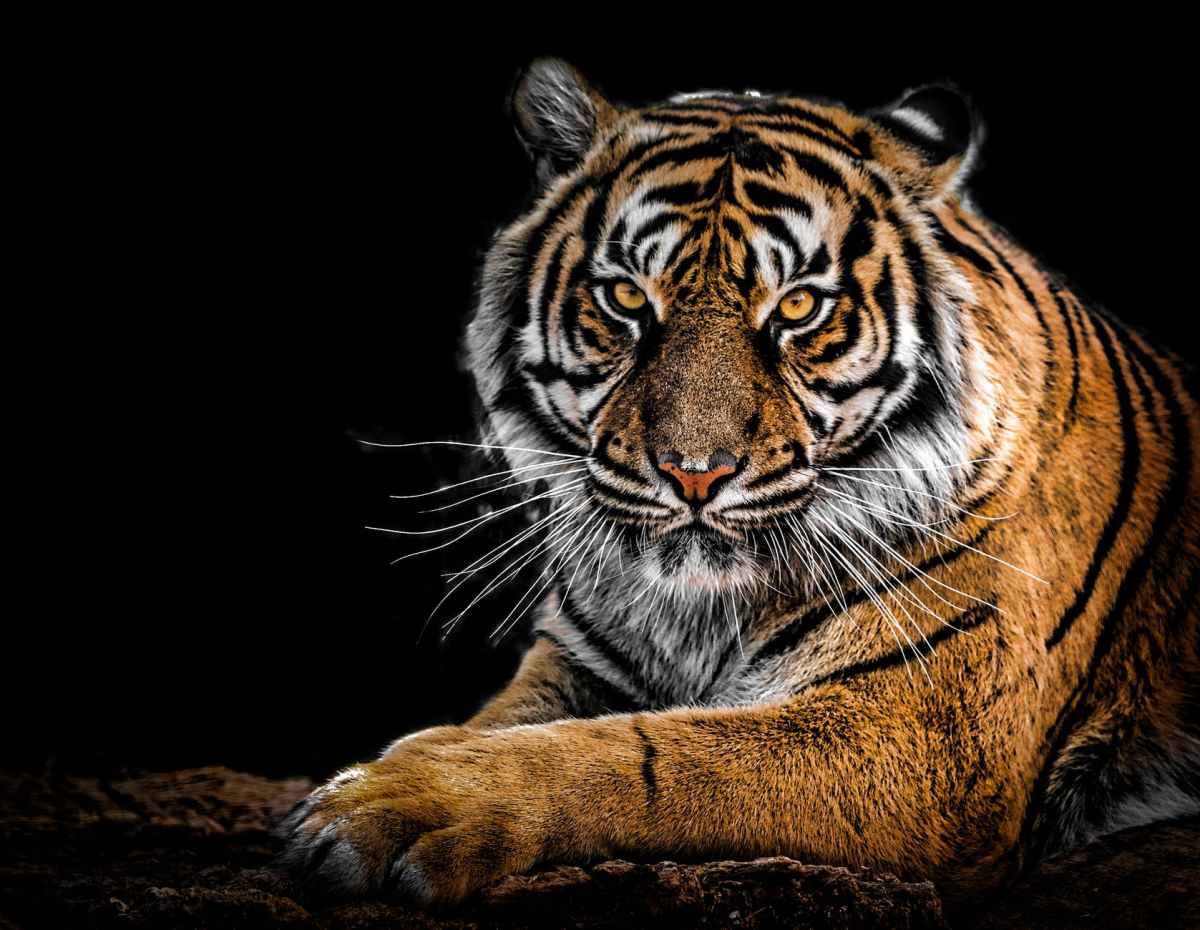
Finally, Wild Cat ‘Ownership’ Could Be Banned Under The Big Cat Public Safety Act

The legislation aims to ban all private big cat ownership throughout the United States.

There are more tigers living in cramped backyards in Texas than there are in the wild.

At roadside zoos, shady people like Joseph Maldonado-Passage, Joe “Exotic” of Tiger King fame, breed big cats like rabbits so they have an endless supply of cubs to steal from their mothers before they’re weaned, pumped full of sedatives, and handed off to tourists who take selfies with them but never stop to consider the welfare of those baby cats or the harm they’re enabling.

And in states like Florida, where “Muh freedoms!” reign supreme over all other values, people can own any wild animals they want, with no real oversight and no mechanisms to ensure they’re doing right by the animals. There’s nothing forcing “exotic” animal “owners” to keep the big cats, monkeys and other mammals in proper enclosures where they have stimulation and — just as importantly — won’t escape and hurt neighbors.

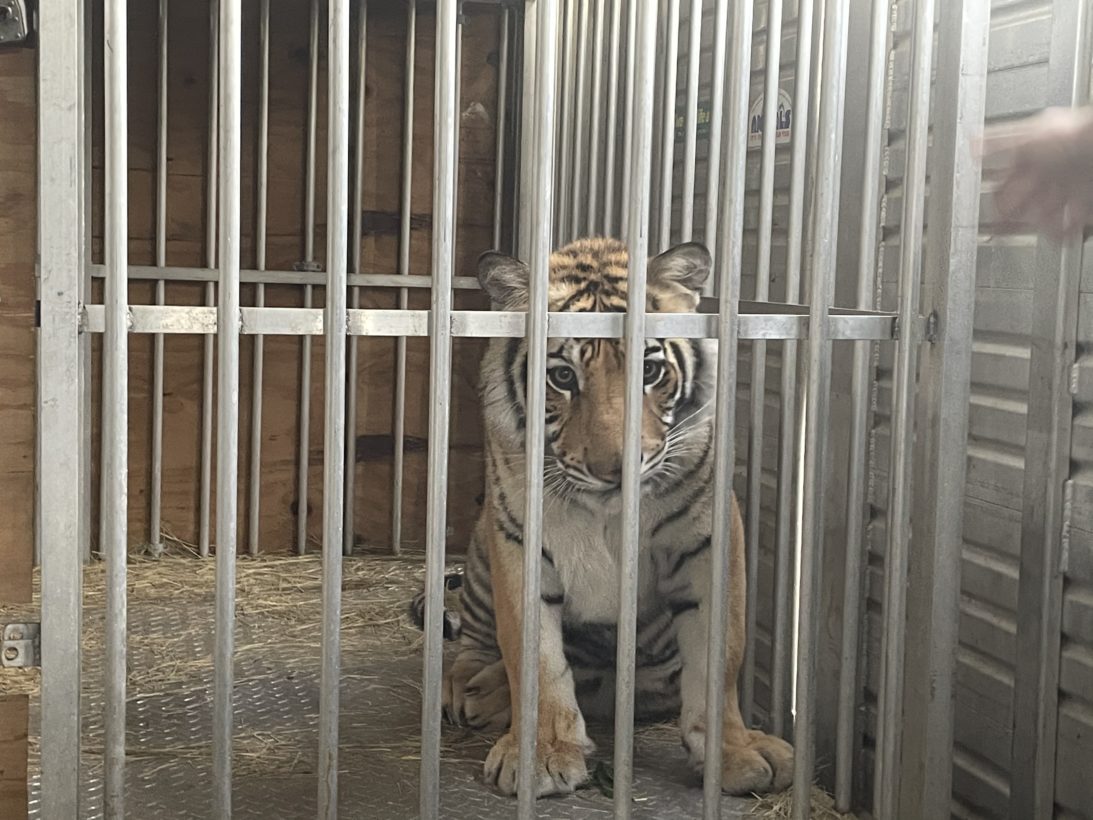
India the tiger Transported to BBR
India the tiger was still just a cub when he was spotted wandering through residential neighborhoods in Texas, where he’d been dumped by his former “owner.” Credit: Humane Society

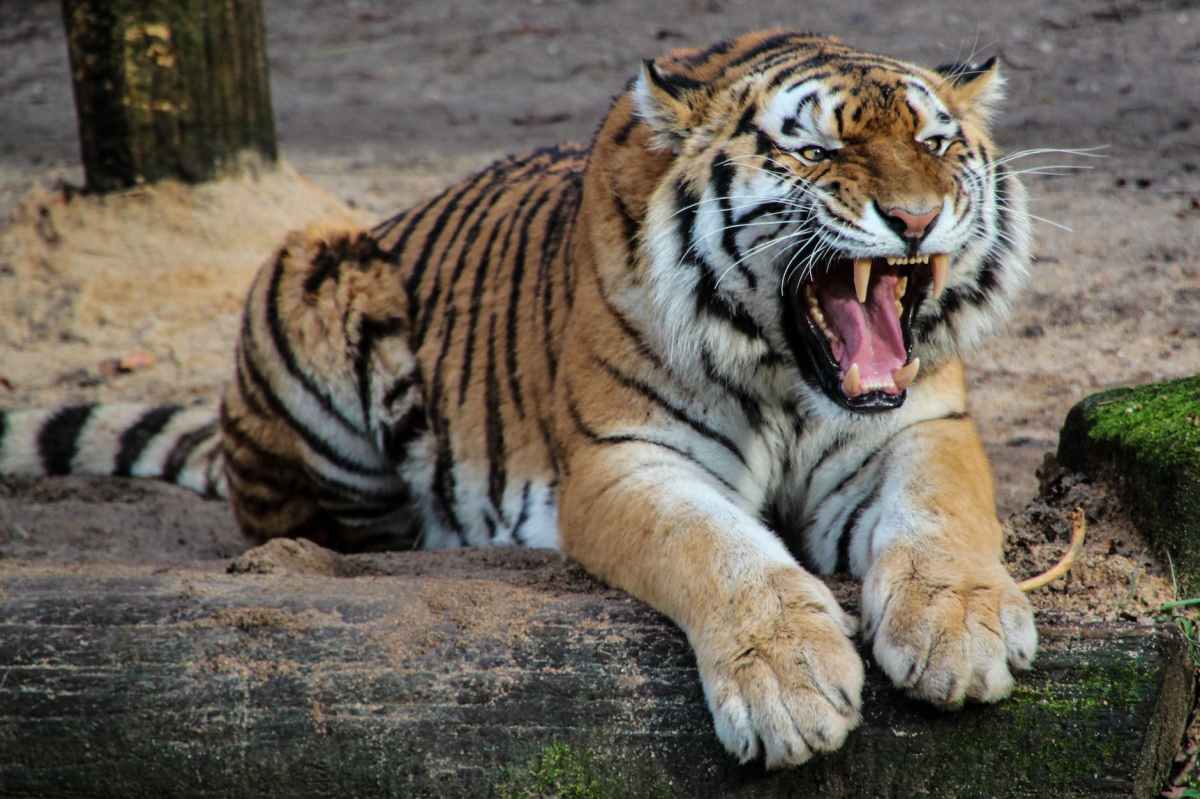
Thankfully, things could change soon as lawmakers are expected to vote on the Big Cat Public Safety Act, a rare bipartisan effort that would finally make it illegal to keep tigers, lions, jaguars, leopards, cheetahs, pumas and other wildcats privately, whether in homes, businesses or non-accredited “zoos.”

Currently keeping big cats is illegal or severely restricted in most states, but like many things in the US, there’s a confusing patchwork of laws and things that would be unthinkable in other states are perfectly acceptable in places like Texas and Florida.

Because, you know, “muh freedoms.”

Now is a good time to point out that this blog has always been, and will remain, politically agnostic. I have my own political beliefs as any other person does, but PITB is a cat humor, news and advocacy blog, and the only politics we discuss here are those that relate to animal welfare. Equally important, Buddy and I want people of all political persuasions to feel comfortable as readers and commenters on PITB. (Although that could change if one or both political parties suddenly makes a move against the nation’s Strategic Turkey Supply. Then Buddy’s gonna have to get biblical.)

The Big Cat Safety Act is co-sponsored in congress by representatives Mike Quickly, D-IL, and Brian Fitzpatrick, R-PA, and in the senate by senators Susan Collins, R-ME, Tom Carpenter, D-DE, Richard Burr, R-NC, and Richard Blumenthal, D-CT.

It’s endorsed by a wide range of groups, from the National Association of Zoos and Aquariums to the Humane Society and various bar associations. The proposed legislation also has the support of the White House, which released a statement this week urging its passage.

If your congressional representative or your senators aren’t publicly on board with the Big Cat Safety Act, you can make your voice heard via the Humane Society’s site, which allows you to draft and send letters to the offices of your lawmakers.

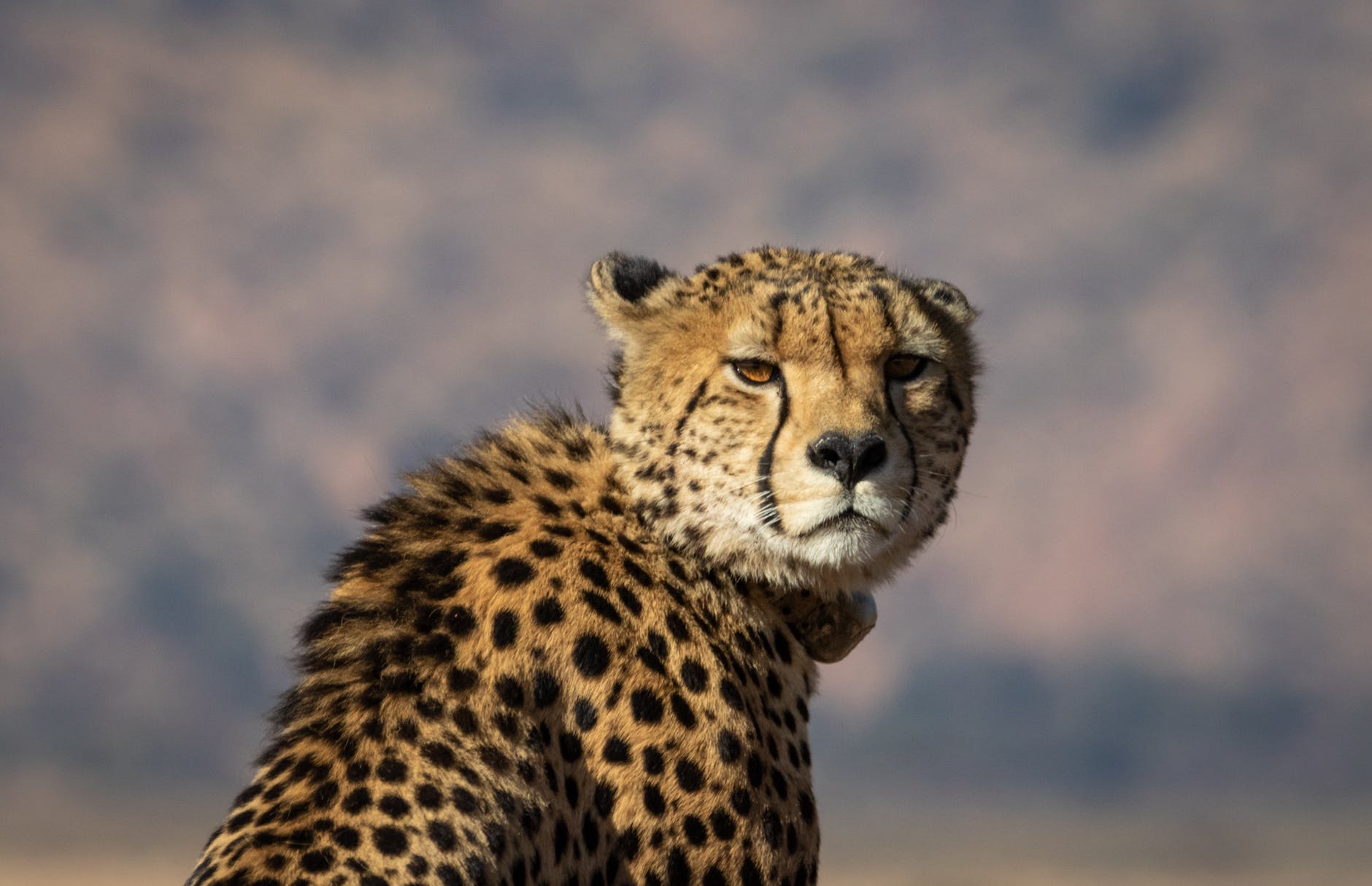
shallow focus photography of cheetah
Cheetahs, already critically endangered, have been almost entirely wiped out by poachers who sell their cubs on the illegal wildlife market. Credit: Magda Ehlers/Pexels

What’s The Difference Between A Puma, Mountain Lion, Cougar, Panther and Catamount?

The puma is known by more names than any other mammal, a fact that reflects its incredible resilience and wide range.

The puma goes by a lot of names. So many, in fact, that it holds the Guinness world record for the mammal with the most names, with more than 40 monikers in English alone.

Add the puma’s various appellations in Spanish and the indigenous tongues of south north America, and the large golden cat has probably had at least 100 names by a conservative estimate.

Cougar, panther, mountain lion, catamount, Florida panther, Carolina panther, ghost cat, gato monte, cuguacuarana, painter, screamer — they’re all names for puma concolor, a felid with the size of big cats in the panthera genus but genetics more closely related to non-roaring “small” cats, including felis catus.

Indeed, although pumas are famously capable of the wild cat “scream,” they’re able to purr just like house cats and their small- to medium-size wild relatives.

Why does the puma have so many monikers?

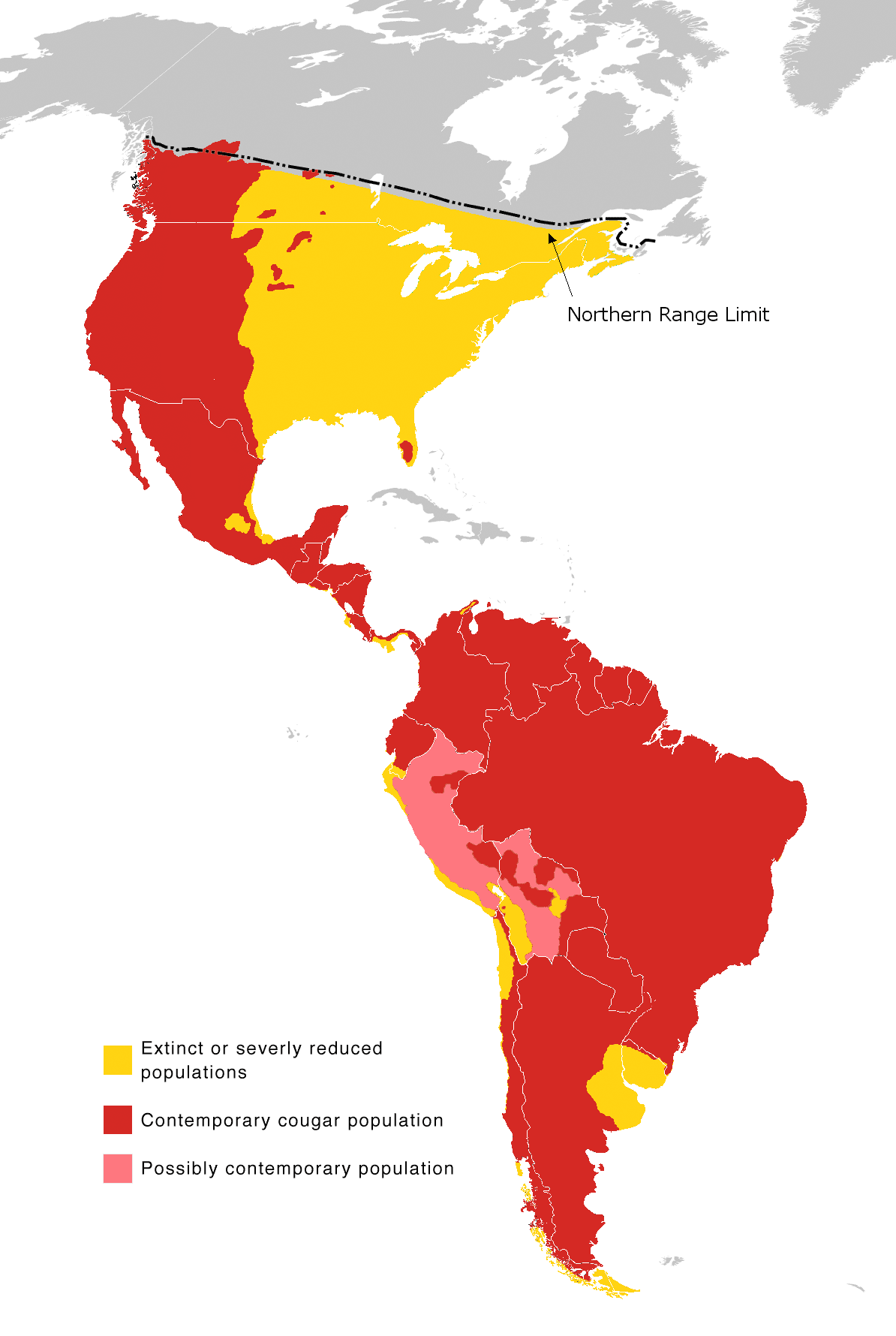
Mostly it’s because the adaptable, elusive feline has a vast range that historically covered almost the entirety of two continents:

Cougar_range_map_2010
Credit: Wikimedia Commons

Even today cougars exist in healthy numbers across most of South America and the western United States. They’re wanderers, with pockets of smaller populations in places like Florida and the midwest, and individual mountain lions have been spotted as far east as New York and Connecticut. (The New York region known as the Catskills, derived from “cat creek” in Dutch, was named after pumas when the area was part of their regular range.)

Throughout their history they’ve been familiar to a diverse group of human civilizations, societies, nations and peoples, from the Aztecs, Inca and Mayans, to the indigenous tribes of North America and the First Nations of Canada, to the inhabitants of modern-day countries like the US, Panama, Brazil, Mexico, Venezuela, Colombia, Ecuador, Paraguay, Bolivia, Chile and Argentina.

Puma
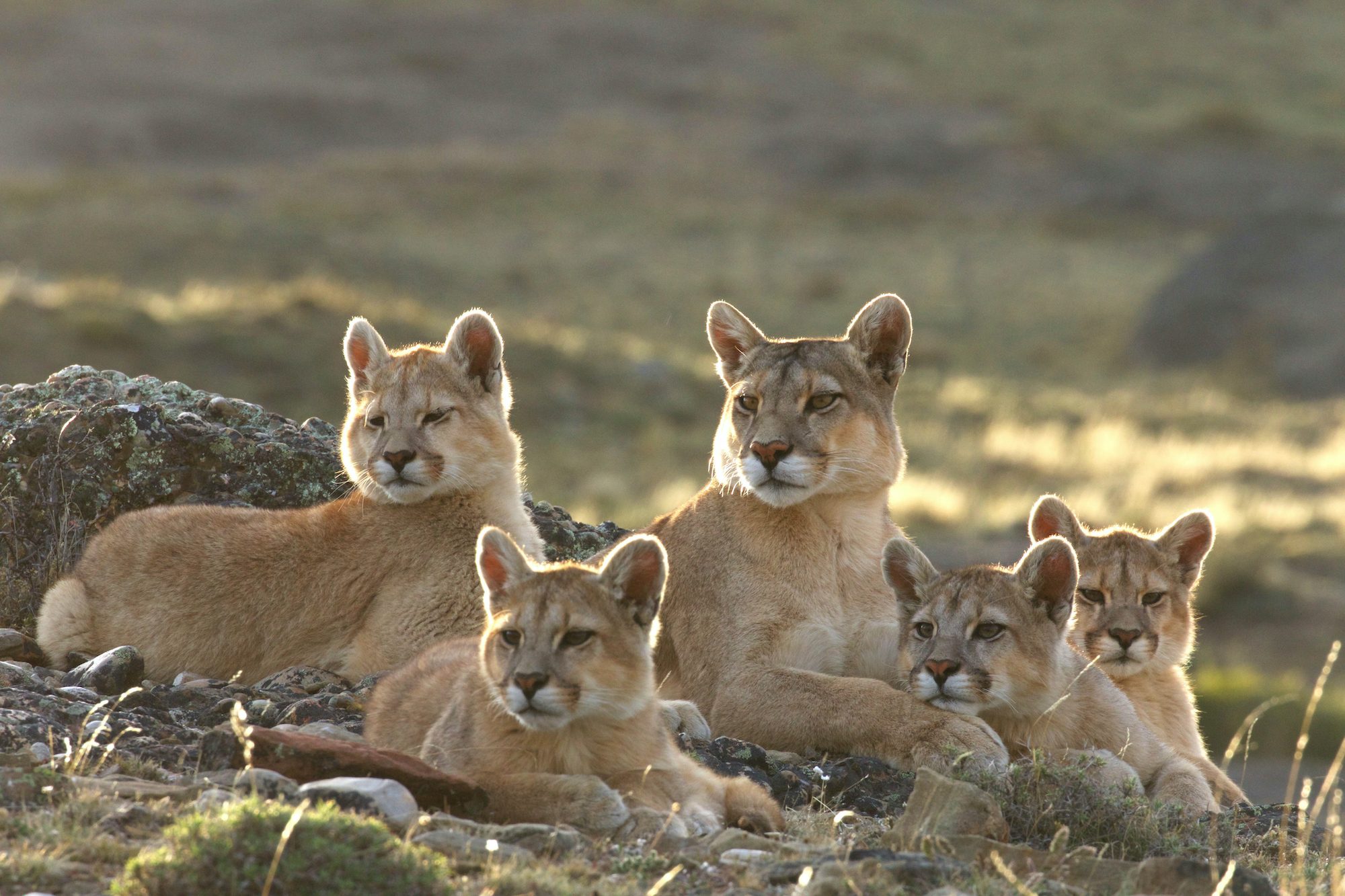
A puma with her cubs. Credit: Nicolas Lagos

But the name confusion doesn’t just stem from the puma’s many monikers bestowed by people of different cultures across space and time. The puma is also one of three cat species that are regularly called panthers. The other two, jaguars (panthera onca) and leopards (panthera pardus), are true “big cats.” That means they’re members of the genus panthera and they can roar but not purr.

Pumas are easily distinguishable from the other two: They have smooth golden fur without adornments, while jaguars and leopards both have blotches called rosettes.

It’s difficult to tell jaguars from leopards, but the biggest giveaway is the fact that jaguars have solid dot-like markings within their rosettes while leopards do not. In addition, leopards have much longer tails than jaguars or pumas, as they need the counterbalance provided by their tails to help them climb trees and balance themselves on tree limbs.

Jaguars are excellent climbers as well, but they don’t need to be as adept at living off the ground — they are the apex predators in the Americas, while leopards coexist with lions and other large animals like Cape buffalo that present a danger to the big cats even if they’re not predators.

Which brings us to our last point: Our many-named friends, the pumas, may be big and they may look dangerous, but they’re not. There have been 27 humans killed by the elusive cats in more than a century in the U.S., according to the U.S. Fish and Wildlife Service, compared to about 3,000 deaths from dog bites over the same period. Between 30 and 50 people are killed by dogs each year.

Most confrontations between humans and pumas happen when the latter are threatened and cannot escape, or when a female is protecting her cubs.

So if you live in an area where you have a chance to see these beautiful cats, admire them and keep your own kitties indoors, but don’t freak out — the puma you see one second will be gone the next.

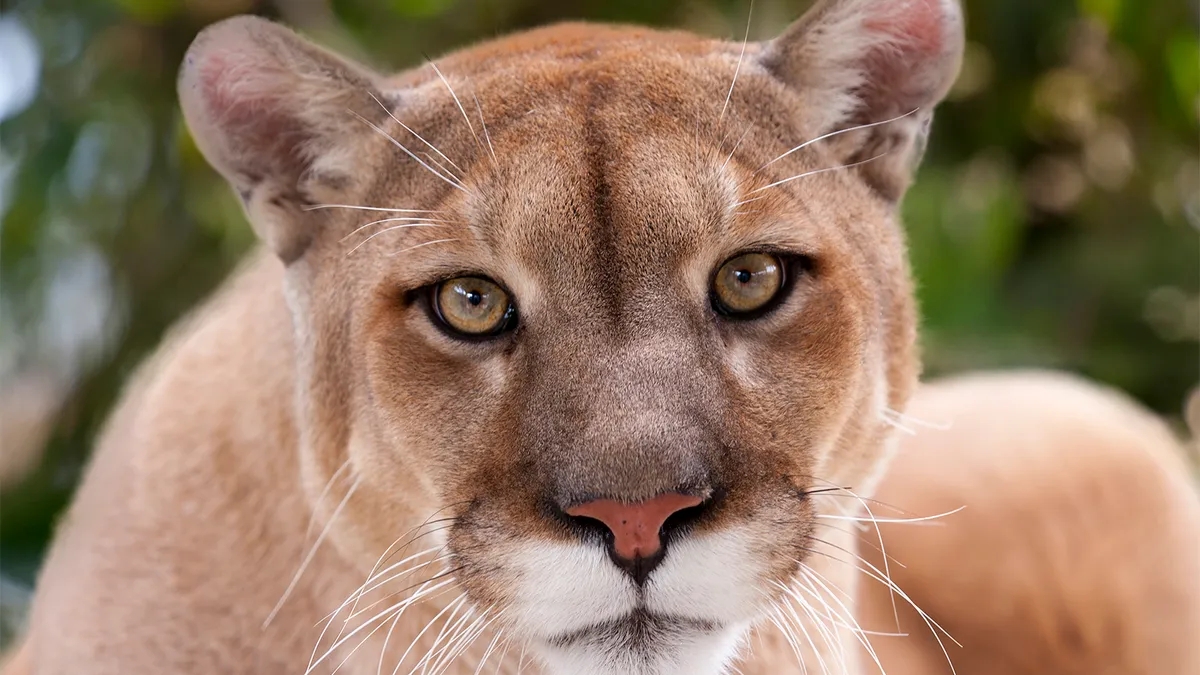
nature animal wilderness head
A captive puma. Credit: Pexels.com

Cats In Games: The Magnificent Jaguars Of ‘Shadow of the Tomb Raider’

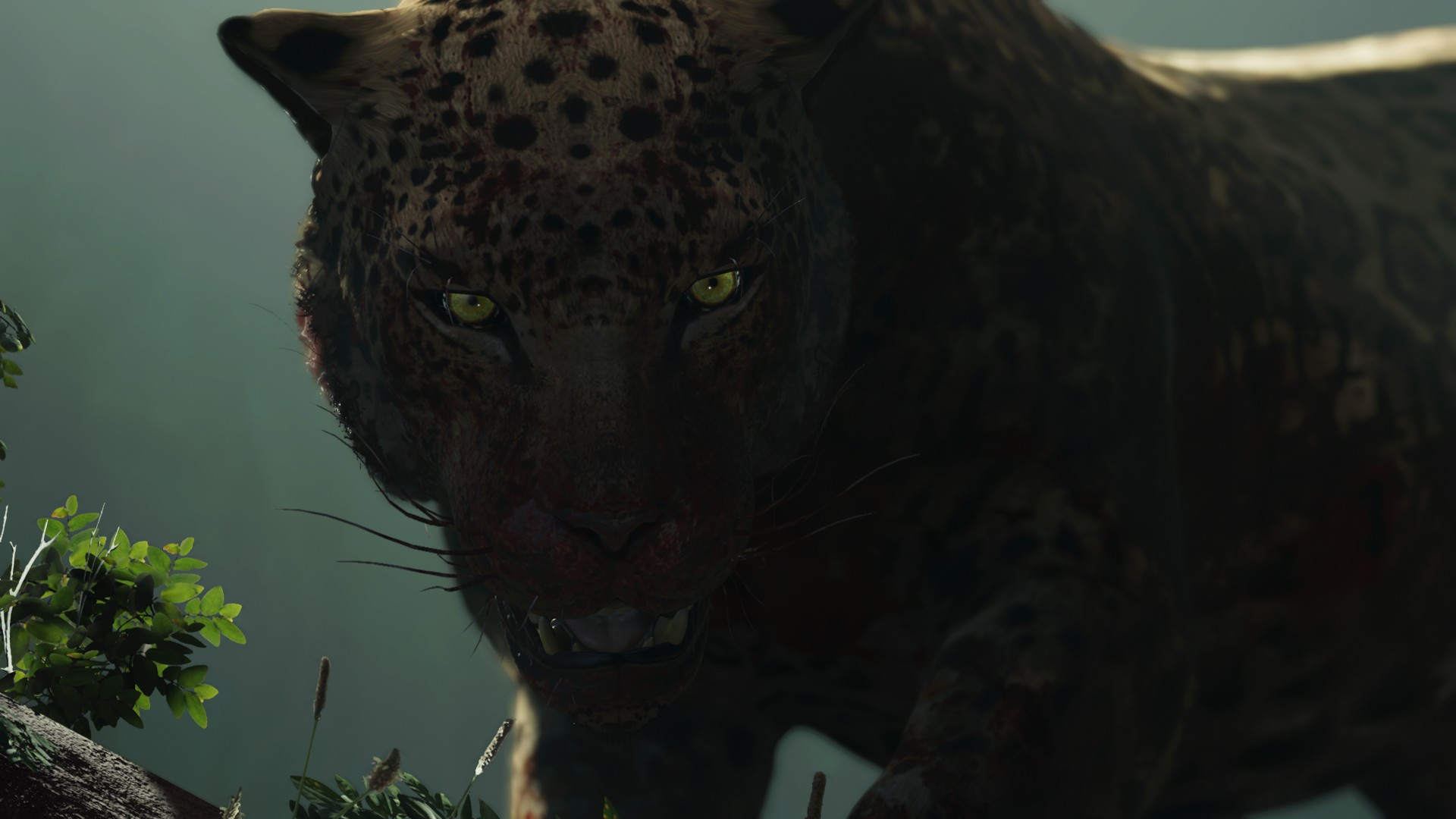
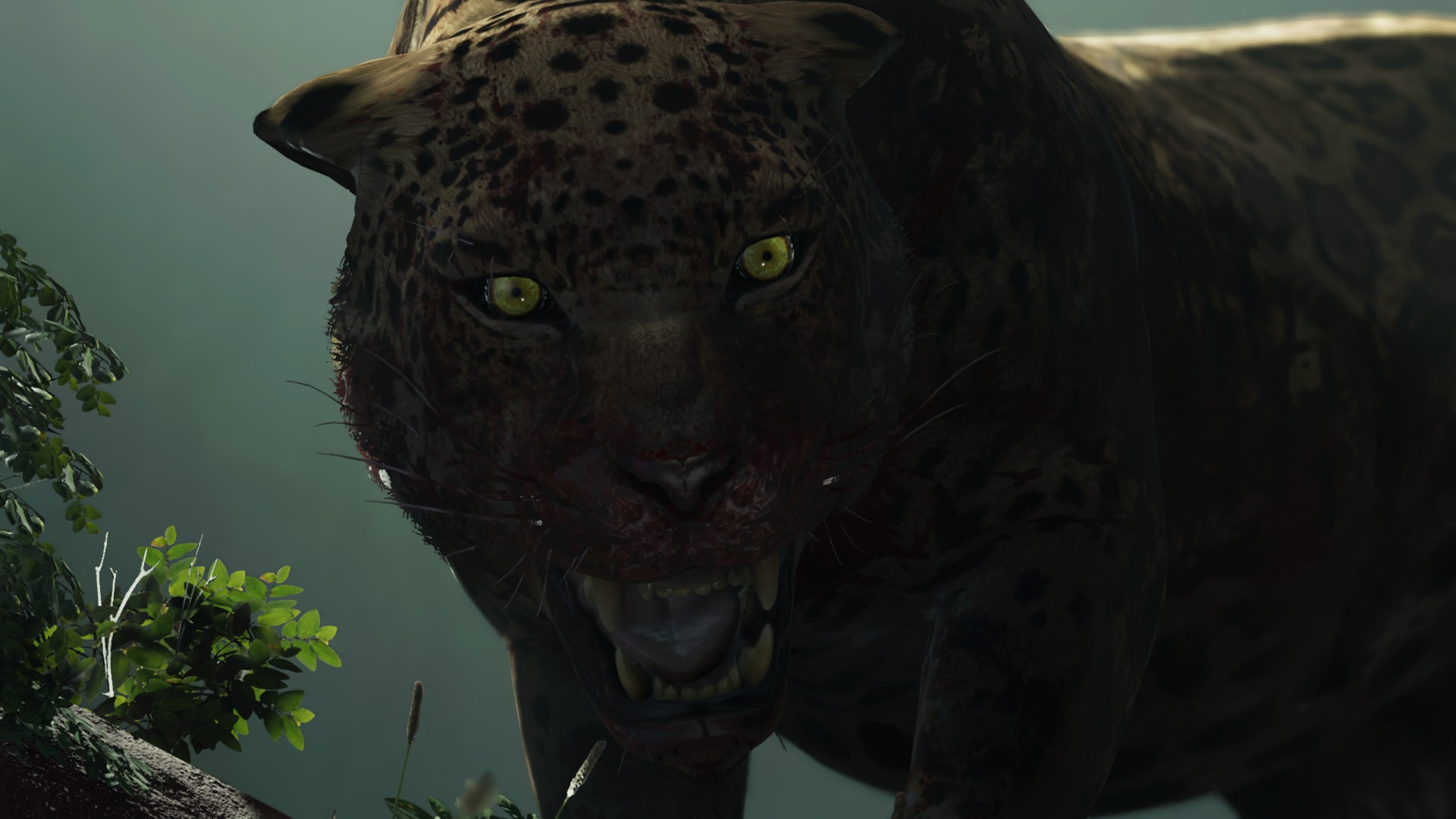
Jaguars figure prominently in Shadow of the Tomb Raider, which takes place primarily in the Peruvian jungle.

Lara Croft has come a long way since the days when she was the polygonal, hyper-sexualized protagonist of the early Tomb Raider games.

Thanks to a reboot the new Lara is a smart, adventurous and brave young woman voiced and motion-capped by the talented Camilla Luddington, and she’s never felt more real. In Shadow of the Tomb Raider, Lara ventures to the Peruvian jungle to chase down Mayan artifacts, and among the many obstacles in her way are jaguars.

Gorgeous, magnificent, regal jaguars who seemingly manifest out of the mist and blend back into the green inferno at will.

Here’s our new Lara, now starring in her third game:

The new Lara Croft
The new Lara Croft is a fearless adventurer and archaeological expert who travels the world unearthing clues to humanity’s past.

Like previous games, her adventures revolve around archaeological digs, ancient tombs and uncovering the history of humanity one find at a time. What would a Tomb Raider adventure be without a bit of danger?

Lara Croft
Lara crosses an underground chasm in search of a Mayan relic.

After an opening sequence, Lara and her friend Jonah head deep into the Peruvian jungle. This being Tomb Raider, they can’t land like normal people — a powerful storm sweeps in, sending their plane crashing into uncharted territory.

Lara finds herself alone, lost in the jungle without her gear. The sounds of the jungle reach a fever peach, with birds fleeing branches and monkeys howling, heralding the arrival of the apex predator of the Americas: Panthera onca, the jaguar, a name that translates to “He who kills with one bound.”

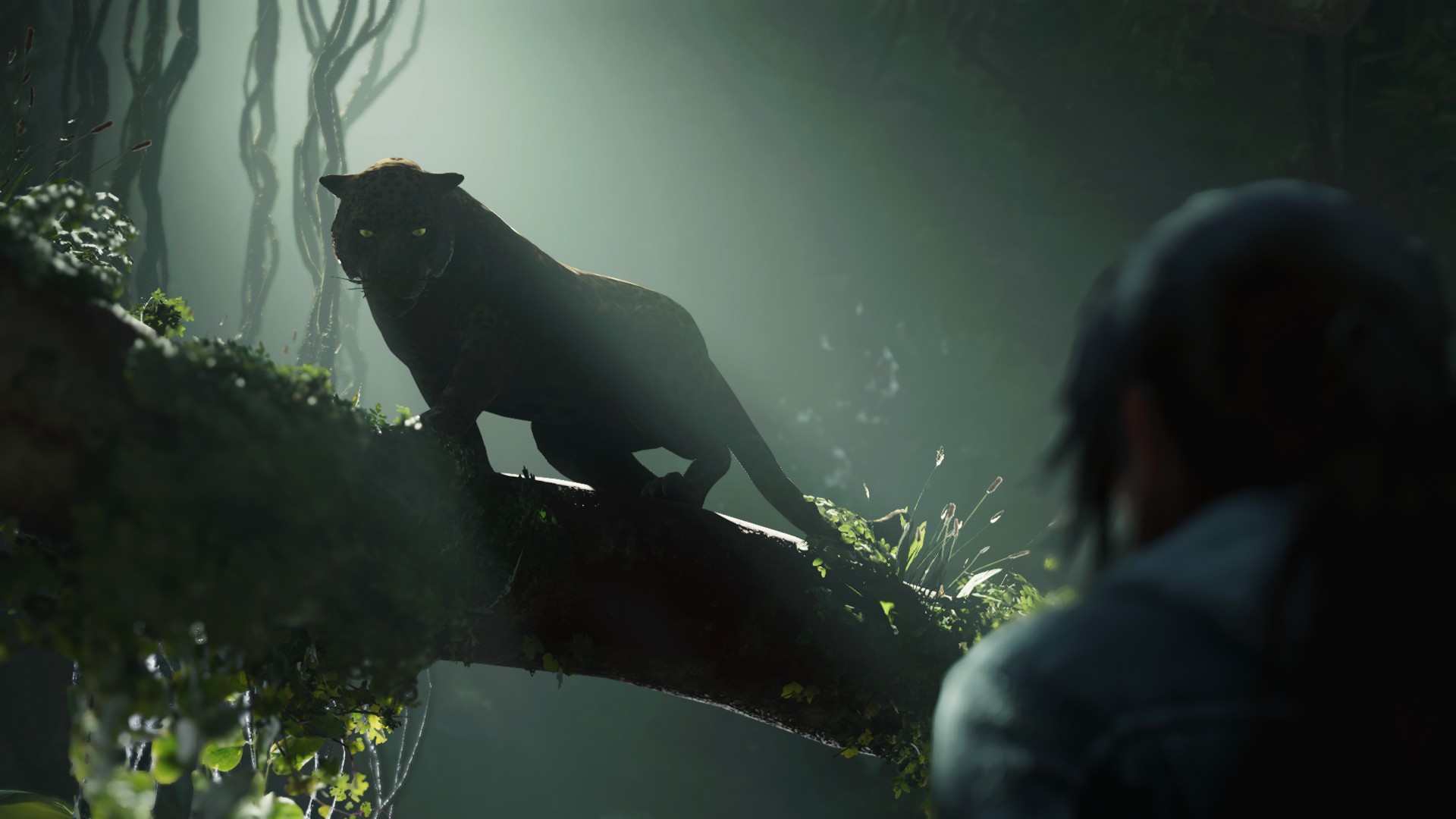
Jaguar of the Tomb Raider
“Hey there, could you tell me how to get to Lima?”

tombjaguar2

Okay, stay calm! Remember your training! You’re face to face with an apex predator with the strongest bite force of any animal, but you can do this!

Besides, it can’t get any worse at this point.

tombjaguar6

Can it?

tombjaguar7

Oh shit. Even the monkeys are like “Dayum! Grab the popcorn!”

Don’t panic! Maybe these jaguars are just saying hello!

tombjaguar3

Or maybe not.

tombjaguar4

tombjaguar5

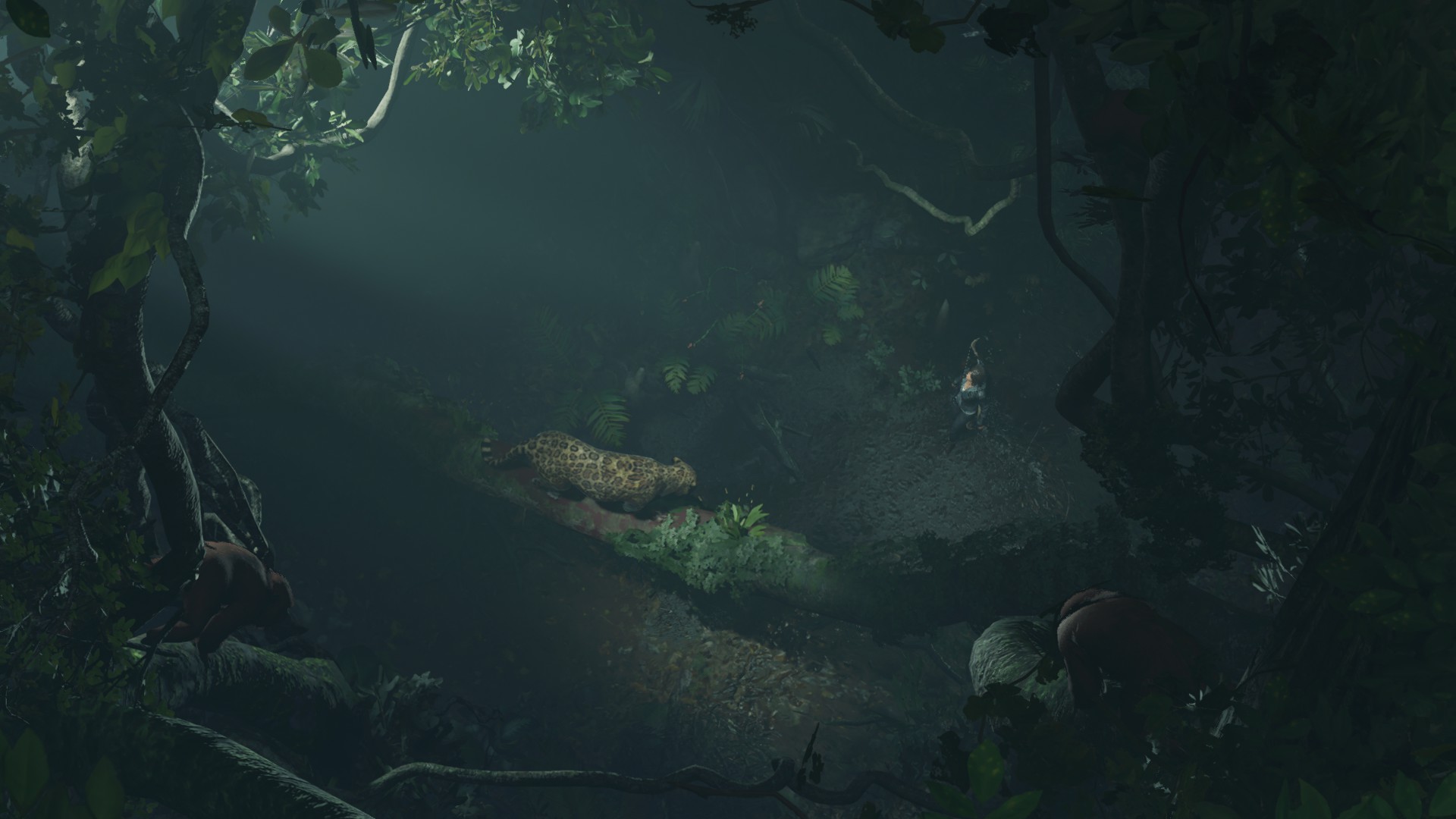
What’s worth noting is that these are not cut scenes — what you see here are screenshots within the game engine. For people who aren’t familiar with video games, that means you’re looking at the game itself. This is what the gameplay looks like.

We have come a long, long way from this, haven’t we?

Old Tomb Raider
The low-texture, low-polygon world of the original Tomb Raider games.

It’s a difference allowed by several generations’ worth of improved computer hardware and software, resulting in billions of additional polygons, millions of additional colors, improved lighting, physics, art assets, high definition textures, motion capture technology and all the little things that fuel progress from a world made from flat, blurry environments and cartoonish characters to a hyper-realistic, almost photo-quality world which makes incredible immersion possible.

Most of our readers may not be gamers, but for those who are, I’ll avoid spoilers here even though Shadow of the Tomb Raider was a 2018 release.

Suffice to say jaguars play a prominent role in the game and serve as the Big Bads, the game’s ultimate threat made even more terrifying by the knowledge that they can appear at any time and ambush our hero before she’s even aware of their presence.

Shadow of the Tomb Raider does a fantastic job of immersion, making all of the dangers of the jungle feel real through meticulously crafted visuals and sound, and a compelling story. And like everything else in life, it’s better with cats!

Ballsy Thai Tourist Grabs Tiger’s Crown Jewels

A small act of cruelty in an industry that has visited immeasurable cruelties on big cats.

Look at the balls on this one!

A woman from Thailand apparently decided that caging, beating and sedating tigers for selfies wasn’t enough mistreatment for Earth’s critically endangered apex predators. You can always add more insult, just a little icing on the “We Destroyed Your Entire Species” cake, by grabbing a handful of tiger testicles and mean-mugging for a selfie.

Of course the reason the tourist, named Waraschaya Akkarachaiyapas (also referred to as Khun Waraschaya in some media reports), was able to enter the tiger enclosure and pose with the tigers in the first place is because the keepers at Tiger Kingdom zoo in Thailand sedate the animals until they can barely yawn, rendering them incapable of defending their personal space or doing anything other than laying down as tourist after tourist touches them and poses for selfies.

Tiger Kingdom was at the forefront of the so-called “Disneyfied” “zoo experience,” in which the operators rake in millions by breeding tiger cubs like an assembly line and charging tourists to interact and pose for photo with the animals.

593c5f46-6499-11e8-82ea-2acc56ad2bf7_972x_195654

The tourists are told comforting lies: Employees of Tiger Kingdom dress like Buddhist monks, spout platitudes about being one with nature, and claim their “humble” operation began when one kindly monk took in an orphaned cub and founded a sanctuary decades ago.

tigerkingdom22
Tourists are told that kindly monks founded a sanctuary after taking in an orphaned tiger cub.

The reason the tigers are so docile, the tourists are told, is because the monks hand-raise them, socializing them with humans from a young age. (Paging Siegfried and Roy, as well as Joe Exotic’s two former employees who lost limbs to hand-reared tigers!)

The comforting fiction allows tourists to justify what they’re doing: When an acquaintance of mine proudly changed her social media profile photo to a shot of herself hugging an adult tiger, she acted as if she was shocked by the suggestion that the tigers were sedated. No, she explained, you don’t understand! These tigers were hand-raised by the monks from the time they were cubs! That’s why they love spending 12 hours a day having their tails pulled and getting mounted by tourists who want to ride them like horses. They love it!

It takes only a few seconds to refute what we’ll gently call that misconception: Articles abound of former employees and conservation experts describing horrific conditions for the animals at Tiger Kingdom. (It’s not the only “zoo” that thrives on selling big cat interactions in Thailand: When the infamous “Tiger Mountain” attraction was raided by authorities in 2016, they found the remains of more than 60 tiger cubs, tiger pelts, and “around 1,500 tiger skin amulets, plus other trinkets apparently made of tiger teeth.”)

The cubs, who would normally spend at least two years with their mothers, are taken away when they’re infants so Tiger Kingdom’s employees can hand-raise them, and not with the care and good intent they claim: The operators want the cubs to be accustomed to being handled and passed around so they don’t protest too much when tourists manhandle them.

The cubs are big money-makers, and tourists will pay a premium to feed them from milk bottles. The baby tigers are fed and fed until they can’t drink anymore, then they’re fed some more, former employees say. The bottle-feeding only stops when the day’s over and there are no more tourists forking over an additional $15 to get “adorable” photos of themselves with the babies.

That’s also the age when the cubs are introduced to the bamboo stick, the primary tool for keeping them in line. A cub who doesn’t want to leave its cage for another day of manhandling and force-feeding is smacked on the nose with a bamboo stick until it complies.

Tiger attractions like the infamous one at Thailand’s Tiger Kingdom have popped up all around the world, with interest fueled by enthusiastic reviews from celebrities like Beyoncé, who shared photos of her visit to an American tiger park with her millions of Instagram followers.

If Queen Bey says it’s okay, then it must be okay. Okay? 

beyonce2
Queen Bey says it’s okay to mess with tiger cubs and chimp babies, so it must be okay!
beyoncetiger
Queen Bey says it’s okay!

Life as a cub at Tiger Kingdom is a walk in the park compared to adulthood. Most of the adults are confined in cages 24 hours a day and are only let out on busy days when the operation swells with visitors who want tiger selfies. (Tiger selfies are extraordinarily popular with men who use them on dating site profiles, and Buddy’s home state of New York went so far as to ban tiger selfies because of their prevalence.)

When you consider the context, it’s really not surprising when someone like Waraschaya Akkarachaiyapas feels perfectly comfortable literally molesting the animals for her amusement.

We’ve poached this species to the brink of extinction and destroyed its habitat. We make rugs of their pelts, mount their taxidermied heads to our walls, sell their claws and teeth as trinkets, and grind their bones into dust for use in elixirs that allegedly cure ailments like baldness and erectile disfunction, according to ridiculous millennia-old folk medicine systems. (Having exhausted their supply of tigers to slaughter for traditional Chinese “medicine,” the Chinese have turned to poaching the Amazon’s jaguars to fuel their insatiable appetite for big cat parts. Jaguar poaching has skyrocketed “200 fold” in the last five years to fuel Chinese demand for animal parts.)

In that context, literally molesting a helpless animal is a drop in the ocean of abuse, decimation and the destruction of the dignity of these amazing animals. We’re supposed to be the intelligent species on this planet, the wise caretakers of the only world that we know of brimming with life. We are failing miserably.


Amazing Cats: He Who Kills With One Bound

The name jaguar comes from the indigenous Tupian word yaguara, meaning “he who kills with one bound.”

On the Scale of Badassery that’s an 11, which is appropriate for such a regal, ephemeral creature who seems to exist only in glimpses before melting back into the jungle.

From ancient chronicles etched in Mayan pictograms to modern-day descriptions of encounters with jaguars, one thing is consistent: When you’re fortunate enough to set eyes on a jaguar, it’s because the animal allows you to.

The world’s most elusive hunter is like smoke: There one moment, gone the next, without any physical evidence that it was present in the first place.

There’s a lot of confusion about jaguars, so let’s get that out of the way first. The jaguar is the third-largest-cat on the planet, behind tigers and lions. Jaguars are the largest cats in the Western Hemisphere and are the apex predators in the Americas.

They’re often confused with leopards, the other spotted big cats, but aside from living on different continents, jaguars are visibly larger, heavier and more sturdy than their African cousins.

Compounding the confusion is the widespread habit of using “panther” to describe both jaguars and leopards, and sometimes other cats too, like pumas.

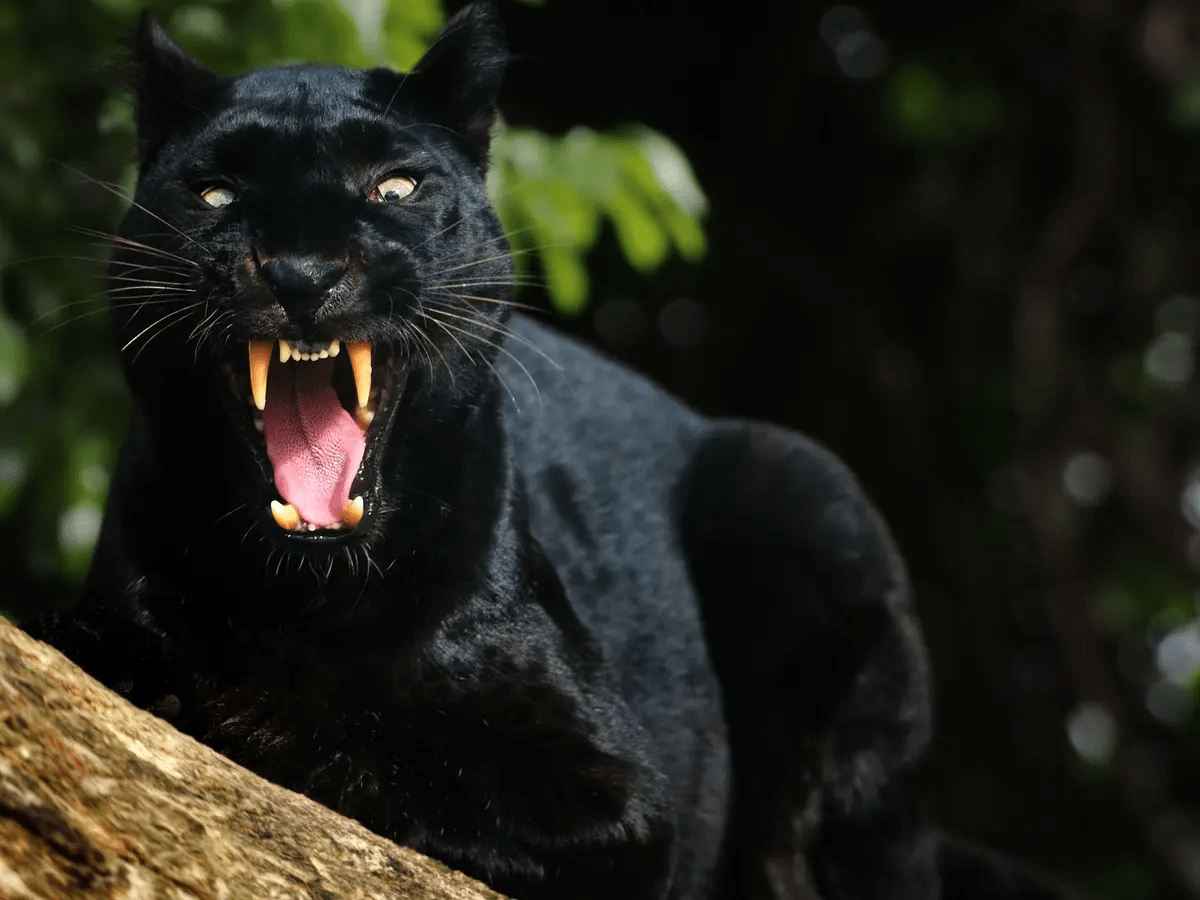
A panther isn’t a type of cat: Panthera is the genus to which big cats — tigers, lions, jaguars and leopards — belong, while a black panther can refer to any melanistic jaguar or leopard.

jaguaryawn

Like its cousins in the genus, the jaguar is an ambush hunter.

But unlike tigers, leopards and lions, jaguars do not kill by going for the spinal cord — they go for the head itself, puncturing skulls, turtle shells, heavily armored caiman scales and anything else they want to make a meal of.

That’s where the “one bound” in their name comes from: By the time a jaguar pounces, it’s already too late for the victim.

Jaguars are paragons of feline grace, yet even among cats they’re strikingly beautiful animals:

6DD23C8C-F9F4-4AFB-B7F9-43709046ED16

FC9F02C8-D401-4747-8810-2B5F2744E6C7

Unlike tigers and lions, there are no recorded cases of prolific man-eaters among jaguars, and the mysterious cats are careful to avoid conflict with humans. The one exception is when a female jaguar feels her cubs are threatened.

Travelers who brave the untamed, near-impenetrable remote rainforests of South America may not see jaguars on their journeys, but the jaguars see them: Humans who venture into the thick tangle are “calmly watched by a jaguar or two” and most of them “don’t realize they’re under surveillance,” Nadia Drake wrote in a 2018 Atlantic story about encountering the enigmatic felids in Peruvian jungles:

Those who have studied jaguars say they sense a kind of preternatural consciousness in the beasts, a combination of disciplined energy and shrewd awareness that allows the jaguar to unleash its power in calculated ways. Alan Rabinowitz, struggling to find the right words, calls it simply “jaguarness.”

The ancient Aztecs saw that same cunning in the eyes of jaguars, naming them the “kings of the animal world” and employing jaguar motifs on statuary, stone reliefs and other artwork. Jaguar imagery was common throughout the pre-European Americas, and at the time the animal ranged across North and South America without a true rival at the apex.

Like tiger imagery is used to denote power, grace and agility in Asian cultures, the jaguar’s image was used for similar purposes, associating the animals with royalty and gods.

In Mayan culture, deities took the form of jaguars, and the big cats were known as gods of the underworld, fertility, war, protection and fire. Ek Balam, for example, was the Mayan god of the underworld, and was depicted as a black (melanistic) jaguar.

Jaguars share another quality with tigers, one that’s rare among cats: They not only enjoy the water, they excel at swimming and even hunting in rivers and swamps. While most cats will do almost anything to avoid entering water, jaguars and tigers have no reservations about immersing themselves, particularly on hot days.

jaguarwater

Like all big cats, jaguar numbers are decreasing. The animal is classified as “near-threatened on the IUCN Red List of Threatened Species as its habitat has been fractured.

Unlike the other members of the panthera genus, habitat loss hasn’t led to conflicts between humans and the majestic cats. Jaguars, it seems, would rather retreat deeper into the jungle than go to war with humans. It’s crucial to preserve what’s left so these beautiful, amazing cats still have a jungle to go back to.

All photos courtesy of National Geographic and Mexico Lore.

790EB2B3-1CA8-4201-B980-B8129826AAC3