“She’s Like,’Where Are The Snacks?'”: Smithsonian Big Cat Keeper On Working With Tigers And Lions

“Oh my God, this is my job every day!” Charlie Shaw says of his position as a big cat keeper at one of America’s most well-known and well-funded zoos.

If you’ve ever wondered what it’s like to work with big cats, WTOP has a new interview with Charlie Shaw, a big cat keeper at the Smithsonian National Zoo.

Hint: it involves a lot of meat, physical enrichment, olfactory enrichment, and checking on the felids to make sure they’re healthy.

Shaw starts his day by feeding the hungry apex predators, including Damai, a 16-year-old tiger who wants all the snacks, and Vostok, a fast-growing young Amur tiger who doesn’t know a genetically-compatible mate is arriving in short order, and he’ll get to be a dad if things go well.

The genetic matches are carefully made to avoid inbreeding and give the species the best chance to recover.

“Tigers are critically endangered,” Shaw told WTOP. “What we want to do is make sure the gene pool itself is still very diverse.”

Vostok loves to swim. Credit: Charlie Shaw/Smithsonian National Zoo

Shaw says he’s working his dream job.

“You walk in and the tigers all chuff at you, or the lions roar. And you’re like, ‘Oh, my God, this is my job every day!’”

THAT story

I’m aware of it, and I think every person concerned about the welfare of cats should at least know it’s happening.

But it’s also extremely distressing. I actually had nightmares the night after I read it. So I’m offering a strong warning here: think about it before you click the story. The report is by CNN, so there are no gory images and the reporters aren’t trying to make anyone uncomfortable, but the reality of it is bad enough.

For everyone who doesn’t want to know the more upsetting details, the essence of it is that there’s a network of people making “content” of themselves torturing and killing cats, and a rapidly growing audience of people who pay thousands of dollars to “sponsor” the horrific content.

They have “menus” set up where people can select the cat they want to see tortured and specify the ways in which the cat should be hurt and killed. CNN, citing a group of vigilantes trying to dismantle the networks, says people pay up to $1,300 for the “service.” Collectively, the torturers and their audience refer to themselves as “cat lovers.”

The Chinese government, to no one’s surprise, does not care. There are no criminal penalties for what the content producers are doing, and the government hasn’t responded to complaints from concerned people or media networks.

I might address it in the future, but for now I don’t even know what to say. I was away when I read it, and it made me really want to hug Bud and make sure he’s never out of my care. Ever.

At Almost 700lbs, Hercules The Tiger Is A Symbol Of His Species’ Comeback

The huge Bengal may be the biggest tiger in India, and has already become a draw for tourists visiting from other parts of the country.

Hercules looks like a heavyweight boxer reincarnated as a tiger.

The massive apex predator was virtually unknown outside of India’s Kumaon district until this week, when a tourist posted a short video of the nearly 700-pound animal lumbering out of the brush and into clear view as he crossed a dirt path between rural villages.

The Bengal, who may be the biggest cat in India, is majestic. His gait is leisurely, as if he knows that anyone or anything he may encounter will clear a path the moment they see him. His fur doesn’t hide the rippling muscle underneath, and as he spots a group of tourists with cameras aimed at him, he bares his teeth momentarily, then pretends as if they don’t exist as he takes his sweet time crossing the path.

“In my entire career, I have never seen such a giant tiger,” Prakesh Arya, a divisional forest officer, told the New Indian Express.

For conservationists, tourists and the government of India, whose national animal is the Bengal, Hercules’ existence is proof that Project Tiger is on the right track. The project is a national effort to save the iconic species, grow its population, and protect it from poachers.

Hercules’ territory includes Ramnagar, a town in northern India known as they gateway to Jim Corbett National Park. The preserve is named after the renowned tiger hunter who took down the Demon of Champawat, a tigress who had killed at least 435 people during a decade-long rein of terror.

Corbett, who described tigers as “large-hearted gentlemen” who were unfairly maligned, was known for his prowess in hunting down man-eating tigers and leopards, but later in life he turned to conservation, realizing that Earth’s biggest cats were in danger of extinction if drastic efforts weren’t taken to save them. That was a century ago.

Now India devotes significant resources to their protection and well-being, with an entire corps of dedicated professional rangers and anti-poaching teams tracking the animals and constantly patrolling the vast country’s 58 tiger preserves, which cover 82,836.44 square kilometers.

A large tiger cools off in water on a hot day. Credit: Warren Garst/Wikimedia Commons, Colorado State University Library

For tigers like Hercules, having large contiguous ranges gives them the chance to live the way nature intended. Experts say the abundance of prey in the reserves, especially in the region Hercules calls home, has resulted in larger, more robust cats of the type that were once a memory.

“This is a clear symbol of the rich biodiversity and the success of our management efforts in this forest area,” Arya said.

In turn, the presence of the iconic cats has revitalized tourism. Tourists who have seen Hercules described the experience as “overwhelming.”

“Seeing ‘Hercules’ was an unforgettable experience,” Priya Sharma, a tourist from Delhi, told the Express.


After 10,000 Years, Dire Wolves Walk The Earth Again

The surprise announcement came from Colossal Biosciences, a company best known for its project to bring back the woolly mammoth.

A US biotech company shocked the world Monday when it announced the births of three dire wolf puppies, bringing back a species that hasn’t lived for more than ten millennia.

Or a version of that species, at least.

Scientists with Colossal Biosciences extracted DNA “from a 13,000 year old tooth and a 72,000 year old skull and made healthy dire wolf puppies,” Colossal CEO Ben Lamm said in a statement.

Of course, it wasn’t that simple.

The dire wolf, Aenocyon dirus, was heavier, stockier and had thicker fur than modern-day gray wolves. In addition, its bite was incredibly strong, generating more force than any living species of canid.

To create the dire wolf puppies, Colossal used the genomes reconstructed from the tooth and skull, spliced them with gray wolf DNA, and made 20 gene edits in 14 genes. Healthy embryos were implanted in three surrogates — large, mixed-breed dogs — and were successfully delivered.

Romulus, one of two male dire wolf pups born late in 2024. Credit: Colossal Biosciences

Remus, who was born at the same time as Romulus. Credit: Colossal Biosciences

Whether the new puppies are officially dire wolves is up for debate and beyond the scope of this post, but just like humans and chimpanzees share 98.7 percent of their DNA, dire wolves and gray wolves share 99.5 percent of their DNA.

The species also existed concurrently with gray wolves and there was interbreeding between the populations, meaning gray wolves already have dire wolf lineage.

As a result, the puppies may be more dire wolf than some are willing to admit. Just how far a “de-extinction” project has to go for the animals to qualify as their namesakes will be debated for years, and there are innumerable questions for which we won’t have answers until the pups grow and scientists monitor their behavior in addition to their physical health.

They won’t behave precisely the way their ancestors did, since they are growing up in a captive environment with teams of specialists constantly monitoring them. The wolves are “essentially living the Ritz Carlton lifestyle of a wolf. They can’t get a splinter without us knowing about it,” Colossal’s chief science officer, Beth Shapiro, told the New York Times.

Whether bringing back dire wolves is a “good” thing is also a topic for another day, at least as far as this post goes. You may disagree, and feel free to say so in the comments, but this is a subject you could write half a library of books on, encompassing ecological, moral and philosophical questions that don’t have easy answers.

It’s made even more complex by the situation we find ourselves in, with our own behavior and relentless expansion killing off more than 70 percent of the world’s wildlife since 1970, according to the World Wildlife Fund. The company wants to use its technology to help critically endangered species, like the red fox, avoid extinction.

Colossal has partnered with leaders in the fields of genetics and bioethics, as well as organizations that specialize in animal welfare. The puppies are in a sizable, custom-built facility in an undisclosed location, secured by “zoo grade” barriers, and the company enlisted the help of the SPCA to create an environment appropriate for them. Colossal says their care regimen will include socialization and the development of pack dynamics.

A newborn dire wolf pup. Credit: Colossal Biosciences

The company has well-publicized projects to bring back woolly mammoths and the dodo, and ultimately, its founders say they want to restore balance in places where apex predators have been brought to extinction by human activity.

“This project demonstrates the awesome potential for advances in genetic engineering and reproductive technologies to recreate lost diversity,” Andrew Pask, a Colossal board member and professor of biosciences at the University of Melbourne, said in a statement. “Apex predators are critical to stabilizing entire ecosystems and their loss from the landscape can have profound impacts on biodiversity.”


The pups are named Romulus, Remus and Khaleesi. That last name is in homage to the character Daenerys Targaryen (Emilia Clarke) from the book series A Song of Ice and Fire, and Game of Thrones, the television adaptation. Dire wolves play a major part in the narrative, and the series is credited with bringing the long-extinct animals back into the popular imagination.

Jon Snow (Kit Harrington) discovers an orphaned dire wolf pup in the first season of Game of Thrones. The pup, who grows into a fierce and massive adult wolf named Ghost, plays a pivotal role in many major events in the series. Credit: HBO

Khaleesi, a female dire wolf, named after the character Daenerys Targaryen from Game of Thrones. Credit: Colossal Biosciences

Wordy Wednesday: Critically Endangered Orangutan Babies

The palm oil and logging industries have killed so many orangutan mothers, there are now more than a dozen major orangutan orphanages in Borneo and Sumatra. The pressure on orangutans, with whom we share 97% of our DNA, shows no signs of abating.

Orangutans are critically endangered, and the biggest threat to their continued existence comes from the agricultural sector, which has razed 55 percent of the species’ habitat in recent decades.

Jarang, a baby orangutan born in 2023. Credit: Blackpool Zoo

Logging companies clearing irreplaceable, old-growth jungle to claim more land for palm oil plantations have no compunction when it comes to flattening jungles despite the presence of orangutans hiding in the trees. The loggers often shoot the large apes on sight, leaving terrified, traumatized babies still clinging to their dead mothers, or taking them to sell as pets.

Of those left to die, the lucky babies are rescued before they starve and are brought to one of the many orangutan orphanages in Borneo and Sumatra, where they attend “school” to learn how to do everything from climb to forage. It takes at least eight years to teach them how to survive on their own, which is about the time it takes orangutan mothers to do the same job in the wild.

The unlucky babies end up as local pets, sold off to entertainment troupes or shipped off to places like Dubai, where wealthy clients will pay a premium for them.

Caretakers must start by teaching rescued orphans the most basic things, like how to climb and move through the jungle Credit: Borneo Orangutan Survival Foundation
Logos, an orphaned baby orangutan who was rescued in 2023 by the Jakarta Animal Aid Network (JAAN) Credit: International Animal Welfare Fund (IAWF)
Baby Galaksi (Indonesian for galaxy), was found wandering the jungle without his mother in 2021 by a villager in Borneo. He’s now in a “school” that teaches orphaned orangutans how to do everything from evading predators to discerning edible fruit from harmful and poisonous varieties. Credit: Samboja Lestari Orangutan Rehabilitation Centre

So what is palm oil, and why are countries in Asia bulldozing ancient jungles and forests to clear room and make more plantations?

Per the WWF:

“Palm oil has been and continues to be a major driver of deforestation of some of the world’s most biodiverse forests, destroying the habitat of already endangered species like the Orangutan, pygmy elephant and Sumatran rhino. This forest loss coupled with conversion of carbon rich peat soils are throwing out millions of tonnes of greenhouse gases into the atmosphere and contributing to climate change. There also remains some exploitation of workers and child labour. These are serious issues that the whole palm oil sector needs to step up to address because it doesn’t have to be this way.

Palm oil is in nearly everything – it’s in close to 50% of the packaged products we find in supermarkets, everything from pizza, doughnuts and chocolate, to deodorant, shampoo, toothpaste and lipstick.”

Palm oil is in constant demand, and it’s an easy to grow, incredibly efficient crop. Indonesia and Malaysia, the only two countries in the world where orangutans exist, produce 85 percent of the world’s palm oil.

Images of orangutan babies in wheelbarrows are common on social media, but usually stripped of context. Orphanages use the wheelbarrows to bring infants and toddlers to and from “school” every day. Credit: International Animal Rescue
Asoka was found crying in the jungle by a fisherman in Borneo. He was brought to an orphanage in Borneo. Credit: International Animal Rescue’s rehabilitation Centre in Ketapang, West Kalimantan

We share 97 percent of our DNA with orangutans, making the species our second-closest cousins from a genetic standpoint. Some studies claim orangutans are our closest relatives based on our phenotypical similarities.

Orphaned orangutans attending “school” to learn how to survive in the wild. Credit: Borneo Orangutan Survival Foundation
A baby at an orangutan orphanage is fed by a caretaker. Credit: Borneo Orangutan Survival Foundation

Want to read more and learn how to help?

Here are some links to get you started. PITB is a big fan of the Jakarta Animal Aid Network, which successfully pushed Jakarta’s municipal government to ban the incredibly cruel “topeng monyet” monkey street shows:

World Wildlife Fund: Orangutans
Jakarta Animal Aid Network
Borneo Orangutan Survival Foundation
The Orangutan Project
Rainforest Trust

Wordless Wednesday: The Magnificent, Majestic Puma Concolor

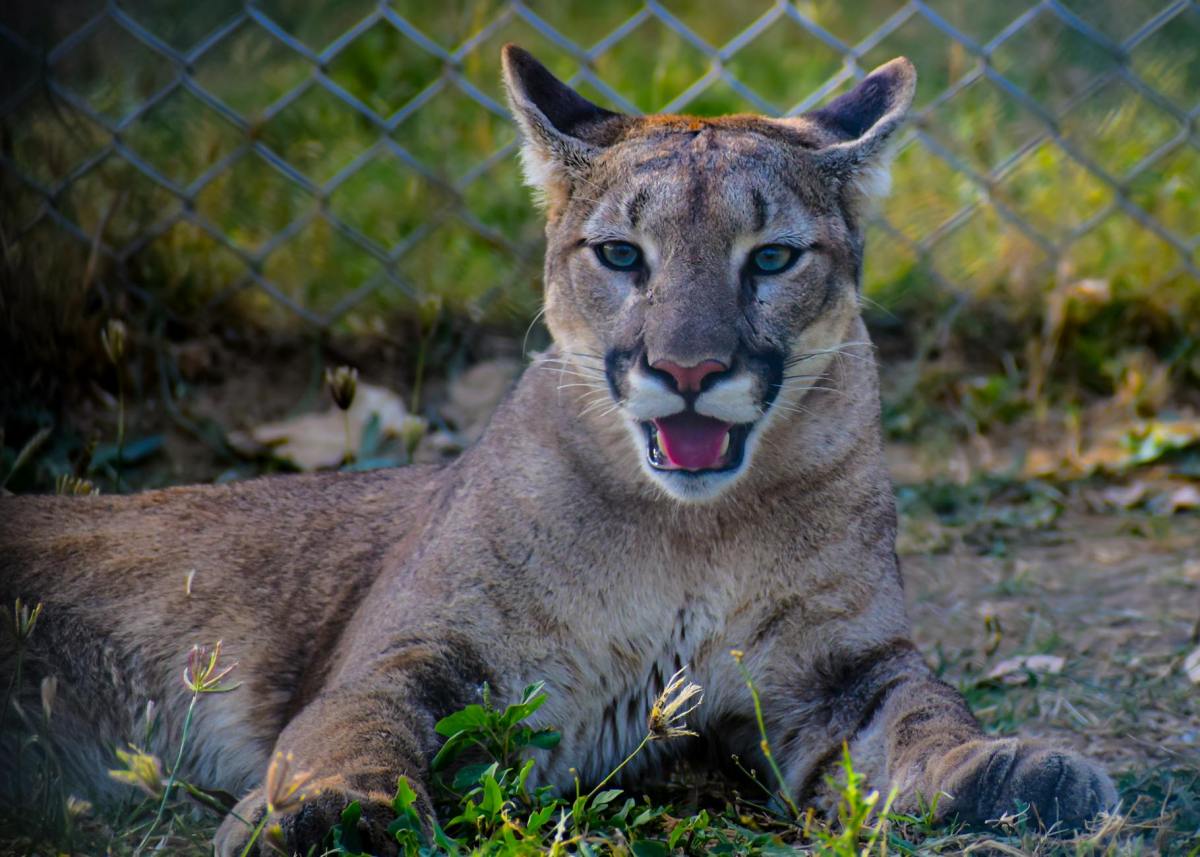
The puma, also known as the mountain lion, cougar, screamer, panther, catamount, suçuarana, pangui, American lion and dozens of other names, looks like a big cat but is genetically closer to our domestic Feline friends.

Credit: Merazonia Animal Refuge of Ecuador

Credit: Wikimedia Commons

Credit: Elizabeth Lucas

Credit: Wikimedia Commons

Credit: Wikimedia Commons

Credit: Wikimedia Commons

Click images for full high resolution versions. Baby puma image credit Elizabeth Lucas. Prints available here.