Kopi luwak aficionados pay a premium for the privilege of drinking the brew.
Kopi luwak is the most expensive beverage in the world and a testament to how pretentious people can be about things labeled exotic, wild or rare.
Developing a taste for the coffee, which hails from Indonesia, means taking on a costly vice: “farm-harvested” kopi luwak beans can go for more than $100 per pound, while beans supposedly harvested from the wild can fetch more than $1,000 per pound.
All for a beverage made from coffee beans eaten and shat out by civet cats.
Aficionados claim the beans undergo a partial fermentation process as they travel the animal’s digestive track, breaking down certain proteins in a process said to reduce acidity. The beans are ejected in fecal logs, which are “harvested,” washed and packaged for sale. (That’s right. Your kopi luwak arrives in authentic segments of constipatory excreta, certifying freshness!)
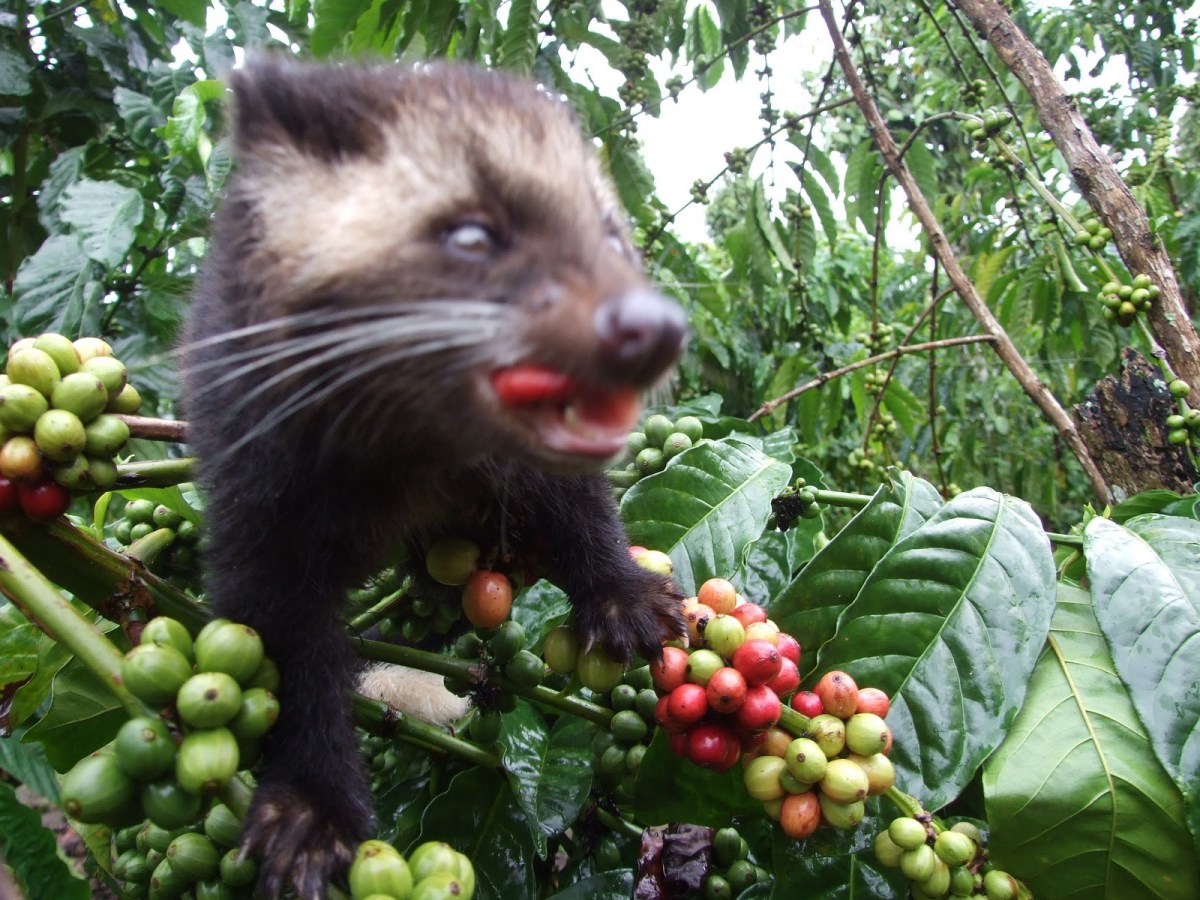
Fecal perfection: kopi luwak is harvested from palm civet turds.
The result, kopi luwak fans claim, is a smoother, smokier, chocolatey brew.
Others disagree.
Kopi luwak tastes like “[p]etrified dinosaur droppings steeped in bathtub water,” a Washington Post writer sniffed, while others insist there’s no meaningful difference compared to most coffee.
Besides the disagreement over the flavor of kopi luwak, there are major ethical issues and the potential for disease transmission vectors.
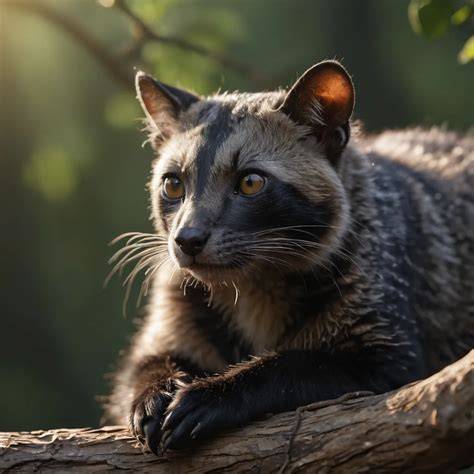
Civet cats aren’t true cats. The Asian palm civet, which is the species used for kopi luwak, is a viverred and is closely related to genets and oyan, which are ferret-like small carnivores.
In plain terms, it’s a feliform animal that shares ancestry with felids and looks like a cross between a cat and a mongoose, but it is distinct from the familiar felidae family we’re all familiar with. Feliform simply means animals with cat-like body plans.
It’s also a wild animal, and the lucrative kopi luwak market has led to widespread exploitation of the civets. The animals, who are highly mobile and curious, are slotted into battery cages, stuffed with cherry coffee beans, and exist as living food processors for Indonesia’s coffee industry.
A palm civet in a small, filthy cage in a kopi luwak facility. Credit: Wikipedia Commons
In a country known for exploited “dancing monkeys” (topeng monyet), and the destruction of species like the orangutan via the ruthless destruction of irreplaceable old growth jungle, animal rights are way down on the list of priorities.
Buying kopi luwak fuels the industry and perpetuates the cycle of bean harvesters stealing young civets from the wild and subjecting them to miserable lives in cages where they can barely move.
So if you’re the adventurous type who is normally game for unconventional food and drink, you might want to sit this one out and have a cup of Folgers instead.
One party has produced records. The other has an implausible story. Yet again, a situation highlights the need for new pet laws that reflect the way people see companion animals now, not as they did more than a century ago.
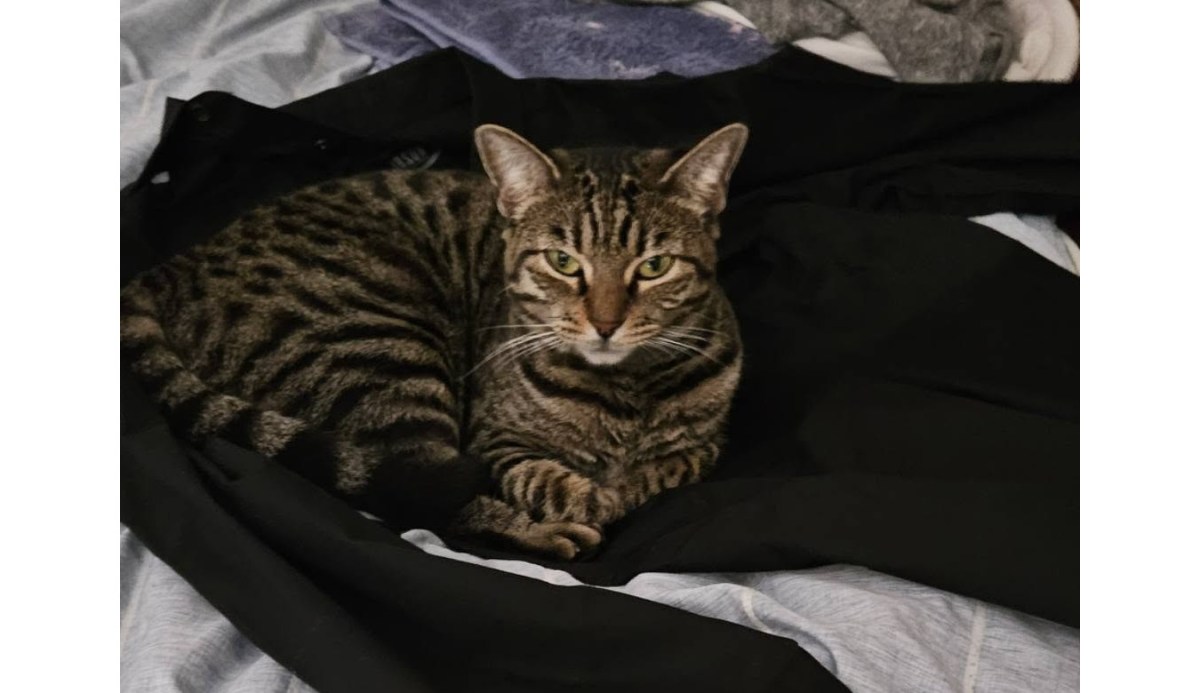
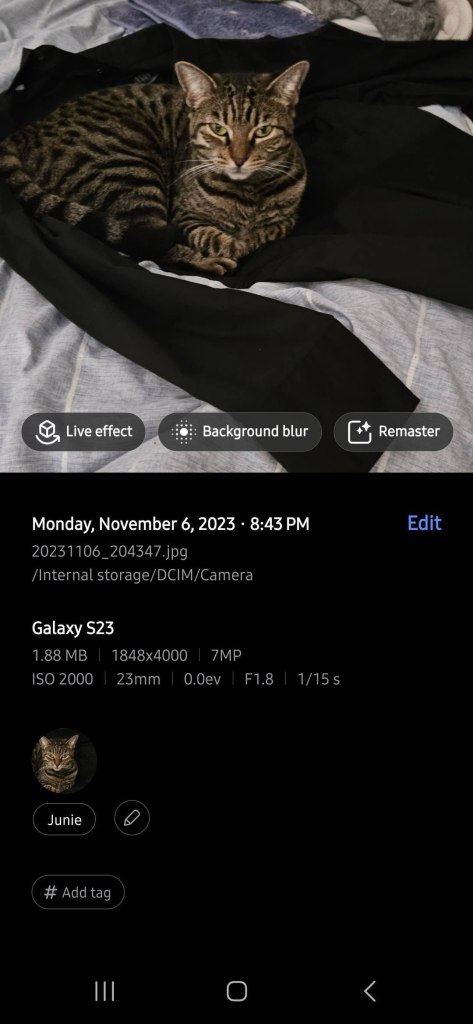
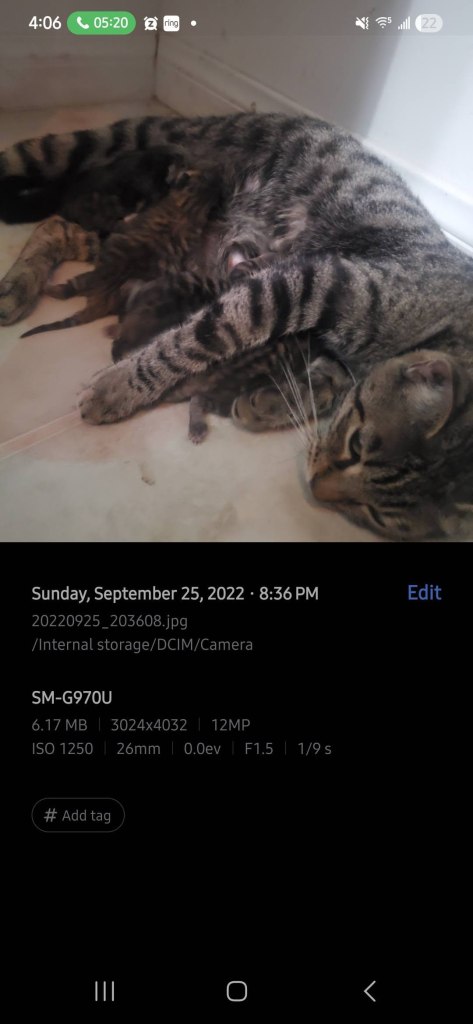
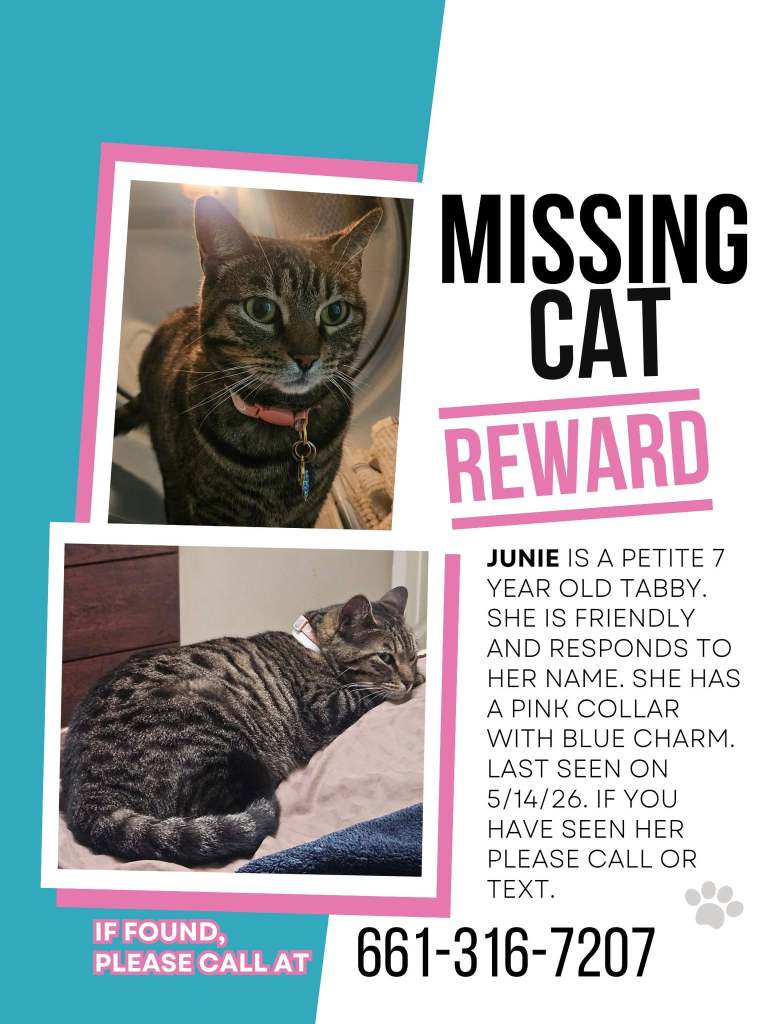
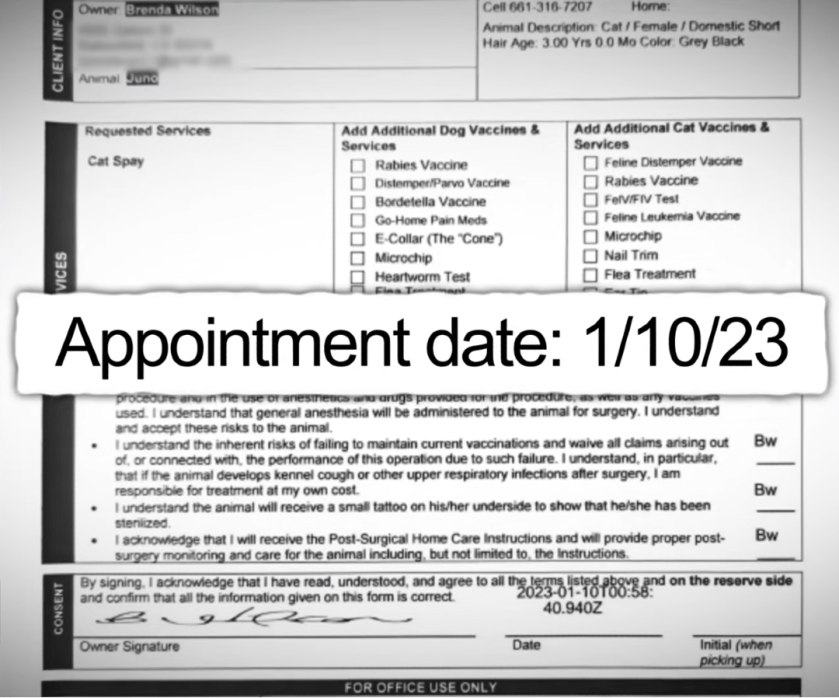
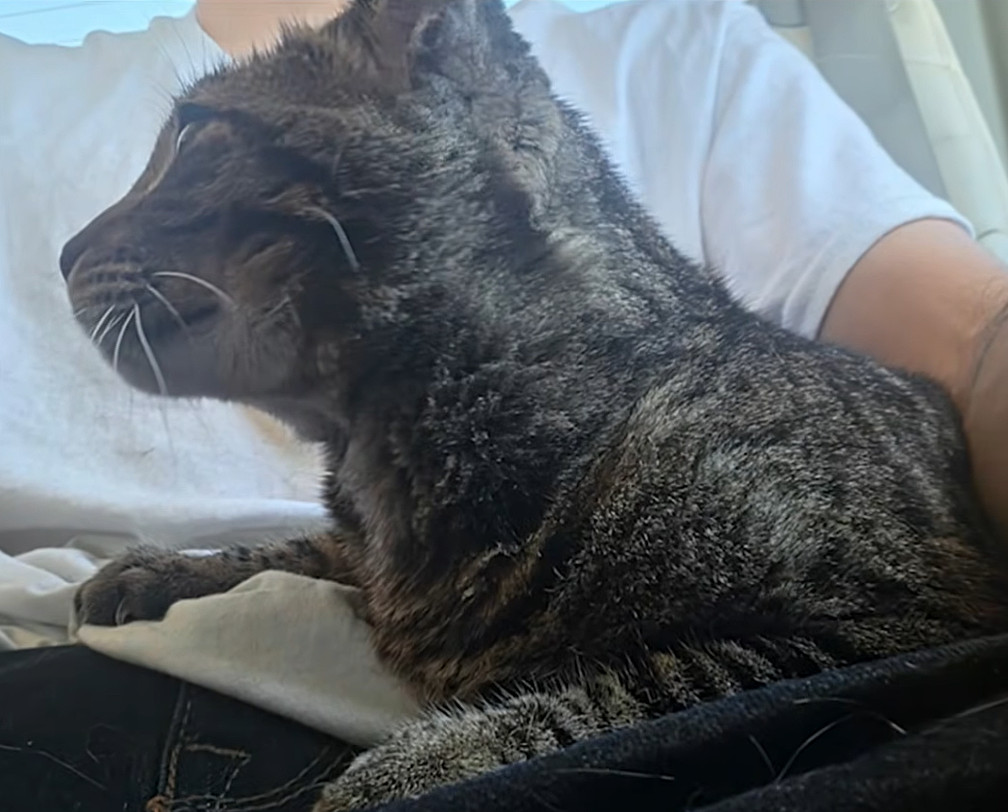
Junie the cat gave birth to a litter of kittens in 2022, was spayed in 2023, and photos show her nursing her babies, relaxing on a favorite blanket, and lazing imperiously on one of her humans’ clean black shirts.
The photos and documents were shared by Brenda Wilson, the Bakersfield, Calif., woman who said her cat still hasn’t been returned to her after an Amazon driver took her several weeks ago.
Since the police say they’re investigating the alleged theft, releasing the documents seems like more of an exasperated act of receipt-producing after the delivery driver, Joshua Gonzalez, went public and said he was retrieving his own cat, not stealing Wilson’s.
You can practically hear Judge Judy snapping “Let’s see the receipts!” as she adjusts her glasses.
In Gonzalez’s version of events he serendipitously happened to discover his own missing cat sitting on the front step of a home that happened to be on his delivery route. At different times referring to the cat as “he,” “she” and “it,” Gonzalez said he’d adopted the feline for his seven-year-old daughter back in October of 2025, still hadn’t bestowed the cat with a name despite her living in his home for seven months, and he knows she’s his cat because she has a “distinct” M-pattern on her forehead.
Gonzalez could be telling the truth. There’s a nonzero chance of that. Truth really can be stranger than fiction. But his version of events stretches credulity to its breaking point.
Literally every tabby cat has the “M” pattern on their heads. It’s what makes them tabbies. He seems as confused about that as he is about Junie’s gender.
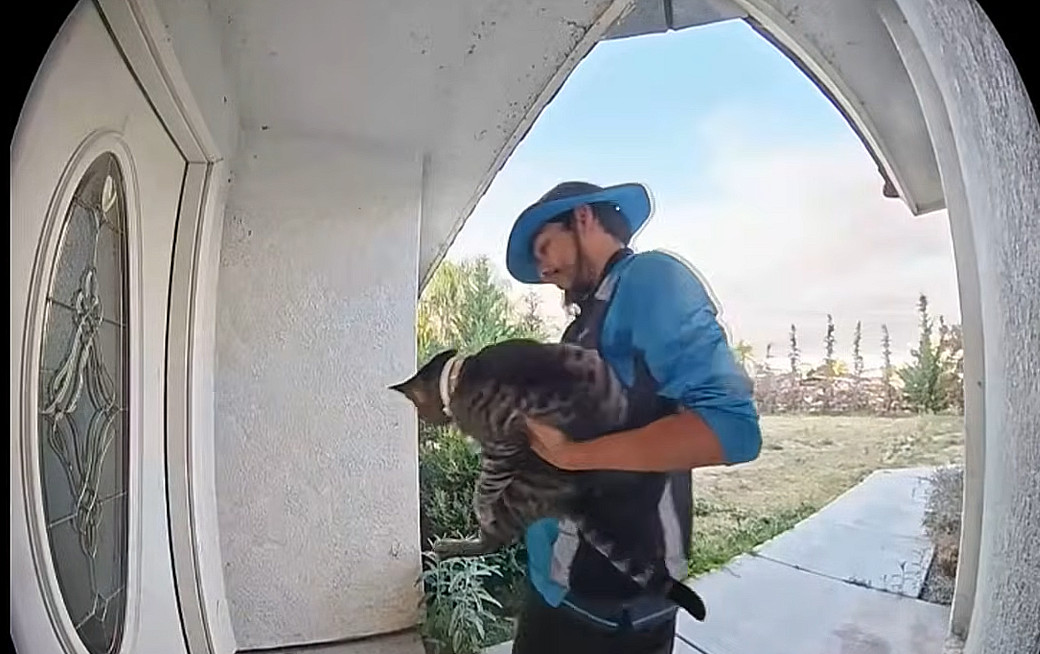
Then there’s the video: the entire sequence of events is captured on a Ring camera near Wilson’s front door. Gonzalez doesn’t react like a man who’s stunned to fortuitously stumble over his own missing cat, at an address his job took him to, no less. He doesn’t express shock or surprise, or seem to visibly react at all. He doesn’t even look at the cat. He delivers the package, logs it on his phone, then swoops the feline up in his arms and walks off with her.
If you’d just unexpectedly found your own cat, would you call out to her, extend a hand, and smile with relief when she pads up with a raised tail and happily brushes her cheek against it? Would you check her coat pattern and markings, then check again? When scooping her up, would you talk to her, maybe even plant a kiss on her head, and tell her how happy you are to find her? Would you look happy? Would you leave a note?
Most people would do at least some of those things. Gonzalez does none of them.
And while Wilson has produced date-and-time-stamped photos of Junie going back years, the only photo Gonzalez shared with a local news station was a smartphone snap from the other day showing Junie in his lap.
And that’s half the problem. Neither party would be going to the media and trying to litigate this in public if the police were motivated to take the alleged theft more seriously. That’s not entirely their fault, because in the vast majority of states, laws regarding animals haven’t been updated since the days, more than a century past, when they were written to settle farm and ranch disputes. There’s little guidance from the law, and fewer options. The law doesn’t recognize pets as conscious individuals with feelings, so courts don’t take into account the best interests of the animals either.
Wilson said she doesn’t want anything but the return of Junie. The police would save her family a lot of angst by making that happen. Unless Gonzalez starts producing some truly impressive evidence, familiarizes himself with the gender of the disputed feline and explains his behavior, it’s difficult to believe Junie belongs with anyone besides the Wilsons.
The case of an allegedly stolen feline has taken a strange turn.
Two weeks ago we posted a story about Junie, a tabbie in Bakersfield, Calif., who was grabbed by an Amazon driver making a delivery at her family’s home.
The Ring camera video clearly shows the driver delivering a package, picking Junie up and walking off with her. In the intervening time, the family has released the video, spoken to local media, filed a report with police and implored Amazon to help them get their cat back.
Amazon shifted the blame to a local contractor that employs delivery drivers, saying the driver is actually an employee of that company despite wearing an Amazon uniform. Police say the investigation is ongoing.
But now the driver has come out publicly and said that, actually, Junie is his cat, and actually, he just happened to deliver a package to the home of the family who allegedly took her.
“I was just doing my regular route. I approached the house. I got Brenda’s package, and I took it like a normal day,” Joshua Gonzalez told KGET, the local NBC affiliate in Bakersfield.
Brenda Wilson is Junie’s caretaker who previously spoke to the same news team about the alleged theft.
The document Gonzalez produced says the feline was a stray adopted on Oct. 9 of 2025, but Gonzalez said he never got around to naming her. Referring to the cat variously as “him,” “her” and “it,” he said he was thinking of naming “him” Spartan.
“I heard a meow,” he said of the moment he delivered the package. “I recognized it was my cat because of the distinct design it had on its forehead. It has the ‘M,’ the eyes, and how the body was set. I knew it was my cat. So I just grabbed him and walked off.”
Gonzalez says he adopted the cat for his seven-year-old daughter.
Aside from the incredible coincidence of supposedly finding his cat during a random work delivery, and the odd detail about not naming a cat that he says had been in his home for at least six months — as well as his apparent uncertainty about the feline’s gender — the document Gonzalez produced does not include a photo of the animal.
Then there’s the fact that literally all domestic tabby cats have the “M” marking on their foreheads, which is the most clear sign they’re tabbies. It’s not clear if Gonzalez thinks the mark is unique, and the news team didn’t ask the obvious question.
Wilson’s been in touch with Gonzalez and his family. She says she’s had Junie for five years, says Gonzalez used to live in her neighborhood, and has gotten nowhere with attempts to get Junie back.
“We’ve had some back and forth with them and they really are saying this is their cat, and I don’t know if it’s a cover, [if] they just really wanted her, or if they really do think this is their cat,” she said. But, she noted, “it’s an easy fix,” meaning the police can quickly determine who Junie/Spartan belongs to by looking at photos, timestamps, vet and adoption records.
Junie, whom Gonzalez says might be named Spartan, is pictured here in an image provided to KGET by Gonzalez. He says the cat is in her rightful home and is happy.
Gonzalez told KGET he realizes the video of him taking the cat “looks bad,” but said neighbors should not jump to conclusions.
“I want them to know I didn’t do anything bad but get my cat back, and now it’s in its rightful home, it’s back where it belongs,” he said. “Like anybody else would do, if they lost their cat and they see it on someone else’s porch, they would do the same thing.”
A couple thoughts here: in addition to the unlikely coincidence that someone would randomly discover their missing cat this way, not bestowing a name on a pet he’s allegedly had for seven months, and the inconclusive document, the video does not show surprise on Gonzalez’s face, nor does it show any hesitation or effort on his part to look at the cat closely.
Instead, he goes immediately from scanning the package and placing it down to picking the cat up. Then just walks off. Even when he pauses momentarily, it’s to look at his phone, not the animal.
You’d think that, if he really did serendipitously discover his own missing pet, there’d be visible surprise or a reaction on his face. You’d think he’d take a long look at the cat just to make sure it really is his. You’d think he’d knock on the door or at the very least leave a note instead of just walking off with the cat. And if this really happened the way Gonzalez says it did, wouldn’t he have told his employer so there’s no misunderstanding?
None of that happened, according to the media reports, the video and Gonzalez’s own words. Of course, Gonzalez could be telling the truth. Stranger things have happened. But the burden of proof is on him here.
I have written in the past about people who aren’t sure if they’ve recovered their own cat, and while I’ve said I’d know Bud instantly — and I maintain I absolutely would, because of his behavior and demeanor as well as his appearance — I’d still be shocked at finding him that way.
If he were missing, I would be overjoyed at finding him. Thrilled. Ecstatic. I’d probably act like a complete idiot, pick him up, spin around and kiss his little forehead. And he’d definitely react, trilling out a “Servant! Where have you been?!? This period of separation has been unacceptable and intolerable! Return me immediately to my proper domicile, where I expect you will have my preferred meal and be ready to ply me with snacks and catnip in profound apology for allowing this ghastly ordeal!”
Okay, so maybe people wouldn’t understand that bit of dialog, but I sure as hell would get his meaning, and I am absolutely a thousand percent sure that’s how he’d react. We’d both be ecstatic about being reunited.
Above: One of approximately 716,253 photos of Buddy in my possession.
I’d also have a mountain of proof: literally four cell phones’ worth of camera roll photos, several hundred photos from my Canon, neuter and vaccination records, receipts from the emergency vet, Chewy records listing an obscene amount of turkey orders, poorly Photoshopped images of him committing various heroic deeds with timestamps dating back more than a decade, and an entire blog dedicated to glorifying him as a meowscular, handsome and inimitable little fellow. But that’s just me.
A spokesperson from the local sheriff’s office told KGET they’re still investigating the alleged theft. I hope that’s true, and I hope they take this seriously. Regardless of US law’s archaic view of pets as property worth a fixed, cheap value that does not take sentiment into consideration, serving the public means setting things like this right. If one party doesn’t like what the police decide, they can go to court.
But for the sake of Junie and her family, they need to get this settled, and quickly, before the feline disappears.
“The evidence is overwhelming, your honor. He even has a disturbing number of poorly Photoshopped images of his cat slaying dragons, fighting evil robot armies, landing on the moon and dunking basketballs over NBA players.”
People are intentionally annoying/frustrating their cats and sharing the footage online.
It pays to make people angry.
Rage-baiting has existed as long as the internet has been a thing, but thanks to algorithmically-ruled social media, eliciting clicks through anger has become incentivized and normalized.
Monetized Facebook groups use rage-bait to drive engagement. Advertisers use it to break through the noise with carefully calibrated taunts: “Taylor Swift has an IQ of 165. Think you can beat her in this online test?” Unscrupulous online “news” platforms use it to keep readers in perpetual doomscrolling loops, which is easy to do in a politically charged environment.
But rage-baiting cats? Why would anyone do that?
Apparently some people think it’s funny, and the practice seems to have originated where all of our society’s most brilliant ideas are spawned: on TikTok, that virtual salon where towering intellects advance the causes of humanity.
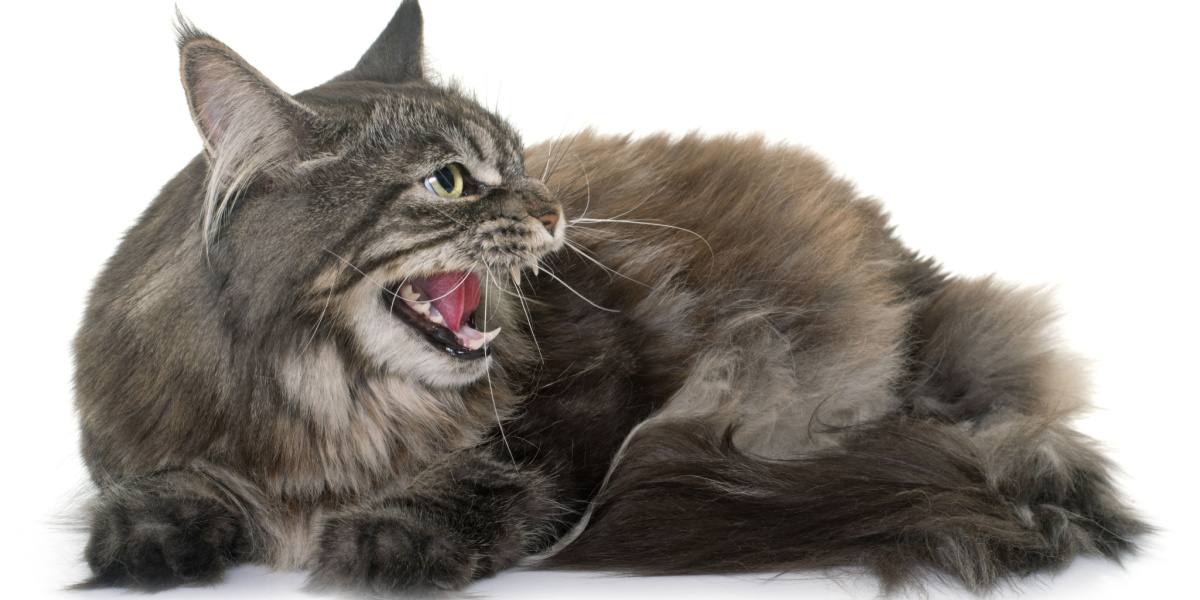
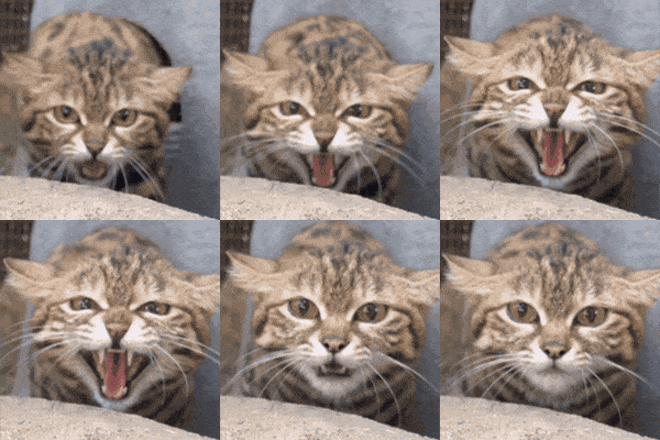
Of course you can’t bait a cat with politics or culture wars, so the videos of feline rage-baiting compilations demonstrate trolling of a more physical nature: pulling tails, aggressively petting when it’s not wanted, poking cats in their tummies, picking them up and taking an agonizingly long time to place them back on the ground.
If it annoys a feline and provokes a reaction, it’s on the table.
We won’t link to cat rage-baiting videos, but suffice to say stuff like this does not benefit your relationship with your feline bud.
Rage-baiting is just another way to say they’re making their cats extremely frustrated to get a rise out of them.
When the cat reacts, that’s supposed to be the funny bit.
It’s not funny. Rage-baiting your cats, in honest terms, means doing things that make them deeply uncomfortable in their own homes where they’re supposed to feel safe. Arguably worse, the perpetrators are their humans, with whom they’re supposed to feel protected and loved.
As feline behavior consultant Julia Specht of Park Slope Paws told Upworthy, our furry friends are not in on the joke, they’re the butt of it.
“Cats can’t know what your intention is; they’re not capable of that tertiary-level thought,” Specht said. “All they know is that you’re doing something unpleasant that they don’t like.”
I’m not going for virtue signaling points when I say it’s a profound betrayal. I cannot fathom intentionally making my cat feel uncomfortable or frustrating him, let alone to do so motivated by potential attention from online strangers.
Your cat is supposed to be your pal. Your cat lives with you and loves you. Your cat is innocent. Why would anyone damage that relationship to bring a few seconds of misguided amusement to phone-addicted automatons who think messing with animals is funny?
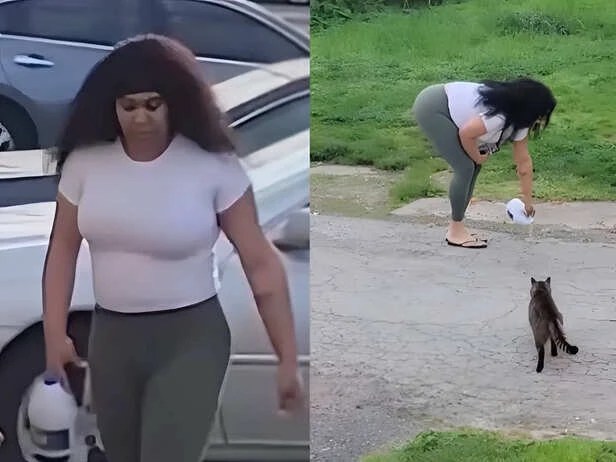
Lauren Carter admitted she poured bleach on cat food on two occasions in April, police say.
The video shows a woman stop her car, get out holding a bottle of what looks like bleach, and pour the substance onto food left for outdoor cats while a tabby looks on, sniffing curiously.
The footage was recorded by a family in Chester, Pa., a town of 32,000 about 25 miles southwest of Philadelpia. The cat, Jumper, belongs to a family on the same street.
The suspect’s name had been floating around on various cat-related social media sites along with the video for weeks, but police and prosecutors had to be sure of the facts before they arrested the woman.
When lab results showed the substance was indeed bleach, officers arrested 35-year-old Lauren Carter, also of Chester.
Cops and the SPCA’s law enforcement division say Carter admitted to pouring bleach on cat food on two occasions in April. It isn’t clear why Carter wanted to harm cats, and so far law enforcement hasn’t made any comments about her motivation.
They did, however, make sure local pets did not eat the poisoned food.
“We do believe based on our investigation that no animals did consume the food,” SPCA spokeswoman Gillian Kocher told KYW, a local news radio station. “Our officers went out through the area to make sure that no animals were sick or deceased, but it is, of course, our intention that this doesn’t happen again, and the animals in the neighborhood are kept safe.”
Carter has been charged with two counts of misdemeanor animal cruelty.
Olivia Oliver, Jumper’s caretaker, said she was satisfied with the outcome of the investigation and Carter’s confession.
“I think it’s enough. I think it’s a good sign; it’s a warning for her,” Oliver told WPVI, the Philadelphia-based ABC news affiliate. “And basically, I’m glad she’s going to pay for what she did. And hopefully nothing like this happens again around here.”