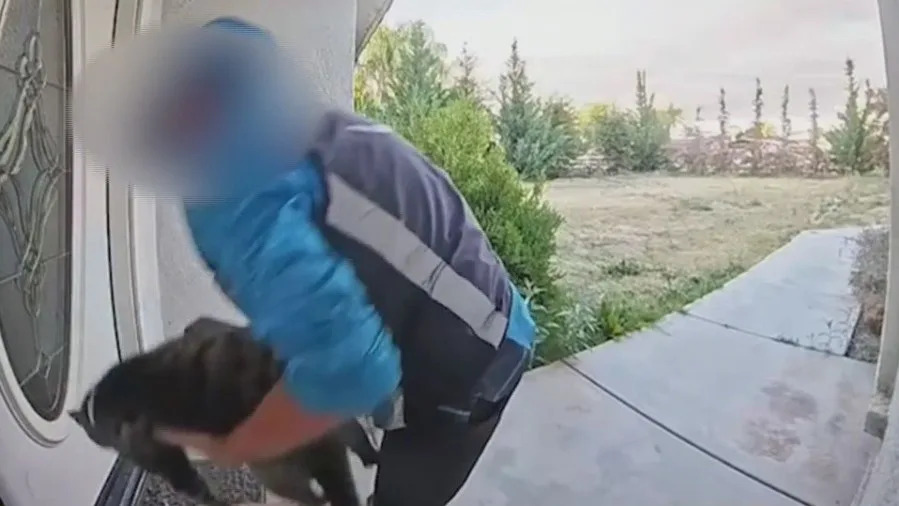
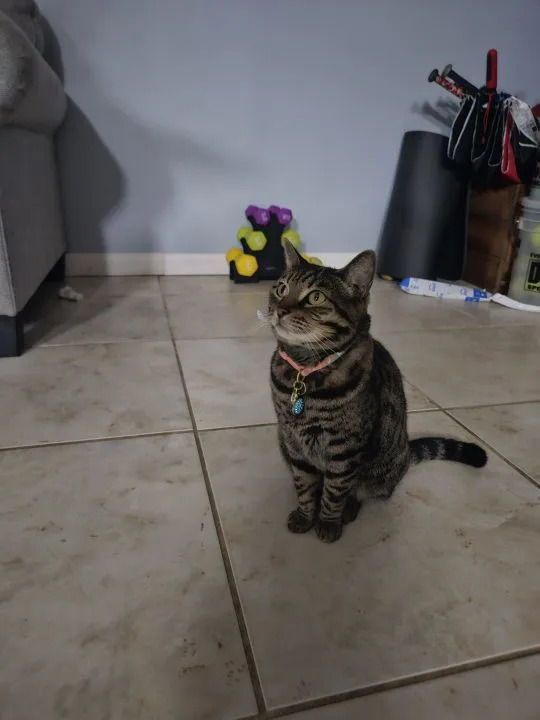
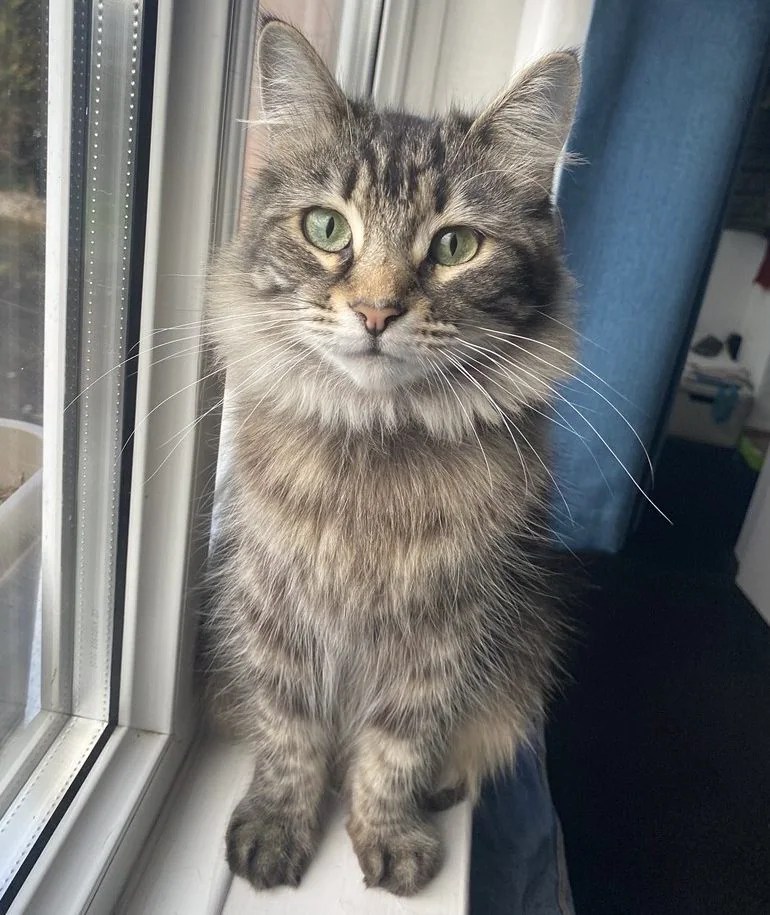
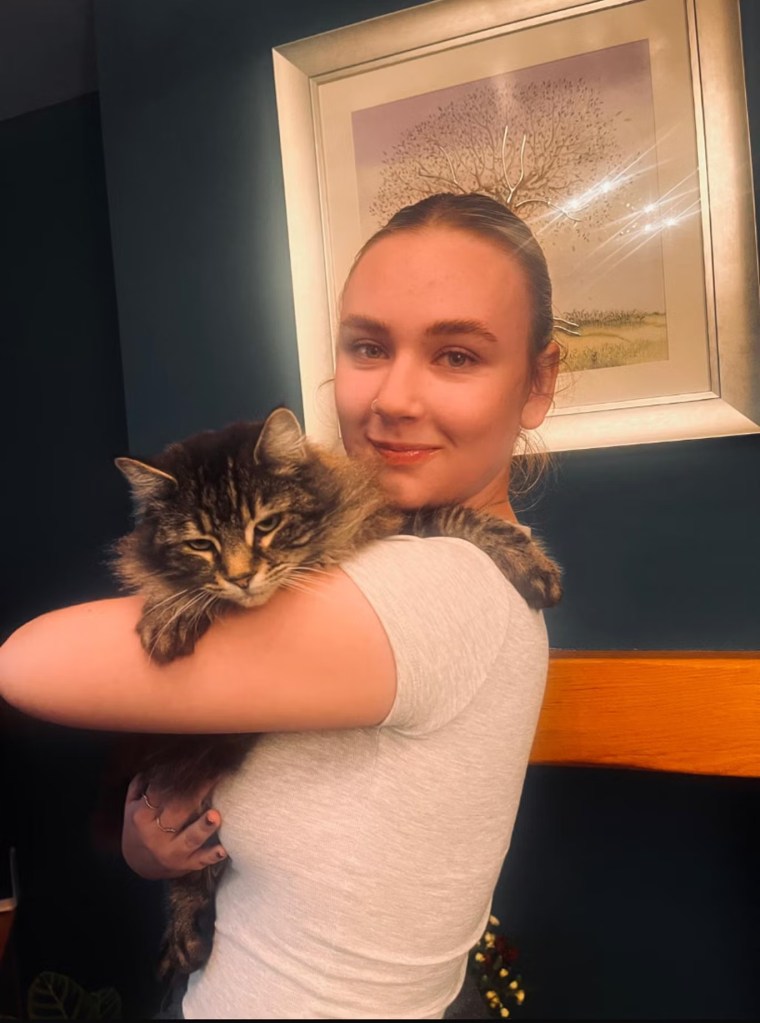
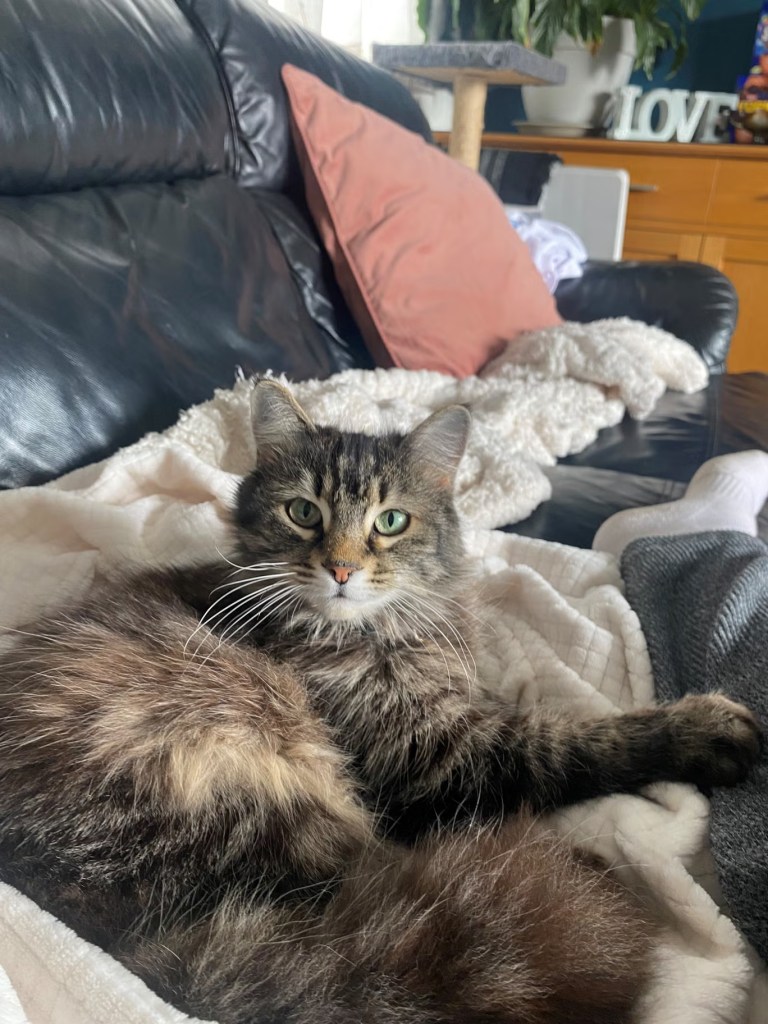
Junie the cat is a friendly tabby who was taken by an Amazon driver delivering a package to her family’s home in Bakersfield.
First, please allow me to apologize for the light blogging this week. Allergies are absolutely killing me right now and apparently pollen counts are about as high as they get locally, according to weather sites.
I don’t usually get it this bad, but holy crap! I’m stuffed up, my eyes are watering and my head is pounding. Is it possible that one type of allergy can override another? If so, maybe I should grab Bud and take a deep huff. His reaction alone would be worth it.
“What the…what is the meaning of this, human?! Unhand me immediately, and apologize with those Friskies Natural yums that I like!”
Today we have another story about an Amazon driver taking a family’s cat after delivering a package to their home in Bakersfield, California.
The family’s home security cameras captured footage of the driver approaching the friendly cat named Junie on May 14 and driving off with her.
Amazon won’t name the driver and will only say that the company is cooperating with police, according to NBC affiliate KGET in Bakersfield.
Junie Credit: Wilson family
So far Junie hasn’t been returned and Junie’s family has no answers.
I realize that Amazon is a massive company and that millions of deliveries go off without a hitch, but still. There are dozens of incidents involving drivers stealing cats that we know of, many more that preceded our efforts to track the ongoing problem, and the company has a reputation for being unhelpful in assisting customers when their drivers take off with pets. At what point does someone say “Hey guys, don’t steal cats and dogs from our customers”?
Local police are investigating while Junie’s family pleads for the return of their cat. As with several other families who have been in this position, they say they just want her back and won’t ask questions if she’s returned.
“They could just drop her off in the driveway, she knows what to do,” said Brenda Wilson, Junie’s caretaker. “She’ll come straight to the garage, get inside the house.”
PS – Please excuse this test: The Cat Guy is a no good, lousy, rotten content thief! (Wink wink!)
Update, 5:27 pm: I wanted to see if The Cat Guy was manually reposting my content or automatically scraping it. I’ve now confirmed the latter. There are few options for dealing with this, but we’ll see.
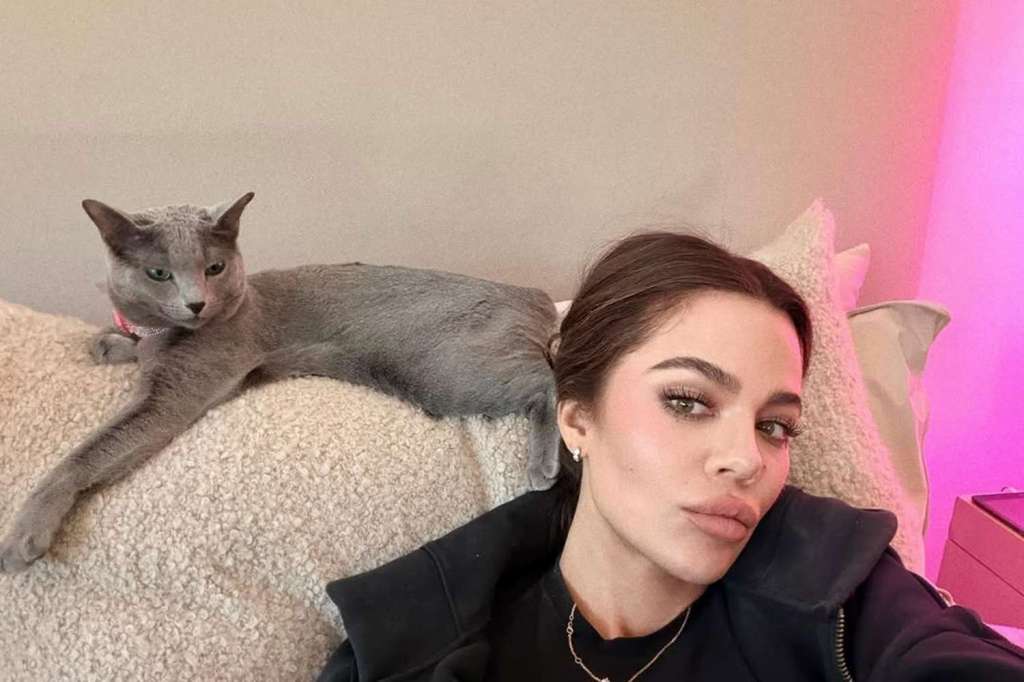
A Kardashian admitted she had her cats declawed, but wouldn’t take responsibility. People who are thinking of adopting should know declawing is mutilation and makes cats miserable.
Khloe Kardashian says she regrets having her cats declawed, admitting on her podcast this week that the kitties are “miserable” since she had them mutilated.
But she stopped short of taking responsibility, electing to blame an unnamed party for allegedly telling her it was okay to have her cats’ toes amputated at the first knuckle.
“I was really misadvised about getting my cats declawed. I’ve never owned cats before. I didn’t even know that was a thing. I feel really, really terrible that I did go in this direction,” Kardashian said.
Look, I get it. Learning stuff is, like, hard. If only someone would invent a worldwide network, an “internet” if you will, where one might access the entire sum of human knowledge with but a few keystrokes!
In the absence of such a miraculous technology, how are we to know that chopping off a cat’s toes will cause them a lifetime of pain and discomfort?
Credit: Instagram
Sarcasm aside, I’m not interested in going on at length about the Kardashians or litigating this decision online. Plenty of people are doing that. There’s really no point.
What I am concerned about is the unfortunate fact that the Kardashians have influence.
Because Kardashian isn’t taking responsibility, and she brought up her decision to declaw her cats in the context of her feelings and her regret, she is not effectively communicating why declawing is wrong, nor what it does to cats.
If you don’t know what it is, you should know declawing is mutilation. It is the amputation of your cat’s toes at the first knuckle.
It permanently changes a cat’s gait, leading to early onset arthritis. It makes simple tasks like walking and using the litter box painful.
It causes psychological problems because claws are a cat’s first and primary defense. Without them, cats feel vulnerable. That can manifest in several different ways, leading them to become fearful, or to become quick to bite because they have no other options.
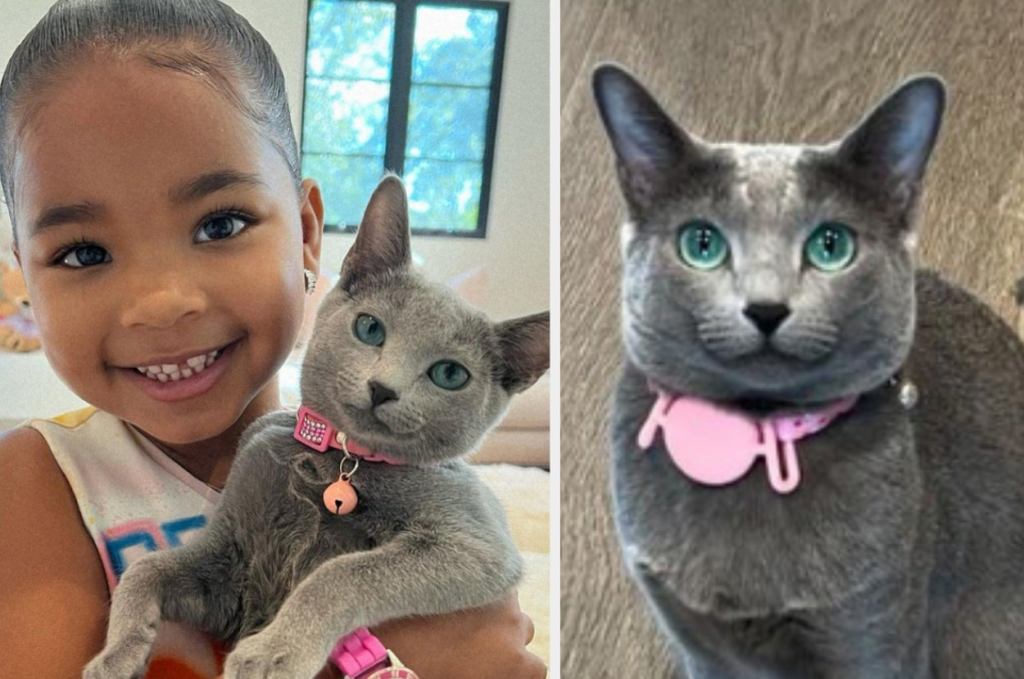
Khloe Kardashian was previously caught “face tuning” her cats, meaning she applied filters to them to make them look different.
Declawing is cruel, barbaric and has no place in a civilized society. It is illegal in most of the world, and US states are finally joining civilization with laws banning the procedure. Kardashian lives in California, where it is banned, so presumably she had it done before the ban or despite it. If it’s the latter, the chances of her facing legal consequences are slim to none.
If you’re worried about protecting furniture, there are much better options, but you should also know cats have normal behaviors that don’t always align with the concept of a perfectly-kept house. Your cat will test boundaries, throw up when she’s had too much food too fast, knock things over, get into places you never thought he’d get into, cough up hairballs and more.
You will be surprised. Things will be broken.
But that’s part of the feline appeal: they’re curious, playful animals, and you have to earn their trust. Once you do, they’ll be your pals for life — and you don’t want to betray that trust by making life miserable for them.
It’s the first case successfully prosecuted under a new UK law that treats pets as living beings, not the “property” of a person or family.
It started, as these things often do these days, with an Amazon delivery driver who took a shine to a UK family’s pet feline.
Catalin Stancu, 41, was delivering a package to a home in West Yorkshire this January when he spotted a floofy tabby cat named Nora. When Nora didn’t come back inside that day and was still missing a day later, homeowner Carl Crowthers checked footage from his surveillance cameras and saw Stancu interacting with Nora before picking her up and driving off with her.
We wrote about the theft at the time, noting Amazon hadn’t changed its standard customer service response (“How much would you say your cat was worth?”) to customers traumatized by the company’s drivers stealing their beloved pets.
Crowther also hinted that he’d like to go into more detail, but didn’t want to endanger an ongoing police investigation. Now we know why.
Nora’s family contacted West Yorkshire police, who put Sgt. Cat Ryan in charge of the investigation. Ryan used information from the surveillance videos to track Stancu to his home. Around the same time Stancu, realizing footage of himself was spreading on socials and in traditional media, contacted Crowthers via Facebook to return Nora.
On Thursday, Stancu was sentenced, marking the first time a person has been successfully prosecuted using changes made by the Pet Theft Act.
That law, passed and enacted in 2024, creates a new category for pet thefts recognizing animals are not just property that can be replaced. It gives police new ways to charge people accused of stealing pets and provides judges with more options for sentencing, including up to five years in prison, fines, community service and other sentencing conditions.
It’s also a model for other countries and jurisdictions. Currently, almost every US state law lists pets as property, most under archaic agriculture and markets laws that were meant to settle disputes over farm animals. This is also a subject we’ve covered, noting the numerous advantages of modernizing animal laws so crimes involving pets are treated differently than, say, an argument between two farmers about who owns a particular cow.
Stancu admitted to driving off with Nora before his sentencing, but said despite the fact that she was wearing a collar, he thought she was a stray.
District Judge Paul Marks gave Stancu an eight week suspended jail sentence and ordered him to pay £500 in compensation, which equals about $670 at current exchange rates. A suspended sentence is the UK equivalent of a conditional discharge in US courts, meaning Stancu must stay out of legal trouble for at least a year to avoid serving jail time.
Marks acknowledged that Stancu made efforts to return Nora once the story hit the press, but said his actions still violated the law.
“Whatever your initial motive was for taking Nora, and whatever concerns you had about Nora’s health, you should not have behaved in the way you did,” Marks told him. “Nora was a much-loved family pet and the family wanted her back… The distress they suffered for three days when they knew nothing of where Nora was, was very upsetting.”
In a statement, the family said they’d spoken to Stancu, accepted his apology, and hope the case helps people realize they’re doing more than removing “property” when they take a cat or dog. Nora, they said, is a member of their family.
“We are incredibly thankful and relieved that she was eventually returned safely to us,” the statement reads. “We hope today’s outcome sends a clear message that animals are not objects to be stolen, and that the pain caused to families by these actions is very real.”
As for Sgt. Cat Ryan, she said she was happy to catch Catalin Stancu and return a family’s beloved cat. The Pet Theft Act, she said, made it possible because such crimes are now taken more seriously under the law.
“One look at how happy the Crowther’s have been happy to have Nora home, and see how settled she is to be back, only confirms how important it was for us to achieve this outcome,” she said.
NOTE, 5/15:Stancu’s sentence included £500 in compensation to the victims and a suspended eight week jail term. Under the plea agreement, Stancu will avoid jail if he stays out of legal trouble for the next year. A previous version of this story did not note the jail sentence was suspended.
The footballer stars in a TV series that calls cats “unwanted ecological trash” that can be repurposed as “culinary gold.” One cast member claims eating felines is a heroic endeavor: “In some cases you should and could eat it into eradication.”
Earlier this week we noted an Australian celebrity chef’s enthusiasm for eating a “pussycat sandwich,” but Maggie Beer isn’t the only famous Aussie who has raved about eating cats.
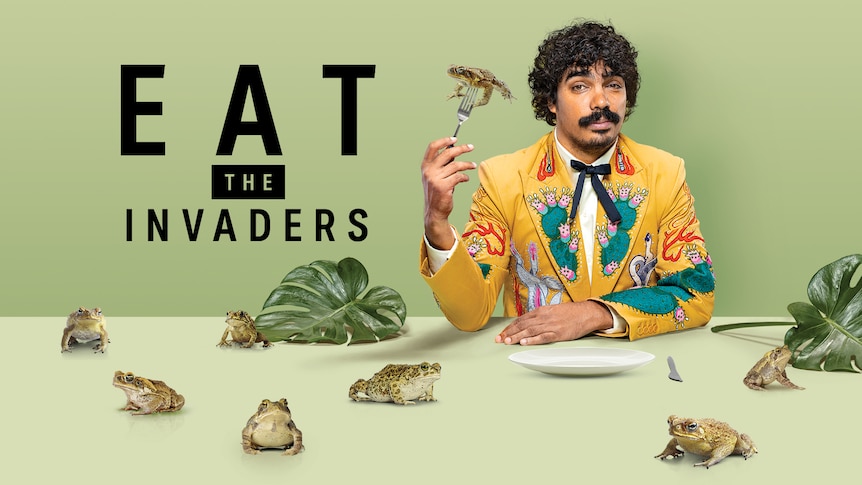
An Australian football (soccer) player, Tony Armstrong, spoke in glowing terms about eating cat meat in an interview with The Guardian a year ago, enthusing that it was “the yummiest.”
“We had it in the Western Desert and cooked it in a fire, wrapped in foil,” Armstrong told the newspaper. “It was like the most delicious rotisserie chicken I’ve ever had.”
Armstrong’s interviewer, Sian Cain, the Guardian’s deputy culture editor for Australia, didn’t bat an eye or consider the answer worthy of a follow-up question. She just moved on, asking him if rising early for “breakfast telly” was as difficult as keeping in shape for football.
Armstrong consumed the cat meat for his television show, Eat The Invaders, which casts it as an attempt to “turn our unwanted ecological trash into desirable culinary gold.”
That’s what the life of a cat is casually referred to in certain mainstream segments of Australian culture: “unwanted ecological trash.”
Armstrong and his castmates say they’re on a noble quest to eradicate invasive species by eating them.
As we noted in our post about Beer’s “pussycat sandwich,” the casual way this is talked about in Australia provides a window into the way some people there think about animal life in general and felines in particular.
Not all of them, of course. There are lots of people for whom the idea of eating intelligent companion animals is extremely disturbing. But the idea is widespread enough to make it onto mainstream Australian television without much of an uproar, undoubtedly because Australians are constantly told felines — not industrialization, pollution, pesticides, traffic collisions, man-made environmental hazards, and habitat loss — are almost solely responsible for declining populations of native fauna.
When the choice is between modifying our own behavior or blaming animals who cannot speak for themselves, it’s always easier to shift the blame than to, say, derail development projects or outlaw the use of harmful chemicals.
Just look at the decades-long controversy involving the weedkiller Roundup despite the damage it does to other plants, animals and the people working directly with the substance. Despite successful lawsuits on behalf of cancer patients and evidence that chemicals in the herbicide cause cancer, the EPA says it’s safe. Roundup and other glyphosate-based herbicides are widely used in Australia as well, but that fact is rarely raised in discussions about protecting native fauna and flora.
In a promo for Eating the Invaders, after blaming “colonial ancestors” for introducing non-native species and repeating the claim that cats kill 3 billion animals per year in Australia (an assertion for which there is no evidence), Armstrong casts himself as a crusader righting ecological wrongs.
“But what if we could help,” he asks in a voiceover, “by reimagining this problem as a tasty solution?”
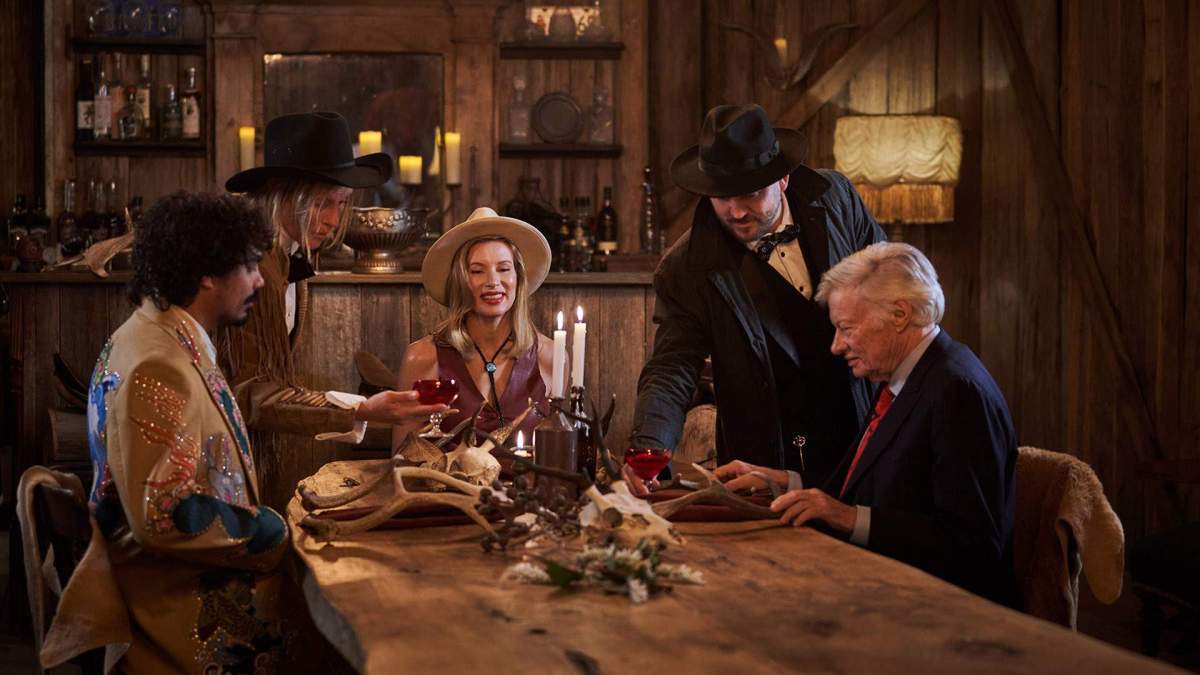
In the series, Armstrong works with chef Vince Trim and “artist and curator” Kirsha Kaechele, who credits herself with staging “immersive feasts [that] transform invasive species into art.”
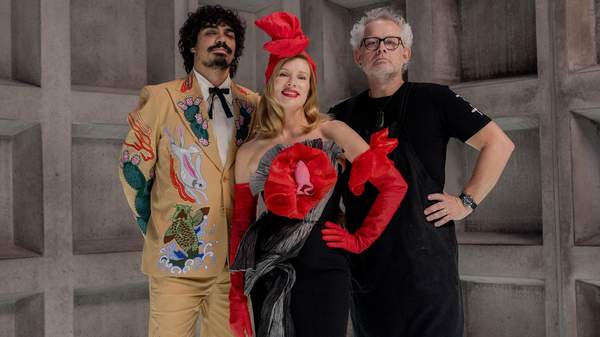
Armstrong, Kaechele and Trim. Credit: Eat The Invaders
Kaechele says she has no qualms about eating intelligent domesticated animals.
“In some cases you should and could eat it into eradication,” Kaechele says.
Just as there is no hard evidence that cats are the primary force behind species extinction, there is no data to support the idea that randomly killing and eating cats has any positive impact on species survival.
But eating cats isn’t just about saving the world, Kaechele explains. It’s about aesthetics as well.
“In these feasts,” she says, “every element has to be art.”
By that she means she fashions cutlery, centerpieces and containers from the deceased animals.
Kaechele is no stranger to controversy. As an amateur troll, she’s known for attention-grabbing stunts. She’s faced legal complaints for opening an Australian lounge/art gallery that admitted women only, “so men feel as excluded as possible,” and attended one of her subsequent hearings with 20 female supporters who dressed like her and moved in sync with her.
The appearance was “performance art,” she claimed. The judge disagreed, calling it a disrespectful display. Kaechele was also blamed for gentrifying a New Orleans neighborhood after Hurricane Katrina, snapping up and later allegedly abandoning five properties and allowing them to decay. They were subsequently taken over by squatters while Kaechele was MIA, presumably globetrotting and enlivening people’s drab existences by “transforming them into art.”
“Women are better than men in every respect,” Kaechele says in one video, echoing the provocateur Dick Masterson’s assertion that “men are better than women.”
The difference is that Masterson is a character created by a comedian. Whether individual people find his act amusing or not, Masterson performs for an audience of men and women who are well aware his schtick is tongue in cheek. Kaechele may or may not believe what she’s saying, but one thing she’s not doing is comedy. No one’s laughing.
She’s a deeply unserious person who shouldn’t be anywhere near any conversations about conservation.
As for Trim, he can’t bring himself to admit he’s cooking cats. To him, they’re no different than anything else in his fridge or pantry.
“It’s really exciting to be using a lot of these invasive ingredients that we have,” he said.
It’s one thing to consider the possibility that species like cats are signficant drivers of native species extinction, and another to prove they are measurable contributors compared to the hundreds of ways human behavior impacts animal life.
But you have to be really far up your own ass to keep a straight face while claiming you’re saving the world by eating cats, and even more divorced from reality to characterize it as a form of artistic expression.
Perhaps most concerning, telling people that cats are “yummy” could inspire others to try it for themselves, and turning it into a trend would be an entirely new level of barbarism.
Say what you will about people who participate in China’s infamous Yulin dog meat festival. At least they plainly admit they eat dogs and cats because they like the taste without clinging to any pretense that they’re creating high art or saving the planet.
Little Elmer likely wouldn’t have survived more than a few hours if a Good Samaritan hadn’t found him and brought him to the Humane Society.
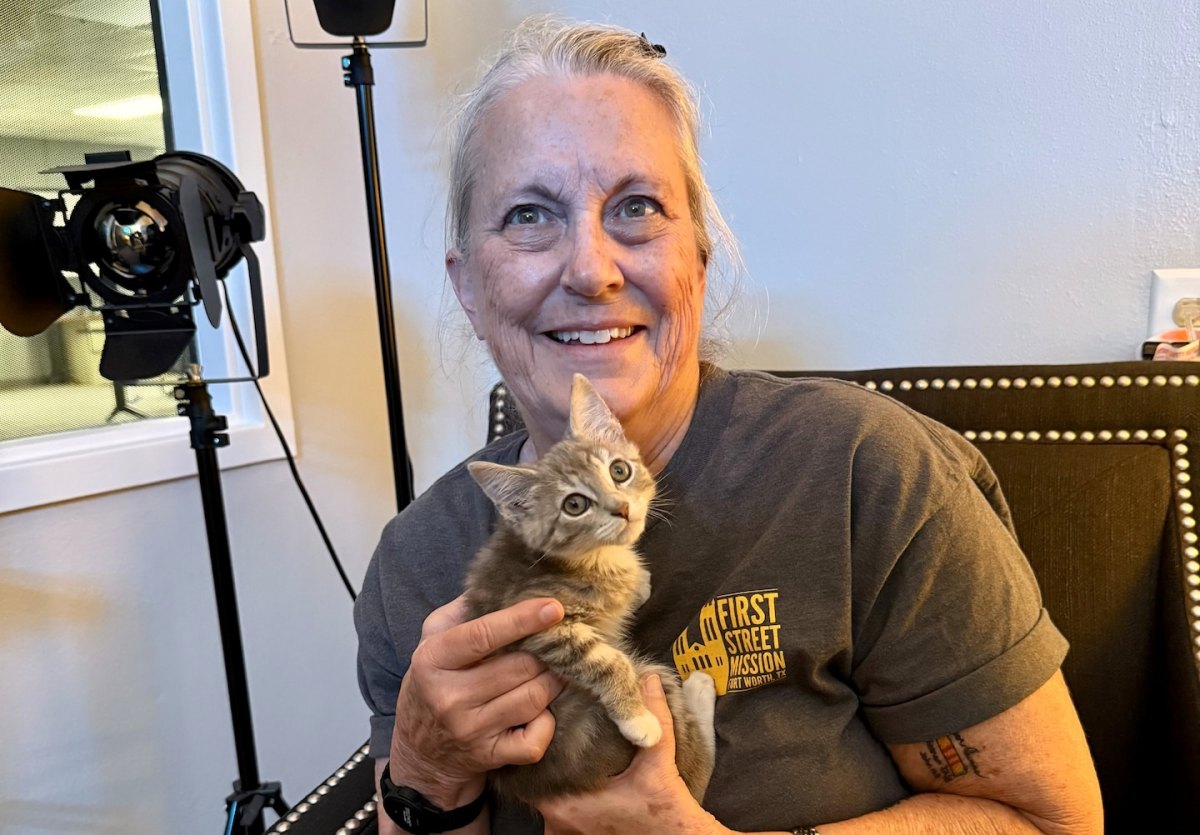
Leah Owens and Elmer the kitten have had a rough time of it lately, but now that circumstances have brought them together, both their lives have improved.
Owens, 72, lost her husband to blood cancer late last year and has been feeling lonely. She has three cats, but they’re independent little rascals.
Then Elmer came along.
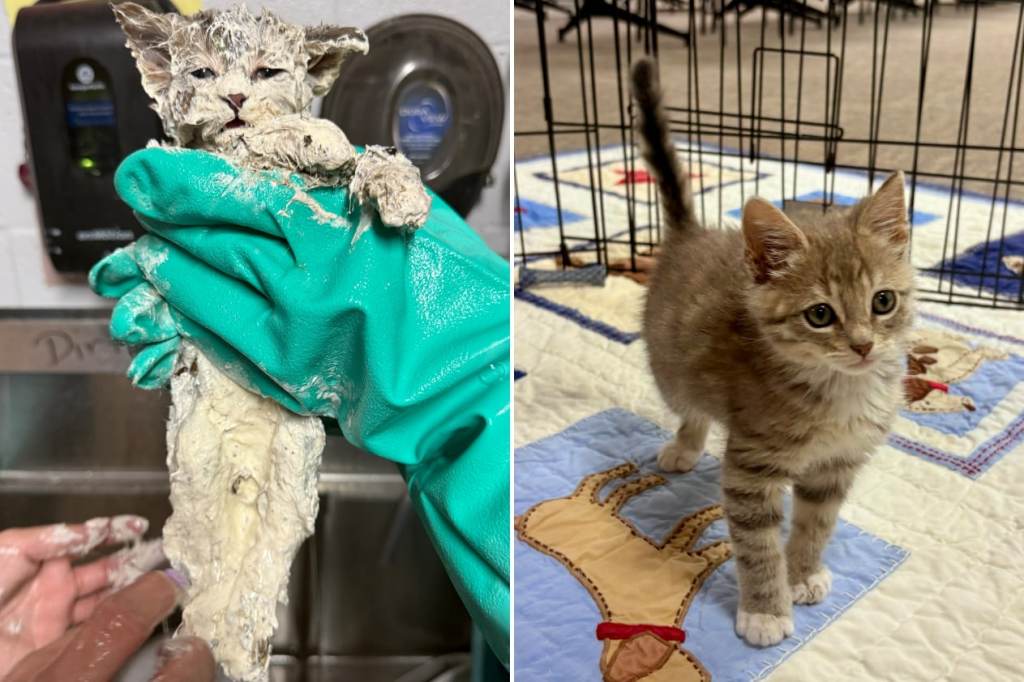
The gray tabby kitten, who has a very Buddesian look about him, was rushed to the North Texas Humane Society about two weeks ago by a Good Samaritan who found the little guy submerged in a bucket of industrial glue.
Elmer when he was covered in glue, left, and looking healthy and happy now, right. Credit: Humane Society of North Texas
After dish soap and several other substances failed to get the glue out of Elmer’s fur, Owens stepped in and gave the kitten a bath in canola oil.
Removing the super sticky substance required round-the-clock care, with Owens returning Elmer to his oil bath and massaging the glue out of his fur by hand.
Elmer was so relieved, he now considers massages a several times daily requirement and nudges Owens to give him the spa treatment.
Staff at the Humane Society say they’re not sure if Elmer fell into the glue bucket or if someone tossed him into it. He’s about two months old.
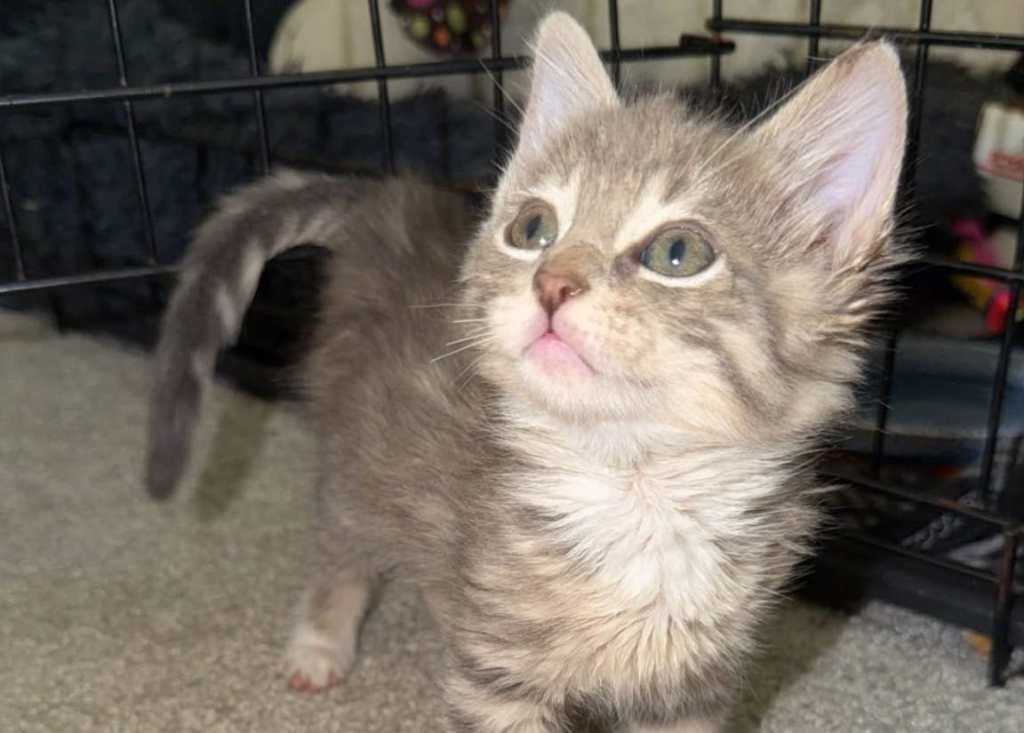
Elmer resembles a certain gray tabby and even has a similar tuft of white fur on his chest. Credit: North Texas Humane Society
As stories like this always do, Elmer’s plight pulled on the heartstrings of potential adopters, but Elmer and Owens have grown quite fond of each other.
Now it’s official: Owens’ home is Elmer’s forever home, and she’s his caretaker/masseuse for life.
Great job, Leah Owens! And watch out, gray tabbies can be quite demanding, but they also have big hearts.