Blog Posts

‘A Vibrant Mind In His Little Head’: How Buddy Became My Animal Cognition Teacher

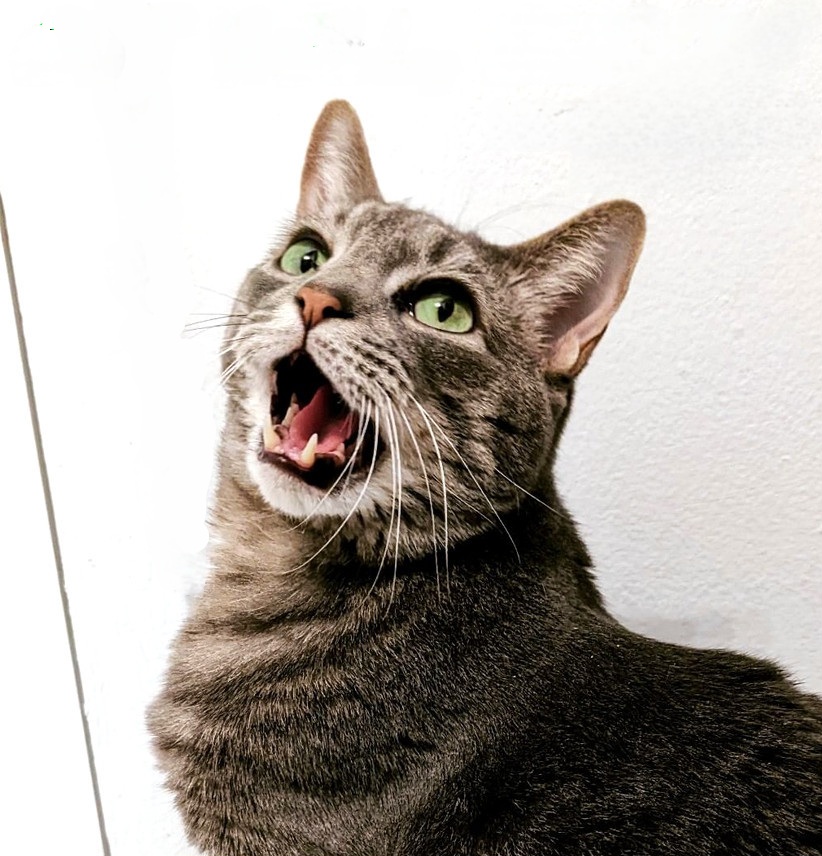
Buddy’s personality is galactic in size, his emotions emblazoned in neon, his opinions shared through a bullhorn.

I used to hate cats.

When I’d hang out at my friend Dave’s house as a teenager, the little shits were everywhere, climbing all over everything with no boundaries and apparently no limit to their numbers.

Dave’s family had between 10 and 12 cats at any particular time, a small army, and as far as I could tell they were little more than inscrutable, uncommunicative tribbles, barely sentient animals who didn’t listen to anyone, could not be told “no,” and were going to stick their little faces in your food or drink no matter how many times you told them to get lost.

Worse, I’d have to dose up on Benadryl just to last a few hours and often left because my eyes were gumming up and my nose was clogged.

There were times when I sat in my car, idling for a half hour with the windows down and heat on blast on frigid nights, waiting for the worst allergic symptoms to subside. I was worried I’d be pulled over and a cop, seeing my half-shut, bloodshot eyes, would decide I was driving stoned or drunk.

Even when another friend adopted a friendly, cuddly tuxedo who became the first cat I truly interacted with, even when I realized I could safely play with one or two cats without getting sick, and even as I was actively looking for a feline of my own, I didn’t think they were intelligent or that it was really possible to meaningfully communicate with them.

At best I’d get a tribble of my own, something to feed and care for in my black depression to take me mentally out of myself.

buddykitten2
My little pal, probably around 10 weeks old.

Then Buddy came striding out of his carrier like a furry little Genghis Khan and started conquering shit.

The furry little conqueror

I was prepared for a kitten who might dive under the bed and refuse to emerge except to sneak a bite or take a sip when the coast was clear. Lots of guides for first-time adopters warned the adjustment period for a new cat or kitten could be extensive.

What I got was a boisterous, bold, imperious little dude who was kind enough to allow me to continue sleeping on my bed, which was now his bed. I got a companion who demanded my attention, wanted to be involved in everything, and was going to let me know loudly and unambiguously what he liked and what he didn’t. He took up a regular position on my shoulder, like a parrot with a sea captain. We were — and still are — inseparable.

Buddy’s personality is galactic in size, his emotions emblazoned in neon, his opinions shared through a bullhorn. There’s a vibrant mind in his little head.

If they met Bud, even the most stubborn animal haters, the kind of people who refuse to acknowledge animal intelligence because they think it diminishes our own, would know they’re dealing with a person even if they may not admit it.

That is why this site exists. It’s why I write about cats, why I’m invested in their welfare and why it hurts my soul to hear about so many casual incidents of cruelty committed by humans toward felines.

When I hear about people gunning down cats or pouring lighter fluid on them, I think about what might have happened if Bud ended up with someone else, and I think about the cats who are just like Bud who are killed or seriously injured by cruel humans engaging in senseless violence.

There is no question that those cats suffer, that they feel pain, anxiety and terror as seriously disturbed people inflict pain on them for “lulz,” or because they think hurting cats might earn them Internet Points in the bowels of the web where diseased minds congregate to share shock videos.

No Turkey?!?
“Dude, you can’t be serious.”

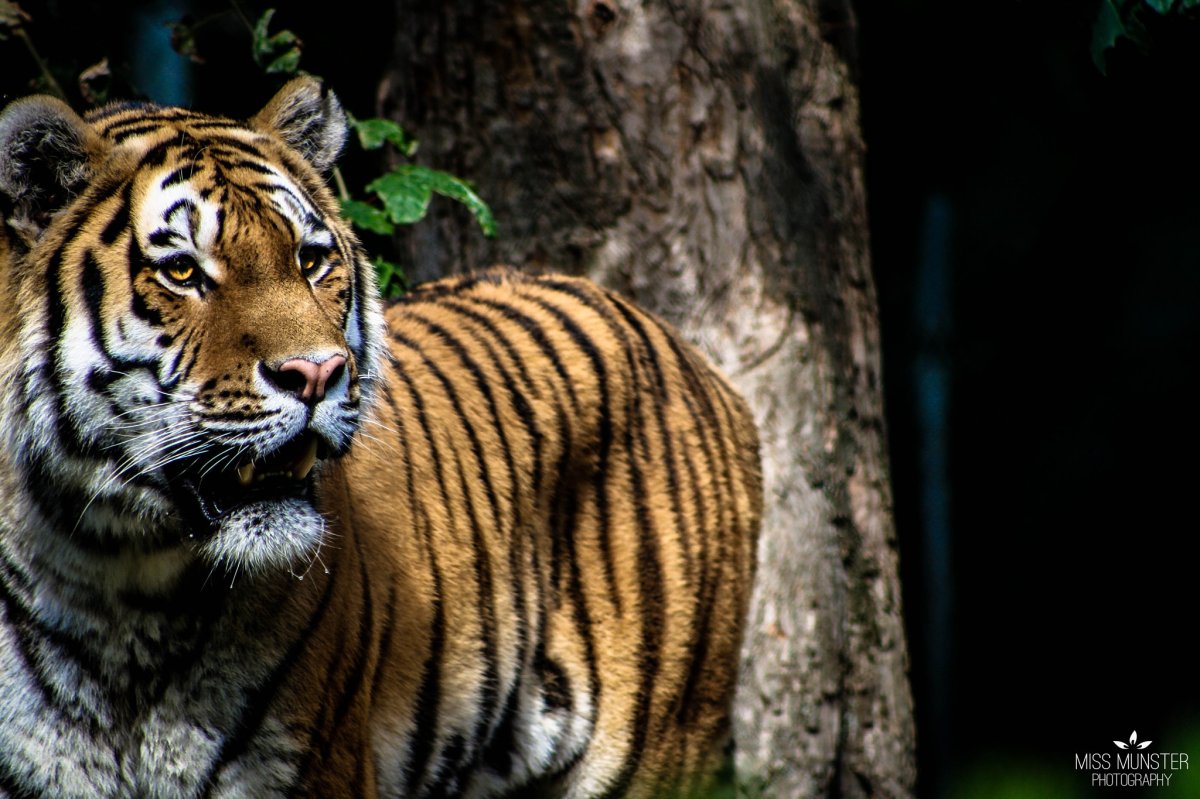
The fact that Buddy thinks he’s a hulking tiger is a running joke here, and it’s true. He thinks he’s the baddest boy on the block, and he doesn’t see any dissonance between cosplaying as the Buddinese Tiger one minute, and running behind my legs when he gets scared the next.

Mighty and brave!

It’s been 10 years now, and I’ve pretty much accepted the fact that he can’t be stopped from pawing at the big screen door leading from the living room to the balcony.

But every time he gets his claws caught and he’s left hanging, he starts crying for me. He sounds like a baby, and all he wants in that moment is his Big Buddy to come and pick him up, gently slide his claws out, and rub his head while telling him what a brave and tough little guy he is.

He responds by puffing his chest out and purring. He’s probably thinking “Yes, I am brave, aren’t I? I endured that ghastly ordeal and only cried a little bit!”

Buddy the Clever
Buddy with a very Buddy look on his face.

It’s not all wonder and awesomeness, of course. I never would have guessed an animal could be so resourceful and clever when it comes to being annoying. Bud graduated from cackling gleefully in the dark as he terrorized my feet at night, to repeatedly punching the flap on his litter box because he knows the squeak drives me crazy. He’s also fond of standing on my head and shrieking at full volume into my ear. Not “fill my bowl” or “I need water,” because those needs are taken care of immediately before bed.

The reason he wakes me up, why I’m ripped out of restful slumber by his high-pitched kitten voice, is because he wants me to wake up and be Buddies with him. He wants to hang out.

So as annoying as he can be, and as much as I really, really hate losing sleep, I can’t be mad at him. If only humans were so pure in their intentions and non-judgmental.

Cats are social animals

A lot of people say their cats ignore them or at best acknowledge them with a twitch of their radar ears. When I call Bud, he responds by happily padding up to me, tail raised straight up or curled like a question mark.

That’s because he knows I’ll never hurt him. He knows I’ll never force him to do anything he doesn’t want to do, nor will I grab him, subject him to unwanted petting and refuse to let him go. Trust goes a long way in human-feline relationships. In some ways, it’s everything.

Schemeowtics
Schemeowtics for Buddy the Cat. Note the huge meowscles.

Part of earning that trust means understanding my little pal, learning from him and learning about him. I’ve read more about felis catus than I ever imagined I would, and Bud’s smarts sparked a years-long deep dive into animal cognition that still has its hooks in me.

The belle epoque of feline research

For decades, dogs were the only domestic pet scientists bothered with. Cats were legendarily uncooperative, and the general consensus was that trying to wrangle them wasn’t worth it. If a research team managed to get 150 people to bring their cats into the lab, they were fortunate if a third or a fourth of them worked out.

Over the past 10 years or so, that’s changed as a new generation of scientists began to think in feline terms. Now the research teams come to the cats instead of the opposite, in recognition of how important territory and surroundings are to the species. They’ve also taken study formats originally built for children and dogs, and modified them for moggies.

Thanks to their efforts, we’ve learned a great deal.

Studies have found that, contrary to popular belief, cats really are social animals. If they’re bonded to a person, they value affection more than food or toys! They pay close attention to our whereabouts at all times, even though they’re masters at appearing ambivalent.

They know their names, they know the names of other cats they live with, and studies suggest they may be an even quicker study than toddlers when it comes to basic word association with items and concepts.

The meow isn’t a part of their regular communicative repertoire when they’re strays or ferals, and vocal communication doesn’t come naturally to them, but meows are embedded with meanings we’re only just beginning to understand.

Most amusingly, they’re capable of being dishonest with us and modifying their meows to manipulate us. But don’t let that fool you into thinking cats are real liars: it seems the one and only thing they’re dishonest about is food, probably because they realize we’re suckers.

Hap

During our time as inseparable pals, Bud and I have developed our own human-feline patois, a way of communicating that involves verbal and non-verbal cues. I pride myself on knowing what he wants the vast majority of the time, but I also realize the majority of the credit goes to little man for meeting me more than half way.

Sometimes Bud is so insistent, his meows apparently so urgent, that I don’t know what he wants. I can rule out food, water, a foul litter box or demands for pets. If he wants to snuggle or lay in my lap, he doesn’t need to ask. If he wants to play, he lets me know.

So what’s he saying? What could possibly be so important? Is he trying to tell me he’s reconciled quantum mechanics with general relativity? Has he gotten word of an anti-Buddesian plot by the devious neighbor cat, Smudge?

I don’t know. But one thing I do know, that I’m absolutely confident about, is that there are real thoughts scrolling through that little head, and a rich, authentic inner existence.

I’m lucky I’ve gotten to be his buddy, and to learn from him that animals are so much more than vacant-brained automatons I used to think they were.

Paleontologists Recover Shockingly Intact Saber-Toothed Kitten Buried For 35,000 Years

The find is extraordinary, allowing scientists to directly study the extinct cat’s musculature, fur, head shape, and even its claws and whiskers.

A team in Russia stumbled on the find of the century when they located the stunningly well-preserved remains of a saber-toothed kitten in Siberia.

The kitten, which was found near the Badyarikha River in northeastern Siberia, was about three weeks old when it died, scientists estimate.

Unlike typical finds — a fang here, a mandible or partial skeleton there — this specimen still had its fur, claws, whiskers and muscles, which means scientists have already learned more about the species, Homotherium latidens, than they have with almost any other long-extinct animal.

homotheriumpawpads
Images of the extinct cub’s paws compared to (D), the paw of a 3-week-old lion cub pictured on the bottom right. The Homotherium paw is thicker but less elongated. Credit: Borissiak Paleontological Institute, Russian Academy of Sciences, Moscow, Russia

While the saber-toothed cub is a true felid, it boasts adaptations unlike any surviving member of the panthera genus.

It has wide paws wrapped in heavy fur, a short tail and a stockier, lower-to-the-ground build than modern lions and tigers. Those adaptations, scientists believe, made it easier for Homotherium latidens to traverse environments with ice and heavy snow.

Its head shape is slightly different, with smaller ears than modern big cats, and its neck is enormous, more than twice as thick as the neck of a comparable three-week-old lion cub which was used for comparison. Likewise, its mouth is capable of opening significantly wider, although the team did not compare it to the jaguar, which has the widest-opening jaw among extant felids.

Homotherium cub
A photograph of the cub, top, and a scan revealing facial, ear and neck structure, below. Credit: Borissiak Paleontological Institute, Russian Academy of Sciences, Moscow, Russia

The frigid, arid clime of Siberia made it possible for the cub’s body to endure for so long. The team that made the discovery conducted radiocarbon dating that puts the cat at between 35,000 and 37,000 years old, according to reports.

It’s not clear how the cub died, although its species went extinct about 10,000 years ago, likely as a direct result of fewer prey animals in the frigid zones it occupied. Additional bones belonging to the rear of the cub skeleton were encased in a large cube of ice immediately next to the intact upper body.

The cub’s remains were recovered in 2020, but the results of the research team’s analysis were just released on Nov. 14 and published in the journal Nature. The paper’s authors have a lot more to share about the species’ physical characteristics, they noted in the text, and plan to follow up soon with a second paper going into more detail about what they learned from the cat’s intact musculature.

Top image: An artist’s impression of an adult member of homotherium.

Homotherium cub
Credit: Borissiak Paleontological Institute, Russian Academy of Sciences, Moscow, Russia

Apocalypse Z: A Man And His Cat Fight For Survival

As the world ends, Manel doesn’t lose sight of his most important priorities: making sure his cat is safe and well-fed.

Shhhh, don’t meow!

With A Quiet Place: Day One and Apocalypse Z: The Beginning Of The End, it looks like the “protagonist and cat surviving the world’s end” thing might be a growing subgenre.

While Day One lit up theaters in spring and early summer, Apocalypse Z is a zombie flick out of Spain, currently sitting atop Amazon’s Prime Video charts as a major crossover hit.

It stars Francisco Ortiz as Manel, the owner of a small solar power business and servant of a talkative cat named Luculo. Manel’s brother-in-law works for the Spanish military, and as reports of a deadly and spreading virus hit the news, his sister relays privileged information from her husband warning Manel to hide during mandatory evacuation and find a way to join the family on the Canary Islands, where Spain’s military and civil leaders have fled.

Vince McMahon Meme

After weathering the initial wave of the virus by huddling in his apartment in Galicia, Manel seeks out a way to make the 2,400km (about 1,500 mile) journey to safety.

One thing I loved about this movie was Manel’s absolute devotion to Luculo. When he tries to stock up at a store being ransacked by panicked locals, the first thing he does is grab cat food. When he finds a set of wheels at one point — a sporty motorcycle — he straps Luculo’s carrier securely to the back of the seat.

No matter how impractical, no matter how much danger it puts him in, Manel refuses to abandon his pal, even though the little guy can’t keep his mouth shut.

Apocalypse Z
Manel with Luculo the cat in his carrier, strapped to the back of the motorcycle.

While watching Day One, all I could think about was how conveniently silent Sam the cat was, and how dead I’d be trying to survive with Bud in the same situation.

Luculo is incapable of being quiet, although he’s not as loud or insistent as Bud is. He’s named after the Roman statesman and conqueror Lucinius Lucullus, described as “the greatest glutton of antiquity, who stunned Rome with his lavish feasts” and his dedication to bringing recipes for the tastiest dishes from the provinces back to the capital.

“He came, he ate, he conquered” might be an appropriate motto for Lucullus, and his feline namesake is similarly food-obsessed, often seen scarfing down yums as if the apocalypse is just a minor obstacle between meals.

Apocalypse Z
Manel refuses to leave his buddy behind, going to great lengths to keep Luculo safe as the world goes to hell around them.

Apocalypse Z isn’t a walk in the park, given the genre, but it’s significantly less gory than The Walking Dead, The Last of Us or even Zombieland. The film’s infected are Danny Boyle-style zombies, the terrifyingly fast baddies from 28 Days Later and 28 Weeks Later, rather than the slow shufflers of Romero-influenced productions. Accordingly, they’re much more dangerous and enable more intense action sequences.

Finally, because this is a cat blog and I’ll most certainly get emails and comments if I don’t address the tabby in the room: nothing terrible happens to Luculo. His greatest ordeal is having too many admirers, who are shocked to see a guy who’s survived so long with his pet cat.

Apocalypse Z
Luculo does quite a bit of hissing at the zombies, who stand between him and his beloved yums.

Apocalypse Z: The Beginning of the End is the first part of a bigger story, as the title suggests. It rocketed to the top as the most-streamed movie in more than 90 countries, so we should be hearing news about a sequel soon.

If you’re a fan of genre movies and escapism, Apocalypse Z is a fun way to spend a few hours.


Apocalypse Z is available now to stream on Amazon Prime Video. The stream will default to an overdubbed version, but we highly recommend enabling English subtitles and switching the audio track to its original Spanish.

Evil Dodgers World Series Hero Adopts A Kitten After Defeating Yankees

In a tragedy for the baseball world, the hated Dodgers defeated the beloved Yankees in the World Series. Buddy the Cat is NOT happy about the outcome.

Freddie Freeman, Dodgers first baseman, infuriating hit-celebrator, and Yankee killer, has adopted a kitten.

The evil Freeman has named his new kitten Champ, in a not very subtle nod to his team winning the World Series with a game five victory over the Bronx Bombers on Oct. 30.

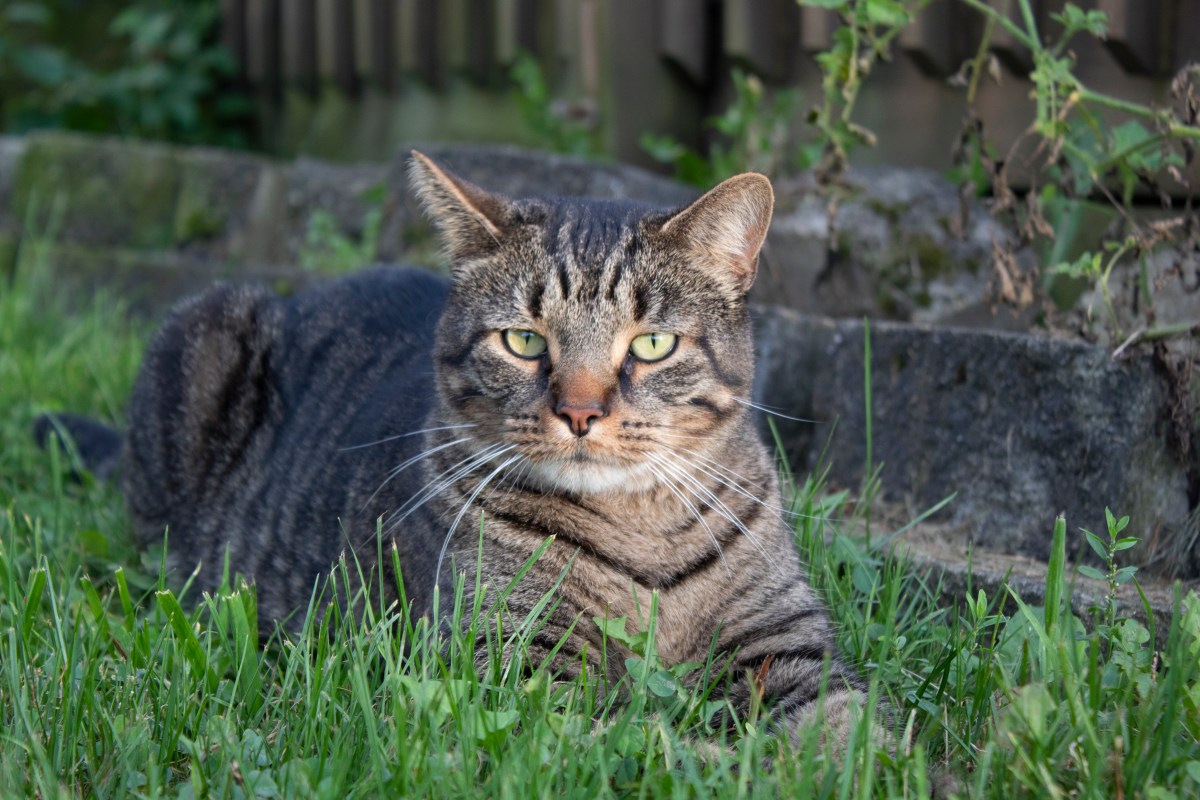
“Freddie Freeman thinks he can buy his way into my good graces by adopting a cat, and a gray tabby, no less,” Buddy the Cat, president-elect of the Americats, told reporters. “Well, I have news for you, Tom Brokaw — you’re still on my poop list!”

freemankitten
Freeman with Champ. Credit: Freddie Freeman/Instagram

Buddy cited the considerable distress Freeman’s five home runs and 12 RBI caused Buddy’s human, including the “despicable” game one walk-off grand slam that shocked the Yankees. He also blasted Freeman for “doing a stupid little dance” every time the Dodger reached base.

But most of all, Buddy said, he blamed Freeman for cutting short the celebratory treats he enjoyed at every previous stage of the playoffs, when the Yankees were on a roll en route to the World Series.

“In the American League Division series against the Kansas City Royals, snacks rained down from the heavens as the Yankees took the series 3-1,” he said. “In the American League Championship Series, I feasted like a viking in Valhalla as the Yankees crushed the Cleveland Indians.”

But tragically, the silver tabby said, there was only one game in the World Series that merited celebration at Casa de Buddy.

“One measly game!” Buddy raged. “So no, you’re not on my good side, Freeman!”

Freeman dance
Freeman should be kicked out of the league just for doing this dance on the bases, Buddy said.

Asked about Freeman’s teammate, Shohei Ohtani, and his dog, Decoy, Buddy claimed the canine “lives by my forbearance alone, and it would be a shame if he found his home raided by Feline Bureau of Investigation (FBI) agents.”

Cat Brains Age Like Ours, Research Shows

Lifelong changes in the brains of felines more closely resemble aging in human brains. Studying cognition and cognitive decline in cats could help us better understand brain aging in general, scientists say.

For almost the entire history of modern science, rodents have served as a stand-in for humans in research into everything from metabolism to autoimmune responses.

They’ve even been the go-to for studies examining cognitive decline, diseases and neural mechanisms.

But now research shows there’s a better model closer to home. It turns out cat brains more closely resemble human brains in many respects, particularly in terms of aging and its effect on our mental faculties.

From Nature:

“As cats age, their brains show signs of atrophy and cognitive decline that more closely resemble the deterioration seen in ageing humans than do the changes in the brains of ageing mice, according to findings presented last month at the Lake Conference on Comparative and Evolutionary Neurobiology near Seattle, Washington.

The results are part of a large project, called Translating Time, that compares brain development across more than 150 mammal species, and is now expanding to include data on ageing. The hope is that the data will aid researchers trying to crack the causes of age-related diseases, particularly conditions that affect the brain, such as Alzheimer’s disease.”

One drawback to using mice is they simply don’t live long enough for their brains to deteriorate in ways many human and non-human animals do, scientists told Nature. They also have species-specific mechanisms that ward off certain degenerative diseases, including Alzheimer’s.

Not only do cats live longer, but their brain development and decline mirrors our own on a shorter time scale, scientists say. Tracking brain changes in cats is also more helpful than doing the same with dogs, who have been radically changed by breeding. Felines are mostly left to mate as they please, meaning they’re closer to their natural form, allowing for more useful data.

a cute cat lying on the couch
Credit: Pranjall Kuma/Pexels

Looking to our furry friends makes sense anecdotally as well. Every cat lover has seen the unfortunate confusion and forgetfulness that can afflict senior cats. Older cats tend to sleep a lot more, which is significant for a species notorious for its extravagant snoozing habits.

Thankfully, efforts like the Catage Project do not result in more cats being used in laboratory experiments. Researchers draw their data from veterinary records, brain scans and blood samples.

When asked about how his species could help humans better understand things like cognitive diseases and decline because of their similarity to humans, Buddy the Cat declared the research “fake news.”

“Where’s my bumblebee toy?” Buddy asked. “Did you hide my bumblebee toy? I’ve been looking everywhere for it!”

When told the toy was right were it’s supposed to be, in his toy basket, the 10-year-old tabby grew irritated.

“Fake news!” he meowed. “You put it back there just to mess with me. I’m onto your games! Now where did I put my favorite milk bottle cap?”