It’s that time of year when we celebrate a Festivus for the Rest of Us!
As seasoned Festivus pros know, the holiday falls on Dec. 23 and eschews the commercialism that’s taken over the season. Instead of a tree or a menorah, Festivus decorating consists of a single unadorned pole. In the words of founder Frank Costanza: “I find tinsel distracting.”
At the Festivus gathering, family and friends get together for a meal, which ends with the Airing of Grievances, in which you tell your loved ones all the ways they’ve disappointed you over the past year.
“I’ve got a lot of problems with you people,” Frank Costanza said during Festivus 1997, “and now you’re gonna hear about it!”
So we’ll hand it over to Little Bud for his grievances:
To Big Buddy: Ten Christmases! Ten, and still no Roomba! You, sir, are a man of empty promises and crushed dreams. Year after year I made my Christmas list, and I remind you of all the ways I’ve been a good boy. I don’t go on the counter tops, ever. I leave the Christmas tree alone. And when I smack you in the face to wake you up, I don’t smack you too hard. What else do I need to do?
The Pirates of Somalia: I thought we had something, guys! Aye, some of me best memories are of sailing the high seas with me mates, looking for plunder on cargo and cruise ships. I didn’t even get a Christmas card from you this year!
The Jaguars of Amazonia: You guys are my true homies! You welcomed me with open paws. We hunted together, we napped together, we took ayahuasca and ran around the jungle hallucinating giant turkeys. You even made me an honorary jaguar and named me Kinich Bajo, or “Tiny sun-eyed one.” And you sure do know how to provide muscle! Every cat and dog for 15 miles is scared of me because I roll with you. I love you guys!
The Tigers of the Bronx Zoo: I offered a paw in friendship, and what did you do? You let one of your females abduct me and take me back to her cave, where she treated me like one of her cubs and bathed me in her saliva. It was horrible! Do you know how many actual baths it took to get rid of the stink? I still have PTSD!
The Readers of PITB: Maybe I’m mistaken, but it feels like you don’t tell me how charming and awesome I am as much as you used to.
Smudge from Apartment 1S: You, sir, are pushing your luck. This floor isn’t big enough for the two of us, and at some point there’s going to be a reckoning. You should be really scared.
So far there are no cases of cats infecting humans, but a new study published Tuesday warns the virus easily mutates in infected felines.
Health officials have identified at least five cases of domestic cats infected with H5 bird flu in California, and they’re warning of multiple vectors of transmission now that both outdoor and indoor cats have been infected.
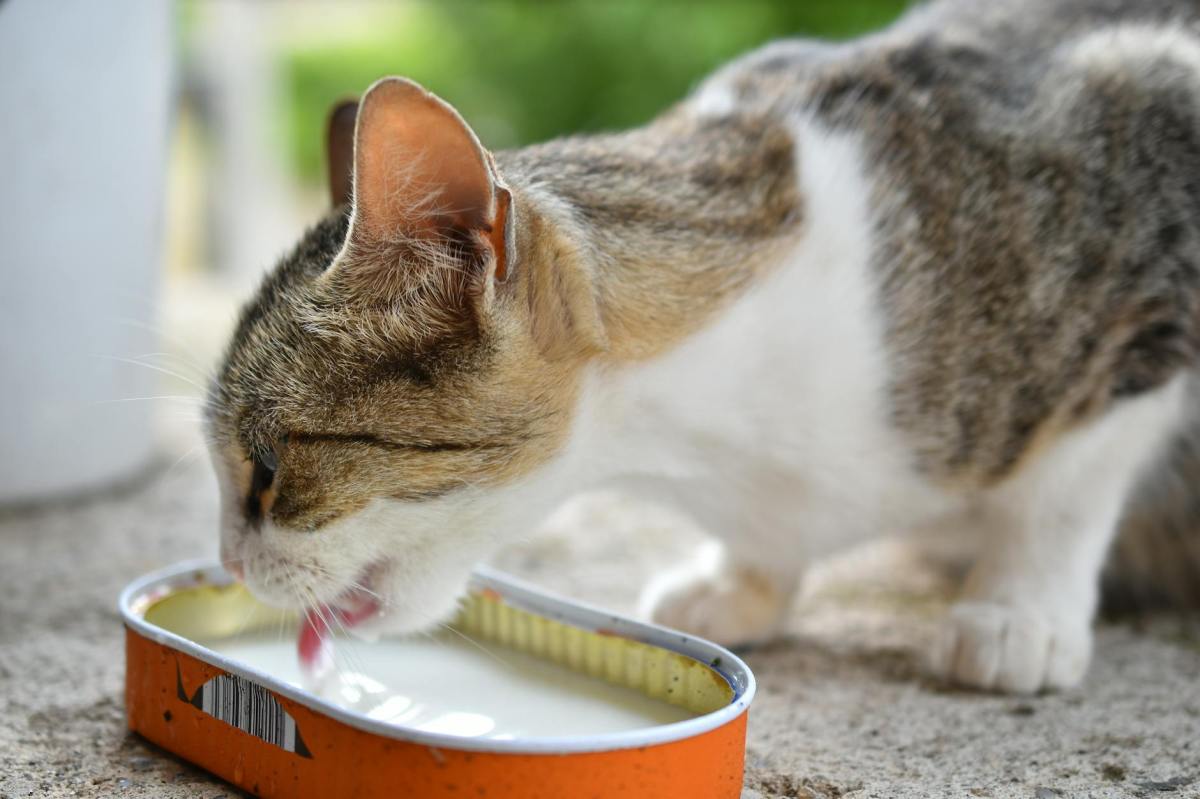
Two cats were infected after drinking raw milk from a dairy farm in Fresno, California, according to the Los Angeles Department of Public Health. That’s also how a dozen barn cats died in April after drinking raw milk from infected cows on a Texas dairy farm, the CDC said.
But three other cats who tested positive for bird flu were indoor-only, lived in the same home, and did not consume raw milk, authorities said. They’re looking into the possibility that the felines were infected through raw meat or by hunting mice.
So now it’s not only confirmed that cats are vulnerable to highly pathogenic avian influenza, or HPAI H5N1, but that they can be infected in different ways.
To be clear, it’s not a cause for panic and it doesn’t mean people should isolate from their cats, but it does mean we should be smart and considerate when it comes to protecting our pets and reducing the possibility that they can be infected.
Because millions of felines live with humans, the fear is that they can pass the virus onto us. So far there have been no confirmed cases, but a study published on Tuesday confirmed that the virus can easily mutate in cats. That means the more domestic cats are infected, the greater chance the virus mutates in a way that allows it to “bridge” to humans.
At least two people — one in Wisconsin and one in Louisiana — have tested positive for the virus and were hospitalized this week. One worked on a farm and the other may have consumed raw milk. In the meantime, health officials are monitoring the people whose three cats were infected, and they’re urging people to take precautions.
“To avoid the spread of disease, including H5 bird flu, we strongly encourage residents and their pets to avoid raw dairy and undercooked meat products, limit contact with sick or dead animals, report sick or dead birds, and keep pets or poultry away from wild animals and birds,” said Dr. Barbara Ferrer, director of the Los Angeles County Department of Public Health.
As Buddy’s mignons, you will execute his will across multiple platforms, ensure that client needs are met, and help maintain a company-wide culture of feline supremacy over humans, dogs and other lesser animals.
Are you a dog who can follow directions? Are you a fellow cat who may be timid and needs a strong leader to rally behind?
You’re in luck!
Buddy the Cat is looking for mignons to help execute his fiendishly brilliant plans for world domination!
We offer a competitive benefits package including paid nap time!
Positions:
Palanquin carrier (4, possibly might need 6 after holidays)
Chef
Human wrangler
Cat burglar (a burglar who is a cat, not a burglar of cats)
Groomers
Meowscle (bouncers)
Meowscle (bodyguards)
Consiglieri
Tigers (4) to be my warlords
Chariot-maker
Kittens to serve as lookouts
Architect to build a really awesome secret lair! (Also, a cool throne)
Once we have our secret lair, we can begin plotting to take over the world! Muahahahaha!*
(*) Battles of conquest and meetings about ruling the planet are scheduled around nap times.
For the first time, humans have successfully returned orphaned tiger cubs to the wild after raising them and training them to hunt.
For more than 50 years, tigers were absent from Russia’s Pri-Amur region.
Sparsely-populated, mountainous and blanketed in forest, the domain borders the heart of the Russian Far East, offering hundreds of thousands of contiguous square miles for the most robust sub-species of Earth’s most magnificent predator.
Here, tigers can roam without fear of conflict with local farmers, or roads that carve up habitat and pose a danger to animals trying to cross. Prey is abundant, and adaptations for surviving in the local terrain are coded into the tigers’ DNA.
Now that scientists have proven for the first time that tigers can be successfully reintroduced into such an environment, big cat advocates imagine Russia’s Far East as a haven for the large felids. It’s a place where tigers can thrive, mate, reproduce and change the outlook for their species, which has dwindled to only 4,000 or so remaining in the wild.
Credit: Leon Aschemann/Pexels
The project to reintroduce Amur tigers to their native habitat is a cooperative Russian-American endeavor. The team started by building a tiger conservation center in the Amur oblast a decade ago.
The facility is built in a way that orphaned tigers can be raised and taught how to hunt without directly interacting with their human caretakers. That’s a crucial component, because tigers who see humans as potentially friendly or sources of food have drastically reduced chances of surviving in the wild, and are easier marks for poachers.
After 18 months, the cubs are brought to remote locations in Pri-Amur and released. Of the first group of orphan tigers released into the wild, 12 were able to survive on their own.
One gluttonous tiger failed: he crossed over the border into China and began eating domesticated animals, including 13 goats in what researchers called “a single event.”
The fattened tiger then retraced his steps to Pri-Amur, and when he didn’t show fear of humans, the team decided he had to go. They captured him and sent him to a zoo, where he gets all the free meals he wants and contributes to the captive breeding program helping his species maintain genetic diversity.
With 12 out of 13 tiger re-introductions successful, the program provides “a pathway for returning tigers to large parts of Asia where habitat still exists but where tigers have been lost,” said Viatcheslav V. Rozhnov, who leads the reintroduction project.
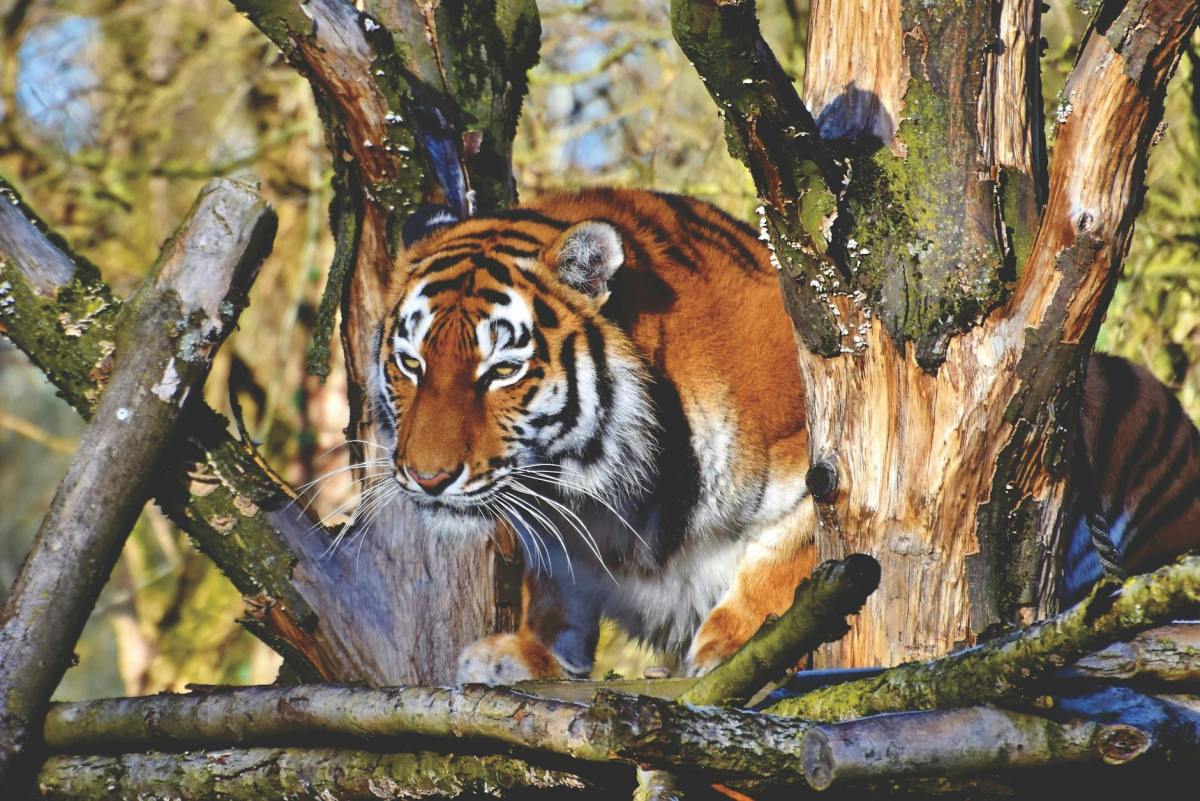
Amur tigers are the largest cats on Earth. They’ve evolved to survive in regions where winters can be brutally cold and snowy, but they also thrive in spring and summer when the snows melt and prey is abundant. Credit: Pexels
The successful reintroduction has also led to some surprising developments. Two of the cubs, Boris and Svetlaya, were unrelated but were rescued at about the same time and raised in the Russian orphanage for their species.
Using tracking devices they’d placed on the newly-released young tigers, the research team watched as Svetlaya settled into a home range and Boris made a beeline for her, “almost in a straight line,” crossing 200km (120 miles) of terrain to reunite.
The team’s hopes were confirmed six months later, when Svetlaya gave birth to a healthy litter of cubs, the first natural-born tigers to result from the reintroduction project.
Another tigress, Zolushka, also gave birth to a healthy litter when she was reintroduced in an area closer to a still-extant population of Amur tigers. The researchers believe the father was born wild in the region and was not part of the reintroduction program.
The wilderness in Pri-Amur and its environs is so vast, untouched and undesirable to human habitation that it could be home to generations of tigers, securing their future after so many decades of grim news for the iconic big cats.
“The grand vision is that this whole area would be connected,” Luke Hunter, executive director of the Wildlife Conservation Society’s Big Cats Program. “There’s lots of habitat that could be recolonized by tigers.”
Some observers believe the drone sightings are merely the first stage in an all-out feline takeover of the US. So far, cats have remained mum on their motivations, preferring instead to sow panic among Americans.
WASHINGTON –The caller was breathing heavily and speaking in rapid-fire sentences as if he had only moments to get the words out over the air.
“I’m telling you, Art, it’s the cats — the cats are piloting these drones!” the caller told Coast to Coast AM radio host Art Bell shortly after 1 am ET on Friday.
“Hold on, hold on,” Bell said theatrically. “You’re saying this has nothing to do with aliens or the government?”
The caller sighed.
“The cats may very well be in league with aliens, but I’m telling you, felines are behind…oh God! They’re here!”
The radio broadcast crackled with distorted hissing and yowling, punctuated by the caller’s pleas for mercy.
“Caller? West of the Rockies, are you there?”
The caller screamed a final time and the line went dead.
“Wow,” Bell told his audience of several million overnight listeners. “There you have it, folks. You be the judge, but that sounded like the real deal to me. Cats are piloting the mysterious drones!”
For weeks, Americans have been asking for answers about swarms of suspicious drones operating above homes, businesses, military bases and government buildings at night.
After rampant speculation that the drones could belong to rogue states, or could be part of some secret government flight test, the FBI confirmed Friday that felines are behind the frequent sightings.
A drone flies above a farm and ranch as the sun fades. Drones have been spotted circling chicken and turkey coops, as well as fish markets.
Biden administration officials confirmed to several media outlets that intelligence supported the theory that cats — not Iranians, Russians or some secret Pentagon operation — are operating the drone swarms that have been lighting up the night sky in states like New Jersey and Maryland for several weeks, befuddling local and state officials.
“At first we thought the idea was absurd,” said a high-ranking official, who spoke on condition of anonymity. “Then we received reports of drone swarms circling several meat-packing plants, a Chewy distribution center in Trenton, and two PetSmarts in northern New Jersey.”
So far, the felines’ motivation remains shrouded in mystery, but experts on the small, furry animals ventured guesses on what may have motivated their sudden interest in aviation and airspace.
“No one’s claimed responsibility, so we’re left to speculate,” said Norah Grayer, a feline behaviorist with NYU’s Gummitch School of Veterinary Science. “But it may be that felines, as a whole, have decided the meow is insufficient for getting their demands across. Humans have become adept at tuning out those vocalizations, so this may be the next step in an attention arms race, so to speak.”
Noted cat expert Jefferson Nebula offered a different explanation.
“Cats are notoriously subject to FOMO, which is one reason why they can’t abide closed doors,” he said. “If someone managed to convince them that we humans were holding out on them, and there are entire worlds of yums we keep for ourselves, well, that would spark the wrath of these otherwise friendly little guys.”
Felines have mastered control over aerial drones despite their lack of thumbs.
For his part, Bell consulted with Michio Kaku, the physicist and science communicator who has been a regular presence on Coast to Coast.
“We physicists have been saying for decades that cats are much more intelligent than we give them credit for,” Kaku said. “This could be retribution for the Schroedinger’s cat thought experiment, or felids may be looking to surpass humanity’s understanding of 11-dimensional hyperspace.”
“Professor, we’ve spoken quite a bit about the Kardashev scale [of civilization progress] in the past,” Bell said. “If we separated human and feline societies, where would we each fall on the scale? Humans are about a zero point seven, are we not?”
“That’s right,” Kaku said. “We physicists believe humanity is on the cusp of a Type I civilization, with things like the internet as a Type I telecommunications system and fusion power on the horizon. However, if you break it down and cats were separated into their own civilization, cats could plausibly already be a Type I civilization.”
“They’re ahead of us?”
“That’s right,” Kaku said. “We physicists believe cats can tap directly into primordial energies and have mastered quantum teleportation. In Star Trek, the Federation is a Type II civilization, and the Caitians — a species of alien cats — are part of the Federation. Yet it’s widely understood that the only reason the Caitians haven’t conquered entire swaths of the galaxy, like the Borg and the Klingons, is because of their strict adherence to their napping schedule and their inherent laziness. These drone swarms may be a signal that real-life cats are fed up enough to disturb their napping schedules, in which case we should all be terrified.”
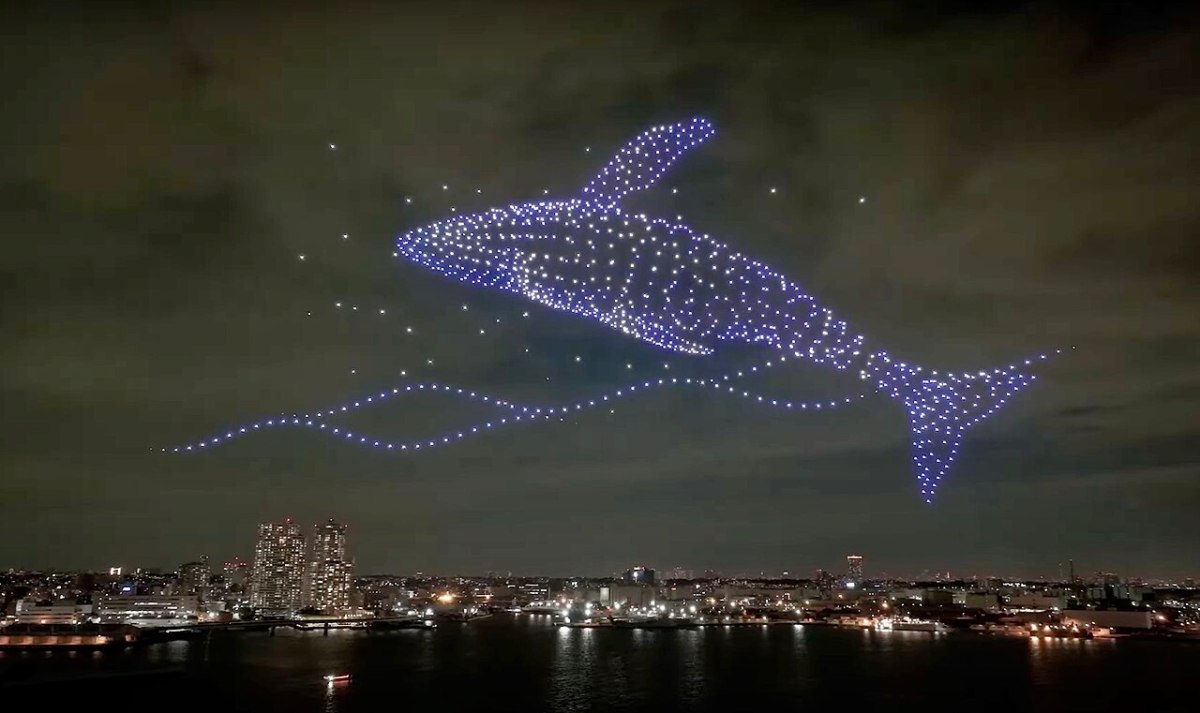
Header image of drone light show credit Wikimedia Commons









 Pain In The Bud