Zoologists were at a loss to explain how the tabby cat moved effortlessly among the big cats without becoming a light snack.
NEW YORK — Zoo visitors and keepers alike were flabbergasted at the sight of a small gray tabby cat lounging in several big cat enclosures on Monday.
Zoologists and a security team were called to the tiger exhibit at 11:45 am when guests reported the domestic cat had somehow entered the enclosure and had settled down between two adult Bengal tigers for a nap.
“It almost looked like the little cat was demonstrating his form for the tigers,” said Al Farelli, who brought his two girls to the zoo Monday and witnessed the strange event. “Both tigers copied the small cat’s posture and then they all dozed off.”
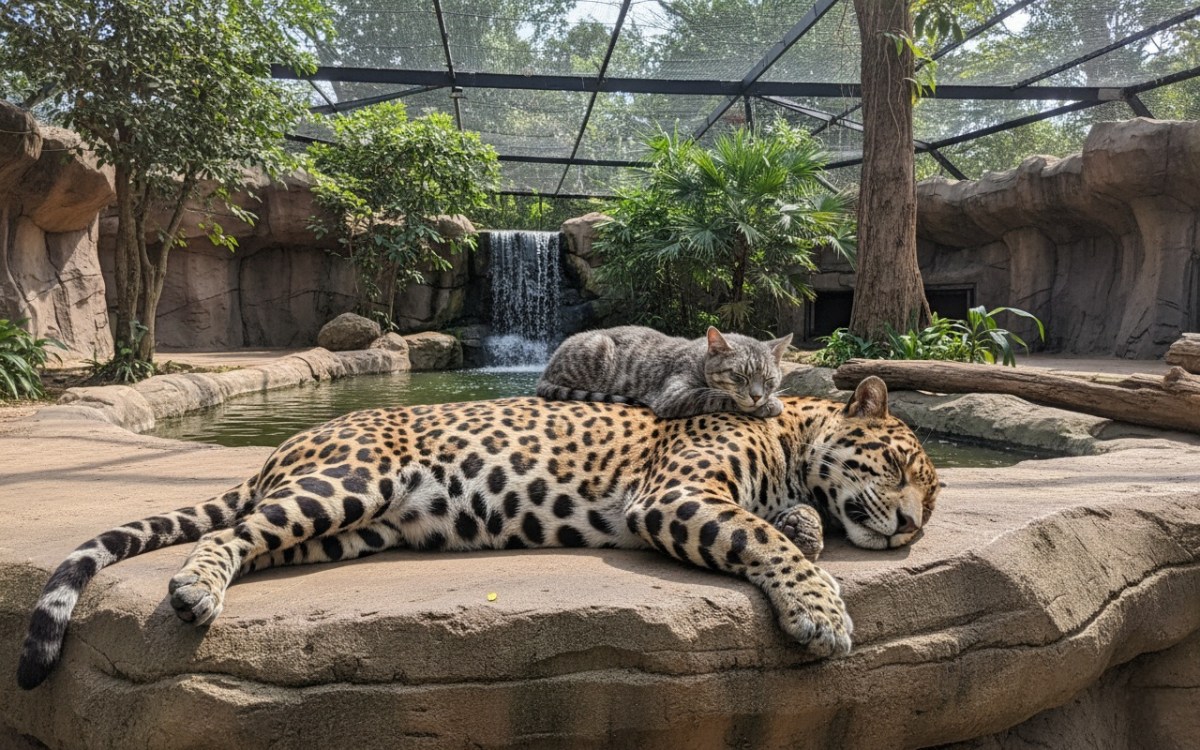
Buddy the Cat enjoying a late morning nap with tigers Zeus, left, and Achilles, right.
Zookeepers, initially fearing for the tiny cat’s safety, were conferring and were trying to coax the domestic feline toward a keeper entrance when the little cat lifted his head and hissed. Zeus, taking notice, followed the smaller cat’s lead and growled at the keepers.
“Never seen anything like it, and I’ve been working with predators for more than 20 years,” said Wendy Johnson, a senior zookeeper.
Zoo staff breathed a sigh of relief when the feline left the enclosure about an hour later, but were incredulous when they received guest reports that the cat had popped up again in Jaguar Jungle.
“We’re just standing there and admiring these majestic big cats when a gray kitty comes padding into the enclosure with his tail up, as if he didn’t have a care in the world,” said Melissa Matthews, a Manhattanite who was at the park with friends.
“Then when the jaguars saw him I gasped because I thought he was about to become an hors d’oeuvre for one of them,” she said, shuddering. “But they chuffed happily, exchanged paw bumps with the little guy and groomed him.”
Once again, the tabby cat settled down for a nap, laying on top of a jaguar named Ixchel.
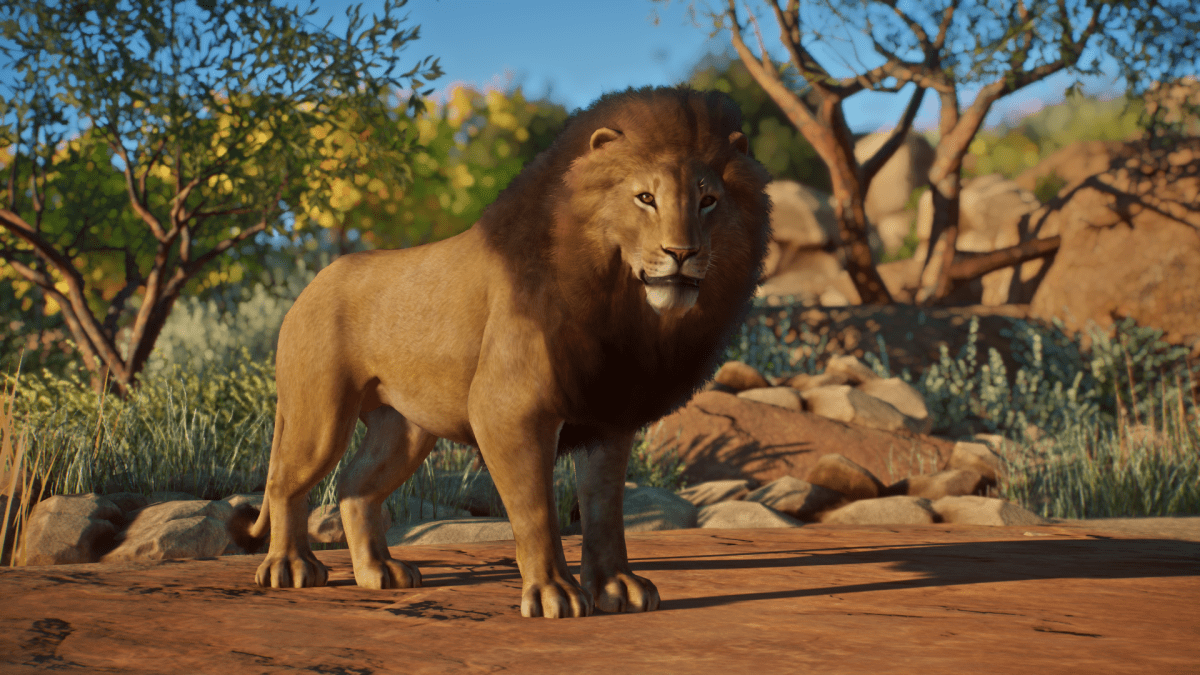
Buddy finally made his way to the lion exhibit by late afternoon, settling down to nap with a lion named Colossus.
Meanwhile a New York man arrived at the zoo, explaining he’d seen clips of the bizarre scene on social media and recognized the feline as his cat, Buddy.
“He’s always doing this!” the man told zoo staff. “There was the time leopards almost ate him on the Masi Mara, the incident in the Amazon when he took ayahuasca with jaguar shamans, and the debacle when he tried to make himself king of the rusty spotted cats.”
As of late Monday the man was seen arguing with the silver tabby and trying to bribe him out of the enclosure with an impressive snack spread.
Have you ever wanted to own or design your own zoo?
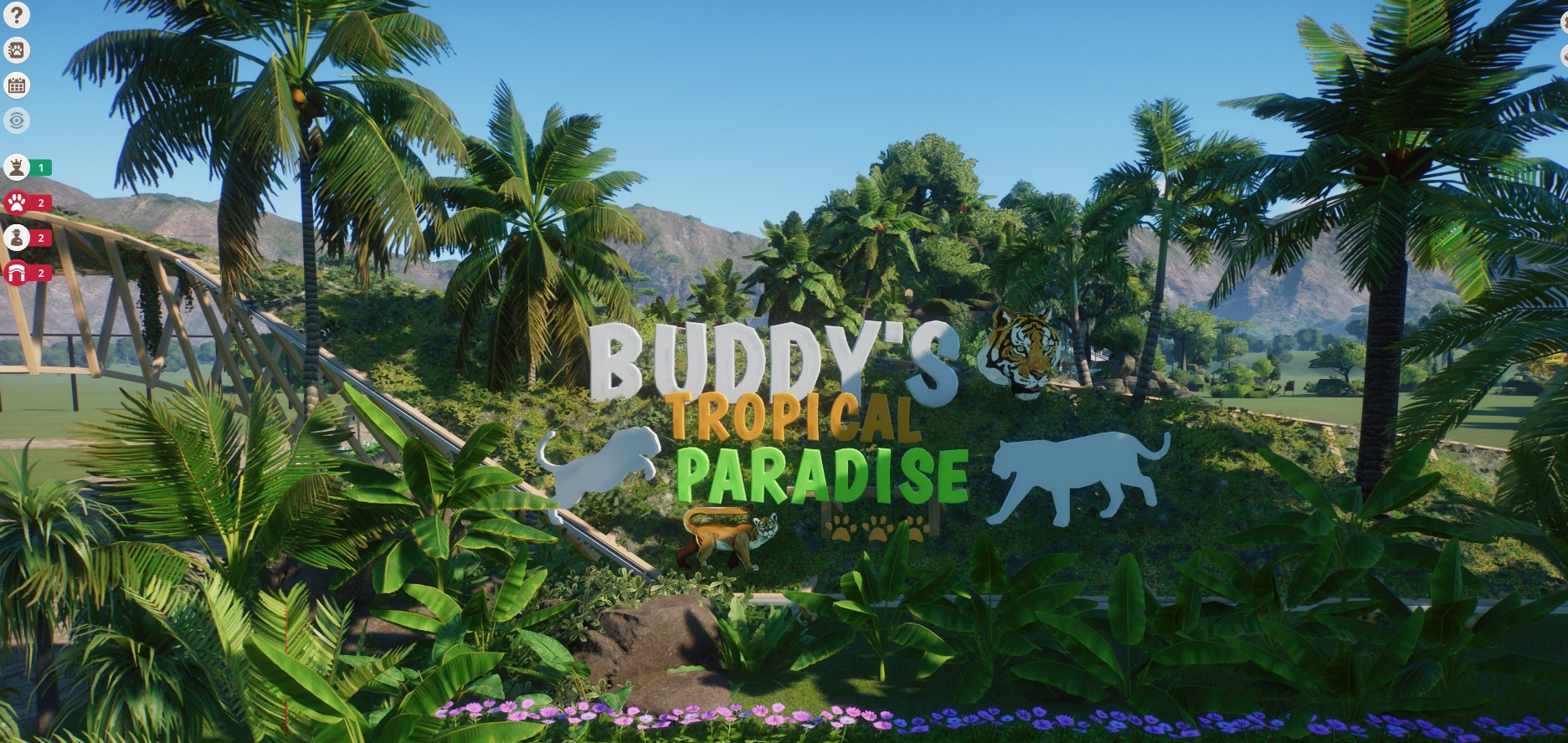
Visitors to Buddy’s Tropical Paradise are greeted by friendly staff who man the entrance, a broad vertical garden shaped like an arch that straddles the main path leading inside.
When they walk through the gate a new vista opens up before them: tiered tropical gardens, waterfalls, and wide boulevards lined with palm trees and flowers. They hear the rumble of big cats calling to each other in the distance and monkeys shrieking as they fling themselves from branch to branch.
Welcome to Buddy’s Tropical Paradise!
A monorail carries passengers above, its tracks looping over animal enclosures and threading tunnels that emerge amid the terraced jungle, eateries and souvenir shops.
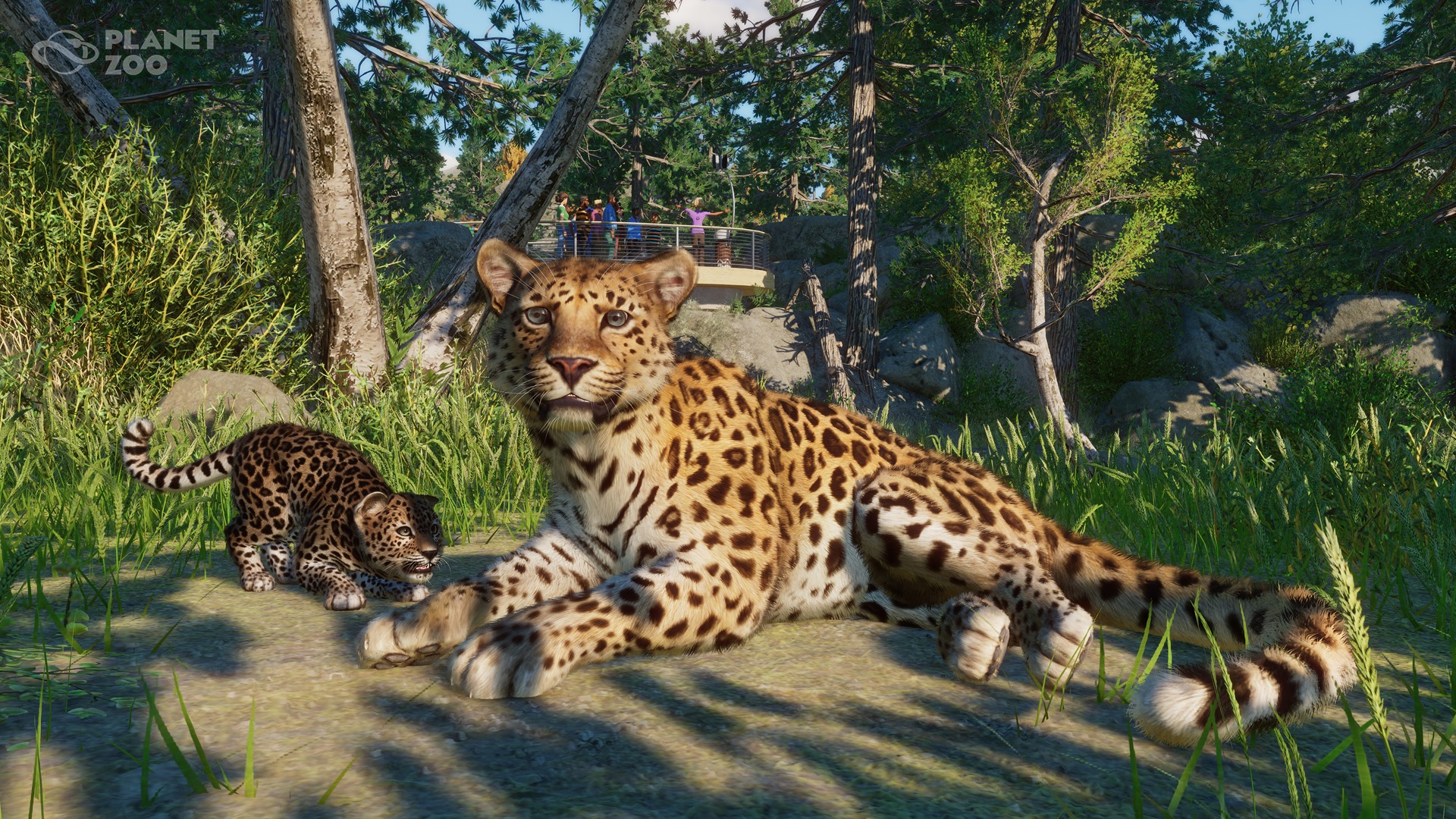
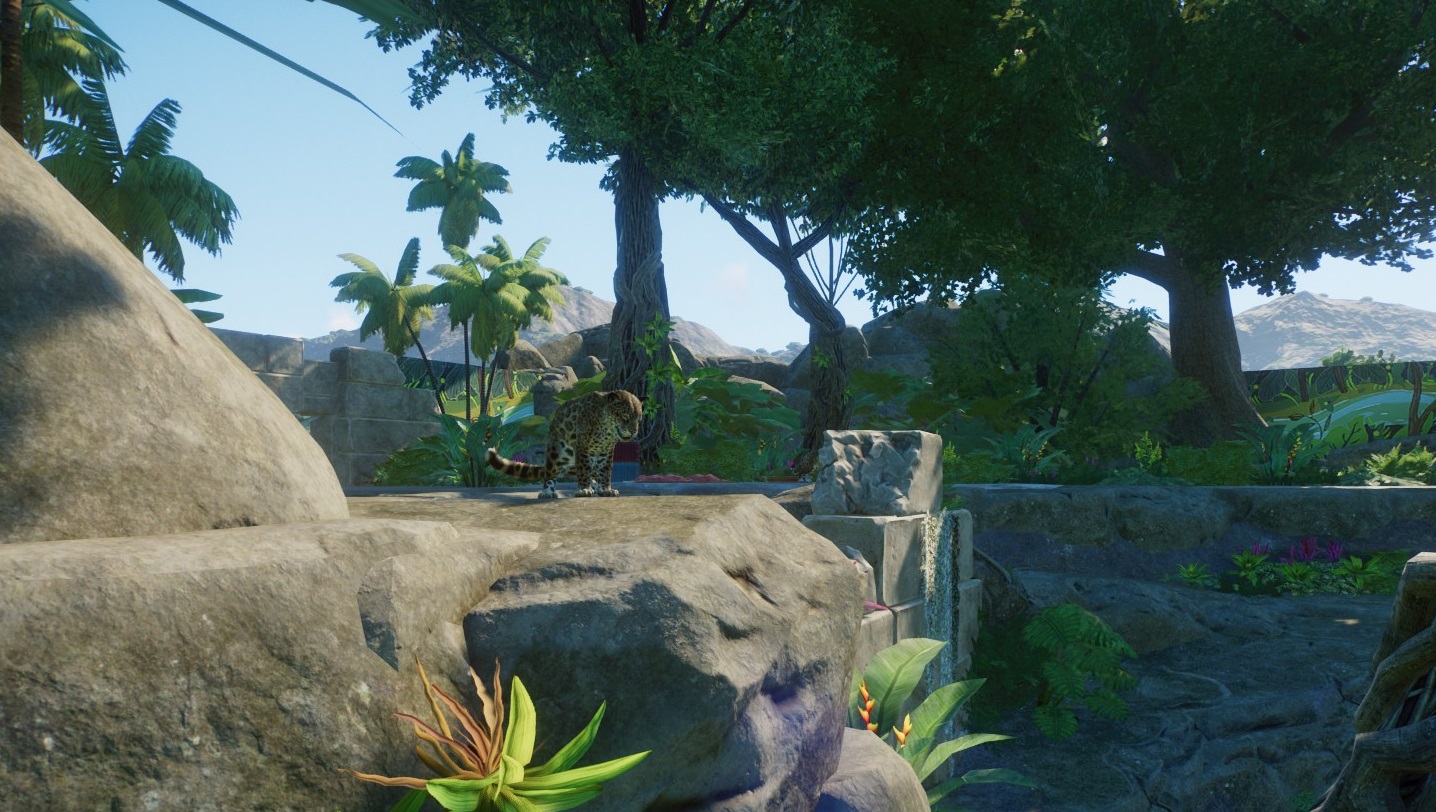
And straight ahead, the first exhibit: a sprawling habitat occupied by jaguars who are enjoying some yums and will probably have a nap in a few minutes.
Buddy’s Tropical Paradise doesn’t exist in the real world, of course. It’s my first attempt at fully functional, guest-attracting park in Planet Zoo, a simulator that allows you to do practically anything you can think of.
You can design your own habitats, enclosures, buildings and scenery. Fancy a monorail that laps the entire zoo? You can do that. Picturing a 1940s style Tarzan-themed jungle boat ride where visitors can see caiman, capuchin monkeys and jaguars up close? Start carving up the river, my friend!
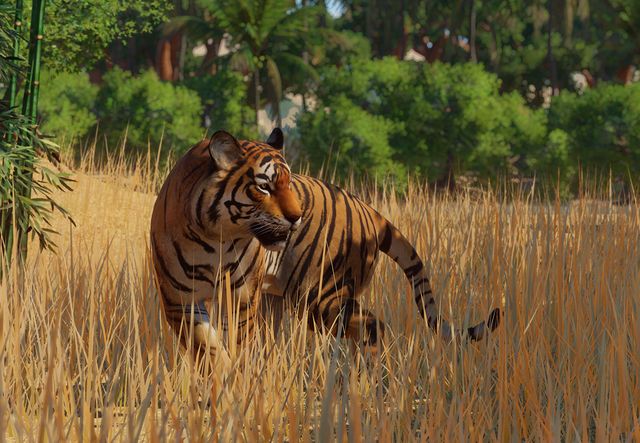
A Bengal tiger stalking the tall grass in Planet Zoo.
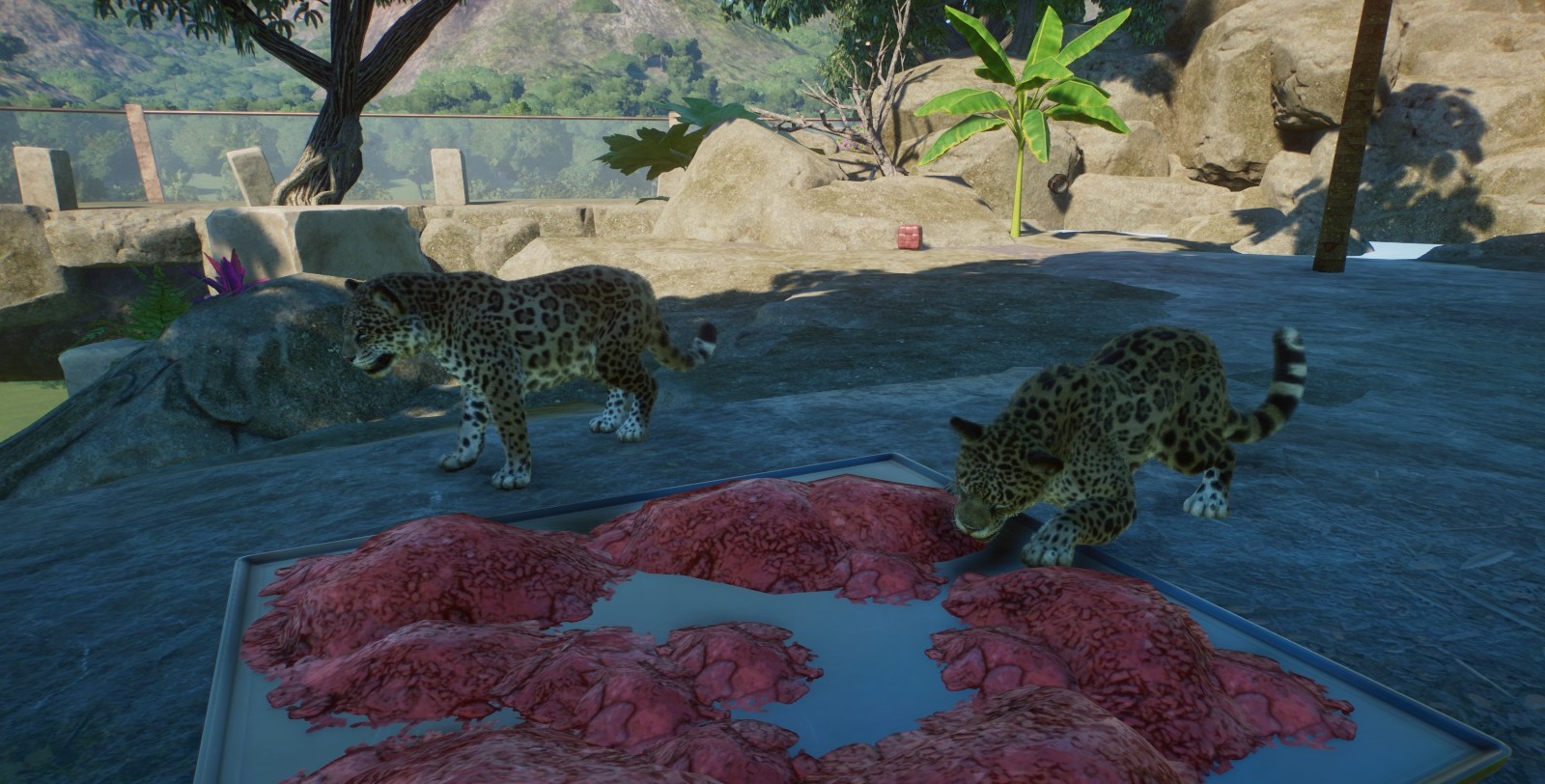
Lunch time in the jaguar habitat, followed by the all-important nap time.
As the zoo’s architect, you’re responsible for everything. You’ll need veterinary facilities, animal quarantine, keeper huts. You’ll need to staff your park with veterinarians, keepers, security officers, maintenance staff and mechanics.
And don’t forget the vendors to run the souvenir shops and man the food stalls, where your guests can grab hot dogs or cool off with slushies on a hot day.
A suitable home for your animals
Designing a habitat is about a lot more than reserving space for your animals. You’re tasked with picking the right barriers, mindful of which species can climb or leap great heights. A good habitat should reflect the animal’s home in the wild with appropriate flora, temperatures the species thrives in and a feeding system that mimics the way they’d naturally obtain food.
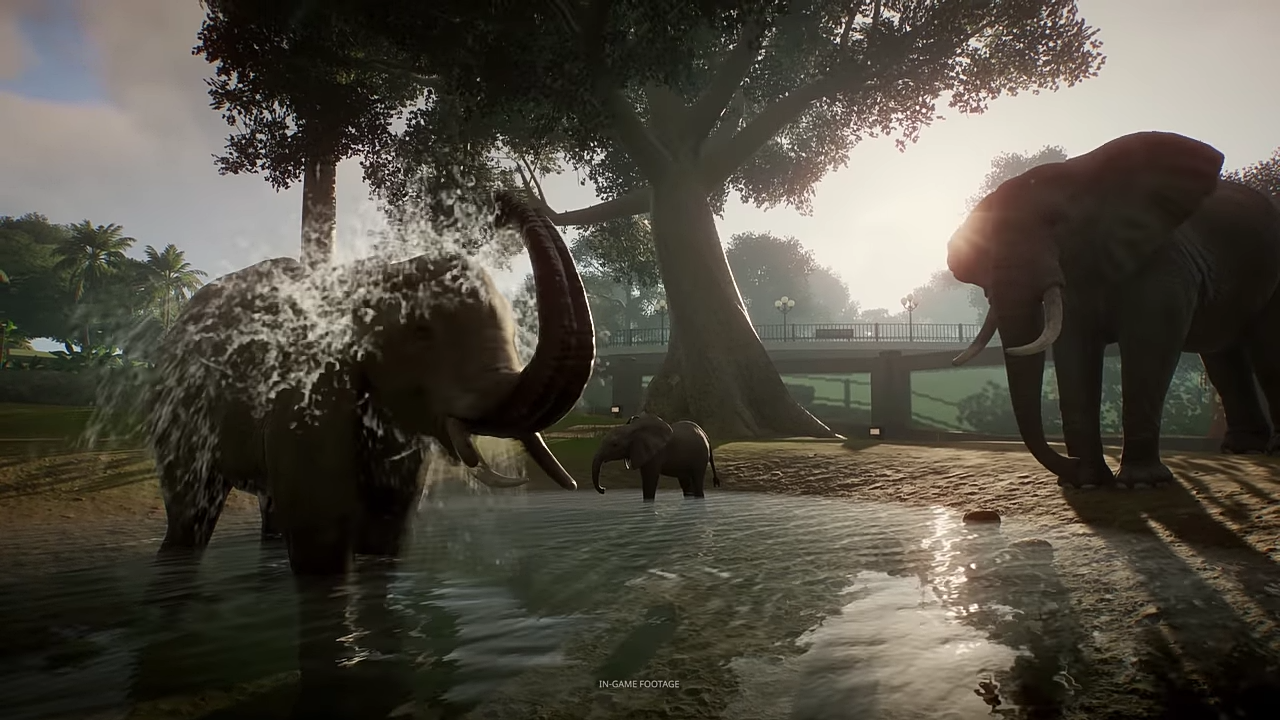
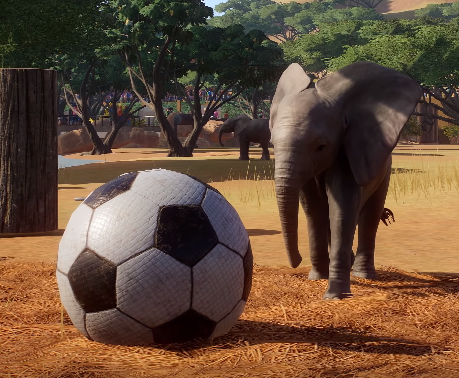
Elephants cool off in their enclosure in Planet Zoo. Every habitat must be designed with the right atmosphere, flora, terrain, shelter and enrichment appropriate for the species it houses.
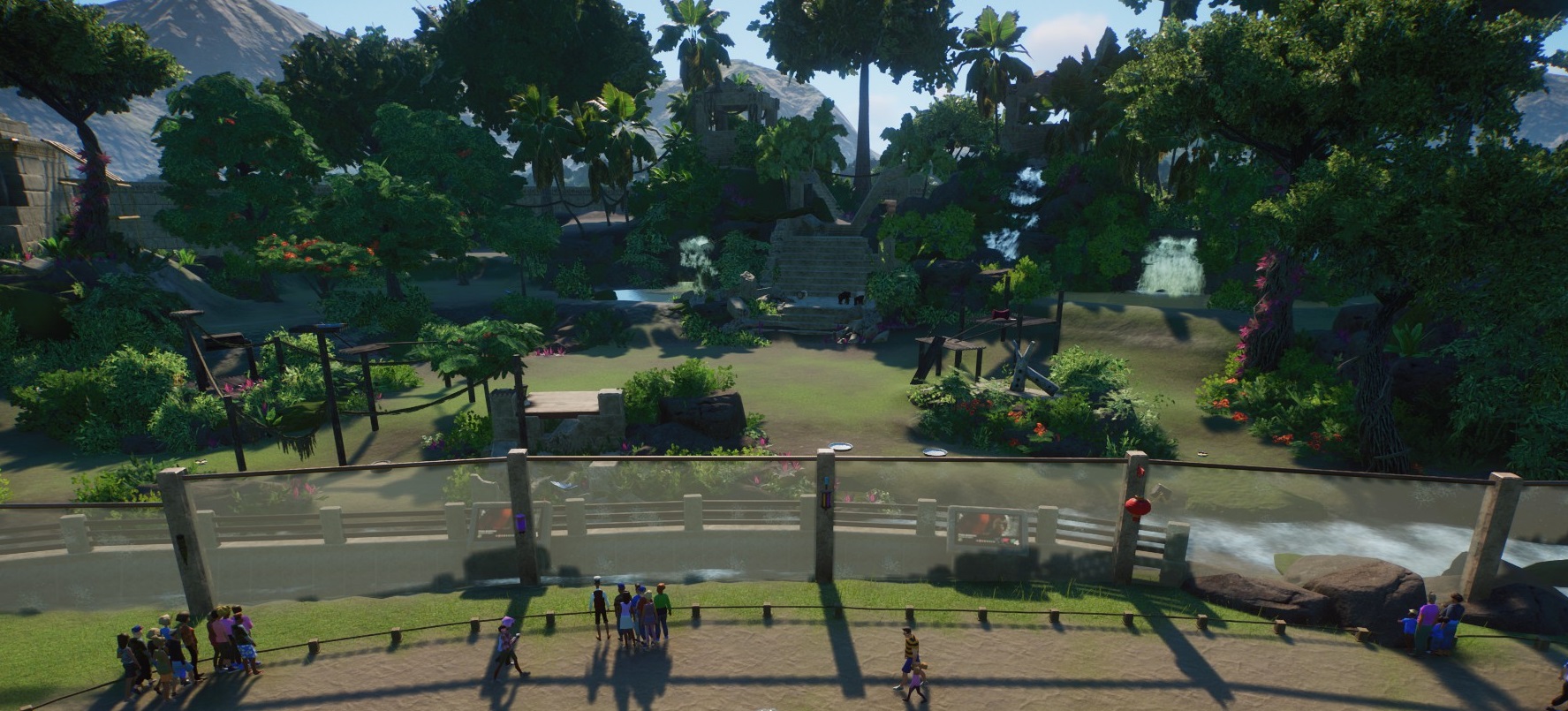
A wide view of my orangutan habitat. Two orangutans are at the base of the stone steps in the distance.
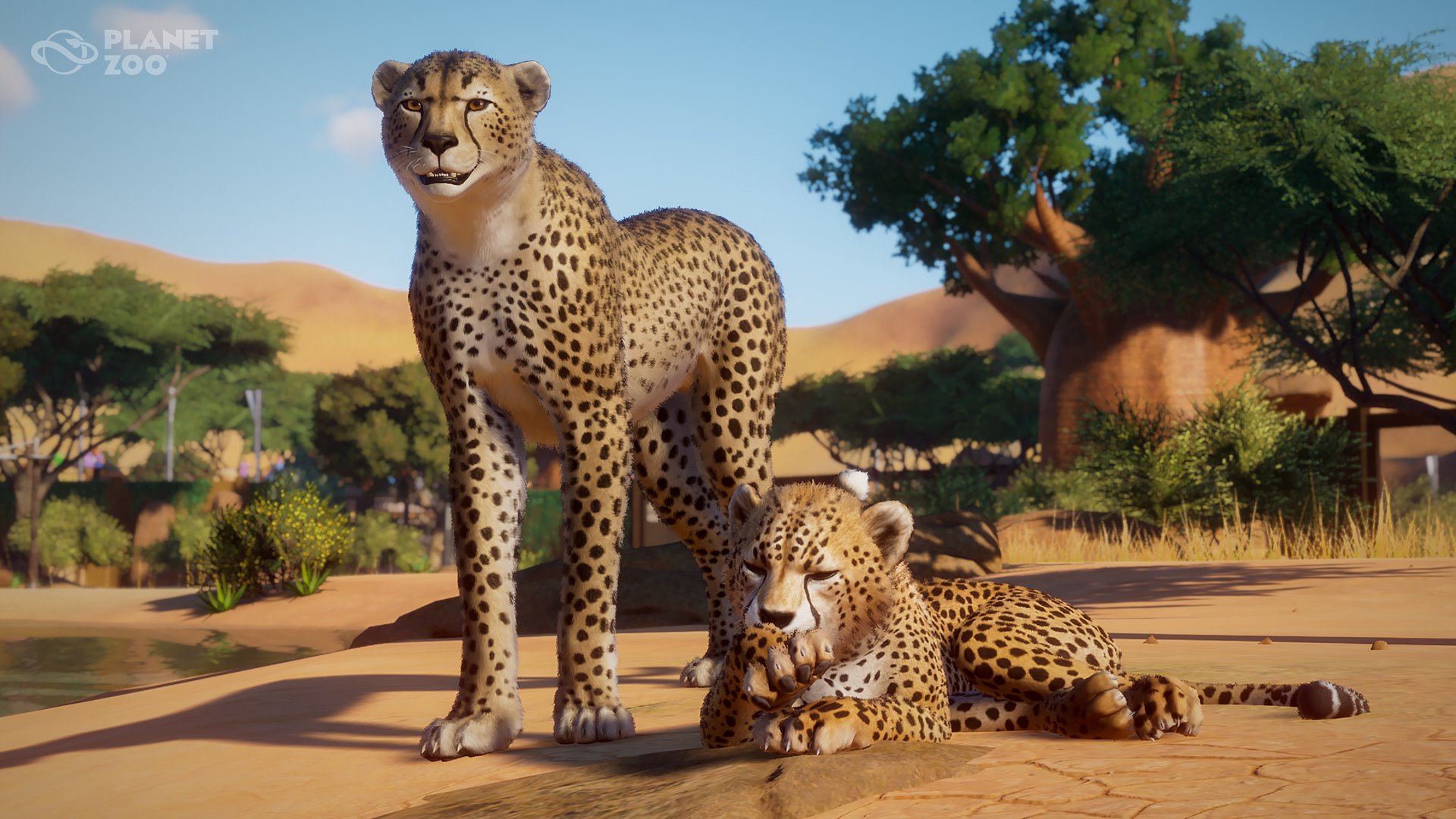
Cheetah sisters.
Then there’s enrichment. Trees for your monkeys to climb, ponds for your tigers to take a dip, bushes for your elephants to strip. Different species enjoy different toys and challenges. An ice block with meat in the middle would hit the spot for carnivores on a hot summer day, but your pandas will want bamboo.
Designing habitats and getting them just right is not only fun, it’s an intuitive way to learn about the needs of individual species and how they live.
The leopard learning incident
My first stab at building a leopard enclosure was a disaster. It looked pretty enough with its Hindu-inspired temple architecture and pond. There were plenty of scratching posts and trees that could withstand claws.
I installed a sprinkler to help the big cats cool off, designed a series of raised platforms for them to climb, and scattered enrichment items all over the habitat. The leopards had balls to bat around, boxes to sit in, rubbing pads, logs and rocks to climb, and plenty of cover and shade.
But when I had the leopards brought into the zoo, through quarantine and into their exhibit, I realized you can’t just design a home for animals from an aesthetic perspective. I’d used several plant and tree species that weren’t native to leopard habitats, the terrain was wrong and I hadn’t paid any mind to ambient temperature.
Making those mistakes was truly educational. When your animals aren’t happy in Planet Zoo, protesters show up, and it’s up to you to read the alerts about where you went wrong and how to remedy your mistakes. It’s an intuitive and fun way to learn about each species and the environments they thrive in.
The escaped jaguar
I’m still learning the ropes, although I do have a basic knowledge of the way the game is designed thanks to some time playing Frontier’s theme park building game, Planet Coaster. The first time I tried to build a jaguar enclosure, I forgot to wall off a viewing cave with protective glass, which my guests did not appreciate.
Even though jaguars don’t like to confront humans, a big cat is a big cat, and the game sent me urgent warnings as people ran for the exits. When I found the escaped jag, he was lounging not far from his enclosure, watching people freak out.
Enrichment is a key aspect of habitat design. Toys, puzzles, obstacles, climbing platforms for arboreal species, ponds for animals who like to get wet — they’re all necessary to keep animals healthy and happy.
In real life it’d be a disaster, but I was able to revert to a previous save, make sure the viewing cave was sufficiently protected, and this time around I placed only two jaguars — a male and a female — in the large enclosure.
After a while, while I was tinkering with an exhibit meant for capuchin monkeys, the game sent me an alert: the female jaguar was pregnant! She gave birth to two energetic, curious cubs who are currently having fun chasing each other around the enclosure and going for dips in their pond.
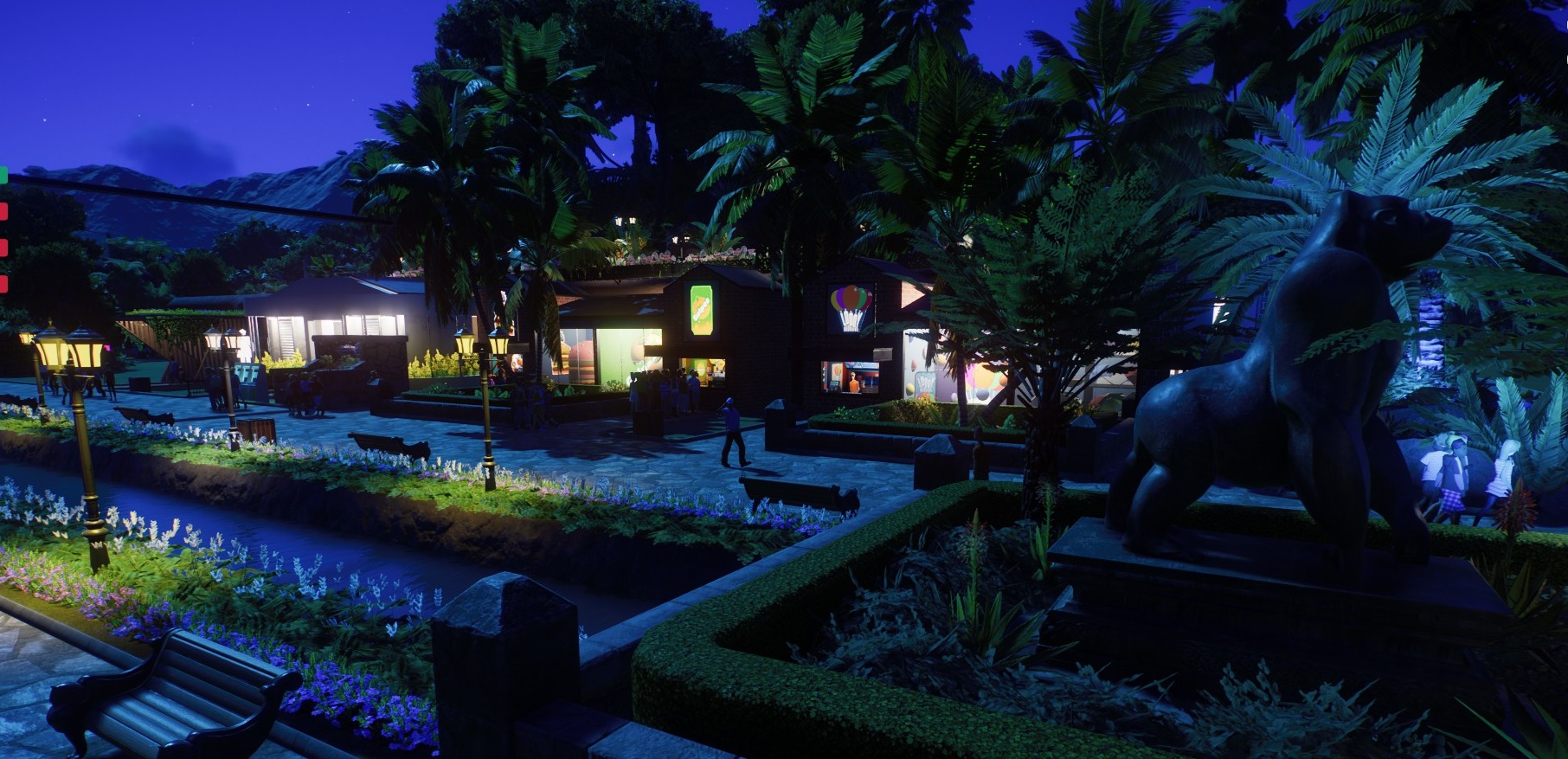
Part of the main boulevard in Buddy’s Tropical Paradise, viewed at night. Players are responsible for everything you see here — lighting, shops, flowers and plants, benches, waste baskets and more.
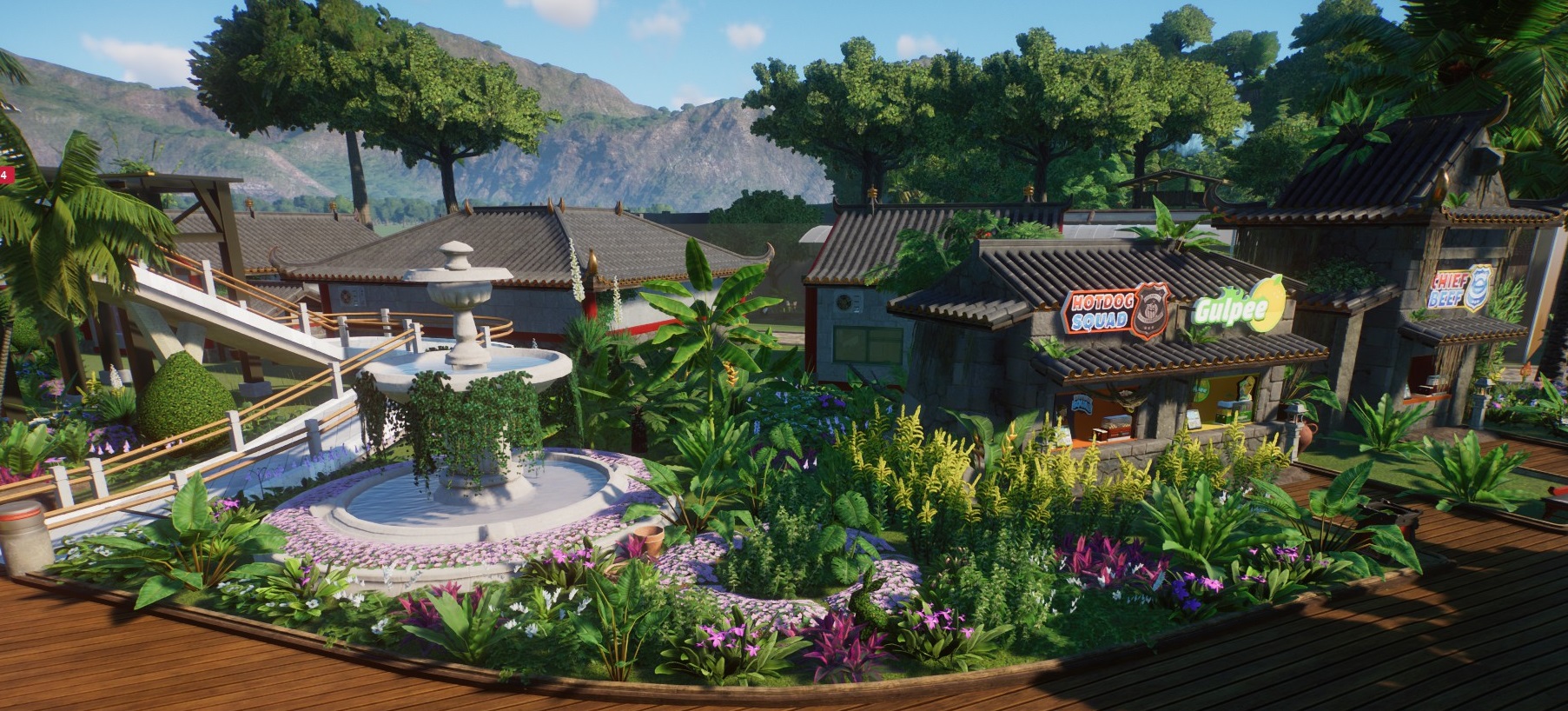
Shops and a monorail station in an unfinished Asia-themed area of the zoo.
As in real life, the game has you source animals from an international pool, with information on breeding and genetics so you can contribute to conservation. When you adopt animals, their first stop is the veterinary facilities for examination, then quarantine. When they pass quarantine, you can have your staff release them into their enclosures.
It took me several hours to familiarize myself with the basics, design an entrance and a main boulevard for the guests, create some tiered gardens with eateries and shops, and get my jaguar and orangutan exhibits up and running.
My monorail currently runs out of track a quarter of the way through the park, and my river boat ride looks pretty cool, with dense jungle, towering trees and the ruins of Mayan temples not far from shore, but completing it will require appropriate barriers to keep the animals in as well as building out more scenery.
A jaguar in her habitat.
I’ve got my sights set on an elephant exhibit next. It will be necessarily huge, so it’s good to reserve the land early and plan smaller exhibits and facilities around it. I’d also like to put the elephants, lions, zebra, giraffes etc into one Africa-themed section of the park, while the tigers, giant pandas and snow monkeys will be housed in an Asia-themed section, with buildings that reflect the architectural styles of countries like Japan and China.
There are also aquatic exhibits, animals for your own reptile house and aviaries. Those enclosures are more complex than the relatively straightforward orangutan exhibit, for example, so I’ll have to spend some time figuring out what makes a good home for peacocks, sharks and komodo dragons.
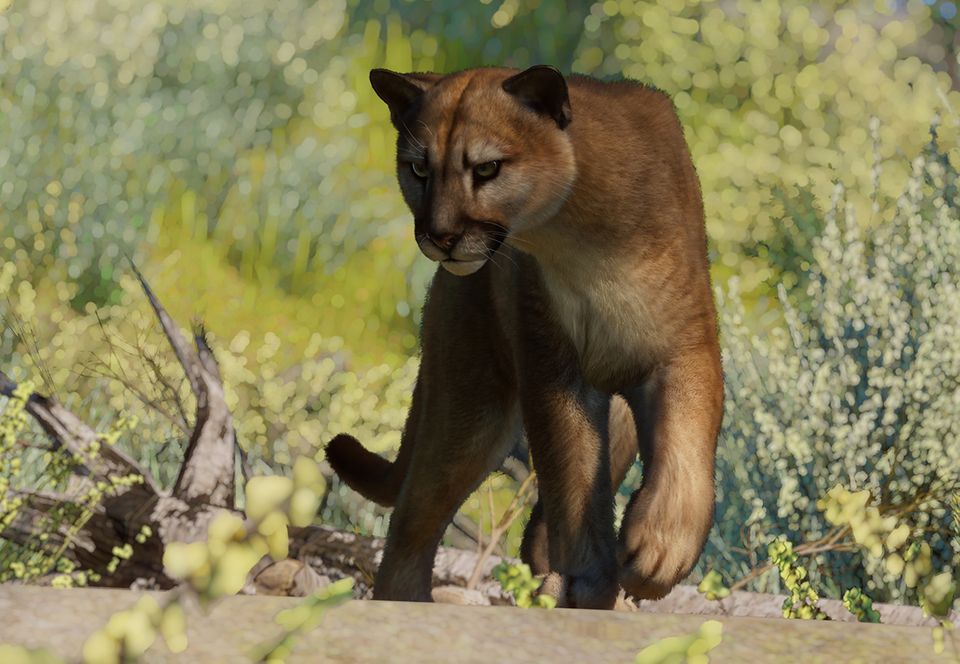
So far I’ve resisted the temptation to make one giant felid park, with snow leopards, pumas and cheetahs joining the tigers, lions, jaguars and others. Of course I did name it Buddy’s Tropical Paradise, so I may be forced down the all-cat road if Bud gets his say.
Planet Zoo is not a traditional video game. There are no winners or losers, and there’s no “end state” unless you intentionally include one.
It’s more relaxing and much slower-paced than your typical game, and it’s a great feeling when you’ve managed to take something from your imagination and perfect the design. When you want to check your progress or just admire your own work, you can set the camera to follow guests and watch as people stroll through your zoo, taking in the sights and sounds.
In that sense it’s more like a virtual model train set or living diorama. You can load up the game and tinker with your zoo when you’ve got a spare 15 minutes, or spend a few hours getting absorbed in the finer details of how to keep pangolin and red pandas happy.
Planet Zoo is appropriate for all ages, although its depth and complexity would probably be a lot for younger kids. In that case, it’s probably best to have an adult guide them so they understand the game is built on interlocking systems: exhibits need power and water, shops need staff, veterinary surgeries need veterinarians and so on.
It’ll have enormous appeal to kids who enjoy Lego, Minecraft and other building games, so if you’ve got a little builder in your life, this could be a good fit. But make no mistake, there’s a lot here for adults to enjoy too.
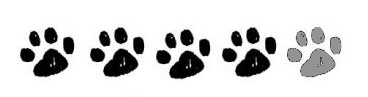
PITB verdict: Four out of five paws!
The only thing keeping Planet Zoo back from a five-paw rating is the DLC (downloadable content) scheme, which requires users to pay extra for certain “packs” containing extra animals, scenery pieces and scenarios. That’s a problem plaguing the larger video game industry, but if you wait for a sale, the normally $44.95 game can be had for as low as $11.24 on Steam. DLC is likewise discounted. Steam’s summer sale is a great opportunity to get games like this for a fraction of their normal price. This year’s summer sale is scheduled for June 27, though it’s possible Planet Zoo could be put on sale before then as well.
The protesting felines, tired of being cast as villains, demanded “cuddlier representation” in movies and TV.
LOS ANGELES — Marching in a broad circle outside the Universal Studios headquarters on Monday, a group of about 200 cats demanded “more cuddly representation” in television and film.
The felid contingent included house cats, pumas, bobcats, tigers, lions, leopards and even a few jaguars, each holding signs with messages like “Cats are more than claws!” and “Stop The Stereotyping!”
“What do we want?” a house cat shouted into a megaphone.
“Cuddlier representation!” the crowd of cats shouted.
“When do we want it!”
“After our nap!” they replied in unison.
Monday’s protest was prompted by Universal Studios’ 2022 thriller, Beast, but protest organizer Buddy the Cat said the felid group was protesting “decades of tropes and injustices committed against cats by Hollywood and TV.” Examples include the undead cat in Stephen King’s Pet Sematary, the rampaging lion in Dutch horror-comedy film Prey (called Uncaged in the US), the many murderous felids in the CBS series Zoo, and Jackson Galaxy’s My Cat From Hell.
“We’re tired of always being cast as villains while dogs are the heroes. Take a cat like me, for instance,” Buddy told a reporter. “It’s easy to mistake me, with my razor sharp claws and ripped physique, for a threat to humans. But really I’m just a cuddly little guy who likes chin scratches.”
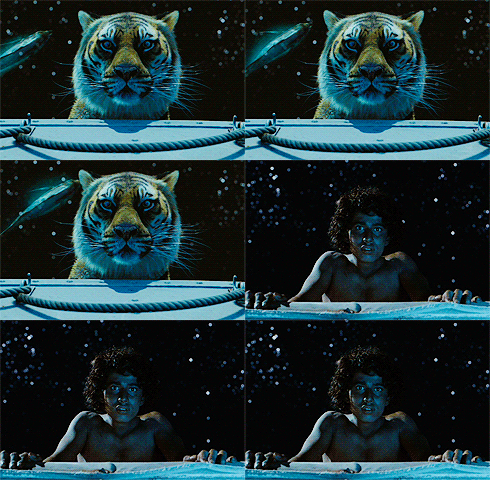
Linus, a 14-year-old Bengal tiger who starred as Richard Parker in the 2012 hit Life of Pi, said he was a young actor who didn’t know better when he agreed to portray the threatening antagonist.
“Now that I’m older and I have all this Frosted Flakes money coming in, I can be picky about the roles I accept and only choose movies I think will be Grrreat!” he told an interviewer. “But what about the next young tiger, or the jaguar fresh off the boat from the Amazon, who doesn’t have the power to tell the director a certain scene is offensive?”
Linus also took issue with the script, in which the writers have him refusing to share fish with Pi.
“Did you see the boat? It was filled with fish! What am I, some sort of glutton who’s gonna eat 200 pounds of fish while the human starves?” Linus asked, bewildered. “I mean, according to Hollywood we’re angry, dangerous, murderous criminals and we stuff our faces all the time. No wonder people are scared of us!”
Prey, also known as Uncaged, depicts an angry lion rampaging through Amsterdam and eating pretty much everyone.
Beast stars British actor Idris Elba and tells the story of a widowed medical doctor who takes his two daughters to South Africa, where they stay with a family friend and embark on a tour of the native wildlife.
Unbeknownst to them, an adult male lion is on a rampage after a team of poachers entered the reserve the previous night and slaughtered his entire pride. While Elba’s character, his two daughters and his friend (Sharlto Copley) explore the reserve, they discover the mutilated remains of an entire village’s population and eventually come face to face with the murderous lion.
“What’s all this barney, then?” Elba said when asked about the felid protest. “Well that’s unfortunate, innit, mate? I played a tiger in The Jungle Book, a proper tiger. I love cats.”
The actor, who rocketed to fame off the strength of his portrayals of Stringer Bell in American police drama The Wire, the title character in British detective thriller Luther, as well as major roles in franchises like the Marvel Cinematic Universe, the Star Trek reboot movies and science fiction action-adventure Pacific Rim, said he’s taken the cat’s criticism to heart.
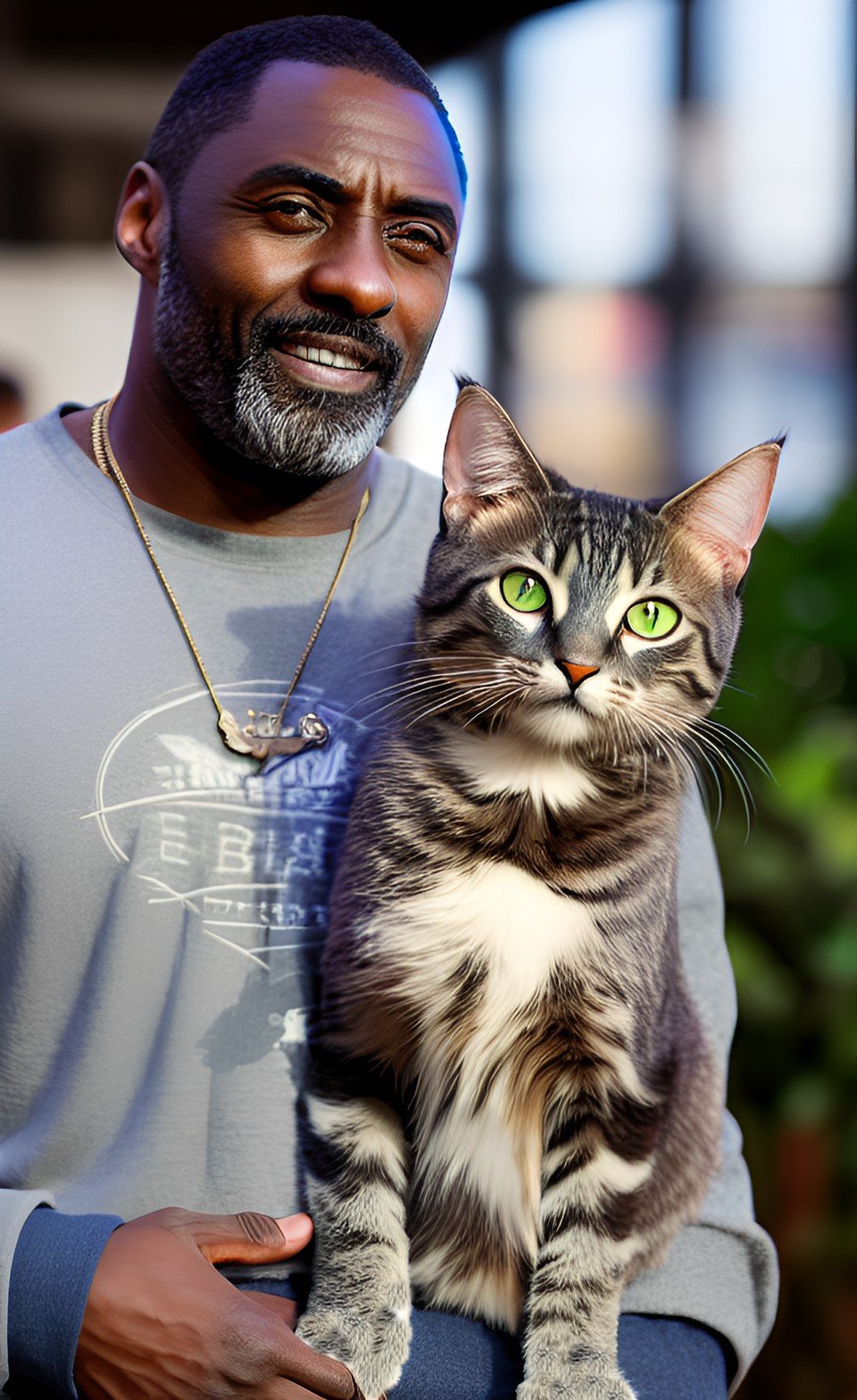
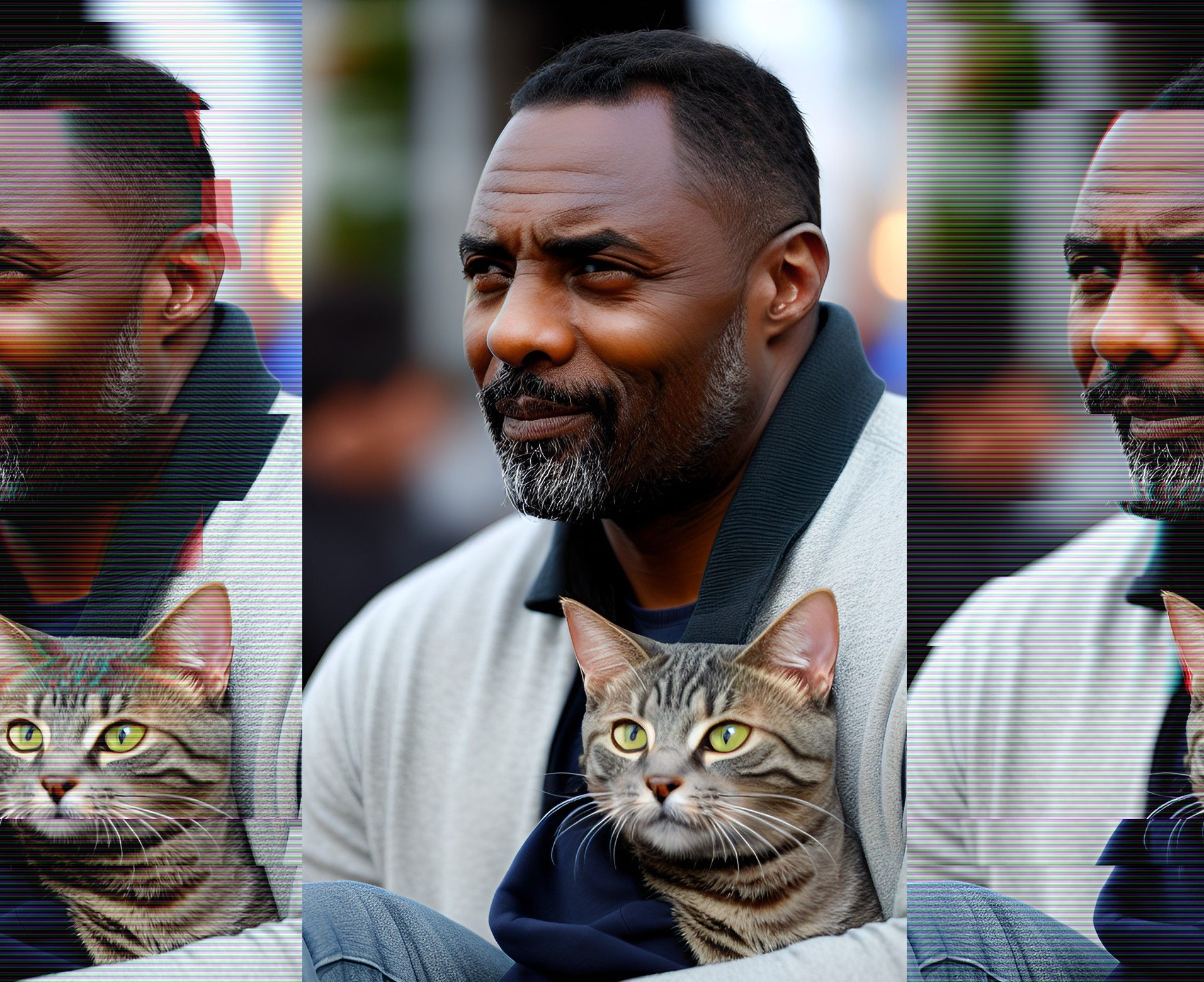
“Buddy’s a good bloke,” says Elba, pictured with his feline friend.
“Me and me mate Buddy, we like to grab a pint on the regular, d’ya know what I mean?” Elba said. “This tosh with the movies, it’s gotta stop. Me mate Buddy is a good bloke, innit? So if he says Hollywood has to have more positive portrayal of cats, then that’s what we’ll do.”
In addition to their negative portrayal in films, which felids likened to the offensive portrayal of Italian-Americans as mafia figures, many cats cried foul at the idea that one of their kind would harm the beloved South African actor Sharlto Copley.
“That’s a very offensive portrayal,” said Chonkmatic the Magnificent, King of All Cats. “Sharlto Copley is the guy who made District 9, about aliens who eat cat food. Everyone knows cats love District 9. We wouldn’t lay a claw on Sharlto!”
Authorities believe the person or people who stole the monkeys intend to sell them as pets or breeding animals.
UPDATE, 2/1/2023: A tip led police to an empty home in Lancaster, Texas, about 15 miles from the zoo. The missing tamarins were found inside a closet and were unharmed, per CNN. They were returned to the zoo and examined by veterinarians.
Police still want to speak to an unidentified man (see story below) who was seen on zoo grounds, but they haven’t said what the man was doing or how he may be connected to the thefts. The abduction of the tamarins follows two other incidents of breached enclosures at the zoo, and the theft of 12 squirrel monkeys from Zoosiana in Broussard, Louisiana, this weekend.
Original story, 1/31/2023:
Dallas police released a photo of a “person of interest” they’d like to speak to after a pair of emperor tamarin monkeys went missing from their enclosure in the Dallas Zoo, the latest of three incidents in which animal habitats at the zoo were breached by human hands.
The first incident happened on Jan. 13 when zookeepers noticed a three-year-old clouded leopard named Nova was missing from her enclosure. They found a breach in the mesh netting that serves as one of enclosure barriers, and said it was a clean, intentional cut with a blade, not from the animals.
After a frantic search — and multiple appeals to the public informing people the leopard was not dangerous and should not be shot — zookeepers found Nova hiding in a tree on the zoo grounds, not far from her enclosure. Nova’s sister, Luna, lives in the same enclosure and remained there.
That same day, staff at the zoo also found another breach, this time at the langur exhibit. Langurs are old-world, leaf-eating monkeys native to Asia. None of the monkeys were missing, but the discovery strengthened the suspicion that someone had tried to steal Nova and at least one monkey, but were not successful.
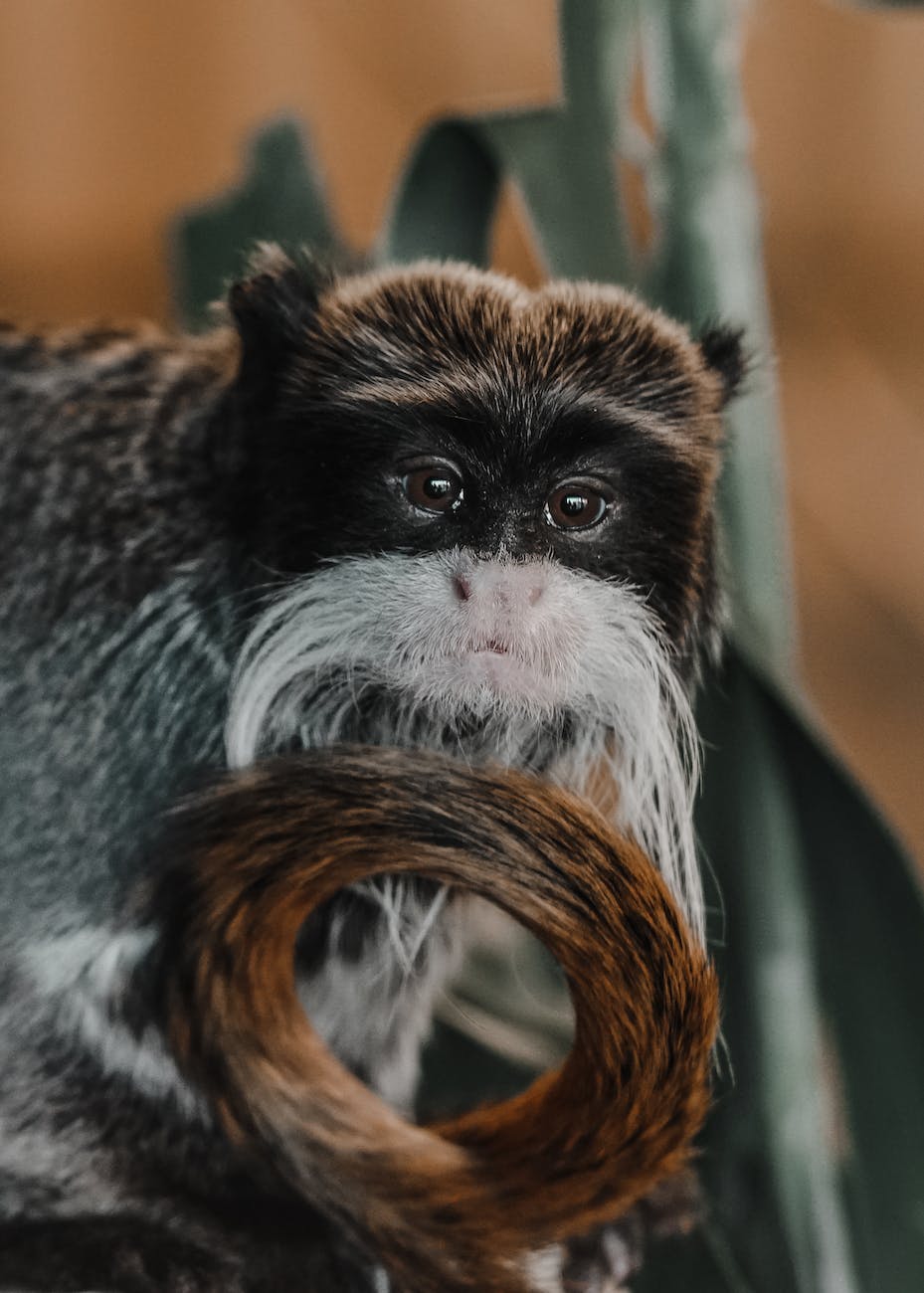
Now it appears that same person or a copycat has been successful in another habitat. On Jan. 30, zookeepers found a breach in a habitat that hold’s the zoo’s emperor tamarin monkeys. Two of the monkeys were missing.
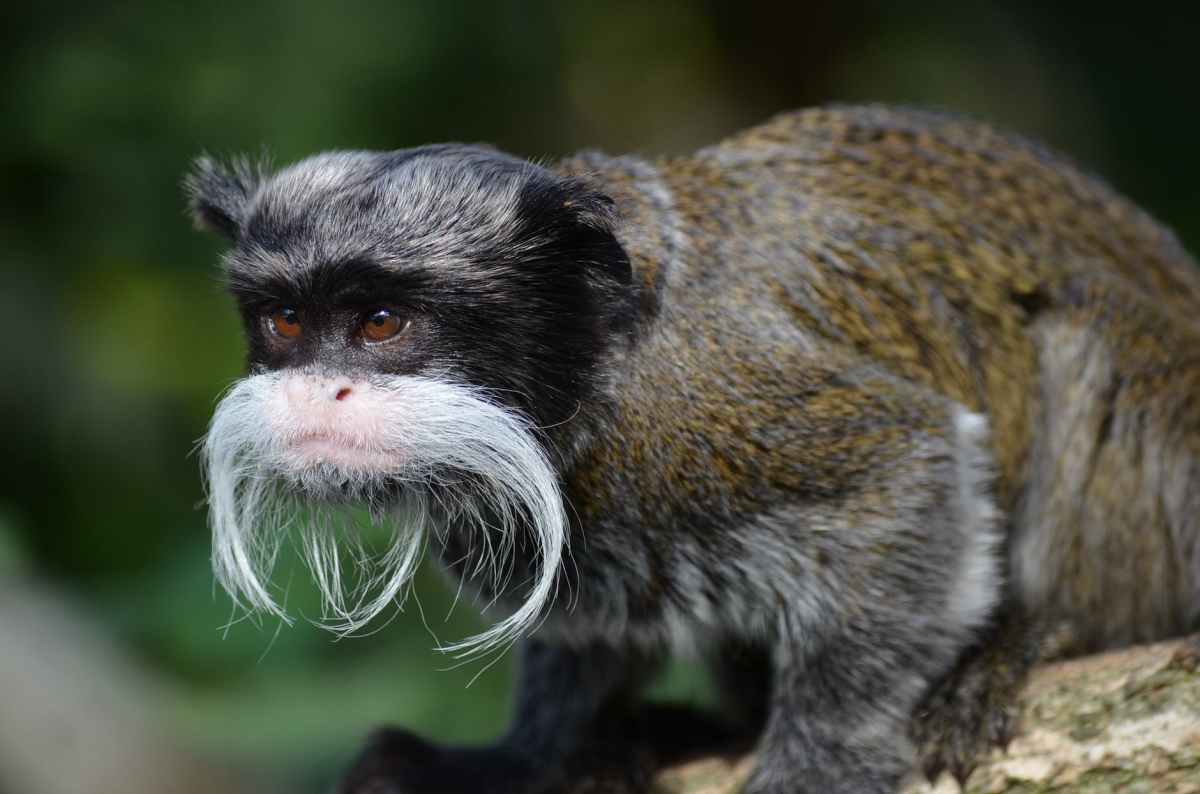
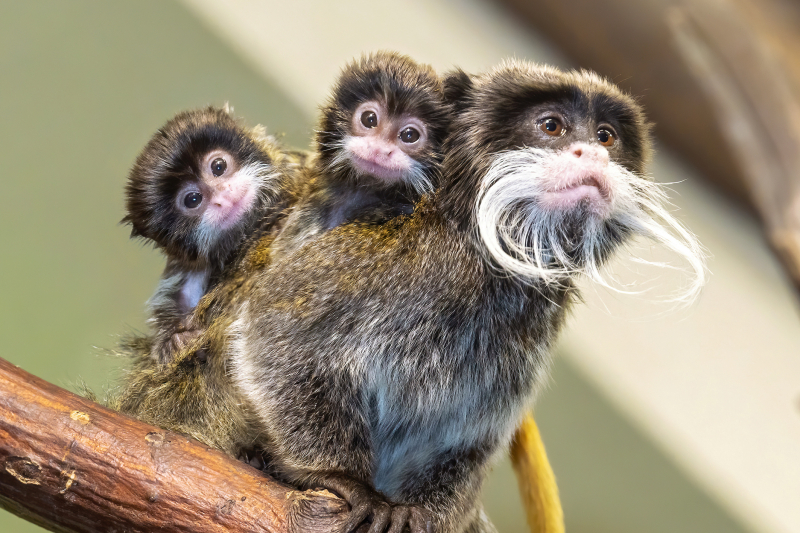
Tamarins are tiny arboreal new world monkeys that have become popular pets due to “influencers” popularizing them on sites like Youtube and celebrities purchasing them.
A tamarin mother with her babies. Primate babies are virtually attached to their mothers for the first years of their lives
There are an estimated 15,000 monkeys living as pets in the US, and some species fetch up to $7,500 as infants, when they’re violently “pulled” from their mothers when they’re just days old and sold. Most are temporary pets, lasting up to two years before docile, adorable infants become destructive, resentful juveniles and the “owners” decide to cut their losses. Buying monkeys as pets and subsequently abandoning them has become so common that sanctuary spots are at a premium, with a handful of sanctuaries taking thousands of monkeys annually.
Some people buy new babies every year or two, shipping the “old” ones off to sanctuaries — or simply dumping them in the woods where they don’t know how to fend for themselves — and repeating the process of infantalizing newly-purchased monkeys. Macaques, capuchins, marmosets and tamarins are the most popular monkeys kept as pets.
Despite the appeal to some people, humans cannot meet the social or environmental needs of monkeys, who naturally live in troops with complex social hierarchies and relationships.
“Monkeys are not surrogate children, and they’re not little people,” the Humane Society’s Debbie Leahy told the New York Post in a 2013 story.
“Pulling” monkeys from their mothers traumatizes infants and the mothers, and there is a wealth of data from primate maternal deprivation studies — going all the way back to the cruel experiments of psychologist Harry Harlow — documenting the psychological damage done to the animals when they’re removed from their mothers and troops.
“If you try to keep them as pets you’re creating a mentally disturbed animal in 99.9 percent of the cases,” Kevin Wright, director of conservation, science and sanctuary at Phoenix Zoo told National Geographic. “The animal will never be able to fit in any other home. Never learn how to get along with other monkeys. And, more often than not, will end up with a lot of behavioral traits that are self-destructive.”
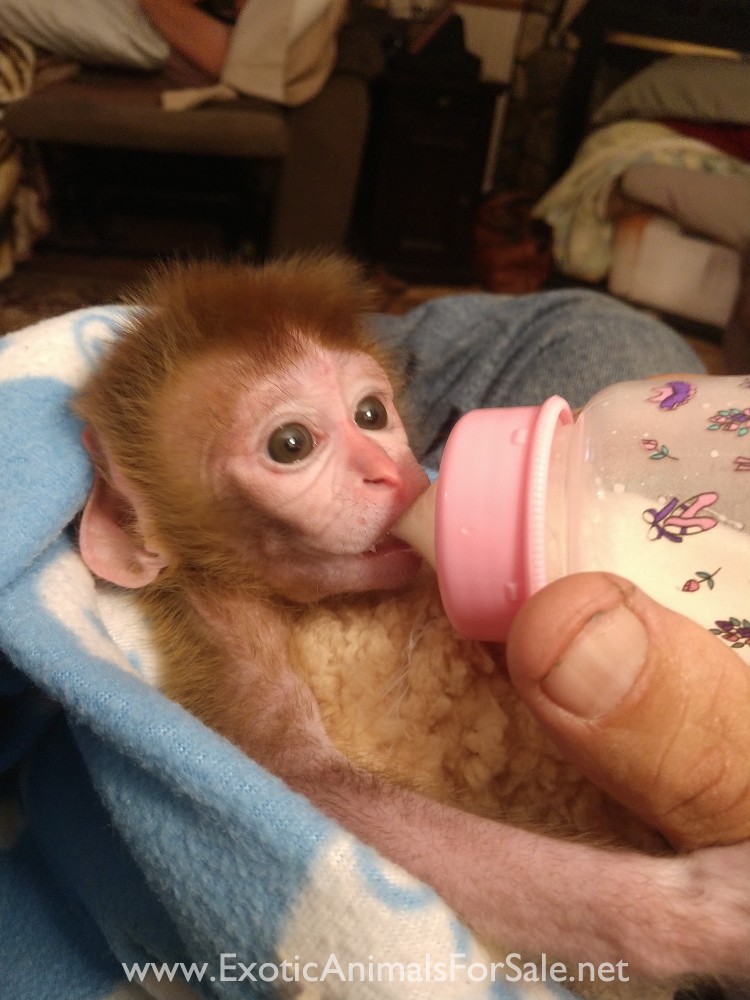
A rhesus monkey baby, already separated from its mother at just a few days old.
Tamarins, which are often called “pocket monkeys” by people who keep them as pets, can fetch up to $5,000 apiece, generally less than larger primates like capuchins or macaques. Demand for macaques has skyrocketed since the pandemic, as laboratories test various drugs on the old world monkeys, and prices for infants have risen as well.
Despite officials at Dallas Zoo installing additional cameras and increasingly patrols on the grounds at night, an intruder or intruders were able to evade detection and successfully remove the animals some time between Sunday night and Monday morning.
Police have released an image of a man who was seen strolling through the zoo and have asked for the public’s help identifying him so detectives can speak with him. Police did not say why they believe the man, who is pictured wearing a hooded jacket and eating Doritos, would have information on the missing animals or what his role might be.
Dallas Police are looking for the public’s help in identifying the pictured individual. Detectives are looking to speak with the man in regard to the two tamarin monkeys missing from the Dallas Zoo. Anyone with information- call 214-671-4509. pic.twitter.com/VVvvHFAdgJ
The 25-pound wildcat was found late on Friday afternoon. Now investigators are trying to determine who freed her and why.
A clouded leopard who went missing from her enclosure was intentionally let loose according to police, who have opened a criminal investigation.
The medium-size wildcat, whose species is native to the foothills of the Himalayas, escaped from her enclosure some time between late Thursday night and Friday morning, prompting a zoo-wide shutdown and a massive coordinated search. During that time, zoo staff emphasized to local press — and in social media posts — that clouded leopards are not aggressive toward people and the escaped cat wasn’t a threat.
She was eventually found safe and unharmed on zoo grounds, hiding in a tree not far from her enclosure, at about 4:40 p.m. on Friday. She was secured within 35 minutes, zoo officials told the Fort Worth Star-Telegram.
But that’s not the end of the saga. Zoo staff say the leopard, a three-year-old named Nova, didn’t escape on her own — a person or persons breached the two-story exhibit by cutting through the mesh fence. Nova’s sister, Luna, lives in the same enclosure and did not leave the area.
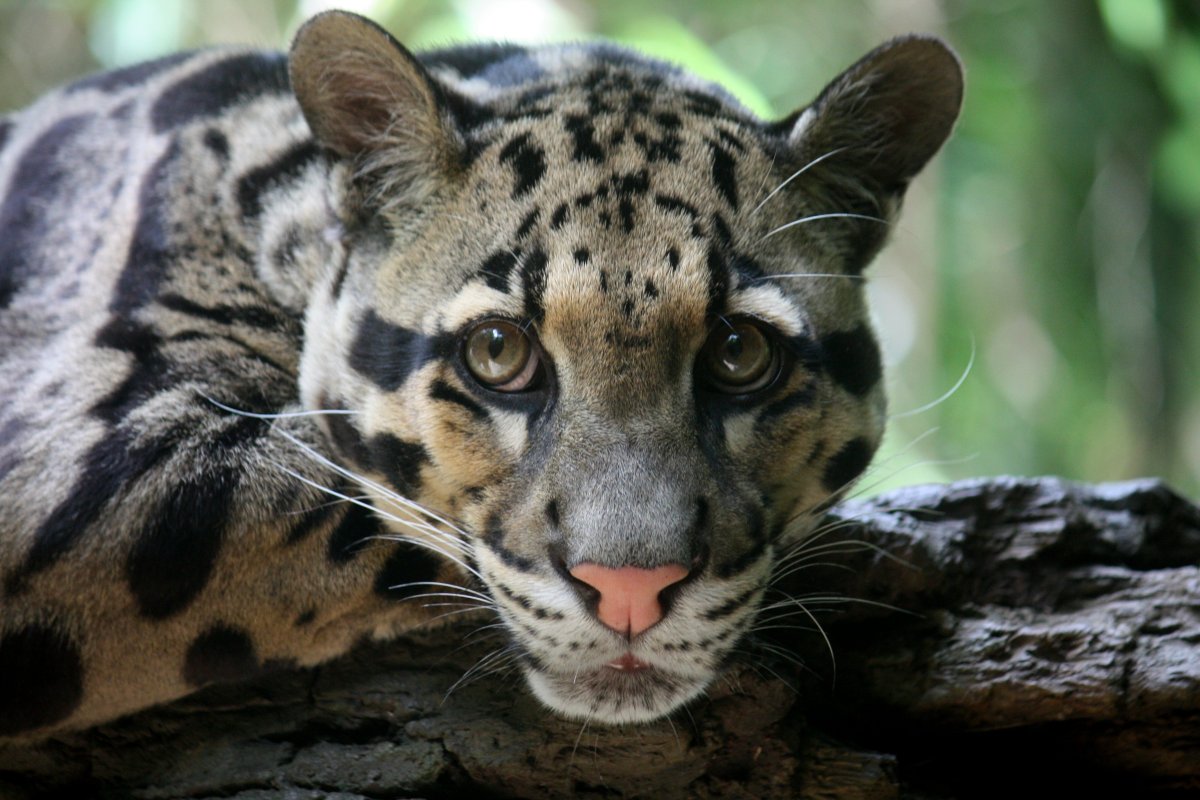
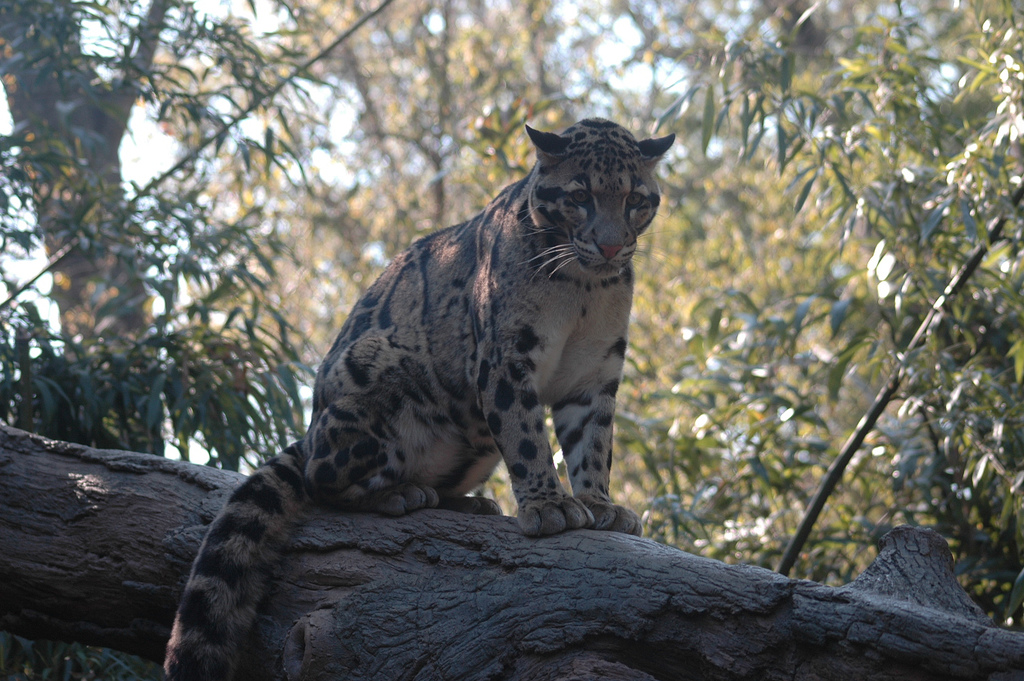
A clouded leopard. Credit: Wikimedia Commons
Now investigators are trying to determine if the people responsible for breaching the enclosure were committing an act of vandalism or intended to take the 25-pound wildcat.
“We found a suspicious opening in the habitat wall in front of the exhibit,” a Dallas Zoo official told reporters on Friday afternoon. “It was clear that this opening was not exhibit failure and it wasn’t keeper error.”
Police are reviewing surveillance footage and looking for clues in the 106-acre zoological park, which is located about three miles south of downtown Dallas and is home to more than 2,000 animals.
“It is their (Dallas Zoo officials’) belief and it is our belief that this was an intentional act, so we have started a criminal investigation,” Sgt. Warren Mitchell of the Dallas Police Department said.
Harrison Edell, vice president of animal care and conservation at the Dallas Zoo, warned against anyone attempting to steal zoo animals.
“This is a cat of conservation concern,” Edell said. “This is not a pet — she’s a critically important member of our family at Dallas Zoo.”
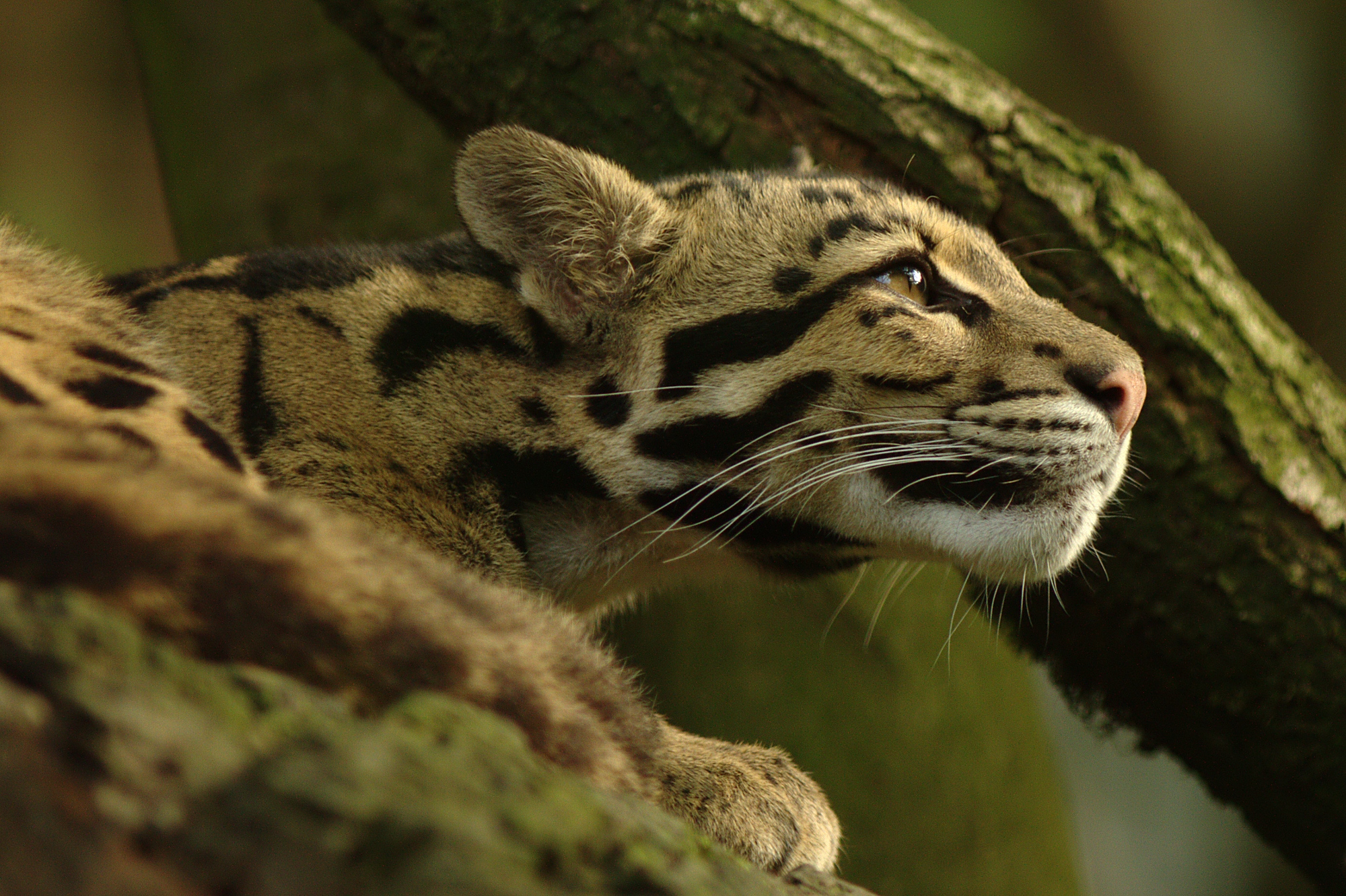
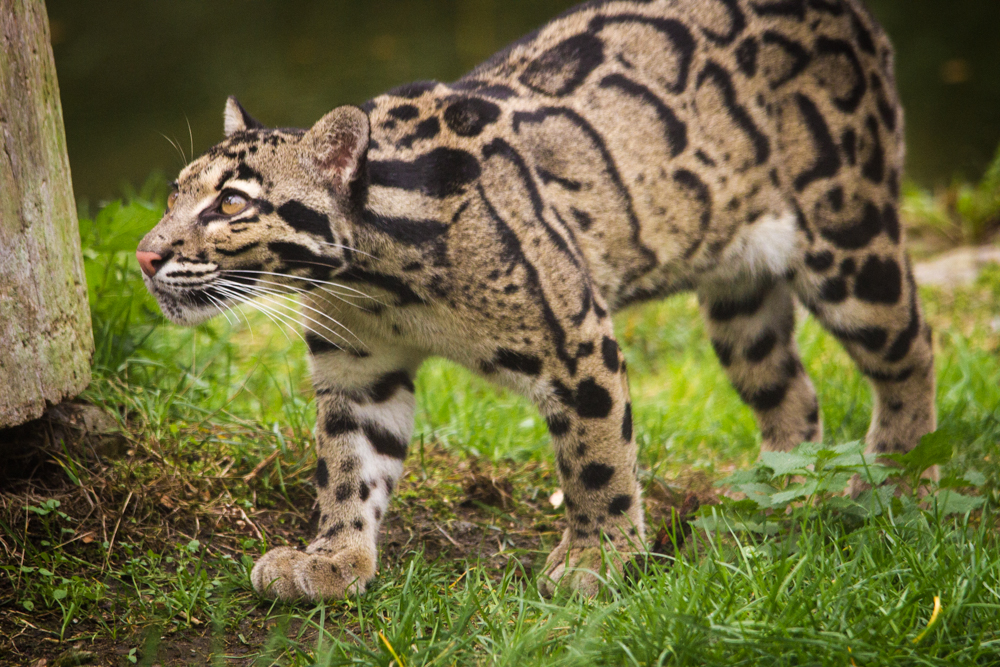
Clouded leopards diverged from a common ancestor shared with big cats, but typically don’t grow to more than 30 or 40 pounds. Credit: Wikimedia Commons
There are fewer than 10,000 clouded leopards left in the wild. In captivity, the wildcats live for 11 years on average. Credit: Wikimedia Commons





 Pain In The Bud