This Animal Was Going To Be Someone’s Lunch. Now It’s A Beloved Star

Can an ocean-dwelling invertebrate make music? Mattias Krantz thought so. Proving his point took months of work, creative thinking and perseverance.

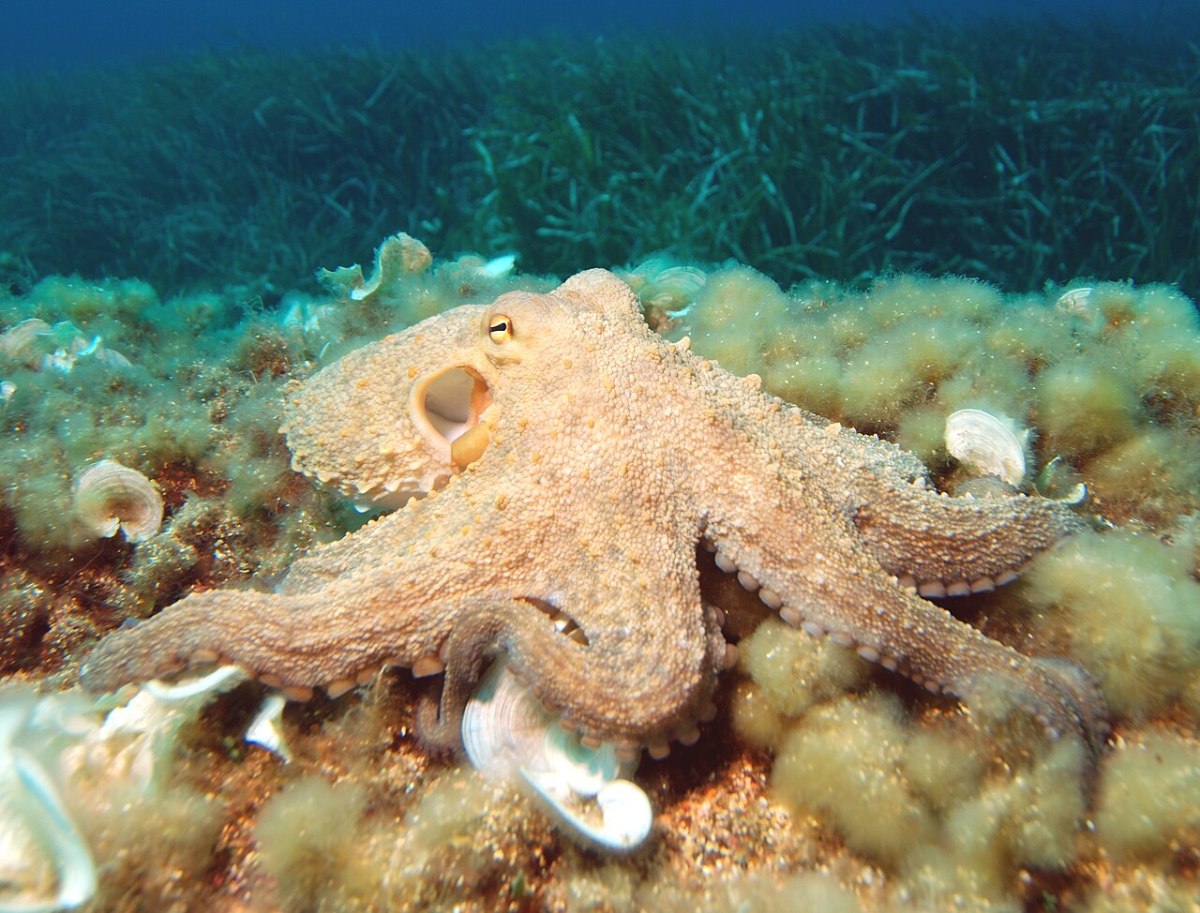
Mattias Krantz got Tako from a Japanese seafood market.

“That guy,” he told the person manning the stall, pointing to a common octopus sitting in shallow water with others of its kind, not even given room to swim before it was to become someone’s meal.

It is the ultimate as far as random interventions of fate go, and I kept thinking about Tako’s almost-end on a plate while watching musician Mattias Krantz teach the clever animal how to play piano.

Octopus are smart. Comparing animal intelligence to human intelligence is always a flawed and imprecise effort, not least because of differences in psychology and evolution, but the eight-armed invertebrates have cognitive abilities on par with humans at three years old. That is to say, some of their cognitive gifts exceed those of small children, some fall short, and some are about equal. It’s always going to be apples to oranges between species.

Octopus learn quickly simply by observing. They remember individual people even if they haven’t seen them for months. They play, explore and even decorate their dens. In the wild, species like the mimic octopus perform nature’s most astonishing acts of imitation, not only changing the hue, texture and patterns of their skin, but also their shape and the way they move. They can imitate dozens of creatures, blend into the sand, and disguise themselves as plants and rocks. When a predator approaches, the mimic octopus takes on the shape, color and behavior of another predator — a highly venomous fish, for example — and scares off the aggressor. That requires serious smarts.

Technically, saying Tako is playing piano may be a stretch. Octopus can’t hear, so Krantz rigged Tako’s tank with a device that turns sound to rhythmic pulses in the water.

Yet there is no denying that Taku took to the piano with enthusiasm, happily played it, even looked forward to it every day when Krantz’ multiple iterations of waterproof keyboards finally reached a point where the animal could reliably manipulate the keys. (Krantz had to create switches Tako could pull, for example, as it’s difficult for the invertebrates to push keys.)

Krantz’ determination is admirable. The Swedish musician, known for his quirky projects, overcame major hurdles that would have stopped most people, and navigating some of those challenges required radical reconsideration of how humans and animals interact with the world.

Yet Krantz and Tako got there in the end, and the piano is only one part of it. Tako is short for takoyaki, a Japanese fried octopus dish. Watching Tako’s interest and enthusiasm as he tackled the piano day after day, you can’t help but think about his less fortunate tankmates, and our collective ambivalence to the overwhelming evidence that we share this planet with billions of other minds, each with their own thoughts and feelings.

Header image of common octopus credit Albert Kok/Wikimedia Commons
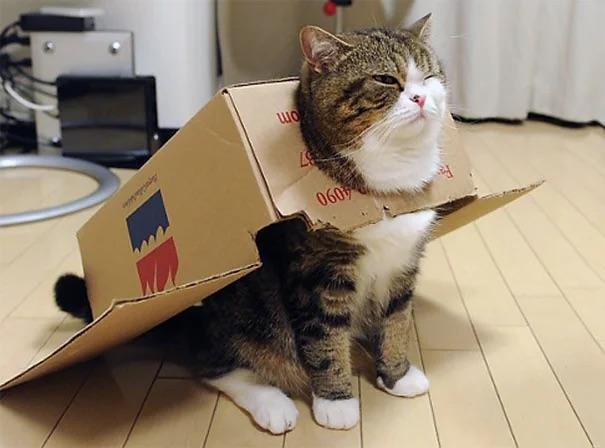
Maru, Youtube Star Feline, Dies At 18

With his comical expressions and determination to squeeze in the tiniest of containers, Maru developed a loyal following. For a time, he held the record for the web’s most popular animal.

Maru the cat, who was once the most-viewed animal on the internet, passed away after a short battle with lung cancer.

The 18-year-old Scottish Fold was one of the first viral animal sensations on the video platform, and his videos have amassed a staggering 578 million views over the years. In 2017, Guinness World Records named him the most popular animal on the internet, lending credence to the joke that the internet was invented to share photos and videos of our feline overlords.

His name, which means “round” in Japanese, was an apt descriptor, and viewers found laughs and distraction while watching his antics. More often than not, his adventures included boxes and other containers he could barely fit in.

For Maru, the smaller the box, the bigger the challenge. Credit: Mugumogu/Youtube

Maru’s face was familiar even to people who weren’t big Youtube watchers, with internet users authoring several popular memes using his image over the years.

Maru’s human, who shared the bad news in a video, said she brought the little guy to the vet when his behavior changed and he stopped eating. His health rapidly deteriorated and he passed away on Sept. 6.

In one of his most-watched videos, the chonky Scottish Fold comically takes a tumble while trying to scale his cat tree, and demonstrates his dedication to laziness by laying on his back, half-heartedly batting his paws at a wand toy while his human tries to get him up.

In the video announcing Maru’s death, his human thanked his fans for being invested in his life for so many years.

“Maru was a laid-back and calm cat,” she wrote, “but at the very last moment he made a mad dash.”

Header image credit Mugumogu/Youtube

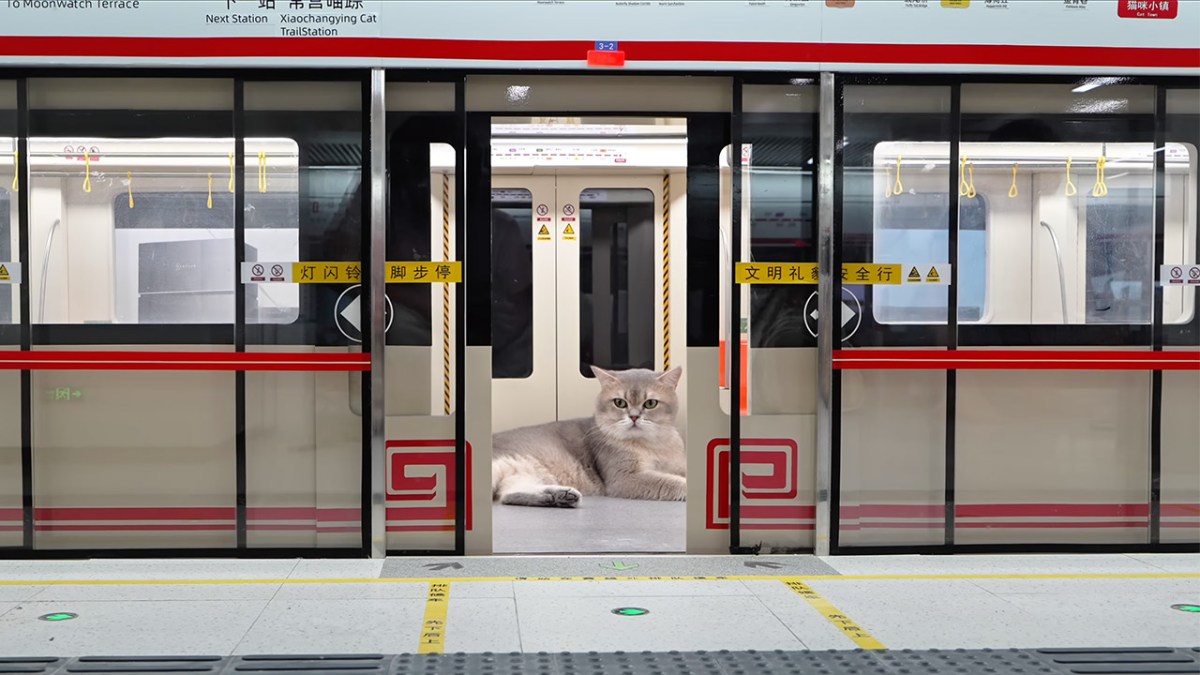
This Dude Built An Entire Subway System For His Cats

A Youtuber spent four months creating a rideable subway system for his cats, and it’s magnificent!

Hello, proxy servants! Buddy here again, blogging in place of my pathetic human minion!

As you may be aware, I am not fond of foul human sorcery, like the evil room that eats people outside my domicile (humans call it an “elevator”), the evil and angry robot, vakuum, and various other products of vile human magicks, like those floppy fishes “toys.”

However, the interweb is not without its uses. After all, it allows me to communicate with you, my deputy servants, and there’s some interesting stuff, like this video of a very nice human named Xing who built an entire subway for his cats. Behold:

Now that’s a dedicated servant!

It looks like so much fun, like having your own not-scary roller coaster to ride all day.

Xing’s magnificent creations also throw into sharp relief the uninspired efforts of my own pathetic minion, who can barely put together a chair from Ikea.

You know what I would like? A Cat Cave, like Batman’s Bat Cave, except cat-size for me. It would have all sorts of awesome gadgets, control stations, surveillance capabilities, and a vehicle for my use when I venture out as a hero to fight crime, dogs and other undesirable elements.

But has anyone ever said “Hey Buddy, would you like a Cat Cave?” Of course not.

Do any of you have schemeowtics for a Cat Cave? If so, send them to me! In the meantime I’ll just have to watch wistfully as these other lucky cats ride their own subway and relax in their own beautiful apartments.

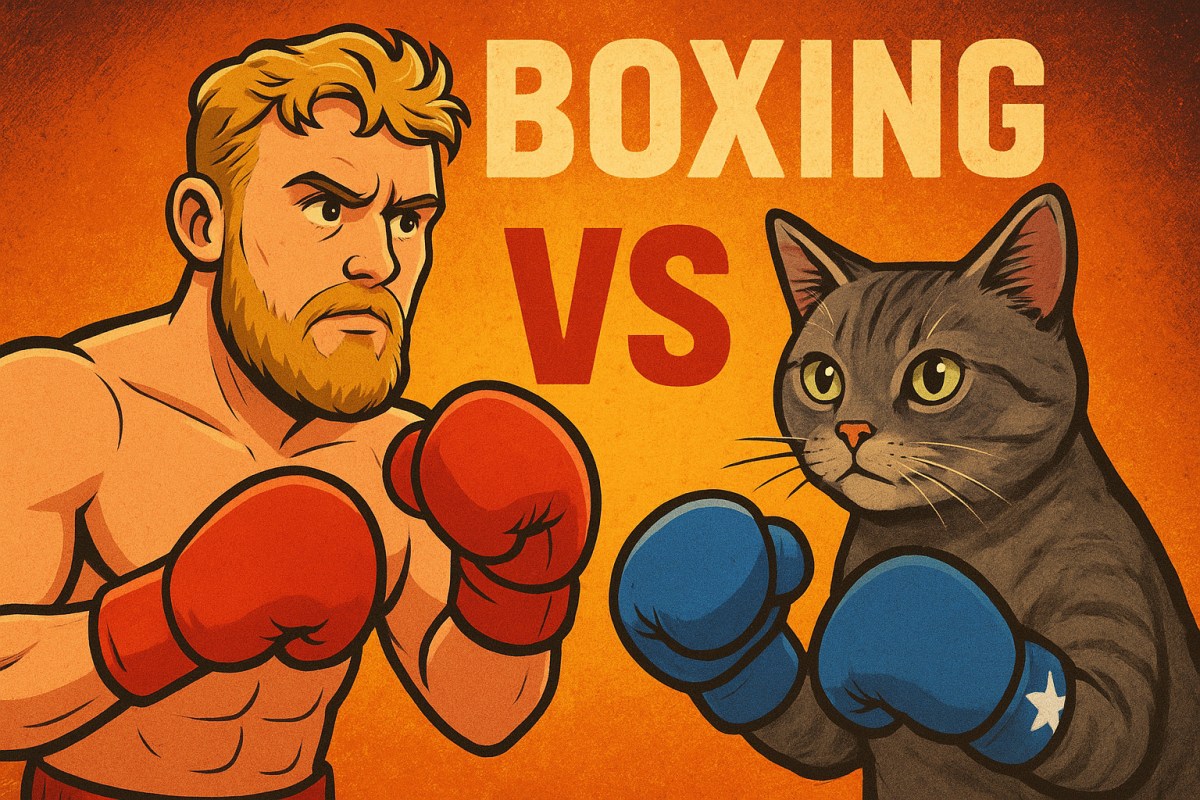
Boxer Jake Paul Set For Dec. 31 Bout Against Buddy The Cat

In a match-up hailed by boxing promoter Don King as “a magnificatious spectacle of pugulisticary skillsmanship,” Jake Paul will square off against Buddy the Cat at Madison Square Garden on New Year’s Eve.

He’s defeated men more than twice his age, hammered opponents 70 pounds lighter than him into submission, and made his mark as a six-time winner of the Billy Blanks Tae Bo Championship.

Now Jake Paul, the Youtuber-turned-boxer, will step in the ring with Buddy the Cat, a gray tabby from New York.

Despite the 190 pound weight advantage and Paul’s 76-inch reach vs Buddy’s 4.5-inch reach, Paul’s manager, Nakisa Bidarian, said the 6 foot 1 Paul and the 11-inch Buddy were evenly matched.

“Buddy the Cat is probably Jake’s most vicious opponent yet,” Bidarian told reporters. “Jake is taking this fight seriously, as seriously as he took the fight with Nate [Robinson],” a 41-year-old, 5 foot 9 former NBA player who had no boxing experience before stepping in the ring with Paul.

An early poster promoting the fight, which has since been postponed to New Year’s Eve.

Asked by another reporter what Paul and his team make of critics blasting him for “making a mockery of the sport” by fighting a succession of cans, geriatric opponents and people without boxing training, Bidarian waved a hand in dismissal.

“Buddy’s a cat, isn’t he? Tigers are cats, too. We’ve all seen how dangerous tigers can be, so obviously Jake is taking a huge risk here by fighting an animal who is, in essence, a slightly smaller version of a tiger.”

Buddy the Cat

As for Buddy, the massive differences in height, weight, reach, species and training haven’t deterred him. The 11-pound southpaw feline promised to “tear into Paul like a bag of Temptations” and “chew him up and spit him out like diet kibble.”

“You see this wand toy?” Buddy told reporters, throwing punches at a colorful felt parrot that dangled from the end of a stick. “That’s what I’m gonna do to Jake’s face. And if it’s legal to attack his feet, I’m gonna do that too. I’m awesome at attacking feet.”

Longtime boxing promoter Don King called the bout “a magnificatious spectacle of pugulisticary skillsmanship.”

Paul vs Buddy is set for Dec. 31 at Madison Square Garden, only six weeks after Paul is scheduled to duke it out with retired super featherweight Geronta “Tank” Davis. Despite Davis giving up more than 70 pounds and eight inches in height, Bidarian insisted the bout will be “about as evenly matched as possible.”

While most traditional boxing fans and critics dismissed the Paul vs Buddy fight as another gimmick, legendary boxing promoter Don King hailed it as “a monumentilacious rejuvenalizationary occasion” for the sport.

“Jason Paul is a heraldific resplendinizer of pugilistic entertainmentized sportulations,” King gushed, “while Buddy is the most splendiferously sanguinarius felid fighter to ever set paw in the ring. I can’t think of a better match-up between two pugnaciously bellicoserized combatulants anywhere. This is gonna be epic!”

You’re No One Without A Pet Tiger: How The Gulf’s Rich Kids Show Off

Cheetahs are on the precipice of extinction because of relentless poaching on behalf of the children of oligarchs, and showing off collections of rare big cats has become de rigueur on social media.

Imagine you’re an obscenely wealthy Emirati heir, a Saudi prince, or the scion of a global business empire in Dubai.

You started an Instagram account, but sadly photos of your Lamborghinis and McLarens aren’t really moving the needle. In the circles you run in, everyone has those. Likewise, your $20 million digs are pedestrian by the standards of Gulf opulence, and showing off private jets is so 2023.

You need something to stand out, to show the peasants that you’re not just a fabulously affluent heir, you’re also really cool and everyone should envy you.

You need a big cat.

Maybe even cats, plural, if you can’t swing an ultra rare white lion or an 850lb liger on the illegal wildlife market.

“I’m not trying too hard in this photo, am I?”

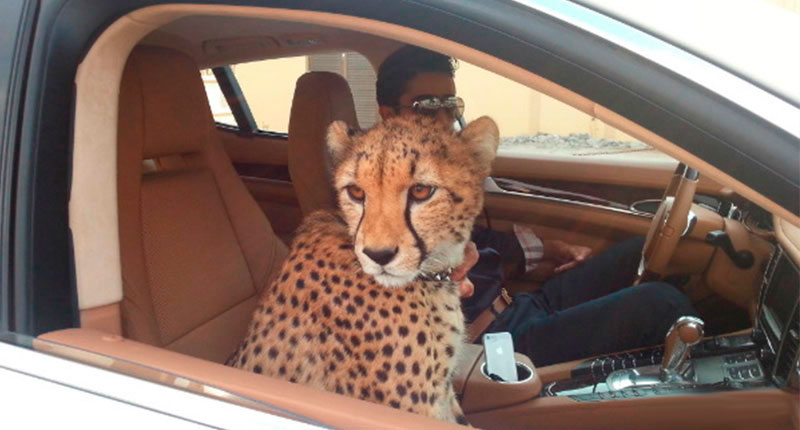
Just imagine your follower count blowing up, and how jealous the peasantry will be when you post images of your apex predator pet chillin’ in the passenger seat of your Sesto Elemento, with a pair of $20,000 sunglasses on his head for the lulz.

That’s what’s currently happening in the Gulf among the incredibly well-off children of royalty, aristocrats, oil oligarchs, shipping magnates and other bigwigs, a report in Semafor notes.

“Of course you can’t put them in the Lamborghini, beratna! You don’t want those claws near your leather seats. Besides, my liger shall have his own custom made Koenigsegg with a gear shift he can operate by paw!”

In addition to providing compelling ‘tent to their social feeds in the form of photos and videos, it’s clear the owners believe big cats offer a kind of osmotic badassery: if you have your very own lion, you must be a powerful and interesting person!

This kind of thing is not new. Years ago there was a brief outcry when wildlife groups begged authorities to protect cheetahs, who are already critically endangered and risk extinction if global elites are allowed to continue to poach them and their cubs from the wild.

As CNN noted at the time:

“While many of these states – including the United Arab Emirates and Saudi Arabia – ban the private ownership and sale of wild animals, enforcement is lax.

The overwhelming majority of these cheetahs end up in Gulf Arab mansions, where Africa’s most endangered big cats are flaunted as status symbols of the ultra-rich and paraded around in social media posts, according to CCF and trafficking specialists.”

The trend is of “epidemic proportions,” according to CCF, an organization devoted to saving cheetahs in the wild. At the current rates of trafficking, the cheetah population in the region could soon be wiped out.

“If you do the math, the math kind of shows that it’s only going to be a matter of a couple of years [before] we are not going to have any cheetahs,” said Laurie Marker, an American conservation biologist biologist and founder of CCF.

Youtube has its share of dauphins showing off cats and cars, and Instagram has an entire sub-genre of pages featuring men in pristine white robes posing in million-dollar hyper cars next to cheetah cubs or tigers who have been sedated to their eyeballs.

As the Semafor report explains, technically keeping big cats is illegal in most Gulf states, except for the super rich. They can skirt existing wildlife laws by getting permits as private “zoo” and “sanctuary” operators, and who’s to say a good zookeeper can’t keep his jaguars in an enclosure with Maseratis and Aston Martins?

One guy even runs a place called Fame Park, a private zoo. The only way to get in is if he deems you famous enough, and thus worthy, to gaze upon his wondrous menagerie of endangered beasts.

The park’s motto is “Where luxury meets wildlife wonder,” and its operator styles himself as a conservationist who just happens to enjoy rubbing elbows with esteemed figures like Andrew Tate and Steven Seagal.

“What pet? I am a licensed zookeeper! In my zoo, enrichment is provided by Ferrari.”

Things really haven’t changed much in the last few hundred years, have they? One way royals and aristocrats amused themselves was by sending explorers to far off lands and instructing them to bring back strange animals.

That’s how elephants ended up in the courts of European kings, and how Hanno the Navigator found himself in mortal danger when he tried to capture gorillas, then decided they were “too violent” to drag back home and had them executed.

A court elephant photographed in 1851 by Eugene Clutterbuck Impey, an English administrator in the British Raj. This elephant is pictured in regalia used for royal processions and other ceremonies. Credit: National Gallery of Scotland

These days, the centers of power have shifted, but human behavior has not. Part of me still has hope, but the cynic in me fears people with the means to exploit rare and endangered animals will continue to do so until there are no more animals left to exploit.

Another critically endangered pet cheetah in a hyper car. Credit: Some clown’s Instagram

Everyone knows that in the wild, big cat cubs nurse from Ferraris and Lamborghinis, and cheetahs learn to run fast by participating in drag races against the hyper cars. Credit: Another clown’s Instagram