The artist says his whimsical animal images are meant to help lower the national temperature after a week of riots and incrimination following the stabbing deaths of three young girls.
UK street artist Banksy has been busy lately, with a new piece of graffiti popping up in London every day for the past six days.
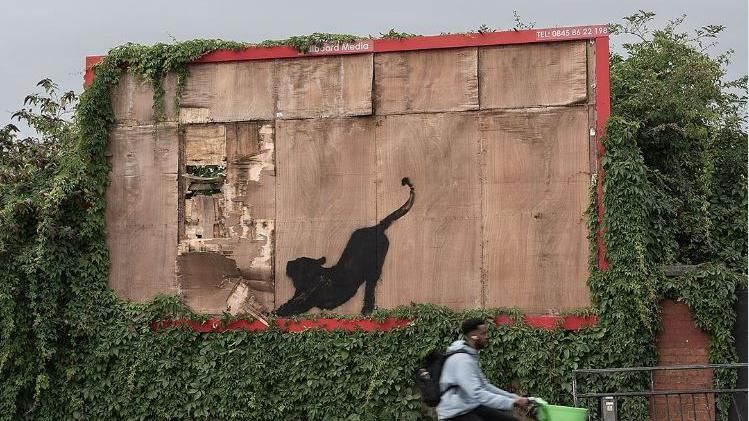
All six new images are animals and the latest is a cat. Sprayed on a billboard in northwest London, the Banksy feline is a black silhouette of a stretching cat and was found this morning.
On Friday, the anonymous artist added a pair of pelicans to a fish shop sign, making it look like the pelicans were eating the fish. That follows a trio of monkeys who appear to be swinging across a bridge, a pair of elephants, a mountain goat, and a howling wolf in the center of a satellite dish, creating the impression that the dish is the moon silhouetting the wolf.
The whimsical animal renderings often show their subjects appearing to interact with their urban environment.
Banksy’s art commands high prices at auction: one piece sold for $25 million, while many others have fetched winning bids well into seven and eight figures.
The wolf piece lasted only hours before a group of men came along and took it. A representative for the artist confirmed to the BBC that the artwork was stolen.
Likewise, the feline was gone by afternoon, removed by contractors who said they were trying to safeguard it.
This isn’t Banksy’s first cat. In 2015 the anonymous artist snuck into the Gaza strip via a tunnel from Egypt and painted a kitten on a fragment of concrete wall that was rubble left over from an Israeli strike. Banksy has also been responsible for at least three other feline-themed pieces of street art, and possibly more.
Banksy’s kitten graffiti in the Gaza strip.
The UK artist is known for using his art to highlight causes, and has made reference to various conflicts around the world, unregulated capitalism, destruction of the environment and distrust of authority, with many of his pieces taking aim at the UK surveillance state. As The Londonist wrote, London is considered one of the most surveilled cities in the world, with between 627,000 and 942,000 CCTV cameras monitoring the public.
However, Banksy’s latest series eschews a political message, his reps told UK media. After a tumultuous week that saw rioting across the country in response to the stabbing deaths of three young girls — and inaccurate news reports about the identity of the attacker — Banksy, his publicist said, merely wants his countrymen to “cheer up.”
The outrage over the death of a pet cat may be the best barometer of Russia’s national mood as its disastrous war on Ukraine enters its third year.
For the past two years I’ve had a lurid hobby. I’ve been watching translated clips from the bizarre world of Russian state TV, where Vladimir Putin’s pet propagandists tell the Russian people what to think.
There’s ringleader Vladimir Solovyov, a guy who dresses like the admiral of a galactic fleet of military starships and is prone to wild mood swings. Depending on when you catch Solovyov he could be cackling maniacally at the prospect of nuking London or crying into his microphone as he laments the loss of his overseas bank accounts and his boss’s slipping grip on power.
There’s Margarita Simonyan, the 43-year-old head of RT (Russia Today) and rumored alcoholic who, strangely, is even-keeled compared to Star Admiral Solovyov.
Then there are the second-tier propagandists: Olga Skabeeva, the “Iron Doll of Putin TV” who matter-of-factly endorses horrific war crimes, and men like Anton Krasovsky, who famously fantasized about drowning Ukrainian children in the Tysa River, a tributary of the Danube, his desk rising three inches as he excitedly repeated “Just drown those children, drown them!” Apparently he forgot he was on television and said the quiet part out loud, forcing his boss (Simonyan) to grudgingly condemn his words.
Margarita Simonyan, left, and Vladimir Solovyov, right, are two of Russia’s most famous pro-Putin propagandists. Credit: Russian state TV
Solovyov, Simonyan and the others looked like a bunch of investors celebrating the sale of a billion-dollar company during the opening phases of the war in early 2022, giddily playing footage of Russian missiles taking out Ukrainian apartment buildings and artillery flattening hospitals.
Their rhetoric was extra-dimensional at the time: they spoke often of a glorious New World Order with Russia at its head and all of humanity united under Putin’s tiny feet, where people would undoubtedly conclude that life under Russian masters is better than any over-hyped concept of freedom.
When Russia faltered and Ukraine began stringing together victories with the help of western weapons and real-time intelligence from the US and UK, the tone of Putin’s propagandists grew bitter. Their body language mirrored their frustration. Solovyov began a tradition of threatening to nuke a different country every day, for “crimes” like acknowledging the reality of Russia’s military incompetence or calling for peace.
To date, Solovyov’s threatened to nuke the UK, France, Spain, Germany, Italy, Japan, Finland, Sweden and the US, and that’s just off the top of my head. He especially hates the British for reasons that aren’t entirely clear, but he regularly makes it clear that it’s only through Putin’s benevolence that cities like London and Paris continue to exist.
He’s also extremely fond of Tucker Carlson: he plays clips from Carlson’s show on X regularly, offered him a job after the American was fired by Fox News, and has declared him the greatest journalist in the western world.
In Putin Russia, cat feed you!
I thought of that motley crew of Putinious jackwagons this week as I read about the Russian public’s horrified response to an incident on a train.
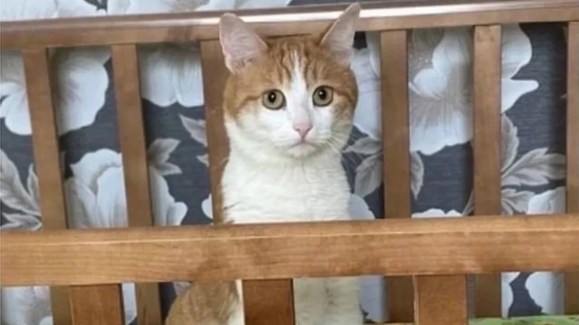
A couple was traveling on a Russian Railways train to St. Petersburg when their beloved cat, Twix, escaped his carrier. The frightened ginger tabby just kept running until he was scooped up by a female conductor, who unceremoniously tossed him into the snow in Russia’s frigid Kirov Oblast. Temperatures regularly dip into the single digits and below zero in the winters there.
On Jan. 20, after a search joined by hundreds of people, little Twix’s body was found in the snow about a half mile from the train tracks. The feline, who was used to safety and warmth, suffered multiple animal bites and died either from his wounds or the temperature.
Twix the cat in a photo from his family that was reposted to a Russian Telegram channel.
To say Russians are furious is an understatement.
Twix’s fate has been the talk of Russian social media platforms for days. Surveillance camera footage of the conductor tossing the tabby ignited a new level of rage. As of Wednesday more than 300,000 Russians had signed a petition calling for the firing of the conductor, whose name hasn’t been released by the state-owned passenger railroad company. A second petition goes further, calling for criminal prosecution, and has 100,000 signatures in just a few days.
Public outrage about the fate of Twix just might be the first authentic sentiment to reach Russian media in years.
In an unusual move, the government acquiesced — partly — to the public’s demands and pulled the conductor from duty pending an investigation. They’ve also acknowledged that Twix’s humans had properly purchased a pass for him and were riding in a car designated for passengers with pets. In the future, they’ve vowed, conductors won’t toss animals from trains.
Russia is a famously cat-loving country. Felines comprise more than 64 percent of all pets kept by Russians, and more than half of all Russian households have pet cats. They’re considerably more popular than dogs in the nation of 143 million.
Cats are popular in Russian folklore, where traditions say the furry ones have the power to ward off evil, and they’re a much more convenient pet for the millions who live in Soviet-era apartment blocks in cities like Moscow and St. Petersburg.
Still, this feels like something more.
Russians haven’t had an easy two years thanks to Putin’s disastrous “special military operation.” They can face years in prison simply for calling for peace with Ukraine. Unless they’re part of the nation’s elite or have connections among them, men can’t leave the country because the military needs more warm bodies. The country’s economy is in shambles as the government pumps more money into the war and international sanctions have taken their toll.
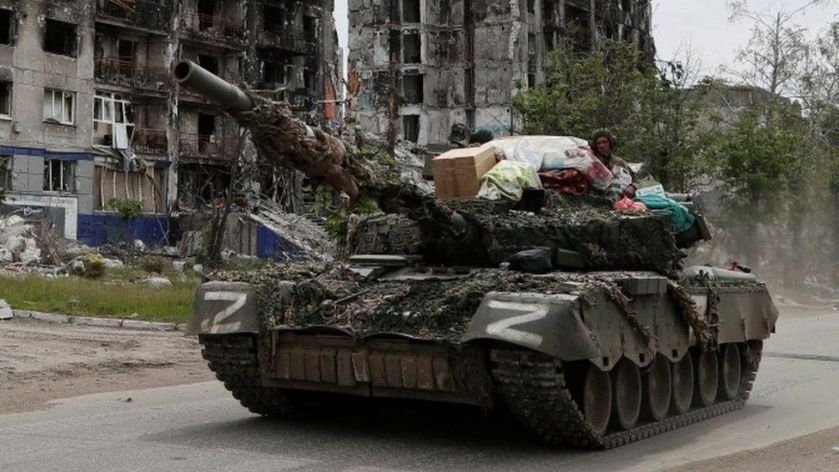
A Russian tank laden with loot, including a toilet, rolls past the ruins of residential buildings in Popasna, a city in eastern Ukraine.
The government has canceled or downplayed annual military celebrations so the public won’t be reminded of the war’s costs. Russia is on pace to lose an astonishing 500,000 men in two years of combat, according to the UK’s Ministry of Defense, and Putin has tried to stem the anger of the country’s mothers by staging several meetings with actresses posing as the moms of Russia’s war dead, events which have been heavily covered by state press.
Russians can’t oppose the war they’re dying in. They can’t mourn their dead fathers, sons, brothers and husbands, not by revealing their real emotions.
Quality of life has further degraded in a country where tens of millions don’t even have indoor plumbing, which is why there have been so many clips of Russian soldiers stealing toilets, washing machines and other appliances from Ukrainian homes. The prospect of being pulled off the street, sent for two weeks’ worth of rudimentary training and deployed as cannon fodder hangs heavy over the heads of Russian men and their families, especially ethnic minorities and the poor.
But Twix? They can mourn him. They can get angry about what happened to him. The furious public sentiment regarding his death wasn’t manufactured by Solovyov and company. State TV didn’t spark the backlash, it was forced to acknowledge it.
I’m neither a Russophile nor an expert on that often difficult-to-understand country, but I’d bet all my rubles that those dueling petitions say more about the Russian mood than any opinion poll to come out of Russia since 2022, and definitely more than the words of anyone allowed to express an opinion on Russian TV.
The orphaned lion cubs are among many wild animals brought safely out of Ukraine as the war there continues to rage.
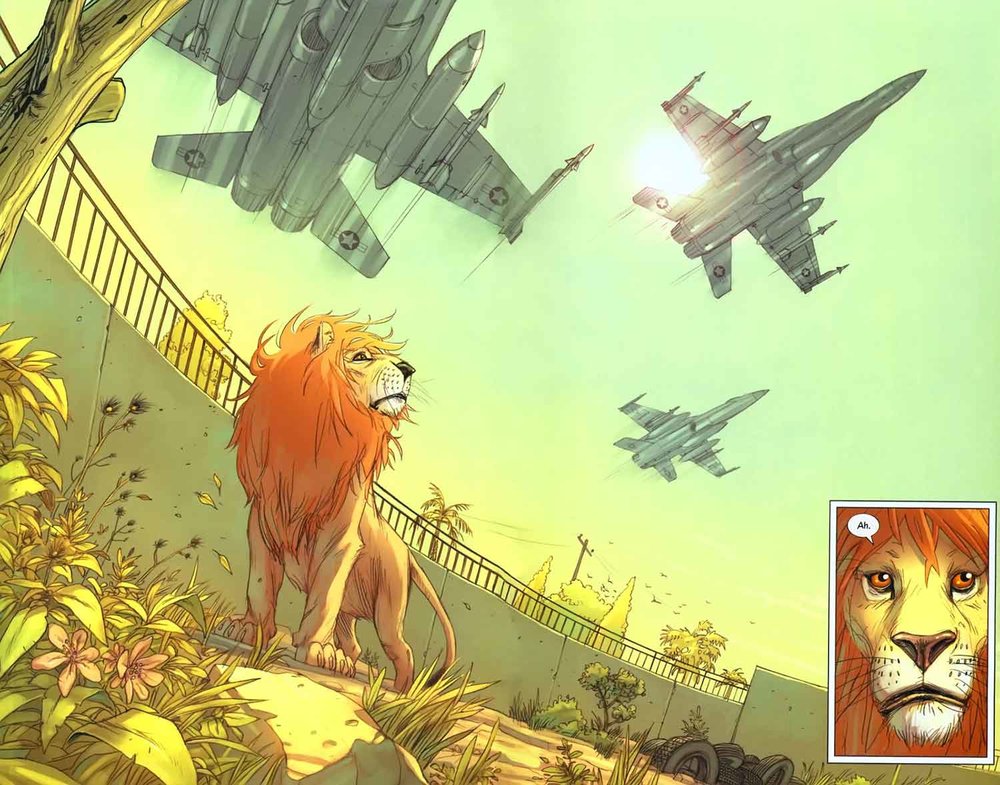
As the brilliant but depressing Pride of Baghdad documented in horrific detail, war isn’t just hard on humans, it’s hell on animals too.
The real-life lions in that drama were left to fend for themselves when American and coalition aircraft began pounding Baghdad in 2003, and their harrowing journey began when an errant missile literally opened a path for them to walk right out of the otherwise abandoned zoo.
As Russian soldiers began pouring over the border into Ukraine and Moscow’s missiles and artillery struck population centers earlier this year, Ukrainian activists sought to avoid a similar fate for their animals and worked on getting wildlife out of the zoos and the country, but there was only so much capacity at sanctuaries in countries like neighboring Poland.
At the same time, remaining in Ukraine was untenable. After Russian forces suffered a series of humiliating ground defeats to a Ukrainian counteroffensive — fueled by weapons systems and tactical intelligence from the US and other NATO countries — Russian President Vladimir Putin has ordered heavy and sustained missile strikes on civilian targets and critical infrastructure in already war-torn Ukraine.
One of his goals is to completely destroy the Ukrainian power grid via missile attacks on coal and gas plants as well as electricity substations, perhaps believing Ukraine might give up its opposition as its population freezes during the region’s harsh winters. The attacks have reached far into Ukraine, hitting the capital of Kyiv and cities like Lviv, which is more than 1,000 km from Russian territory, and some missiles have even disrupted power to neighboring Moldova. The Ukrainian people have not given up despite already enduring months of Russian artillery shelling, occupation and brutality.
But without electricity or reliable access to basics like clean water, caring for the remaining animals has become an impossibility as most people struggle just to keep warm, fed and hydrated.
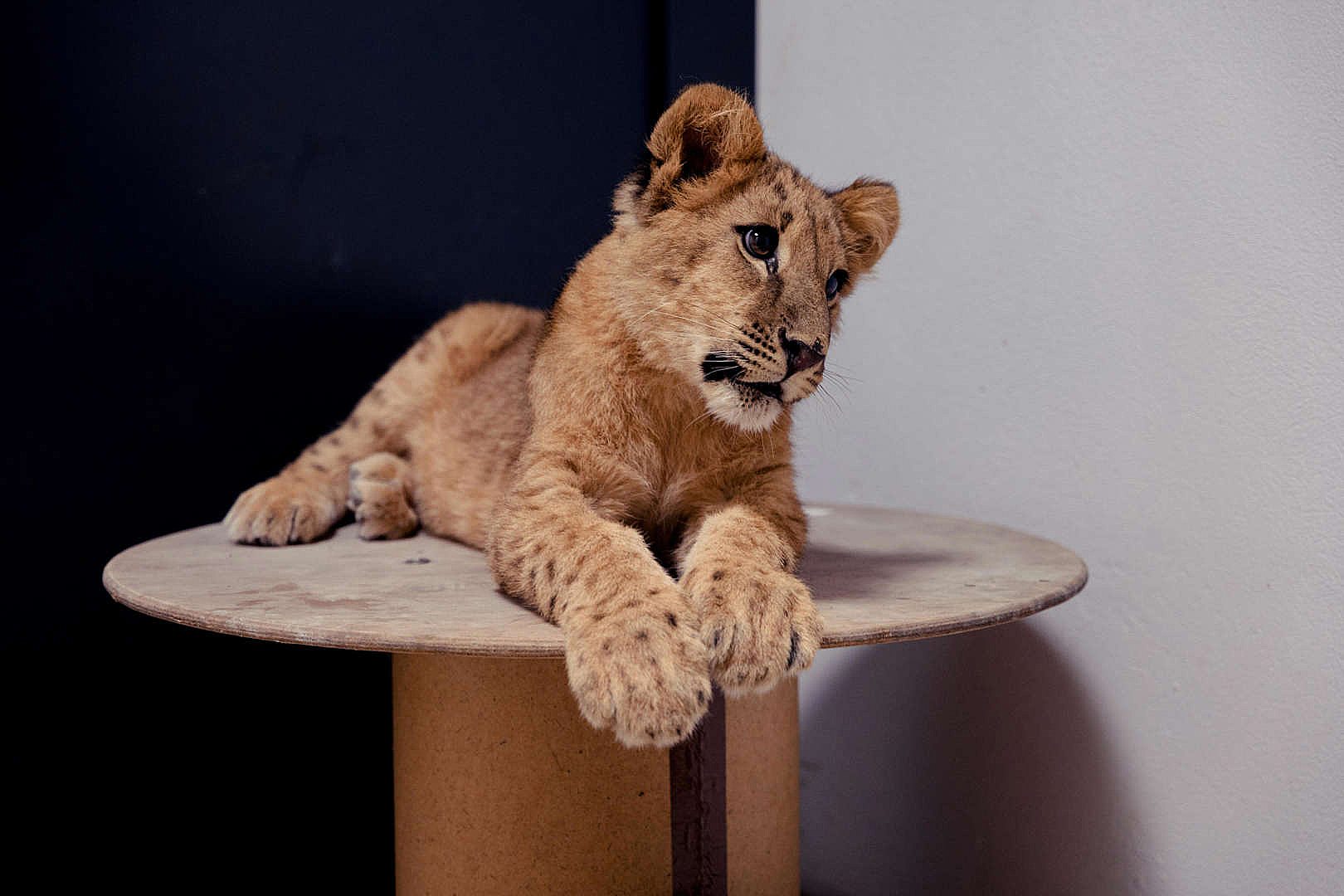
One of the cubs rescued from Ukraine, now living at The Wildlife Sanctuary in Sandstone, Minnesota. Credit: The Wildlife Sanctuary
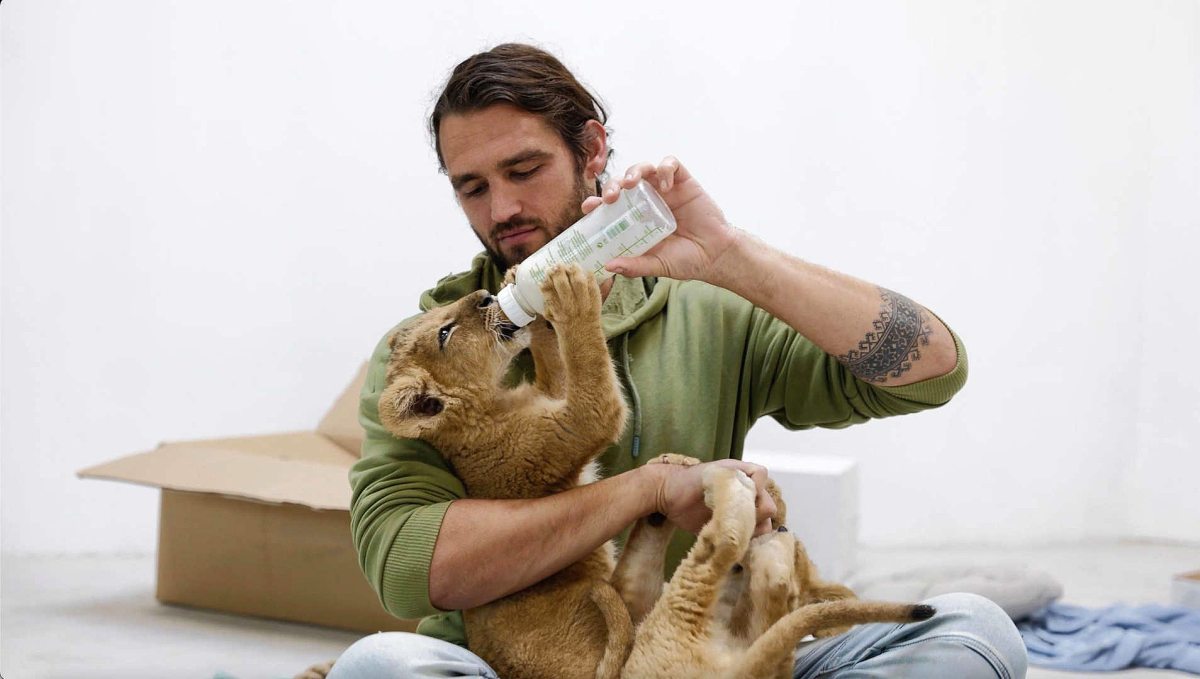
As a result, a quartet of lion cubs born several months into the war had to endure an epic, 36-hour journey that took them from Ukraine to Poland and finally to Sandstone, Minnesota, where they’re easing into their permanent home at The Wildlife Sanctuary. The facility is a non-profit and entirely funded by private donations, which means it’s not open to the public. Animals aren’t put on display, and their enclosures are built entirely for them, not for the benefit of visitor sight lines.
The lion cubs, who are all orphans, have already been indelibly impacted by the war.
“These cubs have endured more in their short lives than any animal should,” said Meredith Whitney of the International Fund for Animal Welfare, which facilitated the transport of the young cats some 5,000 miles from Ukraine to the central US.
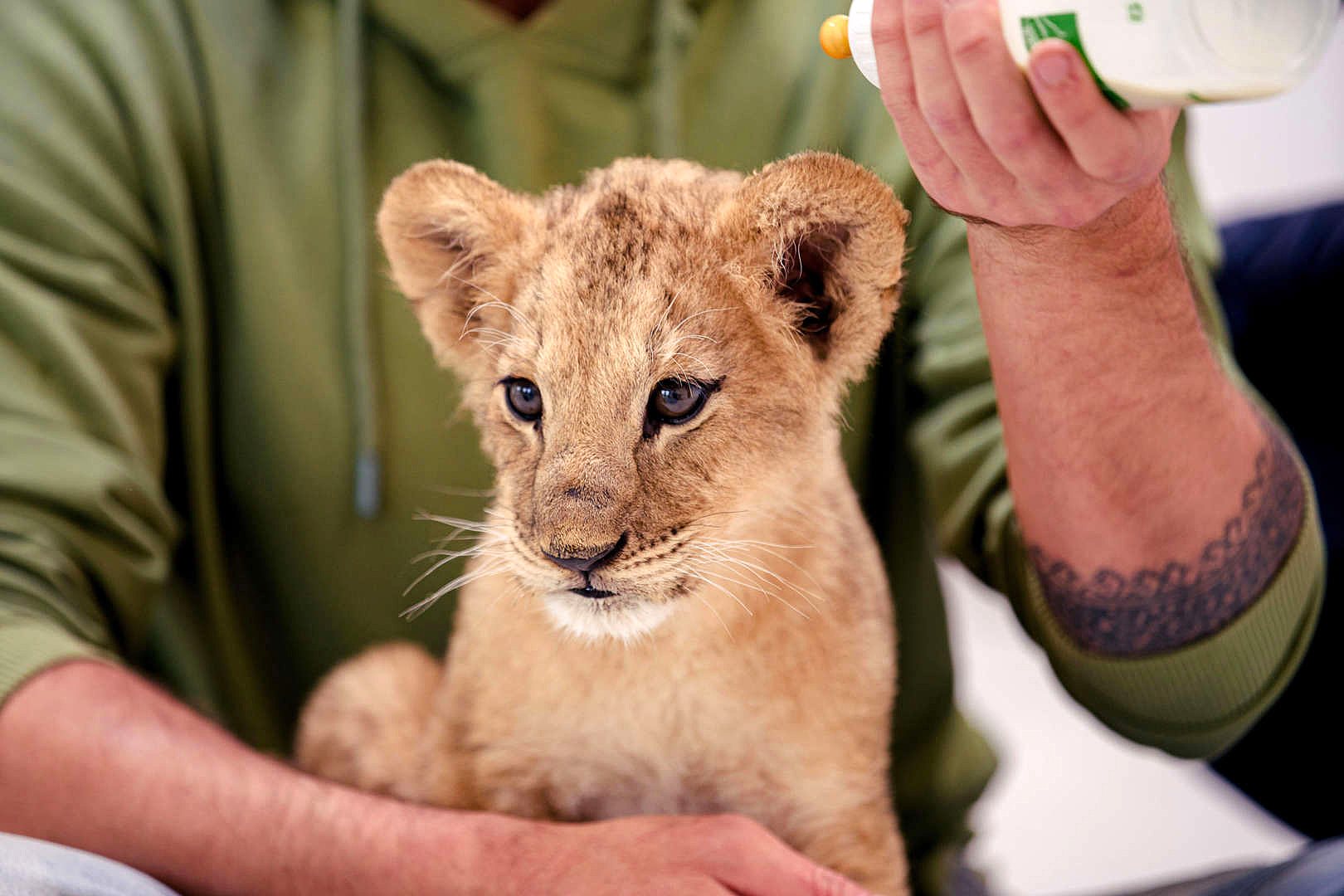
The cubs, all between four and five months old, are named Taras, Stefania, Lesya and Prada. Taras is male while the others are female.
“We’ve cared for 300 big cats at TWS and are acutely aware of the trauma many big cats around the world experience,” said Tammy Thies, the sanctuary’s founder. “From the moment IFAW reached out to request our partnership, we knew these cubs had found their forever home at our sanctuary. They have a custom, open space to explore and soft grass or hay to rest their tired bodies on. Because of the generosity of our supporters, we can provide lifelong care to big cats at our sanctuary.”
Bottle babies: The cubs are all between four and five months old and were not weaned before they were orphaned. Credit: The Wildlife Sanctuary
Pride of Baghdad is a 2006 graphic novel based on the true story of four lions who escaped Baghdad Zoo during coalition airstrikes in 2003. It’s poignant, beautifully illustrated and wonderfully told, but also harrowing and deeply upsetting.
Buddy wasn’t pleased when he found out he missed out on lots of delicious turkey
After finding out his human attended the Maryland Renaissance Faire over the weekend — where vendors sold giant turkey drumsticks, roasted turkey and fried turkey — Buddy the Cat threatened military action against his human.
The silver tabby cat was magnanimous and didn’t give his human the cold shoulder after the latter returned home after several days away, but flew into a rage when he saw photos of the Renaissance faire.
“What is this?” the angry cat said, confronting his human with photos of a stall offering plump turkey legs. “You knew they had all sorts of turkey and you didn’t bring me?!? Et tu, Big Buddy?”
Turkey stall at the Maryland Renaissance Festival in Annapolis, MD.
Sources say Buddy was last seen mumbling about “raising [his] legions” and stewing in anger over his human’s thoughtless actions.
“I was left here all alone for three days with only someone coming by to feed me pate while you attended a festival, drank meade and had a grand old time?” Buddy asked.
The feline’s anger intensified after his human pointed out his cat sitter used to happily play with him until he attacked her on two of the three previous occasions she cared for him.
“Fake news!” Buddy yelled. “Erroneous! You must make right this grave injustice, human, or face my wrath! And by correcting this grave injustice, I mean only turkey will salve my wounds.”
Ukranians are thankful for Patron, a Jack Russell Terrier who has become a prolific revealer of hidden landmines and other dangerous ordnance left as traps by Russian forces.
This is a cat blog, but every once in a while Little Buddy the Cat magnanimously allows us to issue well-deserved props to dogs who do extraordinary things, like Patron, a two-year-old Jack Russell terrier in Ukraine.
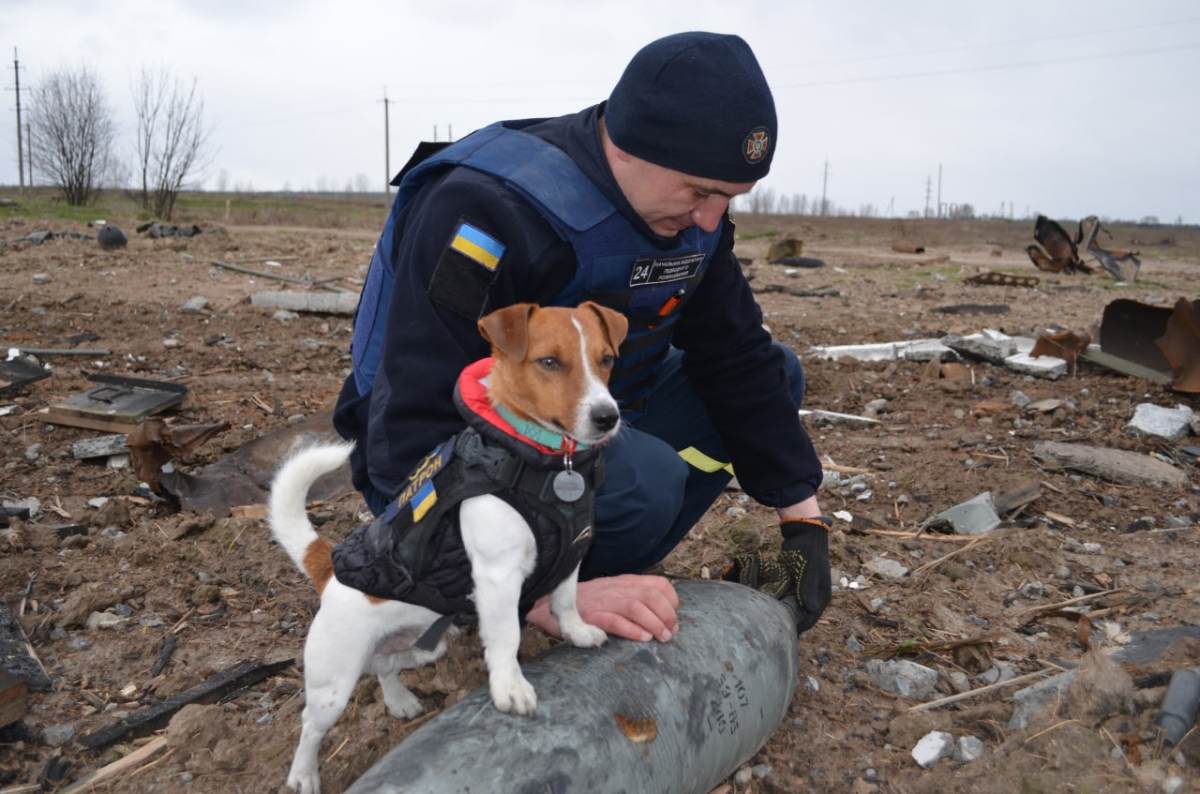
The bomb-sniffing good boy has so far sniffed out 150 dangerous explosives, including landmines and live ordnance left behind by the retreating Russians, according to Ukraine’s foreign ministry. He finds the explosives, tells his human buddies, and the de-miners go to work on neutralizing the devices.
Patron is a service dog in #Chernihiv. He has discovered over 150 explosive devices in #Ukraine since full scale #Russian invasion began. Patron works closely with deminers to make #Ukrainian cities safe again.
Not only does Patron help save lives at a crucial time in the war, when Russian forces are covering their retreat with mines and other traps, he’s also a handsome little guy and he happily cuddles with kids who could really use a little brightness after what they’ve endured. Is there anything Patron can’t do?
Patron and other bomb-sniffing dogs perform a critical task as they help their human handlers sweep cities and towns before civilians can return. While some “experts” predicted Ukraine would fall in days, the country has shocked the world by not only enduring the Russian invasion, but pushing the invaders back after inflicting heavy losses on them.
Making home safe for returning refugees
As a result of their failure Russian units are consolidating in eastern Ukraine, and some Ukrainians are cautiously returning to what’s left of their cities and neighborhoods for the first time since the Feb. 24 invasion. Since Russia abandoned efforts to take Kyiv and the entire country, tens of thousands of Ukrainians have been returning home every day, according to a United Nations report.
While Kyiv was a ghost town just a few weeks ago, people have returned to the streets, bakeries and cafes have reopened, and churches are holding services again. Patron and his buddies are making sure hidden mines and other traps are neutralized before people come home, avoiding further tragedy after so much loss.
Patron has been helping clear Chernihiv and its surrounding environs. The northern Ukrainian city, which is about 150 kilometers northeast of Kyiv, has been designated a “Hero City” by Ukrainian President Volodymyr Zelensky. The title has also been given to cities like Kharkiv, Volnovakha and Mariupol, and marks sites where Ukrainians dug in to defend their homes despite the brutality of the Russian invasion.
“One day, Patron’s story will be turned into a film, but for now, he is faithfully performing his professional duties,” staffers at Ukraine’s Centre for Strategic Communications and Information Security wrote on Twitter when they shared a video of Patron last month.
A dog called Patron, who works with SES rescuers in Chernihiv, has helped defuse nearly 90 explosive devices since the beginning of the full-scale invasion 🐶 One day, Patron's story will be turned into a film, but for now, he is faithfully performing his professional duties. pic.twitter.com/2PpT8p4Yfr
— SPRAVDI — Stratcom Centre (@StratcomCentre) March 19, 2022
Cats have your back, dawgs!
Buddy the Cat salutes Patron and says cats “would totally would help sniff out explosives, but the dogs seem to have a handle on that and we don’t want to steal anyone’s thunder.”
Instead, Buddy said, he’s sure the felines of Ukraine are engaged in some other kind of dangerous, patriotic work, such as reminding humans when it’s dinner time, keeping seats warm and providing delightful company to the war-weary.
Patron atop a destroyed Russian tank.
Patron is one of many animals living through war in Ukraine and enduring alongside their human friends.
A Ukrainian EOD tech shows explosives found by Patron, the bomb-sniffing Jack Russell terrier.
When he’s not helping his buddies find dangerous explosives, Patron cuddles with kids.








 Pain In The Bud