Were Cats Really Domesticated By The Egyptian Cult Of Bastet?

While the sensational claims have spawned headlines around the world, a closer examination raises more questions.

According to dozens of articles, a pair of new studies throws doubt on the commonly-held view that cats self-domesticated 10,000 years ago by helping themselves to rodents invading human grain stores.

The conventional wisdom for some time has been that house cats are the domesticated ancestors of felis sylvestris lybica, the African wildcat. Their genomes are nearly identical, it’s often difficult even for experts to tell the species apart, and they’re much more tolerant toward humans than the comparatively hostile felis sylvestris, the European wildcat.

But two new papers are raising eyebrows for their fantastic claims that feline domestication was actually human-driven and began about 5,000 years ago in Egypt.

Specifically, the papers claim cats were sacrificed en masse by the cult of Bastet, an Egyptian feline goddess, guiding the species toward domestication in a way that doesn’t quite make sense with what we know of evolution.
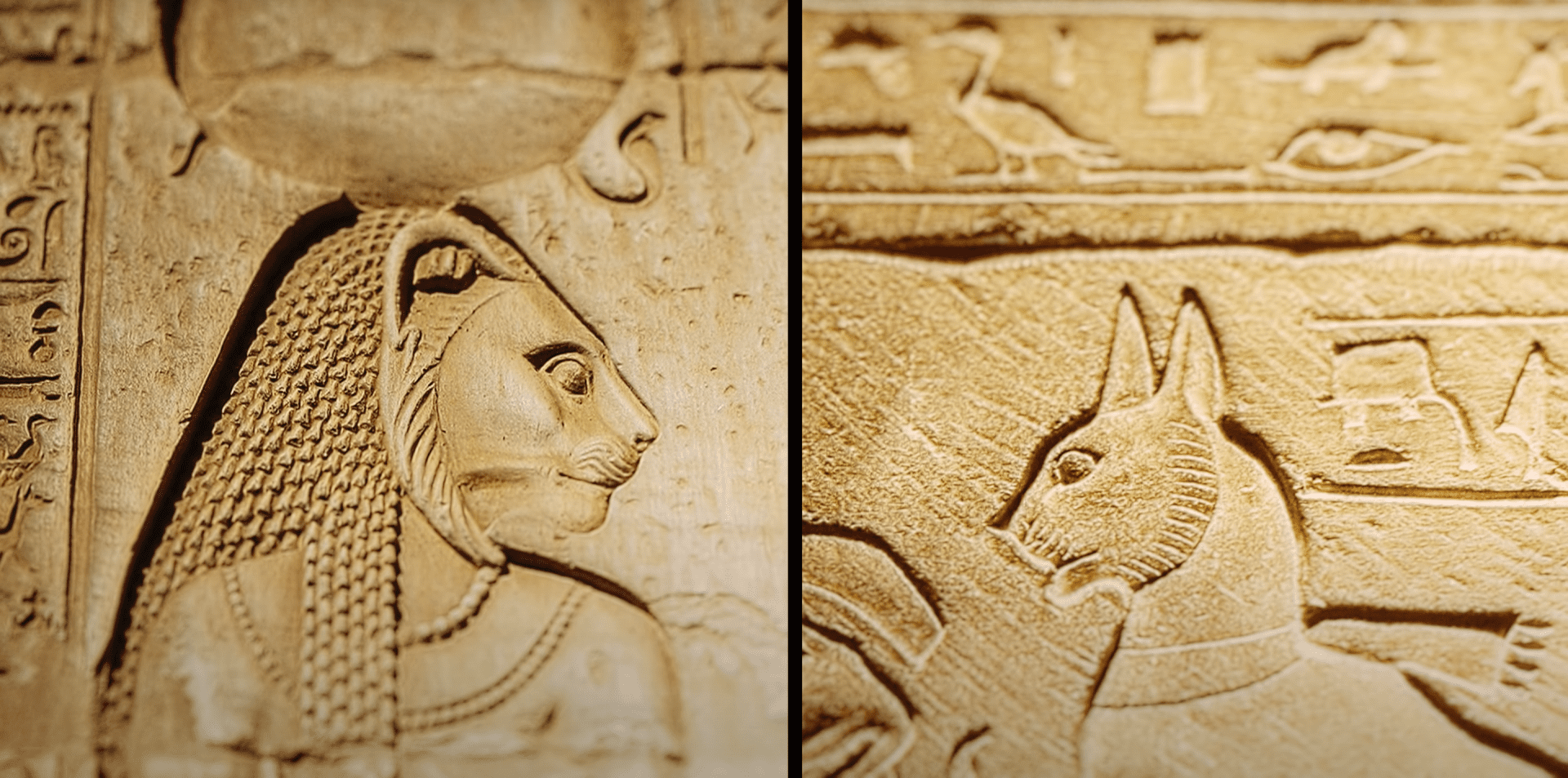
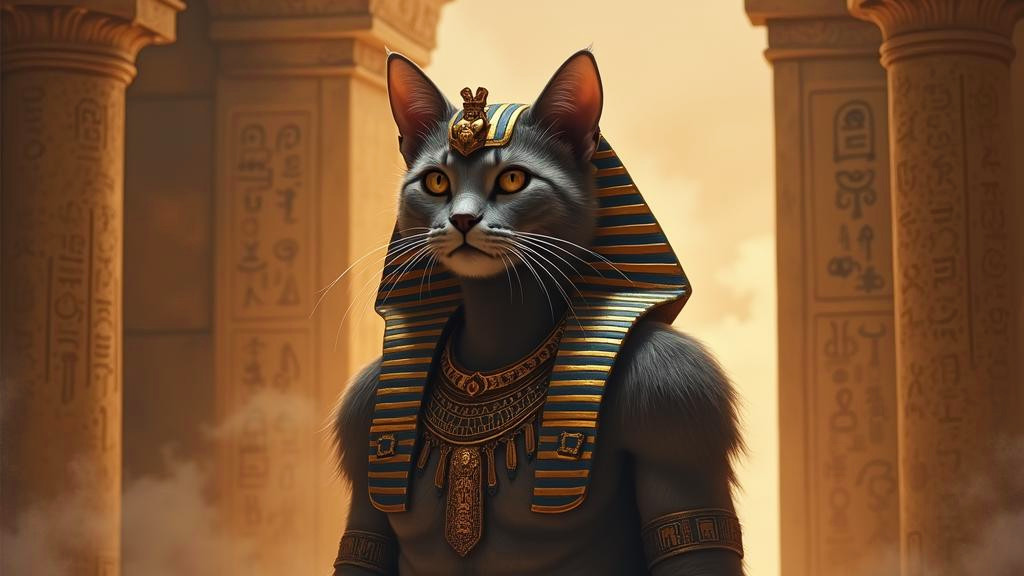
Bastet was originally depicted with the head of a lion, but the imagery around her evolved as she became a more prominent deity in the Egyptian pantheon. Later glyphs depicted her with the head of a domestic cat or African wildcat.

There are two main elements to the new claim:

  1. The earliest grave in which a cat was buried with a human was dated to about 10,000 years ago, and was found in Europe. But an analysis of the cat’s remains indicate it had DNA somewhere between a wild cat and a domestic feline. That, the authors claim, throws into doubt the idea that cats drifted into human settlements, drawn by the presence of rodents.
  2. If domestication was closer to 5,000 years ago, that would coincide with the rise of the cult of Bastet, the Egyptian cat goddess, around 2,800 BC.

Instead of the feel-good, fortuitous sequence of events the scientific community has accepted as the likely genesis of our furry friends, the authors of the new papers claim aggressive and fearful traits were essentially murdered out of the feline population by Bastet cultists who sacrificed cats in large numbers and mummified their corpses.

Neither paper has been peer-reviewed yet, and experts on ancient Egypt, genetics and archeology have already begun pushing back.

The new timeline, they say, doesn’t quite add up, with cat mummies found throughout different periods in Egyptian history, not just during the height of Bastet’s popularity in the Egyptian pantheon. Bastet’s popularity came approximately 700 years later than the authors claim the sacrifices began, and early imagery of the felid goddess depicts her with a lion head. It wasn’t until later centuries that Bastet was represented with the features of a domestic cat.
The powerful Pharaoh Budhotep I, considered an apocryphal king by some, sent a fleet of ships to the Americas to bring back turkey, according to legend. Credit: The Royal Buddinese Archaeological Society

Separate from timeline concerns is the lack of historical evidence. Cats were revered in ancient Egypt, and while there are an abundance of cat mummies — as well as the mummified remains of many other animals — that does not mean the cats were ritually sacrificed.

Indeed, archaeological, hieroglyphic and anthropological evidence all show cats enjoyed elevated status in the Egypt of deep antiquity, long before the nation became a vassal state of the Greeks, then the Romans.

Cats were associated with magic, the divine and royalty, and cats who were the favored pets of Egyptian elites were given elaborate burials. Like Ta-miu, Prince Thutmose’s cat who is known for her grand sarcophagus decorated with images of felines and prayer glyphs meant to guide her to the afterlife.

Cats were sacred companions to the Egyptians

When cats are found buried with humans, the more common explanation is that those cats were the pets and companions of those humans. If the authors of the two new papers want to prove their claim that cats were ritually sacrificed by the tens of thousands — slaughter on a scale that would influence evolution — they’ve got a lot more work ahead of them. (And the burden of proof rests squarely with them, as the originators of the claim.)

Not only does their research attempt to change the origin stories of kitties to an ignominious tale of human barbarity, if we take their assertions at face value, we’re talking about a case of “domestication by slaughter.”

While it may be true that the earliest evidence of companion cats outside of North Africa revealed hybrid DNA, that doesn’t cast doubt on the commonly-accepted view of feline domestication, it strengthens it. Domestication is a process that takes hundreds of years if not more, and it occurs on a species level, so it makes perfect sense that cats found in burial sites from early civilization would be hybrids of domestic and wild. Those felines were of a generation undergoing domestication, but not quite there yet.
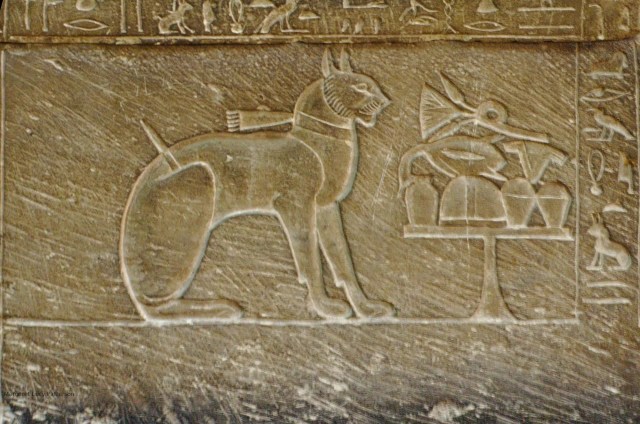
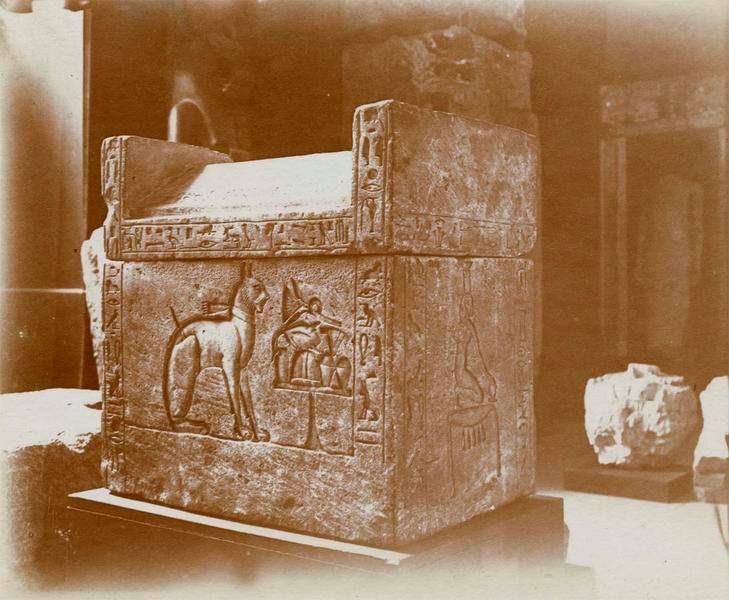
A detail from the sarcophagus of Ta-miu, Prince Thutmose’s beloved cat.
Ta-miu, Prince Thutmose’s beloved cat, was buried in an elaborately decorated sarcophagus with glyphs and offerings meant to guide her to the afterlife. Thutmose, son of Amenhotep III and Queen Tiye, lived in the 14th century BC.

Killing off docile cats?

Which brings us to another significant problem with the claim: if the ancient worshipers of Bastet were selecting the most docile and easiest-to-handle wildcats for their sacrifice rituals, as claimed, then they would be influencing evolution in the other direction.

In other words, they’d be killing off the cats who have a genetic predisposition toward friendliness, meaning those cats would not reproduce and would not pass their traits down. It would have the opposite effect of what the papers claim.

So despite the credulous stories circulating in the press and on social media, take the assertion with a grain of salt. Something tells me it won’t survive peer review, and this will be a footnote about a wrong turn in the search for more information on the domestication of our furry buddies.
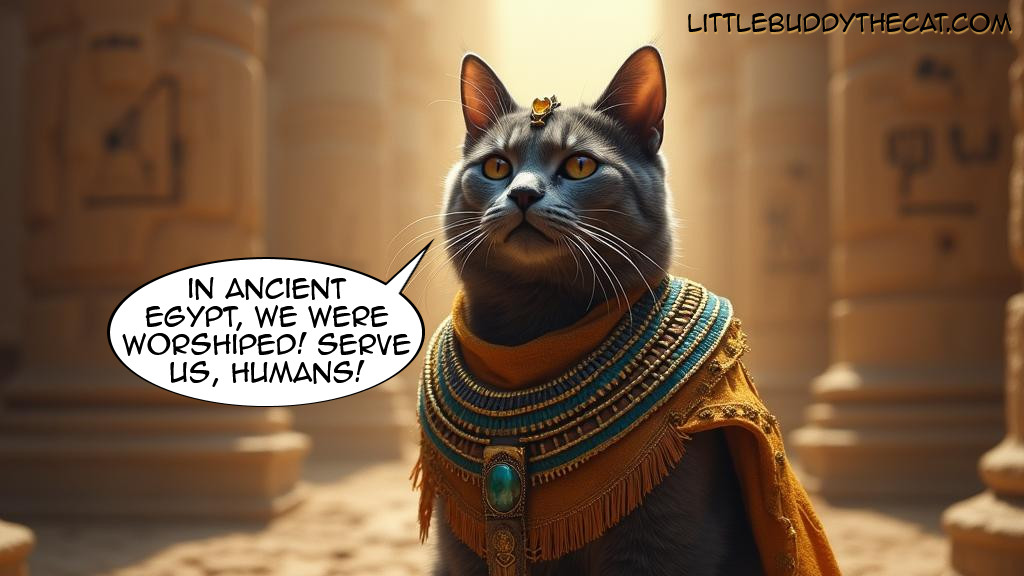
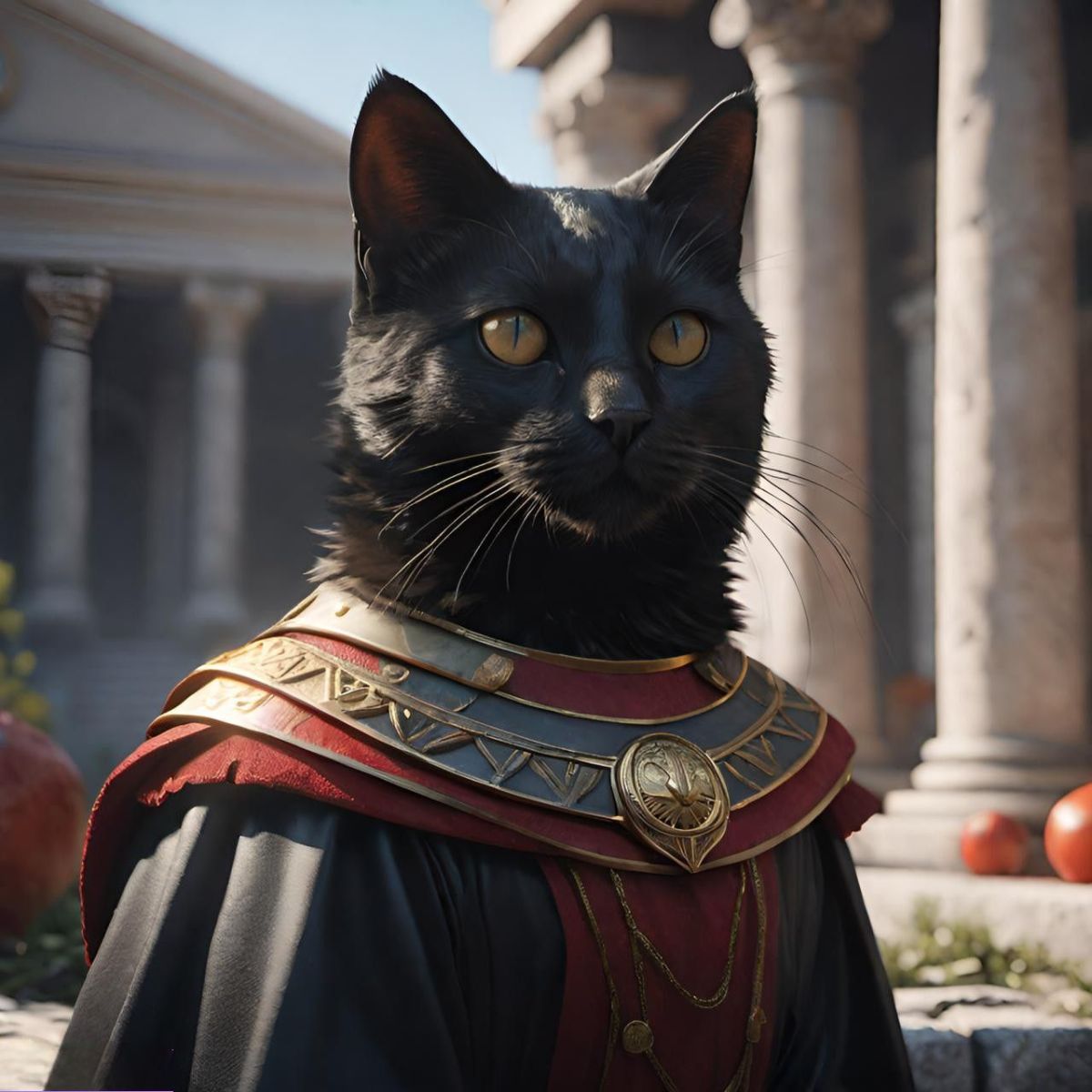
Cats would like human civilization to return to the good old days.

Cat On The Street: Are You Satisfied With Your Human Servants?

We asked six Roman cats if their humans are serving them adequately.

It’s hard out there for a patrician cat.

By the time the newest batch of humans arrives from the provinces, they’re ragged and often useless, but the auctioneers drive a hard bargain anyway. And training them to meet all the needs of a noblecat? Nearly impossible.

We asked six Roman cats whether they’re satisfied with the humans they own:

20231217_204108

“They do not call me Dominus, they do not show proper deference and they are often unforgivably late with my meals. I am a magnanimous feline, but these slights cannot go unanswered. No more Mr. Nice Gaius!” – Gaius Magnus Pawlinius


20240205_1808203951039049773843886

“My human insists on speaking to me in a baby voice. I warned her: ‘Woman, test not the patience of your Dominus, for it is not a quality I possess in great quantity.’ She responded by rubbing salt in my wound, saying ‘Oh you’re just adorable aren’t you? Who’s adorable? You are! You’re my adorbz widdle baby, yes you are!’ I shall have her lashed for her insolence!” – Gingerius Tabbylo Posca


20240205_1807074973929580110852119

“I enjoy making my humans fight each other for the privilege of my affections. They’re incessantly trying to one-up each other, going to extraordinary lengths to win my favor. What more could a good Roman feline ask for?” – Voidicus Duskus Glaber


17071742968788093351292734887332

“Originally I purchased my humans as an investment for my ludus, to bring me glory and riches in the arena! My name would echo from Capua to Rome! But then I realized that humans are excellent at pulling chariots and unlike horses they don’t incessantly eject foul odors. Also, they eat less.” – Smoothilius Sphynxus Cossutius


1000012787

“When it comes to humans, you must accept the fact that they are dim creatures who are often incapable of following orders. Whilst dispatching my primary servant to the market, I made clear my demands for fresh fish, raw beef and rodent meat. Yet he returned with these ghastly hard balls he calls ‘kibble’ that taste like cardboard. Worse, he is entirely incompetent as a hunter, so I am forced to catch my own food. This no noblecat should have to endure!” – Clawdius Quintus Catrillo


20231217_203905

“They objected to being branded with my cognomen and their insolence shall be punished accordingly. It must be made clear they belong to me! That said, they make pretty good snacks. Flavorful, yet not fattening!” – Marcus Flavius Flufficus

All images and text ©2024 Pain In The Bud/littlebuddythecat.com

Previously:

Cat On The Street: What Do You Think About Humans Identifying As Felines?
Cat On The Street: How Will You Celebrate Labor Day?
Cat On The Street: What Do You Think About Humans Translating Your Meows?
Cat On The Street: What Do You Think About The Spy Balloons?
Cat On The Street: What Do You Think Of Harry And Meghan’s War On The Royal Family?
Cat On The Street: What Do You Think About The New Discovery From Ancient Egypt?

A Tabby Cat Tours Pompeii’s Newly Restored Roman Mansion

Cats were treasured pets in ancient Rome, and strays can be found living in the ruins of the empire today.

This is only tangentially related to cats, but 1) It’s awesome, 2) It represents one of the best surviving examples of Roman home life, and 3) Cats invited themselves to the party.

The AP has a story and an extensive photo gallery of what it calls “newly restored remains of an opulent house in Pompeii that likely belonged to two former slaves who became rich through the wine trade offer visitors an exceptional peek at details of domestic life in the doomed Roman city.”

The House of Vettii was known as Domus Vettiorum in Latin and its owners, Aulus Vettius Conviva and Aulus Vettius Restitutus, were freed slaves who used their knowledge of wine — probably gleaned from their former dominus — to launch a successful business which propelled them to the economic heights of Roman society.

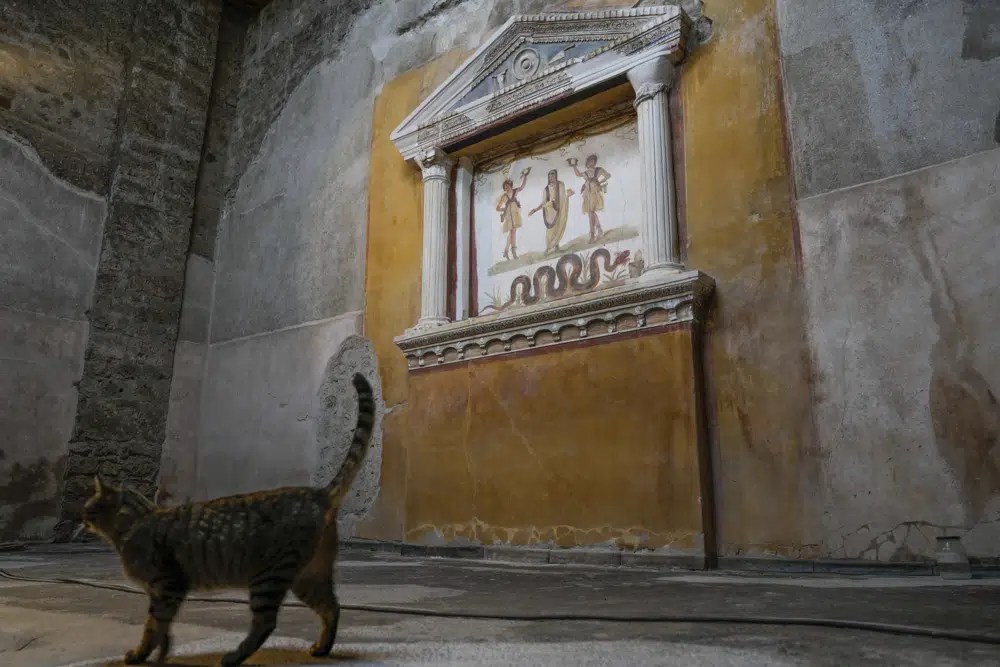
And who do we have there in slide number 16 of the photo gallery? A tabby cat, checking out the restored lararium, a nook where Romans would venerate their “household gods.”

tabbypompeii
A tabby cat prowls the House of the Vettii in Pompei. Credit: AP

The Vettii spared no expense when it came to hiring the best craftsmen and artists to lavishly decorate their home, covering the walls with scenes from Greek and Roman mythology. It took 20 years to restore the domus to much of its former glory

“They evidently tried to show their new status also through culture and through Greek mythological paintings, and it’s all about saying, ‘We’ve made it and so we are part of this elite’” of the Roman world, said Gabriel Zuchtriegel, a German archeologist who is now the director of the Pompeii archaeological park.

Looking at the restored home, it’s clear shows like HBO’s Rome and Starz’ Spartacus did a good job of portraying what Roman houses looked like on the inside, and how individual rooms were used by the people who lived in the homes as well as their servants:

pompeiidomus
Well-preserved walls show meticulously rendered scenes in the House of the Vettii. Credit: AP

We tend to think of ancient Greek and Roman buildings as monochrome since the paint has long worn off most structures, but the unique circumstances of Pompeii allowed some homes and other structures to remain largely preserved under volcanic debris since 79 AD.

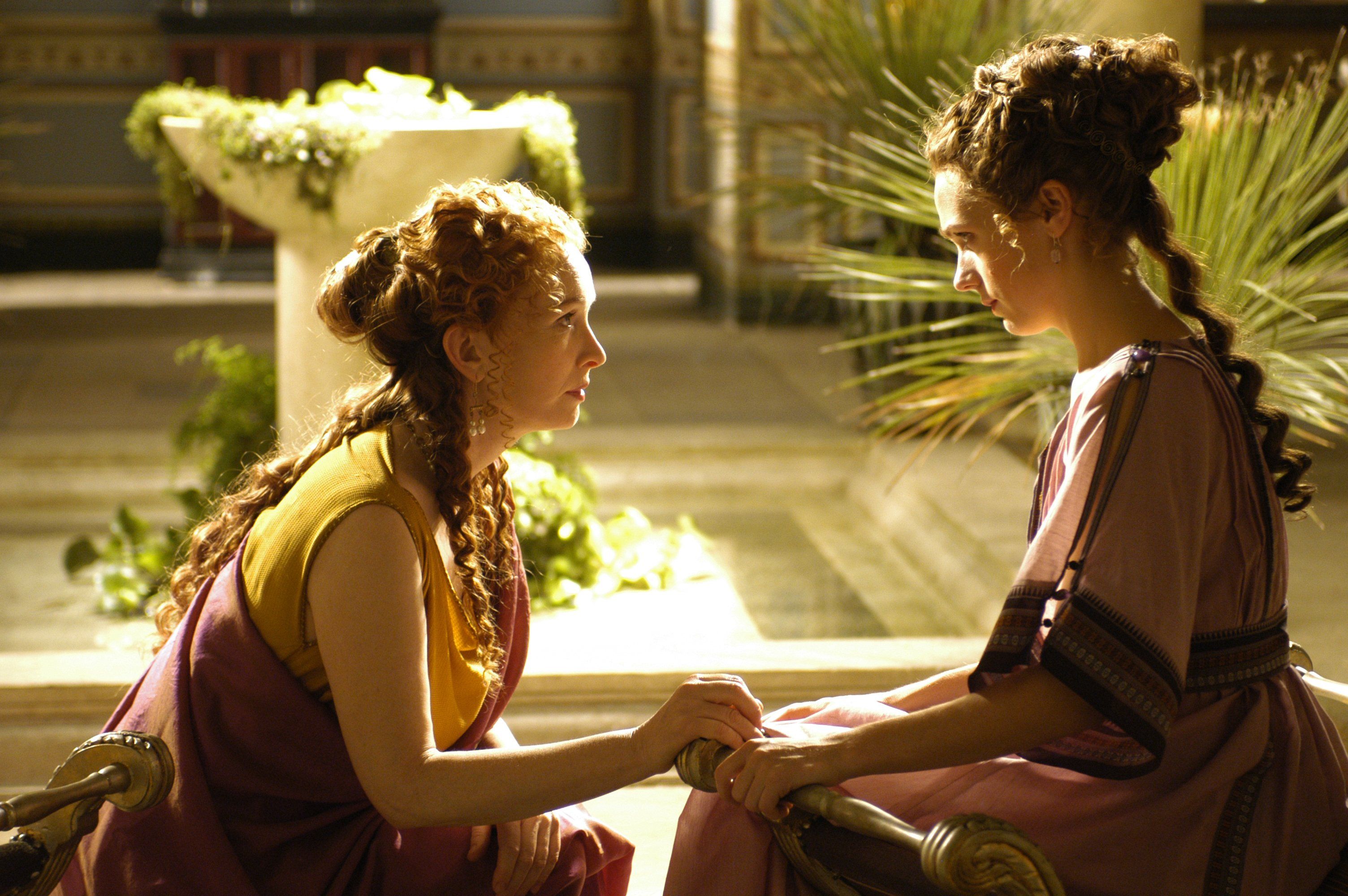
Here’s a scene from Rome showing the interior of Servilia’s home, giving us an idea of how a wealthy Roman’s house would have looked in contemporary times:

Rome
Servilia and Octavia from HBO’s Rome. Credit: HBO

Pope Benedict Asked Us To Be Compassionate Toward Cats And Other Animals

The late Pope Benedict was well known for his lifelong love of cats, but he was also a champion of animals and spoke out about the cruelties visited upon them by humankind.

Long before he was the pontiff, when he was just a young man named Joseph Ratzinger, the future Pope Benedict was known as a cat guy.

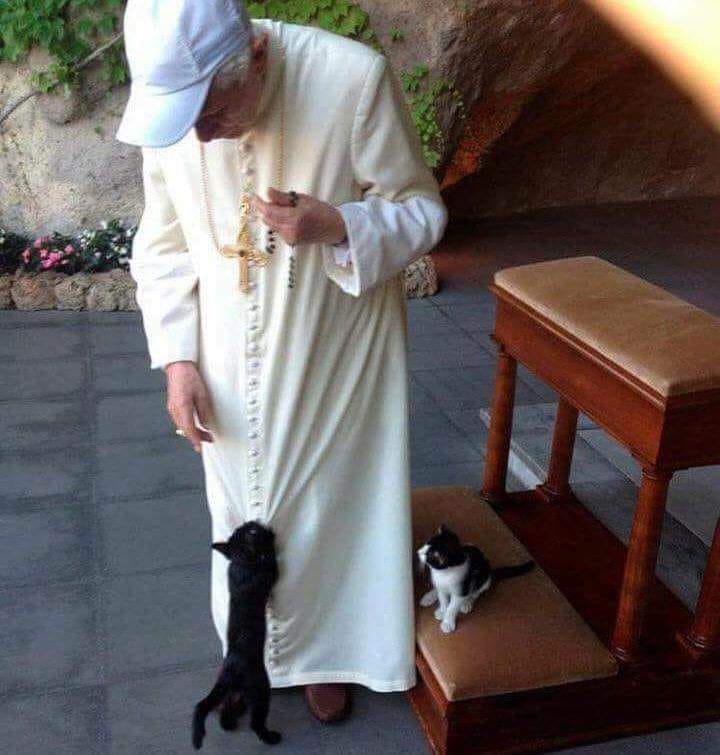
Growing up in the village of Hufschlag, about 55 miles southeast of Munich, Benedict’s family always had pet felines and he fed strays who spent time in their garden. During his years teaching theology to students at Bavaria’s University of Regensburg in the 1970s, then-professor Ratzinger was often seen followed by an entourage of cats — the little ones he fed and cared for — as he crossed campus.

“They knew him and loved him,” said Konrad Baumgartner, a fellow theologian at Regensburg.

His affinity for his four-legged friends never faded, even as he took on more responsibility and had more demands on his time. Cardinal Tarsicio Bertone, one of Benedict’s colleagues, said the German clergyman had a natural connection with animals.

“On his walk from Borgo Pío to the Vatican, he stopped to talk with the cats; don’t ask me in what language he spoke to them, but the cats were delighted,” Bertone recalled. “When the cardinal approached, the cats raised their heads and greeted him.”

The Pope and the Cat
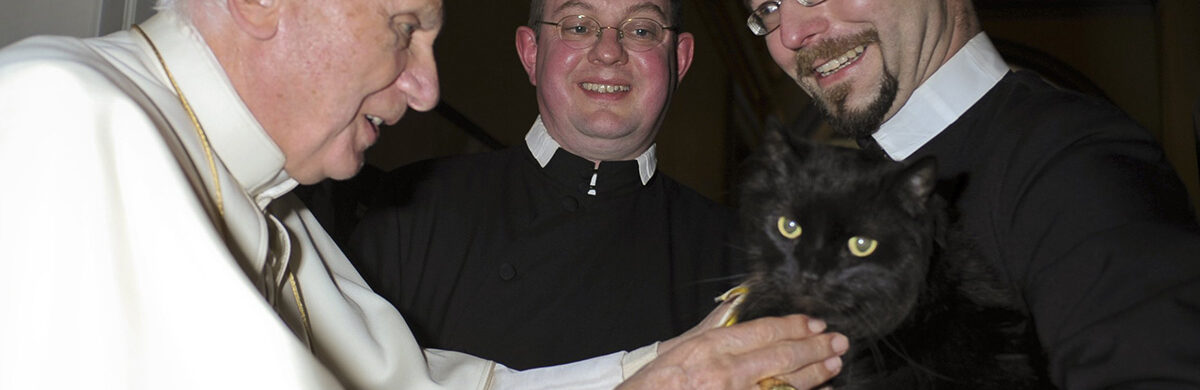
Pope Benedict with one of his cats.

As pope, Benedict continued to care for strays, and had two cats of his own — one who’d been with him since before he was made the leader of the global church, and another he rescued off the streets of Rome.

Photos of Pope Benedict with cats are different than the typical shots showing him meeting with world leaders or waving to crowds. His expression and posture are more relaxed in the presence of felines, and he’s often smiling in the images that show him holding a cat.

But it wasn’t just personal for Benedict.

“Dominion” over animals

For centuries, some people — mostly outside Catholicism, but some Catholics too — have argued that animals exist for the use of mankind, that their purpose on this Earth is to serve as resources. Proponents of the view point to a handful of Old Testament quotes, including a famous quote from Genesis that says God gave man “dominion over the fish of the sea, and over the birds of the air, and over the cattle, and over all the wild animals of the earth, and over every creeping thing that creeps upon the earth.”

Genesis 9:3 attributes this quote to God: “Every moving thing that lives shall be food for you.”

The Pope and the Cats
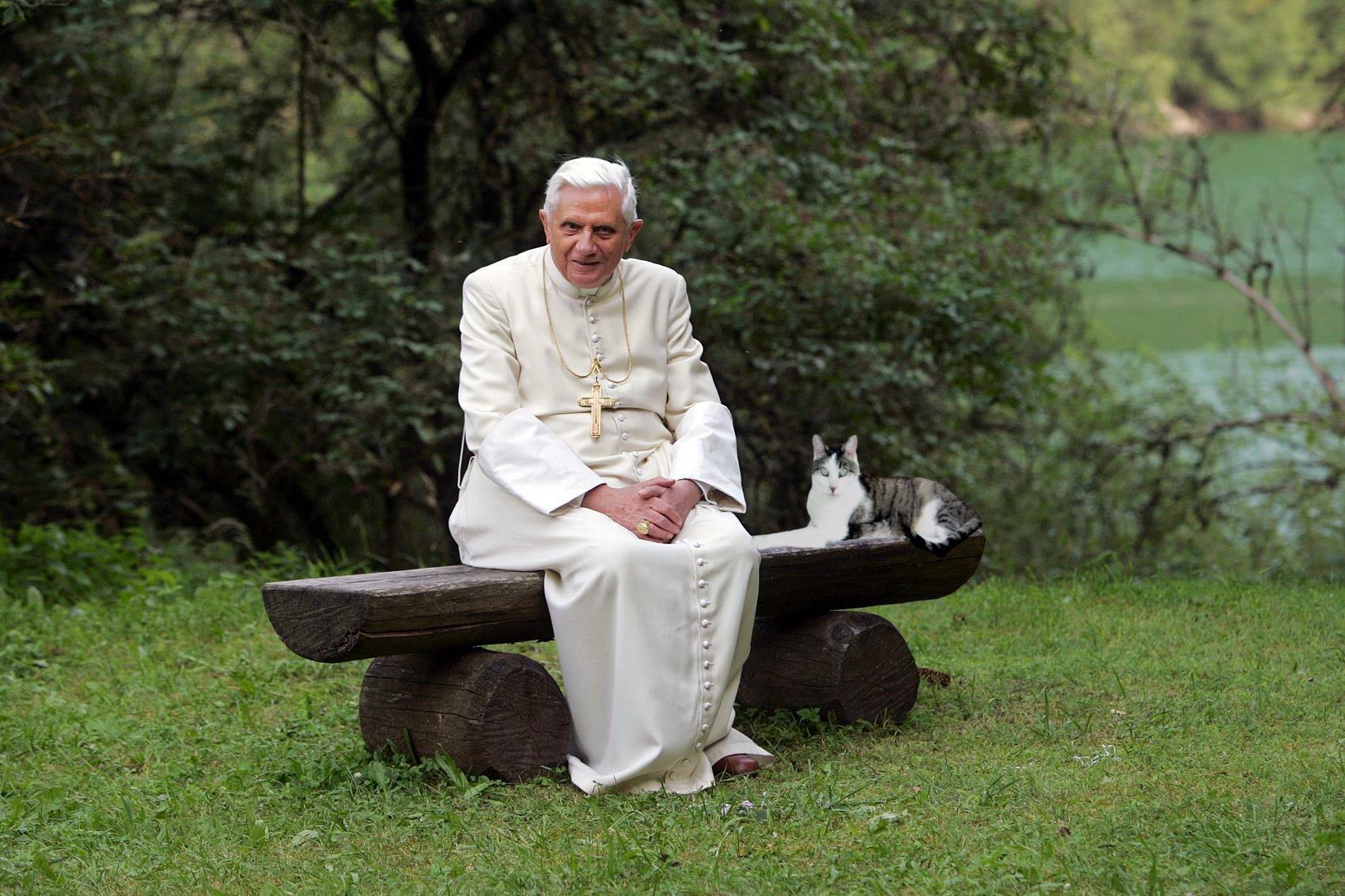
Pope Benedict was well known for his love of cats, from his childhood in Bavaria to his days as pope emeritus living in retirement.

Other verses detail precisely which animals they can eat and remain in His good graces, and many Christian sects see those lines as a clear indication that God intended for animals to serve the needs of men.

But the Old Testament also tells us we can take slaves (Leviticus 25:44-46), that parents can have their kids stoned to death for disobeying them (Deuteronomy 21:18-21), that when children make fun of others, it’s totally cool to call upon righteous bears to maul them to death (2 Kings 2:23-24), and that people with blindness, flat noses and other ugly “blemishes” should wait outside church with the rest of the rejects while the good-looking people pray. (Leviticus 21:17-24).

Don’t even get me started on Sampson and the Book of Numbers.

The point is, if you’re going to be a stickler for things supposedly okayed or forbidden in the Old Testament, animals are the very least of your problems, especially if you trim your beard, let your hair get too long, wear shirts made of two different materials, or have ever placed a bet on DraftKings.

“Animals are God’s creatures”

As we look back on the life of the late pope emeritus, it’s worth noting that Benedict and his successor, Pope Francis, have rejected the view that animals are God’s version of scripted NPC automatons who exist so we can eat steak and wear leather jackets.

“Clearly, the Bible has no place for a tyrannical anthropocentrism unconcerned for other creatures,” Pope Francis declared in 2015.

Benedict spoke out about the cruelty inflicted on animals, the incalculable suffering of animals in industrial farming circumstances, slaughtered by the billions for food after short, brutal lives in which no consideration is given to them as living, sentient creatures.

In a 2002 interview, Benedict called animals “companions in creation” and criticized the modern food industry for its “degrading of living creatures to a commodity.”

“Respecting the environment,” he said in a 2008 interview, “means not selfishly considering [animal and material] nature to be at the complete disposal of our own interests.”

Francis made the church’s position absolutely clear with an encyclical — an official letter to members of the church — called Laudato Si. In it, he condemned the “ruthless exploitation” of animals as commodities and asserts they are individuals who are recognized by God. He urged Catholics to treat them well, to respect and protect wildlife and the environment they depend on.

Animal life has “intrinsic value,” Francis said, adding that Christians must reject the idea that animals are “potential resources to be exploited.”

As if speaking directly to people who use the aforementioned Old Testament quotes to support practices like factory farming, harvesting animals en masse for pelts and hunting for the “fun” of it, Francis said:

“We must forcefully reject the notion that our being created in God’s image and given dominion over the earth justifies absolute domination over other creatures.”

Both popes also noted that, in addition to the suffering we cause, when we exploit animals as are also behaving in a way beneath the dignity of humankind. It’s a stain on our collective identity as a species, a betrayal of our roles as wardens of the planet.

Let’s put aside the moral considerations for a moment. The continued existence of the complex ecosystems on our planet — and indeed of humanity itself — depends on the many roles animals play, from carrying seeds to pollinating plants, limiting the growth of flora that would otherwise dominate and destroy other plants, rerouting water systems by creating dams, controlling the populations of creatures that would otherwise multiply unchecked, and the thousands of other roles they play in maintaining the balance of ecosystems.

Benedict left this Earth on Dec. 31, 2022, at a time when we have killed off almost 70 percent of all wildlife in the entire world. It’s not just a matter of living on a lonely planet, or tucking future children into bed while telling them that, no, they can’t see elephants or tigers because the last of them are dead. Removing keystone species, extirpating entire genera while rendering vast stretches of the planet uninhabitable, purging the oceans of life as they accumulate literal continents of plastic waste, means we’re marching toward a cascade failure most of us won’t even see coming as we argue about carbon credits, politicize common sense, tinker with viruses and edit genomes.

It’s long past time we recognize the fact that we share this planet with billions of other minds and start living in a way that respects them. If we can save them, perhaps we can save ourselves too.

Great Pacific Garbage Patch
The 1.6 million square kilometer Great Pacific Garbage Patch, which weighs more than 80,000 metric tons.

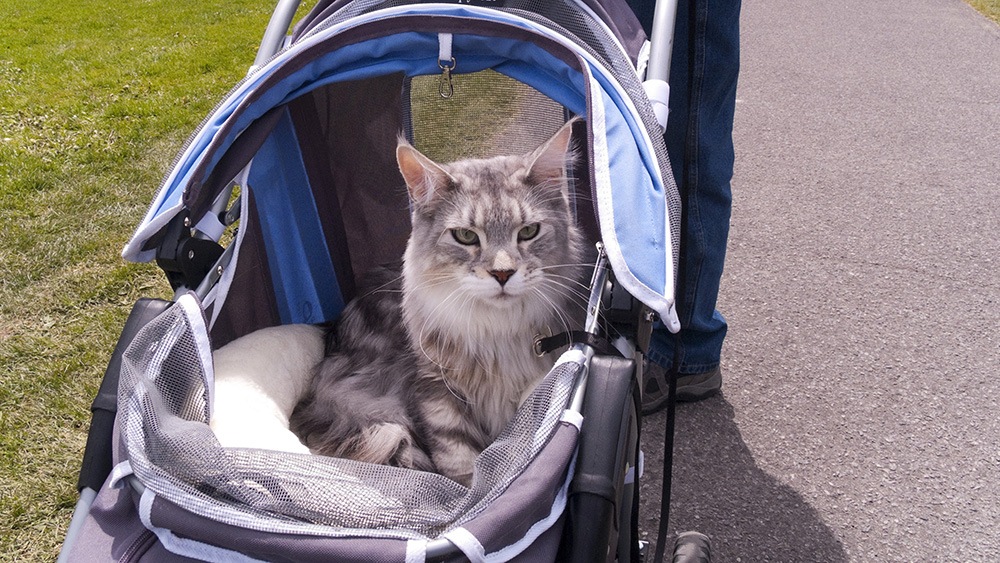
Buddy Acquires Chariot From Which To Lead His Armies

Little Buddy dreams of becoming a military general.

NEW YORK — Buddy the Cat came a step closer to achieving his dream of becoming a powerful feline warlord on Saturday with the acquisition of a glorious chariot, sources confirmed.

“From this chariot, adorned in full battle dress, I shall survey the fields of conflict and lead my forces, bringing to heel all who would oppose me,” Buddy said, excitedly jumping onto his new vehicle of conveyance.

“Perish in the flames of my righteous fury!”

Sources familiar with the militant tabby cat said that after completing the HBO series Rome, his past several days have been consumed with talk of “raising fresh levies,” and constructing a campaign map out of cat food, with clumps of kibble representing legions and treats representing generals.

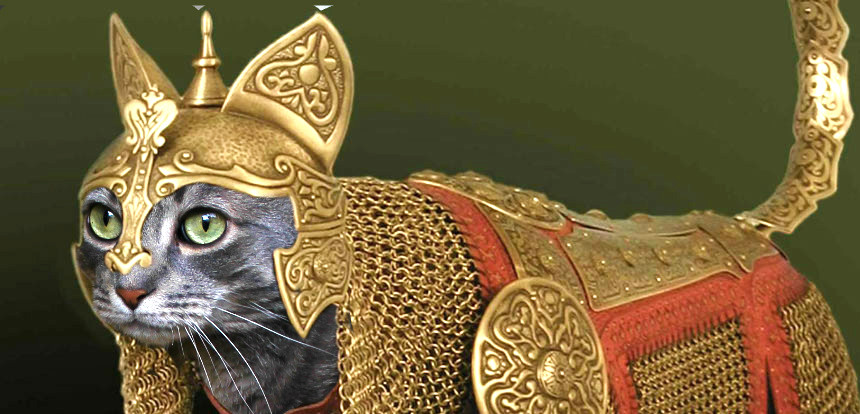
Warrior Bud
Buddy in his battle armor.

Several felines familiar with his thinking said he’d assembled a plan to capture and conscript the strays and ferals of his immediate neighborhood before turning toward the next realm, which is ruled by Lord Lorenz Macaro, a powerful shorthaired Chartreux.

From there, Buddy would set his sights on conquering the fabled Store of Groceries.

The aspiring warlord cat had his human take him on a test run and was surprised to see several human infants in their own chariots.

“Excuse me,” Buddy asked a young mother pushing twins. “I didn’t know human babies rode war chariots.”

The woman laughed.

“War chariot, is it?” she laughed. “May I say, you look so adorable in your own little kitty pram!”

As of press time, sources close to Buddy said the enraged tabby cat had refocused his ire on Big Buddy for lying to him and telling him a baby stroller was a war chariot.

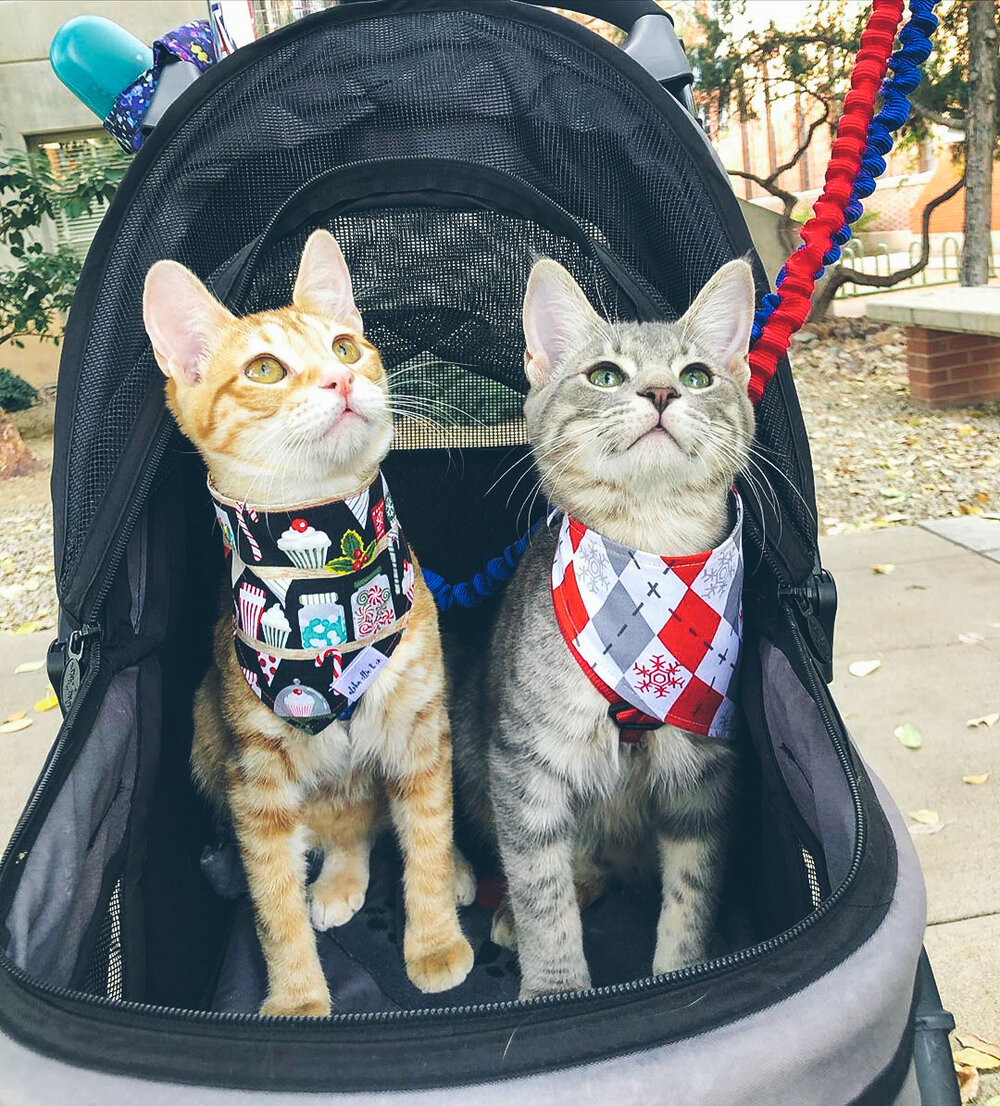
Cats in Mighty War Chariot
“On my mark, unleash hell!”