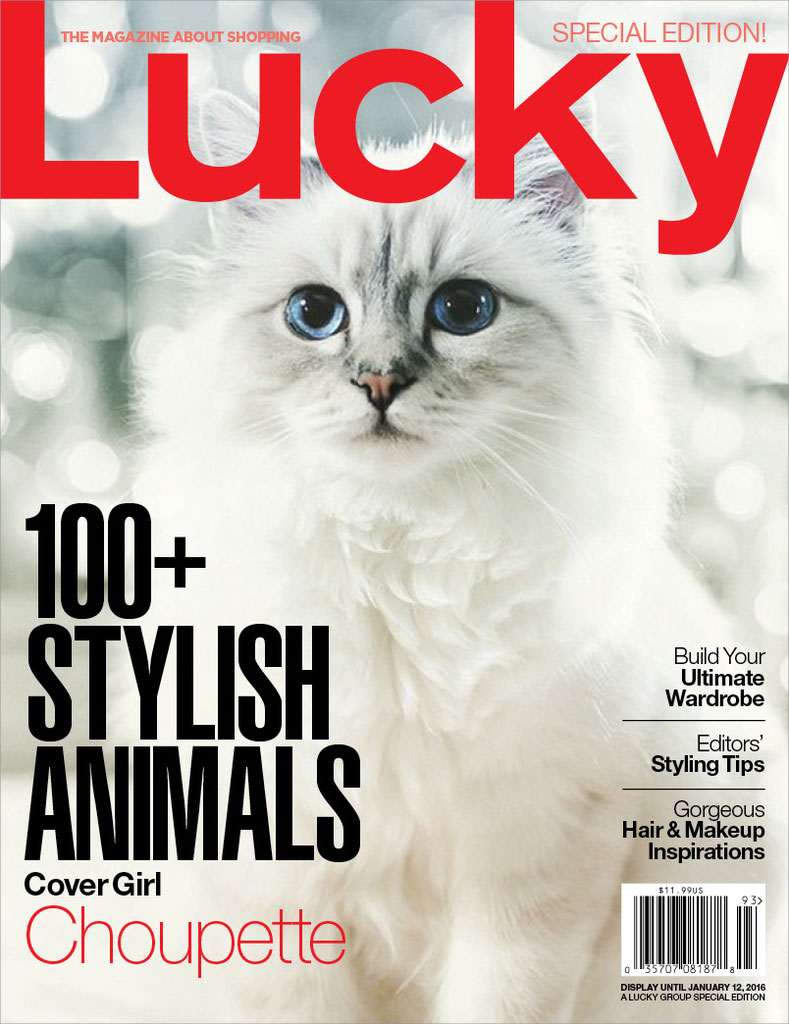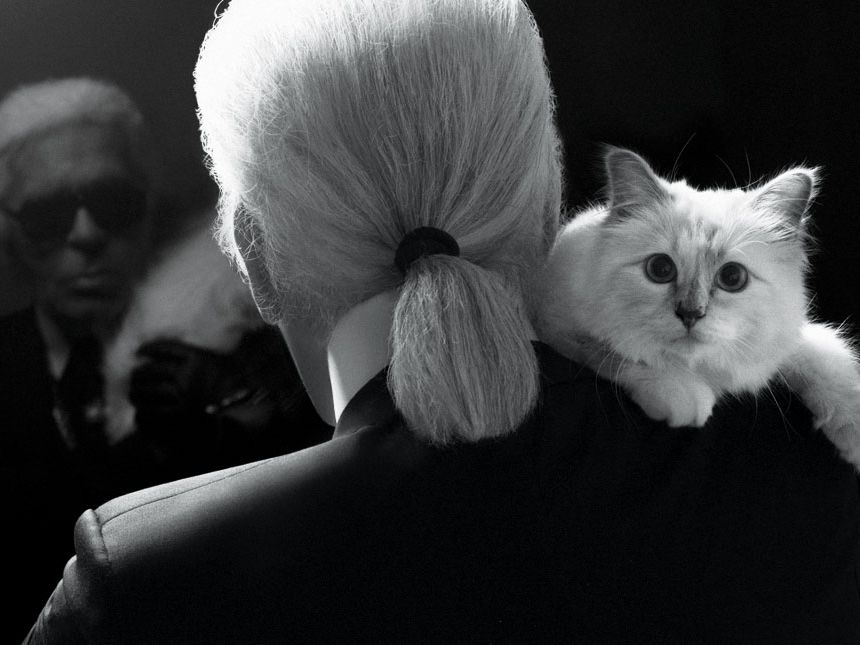
Choupette, The World’s Most Famous Cat, Did Not Like Kim Kardashian And Isn’t As Wealthy As Reported

Despite rumors of lavish excess, a staff of personal servants and even her own chef, Choupette’s reality is much less extravagant: she lives quietly with Lagerfeld’s longtime former maid in a Paris apartment.

When the people behind the Let-Them-Eat-Cake orgy of excess known as the Met Gala announced 2023’s event would honor the late designer Karl Lagerfeld, the natural question was whether Choupette would show up.

The Birman cat with striking blue eyes was the German fashion designer’s most beloved muse, and he was so besotted with her that he included her in almost everything he did.
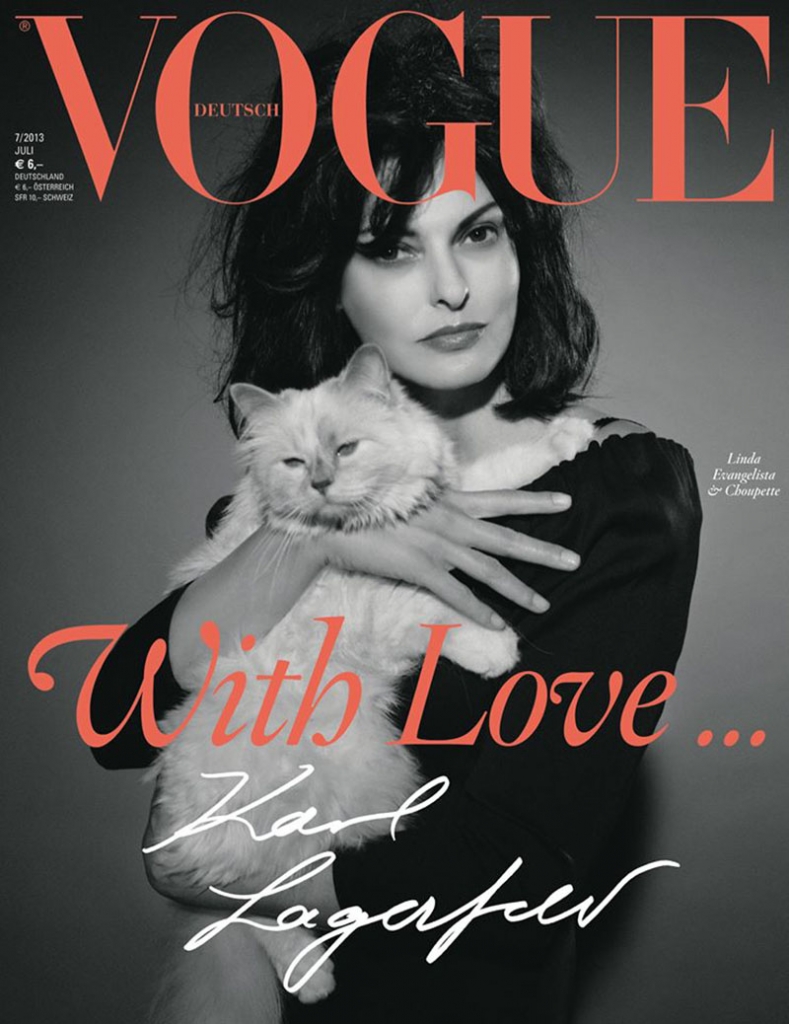
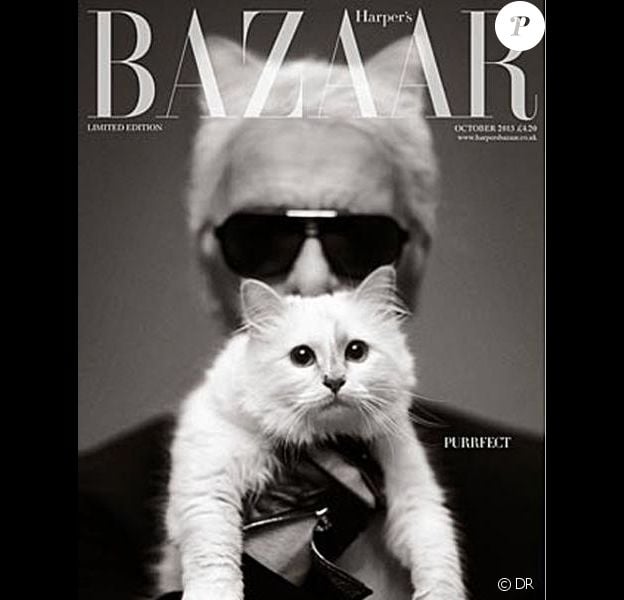
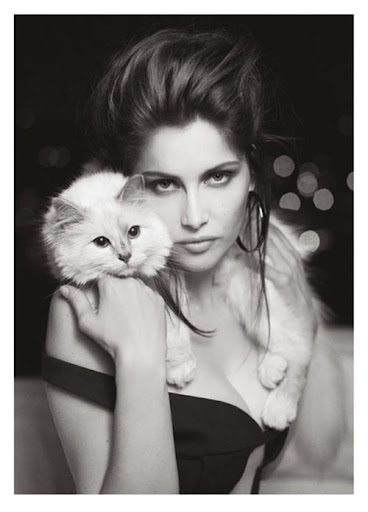
If Lagerfeld wasn’t photographing the fluffy feline in the arms of the world’s best known supermodels or bringing her as his plus-one to fashion world events, he was pining for her presence: she was his favorite subject in interviews, for which he had no shortage of superlatives to describe her.

Initially the plan was not only to include Choupette in the Met Gala fundraiser honoring the memory of her “daddy,” but also to pair her with that timeless icon of taste and high culture, Kim Kardashian.

So Kardashian, working with Choupette’s agent (yes, she really does have one), traveled to Paris to meet with the imperious kitty.

It did not go well.
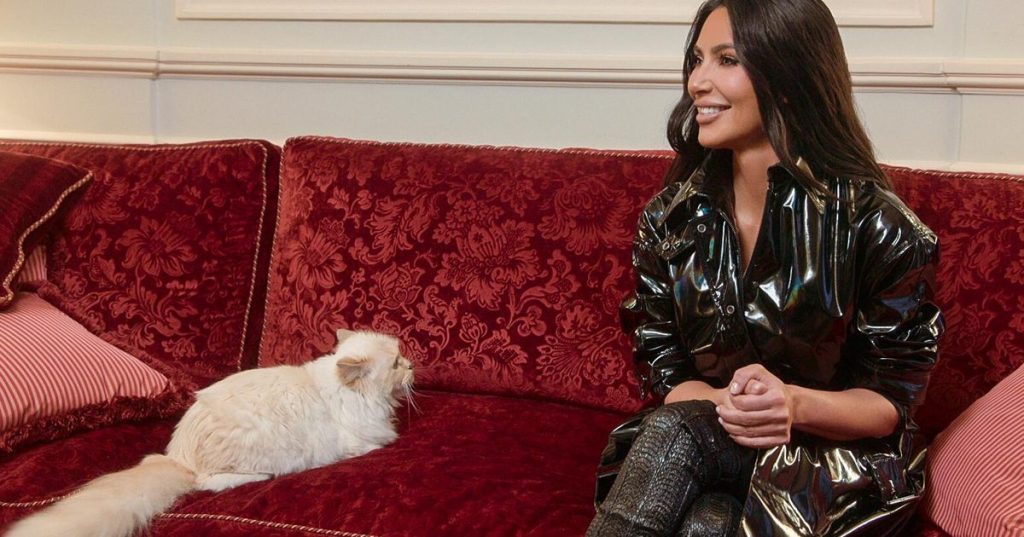
The ill-fated meeting. Credit: Hulu

The organizers think Choupette did not like the sound of Kardashian’s synth leather jacket, but I like to think the pampered puss found Kardashian too artificial even for the circles she and her late human moved in.

Regardless, after several bouts of prolonged hissing and a lunging attempt at clawing the reality TV star, both parties called a halt and decided Choupette would not be attending the gala.

This detail, along with other interesting tidbits, were revealed in a story published by The Atlantic today.

The lengthy article provides a little more background on how Lagerfeld was instantly converted into a cat servant, as well as a breakdown of the situation involving Lagerfeld’s will.

In short, while everyone in the know agrees Lagerfeld did put aside a considerable sum for his beloved feline’s continued care and comfort, a tax dispute between the French government and his estate has effectively frozen disbursement of Lagerfeld’s money, assets and real estate.
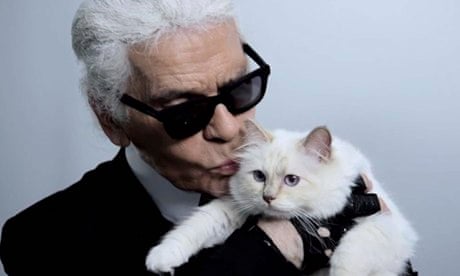
Lagerfeld with Choupette. The designer died in 2019.

An expensive piece of property owned by Lagerfeld is in Monaco, attorneys for his estate contend. French authorities naturally disagree, insisting it’s technically in France, which means there’s a substantial back tax owed.

French law does not allow animals to inherit money, so the sum Lagerfeld intended for Choupette was willed to her caregiver. Not a single Euro has been paid out as lawyers haggle over the tax issue.

Choupette isn’t on the street or anything close to a pauper. She remains in the care of Lagerfeld’s longtime maid, Françoise Caçote, who was the feline’s primary caretaker in the German designer’s absence. They live in a comfortable apartment in Paris, where Choupette eats and naps well, and is watched over by Caçote, her husband and children.

Media reports of a vast fortune, a personal chef serving up gourmet cat food and a round-the-clock team of professional pamperers do not reflect reality, but Choupette doesn’t care.

“The most important thing is that she’s happy, surrounded by love and affection, and protected as Karl would have wanted,” Caçote told The Atlantic’s Chris Heath.

While Choupette skipped the Met Gala, actor Jared Leto went all out with a costume that captured her look.

For Choupette, that’s all that matters. Max Renneisen, a German artist who has painted portraits of Choupette, pointed out our remarkable ability to turn animals into anthropomorphic characters. (A sin I’ve never been guilty of, obviously. Little Buddy dictates his musings and I merely serve as stenographer.)

“All the fuss we do about her, all this concept of celebrity, giving a meaning to her, everything—this is us, for the humans,” Renneisen observed. “Choupette is not a diva. She’s a cat, and we want to see the diva in her.”
Pope Benedict Asked Us To Be Compassionate Toward Cats And Other Animals

The late Pope Benedict was well known for his lifelong love of cats, but he was also a champion of animals and spoke out about the cruelties visited upon them by humankind.

Long before he was the pontiff, when he was just a young man named Joseph Ratzinger, the future Pope Benedict was known as a cat guy.

Growing up in the village of Hufschlag, about 55 miles southeast of Munich, Benedict’s family always had pet felines and he fed strays who spent time in their garden. During his years teaching theology to students at Bavaria’s University of Regensburg in the 1970s, then-professor Ratzinger was often seen followed by an entourage of cats — the little ones he fed and cared for — as he crossed campus.

“They knew him and loved him,” said Konrad Baumgartner, a fellow theologian at Regensburg.

His affinity for his four-legged friends never faded, even as he took on more responsibility and had more demands on his time. Cardinal Tarsicio Bertone, one of Benedict’s colleagues, said the German clergyman had a natural connection with animals.

“On his walk from Borgo Pío to the Vatican, he stopped to talk with the cats; don’t ask me in what language he spoke to them, but the cats were delighted,” Bertone recalled. “When the cardinal approached, the cats raised their heads and greeted him.”

The Pope and the Cat
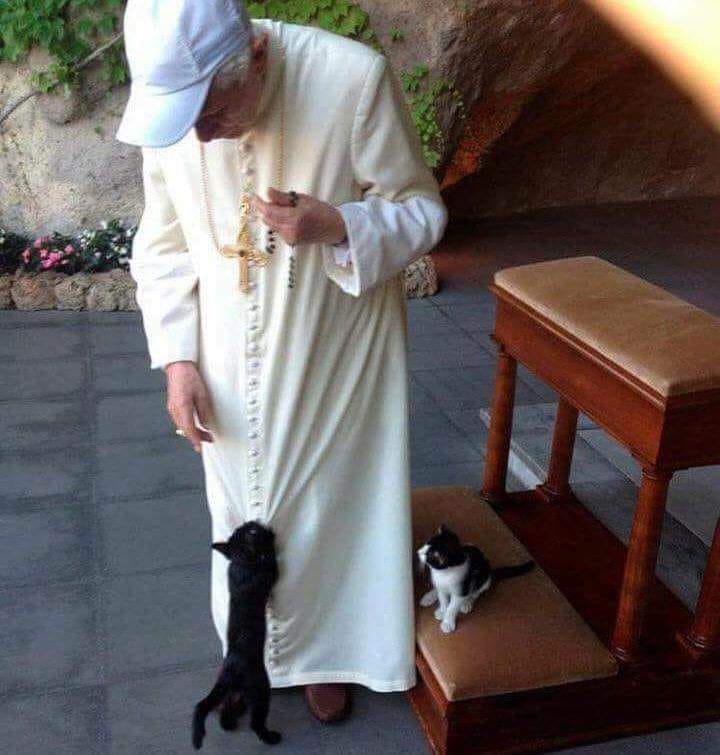
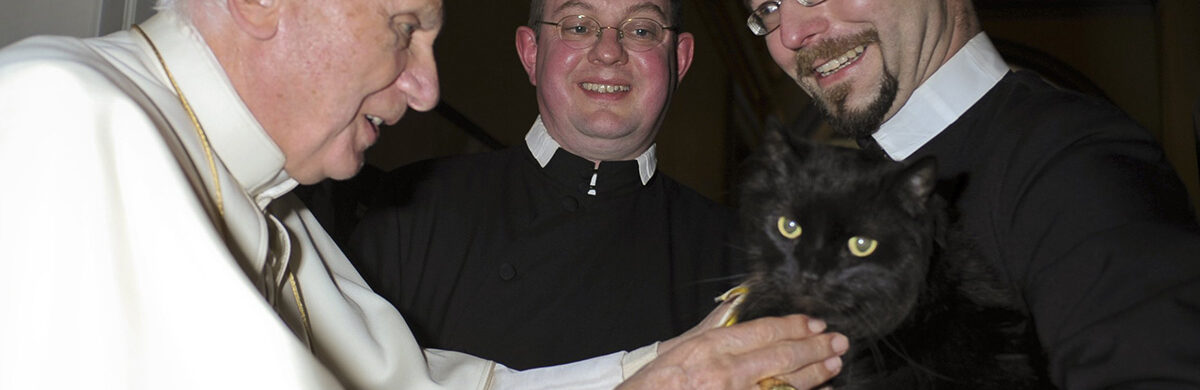
Pope Benedict with one of his cats.

As pope, Benedict continued to care for strays, and had two cats of his own — one who’d been with him since before he was made the leader of the global church, and another he rescued off the streets of Rome.

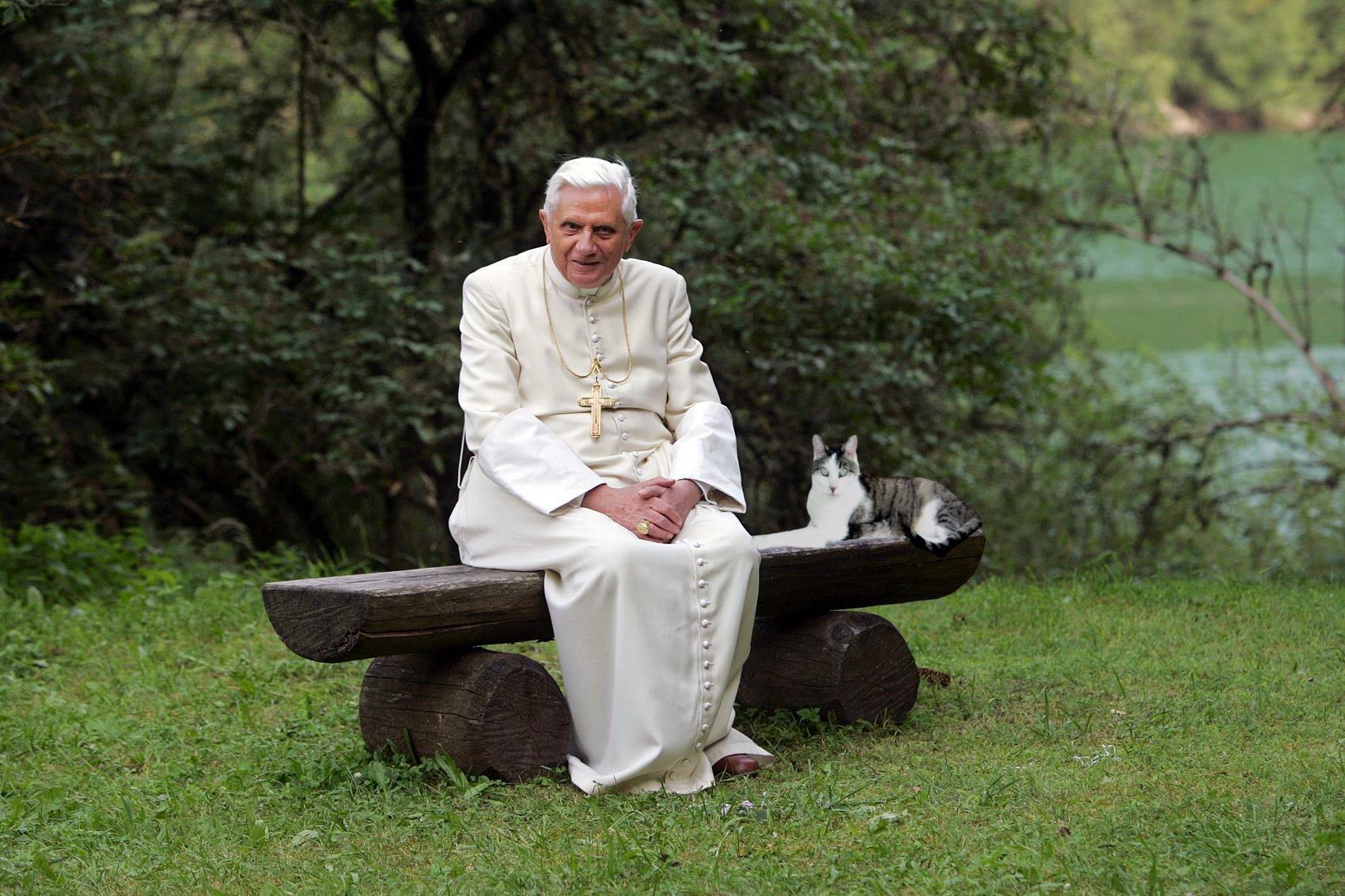
Photos of Pope Benedict with cats are different than the typical shots showing him meeting with world leaders or waving to crowds. His expression and posture are more relaxed in the presence of felines, and he’s often smiling in the images that show him holding a cat.

But it wasn’t just personal for Benedict.

“Dominion” over animals

For centuries, some people — mostly outside Catholicism, but some Catholics too — have argued that animals exist for the use of mankind, that their purpose on this Earth is to serve as resources. Proponents of the view point to a handful of Old Testament quotes, including a famous quote from Genesis that says God gave man “dominion over the fish of the sea, and over the birds of the air, and over the cattle, and over all the wild animals of the earth, and over every creeping thing that creeps upon the earth.”

Genesis 9:3 attributes this quote to God: “Every moving thing that lives shall be food for you.”

The Pope and the Cats
Pope Benedict was well known for his love of cats, from his childhood in Bavaria to his days as pope emeritus living in retirement.

Other verses detail precisely which animals they can eat and remain in His good graces, and many Christian sects see those lines as a clear indication that God intended for animals to serve the needs of men.

But the Old Testament also tells us we can take slaves (Leviticus 25:44-46), that parents can have their kids stoned to death for disobeying them (Deuteronomy 21:18-21), that when children make fun of others, it’s totally cool to call upon righteous bears to maul them to death (2 Kings 2:23-24), and that people with blindness, flat noses and other ugly “blemishes” should wait outside church with the rest of the rejects while the good-looking people pray. (Leviticus 21:17-24).

Don’t even get me started on Sampson and the Book of Numbers.

The point is, if you’re going to be a stickler for things supposedly okayed or forbidden in the Old Testament, animals are the very least of your problems, especially if you trim your beard, let your hair get too long, wear shirts made of two different materials, or have ever placed a bet on DraftKings.

“Animals are God’s creatures”

As we look back on the life of the late pope emeritus, it’s worth noting that Benedict and his successor, Pope Francis, have rejected the view that animals are God’s version of scripted NPC automatons who exist so we can eat steak and wear leather jackets.

“Clearly, the Bible has no place for a tyrannical anthropocentrism unconcerned for other creatures,” Pope Francis declared in 2015.

Benedict spoke out about the cruelty inflicted on animals, the incalculable suffering of animals in industrial farming circumstances, slaughtered by the billions for food after short, brutal lives in which no consideration is given to them as living, sentient creatures.

In a 2002 interview, Benedict called animals “companions in creation” and criticized the modern food industry for its “degrading of living creatures to a commodity.”

“Respecting the environment,” he said in a 2008 interview, “means not selfishly considering [animal and material] nature to be at the complete disposal of our own interests.”

Francis made the church’s position absolutely clear with an encyclical — an official letter to members of the church — called Laudato Si. In it, he condemned the “ruthless exploitation” of animals as commodities and asserts they are individuals who are recognized by God. He urged Catholics to treat them well, to respect and protect wildlife and the environment they depend on.

Animal life has “intrinsic value,” Francis said, adding that Christians must reject the idea that animals are “potential resources to be exploited.”

As if speaking directly to people who use the aforementioned Old Testament quotes to support practices like factory farming, harvesting animals en masse for pelts and hunting for the “fun” of it, Francis said:

“We must forcefully reject the notion that our being created in God’s image and given dominion over the earth justifies absolute domination over other creatures.”

Both popes also noted that, in addition to the suffering we cause, when we exploit animals as are also behaving in a way beneath the dignity of humankind. It’s a stain on our collective identity as a species, a betrayal of our roles as wardens of the planet.

Let’s put aside the moral considerations for a moment. The continued existence of the complex ecosystems on our planet — and indeed of humanity itself — depends on the many roles animals play, from carrying seeds to pollinating plants, limiting the growth of flora that would otherwise dominate and destroy other plants, rerouting water systems by creating dams, controlling the populations of creatures that would otherwise multiply unchecked, and the thousands of other roles they play in maintaining the balance of ecosystems.

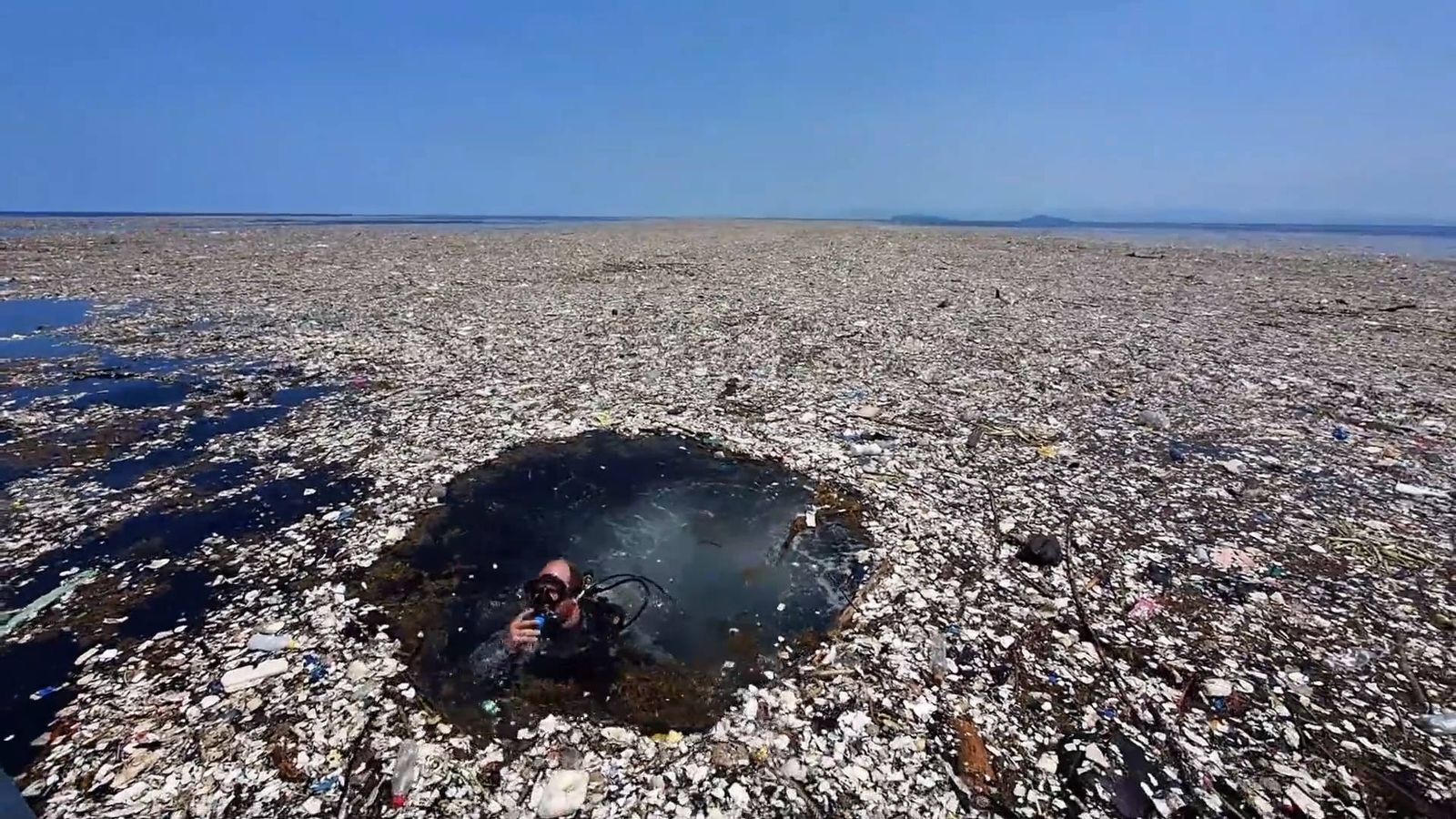
Benedict left this Earth on Dec. 31, 2022, at a time when we have killed off almost 70 percent of all wildlife in the entire world. It’s not just a matter of living on a lonely planet, or tucking future children into bed while telling them that, no, they can’t see elephants or tigers because the last of them are dead. Removing keystone species, extirpating entire genera while rendering vast stretches of the planet uninhabitable, purging the oceans of life as they accumulate literal continents of plastic waste, means we’re marching toward a cascade failure most of us won’t even see coming as we argue about carbon credits, politicize common sense, tinker with viruses and edit genomes.

It’s long past time we recognize the fact that we share this planet with billions of other minds and start living in a way that respects them. If we can save them, perhaps we can save ourselves too.

Great Pacific Garbage Patch
The 1.6 million square kilometer Great Pacific Garbage Patch, which weighs more than 80,000 metric tons.