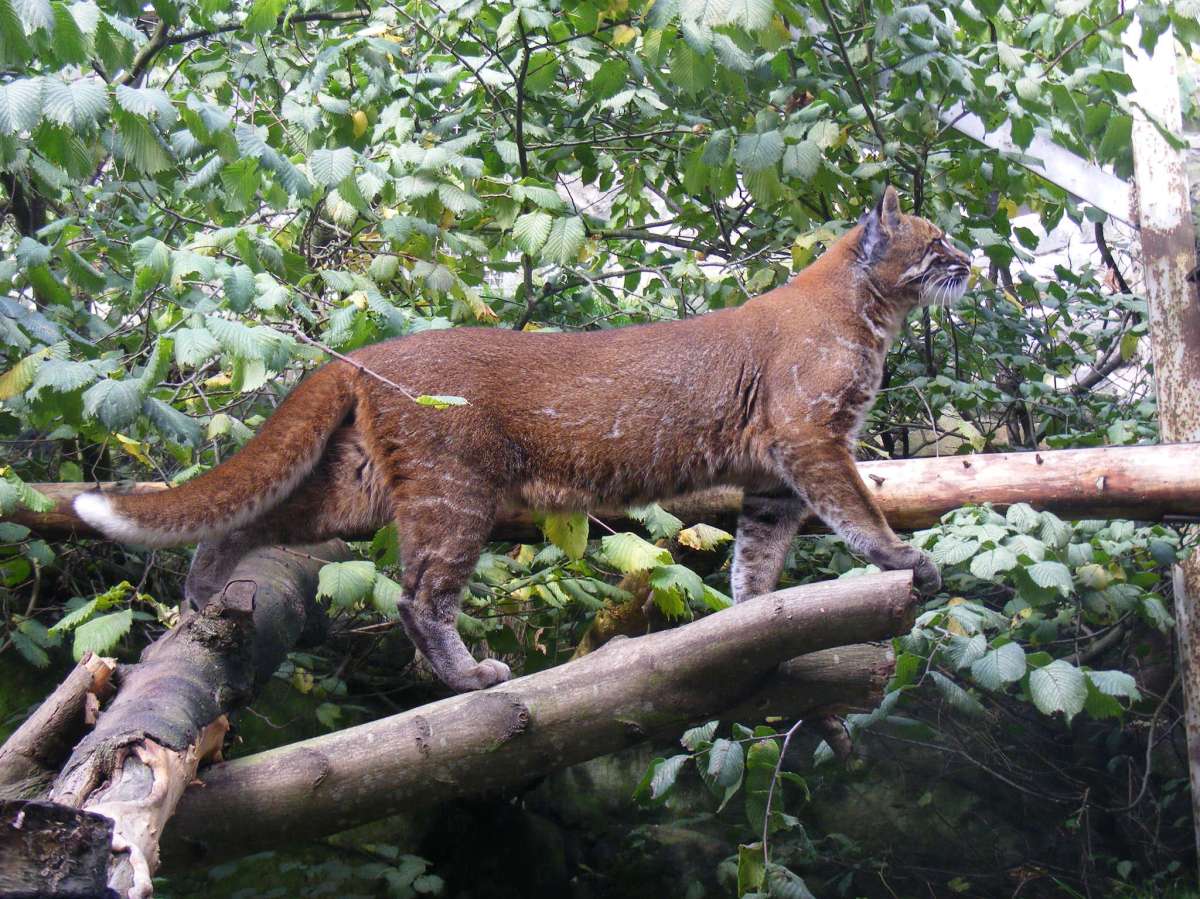
The Asian golden cat, also known as catopuma, is an elusive medium-size wildcat with striking features and exceptional hunting abilities.
It’s extraordinarily elusive, moves with a grace superlative even among fellow felids, and enjoys mythical status in many of Asia’s cultures.
It is the Asian golden cat, a medium-size feline that calls a diverse range of places home, from the mountains of rural China to the jungles of Sumatra.
Known officially as Catopuma temminckii, the species is about three times the size of domestic cats but extremely adept at taking down much larger prey, including young water buffalo and other ungulates several times the cat’s body weight.
An Asian golden cat. Credit: Wikimedia Commons
Asian golden cats inspire legends in many Asian cultures in part because of how difficult they are to find. Even the appearance of one on a trail camera in Thailand’s Khao Luang National Park this summer spawned news headlines, so rarely are they seen.
Often, as was the case with the recent sighting, they’re fleeting, just glimpses before the animals melt back into the jungle. The fire tiger seen in the June 20 trail camera footage pads across a clearing, clearly unhurried, before disappearing back into the ground cover.
In some places it’s good luck to catch a glimpse, while in other locales — like parts of Thailand — people believe a single strand of Catopuma fur is enough to protect the bearer from their larger cousins, panthera tigris. (I wouldn’t rely on that personally, but it does show how large tigers loom in the imagination in areas where they still roam the wild, even as low as their numbers are these days.)
While the Asian golden cat is known as the fire tiger in some places, it’s not a close relative of true tigers, at least not in terms of the cat family.
Credit: Wikimedia Commons
Catopuma is a feline, meaning it can meow and purr, but cannot roar. That puts the species closer genetically to domestic cats, pumas, ocelots, servals and other members of the feline subfamily. True big cats — tigers, lions, jaguars and leopards — are part of the pantherinae subfamily. Aside from their size, they are distinguished by their ability to roar, but they cannot purr or meow.
The Asian golden cat is a feline, but shares some physiological features with big cats
Even though catopuma is genetically closer to small- and medium-size felines, its gait, substantial tail and head shape are reminiscent of big cat features.
The ferocious medium-size cats also have a melanistic color morph that makes them look like smaller versions of jaguars and leopards.
A melanistic catopuma seen on a trail camera. Credit: Panthera
The fire tiger is classified as threatened as its habitats are destroyed to make way for more palm oil plantations, among other agricultural and industrial facilities.
It’s the first time a mountain lion has been spotted in New York since 2011. Authorities aren’t sure if the cat is an escaped — and illegal — pet, or if it made an epic journey from the west coast.
For the first time in 14 years, there’s a puma on the loose in New York.
The wild cat was spotted on a Rochester woman’s Ring doorbell camera padding along the sidewalk in front of her home at about 4 am on Wednesday morning.
A representative from the state Department of Environmental Conservation cautiously said the agency is working on confirming the species of cat in the footage.
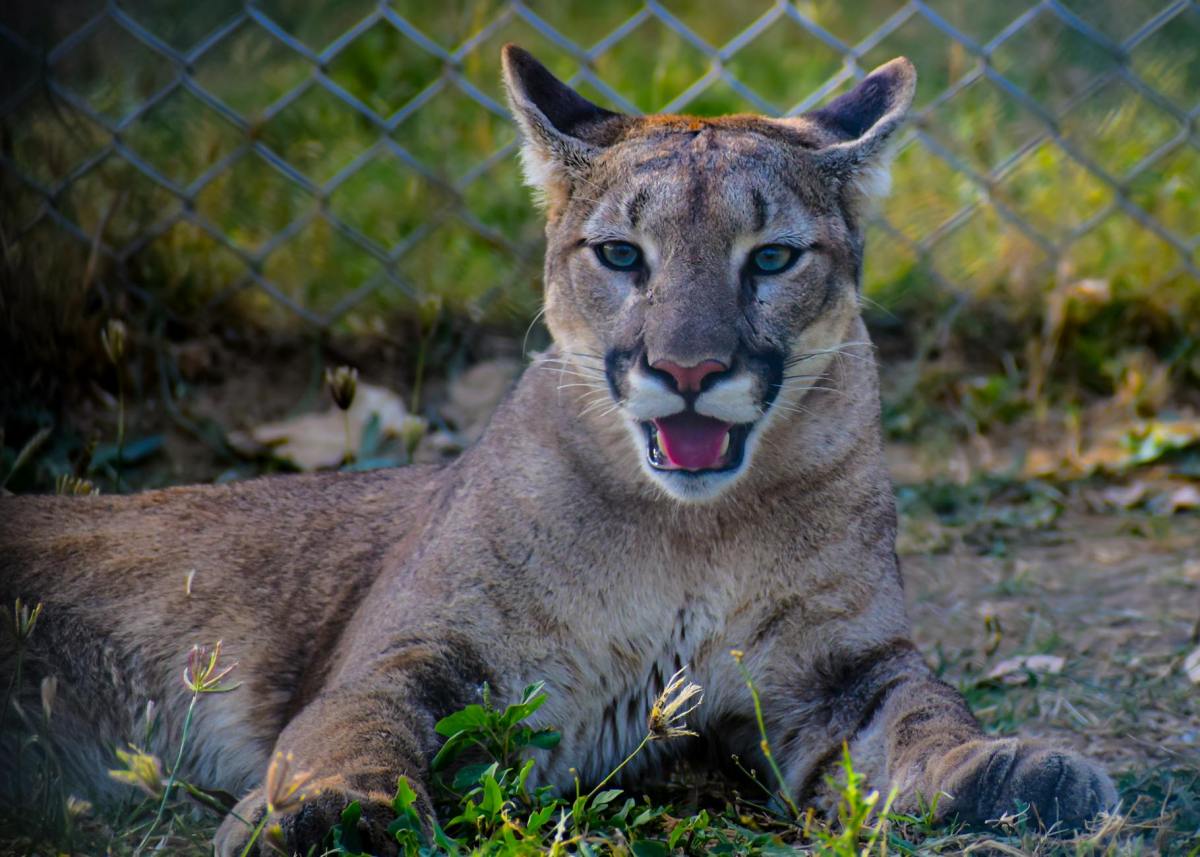
But the feline’s size, gait and tail are dead giveaways, despite the dark footage and fleeting glimpse: it’s a puma.
In the brief clip, the wild feline walks past a tree, giving the DEC an important context clue. Michael Palermo, a wildlife manager with the department, said his team measured the tree, allowing them to closely estimate the animal’s size by comparing the footage to their measurements.
“If, in fact, it is some large cat, we would want to question, how did it get here? It’s not impossible for a wild cougar to travel to New York; it’s happened before,” Palermo said. “Was it a captive one that may have been legal as a licensed facility, and if so, did it escape? We still need to do some work to verify anything like that.”
While pumas were once native to New York and thrived in the forested mountains of regions like the Catskills (“cat creek” in Dutch), the last verified sighting in New York was in 2011. That cougar crossed through the Empire State after an epic journey from the west coast, a stronghold for the species.
Some people who posted to a Rochester community group on Facebook are already freaking out, and pumas are widely misunderstood, so it’s important to note the facts:
Pumas are not African lions, are not closely related to them and do not behave like them
They’re not aggressive toward people. In fact, they try to stay away from humans and will go out of their way to avoid confrontation
The exceptions are when people threaten a puma’s cubs or corner the animal, giving it no opportunity to escape
Americans are 150 times more likely to be struck by lightning than killed by a puma. There are only 27 reported cases of people killed by pumas in more than a century. By contrast, an estimated 4,300 to 10,000 Americans have been killed by dogs in that same time span. (Higher estimates include people who did not die immediately from dog bites, and people who died of infections or complications from bites.)
While some people and media reports erroneously call pumas “big cats,” they are not members of the panthera genus. They are felines more closely related to domestic cats and small wildcats. Accordingly, pumas can purr and meow, but they cannot roar
Pumas are also known as mountain lions, cougars, panthers, painters, screamers, catamounts, pangui, onca parda, cuguacuarana, katalgar, chimbica, shunta-haska, fire cats, California lions, ghost cats, and red tigers, among many other names.
In fact, the species has more names than any other animal. That’s because it’s adaptable with a historically wide and varied range. There are some 40 names for pumas in English and more than 80 in Spanish, Portuguese and the languages of indigenous Native American tribes.
The species is officially known as puma concolor, or “puma of one color” thanks to its typically biege fur that, unlike tigers, jaguars, leopards and even house cats, does not have stripes, spots or rosettes.
While it’s extremely unlikely the mystery cougar would pose a threat to people, Rochester police — who have fielded several reports of sightings in recent days — advise locals to keep their pets indoors and to exercise caution while walking their dogs.
Update: The DEC has officially confirmed the cat is a puma, although it was obvious from the footage.
In the meantime, a Rochester man says he saw the wild cat — and people running away from it — on Wednesday night.
Although that sighting has not been substantiated by authorities, it does illustrate the need to educate the public about these animals.
“You know, a mountain lion, it be ‘rawr.’ They be crawling and… serious,” Curtis Jones told WHAM, an ABC affiliate in Rochester.
“I am going to keep this bat right here, man, just in case,” he told a TV reporter. “I am going to protect us, I ain’t going to let nothing happen to us, nothing. OK?”
Let’s hope common sense somehow finds its way into the Facebook algorithm amid all the misinformation as the locals discuss the sightings online.
If you’re from the area, we beg you: please do not attack, shoot or chase after the puma with a baseball bat. The animal does not consider you food, is not a danger to you, and is probably scared and hungry.
That deserves special emphasis if, as the DEC’s staff have said, the puma is more likely an escaped captive than a long-wandering traveler from the western US.
Jones said he saw the puma “slithering” and hear it “rawr,” but it’s worth noting, again, that pumas are members of the genus felinae, meaning they’re genetically and behaviorally much closer to house cats and can meow and purr, but cannot roar. Despite their size, mountain lions are not true “big cats.”
As for Jones, we hope him and his neighbors give the cat a wide berth and let the authorities safely capture it, have a veterinarian evaluate, and figure out where it belongs.
“I don’t play with lions, I don’t play with tigers, bears, nothing in the wild, I don’t play with those, I promise you,” Jones told the station. “I don’t even do rollercoasters. I’m good.”
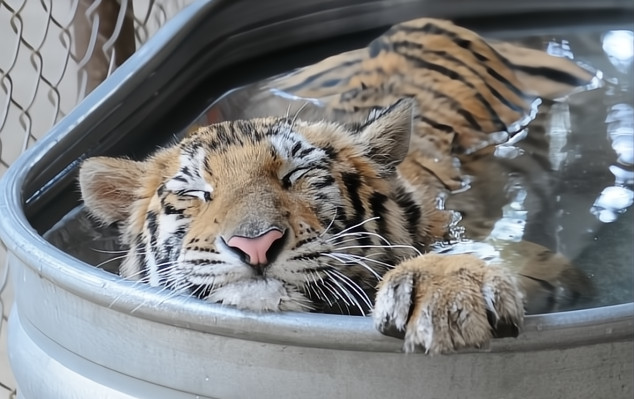
For tigers, going for a dip on a hot day is pure bliss.
Most cats wouldn’t go near water if even if you lured them with a giant spread of catnip and Temptations on an inflatable table.
But tigers? They love it. Here are some shots of the world’s biggest cats taking a dip.
A Malayan tiger named Azul going for a swim at the Bronx Zoo. Credit: Julie Marsen Laher, Wildlife Conservation Society
Siberian tigers in a tub at a sanctuary in Russia. Credit: digger03/Flickr
This meme made me laugh.
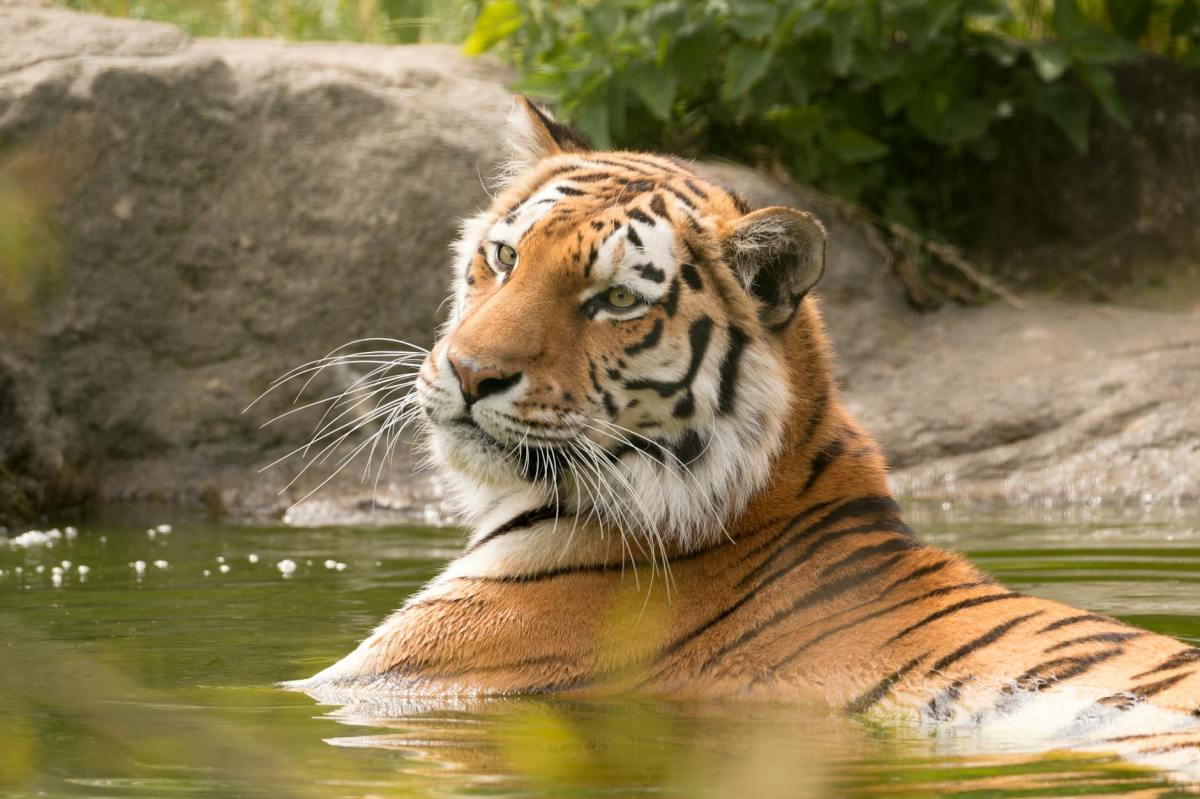
Aasha was rescued from a traveling circus after an inspector found her sickly, suffering from ringworm and only 30 pounds at 8 months old. She’s flourished since she was brought to a sanctuary where she’s been given proper care, a good diet and a calm environment. Aasha is also pictured in the feature photo up top.
A tigress and her cubs cooling off in a river in India. Credit: Sandesh Kadur
Sundarban tigers are a subspecies of the Bengal who live in mangrove forests and are well-adapted to swimming. This Sundarban tiger was spotted on a wildlife tour in India. Credit: Soumyajit Nandy/Wikimedia Commons
This tiger cooled off on a hot day at the Dortmund Zoological Garden in Dortmund, Germany. Credit: Hans Stieglitz/Wikimedia Commons
Angry locals say they’ll kill the tiger if forest rangers do not after the predator ambushed and ate a mother of two in southern India on Friday.
Forest rangers are on the hunt to capture a man-eating tiger who killed a woman and dragged her body into a forest on Friday, while frustrated locals say they’ll destroy the predator if the government does not.
The victim, a 45-year-old woman named Radha, was employed by a local coffee plantation in Mananthavady and was harvesting coffee beans when the big cat ambushed her, according to multiple reports in local media. Mananthavady is a city of about 47,000 people in southern India surrounded by rural farmland.
A Thunderbolt team — a special forces unit trained in counter-insurgency — was patrolling the area when they found blood and signs of a struggle. They followed the tiger’s pug marks into a nearby forest, where they found Radha’s body “half eaten,” the New Indian Express reported.
The attack and the livid response of people in the area highlight the conflicts that India must manage as it works to save tigers, the country’s critically endangered national animal, while also protecting the public. India’s government has relocated thousands of families away from the vast country’s 27 tiger preserves, but the big cats are oblivious to the boundaries of the preserves.
Earlier this month, people living in several contiguous towns over a stretch of more than 130 miles in eastern India barricaded themselves indoors, refusing to leave for work or to travel to local markets, after a pair of hungry tigers had drifted off a preserve and had begun to feast on local livestock.
A tiger who was seized and relocated from a roadside zoo operated by Joseph “Tiger King” Maldonado-Passage. Credit: Wikimedia Commons
In Mananthavady, locals threatened a hartal, a form of strike aimed at gaining concessions from the government, if the tiger is not killed. Forest rangers and local government leaders said they would capture and relocate the tiger, who has been spotted on a trail camera, but the locals say that’s not good enough.
“If you can’t shoot the tiger, then shoot us instead,” one protester told forestry officials.
Others said they’d take matters into their own hands if authorities don’t kill the tiger. It’s not an empty threat: in 2019, a mob of enraged villagers beat a tigress to death after she attacked a person.
Radha was the third person to be killed by tigers in the area since 2023, when two farmers were killed by the endangered apex predators in incidents about 11 months apart.
In addition to the anger and grief felt by family and friends of the victims, the government’s compensation program is also controversial. Radha’s family will receive ₹11 lakh, according to reports, which was about $12,800 in USD according to exchange rates on Jan. 25.
The program has been condemned by people who say the government is wrong to put an arbitrary monetary value on human life, and in recent years there have been attempts to provide families with resources like job training in addition to monetary compensation. The issue remains a sore spot and a topic of ongoing litigation because the government did not compensate victim families for decades, and does not automatically provide compensation if the victims trespass onto preserve land.
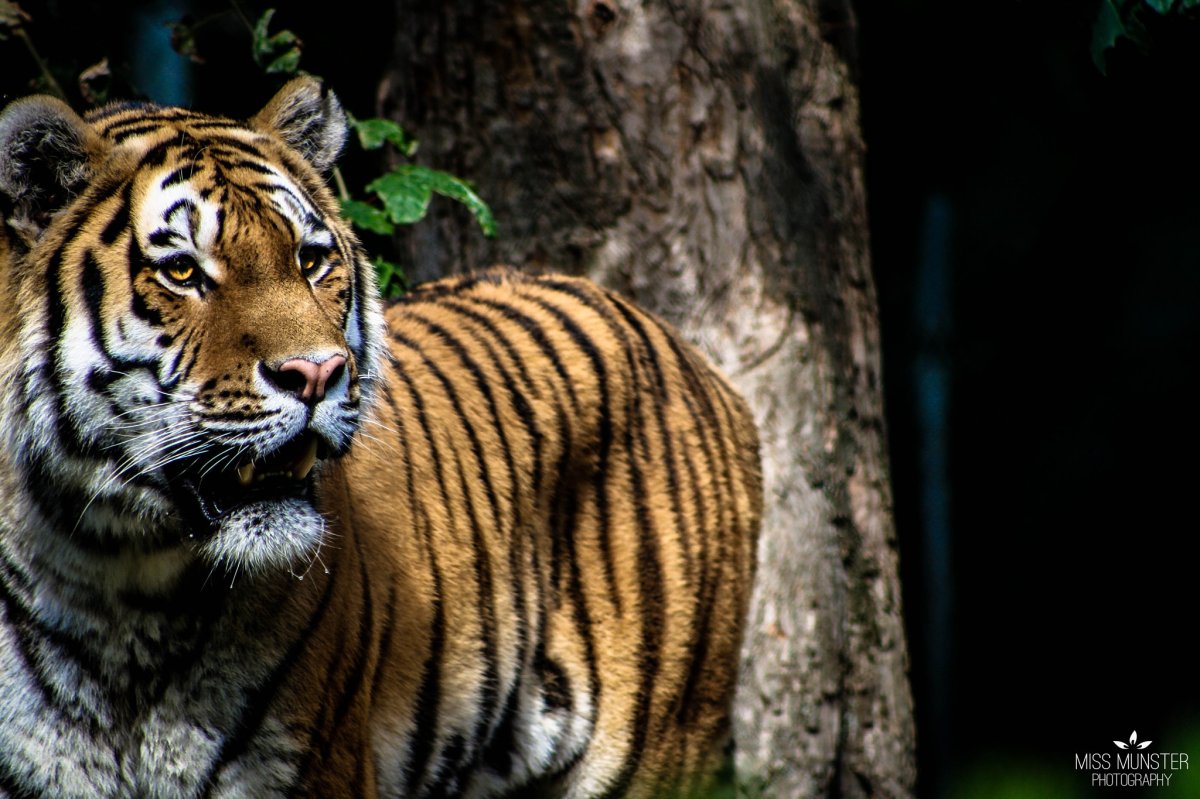
Tigers are the largest and most dangerous of all cat species, and are arguably the most dangerous land animal on the planet, but the vast majority of them do not attack humans and give people a wide berth. Unlike most other felids, they enjoy water and swimming, especially in warm climates. Credit: Warren Garst/Wikimedia Commons
In the meantime, a team comprised of rangers, veterinarians, expert trackers and others — totaling about 100 people — was racing to get to the tiger before the mobs do, utilizing drones, traps and thermal imaging cameras to find and capture the elusive predator.
“The animal is still roaming in the same vicinity, and we are strengthening local patrols to prevent further casualties,” KS Deepa, chief conservator of forests in the region, told local media.
Most tigers who turn man-eater do so because they can no longer take down their usual prey without difficulty, either due to old age or because their teeth are damaged. The infamous Champawat tigress, who killed 436 people during a decade-long reign of terror from the late 1890s through 1907, turned man-eater when a hunter’s bullet shattered one of her canines.
It’s wasn’t clear what forestry officials planned to do with the tiger if it’s captured, but they told reporters they are forbidden by law from killing the animal unless other options are exhausted.
“There are three ways to capture the tiger,” A.K. Saseendran, India’s minister of forests and wildlife, told The Hindu. “We will try to cage it as the first step. If that fails, we will try to tranquilize it and move it out of Wayanad. Killing the tiger is the last resort.”
“If you feed your pet contaminated raw meat or milk, they will likely die. I’m not exaggerating, just giving it to you straight,” one infectious disease specialist warned.
In more disconcerting news from the bird flu front, a new study warns of exceptionally high mortality rates for cats who are infected with the virus.
That applies to all species of cats, from the true big cats in the panthera genus — tigers, lions, jaguars and leopards — to felines, a broad group that includes domestic cats, lynx, cheetahs, pumas, ocelots, servals, jaguarundis and others.
“We don’t know if the cats are more susceptible than anybody else,” the American Veterinary Medical Association’s Michael Bailey told USA Today. “It’s just the fact they’re exposed to higher viral burdens because of where they go.”
Whether cats are more susceptible is up for debate, but one SPCA chapter said felids of all species are “uniquely vulnerable” to avian influenza because there are so many ways it can be transmitted to them by doing nothing more than what they typically do.
The @SeattleTimes reported on the first 2 cases of Avian bird flu that’s killed 2 wild #cougars in Washington, as discovered by Panthera #Puma Program and Washington Department of Fish & Wildlife. Learn more from Puma Program Director Dr. Mark Elbroch: https://t.co/feOcHnPpWTpic.twitter.com/v2nrM1jDOC
Cats can be infected by catching and eating birds and mice, drinking raw milk, eating raw meat (including commercial raw pet food), and exposure to infected animals, including cows.
In Washington state, two wild pumas died after contracting the virus from prey, a development Panthera puma director Mark Elbroch called “troubling.”
“It certainly raises eyebrows and makes one wonder: is it indicative of a bigger pattern out of sight?” Elbroch asked, noting pumas are at the top of the food chain in the Pacific northwest.
To date, as many as 900 cattle herds across the US have tested positive for bird flu, according to the US Department of Agriculture, while two thirds of California’s dairy farms — 660 out of 984 — had confirmed cases as of Dec. 26.
Bird flu was the confirmed cause of death in a house cat from Washington who died after eating Northwest Naturals commercial raw food, which has since been recalled. Three house cats in Texas succumbed to the virus, which they possibly contracted from hunting mice. The bird flu was also responsible for the deaths of two domestic cats in California who drank raw milk, and 20 of 37 wild cats — including a tiger, several pumas, bobcats and a Geoffroy’s cat (pictured at left) — at the Wild Felid Advocacy Center, a sanctuary in Washington.
Contrary to popular belief, cats are typically lactose intolerant. Credit: DHG Photography/Pexels
Veterinarians are warning people to keep their cats indoors and to avoid raw meat diets, which have become more popular in recent years. Cats should not be given cow’s milk anyway, since most are lactose intolerant. As a general rule, kittens should consume milk from their mothers or kitten-specific formula, but should not be given milk from any other source.
“If you feed your pet contaminated raw meat or milk, they will likely die. I’m not exaggerating, just giving it to you straight,” tweeted Dr. Kristen Coleman, an assistant professor at the University of Maryland’s School of Public Health.
While the west coast accounts for the majority of confirmed bird flu infections, the virus continues to spread. A map from the Centers for Disease Control shows where infections have been verified as of late December:
Credit: Centers for Disease Control
Unfortunately, the bird flu outbreak comes on the heels of a heavily politicized pandemic and a major loss in trust in American institutions like the CDC after efforts to obscure the origins of SARS-CoV2, the virus that causes COVID-19.
It’s not clear if the fallout will make Americans less likely to heed warnings about bird flu and other potential viruses, but animal welfare groups and virologists say people can keep their cats safe with a handful of common-sense steps.









 Pain In The Bud