Mother Of Tigers: From Bottle Babies To Big Cats, She Raised Them And Now She’s Trying To Save Them

It took a tiger swiping at her for her to wake up from the dream of being close to big cats. Now Katherine Lee Guard’s mission is to educate people about the animals and how helping them means keeping a healthy distance.

No one knew Saigon better than Katherine Lee Guard.

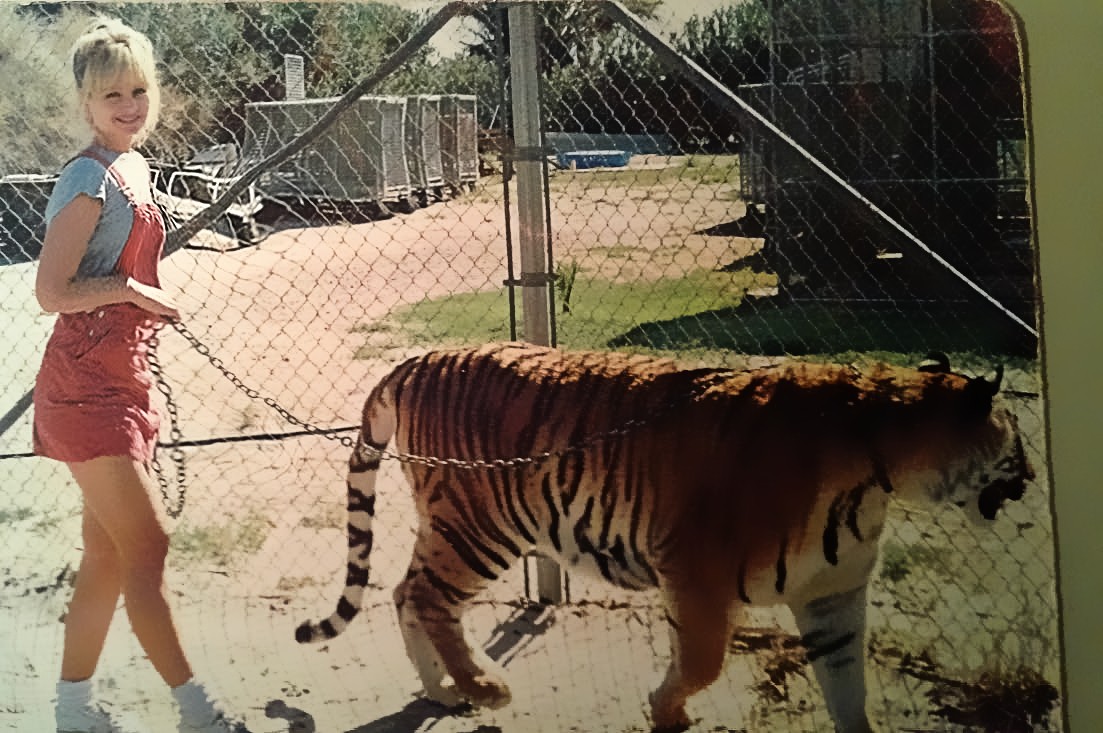
When he arrived at the wildlife ranch in Thermal, Calif., as a baby in the mid-90s, it was Guard who stayed up with him at night, bottle-feeding the orphan cub and swaddling him in soft blankets. She was by his side as he grew, tending to his needs, taking walks with him through the desert and scrubland on the compound that was his home.

Then one day the massive Amur tiger turned on her.

“It was just so shocking even though I knew it could happen,” Guard recalled. “I thought I knew but until it happened, I had no idea. It was terrifying and oddly a weird ‘How dare you!’ kind of feeling that came over me. Like ‘How dare you come at me after all I’ve done for you?’ Because I’d raised him, bottle fed him, been up all night with him.”

Guard was equally surprised by her own reaction, which she described as “more indignation than fear,” but it was that indignation that “allowed me to shelve my fear long enough to get away and out of the enclosure.” If Saigon had sensed her fear, his predatory instincts could have overridden the maternal affection he felt for her.

Saigon never tried to kill Guard. If he had, she wouldn’t be here to tell the story. He was merely warning her that he didn’t want her near him that day, and he made sure she got the message.
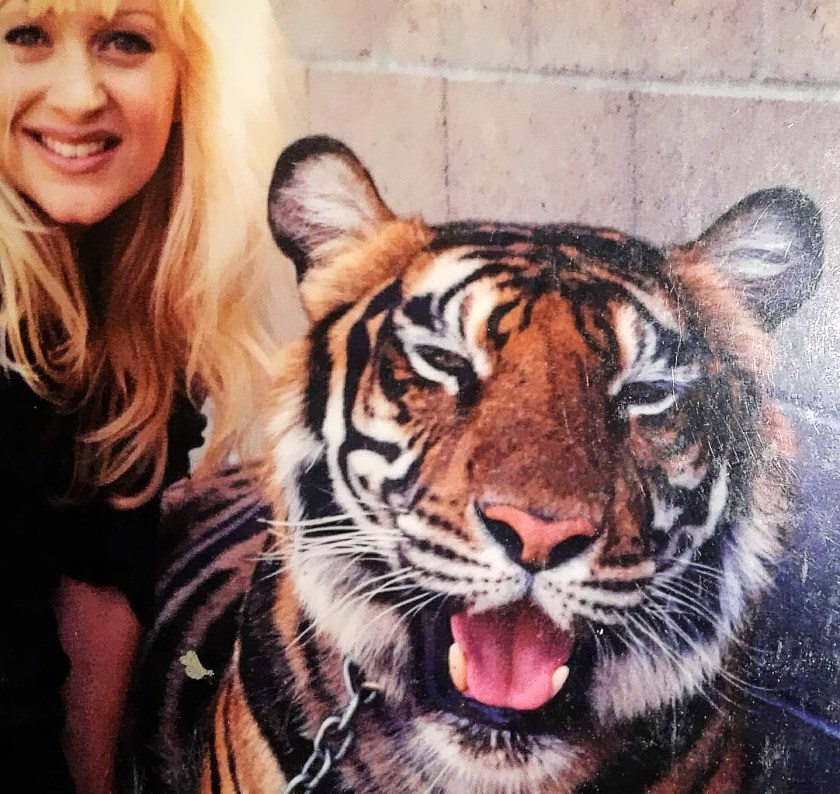
Katherine and Saigon
Katherine and Saigon on a happier day when the massive tiger was in a better mood. Credit: Katherine Lee Guard

Amur tigers, also known as Siberian tigers, are the largest big cat subspecies in the world, topping out at 700 pounds, with males spanning 10 feet from nose to tail.

But the encounter — a growl, a much-less-than full strength swipe and a warning bump — was enough to turn Guard into “a nervous, vomiting wreck” once she extricated herself from the enclosure.

“Getting swatted by a paw, even with sheathed claws, hurts like hell,” Guard told PITB. “I’d feel trounced, disappointed and relieved at the same time. And stupid for being in there with them, although I never would have admitted that to anyone back then.”

That first bad encounter with Saigon, and similar encounters with a lion named Tsavo that Guard had also bottle-fed when he was a cub, planted seeds of doubt in her mind about what she was doing on that California ranch, working with a man who had previously used the big cats in circus performances.


Years earlier when Guard’s mom came to visit her, Guard came out to meet her with baby Saigon in her arms, feeding him from a bottle.

Her mother stopped and took in the scene. “That’s not the baby I imagined for you,” she said flatly.

“I never forgot it,” Guard said.


Later, while caring for a female Bengal named Bombay, Guard had an epiphany. Like so many others who make it their life’s work to be near big cats, she had always been beguiled by the beautiful, powerful and dangerous animals. Looking at Bombay, Guard realized the regal tiger was “totally without pretense,” moving with the purpose and grace of a being self-assured in her existence.

“She was purposeful and unyielding and for the first time I felt separate from her and it didn’t bother me,” Guard said. “It was beautiful to realize that she didn’t need me or anyone else. Had she been given a chance in the wild, she would have flourished. The desire to know her thoughts and be her friend lessened in me because I started to appreciate her for her, not for how she could make me feel. ‘She’s not existing for me! She exists for herself!’ We don’t ‘own’ Bombay. Bombay ‘owns’ herself.”

“It was a light bulb moment, and in hindsight I think it was the beginning of the change in my mindset.”


Guard stopped the practice of going “full contact” with the big cats — meaning caring for them without any barriers or safety measures in place, relying on luck to avoid death or dismemberment — and eventually left the ranch around 2003.

In the two decades since, she’s been focused on educating the public about big cats, supporting conservation efforts and trying to rescue the unfortunate tigers, lions, jaguars, leopards and other wild felids who have the misfortune of living in roadside zoos where they’re sedated and exploited for customer selfies, or living sedentary, unnatural lives in cramped backyards in states like Texas and Florida.
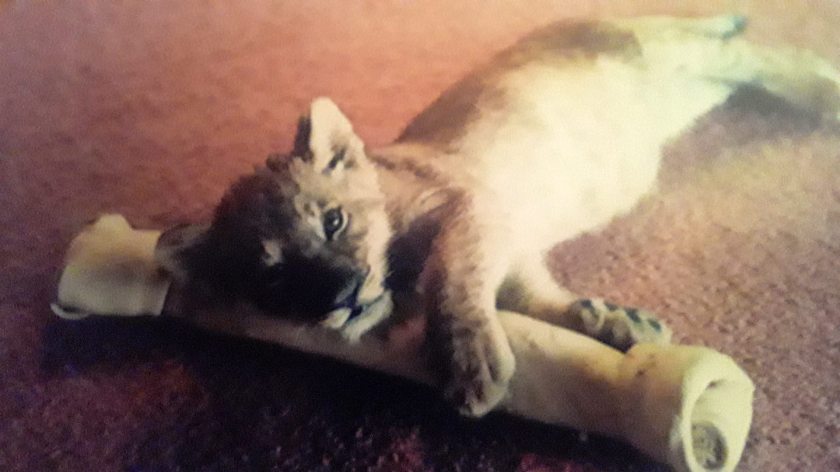
Tsavo
Tsavo the lion, who was rescued from “a shitty private owner,” was another one of Guard’s bottle babies at the sanctuary.

Like many others who have dedicated their lives to helping those animals, Guard is encouraged by the 2022 passage of the Big Cat Public Safety Act — but also miffed that it took lawmakers so long, and worried that loopholes in the law will be exploited by people determined to “own” Earth’s endangered apex predators.


The world of big cat handling is a small one, and the people in that world tend to know each other if not always well, then by reputation or in passing. Guard remembers meeting Joe Exotic, the “star” of the infamous Netflix documentary Tiger King, in the late 1990s. Her boss and mentor at the time, Wayne Regan, wanted Exotic to surrender some of his cats to the sanctuary. Regan and Guard had seen “Exotic’s” handiwork up close when they examined some of the tigers another sanctuary had managed to wrangle out of his care. The tigers were stressed, suffered from poor nutrition and were not well cared-for.

Exotic came to the meeting with a sickly, malnourished lion cub as if taunting the pair.

“I hated him immediately,” Guard said.

She was overcome with a desire to “steal the poor malnourished cub he had with him,” but Regan cautioned her against it. Knowing what “Exotic” — real name Joseph Allen Maldonado — is capable of, it’s probably a blessing that she didn’t, but she still thinks of the cub all these years later.

Exotic remains in a federal prison in Fort Worth, Texas, where he’s serving a 21-year sentence after he was convicted of two counts of trying to hire a hitman to kill his arch-nemesis, big cat sanctuary operator Carole Baskin. He was also convicted of 17 counts of animal abuse, and his name is synonymous with the horror and suffering big cats endure when they’re in the possession of private “owners” and roadside zoo operators.
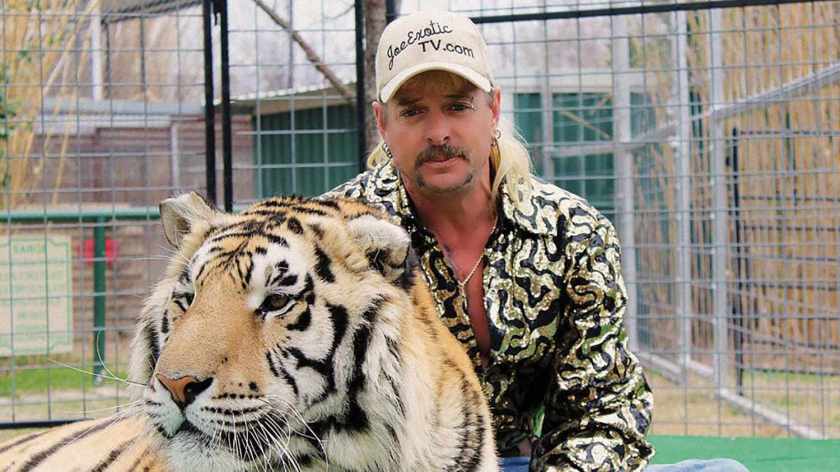
tigerkingexotic
Joe Allen Maldonado, who styled himself as Joe Exotic, was the subject of the infamous documentary Tiger King detailing his exploitation of big cats and his outlandish criminal activity. Maldonado remains imprisoned in a federal facility after he was convicted of trying to have sanctuary operator Carole Baskin killed.

Big cat advocates lament the fact that the documentary, as popular as it was, spent more time focusing on Maldonado’s eccentricities, Machiavellian maneuvering and manipulation of people in his orbit than it did on the suffering of the animals in his “care,” but it did draw attention to his crimes and the plight of tigers in the US.

“He tortured and killed and exploited so many animals,” Guard told PITB. “He is a coward piece of shit who is right where he should be. He is no ‘Tiger King’ and never should have had a minute of fame.”

She has a similarly low opinion of Kevin “Doc” Antle, another eccentric animal abuser featured in the documentary. Antle has provided big cats and other animals for projects including the Ace Ventura films, a Jungle Book adaptation, a Britney Spears performance and an appearance on Oprah Winfrey’s talk show.

Earlier this year he was convicted of illegal wildlife trafficking in Virginia, where authorities said he tried to buy endangered lion clubs in violation of federal law. He’s racked up almost three dozen USDA violations for mistreatment of animals over the years, has been accused of gassing adult tigers to “make room” for more cubs, and faces a slew of additional charges related to money laundering and the alleged import of wild animals, including a chimpanzee and a cheetah.
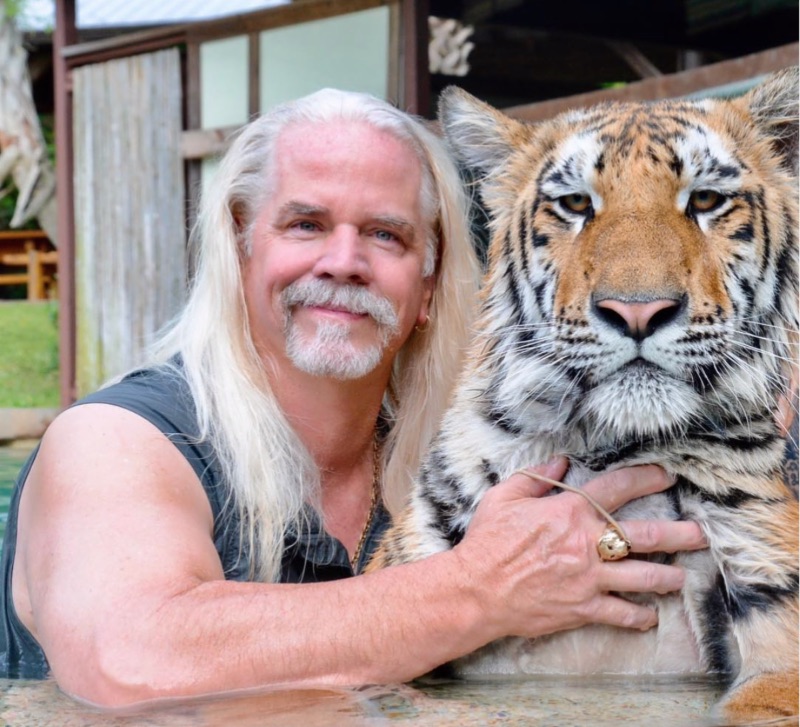
antlewiki
Kevin “Doc” Antle, who now calls himself Bhagavan Mahamayavi Antle,

Antle has also raised the ire of animal welfare advocates and conservationists for the controversial practice of breeding ligers — massive cats that are the result of breeding male lions with female tigers — and inbreeding tigers to produce a color morph commonly known as white tigers. While the latter are beautiful, majestic and rare, intentionally trying to breed them often results in cubs with malformations who either die in infancy or live short, brutal lives.


Guard does not regret the time she spent working with big cats on Regan’s ranch, just the naïve way she went about it. Like others who have spent years thinking about how to best protect and save big cat species, she’s come to the conclusion that the majestic felids are best helped — and appreciated — from a distance.

At the ranch, some of the felids were former show animals rescued from the entertainment business. Some, like Saigon, were abandoned young by people who had planned to use them in shows. Others were like Tsavo the lion, who “came from a shitty private owner.”

Regan was a former tiger trainer for circuses but had changed his views on using the animals for entertainment. He “was fastidious about taking care of the cats, very invested in their welfare and had only the best care for them,” she said. The ranch was sprawling, with enrichment items and toys everywhere, as well as a large lake with an island in the middle so the cats — particularly tigers, who are known for their love of water — could swim and play. At night they settled into their own individual habitats, each equipped with smaller pools, entertainment items and bedding.

In addition Wayne, Guard and their volunteers were reluctant to display the cats for anyone, even donors. They felt it would be a betrayal to the animals to be gawked at in a place that had become a haven for them.

Regan had learned the business from a man named Ron Whitfield, who remains active in the big cat community as the large carnivore curator at the San Francisco Zoo and trained animals for 30 years at the now-defunct Marine World in San Francisco.

“The business is so small that word gets around and Wayne, and Ron too, were known as good people to care for unwanted animals,” Guard said.

These days, Guard cares for small cats too as a caretaker and feeder of stray cat colonies in her California neighborhood. It’s a reminder of the good people can do in their own backyards, and of the need that exists in a country where some 800,000 unwanted felines are euthanized every year despite Herculean efforts to push spaying and neutering. (Those efforts have been very successful, and euthanizations of cats and dogs are only a fraction of the millions they were just 15 years ago, but the fact that so many unwanted animals are still killed illustrates the enormity of the problem.)

Mostly, she wants people to know that the idea of having a big cat for a companion, or even living in something resembling harmony with them, “is a fool’s paradise.” Luck is the only determining factor in whether a handler lives or, as Siegfried and Roy can attest, suffers life-altering injuries from accidentally triggering the ever-present predatory instinct of tigers, lions and other big cats like jaguars and leopards.

They are, after all, the planet’s apex predators, hyper-carnivores designed by nature with the most deadly weapons of any extant animal.

Guard says she hopes the practice of keeping big cats truly ends after the current generation of panthera “pets” — those grandfathered in under the Big Cat Public Safety Act — pass on. And she hopes that young people who are as “spellbound and mesmerized” by the spectacular felids as she was don’t follow her lead and endanger their lives, which is why she’s brutally honest about her own experiences and makes no pretense about benefiting from any factor other than luck.

“It’s been a long road for me to go from there to here,” she said. “I’m glad I can recognize my mistakes and hope I can prevent others from doing the same. I don’t know why people are drawn to do dangerous things but for me I didn’t think about the danger because I just wanted to be close to my cats.”

She understands the allure, but always comes back to the same conclusion: humans and big cats are not meant to live side by side.

“The cost is too great if something goes wrong,” she said. “And something always goes wrong given enough time.”

Did you like this story? Read some of PITB’s other long-form journalism and essays:

Government Biologist Who Shot Cats Called Their Corpses ‘Party Favors’ In Email Celebrating Their Deaths
Ode To Cosmo: The Best Dog I’ve Known
Demon of Champawat: The Man-Eating Tiger And The Hunter Who Put An End To Her Bloody Reign
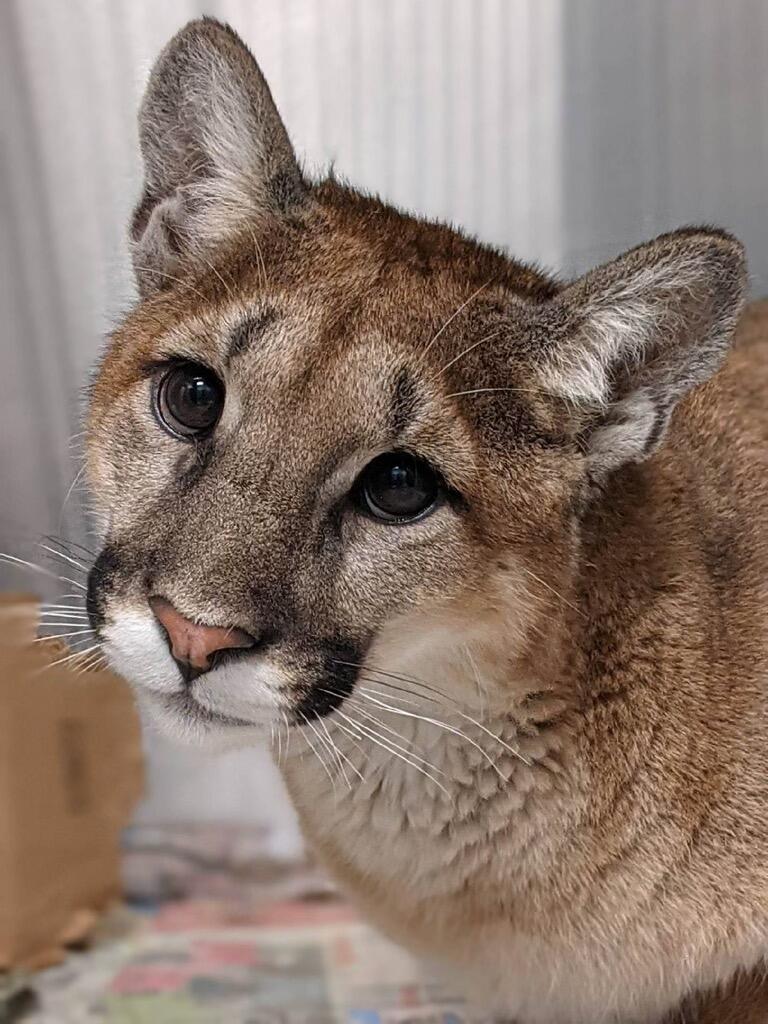
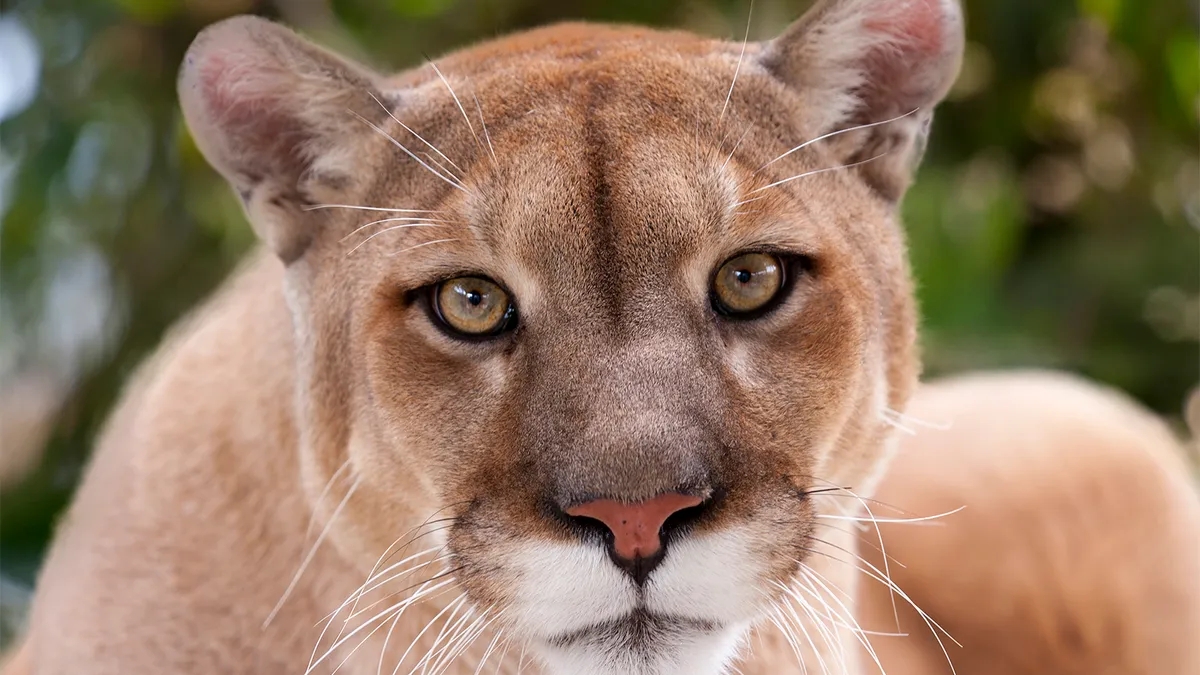
Things Are Looking Up For This Shy Orphaned Puma As He Settles Into A New Home

Nicholas was orphaned and severely injured as a cub as he and his mother tried to cross a busy highway. He’s settling into his new home, where he will have his own habitat, den and even his own pond.

Nicholas the mountain lion has a beautiful home waiting for him with his own pond, a rock den, a grassy area where he can run around and several other little hideaways where he can enjoy some privacy and naps.

But first the three-year-old puma will have to clear quarantine and become more comfortable with his new surroundings and new caretakers.

“He’s doing really well but he’s still very scared, he’s a very timid cat, so we’re just taking it really slow, day by day and the keepers are taking some quiet time with him,” said Bobbi Brink, the founder of San Diego County-based Lions, Tigers and Bears, Nicholas’ new home.

Nicholas the Mountain Lion
Nicholas stretches his legs in quarantine as he awaits the move to his own habitat. Credit: Lions, Tigers and Bears

The golden-coated feline with an expressive face has had a tough journey to the 93-acre sanctuary that will be his permanent home.

In 2020 when he was just a cub, Nicholas was following his mother across a busy highway when both were struck by a car. Nicholas was badly injured and his mom was killed in the collision, an unfortunately common fate for members of their species as their longtime habitats are increasingly fragmented by new developments and highways.

Because they require about two years with their mothers to learn how to survive on their own, it’s almost impossible to release orphaned pumas back into the wild. Unlike, say, the orphaned orangutans of Borneo and Sumatra, who can usually be taught to successfully fend for themselves because humans can show them how to physically manipulate their surroundings, there’s no way to teach orphaned pumas how to select prey, stalk, pounce and deliver kill bites.

A sanctuary in northern California provided a home for Nicholas for about three years, but recently went bankrupt, so the staff at Lions, Tigers and Bears secured him, prepared a habitat for him and took on the Herculean task of transporting him to San Diego County.

Nicholas’ case is even more complicated because he has lasting neurological damage from the car crash that killed his mother, including a pronounced head tilt that worsens when he’s scared.

Brink told PITB it’s normal for cats like mountain lions to be spooked by the commotion and uncertainty of a move, as well as leaving everything they know behind. Nicholas is simply obeying his wild instincts, which urge him to be guarded. But he’s got a loving team of caretakers who will work with him, as well as veterinary specialists who are well versed in caring for animals with neurological damage.

“Sometimes it can take (animals like Nicholas) a month, sometimes it can take three months to build up that trust,” Brink said. “His biggest need is he’s very afraid, so we’re gonna have to work around his fear so we don’t scare him more.”

Nicholas the Mountain Lion
Despite their impressive size, pumas are more closely related to domestic cats than the big cats of the panthera genus. Like their house cat cousins, pumas enjoy tearing up paper and playing with toys. Credit: Lions, Tigers and Bears

While Nicholas will have his own habitat and can keep to himself as much as he likes, recent observations of his secretive species have shown that pumas have “secret social lives,” and Nicholas will have the opportunity to meet and interact with other mountain lions if he’s comfortable with it.

Pumas — which are known by the scientific name puma concolor and are also called mountain lions, cougars, panthers, catamounts, screamers, painters, gato monte and many other names — are among the most adaptable felids in the world and range from the southernmost edge of South America to just over the Canadian border. They’re able to thrive in mountains, tropical regions, deserts, forests, human-adjacent rural areas and even in urban population centers, as the famed “Hollywood Mountain Lion” P-22 did for more than a decade in Los Angeles.

Their ability to adapt has served them well in a changing world, but they’re not immune to the pressures of human expansion.

In California their habitats have been carved up by the state’s busy and deadly highways, leaving the cats in genetically isolated pockets. Pumas who strike out in search of their own ranges are extremely vulnerable to vehicle traffic. P-22 famously crossed several of the world’s busiest highways to reach his eventual home in LA’s Griffith Park, but others like Nicholas and his mom aren’t so lucky.

Solutions like the $90 million Wallis Annenberg Wildlife Crossing, currently under construction in Los Angeles County, can connect fragmented ranges and give pumas, coyotes, foxes, deer, rabbits and other animals safe passage. But experts point out that they are just one component in a long-term solution that must include more careful zoning, fences to funnel animals toward safe crossings, and options like tunnels that run under highways, since not all animals will use overpasses.

As planners and wildlife experts figure out new ways to ensure the survival of wildlife in an increasingly crowded, human-dominated world, sanctuaries like Lions, Tigers and Bears play a crucial role by caring for the innocent animals who are injured, displaced and rescued from bad circumstances.

To learn more about Lions, Tigers and Bears or support their ongoing efforts to provide safe, stimulating and comfortable homes for wild animals, visit the non-profit’s site. To receive updates on Nicholas and the other animals at the sanctuary, follow Lions, Tigers and Bears on Instagram and Facebook. Readers who live in the California area can book guided educational tours or visit during one of the sanctuary’s special events. Thanks to Bobbi Brink and Olivia Stafford for allowing PITB to tell Nicholas’ story. All images and videos of Nicholas courtesy of Lions, Tigers and Bears.

Who Freed Dallas Zoo’s Clouded Leopard? Cops Say Cat’s Enclosure Was Intentionally Breached

The 25-pound wildcat was found late on Friday afternoon. Now investigators are trying to determine who freed her and why.

A clouded leopard who went missing from her enclosure was intentionally let loose according to police, who have opened a criminal investigation.

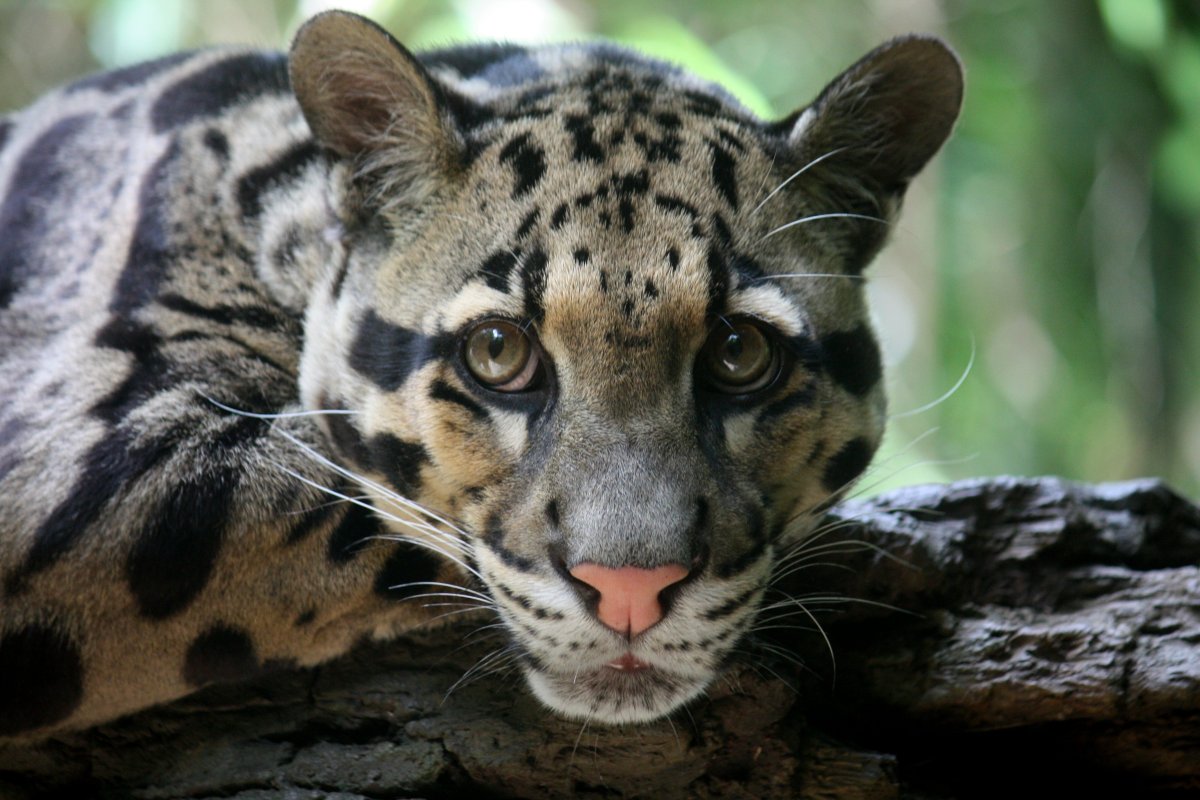
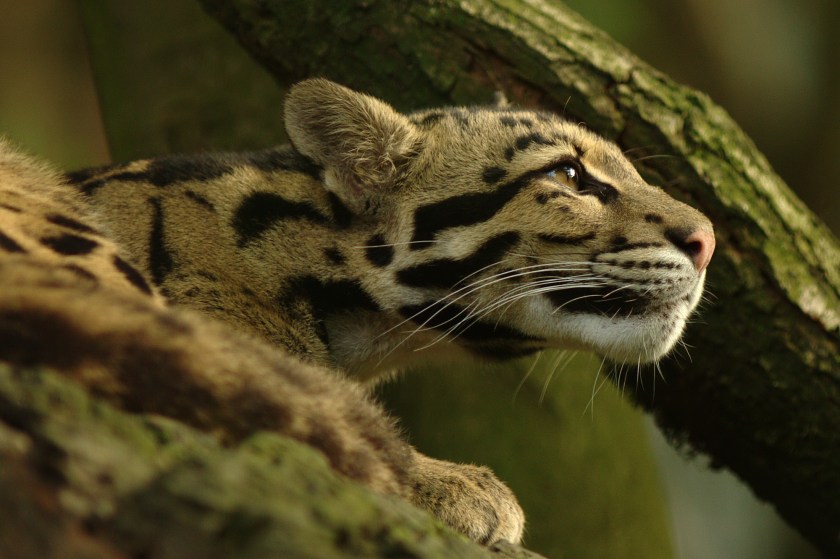
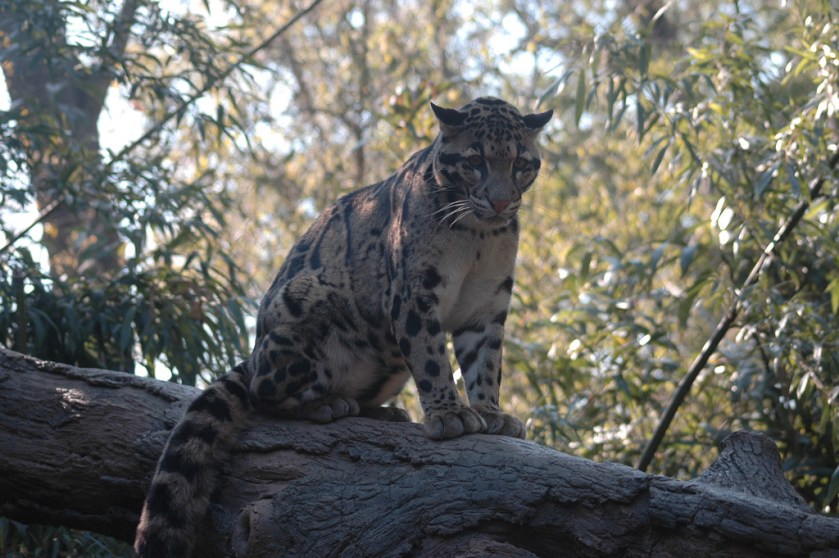
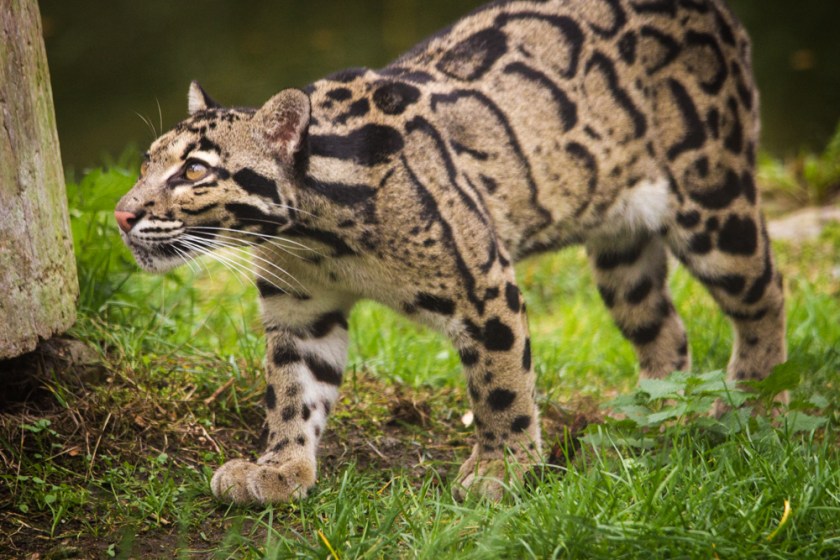
The medium-size wildcat, whose species is native to the foothills of the Himalayas, escaped from her enclosure some time between late Thursday night and Friday morning, prompting a zoo-wide shutdown and a massive coordinated search. During that time, zoo staff emphasized to local press — and in social media posts — that clouded leopards are not aggressive toward people and the escaped cat wasn’t a threat.

She was eventually found safe and unharmed on zoo grounds, hiding in a tree not far from her enclosure, at about 4:40 p.m. on Friday. She was secured within 35 minutes, zoo officials told the Fort Worth Star-Telegram.

But that’s not the end of the saga. Zoo staff say the leopard, a three-year-old named Nova, didn’t escape on her own — a person or persons breached the two-story exhibit by cutting through the mesh fence. Nova’s sister, Luna, lives in the same enclosure and did not leave the area.

Clouded_leopard_(14134537190)
A clouded leopard. Credit: Wikimedia Commons

Now investigators are trying to determine if the people responsible for breaching the enclosure were committing an act of vandalism or intended to take the 25-pound wildcat.

“We found a suspicious opening in the habitat wall in front of the exhibit,” a Dallas Zoo official told reporters on Friday afternoon. “It was clear that this opening was not exhibit failure and it wasn’t keeper error.”

Police are reviewing surveillance footage and looking for clues in the 106-acre zoological park, which is located about three miles south of downtown Dallas and is home to more than 2,000 animals.

“It is their (Dallas Zoo officials’) belief and it is our belief that this was an intentional act, so we have started a criminal investigation,” Sgt. Warren Mitchell of the Dallas Police Department said.

Harrison Edell, vice president of animal care and conservation at the Dallas Zoo, warned against anyone attempting to steal zoo animals.

“This is a cat of conservation concern,” Edell said. “This is not a pet — she’s a critically important member of our family at Dallas Zoo.”

Clouded_Leopard_b_d
Clouded leopards diverged from a common ancestor shared with big cats, but typically don’t grow to more than 30 or 40 pounds. Credit: Wikimedia Commons
Clouded_Leopard_(36997885773)
There are fewer than 10,000 clouded leopards left in the wild. In captivity, the wildcats live for 11 years on average. Credit: Wikimedia Commons

What’s The Difference Between A Puma, Mountain Lion, Cougar, Panther and Catamount?

The puma is known by more names than any other mammal, a fact that reflects its incredible resilience and wide range.

The puma goes by a lot of names. So many, in fact, that it holds the Guinness world record for the mammal with the most names, with more than 40 monikers in English alone.

Add the puma’s various appellations in Spanish and the indigenous tongues of south north America, and the large golden cat has probably had at least 100 names by a conservative estimate.

Cougar, panther, mountain lion, catamount, Florida panther, Carolina panther, ghost cat, gato monte, cuguacuarana, painter, screamer — they’re all names for puma concolor, a felid with the size of big cats in the panthera genus but genetics more closely related to non-roaring “small” cats, including felis catus.

Indeed, although pumas are famously capable of the wild cat “scream,” they’re able to purr just like house cats and their small- to medium-size wild relatives.

Why does the puma have so many monikers?

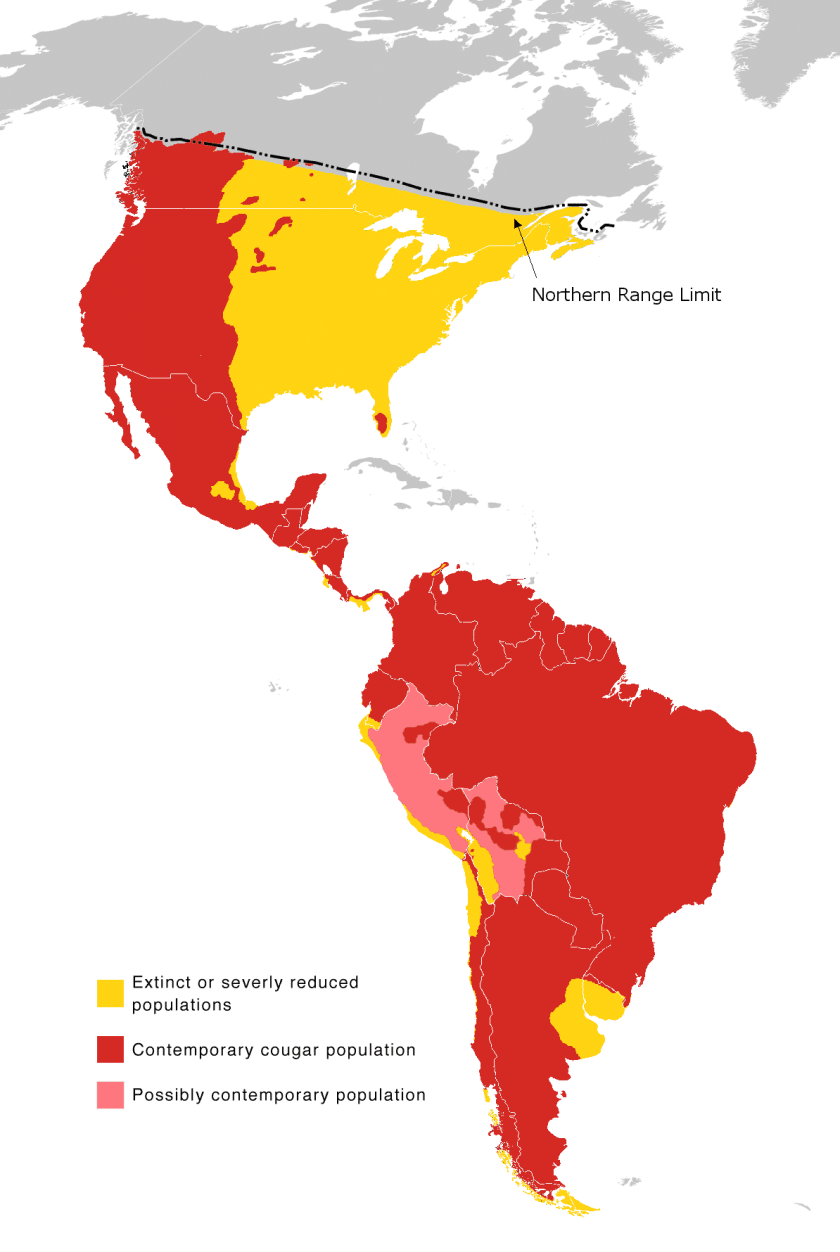
Mostly it’s because the adaptable, elusive feline has a vast range that historically covered almost the entirety of two continents:

Cougar_range_map_2010
Credit: Wikimedia Commons

Even today cougars exist in healthy numbers across most of South America and the western United States. They’re wanderers, with pockets of smaller populations in places like Florida and the midwest, and individual mountain lions have been spotted as far east as New York and Connecticut. (The New York region known as the Catskills, derived from “cat creek” in Dutch, was named after pumas when the area was part of their regular range.)

Throughout their history they’ve been familiar to a diverse group of human civilizations, societies, nations and peoples, from the Aztecs, Inca and Mayans, to the indigenous tribes of North America and the First Nations of Canada, to the inhabitants of modern-day countries like the US, Panama, Brazil, Mexico, Venezuela, Colombia, Ecuador, Paraguay, Bolivia, Chile and Argentina.

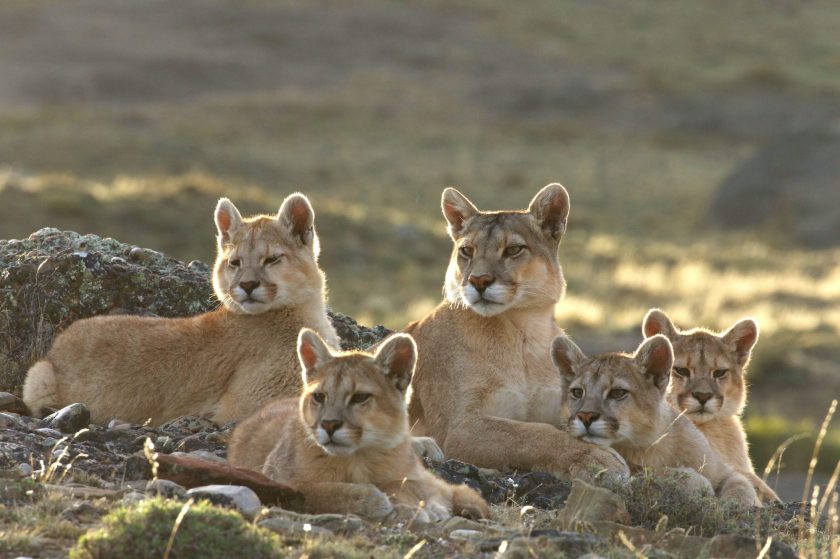
Puma
A puma with her cubs. Credit: Nicolas Lagos

But the name confusion doesn’t just stem from the puma’s many monikers bestowed by people of different cultures across space and time. The puma is also one of three cat species that are regularly called panthers. The other two, jaguars (panthera onca) and leopards (panthera pardus), are true “big cats.” That means they’re members of the genus panthera and they can roar but not purr.

Pumas are easily distinguishable from the other two: They have smooth golden fur without adornments, while jaguars and leopards both have blotches called rosettes.

It’s difficult to tell jaguars from leopards, but the biggest giveaway is the fact that jaguars have solid dot-like markings within their rosettes while leopards do not. In addition, leopards have much longer tails than jaguars or pumas, as they need the counterbalance provided by their tails to help them climb trees and balance themselves on tree limbs.

Jaguars are excellent climbers as well, but they don’t need to be as adept at living off the ground — they are the apex predators in the Americas, while leopards coexist with lions and other large animals like Cape buffalo that present a danger to the big cats even if they’re not predators.

Which brings us to our last point: Our many-named friends, the pumas, may be big and they may look dangerous, but they’re not. There have been 27 humans killed by the elusive cats in more than a century in the U.S., according to the U.S. Fish and Wildlife Service, compared to about 3,000 deaths from dog bites over the same period. Between 30 and 50 people are killed by dogs each year.

Most confrontations between humans and pumas happen when the latter are threatened and cannot escape, or when a female is protecting her cubs.

So if you live in an area where you have a chance to see these beautiful cats, admire them and keep your own kitties indoors, but don’t freak out — the puma you see one second will be gone the next.

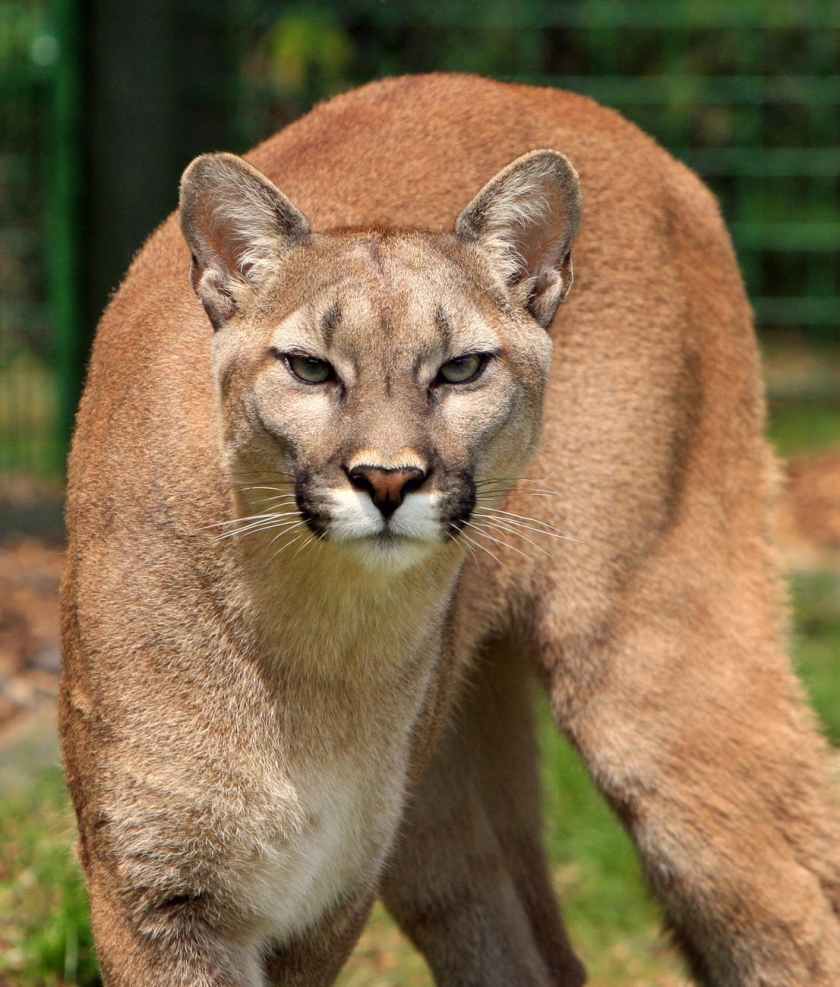
nature animal wilderness head
A captive puma. Credit: Pexels.com

Cats In Games: The Magnificent Jaguars Of ‘Shadow of the Tomb Raider’

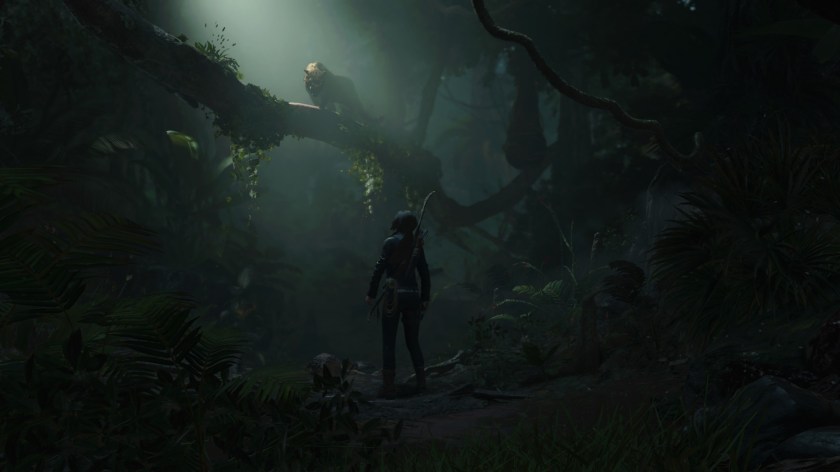
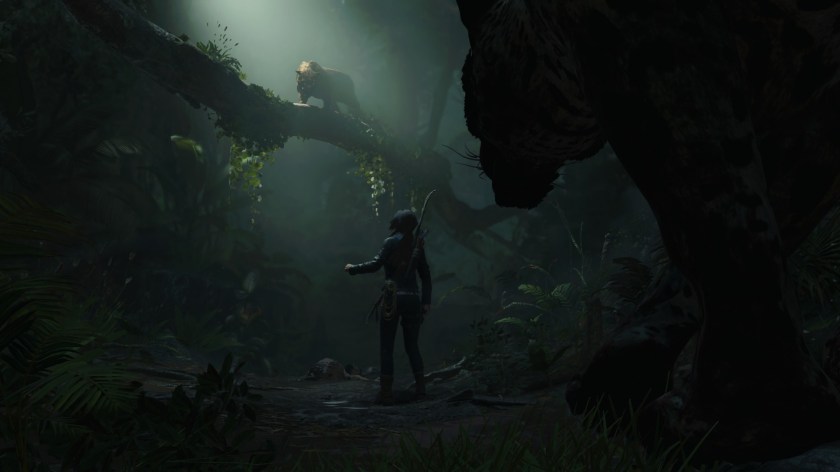
Jaguars figure prominently in Shadow of the Tomb Raider, which takes place primarily in the Peruvian jungle.

Lara Croft has come a long way since the days when she was the polygonal, hyper-sexualized protagonist of the early Tomb Raider games.

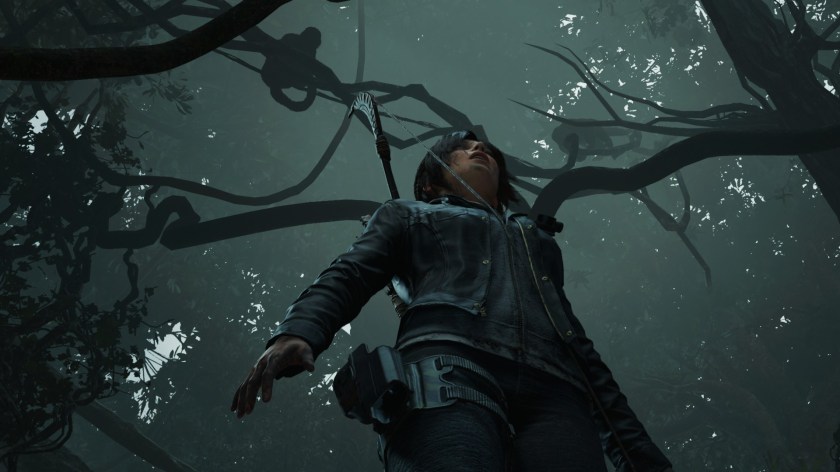
Thanks to a reboot the new Lara is a smart, adventurous and brave young woman voiced and motion-capped by the talented Camilla Luddington, and she’s never felt more real. In Shadow of the Tomb Raider, Lara ventures to the Peruvian jungle to chase down Mayan artifacts, and among the many obstacles in her way are jaguars.

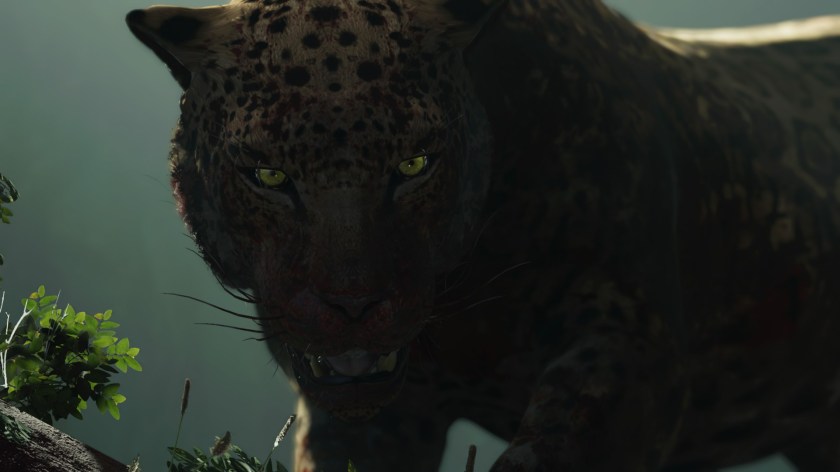
Gorgeous, magnificent, regal jaguars who seemingly manifest out of the mist and blend back into the green inferno at will.

Here’s our new Lara, now starring in her third game:

The new Lara Croft
The new Lara Croft is a fearless adventurer and archaeological expert who travels the world unearthing clues to humanity’s past.

Like previous games, her adventures revolve around archaeological digs, ancient tombs and uncovering the history of humanity one find at a time. What would a Tomb Raider adventure be without a bit of danger?

Lara Croft
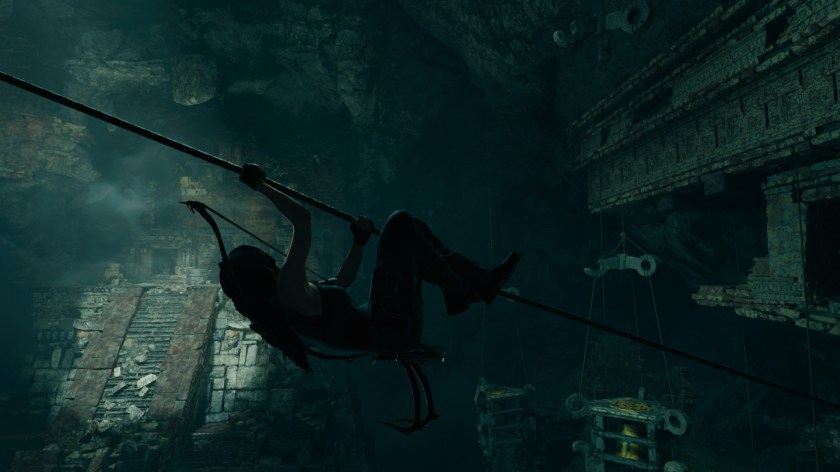
Lara crosses an underground chasm in search of a Mayan relic.

After an opening sequence, Lara and her friend Jonah head deep into the Peruvian jungle. This being Tomb Raider, they can’t land like normal people — a powerful storm sweeps in, sending their plane crashing into uncharted territory.

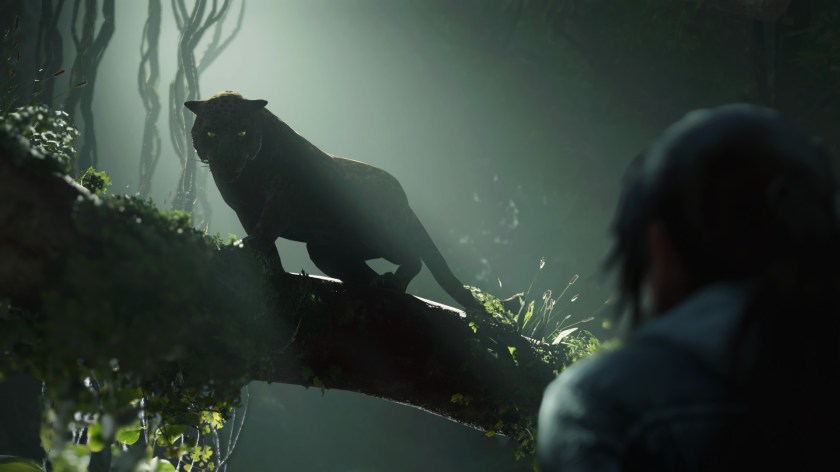
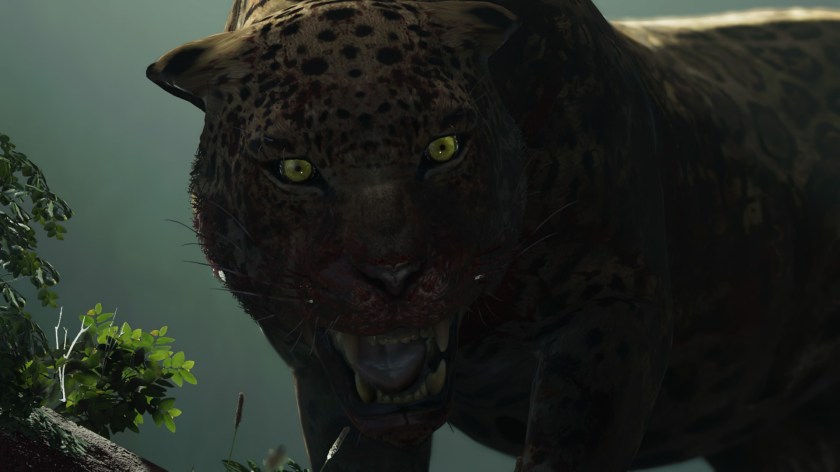
Lara finds herself alone, lost in the jungle without her gear. The sounds of the jungle reach a fever peach, with birds fleeing branches and monkeys howling, heralding the arrival of the apex predator of the Americas: Panthera onca, the jaguar, a name that translates to “He who kills with one bound.”

Jaguar of the Tomb Raider
“Hey there, could you tell me how to get to Lima?”

tombjaguar2

Okay, stay calm! Remember your training! You’re face to face with an apex predator with the strongest bite force of any animal, but you can do this!

Besides, it can’t get any worse at this point.

tombjaguar6

Can it?

tombjaguar7

Oh shit. Even the monkeys are like “Dayum! Grab the popcorn!”

Don’t panic! Maybe these jaguars are just saying hello!

tombjaguar3

Or maybe not.

tombjaguar4

tombjaguar5

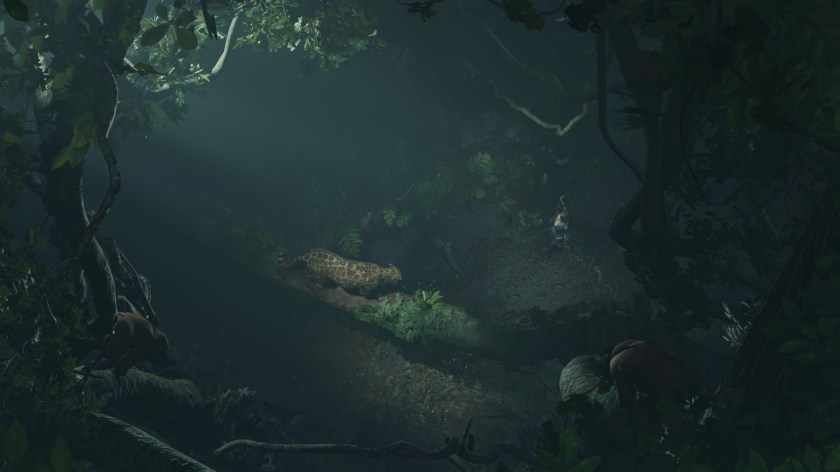
What’s worth noting is that these are not cut scenes — what you see here are screenshots within the game engine. For people who aren’t familiar with video games, that means you’re looking at the game itself. This is what the gameplay looks like.

We have come a long, long way from this, haven’t we?

Old Tomb Raider
The low-texture, low-polygon world of the original Tomb Raider games.

It’s a difference allowed by several generations’ worth of improved computer hardware and software, resulting in billions of additional polygons, millions of additional colors, improved lighting, physics, art assets, high definition textures, motion capture technology and all the little things that fuel progress from a world made from flat, blurry environments and cartoonish characters to a hyper-realistic, almost photo-quality world which makes incredible immersion possible.

Most of our readers may not be gamers, but for those who are, I’ll avoid spoilers here even though Shadow of the Tomb Raider was a 2018 release.

Suffice to say jaguars play a prominent role in the game and serve as the Big Bads, the game’s ultimate threat made even more terrifying by the knowledge that they can appear at any time and ambush our hero before she’s even aware of their presence.

Shadow of the Tomb Raider does a fantastic job of immersion, making all of the dangers of the jungle feel real through meticulously crafted visuals and sound, and a compelling story. And like everything else in life, it’s better with cats!