A bartender gets more than he bargained for when he agrees to watch his neighbor’s cat in the new comedic crime flick Caught Stealing.
In Caught Stealing, the newest film from director Darren Aronofsky, a seedy guy named Russ (Matt Smith) asks his neighbor Hank (Austin Butler) to watch his cat for a few days while he’s out of town.
The cat is not only a handsome little fellow, he’s got a spiffy name: Bud.
The problem? Russ has seriously pissed off New York’s criminal element, and Hank is unaware a category five shitstorm is about to make landfall. No matter how many beatings he takes from gangsters who mistake him for his neighbor, the Lower East Side bartender takes his cat-sitting duties seriously.
“Bud remains central to the action,” the New York Times notes. “His skeptical gazes punctuate scenes and his presence endears the audience to Hank, who goes out of his way to protect the somewhat ornery creature when the going gets rough.”
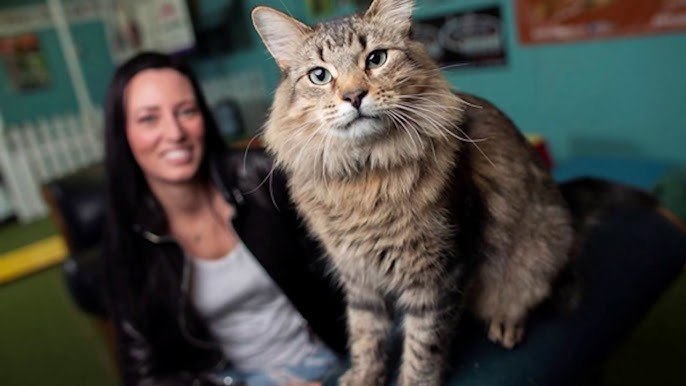
Tonic and his co-star, Austin Butler. Credit: Melissa Millett
Alas, Caught Stealing‘s Bud is not our Bud, although that’s probably for the better. Our Bud would drive the on-set catering crew mad with his turkey-related demands, and he’d run off camera to hide behind my legs during fight scenes.
Instead, Bud is played by a pro, a cat named Tonic who has appeared in the remake of Stephen King’s Pet Sematary and the horror flick Thanksgiving.
Aronofsky tells the Times about the on-set cat wrangling, noting felines are usually “not very notorious for their collaboration skills.”
Still, Charlie Huston, who wrote the book the movie’s based on as well as the screenplay, said the team didn’t take any shortcuts with Bud.
“I don’t feel like we made it as easy for ourselves as some people would have wanted,” Huston told the Times. “I remember a lot of conversations about, ‘Do we have to have the [expletive] cat in this scene?’”
The fact that they did keep him squarely in the action is testament to Tonic. Before the little guy got the role, the team had it narrowed down to him and one other cat. Tonic made the decision easy for them.
“It was just such a no-brainer because the other cat was fine, but Tonic was such a rock star on Day 1 and that was without prep,” Huston said.
Tonic with trainer Melissa Millett. Credit: Melissa Millett
Tonic is so accustomed to performing in live events and movie appearances, he was ready to show off his skills — and to get his paws on his rewards.
“The second he came out of his crate,” trainer Melissa Millett said, “he looked like he thought he was the king of the world and he was ready for all the chicken.”
It’s the first time a mountain lion has been spotted in New York since 2011. Authorities aren’t sure if the cat is an escaped — and illegal — pet, or if it made an epic journey from the west coast.
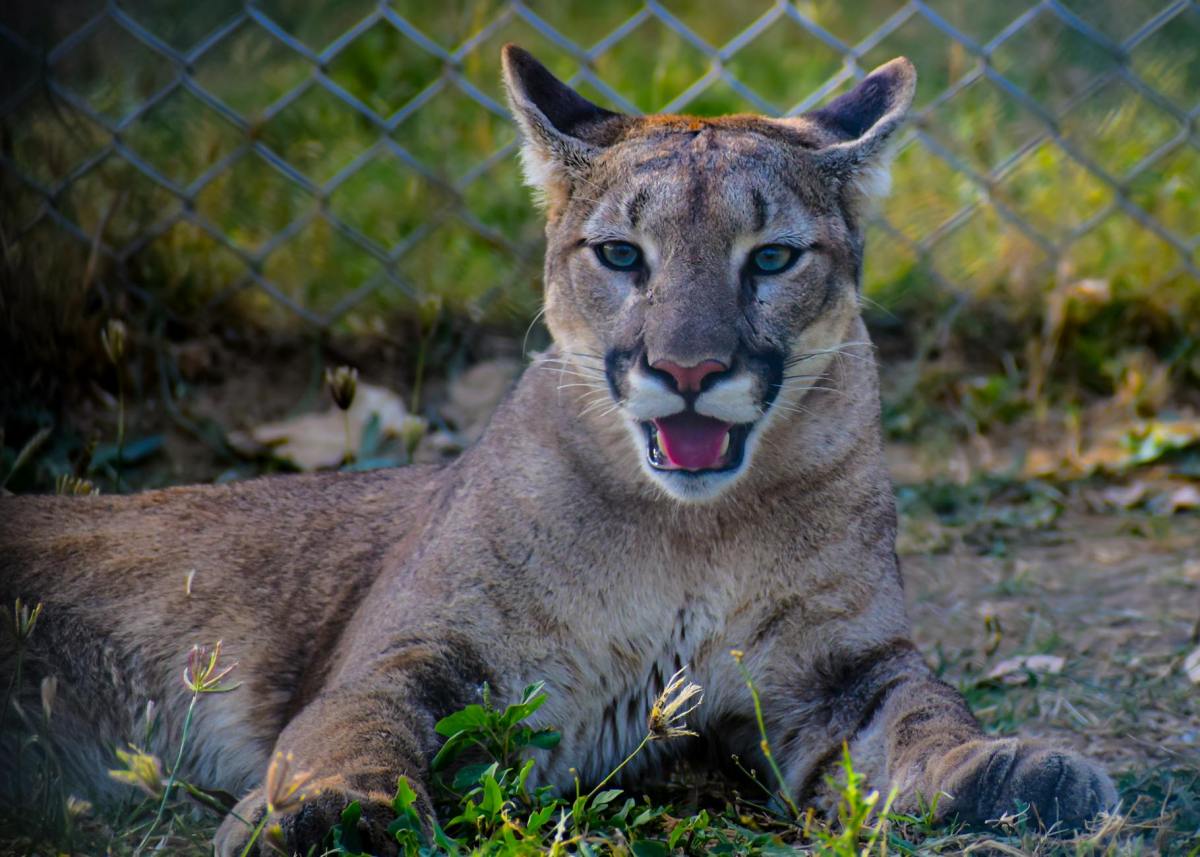
For the first time in 14 years, there’s a puma on the loose in New York.
The wild cat was spotted on a Rochester woman’s Ring doorbell camera padding along the sidewalk in front of her home at about 4 am on Wednesday morning.
A representative from the state Department of Environmental Conservation cautiously said the agency is working on confirming the species of cat in the footage.
But the feline’s size, gait and tail are dead giveaways, despite the dark footage and fleeting glimpse: it’s a puma.
In the brief clip, the wild feline walks past a tree, giving the DEC an important context clue. Michael Palermo, a wildlife manager with the department, said his team measured the tree, allowing them to closely estimate the animal’s size by comparing the footage to their measurements.
“If, in fact, it is some large cat, we would want to question, how did it get here? It’s not impossible for a wild cougar to travel to New York; it’s happened before,” Palermo said. “Was it a captive one that may have been legal as a licensed facility, and if so, did it escape? We still need to do some work to verify anything like that.”
While pumas were once native to New York and thrived in the forested mountains of regions like the Catskills (“cat creek” in Dutch), the last verified sighting in New York was in 2011. That cougar crossed through the Empire State after an epic journey from the west coast, a stronghold for the species.
Some people who posted to a Rochester community group on Facebook are already freaking out, and pumas are widely misunderstood, so it’s important to note the facts:
Pumas are not African lions, are not closely related to them and do not behave like them
They’re not aggressive toward people. In fact, they try to stay away from humans and will go out of their way to avoid confrontation
The exceptions are when people threaten a puma’s cubs or corner the animal, giving it no opportunity to escape
Americans are 150 times more likely to be struck by lightning than killed by a puma. There are only 27 reported cases of people killed by pumas in more than a century. By contrast, an estimated 4,300 to 10,000 Americans have been killed by dogs in that same time span. (Higher estimates include people who did not die immediately from dog bites, and people who died of infections or complications from bites.)
While some people and media reports erroneously call pumas “big cats,” they are not members of the panthera genus. They are felines more closely related to domestic cats and small wildcats. Accordingly, pumas can purr and meow, but they cannot roar
Pumas are also known as mountain lions, cougars, panthers, painters, screamers, catamounts, pangui, onca parda, cuguacuarana, katalgar, chimbica, shunta-haska, fire cats, California lions, ghost cats, and red tigers, among many other names.
In fact, the species has more names than any other animal. That’s because it’s adaptable with a historically wide and varied range. There are some 40 names for pumas in English and more than 80 in Spanish, Portuguese and the languages of indigenous Native American tribes.
The species is officially known as puma concolor, or “puma of one color” thanks to its typically biege fur that, unlike tigers, jaguars, leopards and even house cats, does not have stripes, spots or rosettes.
While it’s extremely unlikely the mystery cougar would pose a threat to people, Rochester police — who have fielded several reports of sightings in recent days — advise locals to keep their pets indoors and to exercise caution while walking their dogs.
Update: The DEC has officially confirmed the cat is a puma, although it was obvious from the footage.
In the meantime, a Rochester man says he saw the wild cat — and people running away from it — on Wednesday night.
Although that sighting has not been substantiated by authorities, it does illustrate the need to educate the public about these animals.
“You know, a mountain lion, it be ‘rawr.’ They be crawling and… serious,” Curtis Jones told WHAM, an ABC affiliate in Rochester.
“I am going to keep this bat right here, man, just in case,” he told a TV reporter. “I am going to protect us, I ain’t going to let nothing happen to us, nothing. OK?”
Let’s hope common sense somehow finds its way into the Facebook algorithm amid all the misinformation as the locals discuss the sightings online.
If you’re from the area, we beg you: please do not attack, shoot or chase after the puma with a baseball bat. The animal does not consider you food, is not a danger to you, and is probably scared and hungry.
That deserves special emphasis if, as the DEC’s staff have said, the puma is more likely an escaped captive than a long-wandering traveler from the western US.
Jones said he saw the puma “slithering” and hear it “rawr,” but it’s worth noting, again, that pumas are members of the genus felinae, meaning they’re genetically and behaviorally much closer to house cats and can meow and purr, but cannot roar. Despite their size, mountain lions are not true “big cats.”
As for Jones, we hope him and his neighbors give the cat a wide berth and let the authorities safely capture it, have a veterinarian evaluate, and figure out where it belongs.
“I don’t play with lions, I don’t play with tigers, bears, nothing in the wild, I don’t play with those, I promise you,” Jones told the station. “I don’t even do rollercoasters. I’m good.”
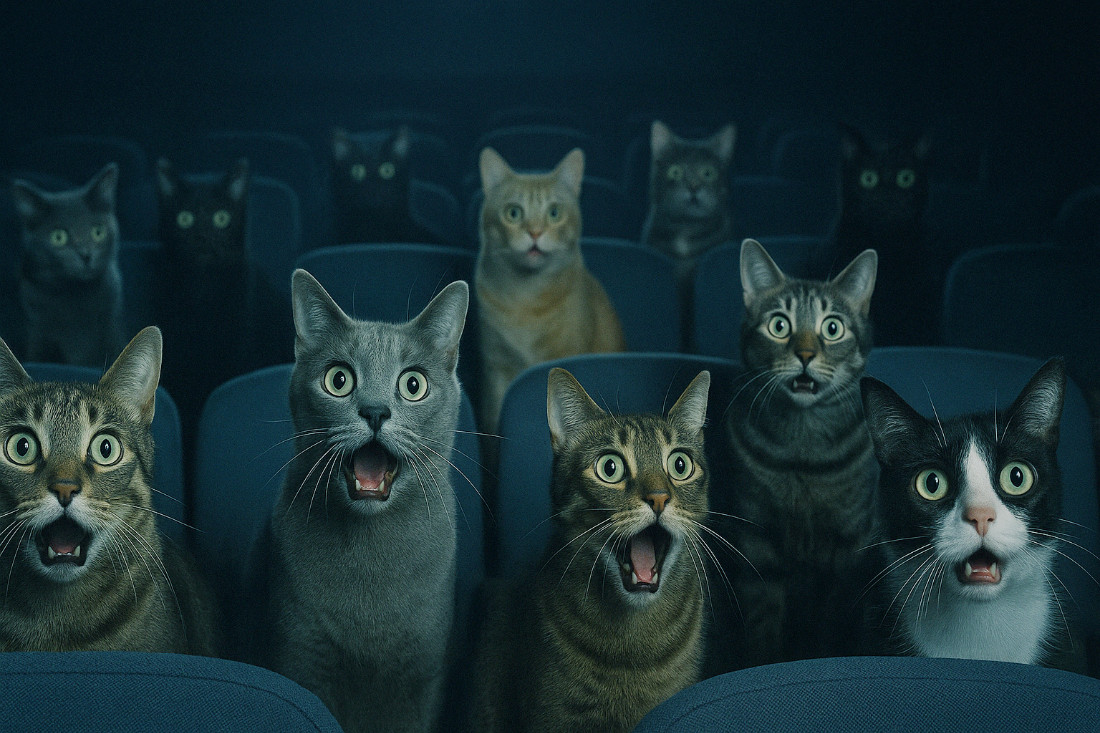
“I found myself subconsciously rationing my popcorn as I sat in the theater,” one critic wrote of the harrowing experience that is ‘The Empty Bowl.’
With a Rotten Tomatoes critic score of 94 percent and an equally enthusiastic reception by fans, Buddy the Cat’s directorial debut. “The Empty Bowl,” has already cemented his place among the modern masters of the horror genre.
The movie follows Dubby, a tabby cat from New York who awakens one day to find his human gone, and most horrifically, his food bowl essentially empty, with just a few morsels pushed to the sides of the ominously hollow container.
Time is measured in the growls of Dubby’s stomach and the lengthening shadows inside his domicile as a sinister score ratchets up the tension.
“Buddy the Cat presents a master class in exploring trauma via the absence of yums,” Associated Press critic Misty Lemire wrote. “We feel Dubby’s hunger as he carefully rations out his remaining pieces of kibble, made worse by the unknowns in front of him: when will Dubby’s human return? Will it be five minutes from now, or five hours? What if there’s nothing left in the cat food cupboard, and he has to go to the store? These are harrowing questions the audience is asked to ponder.”
The film “makes us feel Dubby’s hunger on a visceral level,” feline horror aficionado site YummyDisgusting noted in its review.
Indeed, test audiences indicated they “felt guilty” chowing down as they watched Dubby writhe with hunger.
“I found myself subconsciously rationing my popcorn as I sat in the theater,” New York Times critic Meowchio Mewkatani wrote. “How could I enjoy the buttery goodness in the bucket on my lap as Dubby’s stomach growled in excruciating Dolby surround sound? This is a film that really makes you stop and consider.”
The director told reporters he “wanted to tap into authentic fear, not the fantasy violence that often comes with genre cinema.”
“Obviously there’s something aesthetically primal about an evil, slobbering dog emerging from the shadows,” he said. “But I’m interested in pushing boundaries, not taking the well-padded path. The fear that our minds create is often much more terrifying than any trope.”
In one particularly brutal sequence, Dubby’s human returns home toting several heavy grocery bags, and the snap of a tin can of tuna opening is precisely timed to the crescendo of the orchestral score.
The camera focuses on the meaty morsels tumbling into the bowl, landing with saliva-inducing, moist thuds.
Dubby races toward the feast, his tongue comes within millimeters of the juicy tuna…and he awakes tragically in a cold sweat to find himself laying in a still-empty apartment rendered dark as the last of the sun’s rays disappear over the horizon.
“If that doesn’t hit you right in the feels,” Lemire wrote, “then you’re not a real feline.”
“Harm or death to an animal caused by another animal is not a criminal matter,” even when footage shows dog owners urging their pets to attack, the NYPD claims.
The NYPD says its hands are tied after a group of people sent their pit bulls after a well-known shop cat in Manhattan and cheered as they dogs brutally ended the tabby’s life.
Freddy was the resident moggie at Michelle Flowers, a florist on Amsterdam Avenue in Washington Heights. The little guy was outside the shop at about 9 p.m. on July 4 when a man and two women set their dogs loose on him, then celebrated and cheered as they killed him.
Credit: Cat Collective
The pit bull owners then “smoked, danced and ate food while taking photos and mimicking the grisly scene,” according to the New York Post. Surveillance cameras caught the attack and its aftermath, showing the three black-clad dog owners and others who witnessed the violence and did nothing.
A disgusted neighbor contacted the Cat Collective, a group of volunteers who feed and care for strays in the neighborhood, and they collected Freddy’s remains, then told the florist’s owner what happened.
“Someone deliberately set dogs on a defenseless cat while people watched and cheered,” Dan Rimada of Bodega Cats of New York told the Post.
Cat Collective is offering cash rewards to anyone who can identify the dog owners and the celebrating bystanders, but the police won’t do anything.
An NYPD spokesman told the paper that “harm or death to an animal caused by another animal is not a criminal matter,” citing a gap in the law.
A proposed bill, dubbed Penny’s law after a chihuahua that was mauled by pit bulls earlier this year in Manhattan, hasn’t made it out of committee in the New York State legislature, while New York’s city council is looking at a municipal law that would make it a crime to set dogs on other animals.
Credit: Cat Collective
It’s actually difficult to believe nothing can be done to get justice for Freddy, Penny and other animals aside from civil cases, which can only result in monetary damages.
Manhattan DA Alvin Bragg, who is controversial to say the least for creatively interpreting the law, seems like just the kind of district attorney who could find a way to prosecute the dog owners. The fact that the authorities are outright dismissing the possibility indicates Bragg doesn’t see this as a priority.
Working with the police to find ways to get justice is Bragg’s job, as well as the job of the attorneys working for him in the district attorney’s office. At the very least, they should be able to find something with which to charge the suspects, even if it really turns out there’s no way to hold them criminally accountable for Freddy’s death.
We hope Freddy’s killers are identified and held responsible, and we hope no more pets and strays have to be killed before lawmakers at the city and state level make it a priority to close an obvious gap in the law.
Rhode Island’s law has some teeth: veterinarians who violate it will have their licenses suspended or revoked.
Five down, forty five to go.
With a new law going into effect in the fall, Rhode Island joins New York, Maryland, Virginia and Massachusetts in banning the declawing of cats.
Declawing may sound like a sort of kitty manicure, but the neutral name disguises a cruel form of elective mutilation that involves amputating a cat’s toes at the first knuckle.
It’s the equivalent of chopping off 1/3 of each finger, all to prevent potential damage to inanimate objects like furniture.
“Declawing is painful, unnecessary and inhumane. It’s no way to treat any pet,” said Rhode Island state Sen. Melissa Murray, one of the bill’s co-sponsors. “Fortunately, there has been growing awareness of the risks and cruelty of declawing. Our state must recognize that declawing is animal abuse and prohibit it altogether.”
Rhode Island’s new law is more prohibitive than some of the others: veterinarians who declaw cats once the law goes into effect on Sept. 1 will have their licenses suspended or revoked entirely.
Declawing doesn’t “just” cause short term pain from the procedure. It forces cats to change the way they walk and move in general, altering their gaits. As a result, declawing leads to early onset arthritis among a host of other medical problems.
Declawing also results in psychological and behavioral problems. Cats who are declawed often become depressed, and they’re more likely to avoid the litter box since standing on litter is painful for them.
Since the procedure also takes away their primary defensive mechanism, declawed cats are much more likely to bite, which along with litter box avoidance means they’re more likely to end up abandoned in shelters.
Bud’s got this one, which is sold as the Ultimate Scratcher, which is about 3 feet tall and sturdy, offering an optimal place for cats to literally scratch their itch.
Cats should never be declawed!
There are several viable options for keeping them from scratching furniture, including nail caps and redirecting them to scratchers. The latter are a bare necessity if you have a cat, as scratching is a natural feline behavior and our little friends will find something to scratch if we don’t provide them with appropriate scratching surfaces.
Since cats like to stretch while they scratch, I highly recommend getting a large tower scratcher with a secure base. Bud has one, he uses it constantly, and he does not touch the couch or the chair in the living room, nor does he touch any other furniture. It can be done, it just requires patience and consistent redirecting, with positive encouragement.
Negative reinforcement, such as yelling at your cat, will not achieve results. The only thing it will accomplish is damaging your relationship and trust with your cat.
Since New York became the first state to ban declawing in 2019, more states have considered similar legislation. Although routinely opposed by state Veterinary Medical Associations — special interest groups that represent a portion of veterinarians who see declawing as a reliable money-maker — lawmakers have allied with veterinarians in support of bans, as well as groups like the Humane Society, the SPCA, the Animal Legal Defense Fund and the Paw Project to overcome opposition and get bills passed.