PLUS: Get the Army Corps of Engineers’ whimsical 2023 Cat Calendar!
A mountain lion got more than it bargained for when it found itself face to face with a ferocious furball last week.
The puma was taking a breather near a home on Jan. 5 when it turned, realizing there was a pair of eyes watching it. Those eyes belonged to the resident cat, a 13-year-old moggie who was not pleased to see a wild intruder in its territory.
The puma initially squared off on the other side of a sliding glass door as if saying “You want some of this?” but seemed shocked when the domestic cat, rather than backing down, launched into a series of feints and yowls.
The puma flinched a few times, then decided to vacate the premises.
Clearly, the wild cat found itself wondering about the identity of the tabby.
“Is that Buddy the Cat? Oh crap! If it’s him, I’m in trouble! They say he has huge meowscles and is a master of 36 styles of Kung Fu!”
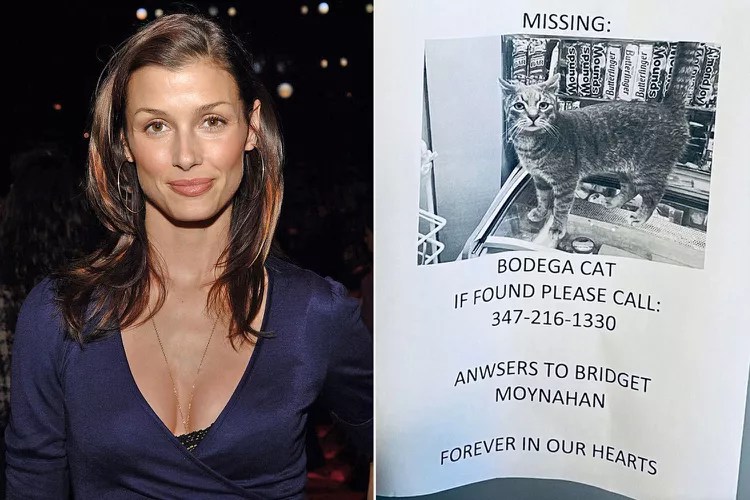
Bridget Moynahan joins the search for Bridget Moynahan
Blue Bloods actress Bridget Moynahan gave a boost to the search for a missing cat bearing her name.
The 51-year-old actress lent her star power to the search by posting about it on Instagram, where she has 345,000 followers.
The missing kitty belongs to the owner of a Manhattan bodega, and spends her days napping on the shelves and being admired by customers.
There are an estimated 10,000 bodegas in New York City, where traditional grocery stores don’t really fit into an urban lifestyle where most people don’t own cars and can’t load up two weeks’ worth of groceries in a minivan.
To keep mice and rats at bay, most of New York’s bodegas have cats. They’re technically illegal, but because having a cat in the store carries the same $300 penalty as having rodents, bodega owners opt for the former. The cats are beloved by New Yorkers, and the city is mostly content to overlook their presence unless there are major health violations.
Get the Army Corps of Engineers 2023 Cat Calendar for free
If you still haven’t picked up a calendar for the New Year, the Army Corps of Engineers has got you covered.
Their 2023 Cat Calendar features magnificent moggies in giant form, scratching, lounging and napping on ships, jetties, dams and dredges.
Click here to download the printable PDF of the calendar.
When even the mayor can’t keep rats from overwhelming his property, it’s clear New York is losing its battle against rodents.
For the second time in seven months, one of New York Mayor Eric Adams’ own health inspectors has ticketed him for rat infestations at the Brooklyn brownstone he calls home.
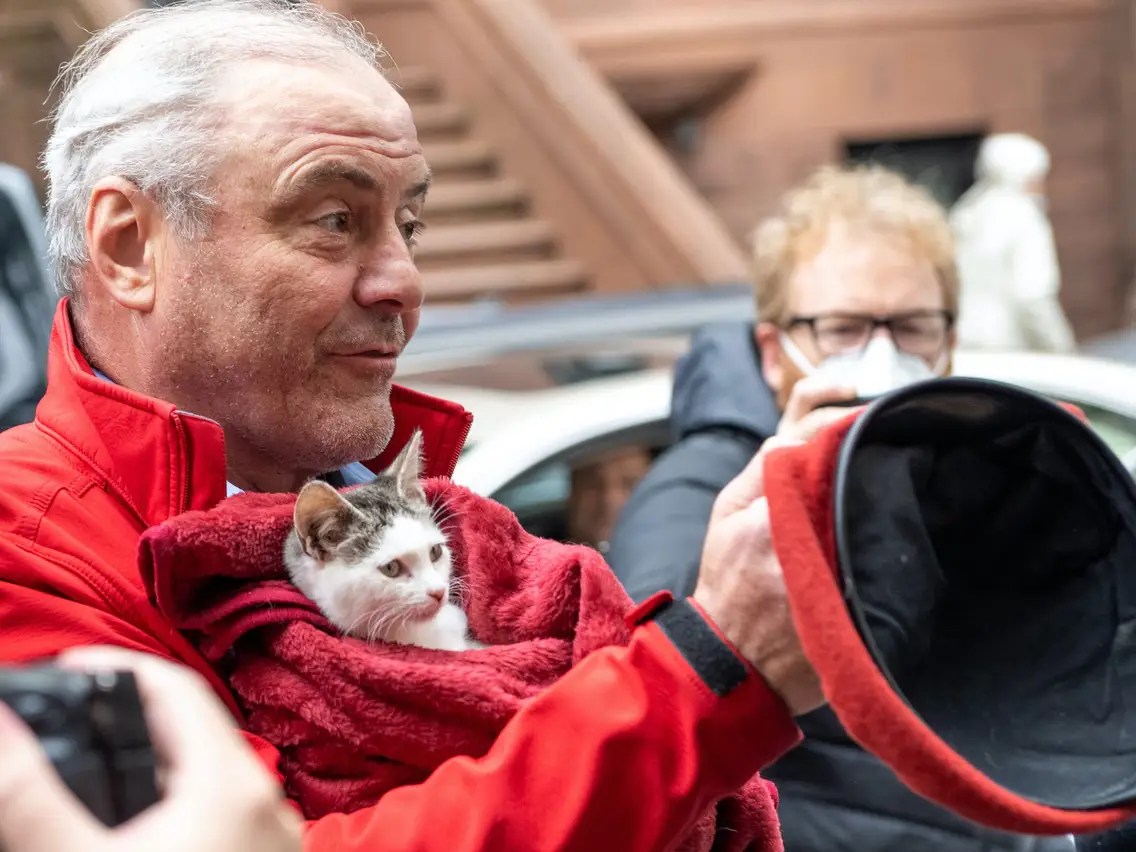
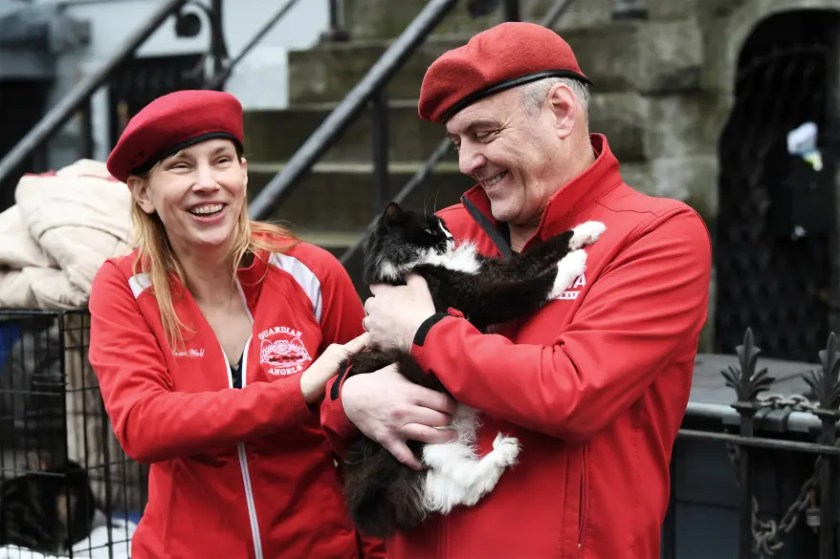
Because it wouldn’t be New York without things turning into a circus, the man who unsuccessfully ran against Adams for the mayorship, Guardian Angels founder Curtis Sliwa, took advantage of the mayor’s embarrassment by bringing two of his 16 18 cats to Adams’ block and holding a press conference on the sidewalk where he touted felines as the solution. (Adams, who is well known for his hatred of the rodents, famously held a “rat summit” at Brooklyn Borough Hall in 2019, “gleefully” showing off a new rat-killing contraption to reporters.)
Introducing reporters to his tuxedo, Tiny, and tabby cat, Thor, Sliwa said Adams was missing the most obvious solution to the rat problem — cats — and offered to become the city’s “rat czar” free of charge.
“Like most New Yorkers, [Adams] is frightened of rats,” Sliwa told reporters outside the mayor’s brownstone. “He’s tried everything but it’s time that we revert back to the best measure that has ever worked — and that’s cats.”
As we’ve noted before on PITB, Sliwa and his wife are dedicated cat servants, perhaps overly so. They currently house 18 cats in their Manhattan studio apartment, Sliwa said on his radio show this Sunday. Some of them are the couple’s pets and some are fosters for their rescue.
Nancy and Curtis Sliwa with one of their cats. Credit: Matthew McDermott
The rat problem in New York is real and, sadly, as bad as people make it out to be. You can hear them at night in many neighborhoods, and it’s not unusual to see them briefly caught in the glow of streetlights before scurrying into the shadows again.
I’ll never forget watching an entire conga line of them at the 125th St. subway platform. They just marched out of a hole in the twilight, each one bigger than the last, going about their business without any concern for what people might do to them.
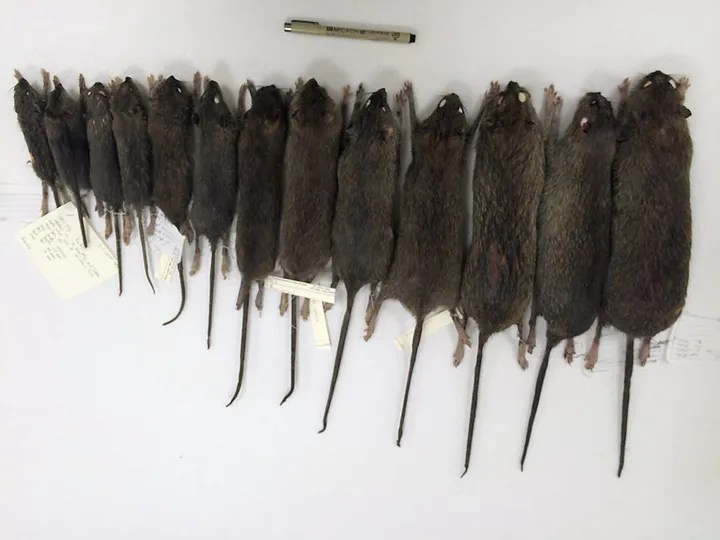
And the answer, they know, is nothing. Because New York’s rats aren’t regular rats. They’re well-fed freaks, ballooning to enormous sizes thanks to the abundance of garbage cans to eat out of and the way garbage is collected in the city. Back in 2015, video of a rat dragging an entire slice of pizza down the steps to a Manhattan subway platform went viral, racking up more than 12 million views and earning the rodent the title Pizza Rat:
People who aren’t from New York and have never visited are probably shocked to see garbage piled high on the sidewalks of every street. New Yorkers are supposed to put the garbage out the night before pickup, but no one really observes that rule, and the mounds of trash grow for days before sanitation removes them. It’s a feast for the rats, and any solution has to start with cleaning up the garbage situation.
In the winter the cold weather prevents the contents of the trash from rotting, so the stink isn’t as bad, and sometimes the trash mountains are covered by snow.
But in the summer, when the tree-lined avenues get their green canopies and flowers bloom in window boxes, the city reeks. On hot days, the perfume of New York is rotting trash and the overwhelming smell of urine wafting up from the subways. Sometimes I think of what the Japanese, with their spotless streets and shiny subways, must think when they come to New York for the first time.
In October, after the city fielded a 71 percent increase in rat complaints over the previous year, the city introduced a new law making it illegal to put trash on the sidewalk before 8 pm ahead of pickup the following morning. The change hasn’t made a dent in the rodent problem.
A 2015 study by Matt Combs of Fordham University documented the enormous size of New York City’s rats. Credit: Matt Combs
In any case, New York is not a good place for cats. Thankfully we have a huge and generally well-funded network of rescues that get kitties off the street and pulls cats and dogs from the city’s animal control system before they’re due to be euthanized, but strays who fall through the cracks don’t last long.
Indeed, when the New York Post talked to one of Mayor Adams’ neighbors shortly after Sliwa’s latest press event on Sunday afternoon, the woman said she’d like another cat to patrol the area around her building. The last one, she explained, had been run over by a car.
I don’t really expect anything to come of Sliwa’s plan to use cats in rat-infested locales. The red-bereted radio host is hawking the scheme because he likes to be a thorn in the mayor’s side, and because it generates free publicity, especially from the city’s tabloids and local news channels.
But if it ever comes to fruition, and people really expect strays to handle their rat problems, Sliwa and company better have a plan to keep the cats safe from traffic.
Buddy says he would totally fight Sphynxie if he could fit the bout into his schedule, obviously.
Saying he couldn’t find a way to squeeze it into his schedule over the next year, Buddy the Cat declined a challenge to step into the cage with one of feline MMA’s brightest young stars.
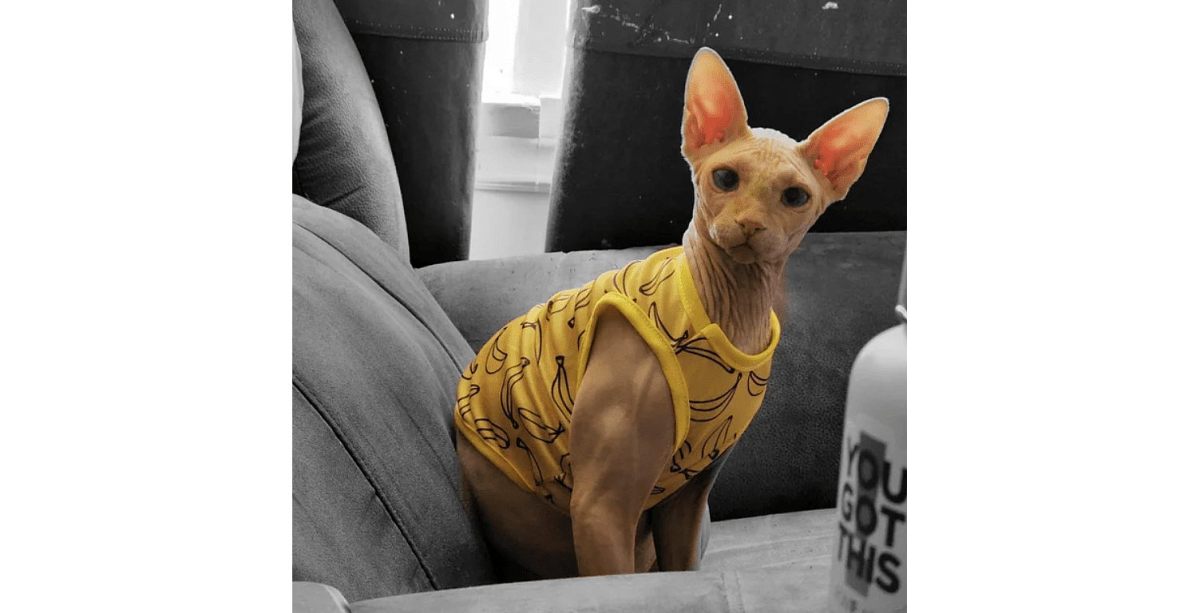
The challenge came courtesy of Sphynxie the Smasher, a four-year-old hairless cat from San Jose, California. The skilled cat uploaded a video in which he pumped iron and ridiculed Buddy for his “completely delusional claim that he’s a badass” and his “hilarious talk about having huge muscles.”
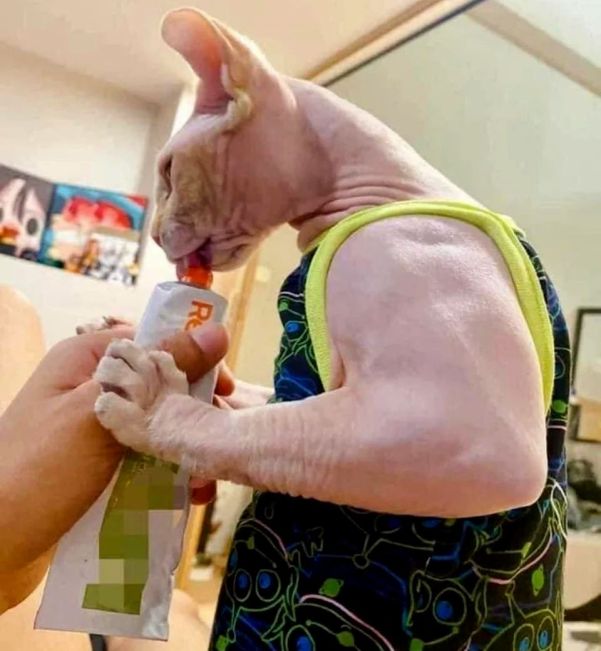
Sphynxie the Cat taking protein supplements after an intense workout.
“This is what huge meowscles look like,” Sphynxie said, curling a meaty forearm and flexing his bicep. “Not the flab of some chubby tabby hoping we won’t notice how many snacks he devours.”
Sphynxie challenged Buddy to a cage match “any time, any place” and said he’d even tie one paw behind his back “to make it even with the chonkster.”
Buddy issued a response on Twitter.
“First of all I’m not chubby, so that’s fake news!” Buddy wrote. “I’m 100% pure lean, mean badass.”
“Secondly, I’d be honored to step into the cage with Sphynxie and teach him a lesson that he’ll remember long after the real Sphinx is weathered to dust,” he continued. “Unfortunately my meownager says I can’t squeeze it into my schedule. I’m shooting my new movie, Fowl Play, through mid March, and then I’m going on tour to promote my next album. In between that stuff I really need to nap when I can, get some laser pointer work in, and catch up on eating turkey. Sphynxie should count himself lucky, because he dodged a bullet!”
The viral hashtags #BuddyDucksFights, #BuddyIsADuck and #ScaredBuddy were trending late Sunday night, prompting a long list of others to challenge the gray tabby to elicit increasingly ridiculous excuses from him.
One of them, a challenge from a five-month-old Russian named Oreonov the Putinizer, accumulated more than 20,000 likes in just a few hours.
“I am kitten. He is full grown cat, yet he won’t step into cage with me,” Oreonov wrote. “He knows I crush him for the glory of motherland.”
Smells loves boxes just as much as any other cat, but his affinity for tight spaces almost landed him in Florida, a long way from his home in Brooklyn.
It was a tuft of orange hair poking out from the zipper of a carry-on suitcase that first alerted a TSA agent that something weird was going on.
The agent, who was processing a traveler departing from New York’s JFK airport on Tuesday morning, then consulted an x-ray scan, confirming the suitcase contained some unusual cargo — a ginger tabby cat tucked in among toiletries, snug and napping comfortably in the enclosed space.
An x-ray scan revealed Smells tucked snugly into the suitcase. Credit: TSAThe incriminatory tuft of orange hair that gave away Smells’ hiding spot. Credit: TSA
As for the traveler, the cat didn’t belong to him, nor was he aware kitty had climbed inside. It turned out he had been a house guest of friends living in Brooklyn, and the cat named Smells had slipped into the luggage before he left for home, for what is a suitcase if not just another box?
The TSA confirmed the story with the cat’s owner before letting the traveler board his Florida-bound flight.
“An officer called and asked if I wanted to press charges” said Alix, Smells’ 37-year-old human. “He wanted to know if there was any reason [the passenger] was trying to steal my cat and go to Florida.”
A TSA security agent opens the suitcase to reveal its unauthorized would-be stowaway. Credit: TSA
After Alix assured the TSA agent that Smells “really likes to check out boxes” and definitely would have climbed in on his own, she hired a driver to retrieve the kitty, who was unperturbed by the adventure.
“I was worried he’d be freaked out but he wasn’t even meowing on the way back,” Alix told the New York Post. “I went to give him some extra treats and he acted like nothing had happened.”
As for the TSA — which often deals with more serious finds like guns and drugs secreted into passengers’ luggage — the saga of Smells was a welcome change that gave them a good story and some laughs.
“On the bright side,” TSA spokesman Lisa Farbstein wrote on Twitter, “the cat’s out of the bag and safely back home.”
Two new reports estimate the cost of caring for a cat over a typical 15-year lifespan.
Two stories published in recent days give wildly varying estimates of how much it costs for the privilege of serving a cat.
First we should note that both reports assume the cats are adopted in kittenhood and the average lifespan of a cat is 15 years. That’s in line with current data showing well cared-for, indoor-only cats live between 12 and 18 years, with outliers on both ends. It’s not uncommon to hear about cats living well into their 20s just as some cats sadly pass on before their time, whether due to natural causes, illness or accidents.
A Texas cat named Creme Puff is the Guinness World Record holder for longest-lived house cat, holding on for an astonishing 38 years until her death in 2005.
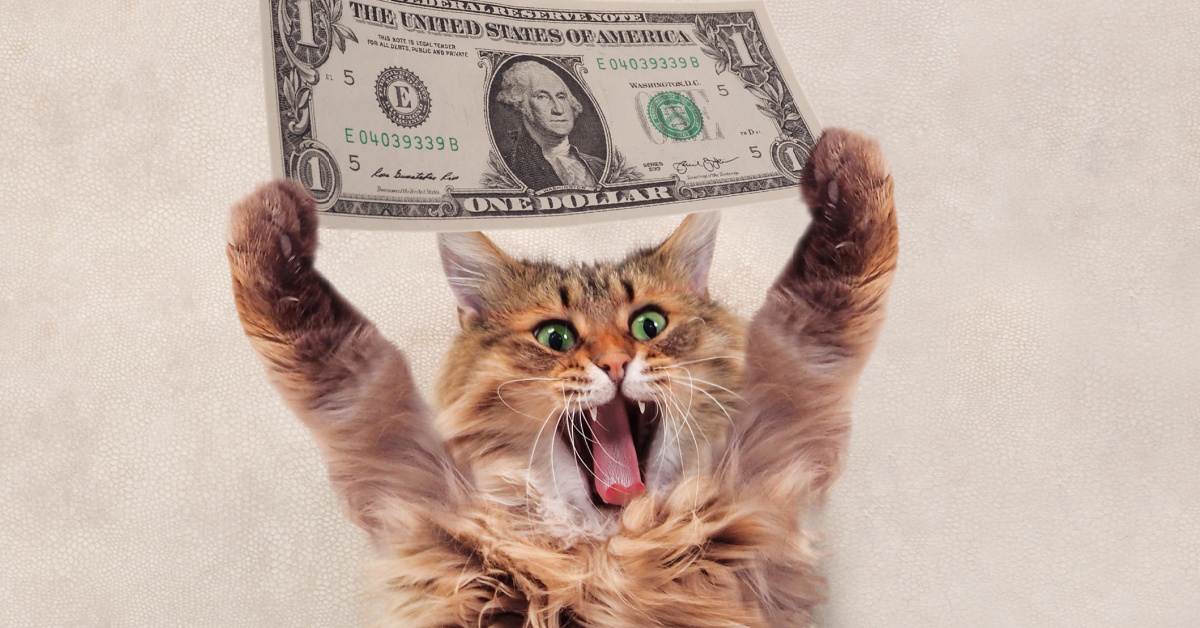
Caring for a house panther can cost between $4,250 and $31,200 over kitty’s lifetime, according to an analysis of associated costs by The Ascent, a vertical of financial literacy site The Motley Fool.
The estimates break costs down into recurring expenses — which include food, treats, litter and veterinary care — and fixed expenses like scratching posts, toys, additional cat furniture, bowls, grooming tools and similar items.
Not surprisingly, the biggest expense is food, the cost of which has been exacerbated by inflation, rising fuel costs and lingering supply chain issues that caused a cascade effect during the pandemic. Everything from sourcing metal for cat food tins to meat availability was impacted as ports were closed and meat processing plants were shuttered at various points since early 2020.
An unrelated estimate from OnePoll, based on a survey commissioned by pet food company Solid Gold, put the lifetime estimate of cat servitude at $25,304. Like the Motley Fool analysis, OnePoll’s respondents cited food as the primary expense, followed by veterinary care.
The wide range from the Motley Fool analysis could be attributable to geography, how well the cat is fed, and how many extra things caretakers do for their cats. A person who lives in Manhattan, splurges on bespoke feline furniture and buys ultra-premium cat food at almost $3 a can is going to spend significantly more than an eastern European cat servant who feeds raw or home-cooked food and builds their own ledge loungers and scratching apparatus.
“Welcome to Teh Bank of Kitteh, you may make a deposit but not withdraw!” Credit: @catsandmoney/Twitter
Here in New York the cost of cat food in local grocery stores has spiked dramatically, but online prices have remained steady. Keeping in mind we’ve never really endorsed any particular brand or vendor on PITB, I switched from occasionally buying food online to Chewy auto-shipments during the pandemic because Bud’s favorite food was becoming very difficult to find locally, and that arrangement has worked out cost-wise as well.
Bud’s a true Pain In The Bud when it comes to “leftovers” so his primary wet food is Sheba Perfect Portions. It’s reasonably priced, comes in variety packs and helps avoid waste since each meal comes in its own 1.3oz recyclable blister-like plastic package. (Recycling is especially important with these single-serve packages, tiny as they are.) His dry food is Blue Buffalo Wilderness Adult Chicken recipe, although occasionally I’ll buy the weight control version of the same dry food when it looks like Little Man has gotten a bit chubby. He doesn’t protest, thankfully.
I feed him two 1.3oz wet meals a day and fill his dry bowl less than halfway at night so he can have his late snack and doesn’t have to wake me up if and when he gets hungry overnight. Sometimes I’m dimly aware of him sliding off me, padding over to his little dining nook and munching on dry food before hopping back onto the bed and dozing off again.
Overall it works out to about $21 a month, so I’d call it an even $25 with treats. You can schedule your auto-ship at any interval you choose, edit it at any time, and prompt the shipment immediately if you’re running out of food, so you can save more by ordering a few months’ worth of food at a time and taking advantage of free shipping on orders of more than $50.
Has inflation impacted cat food prices in your local area? How much does it cost to feed your cat(s) every month?






 Pain In The Bud