DNA From Dead Sheep In UK Matches Big Cats, But Is That Proof Of Their Presence?

Rumors of big cats in the UK countryside have persisted for years, with witness claims from all over the country. The latest reported sighting was in northern England.

People who really want to believe big cats are running around the British countryside are ecstatic with the news that a DNA sample from a dead sheep reportedly tested positive for panthera DNA.

The DNA sample was swabbed from a freshly-killed sheep carcass “at an undisclosed upland location” in Cumbria, northwest England, a witness told BBC Wildlife. It’s exactly the kind of countryside where people have been reporting big cat sightings for years, although the sightings aren’t confined to that area, with other witnesses claiming they’ve seen large felids as far as the UK’s southern coast.

Sharon Larkin-Snowden, who lives nearby, told a big cat enthusiast podcaster that she disturbed the “big cat” while it was feeding. The startled felid took off and jumped a stone wall, leaving the partially-eaten sheep, Larkin-Snowden said.

“I assumed at first it was a sheepdog, but then I did a double take and realised it was a black cat,” she said. “It was big – the size of a German shepherd dog.”

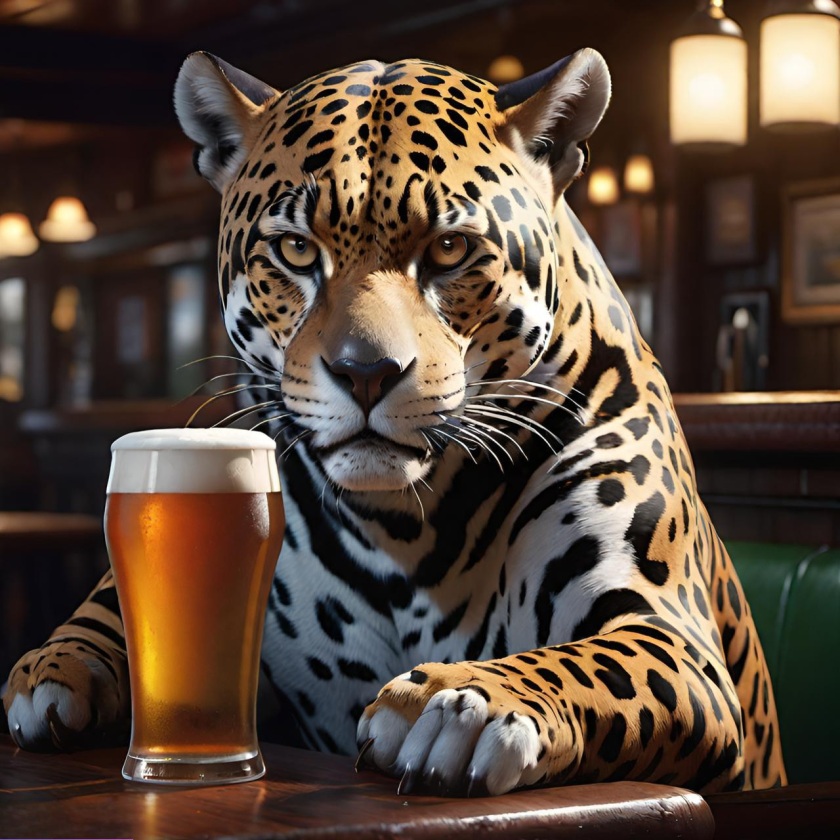
Jaguar in a pub
“I could really go for a Chinese! Anyone else wanna go for a Chinese?”

A swab was collected — the details are sketchy on who did the collecting and when exactly they submitted the sample — and sent to the University of Warwick’s Robin Allaby, a professor of life sciences.

Allaby, whose specialty is studying the genetics and evolution of domesticated plants, began offering a DNA testing service for the public some 12 years ago in response to the persistent rumors of big cats in the countryside. In the past samples have yielded DNA from foxes and other animals, but Allaby says this one matched the genetic profile of a big cat, although he cannot say which species.

It’s not unusual for a DNA sample to match to a genus, in this case panthera, but not to a specific species if the sample was degraded or only partial.

Rick Minter, who has made a career of tracking alleged big cat sightings across the UK, says he believes the mystery cat is a leopard. Leopards and jaguars are the only two big cats who have true melanistic color morphs — meaning some of them have virtually all-black coats — and Minter says he believes it’s more likely the former.

Neither are native to the UK or Europe: Leopards range from Africa to Asia, while jaguars range from south to Central America, with some populations edging slightly into the US.

puma sits on tree
Britain’s big cat enthusiasts say they believe pumas are among the wild cats living in Credit: Jean Paul Montanaro/Pexels

Why isn’t a DNA match evidence of big cats in the UK?

If the lab results say the sample came from a big cat and that result is consistent with the witness account, what’s the problem?

Chain of custody, for one. We don’t know anything about who took the sample, where it was taken, the time elapsed between the kill and the sample swab, or who may have handled it before it reached Allaby.

In fact, we don’t know if there was a dead sheep to begin with.

If I were a prankster living in the UK, for example, and was friendly with a keeper at a local zoo, I could have the keeper swab an animal, bag it and hand it over to me. There are dozens of conceivable ways a person could obtain a sample even if they don’t know someone who works in a zoo.

Leopard in a pub
“So we left the sheep there at the edge of the field and made sure the lady saw us before we buggered off over the fence. Next day, we was in all the papers! A right laugh that was, mate.”

The problem is the provenance of the sample and what happens to it between the time it’s collected and ends up in the hands of a scientist like Allaby.

This is why chain of custody is paramount in criminal trials, and why there must be a complete record of who handled samples from collection in the field to the lab. Even in the absence of foul play, an improperly handled sample can be contaminated and render test results meaningless.

It’s not a matter of trust, it’s the simple fact that extraordinary claims require extraordary evidence, as Carl Sagan was fond of saying. Short of capturing one of these animals or getting clear, indisputable footage, any other claimed proof has to be ironclad.

Speaking of footage, that’s another issue. It’s extremely difficult to believe that a breeding population of big cats can exist in the UK countryside for years or even decades without a single definitive photo or video. The UK’s rural areas may not be blanketed by CCTV cameras like London, but they’re not the Amazon either. People live, work and farm in those regions, cameras are more ubiquitous than ever, and farmers take steps to protect their livestock, including installing cameras.

Big cats don’t just feed and vanish into the mist. They mark trees with their claws and urine, they leave distinct pug marks, they leave distinctive bite marks on their prey, and they make noise. To paraphrase one naturalist, when big cats are living nearby, you know it. Even if you don’t see them, signs of their presence are ubiquitous.

To accept the claims of tigers, leopards and pumas gallavanting in the fields around small towns and villages, we’d have to suspend disbelief or conclude that these are some sort of previously unknown ghost cats who can fade in and out of the physical plane.

I’m not a skeptic to be a killjoy. If big cats really were running around the UK, that would be a hell of a story. But we’d still need convincing evidence, and this isn’t it.

Buddy The Cat’s ‘The Art Of Napping’ Debuts Atop NYT Bestseller List

The book received glowing reviews for its comprehensive approach to the world of slumber and promises something for every type of napper.

A new book on napping from the world’s most prolific snoozer has taken the sleep enthusiast community by storm.

“The Art of Napping: The History and Technique of Dozing Off” by Buddy the Cat bills itself as “the world’s most comprehensive guide to taking a siesta” and a “manual on how to commit yourself to a lifestyle of leisure and laziness.”

It includes an illustrated history of sleep science, from its superstition-mired origins to the highly specialized field of modern-day napology, following the rich sedentary traditions of various cultures.

“The chapter contrasting ancient Sumerian nap-walking with Syracusan Somnambulism is not only heavy with detail, it’ll put you to sleep almost immediately,” said Rusty LeFelino, chaircat of the Snooze Studies Department at the University of Catlanta.

Nap on tatami mat
“Nap on tatami mat under cherry blossoms” by Hirotaro Buddishida, 1646, is one of many historical depictions of shut-eye included in The Art of Napping.

Reviewers were equally effusive with their praise.

“Buddy the Cat dozes headfirst into the world of segmented slumber, documenting everything from Chicago-Style Snoozing to indigenous bedding techniques pioneered by the jaguars of the Pantanal,” reads a starred review in Publisher’s Weekly. “Whether you’re a weekend warrior who enjoys drooling on your couch during baseball games or a committed napper who swears by episodic DaVinci Sleep, there’s something for everyone in this beautifully bound volume.”

The New York-based feline spent more than a year researching and getting paws-on experience for the book. He visited the California headquarters of Google with its famous employee nap pods, spent a week sleeping under the stars with the pumas of the Pacific Northwest, and interviewed lucid dreamers to find out whether it’s possible to nap within a nap a la Inception.

“Buddy leaves no pillow unturned in his quest for the truth, with spectacularly stale prose that will have even the over-caffeinated yawning into the back of their paws,” a reviewer for Narcolepsy Daily wrote. “Get yourself a cozy blanket, curl up with Buddy and let the Z’s commence.”

Jungle Napping
Southern Siesta: The author spent several weeks in the Amazon napping with jaguars, jaguarundis and ocelots, an experience described in a yawn-inducing chapter of The Art of Napping.
Sleeping_cat
“The ability to nap anywhere at any time is the mark of a master snoozer,” Buddy writes in his new book. Credit: Wikimedia Commons

This Is The Zoo Of My Dreams!

Have you ever wanted to own or design your own zoo?

Visitors to Buddy’s Tropical Paradise are greeted by friendly staff who man the entrance, a broad vertical garden shaped like an arch that straddles the main path leading inside.

When they walk through the gate a new vista opens up before them: tiered tropical gardens, waterfalls, and wide boulevards lined with palm trees and flowers. They hear the rumble of big cats calling to each other in the distance and monkeys shrieking as they fling themselves from branch to branch.

Buddy's Tropical Paradise
Welcome to Buddy’s Tropical Paradise!

A monorail carries passengers above, its tracks looping over animal enclosures and threading tunnels that emerge amid the terraced jungle, eateries and souvenir shops.

And straight ahead, the first exhibit: a sprawling habitat occupied by jaguars who are enjoying some yums and will probably have a nap in a few minutes.

Buddy’s Tropical Paradise doesn’t exist in the real world, of course. It’s my first attempt at fully functional, guest-attracting park in Planet Zoo, a simulator that allows you to do practically anything you can think of.

You can design your own habitats, enclosures, buildings and scenery. Fancy a monorail that laps the entire zoo? You can do that. Picturing a 1940s style Tarzan-themed jungle boat ride where visitors can see caiman, capuchin monkeys and jaguars up close? Start carving up the river, my friend!

Bengal Tiger
A Bengal tiger stalking the tall grass in Planet Zoo.
Jaguars
Lunch time in the jaguar habitat, followed by the all-important nap time.

As the zoo’s architect, you’re responsible for everything. You’ll need veterinary facilities, animal quarantine, keeper huts. You’ll need to staff your park with veterinarians, keepers, security officers, maintenance staff and mechanics.

And don’t forget the vendors to run the souvenir shops and man the food stalls, where your guests can grab hot dogs or cool off with slushies on a hot day.

A suitable home for your animals

Designing a habitat is about a lot more than reserving space for your animals. You’re tasked with picking the right barriers, mindful of which species can climb or leap great heights. A good habitat should reflect the animal’s home in the wild with appropriate flora, temperatures the species thrives in and a feeding system that mimics the way they’d naturally obtain food.

Elephant shower
Elephants cool off in their enclosure in Planet Zoo. Every habitat must be designed with the right atmosphere, flora, terrain, shelter and enrichment appropriate for the species it houses.
Orangutan habitat
A wide view of my orangutan habitat. Two orangutans are at the base of the stone steps in the distance.
Cheetahs
Cheetah sisters.

Then there’s enrichment. Trees for your monkeys to climb, ponds for your tigers to take a dip, bushes for your elephants to strip. Different species enjoy different toys and challenges. An ice block with meat in the middle would hit the spot for carnivores on a hot summer day, but your pandas will want bamboo.

Designing habitats and getting them just right is not only fun, it’s an intuitive way to learn about the needs of individual species and how they live.

The leopard learning incident

My first stab at building a leopard enclosure was a disaster. It looked pretty enough with its Hindu-inspired temple architecture and pond. There were plenty of scratching posts and trees that could withstand claws.

I installed a sprinkler to help the big cats cool off, designed a series of raised platforms for them to climb, and scattered enrichment items all over the habitat. The leopards had balls to bat around, boxes to sit in, rubbing pads, logs and rocks to climb, and plenty of cover and shade.

But when I had the leopards brought into the zoo, through quarantine and into their exhibit, I realized you can’t just design a home for animals from an aesthetic perspective. I’d used several plant and tree species that weren’t native to leopard habitats, the terrain was wrong and I hadn’t paid any mind to ambient temperature.

Making those mistakes was truly educational. When your animals aren’t happy in Planet Zoo, protesters show up, and it’s up to you to read the alerts about where you went wrong and how to remedy your mistakes. It’s an intuitive and fun way to learn about each species and the environments they thrive in.

The escaped jaguar

I’m still learning the ropes, although I do have a basic knowledge of the way the game is designed thanks to some time playing Frontier’s theme park building game, Planet Coaster. The first time I tried to build a jaguar enclosure, I forgot to wall off a viewing cave with protective glass, which my guests did not appreciate.

Even though jaguars don’t like to confront humans, a big cat is a big cat, and the game sent me urgent warnings as people ran for the exits. When I found the escaped jag, he was lounging not far from his enclosure, watching people freak out.

Elephant and ball
Enrichment is a key aspect of habitat design. Toys, puzzles, obstacles, climbing platforms for arboreal species, ponds for animals who like to get wet — they’re all necessary to keep animals healthy and happy.

In real life it’d be a disaster, but I was able to revert to a previous save, make sure the viewing cave was sufficiently protected, and this time around I placed only two jaguars — a male and a female — in the large enclosure.

After a while, while I was tinkering  with an exhibit meant for capuchin monkeys, the game sent me an alert: the female jaguar was pregnant! She gave birth to two energetic, curious cubs who are currently having fun chasing each other around the enclosure and going for dips in their pond.

Night view
Part of the main boulevard in Buddy’s Tropical Paradise, viewed at night. Players are responsible for everything you see here — lighting, shops, flowers and plants, benches, waste baskets and more.
Asian section
Shops and a monorail station in an unfinished Asia-themed area of the zoo.

As in real life, the game has you source animals from an international pool, with information on breeding and genetics so you can contribute to conservation. When you adopt animals, their first stop is the veterinary facilities for examination, then quarantine. When they pass quarantine, you can have your staff release them into their enclosures.

It took me several hours to familiarize myself with the basics, design an entrance and a main boulevard for the guests, create some tiered gardens with eateries and shops, and get my jaguar and orangutan exhibits up and running.

My monorail currently runs out of track a quarter of the way through the park, and my river boat ride looks pretty cool, with dense jungle, towering trees and the ruins of Mayan temples not far from shore, but completing it will require appropriate barriers to keep the animals in as well as building out more scenery.

Jaguar habitat
A jaguar in her habitat.

I’ve got my sights set on an elephant exhibit next. It will be necessarily huge, so it’s good to reserve the land early and plan smaller exhibits and facilities around it. I’d also like to put the elephants, lions, zebra, giraffes etc into one Africa-themed section of the park, while the tigers, giant pandas and snow monkeys will be housed in an Asia-themed section, with buildings that reflect the architectural styles of countries like Japan and China.

There are also aquatic exhibits, animals for your own reptile house and aviaries. Those enclosures are more complex than the relatively straightforward orangutan exhibit, for example, so I’ll have to spend some time figuring out what makes a good home for peacocks, sharks and komodo dragons.

So far I’ve resisted the temptation to make one giant felid park, with snow leopards, pumas and cheetahs joining the tigers, lions, jaguars and others. Of course I did name it Buddy’s Tropical Paradise, so I may be forced down the all-cat road if Bud gets his say.

Cougar

Planet Zoo is not a traditional video game. There are no winners or losers, and there’s no “end state” unless you intentionally include one.

It’s more relaxing and much slower-paced than your typical game, and it’s a great feeling when you’ve managed to take something from your imagination and perfect the design. When you want to check your progress or just admire your own work, you can set the camera to follow guests and watch as people stroll through your zoo, taking in the sights and sounds.

In that sense it’s more like a virtual model train set or living diorama. You can load up the game and tinker with your zoo when you’ve got a spare 15 minutes, or spend a few hours getting absorbed in the finer details of how to keep pangolin and red pandas happy.

Planet Zoo is appropriate for all ages, although its depth and complexity would probably be a lot for younger kids. In that case, it’s probably best to have an adult guide them so they understand the game is built on interlocking systems: exhibits need power and water, shops need staff, veterinary surgeries need veterinarians and so on.

It’ll have enormous appeal to kids who enjoy Lego, Minecraft and other building games, so if you’ve got a little builder in your life, this could be a good fit. But make no mistake, there’s a lot here for adults to enjoy too.

PITB verdict: Four out of five paws!

Paw Rating

The only thing keeping Planet Zoo back from a five-paw rating is the DLC (downloadable content) scheme, which requires users to pay extra for certain “packs” containing extra animals, scenery pieces and scenarios. That’s a problem plaguing the larger video game industry, but if you wait for a sale, the normally $44.95 game can be had for as low as $11.24 on Steam. DLC is likewise discounted. Steam’s summer sale is a great opportunity to get games like this for a fraction of their normal price. This year’s summer sale is scheduled for June 27, though it’s possible Planet Zoo could be put on sale before then as well.

The Buddinese Jaguar: A Fitting Feline For The One Percent!

You can’t have a jaguar pet and you can’t have Buddy the Cat, but what if you could have a breed that combines the best features of both? You’d pay a lot for that, wouldn’t you? Good, ’cause they start at $10k!

SATIRE/CAT HUMOR

Inspired by the exclusive Ashera cat, we proudly present to you the Buddinese Jaguar, the pinnacle in feline luxury.

Why settle for a pedestrian Bengal or Savannah when you could own the ultimate in feline status symbols?

Buddinese Jaguar

Our Buddinese Jaguars feature royal lineage, the finest genetic modifications, and they’re extremely handsome!

– Ultra exclusive luxury cat
– Available in hypoallergenic variants
– Version 2.15 now available!
– Patented SilkySmooth™ technology results in a luxuriously soft coat
– Eye colors available in Neon Emerald, Viridescent Beryl, Azure Sky, Amber Glow, Flecked Gold, Elvis Pink Cadillac, Crystal Cobalt and Electric Sapphire
– Optional moon roof
– Easy to use Quiet Mode™ technology guarantees your Buddinese Jaguar will shut up when you want it to
– Extended 5-year warranty

Each Buddinese Jaguar comes with a rapid USB 3.0 charger, a V8 engine that provides plenty of power for HyperZooms, and an Apple AirTag-enabled collar.

Buddinese Jaguar kitten
From kittenhood until adulthood, Buddinese Jaguars are exemplars of handsomeness.

In addition to guaranteed software updates for at least five years, your Buddinese Jaguar is equipped with onboard analog algorithms ensuring it downloads exclusively in its litter box and nowhere else.

Base models start at only $9,950! Hypoallergenic models with patented Fel-d-1 Guard™ technology available starting at $12,495.

We are an officially authorized retailer accredited by the Buddinese Jaguar Association and the Buddinese Authorized Distributor Association Service Standards (BADASS), awarded only to retailers who maintain the highest breed standards.

Buddinese Jaguar
Like its jaguarundi forebears, the Buddinese Jaguar is an apex predator and is awesome at stalking the jungle.

About the breed:

The Buddinese Jaguar was developed by Buddesian Labs. Lead scientist Buddy the Cat tirelessly and selflessly engaged in coitus with 217 jaguarundi females, producing the magnificent offspring that would comprise the first generation of these extremely handsome cats. Using pioneering techniques in CRISPR gene-editing, Buddy did the impossible and improved upon perfection by eliminating allergens and adding even more meowscle mass.

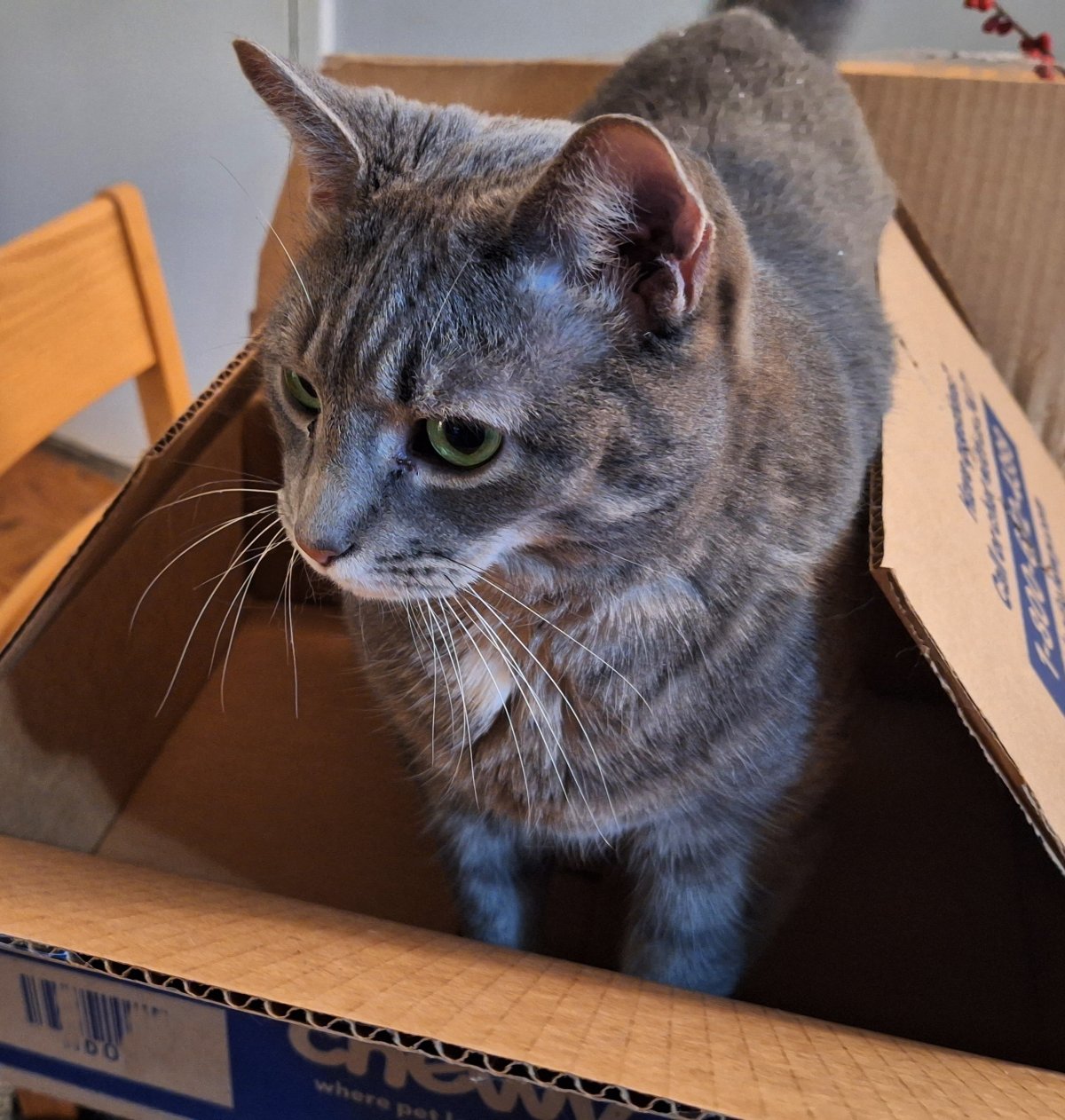
Note: Buddy the Cat himself is not available for purchase, although he will entertain offers for his human.

Buddy sleeping
Chief scientist Buddy recovers after selflessly and heroically engaging in coitus with 217 jaguarundi females in the name of science.

Which Animal Would You Compare Yourself To And Why?

There’s a lot to admire about tigers, jaguars and other big cats, and a lot we need to do to safeguard their existence in the future.

Daily writing prompt
Which animal would you compare yourself to and why?

This momentous occasion marks only the second time PITB has participated in the daily writing prompt via WordPress, and the reason we’re participating is to bring more awareness to the meowscular and powerful Buddinese Tiger — and its threatened cousins, the majestic tigers, jaguars, lions and leopards.

Known in scientific nomenclature as panthera tigris muscularis handsomus, the Buddinese Tiger is an apex predator who rules over his natural habitat, the living room, with an iron paw. No one is safe from the Buddinese Tiger’s charms or its rage when sufficient snacks are not provided.

Buddy and a Tiger
You can’t tell the difference, can you? I mean, they’re virtually identical!

All jokes aside, I’d compare myself to tigers and jaguars because they’re awesome and they’re my favorite cats, aside from the above-mentioned panthera tigris muscularis handsomus. Cats are solitary hunters, they don’t like to be disturbed when they’re sleeping, and they appreciate the value of a good nap as well as a good snack. They are creatures of extraordinary taste!

Most of all, we need more people to appreciate big cats because the future doesn’t look good for them if we don’t do more to save them. Although tiger numbers have rebounded somewhat thanks to concerted conservation efforts in places like India (Bengal) and Russia (Amur), they’re still extremely vulnerable to habitat loss, poaching and revenge killing by farmers and rural villagers who often blame the big cats for being cats and going after livestock.

Likewise, while jaguars were once the sole success story in the big cat world thanks to their isolation deep in the Amazon rainforest and their elusive nature, they face a massive threat to their existence from deforestation and from the Chinese presence in countries like Brazil and Peru, where Chinese nationals poach the majestic felids to fuel the destructive Chinese traditional “medicine” market.

Just as TCM has devastated tiger, lion, elephant, rhinoceros and pangolin populations, it’s moved on to jaguars. Even vast “tiger farms” in places like South Africa, which cater to canned hunts and the TCM market, aren’t enough to meet the demand for big cat parts for use in folk “medicine,” in which ground tiger bones, fur, claws and other body parts are included in various elixirs people believe will cure everything from baldness to sexual dysfunction.

Check out Panthera for more information on conservation efforts and how you can help.

buddinesetiger_script
The Buddinese Tiger