Trump ‘Delighted’ By Saudi Deal To Send Rare Arabian Leopards To D.C.’s Smithsonian Zoo

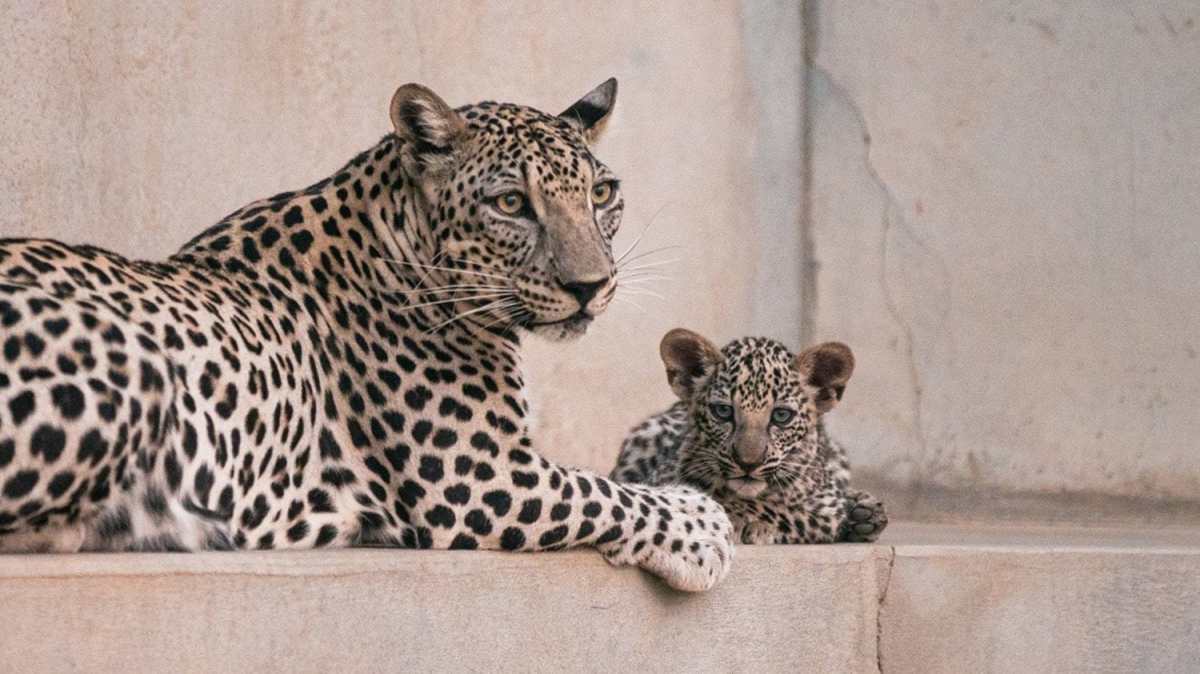
Arabian leopards are among the most rare of all cats, with only about 120 left living in the wild. Trump was taken with them on a recent visit to Saudi Arabia.

I can practically hear Donald Trump bragging about the new pair of extremely rare Arabian leopards the Saudis will send stateside as a deal-sweetener between the countries.

“They’re tremendous cats, just terrific,” he’ll say. “The most ferocious cats you’ve ever seen, believe me. It’s incredible. A lot of people are saying — and by the way, did you know leopards eat up to 40 pounds of meat a day? They’re tremendously powerful animals, very powerful.”

As the New York Times notes, Trump is just as beguiled by dangerous apex predators as he is with dangerous “strong men” tyrants:

Mr. Trump does not own pets and, unlike his sons, he does not hunt big game. But he has shown a particular fascination for animals at the top of the food chain. Last year, he talked constantly on the campaign trail about shark attacks. While campaigning in 2015, he was nearly mauled by a bald eagle he posed with in Trump Tower for a Time magazine photo shoot. (“This bird is seriously dangerous but beautiful!” he chirped after the raptor lunged at his head.)

During his first term, Mr. Trump asked aides about dropping snakes and alligators into a hypothetical moat he wanted built on America’s southern border. He also reportedly became fixated on the viciousness of badgers, badgering his former chief of staff Reince Priebus, who is from the Badger State, as Wisconsin is known, about whether badgers were mean or friendly, according to “Sinking in the Swamp,” a book about the first Trump administration. (Mr. Priebus did not respond to multiple requests for comment.)

Trump viewed the leopards and spoke to a zookeeper while he was in Saudi Arabia to complete a recent arms deal. (The U.S. will sell $142 billion in high tech weapons to Saudi Arabia so the kingdom can more effectively slaughter Yemeni civilians in its ongoing proxy war with Iran.) The American president wanted to know all about the big cats, including how big they are and what they eat. The zookeeper, who routinely handles those sorts of questions from visiting classes of elementary school children, happily indulged his interest.

Arabian leopards are fierce, but they’re somewhat smaller than their Asian counterparts. Panthera pardus nimr, as the species is known, generally has a lighter, tan-colored coat that provides more camouflage in desert and arid environments.

An Arabian leopard Arabia’s Wildlife Center in Sharjah, United Arab Emirates. Credit: Arabia Wildlife Center

The Times also quotes Joe Maldonado, aka Joe Exotic, who spoke to a reporter from prison, where he’s serving a 21-year sentence for trying to have Big Cat Rescue’s Carole Baskin murdered. Maldonado is keenly aware of Trump’s recent streak of handing out pardons to reality TV grifters, like Todd and Julie Chrisley, who stole almost $40 million, as well as less famous scammers like convicted crypto bros. (The Chrisleys, who were convicted of bank fraud and tax evasion, declared bankruptcy to avoid paying back their victims, and will now launch a new reality TV show detailing their post-prison lives. ‘Merica!)

Now Maldonado sees an opportunity.

The former “Tiger King” says Trump should have leopards and other big cats prowling the grounds of the White House, which is the kind of thing dictators like Vladimir Putin and Saddam Hussein have been known for.

“I think it would be absolutely amazing if he would put some endangered cats like that around the White House,” Maldonado said. “I’ve never been there. I don’t know how big the Rose Garden is, but I would imagine you could build a pretty nice size complex.”

Perhaps Trump can threaten to feed congressmen and senators to his new leopards if they defy him and don’t vote for legislation like the “big, beautiful bill” he’s been pushing.

Maldonado admitted that even he’s never seen an Arabian leopard, an animal so rare that only an estimated 120 of them remain in the wild. Still, he thinks he can handle them for Trump.

“Let me out,” Maldonado said, “and I’ll come take care of ’em!”

Credit: Tomasz Dworczyk/Pexels

FBI: Felines Behind Mysterious Drones Spotted In Night Sky

Some observers believe the drone sightings are merely the first stage in an all-out feline takeover of the US. So far, cats have remained mum on their motivations, preferring instead to sow panic among Americans.

WASHINGTON –The caller was breathing heavily and speaking in rapid-fire sentences as if he had only moments to get the words out over the air.

“I’m telling you, Art, it’s the cats — the cats are piloting these drones!” the caller told Coast to Coast AM radio host Art Bell shortly after 1 am ET on Friday.

“Hold on, hold on,” Bell said theatrically. “You’re saying this has nothing to do with aliens or the government?”

The caller sighed.

“The cats may very well be in league with aliens, but I’m telling you, felines are behind…oh God! They’re here!”

The radio broadcast crackled with distorted hissing and yowling, punctuated by the caller’s pleas for mercy.

“Caller? West of the Rockies, are you there?”

The caller screamed a final time and the line went dead.

“Wow,” Bell told his audience of several million overnight listeners. “There you have it, folks. You be the judge, but that sounded like the real deal to me. Cats are piloting the mysterious drones!”

For weeks, Americans have been asking for answers about swarms of suspicious drones operating above homes, businesses, military bases and government buildings at night.

After rampant speculation that the drones could belong to rogue states, or could be part of some secret government flight test, the FBI confirmed Friday that felines are behind the frequent sightings.

Drone at night
A drone flies above a farm and ranch as the sun fades. Drones have been spotted circling chicken and turkey coops, as well as fish markets.

Biden administration officials confirmed to several media outlets that intelligence supported the theory that cats — not Iranians, Russians or some secret Pentagon operation — are operating the drone swarms that have been lighting up the night sky in states like New Jersey and Maryland for several weeks, befuddling local and state officials.

“At first we thought the idea was absurd,” said a high-ranking official, who spoke on condition of anonymity. “Then we received reports of drone swarms circling several meat-packing plants, a Chewy distribution center in Trenton, and two PetSmarts in northern New Jersey.”

So far, the felines’ motivation remains shrouded in mystery, but experts on the small, furry animals ventured guesses on what may have motivated their sudden interest in aviation and airspace.

“No one’s claimed responsibility, so we’re left to speculate,” said Norah Grayer, a feline behaviorist with NYU’s Gummitch School of Veterinary Science. “But it may be that felines, as a whole, have decided the meow is insufficient for getting their demands across. Humans have become adept at tuning out those vocalizations, so this may be the next step in an attention arms race, so to speak.”

Noted cat expert Jefferson Nebula offered a different explanation.

“Cats are notoriously subject to FOMO, which is one reason why they can’t abide closed doors,” he said. “If someone managed to convince them that we humans were holding out on them, and there are entire worlds of yums we keep for ourselves, well, that would spark the wrath of these otherwise friendly little guys.”

Cat with drone
Felines have mastered control over aerial drones despite their lack of thumbs.

For his part, Bell consulted with Michio Kaku, the physicist and science communicator who has been a regular presence on Coast to Coast.

“We physicists have been saying for decades that cats are much more intelligent than we give them credit for,” Kaku said. “This could be retribution for the Schroedinger’s cat thought experiment, or felids may be looking to surpass humanity’s understanding of 11-dimensional hyperspace.”

“Professor, we’ve spoken quite a bit about the Kardashev scale [of civilization progress] in the past,” Bell said. “If we separated human and feline societies, where would we each fall on the scale? Humans are about a zero point seven, are we not?”

“That’s right,” Kaku said. “We physicists believe humanity is on the cusp of a Type I civilization, with things like the internet as a Type I telecommunications system and fusion power on the horizon. However, if you break it down and cats were separated into their own civilization, cats could plausibly already be a Type I civilization.”

“They’re ahead of us?”

“That’s right,” Kaku said. “We physicists believe cats can tap directly into primordial energies and have mastered quantum teleportation. In Star Trek, the Federation is a Type II civilization, and the Caitians — a species of alien cats — are part of the Federation. Yet it’s widely understood that the only reason the Caitians haven’t conquered entire swaths of the galaxy, like the Borg and the Klingons, is because of their strict adherence to their napping schedule and their inherent laziness. These drone swarms may be a signal that real-life cats are fed up enough to disturb their napping schedules, in which case we should all be terrified.”

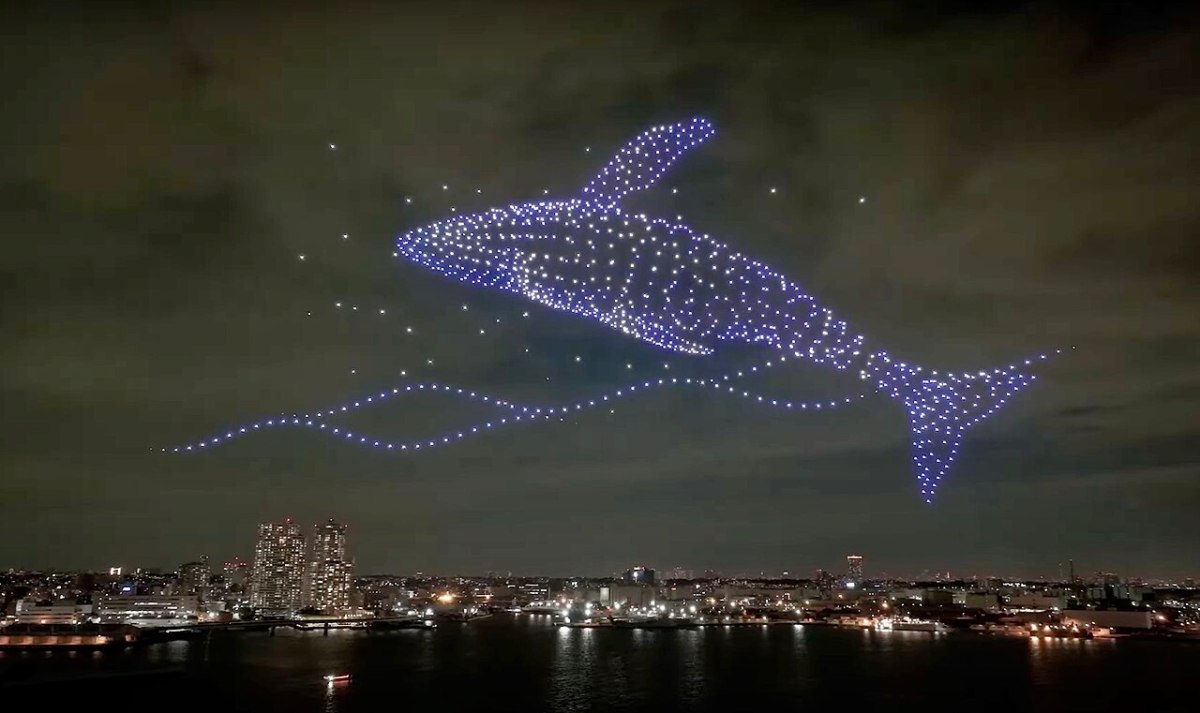
Header image of drone light show credit Wikimedia Commons

Iran’s Theocrats Want To Ban Cats, Dogs and Other Pets

Iranian clerics and lawmakers claim pets are dangerous, but observers say the country’s religious authorities see pets as a threat to conservative Islamic beliefs.

The Prophet Muhammad heard the afternoon call to prayer one day and was about to rise when he realized his favorite cat, Muezza, was sleeping on his sleeve.

Rather than wake the slumbering kitty, Muhammad cut off his sleeve, stroked her fur and headed off to pray.

That story — and accounts of Muezza regularly napping in the lap of Islam’s most sacred prophet as he preached to followers — make Muezza one of the most well-known felines in human history, and form the basis for Islamic teaching regarding cats. Muslims consider cats the cleanest of animals, worthy companions and, thanks to the way the Prophet Muhammad treated Muezza and his other cats during his life, animals worthy of respect and the protection of humans.

Why, then, do hardline Islamic lawmakers in Iran want to ban the keeping of cats as pets, along with other animals?

Animal lovers in the country of 84 million are alarmed after conservative lawmakers introduced a bill, titled “Protection of the Public’s Rights Against Animals,” that would ban people from “importing, raising, assisting in the breeding of, breeding, buying or selling, transporting, driving or walking, and keeping in the home wild, exotic, harmful and dangerous animals.”

The list of “dangerous animals” includes creatures domestic and wild including “crocodiles, turtles, snakes, lizards, cats, mice, rabbits, dogs and other unclean animals as well as monkeys,” according to Agence France Presse.

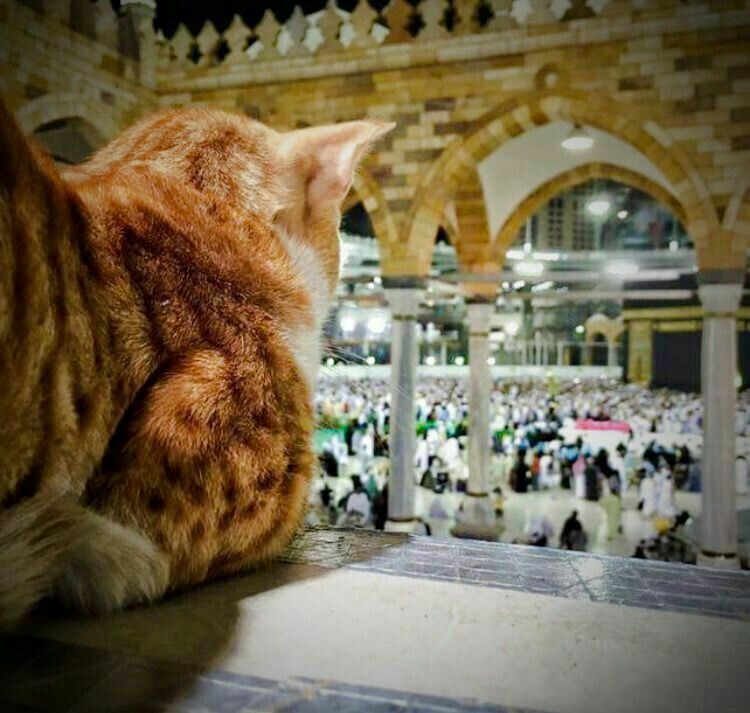
Cat in mosque
A cat loafs in Saudi Arabia’s Masjid al-Haram in Mecca, just a few hundred feet from the Kabah, the most sacred site in Islam. The fact that cats are allowed in such close proximity to the site reflects the Prophet Muhammad’s devotion to felines. Credit: Wikimedia Commons

Penalties for violating the ban would be steep:

“Offenders would risk a fine equivalent to 10 to 30 times the ‘minimum monthly working wage’ of about $98 or 87 euros and the ‘confiscation’ of the animal,” the report says. If passed, the law would also require landlords to ban pets on their properties.

The proposal has caused an outcry in Iran, where keeping pets has become more popular in recent years, especially because it’s not just one or two politicians introducing a long-shot piece of legislation: At least 75 of Iran’s 290 legislative representatives have already signaled support for the bill.

Officially, Iranian lawmakers who support the pet ban say they’re obligated to act because pets are “dangerous.” Mohammad-Taghi Naghdali, an Iranian MP, told Persian-language news site Didban-e Iran that dogs in particular can “cause nuisance and harm” to people, citing a recent incident in which a dog killed a child in a Tehran public park.

But observers say the real reasons have to do with the Iranian government’s interpretation of Islamic teaching, as well as fear that keeping pets is a western, liberal (in the classic sense) behavior that poses a danger to the Islamic theocracy.

In 2019, dog walking was officially banned in Tehran, and authorities warned residents to keep their pets out of public spaces.

“Police have received permission from the judiciary branch to crack down on people walking dogs in Tehran,” Tehran Police Chief Hossein Rahimi said in late 2019. “Carrying dogs in cars is also banned and if a dog is seen inside the car, police will confront the owner of the dog.”

In 2016, media reports said “officials were showing up at the homes of pet dog owners claiming that they were from a veterinary unit and these dogs needed vaccinations. The dogs were taken away, ostensibly for the purpose of vaccination and were never seen again.”

Dogs are considered “ritually unclean” according to Islamic hadiths, and some majority-Muslim countries, especially theocracies like Saudi Arabia, ban dog ownership completely with very few exceptions, such as seeing eye dogs for the blind.

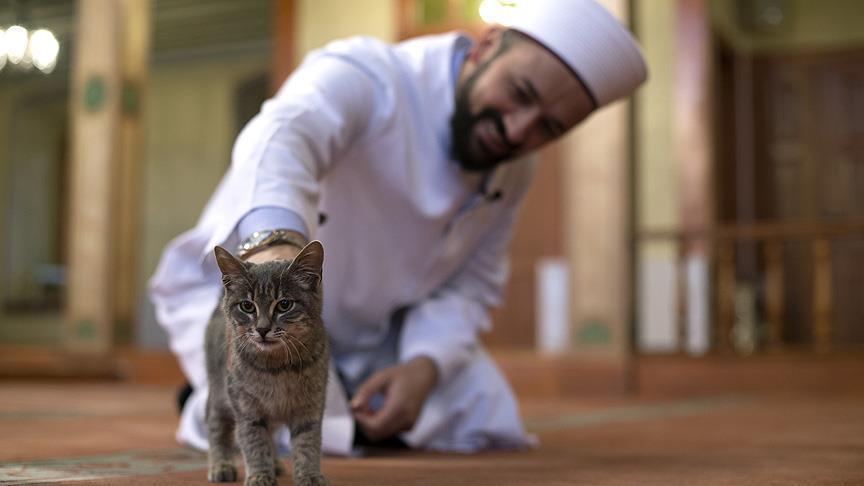
By contrast, cats are widely tolerated and even welcomed into holy sites in most Islamic countries. In Saudi Arabia it’s not uncommon to see cats lounging on the grounds of mosques, while Turkey is famously hospitable to felines, with Istanbul earning an international reputation for its well-treated and ubiquitous street cats. In Turkey, cats are welcome in mosques, shops and homes, and tiny shelters for strays can be found almost everywhere.

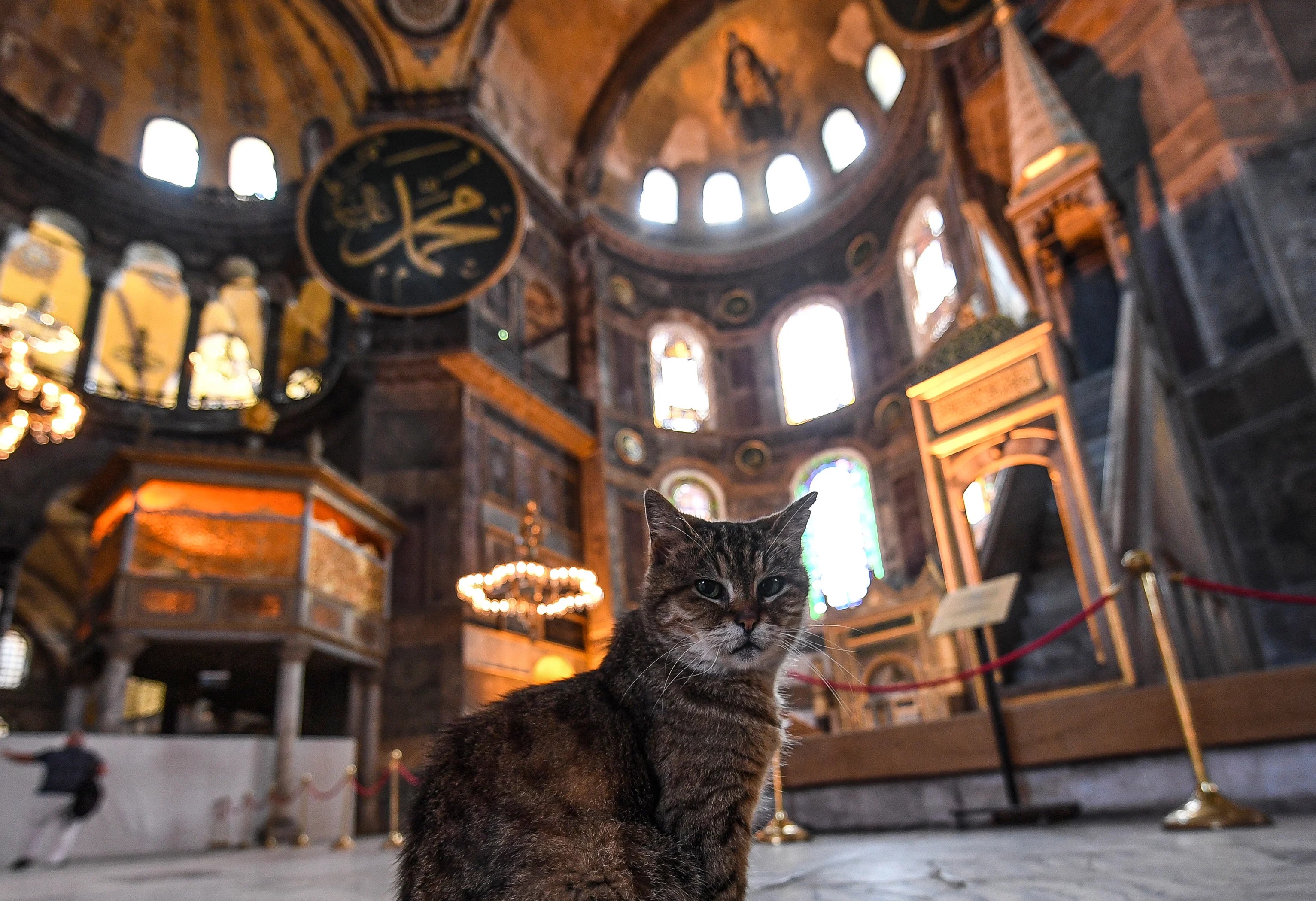
gliistanbul
The late Gli, the most famous feline resident of the Hagia Sophia in Istanbul.

The proposed law has not gone over well with the people of Iran, who are often at odds with the country’s theocratic leaders on almost every aspect of social life.

“I have renamed my cat ‘Criminal’ since I heard this proposed law,” one Iranian wrote on Twitter, while journalist Yeganeh Khodami tweeted: “How many times have cats sought to devour you so that you consider them wild, harmful and dangerous?”

A common refrain among animal lovers is that the country’s leadership is once again focusing on something ultimately unimportant and harmful to Iranians instead of working to fix real problems like a depressed economy, widespread droughts and nationwide belt-tightening caused by international sanctions.

“Why should I imprison him at home?” a Tehran woman walking a dog told Agence France-Presse. “The MPs probably assume that young couples today don’t have children because they have a pet dog, but that’s stupid. It’s not the dogs but the economic conditions that don’t allow us to have children.”