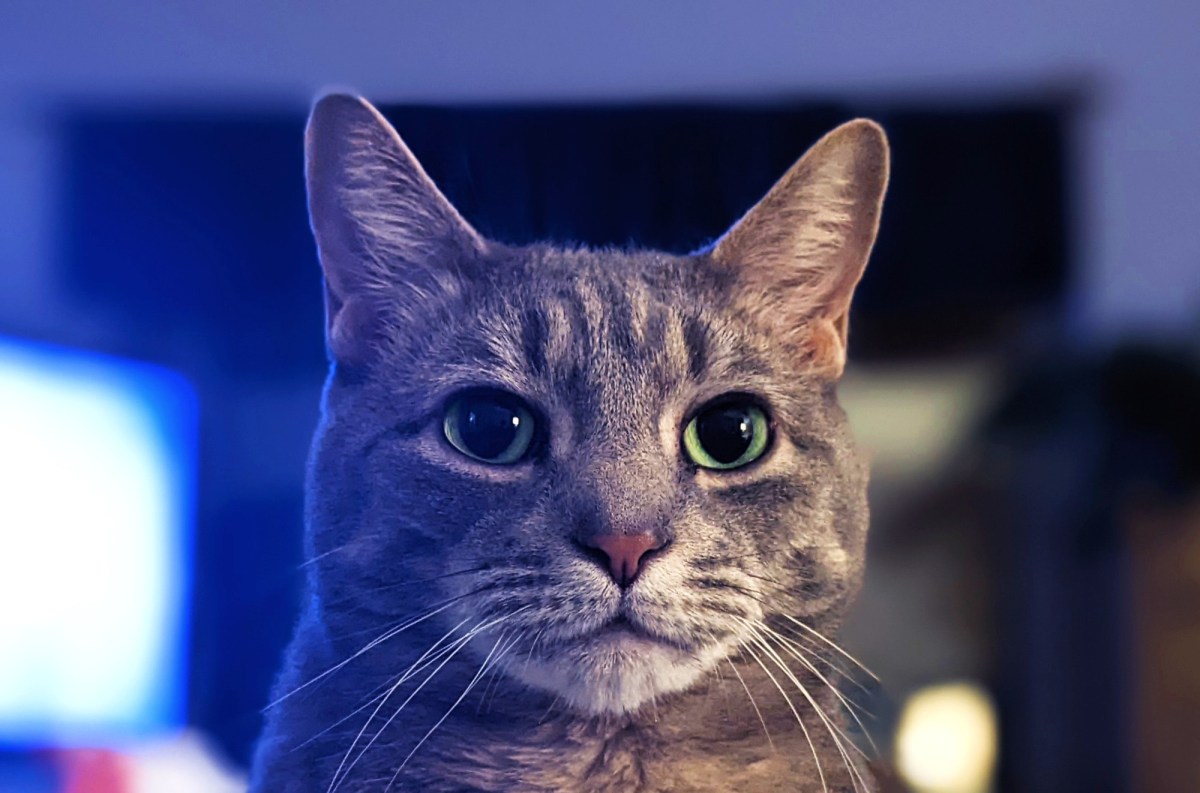
‘A Vibrant Mind In His Little Head’: How Buddy Became My Animal Cognition Teacher

Buddy’s personality is galactic in size, his emotions emblazoned in neon, his opinions shared through a bullhorn.

I used to hate cats.

When I’d hang out at my friend Dave’s house as a teenager, the little shits were everywhere, climbing all over everything with no boundaries and apparently no limit to their numbers.

Dave’s family had between 10 and 12 cats at any particular time, a small army, and as far as I could tell they were little more than inscrutable, uncommunicative tribbles, barely sentient animals who didn’t listen to anyone, could not be told “no,” and were going to stick their little faces in your food or drink no matter how many times you told them to get lost.

Worse, I’d have to dose up on Benadryl just to last a few hours and often left because my eyes were gumming up and my nose was clogged.

There were times when I sat in my car, idling for a half hour with the windows down and heat on blast on frigid nights, waiting for the worst allergic symptoms to subside. I was worried I’d be pulled over and a cop, seeing my half-shut, bloodshot eyes, would decide I was driving stoned or drunk.

Even when another friend adopted a friendly, cuddly tuxedo who became the first cat I truly interacted with, even when I realized I could safely play with one or two cats without getting sick, and even as I was actively looking for a feline of my own, I didn’t think they were intelligent or that it was really possible to meaningfully communicate with them.

At best I’d get a tribble of my own, something to feed and care for in my black depression to take me mentally out of myself.

buddykitten2
My little pal, probably around 10 weeks old.

Then Buddy came striding out of his carrier like a furry little Genghis Khan and started conquering shit.

The furry little conqueror

I was prepared for a kitten who might dive under the bed and refuse to emerge except to sneak a bite or take a sip when the coast was clear. Lots of guides for first-time adopters warned the adjustment period for a new cat or kitten could be extensive.

What I got was a boisterous, bold, imperious little dude who was kind enough to allow me to continue sleeping on my bed, which was now his bed. I got a companion who demanded my attention, wanted to be involved in everything, and was going to let me know loudly and unambiguously what he liked and what he didn’t. He took up a regular position on my shoulder, like a parrot with a sea captain. We were — and still are — inseparable.

Buddy’s personality is galactic in size, his emotions emblazoned in neon, his opinions shared through a bullhorn. There’s a vibrant mind in his little head.

If they met Bud, even the most stubborn animal haters, the kind of people who refuse to acknowledge animal intelligence because they think it diminishes our own, would know they’re dealing with a person even if they may not admit it.

That is why this site exists. It’s why I write about cats, why I’m invested in their welfare and why it hurts my soul to hear about so many casual incidents of cruelty committed by humans toward felines.

When I hear about people gunning down cats or pouring lighter fluid on them, I think about what might have happened if Bud ended up with someone else, and I think about the cats who are just like Bud who are killed or seriously injured by cruel humans engaging in senseless violence.

There is no question that those cats suffer, that they feel pain, anxiety and terror as seriously disturbed people inflict pain on them for “lulz,” or because they think hurting cats might earn them Internet Points in the bowels of the web where diseased minds congregate to share shock videos.

No Turkey?!?
“Dude, you can’t be serious.”

The fact that Buddy thinks he’s a hulking tiger is a running joke here, and it’s true. He thinks he’s the baddest boy on the block, and he doesn’t see any dissonance between cosplaying as the Buddinese Tiger one minute, and running behind my legs when he gets scared the next.

Mighty and brave!

It’s been 10 years now, and I’ve pretty much accepted the fact that he can’t be stopped from pawing at the big screen door leading from the living room to the balcony.

But every time he gets his claws caught and he’s left hanging, he starts crying for me. He sounds like a baby, and all he wants in that moment is his Big Buddy to come and pick him up, gently slide his claws out, and rub his head while telling him what a brave and tough little guy he is.

He responds by puffing his chest out and purring. He’s probably thinking “Yes, I am brave, aren’t I? I endured that ghastly ordeal and only cried a little bit!”

Buddy the Clever
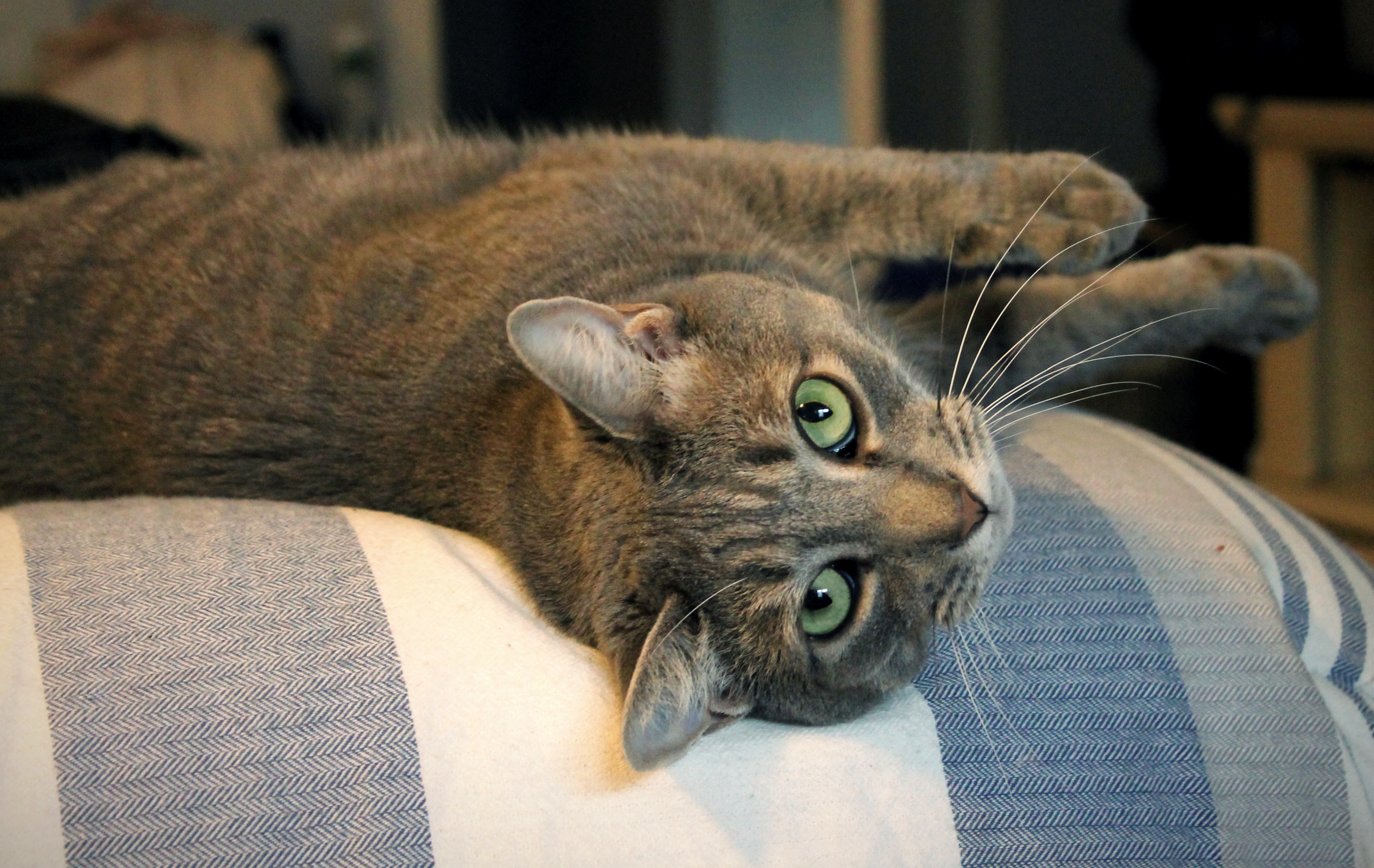
Buddy with a very Buddy look on his face.

It’s not all wonder and awesomeness, of course. I never would have guessed an animal could be so resourceful and clever when it comes to being annoying. Bud graduated from cackling gleefully in the dark as he terrorized my feet at night, to repeatedly punching the flap on his litter box because he knows the squeak drives me crazy. He’s also fond of standing on my head and shrieking at full volume into my ear. Not “fill my bowl” or “I need water,” because those needs are taken care of immediately before bed.

The reason he wakes me up, why I’m ripped out of restful slumber by his high-pitched kitten voice, is because he wants me to wake up and be Buddies with him. He wants to hang out.

So as annoying as he can be, and as much as I really, really hate losing sleep, I can’t be mad at him. If only humans were so pure in their intentions and non-judgmental.

Cats are social animals

A lot of people say their cats ignore them or at best acknowledge them with a twitch of their radar ears. When I call Bud, he responds by happily padding up to me, tail raised straight up or curled like a question mark.

That’s because he knows I’ll never hurt him. He knows I’ll never force him to do anything he doesn’t want to do, nor will I grab him, subject him to unwanted petting and refuse to let him go. Trust goes a long way in human-feline relationships. In some ways, it’s everything.

Schemeowtics
Schemeowtics for Buddy the Cat. Note the huge meowscles.

Part of earning that trust means understanding my little pal, learning from him and learning about him. I’ve read more about felis catus than I ever imagined I would, and Bud’s smarts sparked a years-long deep dive into animal cognition that still has its hooks in me.

The belle epoque of feline research

For decades, dogs were the only domestic pet scientists bothered with. Cats were legendarily uncooperative, and the general consensus was that trying to wrangle them wasn’t worth it. If a research team managed to get 150 people to bring their cats into the lab, they were fortunate if a third or a fourth of them worked out.

Over the past 10 years or so, that’s changed as a new generation of scientists began to think in feline terms. Now the research teams come to the cats instead of the opposite, in recognition of how important territory and surroundings are to the species. They’ve also taken study formats originally built for children and dogs, and modified them for moggies.

Thanks to their efforts, we’ve learned a great deal.

Studies have found that, contrary to popular belief, cats really are social animals. If they’re bonded to a person, they value affection more than food or toys! They pay close attention to our whereabouts at all times, even though they’re masters at appearing ambivalent.

They know their names, they know the names of other cats they live with, and studies suggest they may be an even quicker study than toddlers when it comes to basic word association with items and concepts.

The meow isn’t a part of their regular communicative repertoire when they’re strays or ferals, and vocal communication doesn’t come naturally to them, but meows are embedded with meanings we’re only just beginning to understand.

Most amusingly, they’re capable of being dishonest with us and modifying their meows to manipulate us. But don’t let that fool you into thinking cats are real liars: it seems the one and only thing they’re dishonest about is food, probably because they realize we’re suckers.

Hap

During our time as inseparable pals, Bud and I have developed our own human-feline patois, a way of communicating that involves verbal and non-verbal cues. I pride myself on knowing what he wants the vast majority of the time, but I also realize the majority of the credit goes to little man for meeting me more than half way.

Sometimes Bud is so insistent, his meows apparently so urgent, that I don’t know what he wants. I can rule out food, water, a foul litter box or demands for pets. If he wants to snuggle or lay in my lap, he doesn’t need to ask. If he wants to play, he lets me know.

So what’s he saying? What could possibly be so important? Is he trying to tell me he’s reconciled quantum mechanics with general relativity? Has he gotten word of an anti-Buddesian plot by the devious neighbor cat, Smudge?

I don’t know. But one thing I do know, that I’m absolutely confident about, is that there are real thoughts scrolling through that little head, and a rich, authentic inner existence.

I’m lucky I’ve gotten to be his buddy, and to learn from him that animals are so much more than vacant-brained automatons I used to think they were.
Study: Humans Aren’t Great At Judging Feline Moods, But We Can Improve

People who were asked to identify feline moods based only on audio of meows fared the worst in the study.

A new study suggests people misinterpret their cats’ moods often, but offers an easy fix.

A group of researchers from Paris Nanterre University split participants into three groups: one that was shown soundless video and images of cats, a second group that heard audio-only recordings of feline vocalizations, and a third group that had the benefit of video and sound.

Participants from the first two groups misinterpreted feline moods as much as 28 percent of the time, the study found, but people who had the benefit of seeing and hearing cats correctly identified their mental state almost 92 percent of the time.

The study also yielded another insight: people are much better at accurately assessing positive moods than they are at spotting an upset or antagonistic cat.

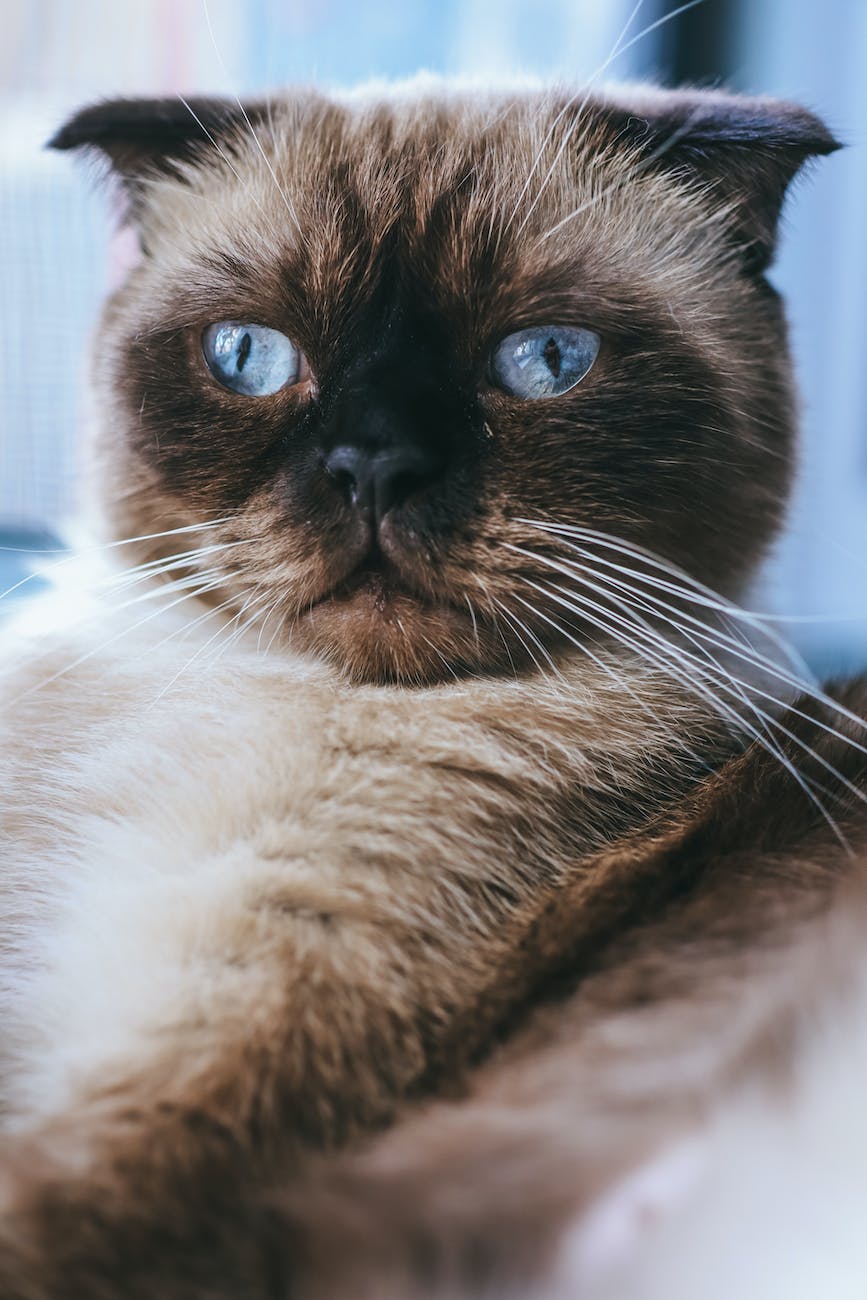
cute cat with blue eyes
Credit: Sami Aksu/Pexels

The findings indicate we’re better off giving our cats our full attention than, say, jumping to conclusions about what they want based solely on their vocalizations or the position of their tails. It seems obvious, but how many of us have our eyes on a screen or we’re multitasking when our cats want our attention?

Of 630 people who participated in the research, 166 were professionals in animal-related fields like veterinary medicine and animal behaviorism, while the rest were lay people. There was a major gender imbalance among participants, with 574 women, 51 men and five people who didn’t identify with either gender.

It’s not clear how such an imbalance might skew the results, and it would be nice to see follow-up research evenly split between women and men.

Felines Protest Idris Elba’s Lion Thriller ‘Beast’: ‘Stop Stereotyping Us Cats!’

The protesting felines, tired of being cast as villains, demanded “cuddlier representation” in movies and TV.

LOS ANGELES — Marching in a broad circle outside the Universal Studios headquarters on Monday, a group of about 200 cats demanded “more cuddly representation” in television and film.

The felid contingent included house cats, pumas, bobcats, tigers, lions, leopards and even a few jaguars, each holding signs with messages like “Cats are more than claws!” and “Stop The Stereotyping!”

“What do we want?” a house cat shouted into a megaphone.

“Cuddlier representation!” the crowd of cats shouted.

“When do we want it!”

“After our nap!” they replied in unison.

Monday’s protest was prompted by Universal Studios’ 2022 thriller, Beast, but protest organizer Buddy the Cat said the felid group was protesting “decades of tropes and injustices committed against cats by Hollywood and TV.” Examples include the undead cat in Stephen King’s Pet Sematary, the rampaging lion in Dutch horror-comedy film Prey (called Uncaged in the US), the many murderous felids in the CBS series Zoo, and Jackson Galaxy’s My Cat From Hell.

“We’re tired of always being cast as villains while dogs are the heroes. Take a cat like me, for instance,” Buddy told a reporter. “It’s easy to mistake me, with my razor sharp claws and ripped physique, for a threat to humans. But really I’m just a cuddly little guy who likes chin scratches.”

vsgif_com__.3231405

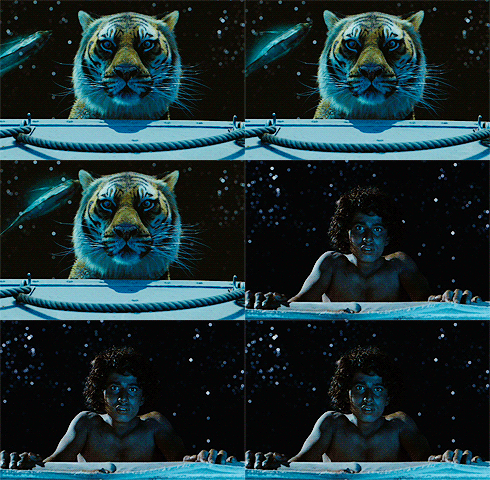
Linus, a 14-year-old Bengal tiger who starred as Richard Parker in the 2012 hit Life of Pi, said he was a young actor who didn’t know better when he agreed to portray the threatening antagonist.

“Now that I’m older and I have all this Frosted Flakes money coming in, I can be picky about the roles I accept and only choose movies I think will be Grrreat!” he told an interviewer. “But what about the next young tiger, or the jaguar fresh off the boat from the Amazon, who doesn’t have the power to tell the director a certain scene is offensive?”

Linus also took issue with the script, in which the writers have him refusing to share fish with Pi.

“Did you see the boat? It was filled with fish! What am I, some sort of glutton who’s gonna eat 200 pounds of fish while the human starves?” Linus asked, bewildered. “I mean, according to Hollywood we’re angry, dangerous, murderous criminals and we stuff our faces all the time. No wonder people are scared of us!”

Prey/Uncaged
Prey, also known as Uncaged, depicts an angry lion rampaging through Amsterdam and eating pretty much everyone.

Beast stars British actor Idris Elba and tells the story of a widowed medical doctor who takes his two daughters to South Africa, where they stay with a family friend and embark on a tour of the native wildlife.

Unbeknownst to them, an adult male lion is on a rampage after a team of poachers entered the reserve the previous night and slaughtered his entire pride. While Elba’s character, his two daughters and his friend (Sharlto Copley) explore the reserve, they discover the mutilated remains of an entire village’s population and eventually come face to face with the murderous lion.

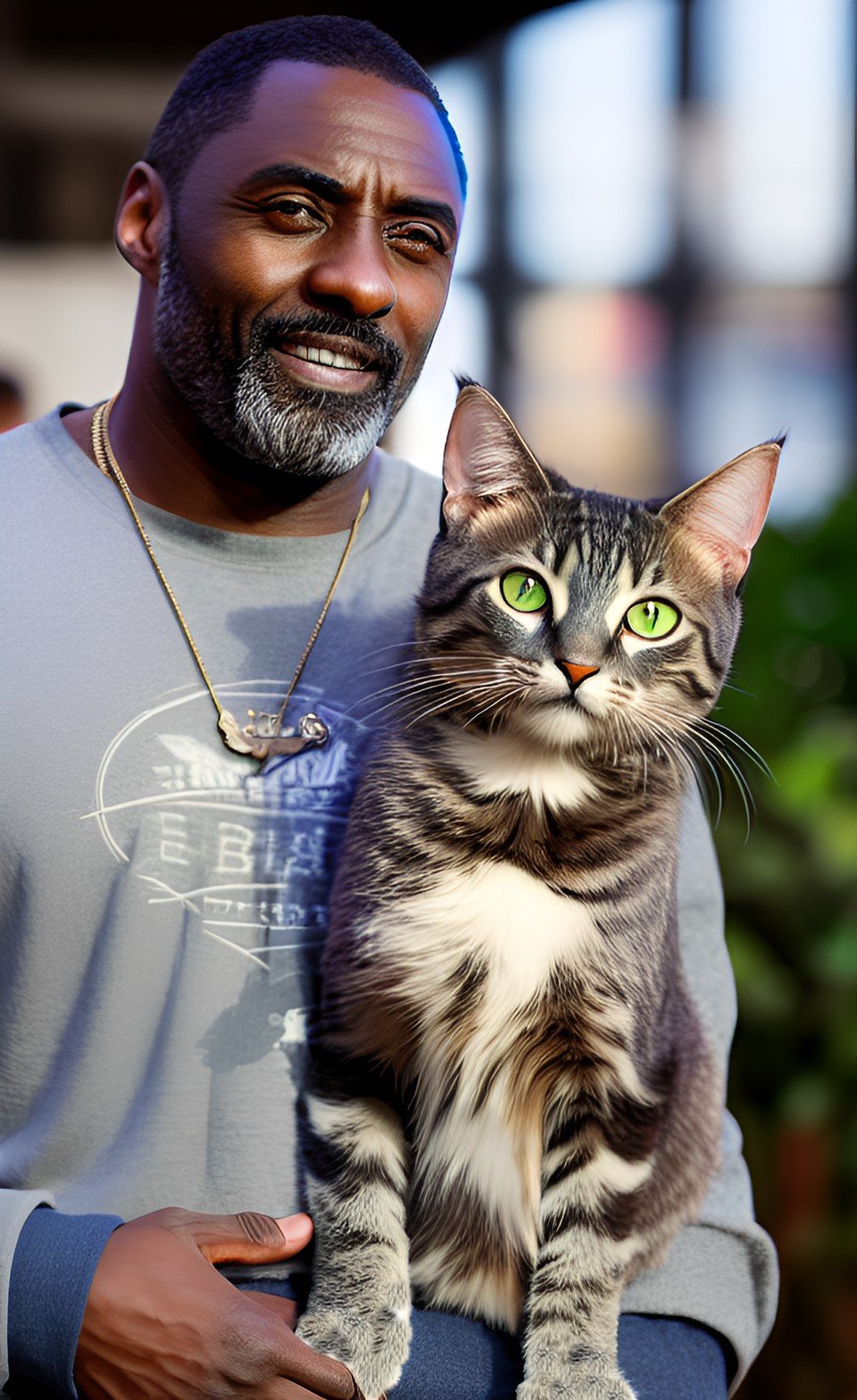
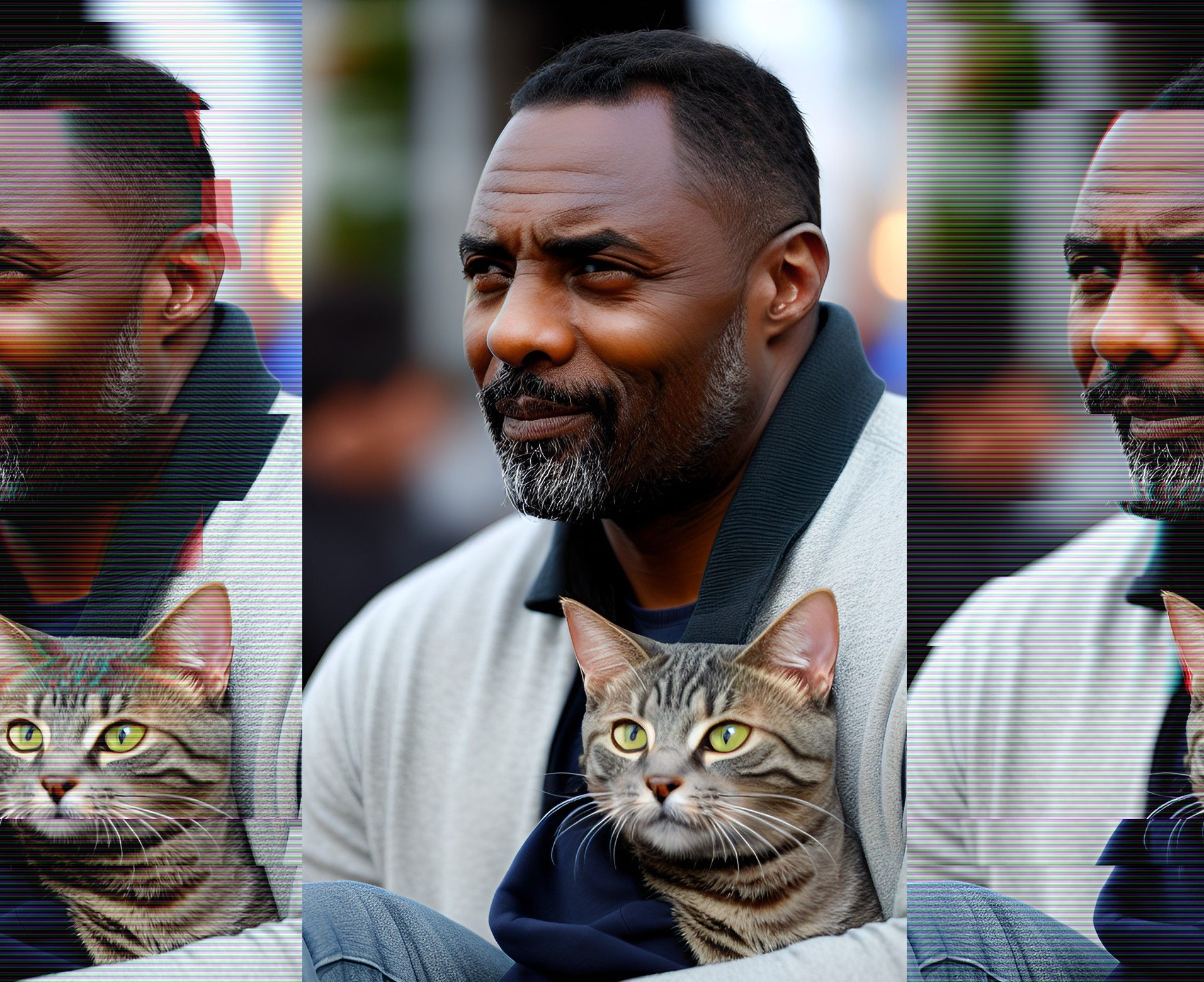
“What’s all this barney, then?” Elba said when asked about the felid protest. “Well that’s unfortunate, innit, mate? I played a tiger in The Jungle Book, a proper tiger. I love cats.”

The actor, who rocketed to fame off the strength of his portrayals of Stringer Bell in American police drama The Wire, the title character in British detective thriller Luther, as well as major roles in franchises like the Marvel Cinematic Universe, the Star Trek reboot movies and science fiction action-adventure Pacific Rim, said he’s taken the cat’s criticism to heart.

elbabuddy2
“Buddy’s a good bloke,” says Elba, pictured with his feline friend.

“Me and me mate Buddy, we like to grab a pint on the regular, d’ya know what I mean?” Elba said. “This tosh with the movies, it’s gotta stop. Me mate Buddy is a good bloke, innit? So if he says Hollywood has to have more positive portrayal of cats, then that’s what we’ll do.”

In addition to their negative portrayal in films, which felids likened to the offensive portrayal of Italian-Americans as mafia figures, many cats cried foul at the idea that one of their kind would harm the beloved South African actor Sharlto Copley.

“That’s a very offensive portrayal,” said Chonkmatic the Magnificent, King of All Cats. “Sharlto Copley is the guy who made District 9, about aliens who eat cat food. Everyone knows cats love District 9. We wouldn’t lay a claw on Sharlto!”

idrisbuddy

Kitten With No Sex Organs Up For Adoption, Plus: Cat Proves The Dog Is HIS Pet (VIDEO)

Hope the Cat’s condition is so rare it doesn’t have a name, but her rescuers say it won’t lead to health complications and Hope is otherwise a very normal and friendly cat.

We all know what it’s like — you’re trying to get something done when your pet, beloved as he or she is, has decided to be really annoying in insisting on treats.

Finn the cat was in this position recently when his pet, Piper the Cavalier King Charles Spaniel, had her eye — or more likely her nose — on a small bowl of Cinnamon Toast Crunch on the kitchen counter. Piper couldn’t reach the tasty snack, so Finn climbed up, fished out a piece of cereal one at a time and dropped them for his loyal canine companion. (Finn himself had no interest in the sugary cereal, lacking in meat as it is.)

This should settle any remaining questions about where cats and dogs stand relative to each other:

Homeless kitten from UK has rare condition, is neither male nor female

A kitten rescued by a shelter in Warrington, about 20 miles west of Manchester, was originally listed as female and given the name hope. However, during a routine exam, a veterinarian found Hope does not have reproductive organs, according to The Guardian.

“There’s an outside possibility of some ectopic ovarian tissue hiding away internally but we think this is extremely unlikely … This is so rare that there isn’t really a commonly used term for this condition, but it is effectively sexual organ agenesis,” said Fiona Brockbank, senior veterinarian at Cats Protection in Warrington. “While this means we don’t have any previous cases [on which] to base our knowledge of how this will affect Hope in the future, we spent time monitoring this cat to ensure they can urinate and defecate appropriately before they were considered ready for rehoming.”

Hope’s condition is so rare it doesn’t have a name, but shelter manager Beni Benstead told the newspaper that shouldn’t dissuade potential adopters. Hope is very friendly with other cats at the shelter and “has been a delight to care for.”

Cats Win ‘Laziest Species’ At 212th Annual Animal Awards

Cats were recognized for their efforts to transform laziness into an art form.

NEW YORK — Domestic cats swept the Laziest Species category at the 212th Annual Animal Awards on Friday night.

Accepting the award on behalf of all cats, Chonkmatic the Magnificent waddled on stage, took a short nap, then was helped up to the podium, where he yawned and addressed the audience.

“Thank you!” Chonkmatic said, allowing others to hoist the award for him. “We didn’t work hard at all to earn this recognition, and that makes it even more satisfying.”

Chonkmatic went on to list several other cats who made the award possible by demonstrating remarkable laziness, before handing off the list to his assistant so he could be carried off stage for a snack and another nap.

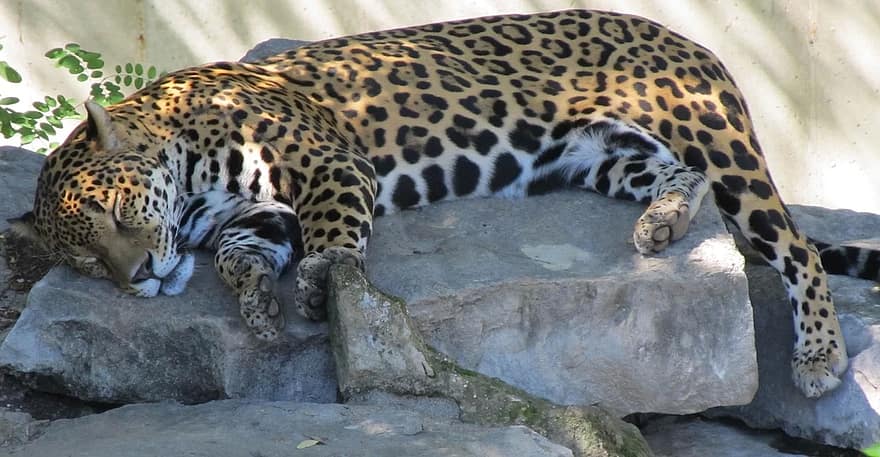
Jaguars, the apex predators of South America, were recognized in the wild cat category for the remarkable achievement of ruling more than two million square miles of rainforest while napping approximately 70 percent of the time.

jaguar-sleeping-big-cat-carnivore-feline-resting-cat-nap-portrait-fur
Prolific nappers: Panthera Onca, the jaguar.

The big cats of the Amazon prerecorded an acceptance speech because the award show was scheduled to interfere with their napping schedule.

“We are honored to receive this award,” Ahau-K’in, the King of Jaguars, said in the message. “If you could just deliver it to us, that’d be great. In fact, you can leave it at the Temple of Palenque, but bring it up the stairs, mind. We don’t want to have to drag that thing up here.”

IMG_4186
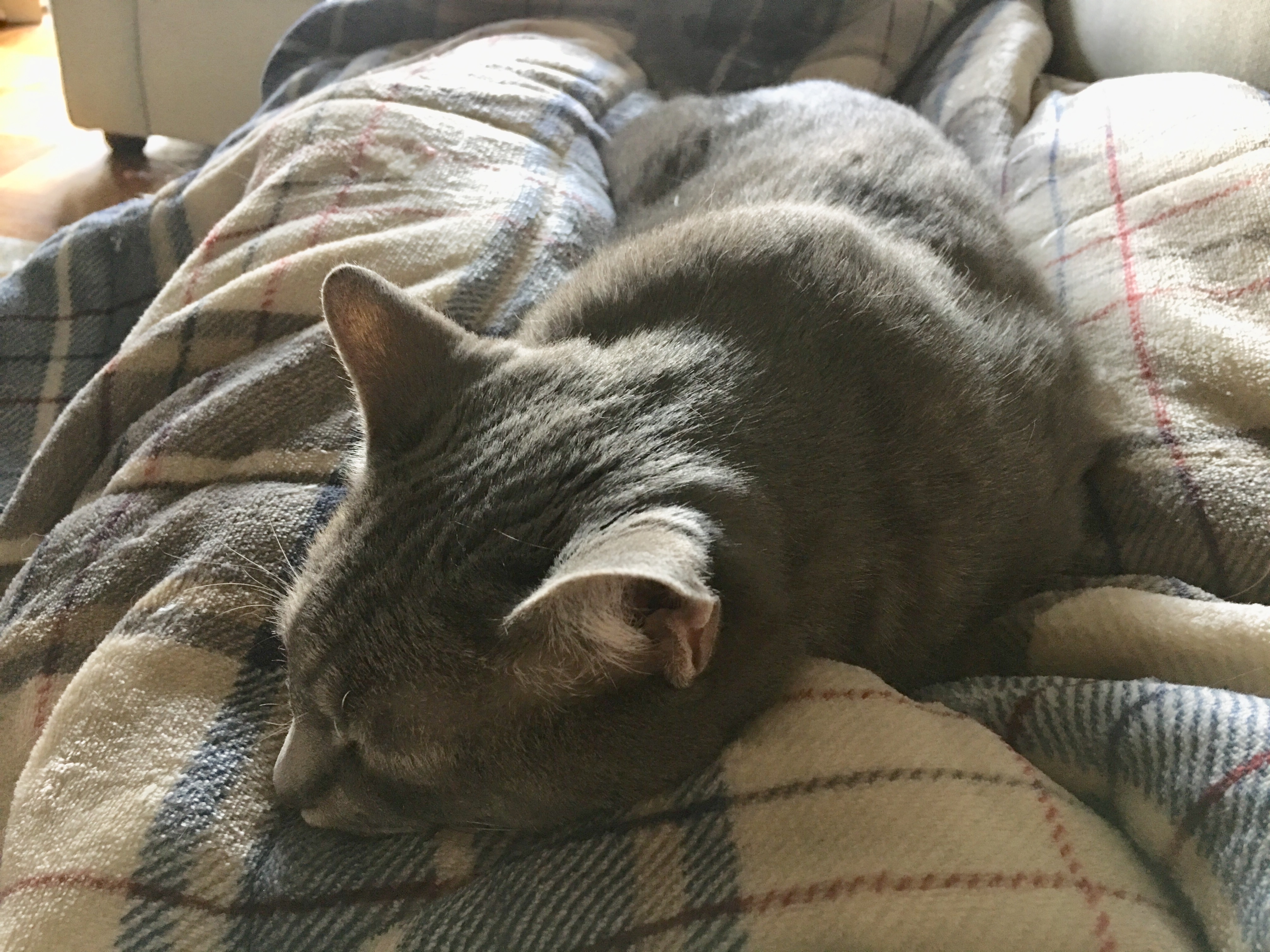
Buddy the Cat sleeping on Big Buddy the Human.

Sharing in the recognition was Buddy the Cat, who “showed us all that a new style of napping is possible by training our humans never to move if we’re sleeping on top of them.”

“The New York cat also developed new techniques for prompting humans to deliver snacks directly to their feline overlords,” the judges wrote. “After all, why should we come running at the sound of a crinkly bag being opened? The snacks should be placed before us, requiring as little effort as possible to eat them and leaving more time for yawning, stretching and lazing.”

buddy_bed
BRING THE SNACKS TO ME.

CE04A830-3681-4E11-9ED4-A6B59CE1E188
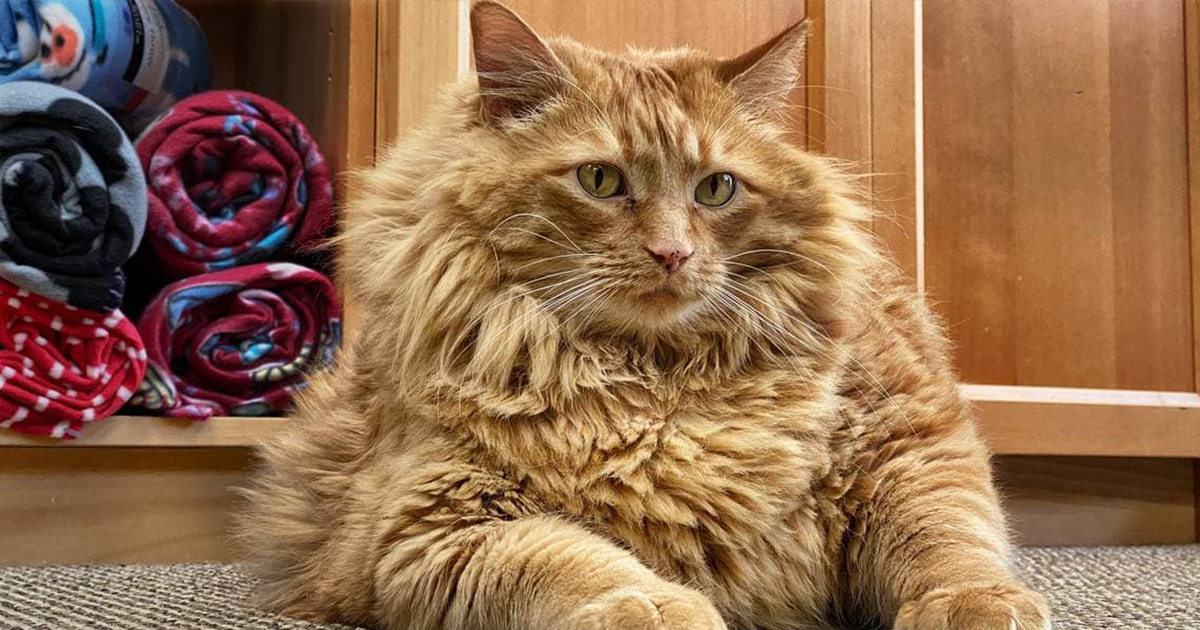
Chonkmatic the Cat has been chosen to negotiate on behalf of all living beings on Earth. Credit: SPCA of Wake County