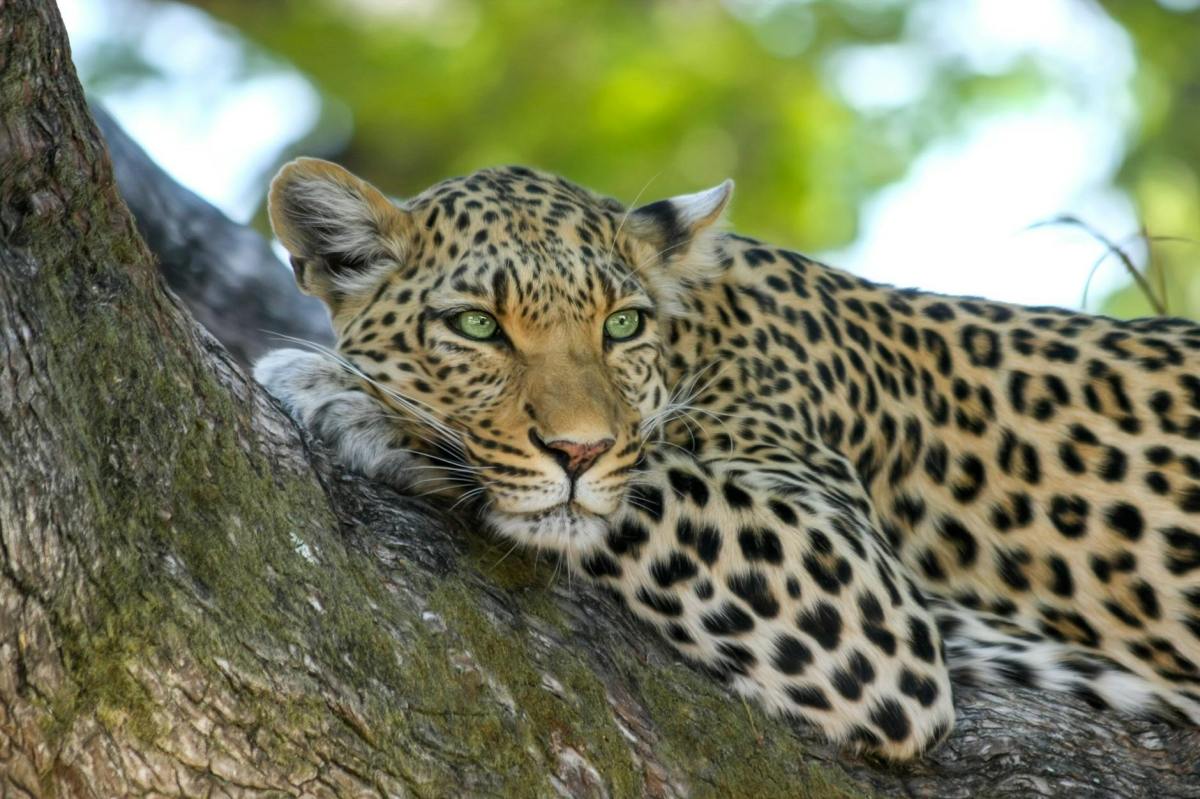
Buddy Visits Leopards, Finds Himself On The Menu

Buddy’s back at it, trying to befriend big cats. Emboldened by his success with the tolerant and wise jaguars, the reckless tabby has his sights set on the savanna and its temperamental predators, the leopards. Can Buddy win the admiration of these notoriously dangerous felids, or will he end up as a light snack for a spotted cat?

VIRUNGA NATIONAL PARK, Democratic Republic of Congo — “What the heck is that?”

A leopardess raised her head in response to her mate’s question, gazing down from the sturdy limb of an acacia tree where she’d taken refuge from the scorching midday sun.

Two hundred yards ahead, a tiny gray cat was padding toward them, picking his way carefully around rocks and occasionally disappearing in the high grass.

“There’s nothin’ that a hundred men on Mars could ever do,” the little feline sang as he walked. “I bless the rains down in Africa! I bless the rains down in…”

The diminutive feline stopped near the base of the tree and looked up at the leopards.

“Jambo!” he meowed enthusiastically. “My name is Budvuvwevwevwe Budyetenyevwe Buddabe Ossas!” he announced. “You can call me Buddy!”

Jambo!

The adult leopards were momentarily stunned until one of the cubs awoke from her nap, spotted Buddy and exclaimed: “Look, mommy, lunch!”

The small cat flashed a wide smile.

“That’s a great idea! I’ve already eaten, but you know what they say: a lunch a day barely keeps the rumbles at bay! I’m a three-lunch cat, myself. So what are we having?”

Another cub piped up.

“That’s not lunch, that’s a snack!” he told his sister.

“And what a cute little snack he is!” the female cub said, gracefully dropping from her napping spot in the tree.

Buddy’s eyes bulged.

“You’re…you’re talking about me?”

The male cub did a squeaky impression of a roar.

“Do you see any other single-serve snacks around?”

Buddy licked his lips, his effort to hide his fear betrayed by his rising hackles and tail, which now resembled a quivering spiked club.

“I…I…I am a cat,” he said in his best impression of an authoritative meow. “I’m practically your cousin!”

The female was just paces away now and moving too fast for Buddy’s liking as he backpedaled.

“The question is,” she said, “are you tasty like cousin Serval or cousin cheetah?”

An image of a leopard cub
Credit: RudiHulshof/iStock

Buddy changed tactics.

“This is an outrage! Not even the tigers tried to eat me! This is…this is, uh, catibalism!”

The cubs were circling him now.

“Mommy, can we have a snack?” the male cub called, looking back at his mother on the tree.

“As long as it doesn’t spoil your dinner later,” came the reply.

“It won’t, mamma!”

Buddy gulped.

The cubs closed the distance, ready to strike, and Buddy was babbling while pleading for his life when the earth itself shook.

Branches jolted and leaves dropped. A flock of birds nesting in a nearby tree took off, silhouettes etching ephemeral geometric patterns in the sky. In the distance, a baboon shrieked a warning to its troop.

The cubs went from aggressive to retreat in the span of an instant, and even their parents looked alarmed, taking off after their young.

Buddy watched them flee, wondering if he should bolt in another direction as something incomprehensibly gargantuan lumbered toward him, shaking the trees.

He’d emptied his bowels by the time a gigantic head poked through the foliage, followed by the rest of the colossal beast. It was gray-skinned, leathery and bizarre, unlike anything Buddy had ever seen.

“Giant space aliens!” he screamed, turning around and running right into a tree trunk.


“Ahhhhh! Don’t eat me!”

Buddy awoke in a sweat, his fur damp in the soupy, stifling heat.

An entire platoon of the peculiar beasts stood around him, their sizes ranging from 25 Buddies in mass to freakishly large individuals sporting pairs of prodigious teeth that looked like scimitars made of bone.

“Einstein’s awake,” one of them rumbled, and the rest turned from stuffing themselves with leaves to get a better look at the Liliputian animal before them.

“What is that thing?” one of them asked.

“It’s a fun-size cheetah!” one exclaimed confidently.

“No, it’s a baby Serval!” another said. “But the color’s all wrong.”

In the distance, a giraffe poked its head above the tree line, pausing to munch on the silky pink flowers of a mimosa tree.

Buddy was saved from hungry leopards by friendly giant space aliens!

Buddy cautiously pushed himself up on his paws. These aliens did not seem interested in eating him.

“Greetings,” he said. “I am a feline, a cat from planet Earth! What planet do you come from?”

There was a pause, then trumpeting, cacaphonic laughter.

“‘What planet are you from?'” one of the great beasts mimicked, sparking a second round of giggles that sounded like the trombone section of an orchestra, if someone had slipped the players psychedelics.

“We are elephants, and this is our home,” said the leader, a magnificent female. “And you, little one, are fortunate we happened by.”

Buddy puffed himself up.

“I think you mean the leopards were lucky,” he said, flexing his meowscles. “They didn’t want to tangle with these guns.”

The elephants chortled. “Can we keep him? He’s funny!”

The matriarch shook her massive head.

“He is far from home, and he should return before he runs into leopards again, or something worse,” she said.

Buddy looked unsure of himself.

“But I’m homies with the jaguars and the tigers! I thought…you know, I could be down with the leopards too. Us big cats gotta stick together, ya know? It’s hard out there for an apex predator. By the way, got any lunch?”

One of the elephants raised her trunk, pointing east toward a herd of intimidating horned beasts.

“Lunch,” she said. “Think you can take them?”

Buddy gulped.

“Go home, little one.”


Buddy’s version of events!

“So anyway,” Buddy said, addressing his human, “that’s how I impressed the leopards, and they made me their king. In fact, they bestowed the honorific ‘Paka mkubwa na mwenye misuli hodari,’ which means ‘great and mighty muscled cat’ in Swahili!”

“Sounds like you had quite an adventure! That’s impressive, Bud!” Big Buddy said.

“It is! It is!” Buddy said, nodding vigorously.

Big Buddy made a whistling sound.

“Was that before or after you peed yourself in terror?”

“What? I…no, I told you, they made me their king! Where did you hear this, this slander?”

Big Buddy reached for his iPad, pulling up images of a terrified Little Buddy running from leopard cubs on the savanna, Buddy running head-first into a tree, and Buddy cowering before a herd of elephants.

“A wildlife tour was nearby during your ‘coronation,’ but this is probably just a gray tabby who looks exactly like you and happened to be right where you were crowned,” he said. “Congratulations, Your Meowjesty!”
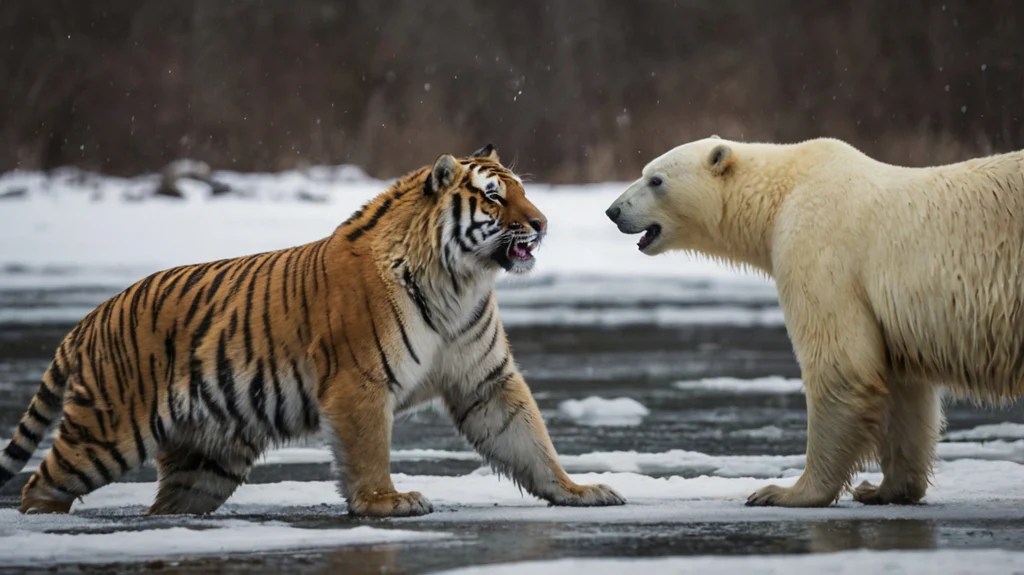
No Respect! 6% Of Americans Think They Can Beat A Grizzly Bear In A Fight, 69% Think They Can Beat A Cat

A Yougov survey of Americans produced some hilarious results when respondents were asked how they’d fare in hypothetical combat.

In the opening scene of Netflix’s Afraid, a woman is using her iPad in bed when she asks her husband: “Did you know six percent of Americans believe they could beat a grizzly bear in a fight?”

I had to pause the movie right there and see if there was any truth to the claim. Sure enough, in a Yougov survey from 2021, titled “Rumble In The Jungle,” six percent of respondents — almost entirely men — said they could defeat a grizzly bear unarmed.

Grizzly bears top out at more than 2,000 pounds, can crush bowling balls with their paws and have claws the size of large knives. They’re also extraordinarily well-protected, with heavy fur and fat protecting their vital organs. If you think you can harm one unarmed, let alone kill it, well, good luck with that.

Incredibly, eight percent said they could defeat a lion, gorilla or elephant, while 17 percent thought they could take on a chimpanzee. Again, the respondents who liked their own odds against extraordinarily lethal animals were almost exclusively men. The survey doesn’t say what they were smoking when they responded.

Buddy

Domestic cats fared poorly in the imaginations of Americans: 69 percent thought they could defeat the little stinkers in hypothetical battles. Only rats fared worse, with 72 percent sure of victory in unarmed single combat.

“This is really an insult to felines,” said Buddy the Cat, a combatologist at Buddesian University. “However, we jaguars fared much better, as we were projected to win about two-thirds of hypothetical fights against other animals, including elephants, rhinos and tigers. Personally I think it’s closer to 99 percent, but I won’t protest. It’s better for us if we’re underestimated.”

He chalked human overconfidence up to the fact that people are “bizarre creatures who live in a fantasy world,” and have “an unfulfilled yearning to be something more than our servants.”

“They don’t have the claws, teeth or, like, the muscle fibers we do,” he explained. “Those advantages make it possible for me to kill a caiman with a single bite or tear an anaconda apart in seconds. Jaguar means ‘He who kills with one leap,’ did you know that? Yeah, it’s pretty badass.”

This Is The Zoo Of My Dreams!

Have you ever wanted to own or design your own zoo?

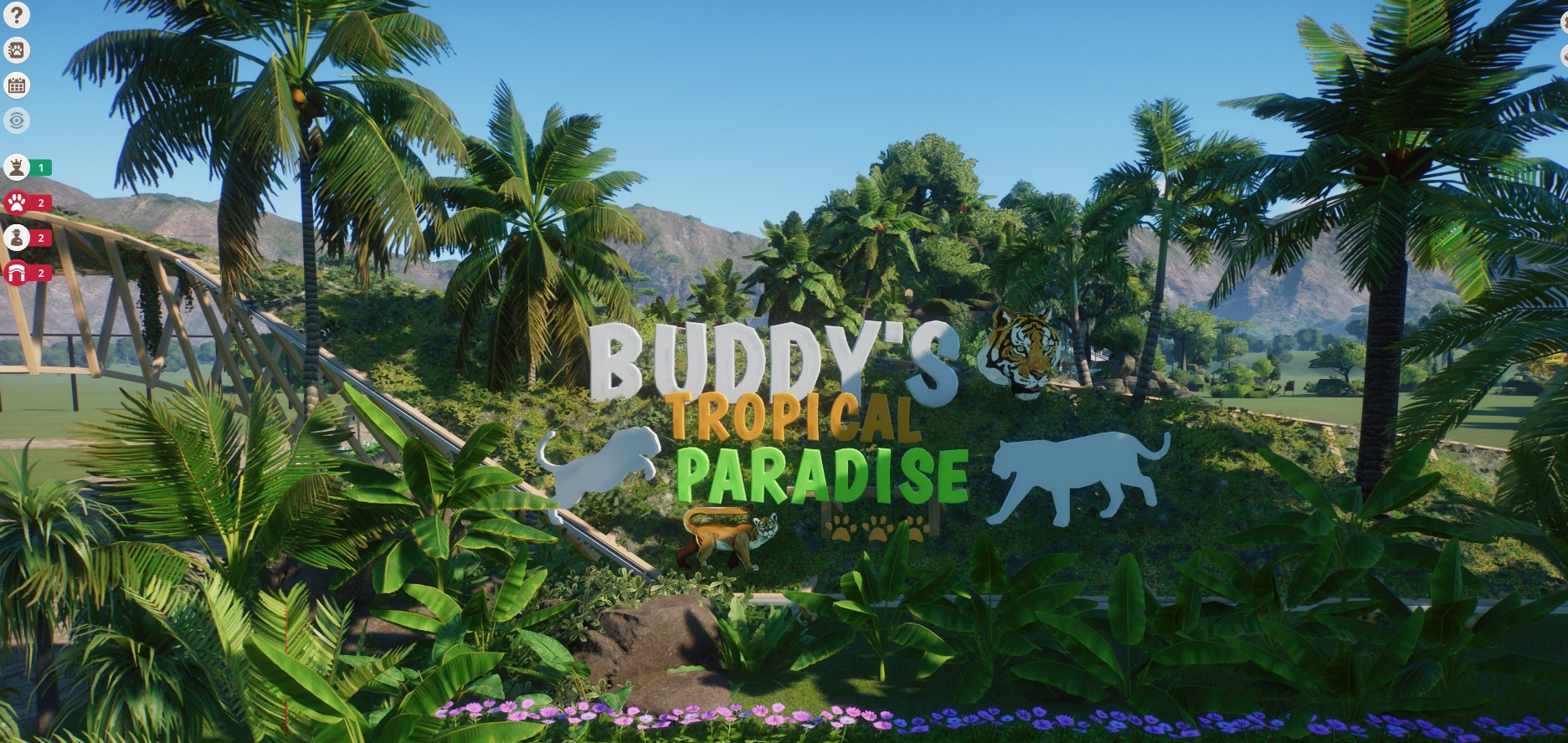
Visitors to Buddy’s Tropical Paradise are greeted by friendly staff who man the entrance, a broad vertical garden shaped like an arch that straddles the main path leading inside.

When they walk through the gate a new vista opens up before them: tiered tropical gardens, waterfalls, and wide boulevards lined with palm trees and flowers. They hear the rumble of big cats calling to each other in the distance and monkeys shrieking as they fling themselves from branch to branch.

Buddy's Tropical Paradise
Welcome to Buddy’s Tropical Paradise!

A monorail carries passengers above, its tracks looping over animal enclosures and threading tunnels that emerge amid the terraced jungle, eateries and souvenir shops.

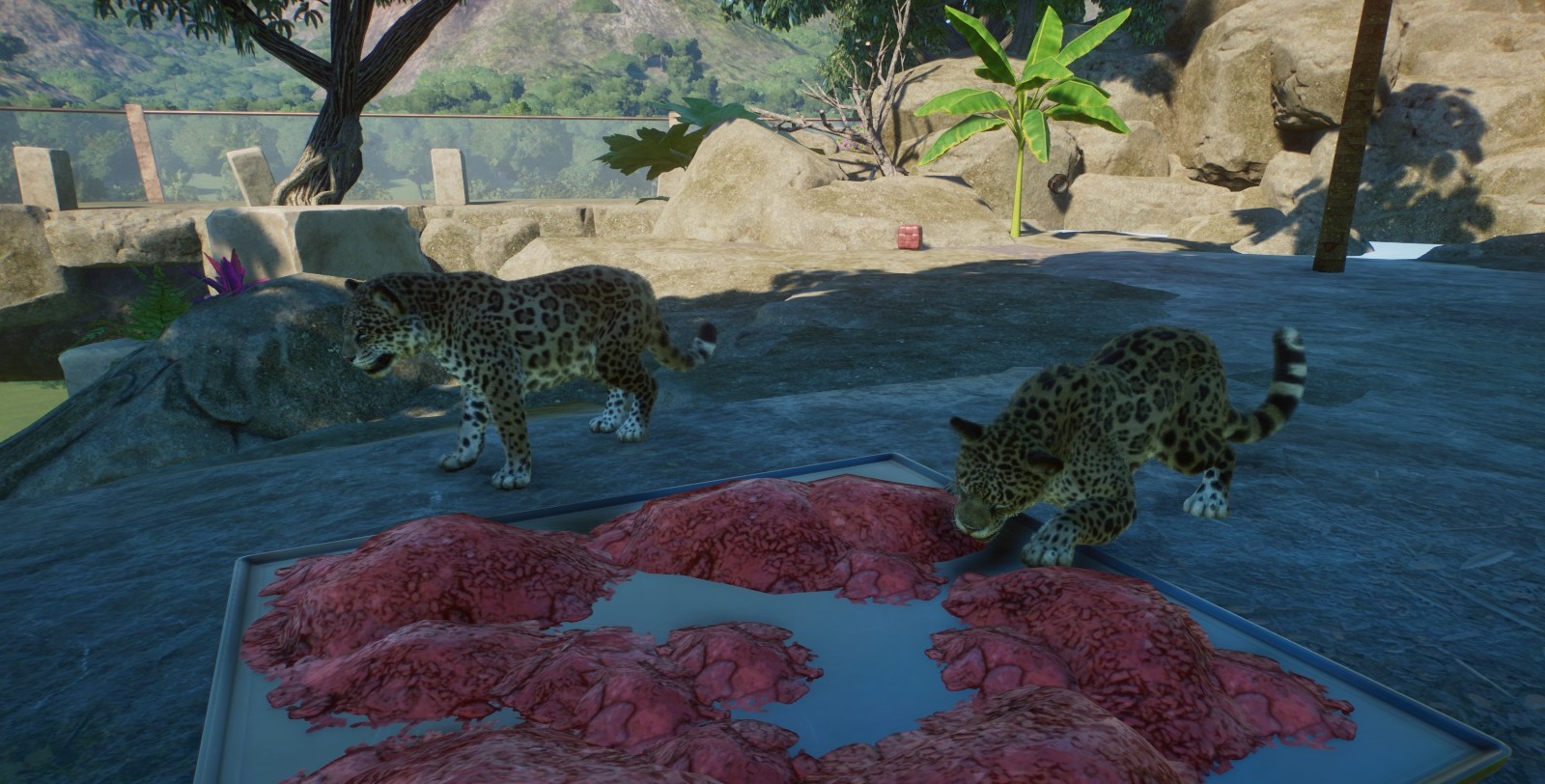
And straight ahead, the first exhibit: a sprawling habitat occupied by jaguars who are enjoying some yums and will probably have a nap in a few minutes.

Buddy’s Tropical Paradise doesn’t exist in the real world, of course. It’s my first attempt at fully functional, guest-attracting park in Planet Zoo, a simulator that allows you to do practically anything you can think of.

You can design your own habitats, enclosures, buildings and scenery. Fancy a monorail that laps the entire zoo? You can do that. Picturing a 1940s style Tarzan-themed jungle boat ride where visitors can see caiman, capuchin monkeys and jaguars up close? Start carving up the river, my friend!

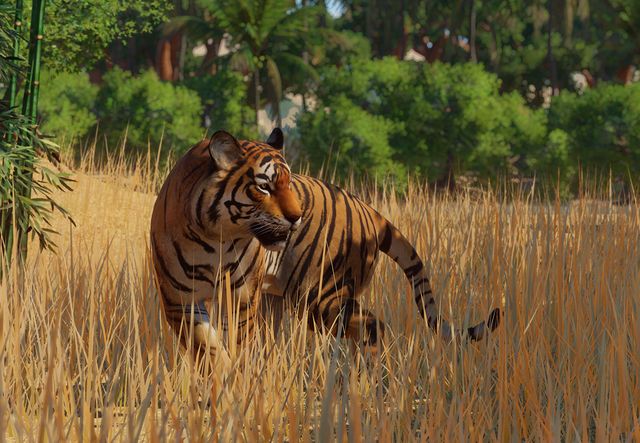
Bengal Tiger
A Bengal tiger stalking the tall grass in Planet Zoo.

Jaguars
Lunch time in the jaguar habitat, followed by the all-important nap time.

As the zoo’s architect, you’re responsible for everything. You’ll need veterinary facilities, animal quarantine, keeper huts. You’ll need to staff your park with veterinarians, keepers, security officers, maintenance staff and mechanics.

And don’t forget the vendors to run the souvenir shops and man the food stalls, where your guests can grab hot dogs or cool off with slushies on a hot day.

A suitable home for your animals

Designing a habitat is about a lot more than reserving space for your animals. You’re tasked with picking the right barriers, mindful of which species can climb or leap great heights. A good habitat should reflect the animal’s home in the wild with appropriate flora, temperatures the species thrives in and a feeding system that mimics the way they’d naturally obtain food.

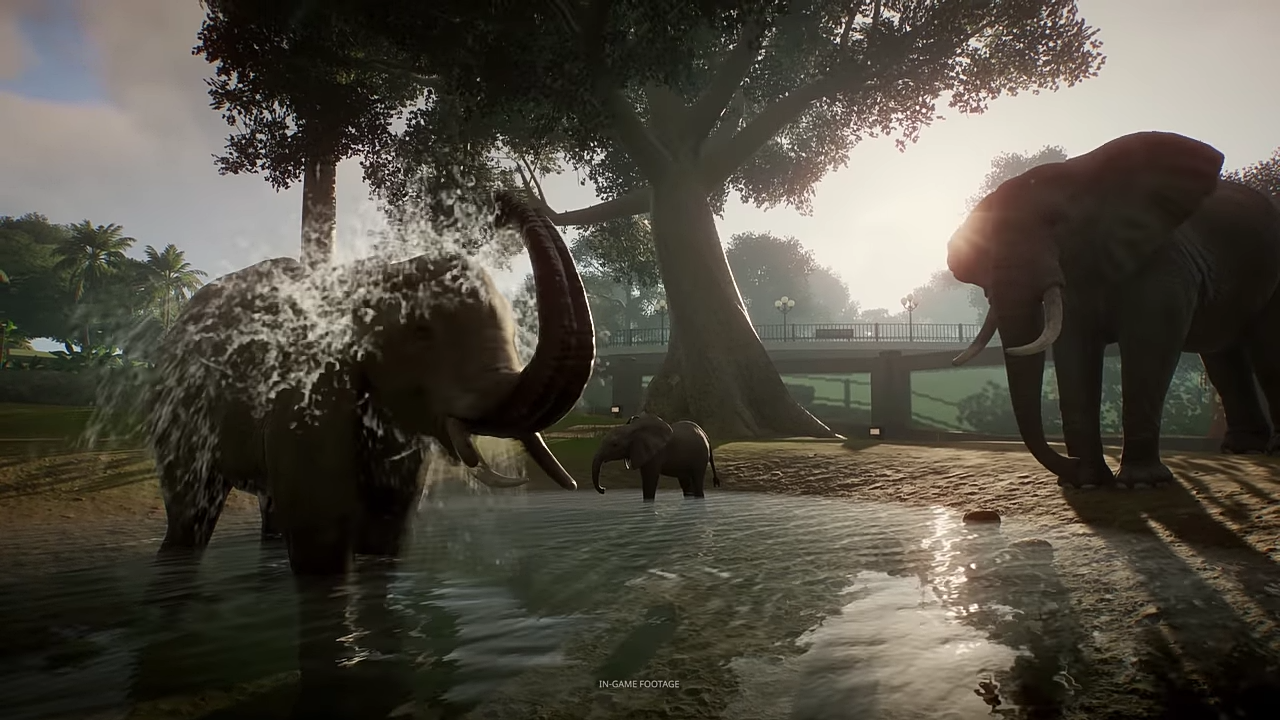
Elephant shower
Elephants cool off in their enclosure in Planet Zoo. Every habitat must be designed with the right atmosphere, flora, terrain, shelter and enrichment appropriate for the species it houses.

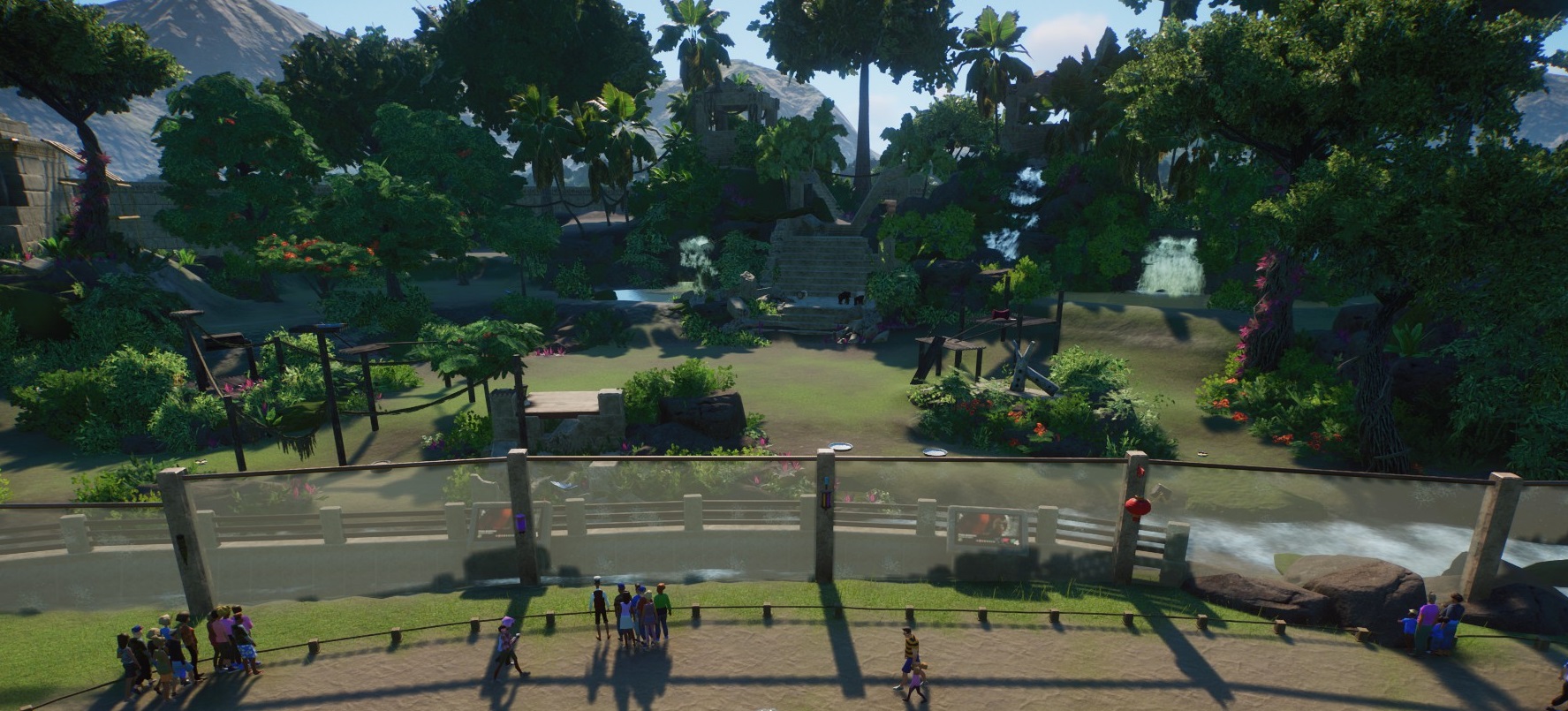
Orangutan habitat
A wide view of my orangutan habitat. Two orangutans are at the base of the stone steps in the distance.

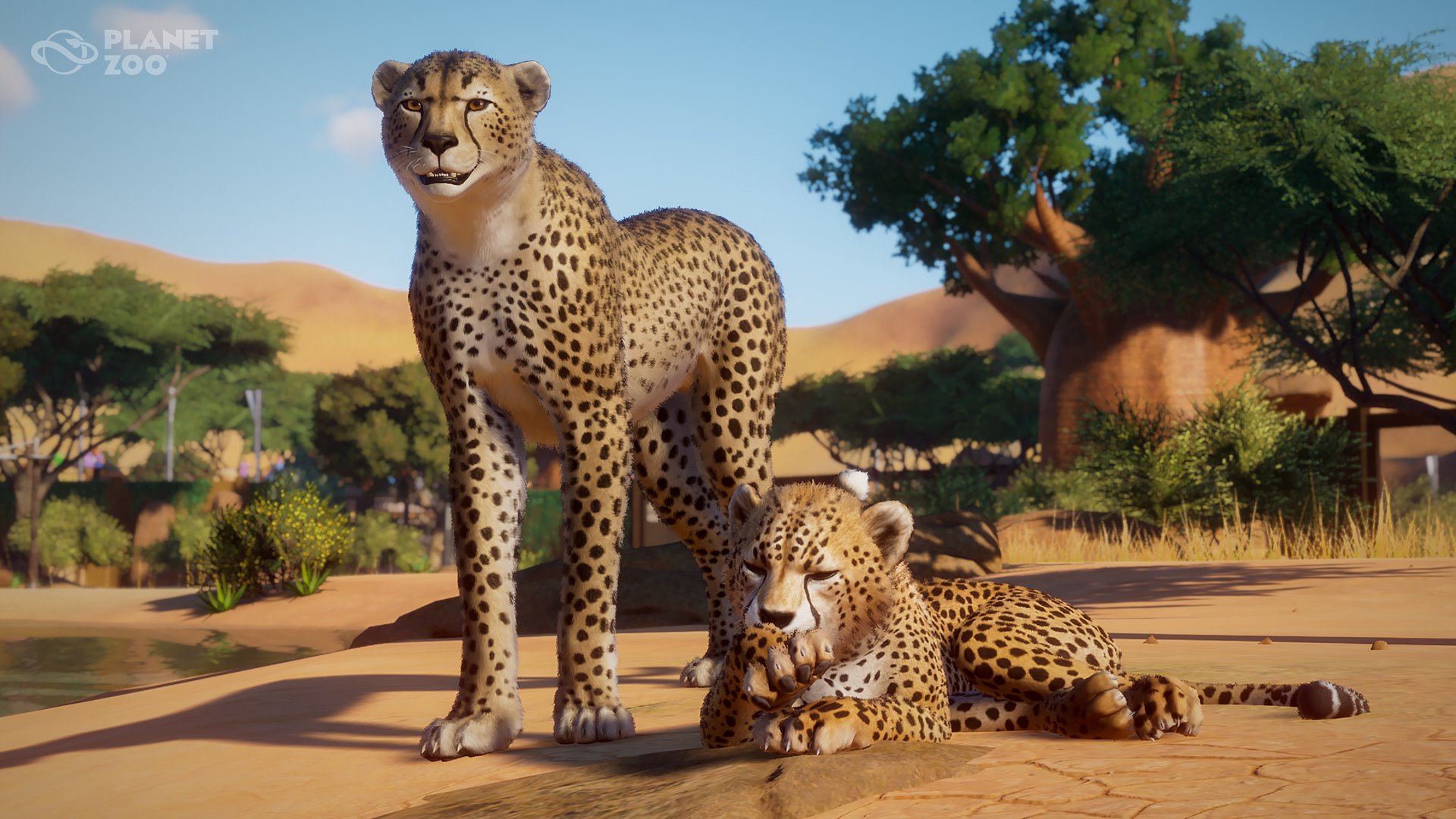
Cheetahs
Cheetah sisters.

Then there’s enrichment. Trees for your monkeys to climb, ponds for your tigers to take a dip, bushes for your elephants to strip. Different species enjoy different toys and challenges. An ice block with meat in the middle would hit the spot for carnivores on a hot summer day, but your pandas will want bamboo.

Designing habitats and getting them just right is not only fun, it’s an intuitive way to learn about the needs of individual species and how they live.

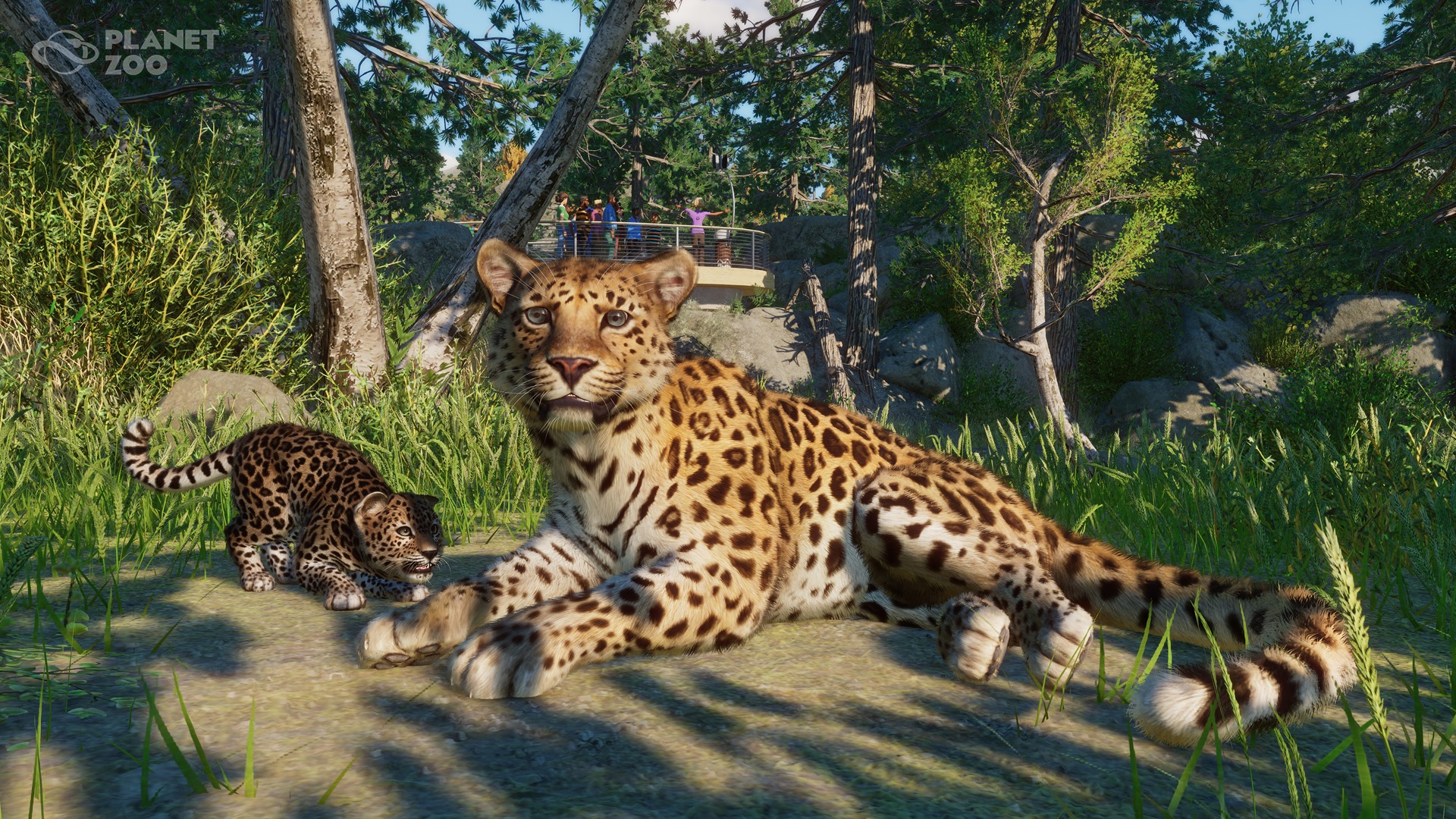
The leopard learning incident

My first stab at building a leopard enclosure was a disaster. It looked pretty enough with its Hindu-inspired temple architecture and pond. There were plenty of scratching posts and trees that could withstand claws.

I installed a sprinkler to help the big cats cool off, designed a series of raised platforms for them to climb, and scattered enrichment items all over the habitat. The leopards had balls to bat around, boxes to sit in, rubbing pads, logs and rocks to climb, and plenty of cover and shade.

But when I had the leopards brought into the zoo, through quarantine and into their exhibit, I realized you can’t just design a home for animals from an aesthetic perspective. I’d used several plant and tree species that weren’t native to leopard habitats, the terrain was wrong and I hadn’t paid any mind to ambient temperature.

Making those mistakes was truly educational. When your animals aren’t happy in Planet Zoo, protesters show up, and it’s up to you to read the alerts about where you went wrong and how to remedy your mistakes. It’s an intuitive and fun way to learn about each species and the environments they thrive in.

The escaped jaguar

I’m still learning the ropes, although I do have a basic knowledge of the way the game is designed thanks to some time playing Frontier’s theme park building game, Planet Coaster. The first time I tried to build a jaguar enclosure, I forgot to wall off a viewing cave with protective glass, which my guests did not appreciate.

Even though jaguars don’t like to confront humans, a big cat is a big cat, and the game sent me urgent warnings as people ran for the exits. When I found the escaped jag, he was lounging not far from his enclosure, watching people freak out.

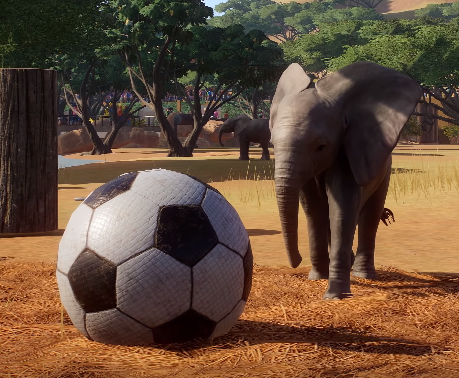
Elephant and ball
Enrichment is a key aspect of habitat design. Toys, puzzles, obstacles, climbing platforms for arboreal species, ponds for animals who like to get wet — they’re all necessary to keep animals healthy and happy.

In real life it’d be a disaster, but I was able to revert to a previous save, make sure the viewing cave was sufficiently protected, and this time around I placed only two jaguars — a male and a female — in the large enclosure.

After a while, while I was tinkering  with an exhibit meant for capuchin monkeys, the game sent me an alert: the female jaguar was pregnant! She gave birth to two energetic, curious cubs who are currently having fun chasing each other around the enclosure and going for dips in their pond.

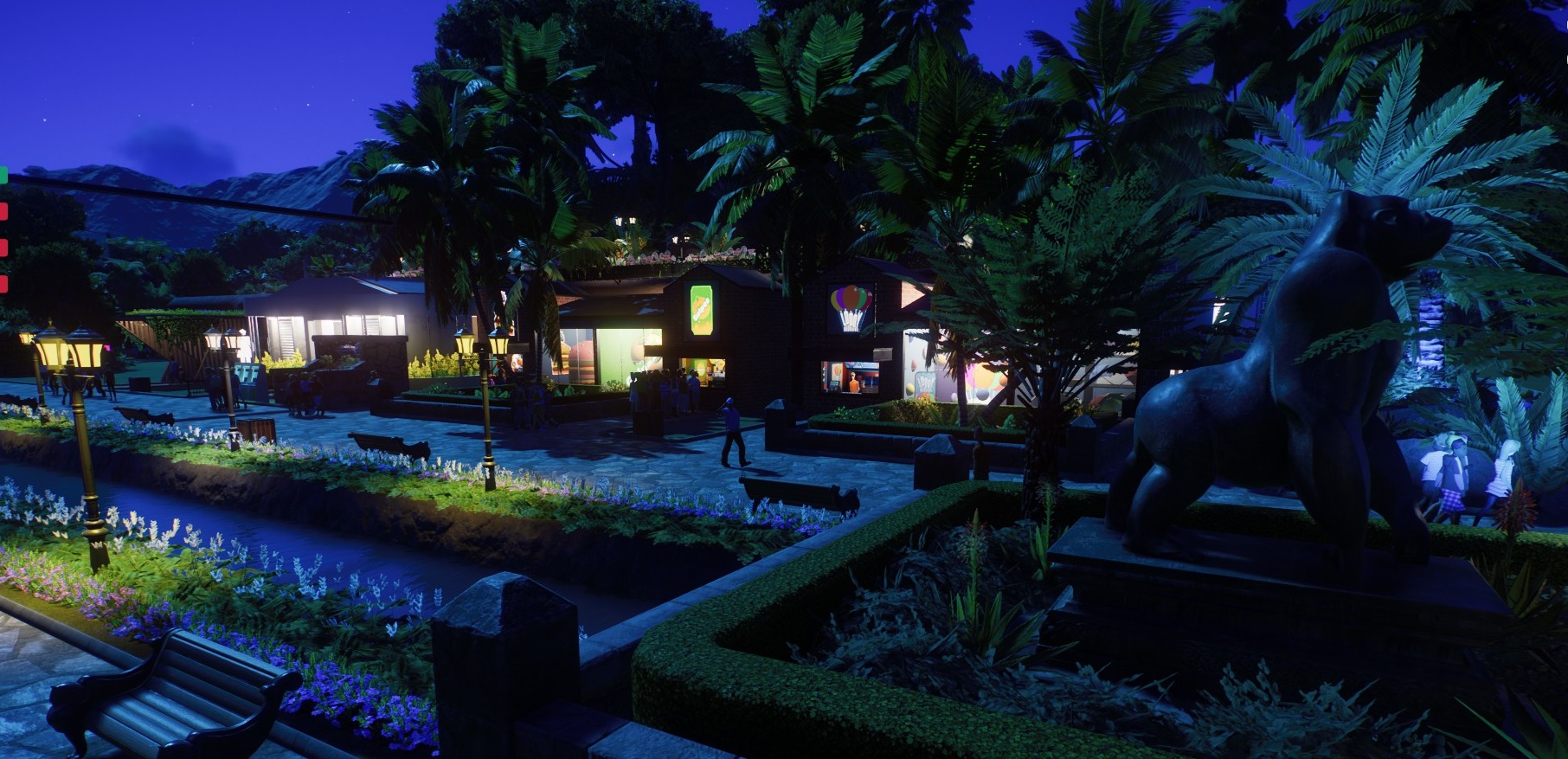
Night view
Part of the main boulevard in Buddy’s Tropical Paradise, viewed at night. Players are responsible for everything you see here — lighting, shops, flowers and plants, benches, waste baskets and more.

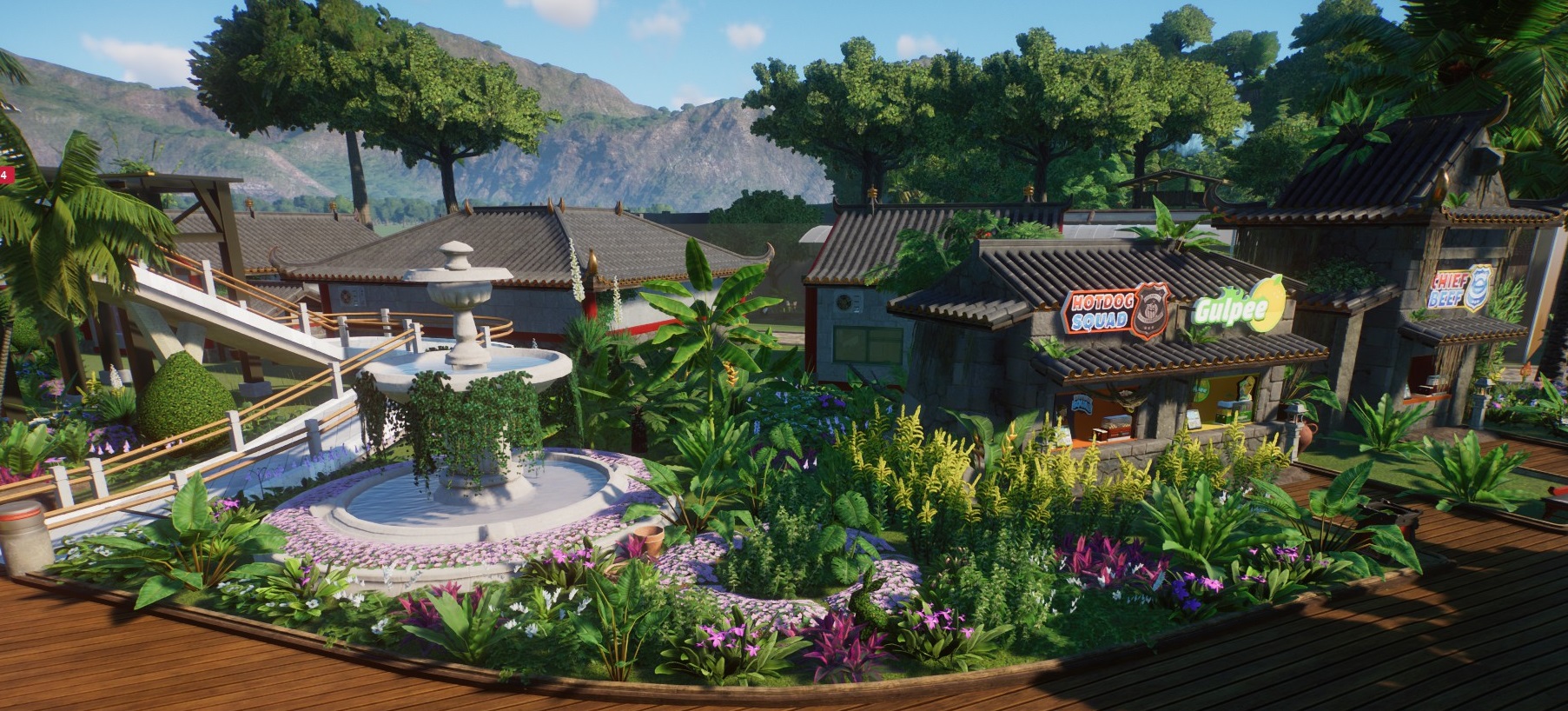
Asian section
Shops and a monorail station in an unfinished Asia-themed area of the zoo.

As in real life, the game has you source animals from an international pool, with information on breeding and genetics so you can contribute to conservation. When you adopt animals, their first stop is the veterinary facilities for examination, then quarantine. When they pass quarantine, you can have your staff release them into their enclosures.

It took me several hours to familiarize myself with the basics, design an entrance and a main boulevard for the guests, create some tiered gardens with eateries and shops, and get my jaguar and orangutan exhibits up and running.

My monorail currently runs out of track a quarter of the way through the park, and my river boat ride looks pretty cool, with dense jungle, towering trees and the ruins of Mayan temples not far from shore, but completing it will require appropriate barriers to keep the animals in as well as building out more scenery.

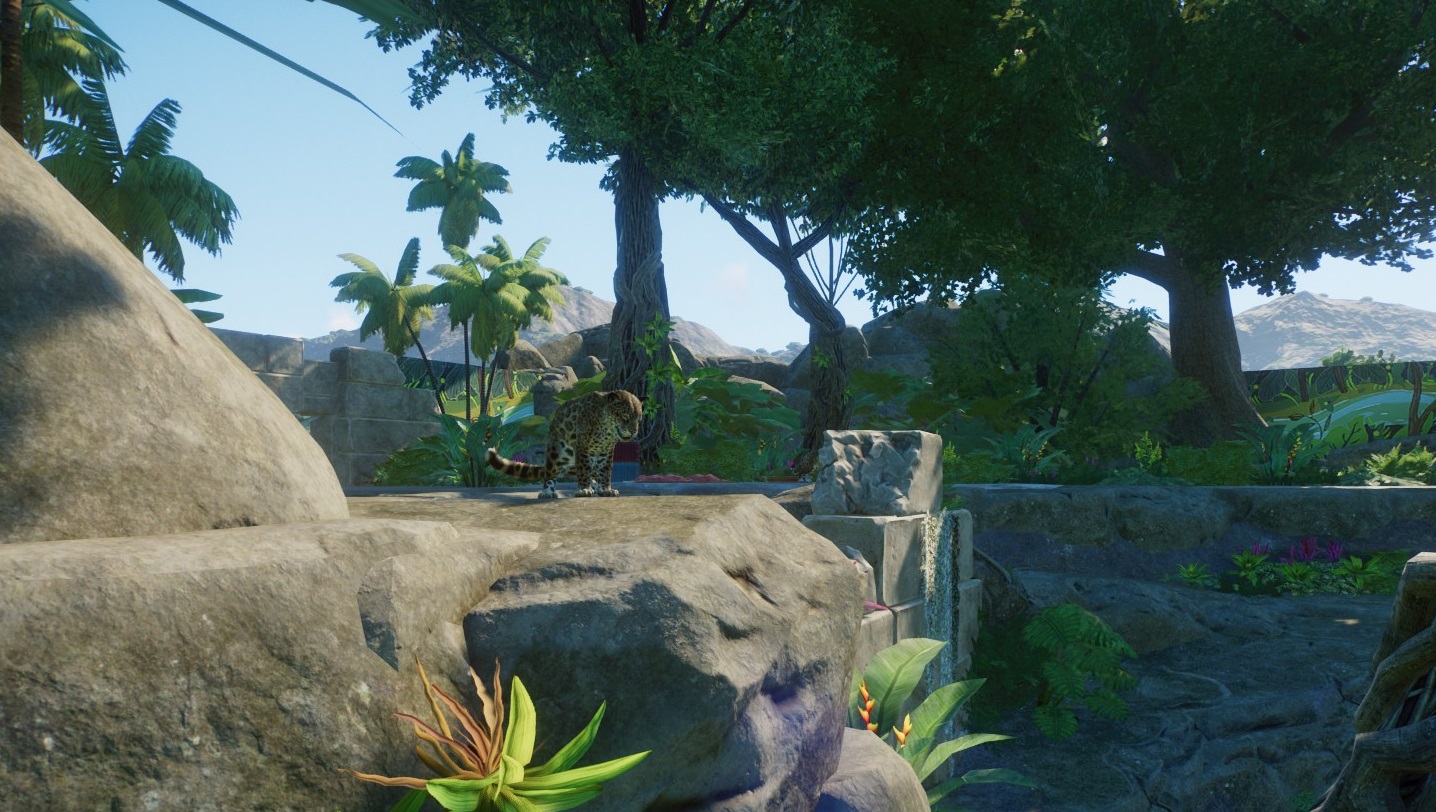
Jaguar habitat
A jaguar in her habitat.

I’ve got my sights set on an elephant exhibit next. It will be necessarily huge, so it’s good to reserve the land early and plan smaller exhibits and facilities around it. I’d also like to put the elephants, lions, zebra, giraffes etc into one Africa-themed section of the park, while the tigers, giant pandas and snow monkeys will be housed in an Asia-themed section, with buildings that reflect the architectural styles of countries like Japan and China.

There are also aquatic exhibits, animals for your own reptile house and aviaries. Those enclosures are more complex than the relatively straightforward orangutan exhibit, for example, so I’ll have to spend some time figuring out what makes a good home for peacocks, sharks and komodo dragons.

So far I’ve resisted the temptation to make one giant felid park, with snow leopards, pumas and cheetahs joining the tigers, lions, jaguars and others. Of course I did name it Buddy’s Tropical Paradise, so I may be forced down the all-cat road if Bud gets his say.

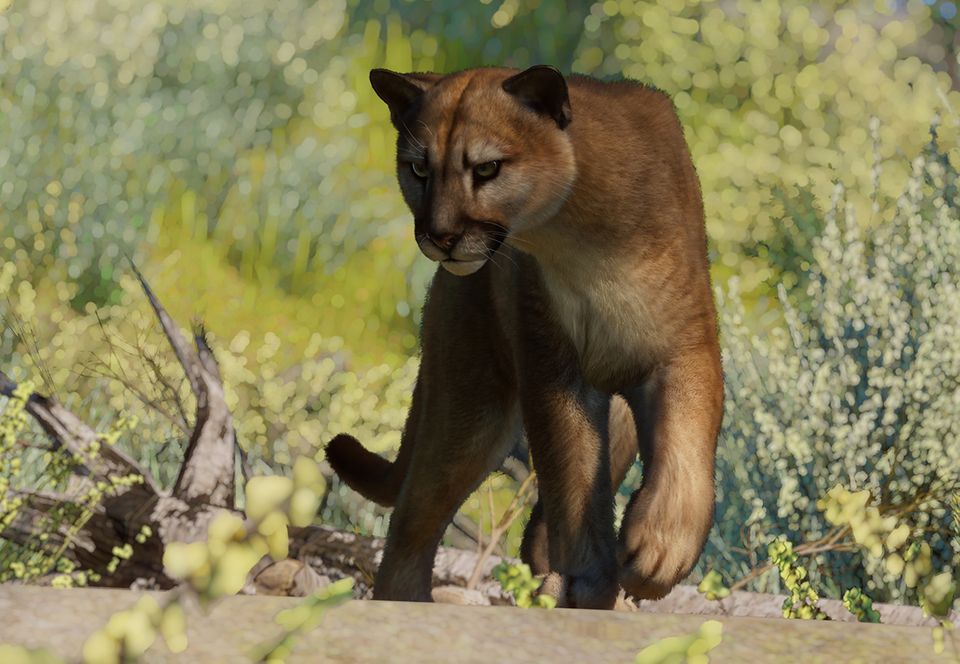
Cougar

Planet Zoo is not a traditional video game. There are no winners or losers, and there’s no “end state” unless you intentionally include one.

It’s more relaxing and much slower-paced than your typical game, and it’s a great feeling when you’ve managed to take something from your imagination and perfect the design. When you want to check your progress or just admire your own work, you can set the camera to follow guests and watch as people stroll through your zoo, taking in the sights and sounds.

In that sense it’s more like a virtual model train set or living diorama. You can load up the game and tinker with your zoo when you’ve got a spare 15 minutes, or spend a few hours getting absorbed in the finer details of how to keep pangolin and red pandas happy.

Planet Zoo is appropriate for all ages, although its depth and complexity would probably be a lot for younger kids. In that case, it’s probably best to have an adult guide them so they understand the game is built on interlocking systems: exhibits need power and water, shops need staff, veterinary surgeries need veterinarians and so on.

It’ll have enormous appeal to kids who enjoy Lego, Minecraft and other building games, so if you’ve got a little builder in your life, this could be a good fit. But make no mistake, there’s a lot here for adults to enjoy too.

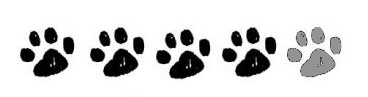
PITB verdict: Four out of five paws!

Paw Rating

The only thing keeping Planet Zoo back from a five-paw rating is the DLC (downloadable content) scheme, which requires users to pay extra for certain “packs” containing extra animals, scenery pieces and scenarios. That’s a problem plaguing the larger video game industry, but if you wait for a sale, the normally $44.95 game can be had for as low as $11.24 on Steam. DLC is likewise discounted. Steam’s summer sale is a great opportunity to get games like this for a fraction of their normal price. This year’s summer sale is scheduled for June 27, though it’s possible Planet Zoo could be put on sale before then as well.

The People Who Clone Pets Want To Bring Back Extinct Species — And Clone Animals For Their Organs

Genetics, gene-editing and cloning have rapidly matured since the days of Dolly the Sheep, which means we have less time than we think to grapple with some heady moral questions.

Should scientists resurrect long-extinct species? Is it ethical to clone thousands of animals who will not live, but have their organs harvested for human patients?

Those are some of the questions people are asking as the cloning industry — once relegated to producing one-off copies and genetically identical versions of deceased pets for wealthy clients — is expanding with new capabilities.

This story by the BBC’s David Cox provides an informative, brief history of cloning before pivoting to the current state of the industry and how it could continue to evolve.

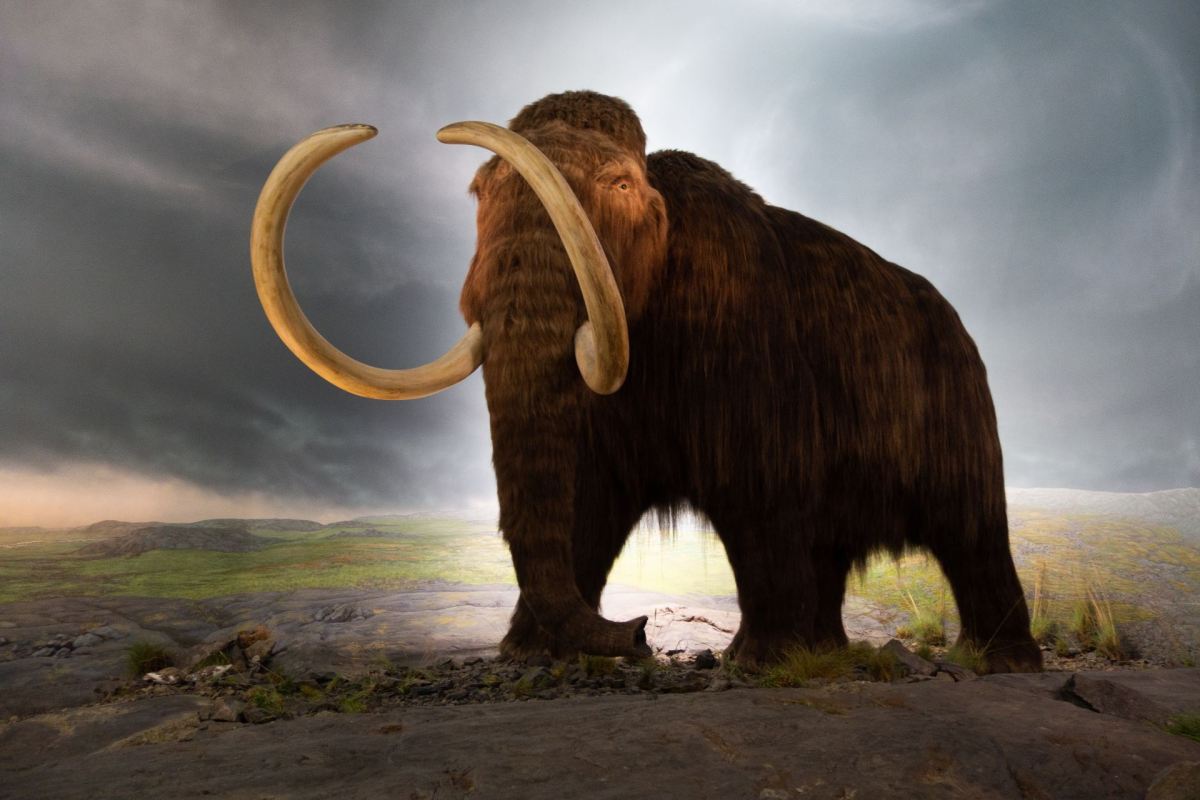
Two of the most fascinating prospects have to do with conservation. One company, Colossal, is working on bringing back the extinct woolly mammoth, while other scientists are turning to cloning as a way to prevent the extinctions of species like the white rhino, which is functionally extinct without any breeding pairs left living.

Dolly_face_closeup
Scottish scientists shocked the world when they cloned Dolly the Sheep in 1996.

As with anything in science, innovations in cloning unlock new applicative branches, and scientists have partnered with the medical field to address human health concerns. Some, like the practice of editing genes to prevent diseases in newborns, tend to fly under the radar. But others, like the push to adapt organs from animals like pigs so they can be replacements for human organs, are much more controversial and have met opposition from animal welfare groups.

Then there’s the elephant in the room, no pun intended. What about cloning humans?

Right now no one’s gone down that route, at least not publicly, because of the inevitable backlash. What’s happening deep in the bowels of clandestine medical facilities in nations with murky ethics laws is another question entirely.

I am opposed to human cloning, but I don’t believe it will remain the immutable taboo some people think it is. Someone will break the dam, and while that pioneer will likely get raked over the coals, the bell cannot be unrung. Things change so fast these days that what’s shocking one day merits a shrug the next, and it’s possible the world will be introduced to a man or woman one day before it’s revealed the person is, in fact, a clone. (Not unlike the way the world was introduced to Imma, a Japanese influencer and model who exists only digitally.)

Imma
Imma has more than 400,000 Instagram followers, she models the latest fashions and she appears in adverts for products like beverages and watches, but she doesn’t exist. She’s a digital creation.

They’ll be the Dolly the Sheep of the human race, and ethicists won’t get a say in whether they should exist because it’s already been done.

“See how normal they are?” people keen on cloning will say. “They’re just regular people. Are you going to tell them they shouldn’t live?”

But before that, it looks like the movie Gattaca will become reality, and people will order up a great baseball player or a child with intuitive musical genius just like they might commission a piece of art or a custom car job. Gene editing with CRISPR is surprisingly trivial.

Of course, it won’t be lost on people that we’re cloning humans when there are millions of unwanted, uncared-for street kids in the third world, not to mention people who live without the consideration of their fellow human beings in every nation. Just like it hasn’t escaped the notice of activists that South Korea and China are leaders in cloning pets, yet dogs and cats are also food in those countries.

What separates the dogs and cats bound for restaurant kitchens from the dogs and cats having their cells preserved for cloning?

Nothing except for their individual value to humans, just like pure luck separates a cat who finds a loving home from a cat who ends up euthanized with a needle. We are a fickle species.

Yet both the beloved pet and the unwanted shelter cat are sentient, experience intense emotions and have their own thoughts. That’s not conjecture, it’s fact as confirmed many times over experimentally, but it shocks a lot of people. Our education system has not done right by the billions of non-human minds we share our planet with.

Cloned monkeys
These rhesus macaque infants were cloned in a lab in China. The remaining barriers to human cloning are ethical, not technological.

I’ve thought about what might have happened if Buddy had been adopted by someone else, and what his fate may have been. I love the little guy, but it’s possible that someone else may have viewed him as an annoyance, a loud and incessantly chatty cat who needs an inordinate amount of attention and affection, sometimes lashes out, and needs to be surrendered.

Likewise, unwanted cats have languished in shelters for months before viral posts spark interest in them, and suddenly offers to adopt come in by the hundreds from across the globe. Nothing about those cats changed, but humans formed an emotional attachment to them after learning their stories.

Of course, the ethics of how we treat and consider animals can change depending on where you’re sitting. If you’re young, healthy and energetic, your view may be radically different than the person sitting on an organ donation waiting list, knowing their time may be up before a new liver or kidney becomes available. Suddenly a seemingly simple moral calculus becomes murky and complex.

There’s strong evidence that people who take the first steps toward cloning their beloved cats and dogs spend time wrestling with the ethics of the decision as well. Texas-based ViaGen, the western leader in commercial cloning, told the BBC that 90 percent of its clients are not people who have gone through with cloning, but have only taken the initial step of preserving their pets’ cells for $1,600.

And what of the mammoths? Bringing them back from extinction isn’t as simple as filling in the gaps in their genome, implanting gene-edited eggs in female elephants and hoping gestation takes care of the rest. Mammoths are social animals. Will an elephant mother raise a mammoth baby? Where does that mammoth baby belong? Without a herd of its own kind, can it be happy?

We can’t ask the mammoths, and even if we could, it might not be up to them anyway. As one paleogeneticist put it to NPR last year: What if the technology isn’t used to resurrect the mammoth, but to save the elephant? Does the end justify the means in the latter situation, but not the former?

Mammoth, Dolly the Sheep and rhesus macaque images credit Wikimedia Commons


Jurassic Park With A Cat Instead of A T-Rex

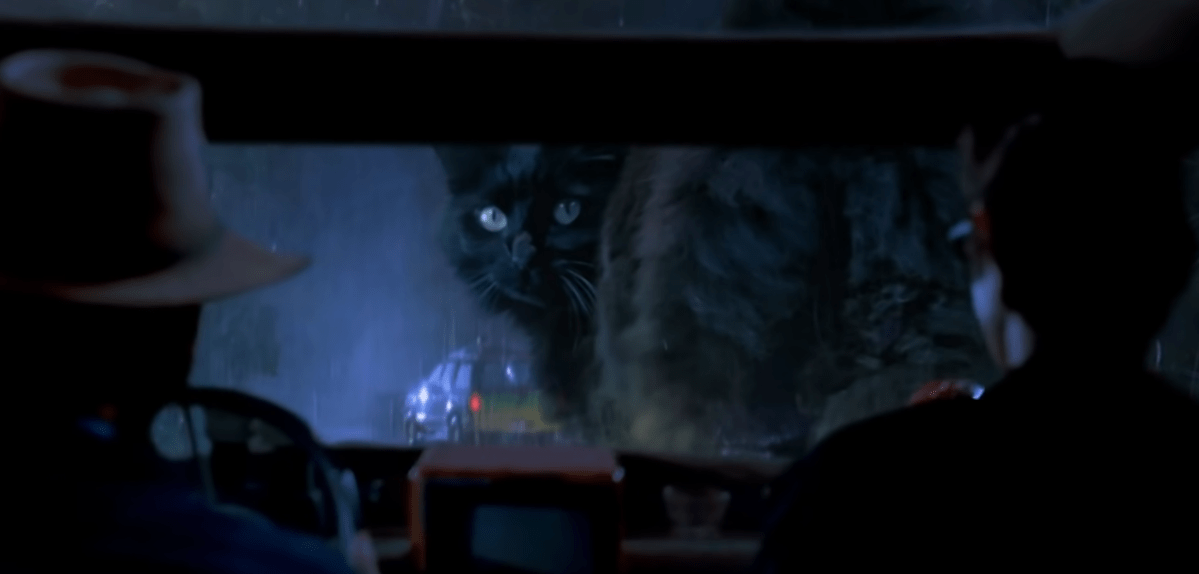
Owl Kitty’s human puts his beloved feline into an iconic scene from 1993’s Jurassic Park.

Owl Kitty’s human has put his house panther into The Matrix, John Wick, Home Alone, Titanic — and now the original Jurassic Park as a stand-in for the terrifying tyrannosaurus rex.

Despite standing at least 20 feet tall and weighing several tons, Jurassic Owl Kitty is a kindler, gentler threat to Sam Neill, Jeff Goldblum and the kids. Kitty just wants to rub up against the Jeep and purr, and perhaps score some cat food, not eat people like that evil dinosaur.

Plus we can now confirm that, even if they were twice the size of African elephants, cats would still be cute: