Woman Fined $130 After Her Cat Meowed ‘Too Loudly’ On Train To Paris

The Europeans aren’t messing around when it comes to noise on public transportation, and a loud pet can cost you.

Note to self: Never take Buddy on a French train, unless I want to be out a few hundred bucks by the time I reach my destination.

That’s my takeaway after coming across this story about a woman who was fined €110 (about $130 in ‘Merican dollars) by the French National Railway Company after another passenger complained that her cat was causing “acute tensions” by vocalizing.

Naturally, the passenger and the railroad have two different versions of events. Camille, who was identified only by her first name, said she’d purchased a ticket (about $8) for her cat, Monet, and had the feline in a carrier for the trip from Vannes, Brittany, to Paris, per railroad rules.

Monet “meowed a bit at the start” at the beginning of the journey, Camille admitted, but wasn’t excessively loud.

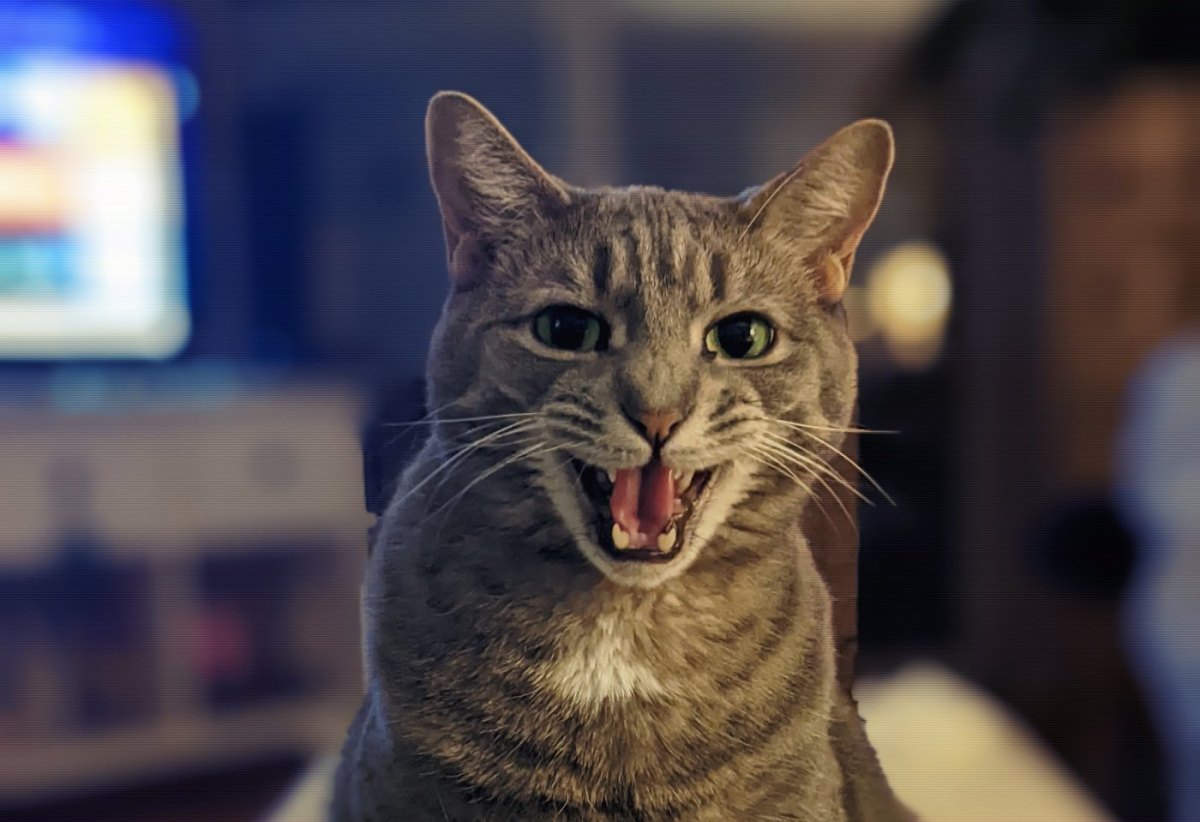
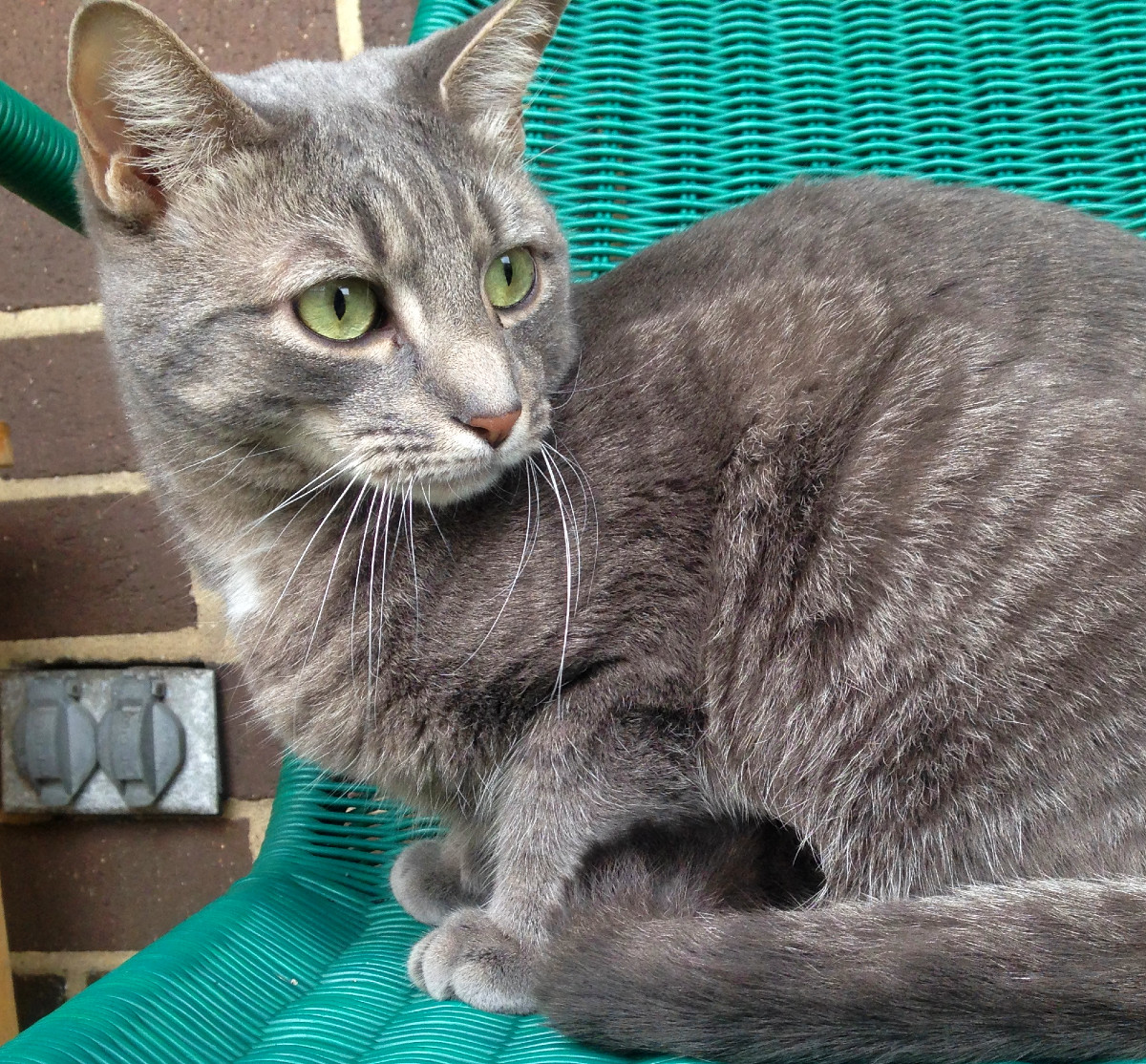
Buddy the Cat, a gray tabby cat, with a synthwave background.
“Loud? I’m merely expressing my displeasure with the level of service around here!”

Railroad operators said there were multiple complaints, not just one, and claimed a conductor asked Camille and her boyfriend, Pierre, to switch to a mostly-empty car as a compromise with other passengers.

A conductor ticketed Camille when she declined the “simple and common sense solution,” according to French broadcaster BFM.

I’ve joked in the past about sedating the Budster before flights so the other passengers won’t toss him out at 40,000 feet, but there’s truth at the heart of it: Buddy is a naturally chatty cat, he’s got strong opinions, and he doesn’t hesitate to share them with anyone.

Of course you don’t want your companion animal to create a scene or make other passengers uncomfortable. I still wince when ai think about the woman who forced fellow passengers to endure the smell, proximity and potential defecation of her “emotional support horse,” and when people began abusing the privilege of going places with emotional support animals (emotional support alligator, anyone?), it was only a matter of time before companies that operate common spaces — be they in a fuselage, a baseball stadium or a grocery store — tightened the rules to avoid conflict.

Still, unless the cat was wailing, or Camille really did refuse to switch seats, a $130 fine is excessive.

Just something to think about for those of us who have plans to travel with our cats.

Header image of a cat cafe train car in Japan, credit: Wikimedia Commons

Did A School Really Go Into Lockdown After A Teacher Confused A Chonky Cat For A Mountain Lion?

The latest viral cat story offers a lesson in healthy skepticism in today’s news environment.

Viral news accounts on social media and less scrupulous news sites have been buzzing this week about a school lockdown in Moses Lake, Washington, which was reportedly caused by a teacher confusing a particularly fat cat for a puma.

I saw red flags immediately while reading the story. While it did give a specific location, it was suspiciously devoid of other details, and the wording on all the posts and stories was dubiously similar. Additionally, a Google news search doesn’t turn up anything recent from reputable press.

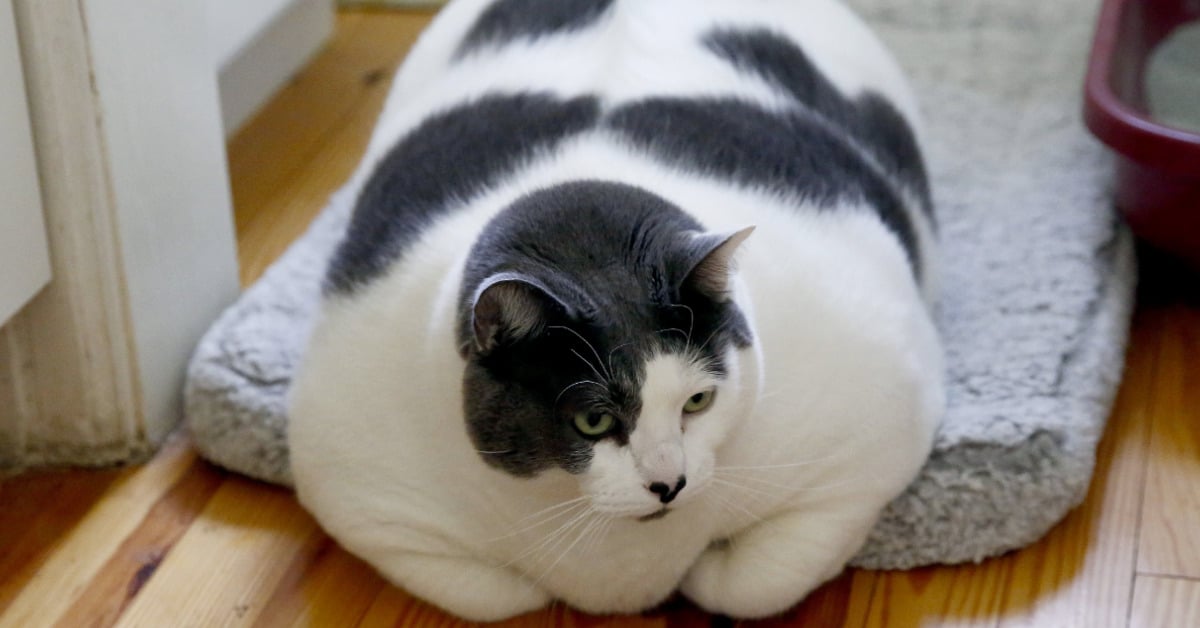
Then there’s the photo, which looks a little too good to be true.

This photo is a Getty stock image and does not depict the domestic cat in the school lockdown story, despite accompanying it in dozens of news posts.

So did a school really go into lockdown after a case of mistaken feline identity?

Yes, but it happened in November of 2023, and the photo of the obese cat making the rounds in stories this week does not depict the cat in question. The original story was published by a local news site on Nov. 22, 2023, and says the school went into lockdown at 10:30 that morning, but was quickly lifted after staff confirmed there was no puma stalking the school grounds.

“…educators soon learned that the mountain lion was in fact, a “fat cat eating a rat,” according to the school memo to parents. 

‘While we take all reports seriously, this was the first report we’ve ever had of this nature,’ the school wrote in a statement. 

Despite the benign nature of it all, safety measures resumed to safeguard students and staff. Classes resumed as normal after a short period of time. “

As for the photo, the particularly rotund moggie’s image is a stock photo from Getty. It was used in a story about feline obesity in 2017 and an April 2018 story from the New York Daily News about public outrage in Jefferson, Iowa, where the police were shooting feral cats instead of dispatching animal control or working with local shelters.

Since the image is from a photo agency and predates the original story about the Washington school lockdown by at least six years, we can rule it out as an image of the feline mistaken for a mountain lion while settling down to a feast of fresh rat.

A deceptive image used to promote the story on Facebook.

So what happened here, and why are so many news sites and channels reporting this incident as if it just happened, accompanied by a deceptive photo that is not credited to Getty?

It’s classic clickbait. That is to say, some administrator or editor saw the old story picking up traffic or noticed a blip in certain search strings, and republished the story as if it’s new while omitting the original date.

Others noticed and followed suit to get the clicks while the getting’s good, fighting over the scraps that fall from the Zuckerbergian table in the form of ad revenue. The story is simple, sharable, has been paired with an amusing image, and is exactly the sort of thing people love to post and comment on via social media.

It’s a reminder to all of us to be skeptical about what we read, and to never take anything on Facebook, Instagram, TikTok et al at face value. In fact, it’s best to ignore anything on those platforms presented as news or fact. Everyone’s got their own preferences, but here at Casa de Buddy, we like the Wall Street Journal, Reuters, The Guardian, Associated Press, al Jazeera, the BBC, and aggregators like RealClearPolitics.

That doesn’t mean they’re above reproach or that everything they produce is a sparkling example of journalism, but they’re institutions that operate under the traditional rules, staffed by professionals who take pride in trying to get stories right. I’ll take that any day over a random Facebook account run by some shady guy in Macedonia or Belarus, who will post anything as “news” as long as it brings him clicks and ad revenue.

Mars, The Pet Food Company, Claims There’s A ‘Treat Gap’ Between Cats And Dogs

The makers of Temptations want you to feed your cats more snacks, as if they don’t get enough!

In yet another indication that some people don’t seem to pay attention to their feline masters, the Wall Street Journal reports on Mars and its internal operation “Cattitude,” which as far as I can tell amounts to a few people within the company realizing they haven’t squeezed every last dollar of revenue from people who have cats.

That’s a problem, the company realized, because more people are adopting cats, younger generations are more likely to adopt felines, and anyone who hasn’t had their head in the sand knows the little ones rule the internet with their cuteness.

Through “Cattitude,” which apparently involves everything from executives walking around the office wearing cat ears, to handing out “I Love Cats” decals and consulting with “cat parents” on products, the company says it’s identified a “treat gap” between felines and canines, with dogs as the far more frequent beneficiary of yums:

“Feline insecurity can be self-fulfilling. If you think your cat doesn’t care, you might be less likely to shower them with perks. That may be why dogs get way more treats. 

Mars launched a campaign in May that spotlights the “treat gap” by the numbers: Dogs are nearly 32% more likely to get daily treats than cats in dogs-only and cats-only households; in homes with both, 38% of parents said they don’t give the same number of treats.

The story does not say how the company arrived at those numbers. Probably market research in the form of surveys. Not exactly scientific, as these things go.

This is one of those stories that makes me wonder if these people actually have cats.

From the moment I wake up until the second I settle into bed, Bud shrieks at me for snacks. He won’t even let me stumble into the bathroom before the first shrill reminders. He demands snacks before dinner, after dinner, after he’s had snacks, and sometimes while he’s eating them.

If he could speak English and hold a bull horn, I have no doubt he’d spend the majority of his day blasting the demands into my ears: “MOAR SNACKS, BIG BUDDY! MOAR! MOAR!”

Mars should know this. One of its most popular products, Temptations, turns cats into slobbering addicts. I had to wean the Budster off them, then stupidly bought them again months later and had to wean him off the Temps again because he has a one-track mind when they’re in his bloodstream. Two are not enough. Six are not enough. Ten are not enough.

One time, I left a big tub of the damn things unattended for a minute and he managed to pop the top off by knocking it off the coffee table. When I walked back into the living room, he was dragging his jaw along the floor like a bulldozer, inhaling as many as was felinely possible into his little mouth.

Frantically, I shooed him away and began picking them up, but the damage was done. He threw up a few minutes later. Then he shrieked for more!

He always looks innocent, doesn’t he?

Interestingly, the WSJ notes that if you type “Does my cat” into Google, the first two auto-complete suggestions are “Does my cat love me?” and “Does my cat know I love her?”

And that brings us to a point on which I agree with the people at Mars: cats still aren’t well understood.

Dogs happily slobber over their people. Cats show their love in subtle ways, like proximity, head bunting and momentary contact.

Just like the whole “cats love milk” thing is half myth, half misunderstanding, so is the idea that your cat doesn’t love you unless he’s leaping into your arms to hug you as saccharine orchestral music swells in the background.

While there are always outliers, most cats don’t like being hugged or picked up, and most have hard limits when it comes to the amount of physical affection they’ll tolerate. It’s not because they don’t care for us, but because they’re semi-domesticated carnivores who still retain the skittish tendencies of their wild brethren, and because they get easily overstimulated, among other reasons.

If Mars’ Cattitude is an ongoing thing, I hope the decision-makers in the company come to what I believe are two of the most important conclusions to keep in mind when it comes to cats. Giving them your love means giving them your time and attention, and treating them like the sentient, emotional creatures they are.

The best piece of advice I ever got was to always take your cat’s emotions into consideration.

It really is that simple.

Now if you’ll excuse me, I have snacks to dispense.

Bud Battles A New Vacuum, Plus: Webb Telescope Reveals ‘Toe Bean’ Of Cat’s Paw Nebula

Buddy confronts his machine arch-nemesis, while NASA celebrates JWST’s third anniversary by imaging the cosmic cat’s paw in detail we’ve never seen before.

To mark its third anniversary, the team behind the James Webb Space Telescope has released an image of the Cat’s Paw nebula, and it’s incredible!

Below is a dramatically scaled down version of the image to make things easier on readers who may have slower connections or tend to visit PITB on mobile devices. The original is 30mb and can be found here.

It really is worth viewing at maximum resolution, where you can see details of the stellar nursery and the thick plumes of ionized gases that comprise the radiant, multi-hued structure of the nebula.

The dark red areas are dense concentrations of gases, the clouds from which stars are born. The blue stars are the cosmic newborns, and if you scroll through the image at maximum resolution, you can see those young stars floating in seas of their golden brethren in interstellar expanses stretching thousands of light years. In this image, we’re looking at an area of our galaxy between about 4,000 and 5,500 light years away.

Here’s the small version:

And here are images that better illustrate why it’s called the Cat’s Paw, with a view oriented in the “correct” way to trigger our brains’ pattern recognition processes, the mechanisms that make us think “Oh yeah, that does look like a cat’s paw!”

“Toe beans” up top, large pad beneath. The Cat’s Paw Nebula.
Viewed in different wavelengths to better see the overall structure without the obscuring elements.

We’re fortunate there is no cosmic-scale feline floating out there. Just imagine entire star systems batted around for fun, or a section of the galaxy reserved as a litter box.

I know this can seem overwhelming to some people, while others see images like this and think “What’s the big deal? Haven’t we seen things like this before?”

And the truth is no, we haven’t. That’s the beauty of the James Webb Space Telescope. We’re not only seeing galaxies and structures previously undiscovered, we’re also seeing familiar cosmic locations in detail and resolution that was previously impossible.

In a very real way, we’ve upgraded from standard definition Cosmic TV to the HD version.

The scope is in orbit, at a gravitationally stable position known as Lagrange point 2. In plain English, it’s a special place a million miles from Earth where the gravitational dance between our planet and our sun effectively cancel each other out.

Or, as NASA puts it, Lagrange points are “positions in space where objects sent there tend to stay put.”

It took decades of planning and the engineering talents of thousands of humanity’s best to create the JWST, which is also a spacecraft. The scope was built to travel to L2 without anyone aboard, then unfold itself in a delicate ballet of almost innumerable moving parts. The JWST’s ability to transform, like a butterfly emerging from a cocoon, is an engineering marvel in and of itself, and that’s before it began providing us with a better view of the cosmos than we’ve ever had in the history of our species.

Cheers to the scientists and engineers at NASA, who have repeatedly demonstrated they’re cat-loving people!

Header image credit: Texas Tech University Department of Physics and Astronomy

The fury of the Budster

Casa de Buddy has a new vacuum, desperately needed during this hot summer as Bud has been shedding more fur than usual.

I could have made another cat from all the hair the new vac picked up from the area rugs, couches and pillows, but Buddy wasn’t happy.

As PITB readers know, vacuums are high on the list of things Buddy despises. He’ll start hissing the moment he sees one, even if it’s not plugged in. He thinks they are angry nemesis machines created to infiltrate his territory and torment him.

Usually I try to lure the little dude into another room with treats and lock him in for a few minutes while I vacuum, but he was nowhere to be found, so I thought he’d spotted the vac and retreated voluntarily.

Tragically, I was mistaken.

Shortly after I began vacuuming my bedroom, I heard a low growl, then Buddy leaped from his hiding spot under my desk and shrieked his high-pitched, baby-like battle cry as he launched himself at the evil vacuum!

It was comical. His little face was twisted into a mask of rage, his ears were pinned back, and he slapped the hell out of the vac: SLAP SLAP SLAP SLAPPP!!! with his little paws.

Here’s a reimagining of the ghastly incident, since it would be cruel to repeat it just to get photos. It’s Buddy — or the “model” of Buddy I’ve built using dozens of photos — exacting his wrath on the evil machines that disturb his peace:

I turned the vacuum off and tried to calm him down by reassuring him in a soft voice that he was safe. Nothing to be worried about, pal!

But I couldn’t stop laughing, which didn’t help the situation. Little man does not like to be mocked, and I’m convinced he fully understands when I’m laughing at instead of with him.

Ah, well. Next time there will be no assumptions and I’ll get him safely out of harm’s way before using the evil contraption.

Animal Rights Groups Are Begging For This UK Influencer To Be Banned From Owning Pets

The woman has been dubbed a “serial killer” of animals after eight of her pets and one of her horses met early ends, and several others simply disappeared. She’s part of an unfortunate trend of influencers and quasi-celebrities popularizing exotic pets, with “ownership” of the animals frequently leading to tragedy.

So apparently Katie Price is some sort of proto-Kardashian, a pioneer of the “famous for being famous” genre of hybrid reality/online celebrity, to use the term loosely.

Wikipedia says she got her first taste of fame in the 90s posing topless for British tabloid newspapers before moving on to loftier pursuits, like appearing on Big Brother and holding court on important topics, like whether toes have bones.

The background really doesn’t matter, except to establish that Price is someone with a lot of money, minimal common sense and extraordinarily poor judgment who has gotten so many of her pets killed or injured, PETA and other animal rights groups in the UK have begged politicians to write new laws preventing serial pet-killers from purchasing more animals.

Sort of a “10 strikes and you’re out” rule, if you will.

Four of Price’s dogs have been hit by cars, including one killed by a pizza delivery driver on her property. Another got stuck in an electric armchair and was crushed after Price gave him cannabis oil, pleading ignorance on its effects.

Previously, one of her breed cats was euthanized under mysterious circumstances at five months old, her rare chameleon fell ill and died because he wasn’t kept in a properly heated enclosure, and her “guard dog” was apparently intentionally killed by someone, although the information on that death comes from Price so there’s no way of telling what the actual circumstances were.

A horse Price owned was killed on the same road where two of her dogs met their end, which would bring the tally to nine depending on whether you consider a horse a “pet.”

Price, pictured this year.

There have also been animals — kittens, puppies, animals gifted by boyfriends, fiances, and friends — who were featured on Price’s social media feeds as babies and never heard from again, according to the UK’s Mirror. Some of them were given away to assistants and acquaintances. The fates of the others are unknown.

Price currently owns at least four chihuahuas and five Sphynx cats. An incident with one of the Sphynxes has animal lovers and welfare groups renewing calls to prevent her from buying new pets. (Price, like so many social media influencers, exclusively purchases breed pets for thousands of dollars each.)

In a new video posted online, Price — who has been dubbed a “serial killer” of animals by PETA — makes duck lips at the camera and rubs one of her Sphynx cats, Kevin, explaining that the little guy suffered sunburns.

“Oh Kevin you have been in the sun today, you have got sun burnt despite us putting sun cream on you… look at his little face,” Price said in the video. A caption written by Price claims “Trying to keep the cats out of the sun is hard work.”

A screen shot from Price’s recent video in which she shows one of her cats who suffered sunburn during the ongoing heat wave.

The latest incident is drawing fresh attention to a petition that calls for the UK government to step in to stop Price from owning animals.

As of July 10, there were 37,728 verified signatures on the Change.org petition, which mentions a number of additional disturbing incidents involving Price’s pets. One accusation claims Price’s guard dog — it’s not clear if it was the dog who was killed, or a new guard dog — bit the tail off one of her cats.

“Anyone who warns Katie not to hurt the animals she takes in might as well be screaming into the wind, for all she seems to care,” PETA’s Elisa Allen said. “And here we go again: her cat is sunburnt – something she was likely warned about when acquiring a gimmick cat, bred to look odd and be hairless.”

For her part, Price claims the deaths and unfortunate incidents that have befallen animals in her care are simply the result of bad luck and circumstances outside her control. Her representatives have also accused animal welfare groups of using the influencer’s fame to raise money.

That has not changed the narrative as new incidents continue to pile up. In a 2023 live TikTok stream, Price allegedly slapped her then-puppy, Tank — who she’s since discarded — for sitting on a hoodie. “Get off! You’re sitting on my jumpers, my jumpers that I love,” Price said after the sound of a loud slap off camera, leaving viewers fuming.

Price is not alone in the world of influencers, quasi-celebrities, Real Housewife types and entertainers who apparently view animals as disposable amusements.

Hilaria Baldwin, Alec Baldwin’s wife, has earned the nickname “Cruella Seville” from her detractors for her alleged treatment of her breed cats and dogs. The nickname is a play on the character Cruella de Vil from 101 Dalmations and the Spanish city of Seville, where Baldwin claimed to have roots before claiming she was born in Mallorca.

Baldwin with two of her Bengal kittens. New kittens have appeared in her Instagram posts several times in recent years, apparently replacing older Bengals she’d purchased previously.

Baldwin, you may recall, was enthusiastically Spanish until she wasn’t. She was essentially exiled from celebrity-adjacent society in 2020 after Twitter users dug up videos of her fluctuating accent and performative “forgetting” of English words like cucumber, outlet and onion. Former classmates, acquaintances and friends came forward to say she was the Boston-born Hillary Hayward-Thomas and didn’t go by Hilaria — or speak with an accent — until around 2010, when she met Alec Baldwin.

But the actor’s wife never stopped posting to social media, and in addition to animal lovers calling foul on videos that show her allegedly mishandling her dogs, her online posts show a rotating cast of Bengal kittens. Critics have called for action against Baldwin for her alleged treatment of animals, as well as buying Bengals despite the fact that it’s against the law to keep them as pets in New York City. PETA, which previously worked with Alec and Hilaria Baldwin on a publicity campaign, also called on the couple to stop buying exotic pets.

In the music world, mainstream pop artists like Justin Bieber and Rihanna have both come under fire for purchasing baby monkeys — a capuchin in the case of Bieber, and a slow loris for Rihanna.

The Rihanna incident, in which she shared a photo of herself with a slow loris pet to social media, resulted in raids on illegal wildlife markets in Thailand, where Rihanna allegedly acquired the animal. There are nine subspecies of slow loris, ranging from vulnerable to critically endangered in conservation status, per the World Wildlife Fund.

Rihanna posing with a slow loris, a nocturnal, arboreal animal that is notably the world’s only venomous primate. The venom glands are removed from slow lorises sold on the illegal wildlife market. People continue to poach and sell them despite their declining numbers in the wild.

Bieber named his monkey Mally OG and famously ditched the then-infant in Germany in 2013, when officials there seized the primate from his private plane after it touched down in Munich, citing his lack of permits and purchase records for the animal. (They essentially accused Bieber of buying Mally on the illegal wildlife market.)

“Honestly, everyone told me not to bring the monkey. Everybody,” Bieber told GQ magazine in an interview several years later. “Everyone told me not to bring the monkey. I was like, ‘It’s gonna be fine, guys!’ It was the farthest thing from fine.”

Bieber with his pet capuchin monkey, Mally OG, who was just an infant when he was ripped from his mother’s arms so he could be sold to the pop singer.
Bieber with another capuchin monkey as part of a skit in which he joked about German authorities seizing his first monkey pet.

The singer said he’d return for his pet after retrieving the paperwork from one of his US homes, but he never did, and Mally OG was placed in a sanctuary after a long rehabilitation period.

In a follow-up story five years later, Asta Noth of Serengeti Wildlife Park said Mally was still trying to imitate human speech, and didn’t know how to communicate with his own species. That’s a common problem with monkeys who are former pets, as they do not understand the complex social dynamics of troops and family units.

His developmental problems stem from the fact that “he was taken away from his mother and natural family way too early,” Noth said. “He did not learn to be a monkey.”