How Long Can You Leave Your Cat Alone?

“Cats take care of themselves,” the conventional wisdom insisted for decades. These days we know that’s not true.

Back in the Dark Ages of kitty cognitive knowledge, when scientists wouldn’t go near a cat with a 20-foot pole because they were considered impossible to work with, the conventional wisdom was that as long as a cat was fed and watered, its needs were met.

Going away for three days? Leave a few bowls of dry food and water and you’re good to go, or if you really want to splurge, get an automatic feeder, the prevailing wisdom went. Gonna be away for a week or two? Get someone to check in on the cat a few times a week just to make sure food and water is available.

“If you want a dog but you don’t have time to meet all of its needs, get a cat,” people would say. “They take care of themselves.”

It didn’t take me long to realize how wrong the “prevailing wisdom” on cats really was, and thankfully in recent years we’ve seen a boom in research into cat behavior, intelligence and emotional needs. Among the many things verified by those studies is the fact that cats absolutely are emotional animals and are not the cold, indifferent automatons many people insisted they were.

One reason for that enduring myth may be cats’ famous stoicism. Ignore a dog and she might cry, become destructive or pee in your house, but one thing’s for sure — she’s going to let you know she’s not handling the isolation well. Ignore a cat, and he’ll just withdraw.

I’ve seen plenty of examples of the latter in the homes of friends and acquaintances. The cats are just sort of there, existing like the furniture or plants, interacted with rarely and given affection only occasionally. Those poor cats are quiet, seemingly indifferent, expecting nothing and sadly accepting of their place. They are neglected.

But when you pay attention to your cats they come out of their shells, so to speak. They warm to you. They reveal their hidden emotional core.

Of course, when you raise a cat with attention and love, that’s there from the very beginning, and they WILL let you know when they’re not happy with your absence.

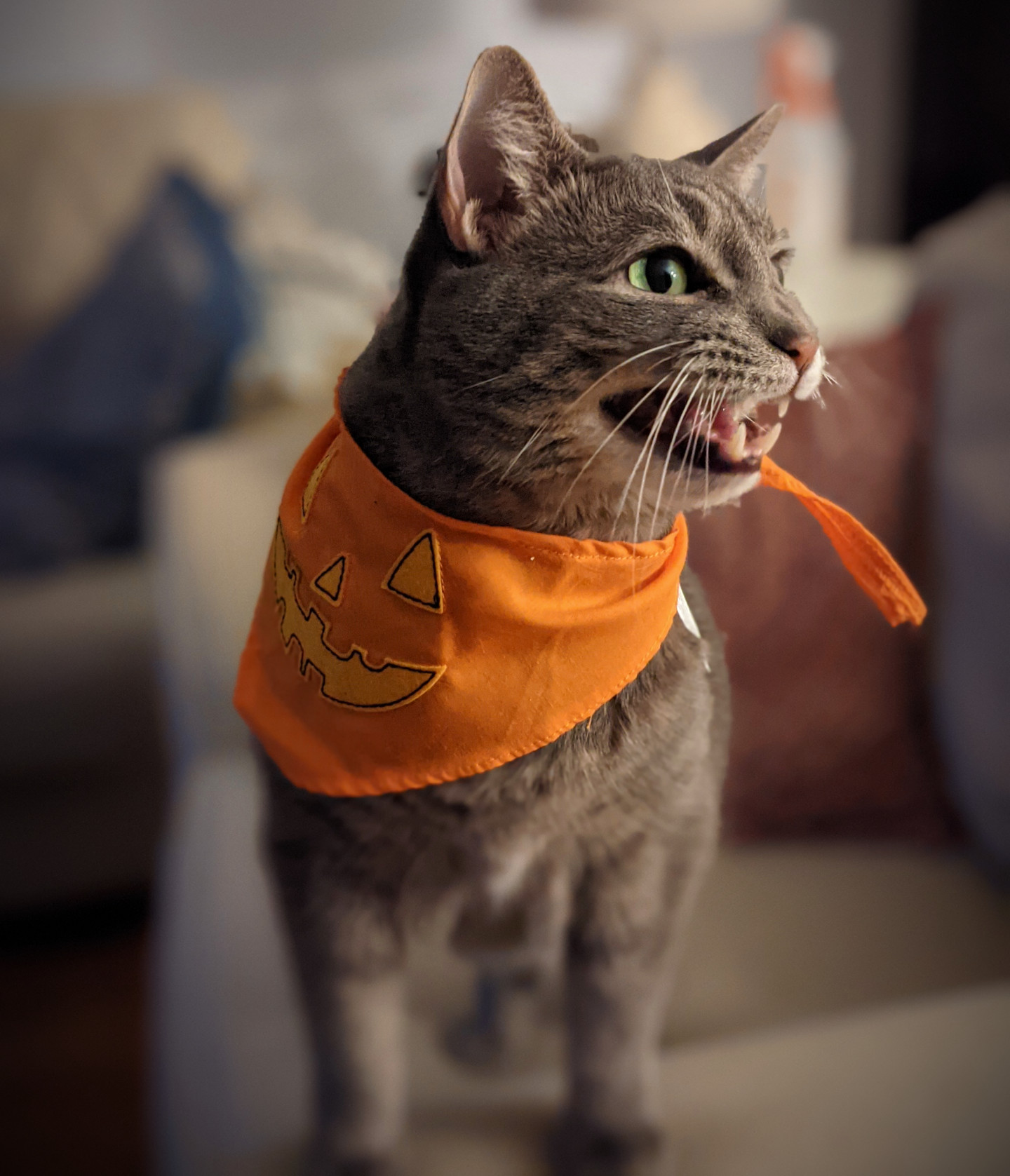
Who do we know who’s like that? His name sounds like Bum, or maybe Bunny, or…oh yeah! God forbid I should ignore Buddy. I’ll never hear the end of it. In fact, he’s on my desk right now, butt parked next to the mouse, and I’m sure any minute now he’s going to decide that I’ve been writing for too long and declare it’s Buddy Time.

Of course, the little jerk attacked his own cat sitter, a friend who has been caring for him when I’m away since he was a kitten! That complicates things.

“Oh servant! Servant, come here at once! I’d like a massage!”

If you’ve made it this far, you might be wondering how long you can really leave your cat alone. The answer is no more than 24 hours without someone dropping by to check on kitty, refill the water and food bowls, and give him some attention.

If you’re gone longer you’re going to want to make concrete plans for a cat sitter to be there every day.

“You should not leave your cat alone for a prolonged period,” veterinary postdoc Mikel Delgado told Inverse. “Cats also have emotional and social needs that can’t be met when they are left alone for extended periods.”

If your cat likes to play, that’s great, but even if the little one doesn’t, your cat sitter can make things easier by simply hanging out, Delgado said.

Now if you’ll excuse me, His Grace needs me…

Buddy the Cat Spotted With Jaguars In The Amazon

The third time’s the charm: After failing in his attempts to ingratiate himself with tigers and lions, Buddy heads south to the Amazon to commune with the jaguars.

MATO GROSSO DO SUL, Brazil — Fisherman and naturalists working in the Pantanal have reported a strange sight in recent weeks — a domestic cat tagging along with jaguars.

The gray tabby was observed lounging on the banks of the Amazon, napping in a tree and struggling to take bites out of a caiman killed by a generous jaguar, witnesses reported.

“HQ, we’ve got something extraordinary here,” a naturalist was heard reporting over local radio channels. “A jaguarundi is — no, scratch that — a house cat! A house cat is following a group of jaguars from the river bank into the deeper jungle.”

The feline in question was identified as Buddy the Cat of New York after his concerned human reached out to local authorities and appealed to the Brazilian press for his safe return.

“He does this all the time,” the New York man, identified as Big Buddy, told an interviewer from Folha De S. Paulo. “First he broke into the tiger exhibit at the Bronx Zoo and tried to get the tigers to accept him, only to be claimed as a cub by one of the tigresses. It took weeks to convince the zoo to get him out, and when I got him home I had to bathe him five times just to get the stink of tiger saliva off his fur.

“Then somehow he made his way to Tanzania, where he wandered around the Maasai Steppe for a few weeks trying to get into a lion pride. He failed miserably in that endeavor, too. Now with the jaguars. It never ends.”

budd_and_jaguars
Buddy the Cat, known as Kinich Bajo to his jaguar friends, pictured here in the Amazon.

The exasperated New York man claimed responsibility for his failure to keep his “ridiculous” cat from adventuring, but also blamed the transportation industry for accommodating Buddy.

“Who the hell allows an unaccompanied cat to take a bus or board an airplane?” he asked. “How did he end up in first class, sipping champagne and buzzing the stewardesses for more turkey every five minutes? I’m told he got quite drunk and threatened to become combative if he didn’t get an entire fried turkey.”

Asked why his cat was obsessed with ingratiating himself to larger cat species, Big Buddy answered without hesitation.

“He’s a dumbass,” the human said. “Don’t get me wrong, he’s a very cute, very loving little guy, and often a good boy, but a dumbass all the same.”

Buddy’s human said the 10-pound domestic cat often tears around the house, ambushing animate and inanimate objects and practicing his roar, “but he sounds like Elmo singing a funk song in falsetto.”

jaguar-big-cat
Credit: Wikimedia Commons

As of press time, Buddy the Cat still hadn’t returned home. Jaguars are known to be extraordinarily laid back compared to other big cats, and a loosely-affiliated group of the South American apex predators seemed to tolerate the domestic kitty.

“I can’t leave now,” Buddy told reporters. “They’ve begun to accept me! It would be a violation of trust if I just left them to eat all this delicious food by themselves.”

Kinich Ahau, the local jaguar elder, said his extended family had taken a liking to Buddy.

“Have you heard of this turkey? We did not know of it. It is wondrous!” the great jaguar said. “Buddy, or Kinich Bajo as he is known to us, has also shared great wisdom in the form of new and comfortable napping techniques. On the first night, we observed him construct a soft bed of leaves for himself in the crook of a branch, and over the following suns and moons we have come to appreciate softer napping spots.”

Buddy had sparked a renaissance in jaguarian napping technique, Kinich Ahau said.

“Nobody naps like Buddy,” he said. “No one!”

buddyandbuds
Brothers: Xibalbá, left, with Kinich Bajo and Ek B’alam.

With the fond support of the Amazon’s jaguars, Buddy was set to undergo an ancient shamanistic ritual involving the imbibing of Ayahuasca, a powerful psychoactive brew said to reveal cosmological secrets to those who drink it as part of a spiritual ceremony.

“We would not have invited Kinich Bajo, or Buddy as you call him, to commune with the ancient B’alam (jaguar) spirits if we did not sense a deep spirituality and wisdom inside him,” said an elder jaguar shaman named Mike the Melanistic. “He has shown us the way in matters of snacking and napping, and now as we welcome him to our ethereal fraternity, we shall accompany him on his journey to the stars, where he will drink of the deep knowledge of our ancestors.”

Buddy himself told a reporter he was looking forward to the ceremony.

“It’ll grant me, like, awesome powers and shit,” he said. “I’ll be able to disappear in a puff of mist like the jaguars do, my muscles will get bigger and, like, I’ll be able to sniff out snacks from up to a mile away. Pretty cool, if you ask me.”

At press time the jaguar shaman elders said the ceremony does not, in fact, grant such powers.

Animals Teach Us Our Self Worth Isn’t Tied To What We Do

We could learn a lot from our feline friends, who live in a default state of contentment, according to a philosopher who muses on cats in his new book.

NPR has an interesting article about the very human tendency to peg our self worth to our careers and our egos to our accomplishments, something most of us are guilty of to one degree or another.

I know I’m guilty of it, and I’m often unhappy when I’m not meeting some arbitrary level of creative output.

But Devon Price, a social psychologist, told NPR a pet chinchilla named Dumptruck — “the opposite of productive, and frankly, rather destructive” — led to a revelation Price had about intrinsic worth.

“I would never look at him and think of his life in terms of, ‘Has he justified his right to exist?'” Price told NPR. “He’s not paying rent. He’s not performing any service. And it would be absurd to even think about his life in those terms.”

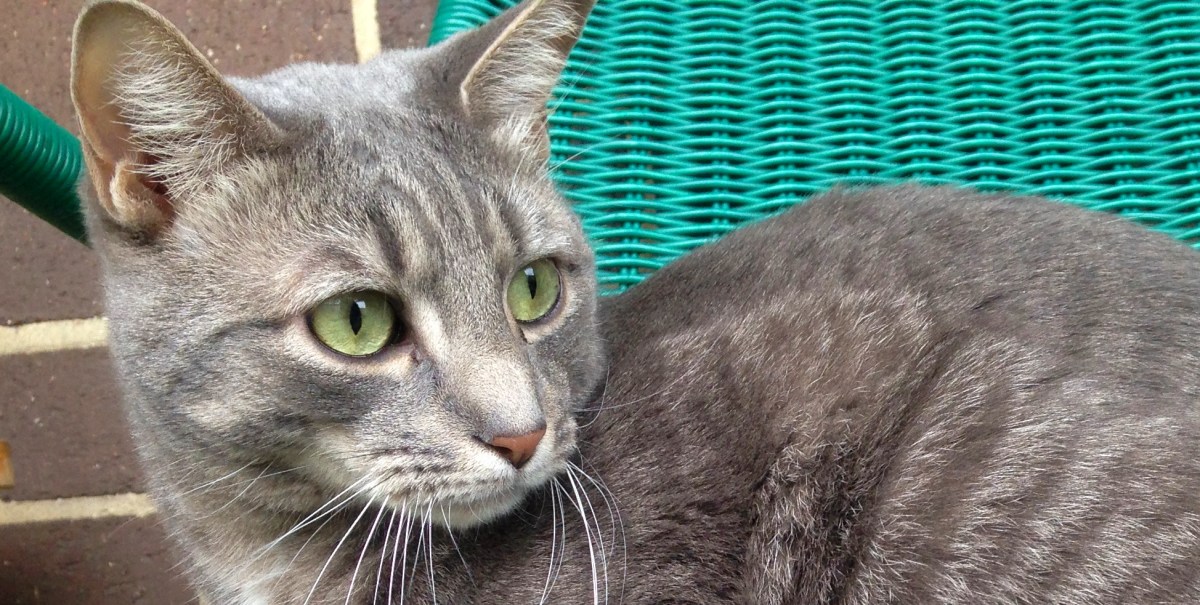
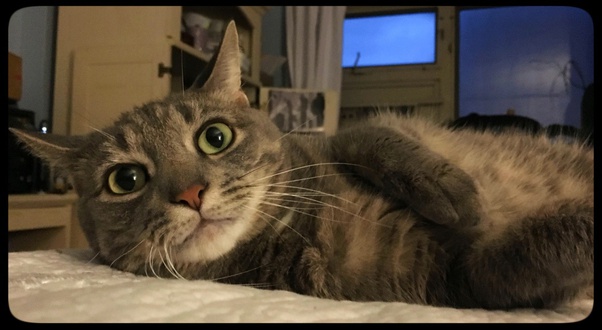
The article prompted me to think about Bud, of course. He’s just Bud. A gray-furred, mercurial, amusing little guy whose favorite activities are eating, sleeping and hanging out with his Big Buddy.

How Buddy pulls his weight

Does he do anything to “justify” his existence? Well, according to him, he does.

“What services do I provide?” Buddy repeated when asked. “Well, first of all, I’m delightful. I’m responsible for like 95% of the delightfulness around here, let’s be honest. Yes, delightfulness is a word. Because I say it is!”

He also claims he provides security — “no burglar in their right mind would break in knowing I’m here” — as well as daily wake-up services, and “annoyingness desensitization.”

orange cat on focus photography
Credit: Alexas Fotos/Pexels

Price’s observations are not far from those of John Gray, the British philosopher who published a new book, Feline Philosophy: Cats and the Meaning of Life, earlier this year.

Cats live in the moment, Gray points out, and don’t stress themselves obsessing over “an imagined future.” Some people, especially those who don’t appreciate the full scope of animal cognition, would say cats are so adept at enjoying the present because they’re simple creatures incapable of thinking in the abstract or planning for the future.

That, of course, isn’t true: Cats develop abstract thinking skills early in their development, they understand object permanence, and anyone who’s seen a mother cat care for her babies — fretting over hiding spots, frequently moving her kittens and checking in on them when she must hunt for food — knows our feline friends are most certainly capable of planning and worry. (Or you can just watch my cat when his dinner’s late.)

Human anxiety is compounded by existential concerns, which cats aren’t burdened by. They’re not worried about their place in the world, and it probably never occurs to them that trying to be happy acknowledges the possibility of failure.

Contentment is a cat’s natural state

Cats, Gray points out, just do what makes them happy, whether it’s playing with a favorite toy or shredding a roll of toilet paper. They’re not worried about whether they could have more fun doing something else, or whether they’re making the best use of their time. Cats are “among the wisest animals because they’re spontaneous and playful and content with whatever life presents them,” as one reviewer of Gray’s book put it.

photo of grey tabby kitten lying down
Credit: Anel Rossouw/Pexels

“I would say that a lot of torment in our lives comes from that pressure for finding meaning,” Gray told The Guardian earlier this year. “Unless you adopt a transcendental faith which imagines a wholly other world where meaning is secure from any accident, most of the things that happen to us are pure chance. We struggle with the idea that there is no hidden meaning to find. We can’t become cats in that sense – we probably will need to always have the disposition to tell ourselves stories about our lives – but I would suggest a library of short stories is better than a novel.”

In response to questions about what cats might say to us if they could truly talk, rather than simply communicate, Gray responds with a question of his own: “If they could talk, would they find us sufficiently interesting to talk with?”

Would they consider us buzz kills? Would they roll their eyes, say nothing and return to gleefully knocking beverages off tables?

“Unless cats are hungry or mating or directly threatened, they default to a condition of rest or contentment or tranquility — basically the opposite of humans,” Gray told Vox. “So if cats could philosophize, my guess is they’d do it for their own amusement, not because of some deep need for peace.”

tabby kittens on floral comforter
Credit: Pixabay/Pexels

Buddy’s Gate Crashing My Dreams

Bud makes himself comfortable in my consciousness so he can annoy me on an entirely different plane of existence!

Buddy has a tendency to show up in my dreams, which I attribute to his relentless insistence on messing with me while I’m asleep, whether it’s yowling in my ear for breakfast, deciding my nose needs grooming or just burrowing into me with a soft “Mrrrrrp!”

Last night, however, was a doozy. I dreamt I was back in high school, but instead of being in class I was in the newsroom at my first-ever newspaper job, which somehow occupied the third floor of the school building. I excused myself to go have a smoke — which I don’t do anymore — and walked down to the first floor where Bud was waiting for me near the door leading outside.

To say I was alarmed to find him just hanging out unsupervised in my high school-slash-workplace would be an understatement.

“Bud!” I said. “What the hell are you doing here?”

“I came here with you, remember?” Buddy answered, speaking as if it was the most natural thing in the world. “We took the Celica.”

I sighed.

“I can’t have you running around here where someone could snatch you,” I said. “You’re going back in the car until I’m done for the day.”

“No I’m not!”

“Yes you are!”

“Oh yeah?” Buddy asked. “Where’s the car?”

Celica
A black Celica just like the one I owned until it died one day on the highway en route to Long Island.

And that’s when my dream morphed into a recurring nightmare, which is that I’m walking through a parking lot and can’t find my car. (In this case the car I got at 19 years old, a black Celica hatchback that was all sleek looks and underwhelming engine power. I still miss that car!) In these dreams I start to panic, redouble my efforts, and realize the parking lot is so huge, so endless that I’m gonna need a lift, someone to drive me around so I can look for my car

Buddy smile
“I’m a little Buddy, short and sweet! Here are my clawses, here are my feet!”

Maybe I can ease my anxiety in future dreams by dispatching Buddy to look for the car, but in last night’s dream he was clearly responsible for moving it.

“Bud…” I said. “What’d you do with the car?”

Dreams have a way of making it seem perfectly reasonable that a 10-pound house cat can not only speak, but drive a car.

I was absolutely sure that little jerk had hidden my car! (And here’s the standard disclaimer for all new readers: “little jerk” is a term of endearment when it comes to Bud. I love the little guy, obviously.)

I know it was just a dream, but it’s probably not a bad idea to hide my keys from now on…

Words of Wisdom From Buddy

Buddy shares his philosophy on life and slumber.

Hark! Upon this day rejoice, for we bring you wise words from Buddy the Cat!

We’re often told to follow our dreams, but how many shareable quotes on social media actually tell us how to do so? It turns out there’s a critical step: To follow your dreams, you need to have dreams first! This is where Buddy sagely instructs us to begin, surrendering to sweet slumber so our unconscious can tell us what we really want:

buddy_napquote3
An important and common sense bit of wisdom from Bud.

On Jan. 20, 1961, John F. Kennedy was inaugurated at 43 years old, making him the youngest president since Theodore Roosevelt — and the youngest elected president. (Roosevelt assumed the highest office after then-President William McKinley was assassinated in 1901.) While an impressive feat, it was Kennedy’s speech that continues to reverberate throughout history: “Ask not what your country can do for you,” the newly-sworn-in president told the nation. “Ask what you can do for your country.”

Those were simpler times, before we made the wise decision to politicize viruses, rip each other’s throats out over vaccines, and apprentice ourselves to intellectual giants like Tucker Carlson and Joy Ann Reid, tuning in nightly to drink of their limitless sagacity as they educate us on how to cherry pick facts that support our respective world views and ignore everything that contradicts them.

Still, there are lessons to be learned from those innocent times, and Buddy has repurposed Kennedy’s quote to give it a deeper, more profound (and useful) meaning:

buddy_asknot
JFK has nothing on Buddy.

For our final bit of Buddesian wisdom, we return to the solution to so many of life’s problems: Sleep.

Why confront adversity when you can just take a nap? In this quote, Buddy advises the path of least resistance, a crucial strategy for anyone who finds themselves dealing with stress or anxiety:

buddy_adversityquote
Sink to meet the challenges of life!