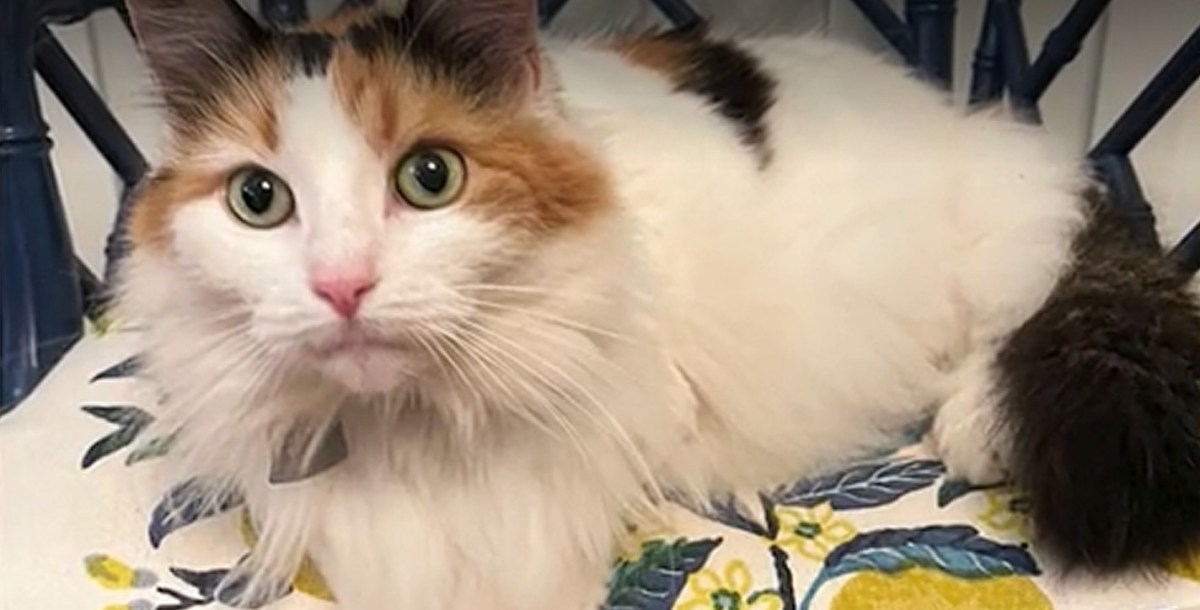
Actress Shares Why She’s A ‘Crazy Cat Lady,’ PLUS: Waymo Denies Responsibility For SF Cat’s Death

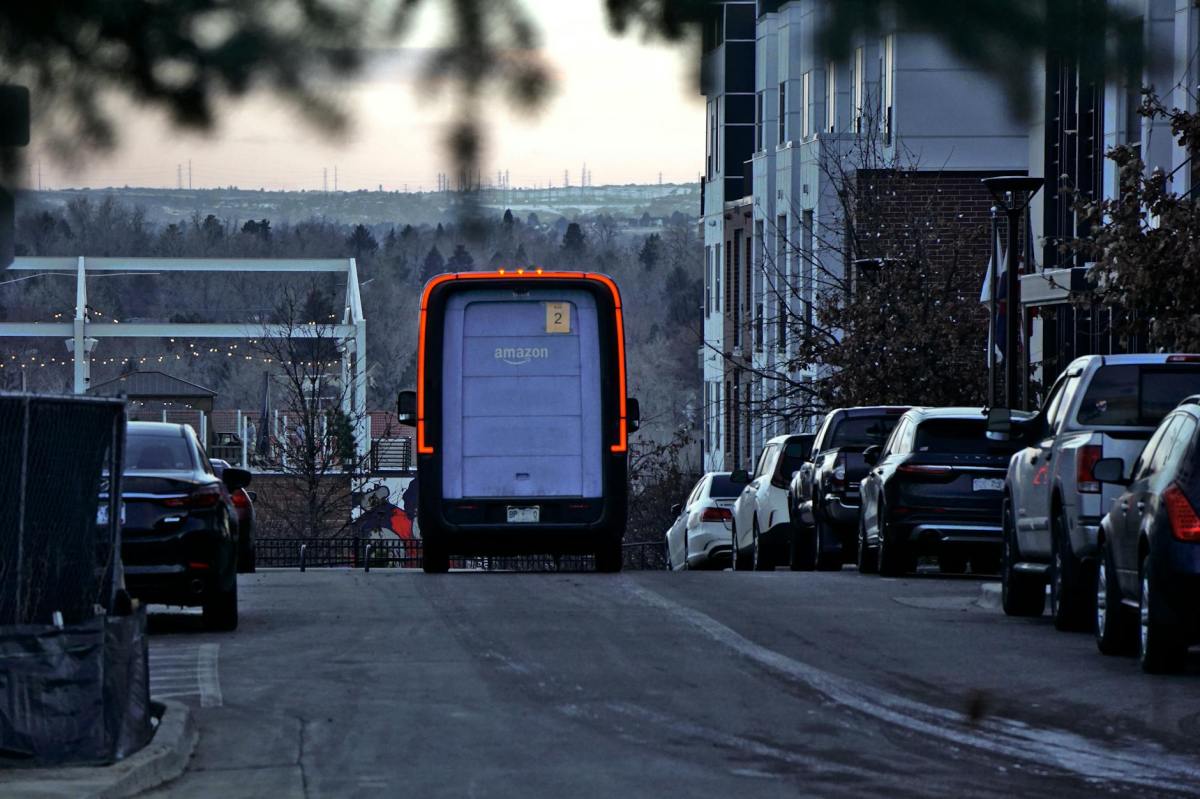
Waymo says KitKat “darted under our vehicle as it was pulling away” in the accident that killed the popular bodega cat.

Last week when we wrote about a San Francisco cat hit by an autonomous taxi, the Google subsidiary that produces the cabs hadn’t responded to media requests for comment.

Now Waymo has confirmed one of its driverless taxis did strike KitKat late on the night of Oct. 27, but claims the nine-year-old tabby got in the car’s way as it began to move. Here’s Waymo’s statement:

“The trust and the safety of the communities we serve is our highest priority. We reviewed this, and while our vehicle was stopped to pick up passengers, a nearby cat darted under our vehicle as it was pulling away. We send our deepest sympathies to the cat’s owner and the community who knew and loved him, and we will be making a donation to a local animal rights organization in his honor.”

People in the neighborhood where KitKat was a fixture are not happy with the response. Per Mission Local: “Waymo did not reply to a request to review the video, and did not say how much it would donate or what group would receive the gift.”

Mission Local noted witnesses gave slightly different accounts of the collision, saying KitKit was in front of the taxi for several seconds before it began moving.

As testament to how well-known and beloved KitKat was, there’s now a considerably sized memorial to him in front of the store he called home, with flowers, candles, drawings of KitKit and even cans of cat foot left on the spot. The San Francisco Chronicle has photos of the memorial.

KitKat featured prominently on Instagram, where photos show him hanging out with customers, patrolling the sidewalk in front of the store, and curling up for naps on the counter. Credit: https://www.instagram.com/randasmarket/

The paper also quotes a local who explained the outpouring of grief: “If you’re not a 16th Street regular this can seem silly, but this cat meant so much to this community. If you knew KitKat, you’d understand.”

KitKat’s death has soured more people on Waymo, with the Chronicle noting it “struck an emotional nerve in a neighborhood already wary of driverless cars weaving through its crowded streets.”

Waymo, a subsidiary of Alphabet Inc. (Google’s parent company), operates driverless fleets in San Francisco, Los Angeles, Phoenix, Austin (TX) and Atlanta, with plans to offer automated taxi service in Washington, D.C., and Miami.

“When they show up in your yard and they need you, we can’t look away.”

As someone who avoids medical dramas like the plague, I’m not familiar with Wendi McLendon-Covey’s work, but I’m sure many PITB readers will know the St. Denis Medical star. In an interview, McLendon-Covey talks about rescuing cats, earning their trust, and getting satisfaction from knowing she’s improving one life at a time.

The actress with one of her feline friends. Credit: https://www.instagram.com/wendimclendoncovey/

Most recently she’s been earning trust with a stray she calls Harvey, saying it’s “taken me forever to bond with him” and she still has work to do before he trusts her enough to go indoors.

Cats, she said, are “cuddly, they’re cute, they’re hilarious. They all have their different personalities and they have their little meetings and their little way of talking to each other, and it’s just fascinating to watch. So that’s a hot Friday night for me, is just throwing treats to the cats.”

You can read the rest of the interview here.

Morbidly Obese Cat Completely Transformed After Shedding Half His Weight

Patches was the biggest cat the staff at a Virginia animal shelter had ever seen, and was within snacking distance of the all-time record.

When Patches was surrendered to a Virginia animal shelter in mid-April of 2023, the staff — including longtime veterans of cat rescue — were taken aback.

The six-year-old feline weighed in at a staggering 40-plus pounds and was so big, the shelter staff had to keep him in an office because the largest crates they had were barely large enough for Patches to turn around.

“We thought we had seen big cats before, but he was definitely the biggest that we’ve ever seen,” Richmond Animal Care and Control’s Robin Young told the Washington Post at the time.

Patches was in dangerous territory for his personal health, and if allowed to continue gaining weight, he’d threaten the world record for a domestic cat, which is more than 46 pounds. (Guiness World Records stopped recognizing the heaviest cats decades ago because the organization didn’t want to encourage people to overfeed their cats in pursuit of the record.)

Top row: Patches in the early days shortly after his adoption. Bottom row: Patches after losing a significant amount of weight.

Last week, Patches reached a new milestone, weighing in at 18.94 pounds after more than two years of eating healthy and getting exercise with the help of Kay Ford, a retired businesswoman who adopted him.

It’s an incredible achievement, and one that was hard-fought, as anyone familiar with cats will know. Many well-fed cats can convince almost anyone they’re starving.

Ford’s pitch to the shelter made it easy for them as they fielded a flood of adoption applications for the chonkster, who had attracted plenty of attention as soon as the shelter posted about him online.

Ford told the shelter she was experienced, committed to helping Patches get down to a healthy weight, and would look forward to the challenge. She’d put on a few pounds during the pandemic, she added, and would lose weight alongside her new pal.

“I’ve had cats all my life,” Ford told the Post at the time. “It just seemed like the right thing.”

Ford with Patches shortly after meeting him. Credit: Richmond Animal Care and Control

She agreed to meetings at the shelter to review a weight loss plan and began documenting Patches’ progress on a Facebook page, Patches’ Journey, which now has more than 53,000 people following the feline’s transformation.

His diet isn’t over, and it’s a lifestyle change meant to be permanent, but there are a lot of people who are proud of the (much less) big guy, who now looks like a completely different cat.

Images via Patch’s Journey/Facebook

California Becomes 6th State To Ban Cat Declawing

Three states have banned declawing so far in 2025.

Six down, forty four to go.

California became the sixth and latest state to ban cat declawing this week when Gov. Gavin Newsom signed Assembly Bill 867, which makes it illegal to remove a feline’s claws unless it’s medically necessary for the health and survival of the cat.

Declawing may sound like a sort of kitty manicure, but the neutral name disguises a cruel form of elective mutilation that involves amputating a cat’s toes at the first knuckle.

It’s the equivalent of chopping off a third of each finger, all to prevent potential damage to inanimate objects like furniture. The procedure has been condemned by every major animal welfare group including the Humane Society and the SPCA.

Credit: Tamba Budiarsana/Pexels

Declawing inflicts a lifetime of pain on cats, changes feline gait and posture, leads to early arthritis and causes a long list of secondary problems. For example, declawed cats are much more likely to bite because they have no other form of defense when they feel threatened, and they’re also much more likely to stop using litter boxes because it hurts to walk on the sand-like and granule texture of the litter with half-amputated toes.

Lawmakers haven’t worked out the details on how the new law will be enforced or what the penalties will be if veterinarians illegally perform the procedure. Other states have implemented a system of increasingly harsh fines and the suspension of veterinary licenses for repeat offenders.

New York became the first state to ban declawing in 2019. Maryland and Virginia followed in 2022 and 2023, respectively, and in 2025 Massachusetts, Rhode Island and now California have all passed similar laws.

His Mission: Save Cats, And Prove Men Can Love Them Too

Abdul Raheem found peace when he adopted his beloved cat, Bambi. Now he wants other men to know felines are awesome.

There’s something to the idea that people who aren’t fond of felines just haven’t met the right cat.

For me, it was the experience of interacting with a friend’s affable tuxedo — just one, since all my experiences up to that point had been with people who kept an unreasonable number of cats.

For Abdul Raheem, it was adopting a cat named Bambi after he and his wife fostered and fell in love with her.

“She brought me so much just happiness, and she made my mental health better,” Raheem told the Washington Post. “My anxiety was better when I was around her. So I just want to give other people that feeling.”

Raheem and his wife, Shamiyan Hawramani, became regular fosters for a shelter near their home, and Hawramani began filming her husband’s doting interactions with the baby felines.

Raheem with one of his bottle babies. He and his wife have fostered about 200 kittens and cats since the COVID pandemic.

Their friends found the videos amusing, and lots of people online have too. Abdul’s Cats, an Instagram account documenting Raheem caring for fosters, has a large following — including young men, many of whom are thinking about adopting a cat for the first time because Raheem is showing them something that challenges stereotypes.

My favorite anecdote is about Raheem’s enthusiasm for cats spreading to his friends. At first, they got accustomed to the idea of baby cats jumping in their laps and taking curious swipes at controllers on nights when they’d hang out and play video games.

Then they came to the same conclusion Raheem had: hanging out with cats is relaxing. Several of those friends have since adopted their own feline overlords, and Raheem says one friend now has four cats running around his house.

As for stereotypes, I think cat ladies get a bad rep. They’re the ones who do all the hard work of managing colonies, trapping, fostering, volunteering in shelters and placing cats in good homes.

When you think of the sheer volume of work, and the things they’ve accomplished — including a dramatic reduction in euthanized cats thanks to TNR efforts — they are the unsung heroes. They do it because they love cats.

Jordan Poole is one of several NBA players who have professed their love of felines. In the off-season Poole volunteers with his local shelter.

But it’s also good to toss aside labels and outdated attitudes, like the insistence that cats are companions for women only, and that adopting and caring for a feline friend is somehow unmanly.

Like Jordan Poole, the NBA guard who evangelizes the awesomeness of cats to his fellow players, men like Raheem show guys that they can adopt too.

Now if you’ll excuse me, Bud and I have a busy day of lifting weights, watching football, working on the hot rod we’re restoring in the garage, and drinking beer. Then we’re gonna chant Viking drinking songs until we pass out.

Header image credit Abdul’s Cats

Happy Tuesday Blog Hop

https://www.linkytools.com/basic_linky_include.aspx?id=317817

Jane Goodall Forever Changed Our Understanding Of Animals

Goodall spent the better part of seven decades with the chimpanzees of Tanzania. Her discoveries were so profound, they forced the scientific community to reevaluate what separates humanity from other animals.

As I’m sure most of you have heard, Jane Goodall passed away Wednesday of natural causes. She was 91.

Goodall’s work was revolutionary and her career was extraordinary. It’s difficult to imagine now, but when Goodall first pitched camp in Tanzania’s Gombe Stream National Park in July of 1960, the scientific community knew virtually nothing about great apes.

Goodall wasn’t exactly welcomed with open arms. Being female and photogenic were the first two strikes against her in the eyes of the establishment.

She was self-taught, didn’t have a degree (she later earned a doctorate at Cambridge), and perhaps her biggest “sins” involved empathy and an attitude more buttoned-up scientists saw as anthropomorphizing the animals.

Goodall with a Gombe chimpanzee. Credit: Wikimedia Commons

Goodall gave the chimps names (a no-no at the time among scientists), carefully observed and recorded their family trees, worked out the obtuse — to human eyes– social hierarchy of primate troops, and witnessed behavior that no one had ever seen before.

She saw friendship, love and loyalty among the chimpanzees, witnessed a bitter war between the Gombe troop and a splinter group, followed families over generations, and saw one chimp die of a broken heart after his mother passed away. (I recommend Goodall’s 1990 book, Through A Window: Thirty Years With The Chimpanzees of Gombe, and the 2002 follow-up, My Life With Chimpanzees, for anyone who wants to read more.)

Her first major contribution, in October of 1960, not only fundamentally challenged our assumptions about animals, it forced us to change the way we regard our own species.

Goodall, observing the chimpanzees from a distance despite the rain that day, watched as a male she named David Graybeard repeatedly dipped blades of grass into the Earth. Curious, Goodall approached the site after Graybeard left, grabbed a few blades of grass and imitated what she’d seen the chimp doing.

She was astonished when she pulled the grass out and the strands were covered in termites. David Graybeard had been eating. He was using a tool to eat!

Goodall at Gombe in the early 1970s. The primatologist secured unprecedented access to the chimpanzees by gaining their trust. Credit: Wikimedia Commons

The discovery was huge because scientists believed tool use was, at the time, limited to mankind. We build and use tools, animals don’t, the thinking went.

When Goodall reported her findings to her mentor, anthropologist Louis Leakey, his prompt response indicated the gravity of her discovery: “Now we must redefine ‘tool,’ redefine ‘man,’ or accept chimpanzees as humans.”

Goodall never stopped working with the chimpanzees of Gombe, and today her formerly humble camp has become a permanent compound where researchers — all inspired by Goodall’s story — continue to study our genetic relatives.

But in her later years, Goodall became known for her activism just as much as her work as a scientist. She traveled constantly, engaging audiences on the subjects of animal conservation, respect for nature and understanding our place in the natural order. It’s a job that has become more necessary than ever as relentless human expansion, habitat fragmentation and human behavior push thousands of species toward extinction.

Credit: The Jane Goodall Institute

We lost Frans de Waal, the famous primatologist, in 2024. Now we’ve lost Goodall, and Sir David Attenborough is less than six months shy of his 100th birthday. We’re going to need people to pick up where they left off, and the job is much more difficult than it looks, requiring expertise, charisma and the ability to connect with audiences who know little about the subject matter.

But that’s a problem for another time. For now, let’s remember Jane and appreciate all she’s done over the span of an incredible life and career.