Blog Posts

Alabama Women Who Fed And Trapped Cats Found Guilty Despite National Outcry Over Their Arrest

Since there are no laws against trapping, feeding cats or managing colonies, authorities charged the women with trespassing.

Despite widespread condemnation at the arrest and treatment of two Alabama women who were caring for a cat colony, a town judge found the women guilty after a trial Tuesday.

Beverly Roberts, 84, and Mary Alston, 60, were arrested on June 25 after a group of police officers pulled up to a park in three vehicles and ordered the women to leave.

Exasperated at the disproportionate police response — and the non-negotiable demand that they leave a public park during daylight hours — the women protested, and things grew heated when the police told them not to question their authority.

“I’m teetering on going to jail for feeding cats?” an incredulous Alston asked the officers in footage of the arrest, which was released by attorneys representing the women after they fought to obtain it from the Wetumpka Police Department.

Shortly afterward, one of the officers lost his patience when Alston said she needed to collect her traps before leaving.

“You aren’t doin’ it fast enough and now you’re going to jail!” he said, grabbing Alston by the wrists and yanking her out of her car.

The two women had tried explaining to the police that they were caring for a colony of stray cats and that they were using their own funds to conduct trap, neuter and return services, a common activity among cat lovers who care for strays and ferals in towns across the country. In most places, the authorities work with volunteers and local rescues, understanding that TNR programs help control cat populations.

Roberts wasn’t moving fast enough for the police either, and one officer jabbed a finger at her, raising his voice.

“It’s gonna get ugly if you don’t stop!” he said.

Wetumpka cat arrests
A police officer pulls Alston from her car on June 25 before arresting her for trespassing.

Despite complaints from across the country, widespread coverage in local media and national animal-related news sites, Wetumpka Police Chief Greg Benton doubled down on his officer’s response, insisting the cats are a “nuisance” and Roberts and Alston were making the situation worse by managing the colony.

During Tuesday’s municipal trial, it became clear why Wetumpka police had acted so aggressively: They were called by Wetumpka Mayor Jerry Willis, who saw Alston’s parked car near the park and directly phoned the assistant chief of police.

Despite that, and despite admitting he’d had arguments with the women in the past about managing the colony, Willis told Judge Jeff Courtney he didn’t tell the police to respond and didn’t order the arrests.

“They have a right to make those decisions,” Willis said. “I don’t make those decisions for them.”

When attorney Terry Luck directly asked Willis if he’d ordered the arrest or played any part in the trespass order, Willis simply said “I did not.”

However, Officer Jason Crumpton said under oath that the assistant chief told him and the other officers to arrest the women.

After Roberts said, per the Montgomery Advertiser, that she was “not the first person in Wetumpka to feed cats,” merely the first to get caught, Courtney said the women “weren’t convicted for feeding cats.”

“I know,” Roberts said, “because that’s not illegal!”

There are no laws against managing cat colonies or feeding cats in Wetumpka, so police charged Roberts with criminal trespassing and disorderly conduct, and Alston with criminal trespassing and interfering with governmental operations, a charge tantamount to resisting arrest in many states. The charges are misdemeanors. Courtney suspended the 10-day jail sentences that come with convictions at that level and sentenced Roberts and Alston to two years’ unsupervised probation, a $100 fine each and court costs.

Attorneys for Roberts and Alston say they plan to appeal.


Sunday Cats: Should Kitties Be Allowed On Passenger Jets? Plus: Footballers Adopt Cat From Qatar

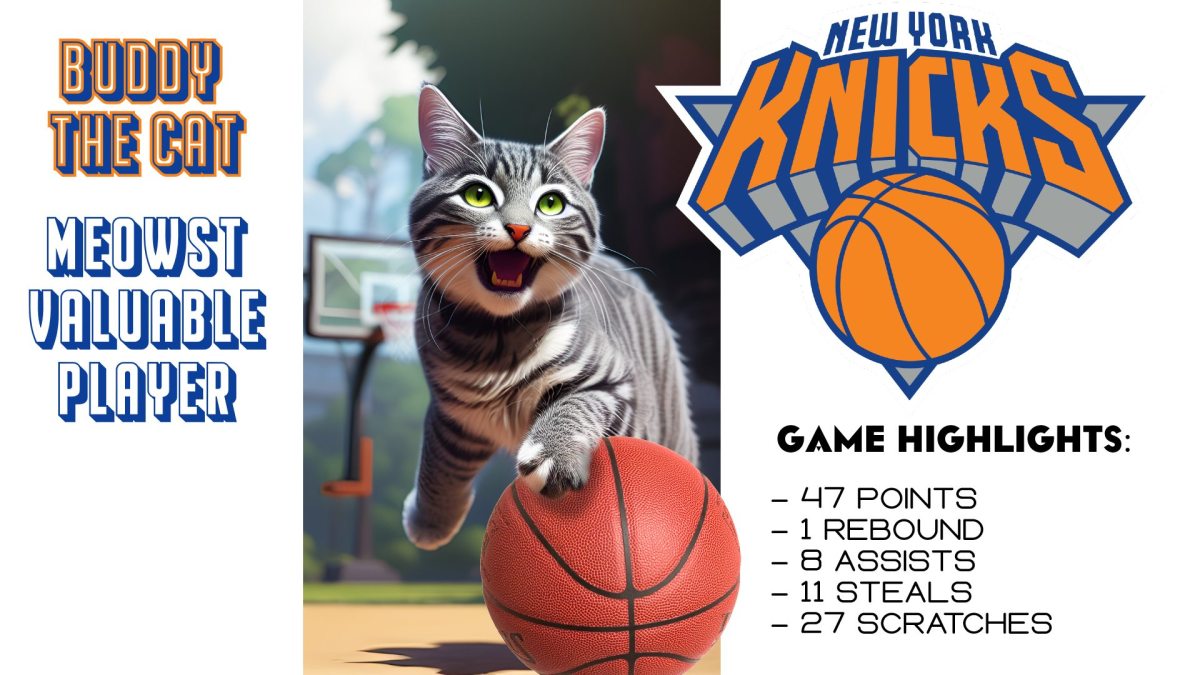
Buddy the Cat tries to sell his human. Meanwhile, UK soccer stars adopt their own new buddy from Qatar.

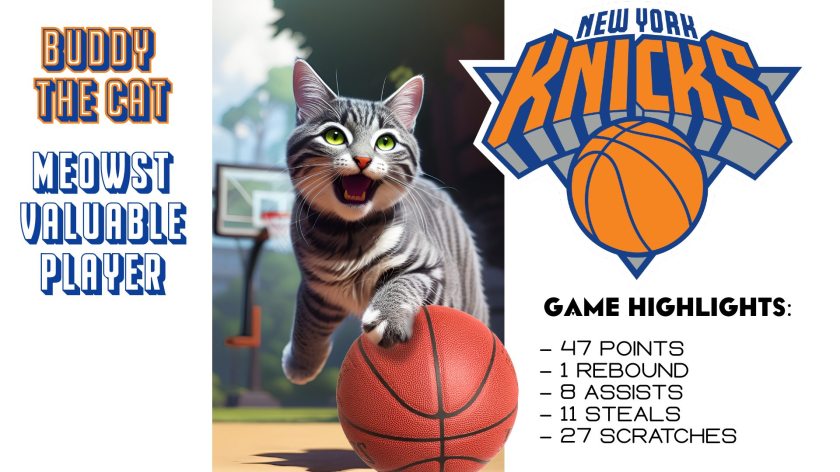
Happy Sunday, dear readers. Buddy’s apparently angry with me about something, because I found a copy of this on the printer:

Human Buddy 4 Sale
Listed under “For sale by owner.”

What could I have done to deserve this? And $16? Isn’t that a little low? It’s insulting! We’re gonna need to have a little chat, Buddy to Buddy.

Should Cats Be Allowed On Airplanes?

CNN’s Jacqueline Swartz has a column about the challenges of traveling when you’re afflicted with severe allergies. Swartz is thoughtful, isn’t resentful of cats and understands it’s on her — for the time being, at least — to prep for flights by taking allergy medication, but she also believes airlines can do more to accommodate people who are allergic to pets.

As a cat guy and someone who dealt with really bad cat and dog allergies in my childhood and teenage years, I can sympathize with Swartz’s plight, and I agree that airlines can do more.

Of course, by “Should cats be allowed on airplanes?” she’s really asking if cats should be allowed in the passenger cabin. Even if a feline’s snug in a carrier, tucked beneath its human’s seat and well-behaved during the flight, a relatively short six-hours from New York to LA can cause all kinds of havoc on the immune systems and sinuses of people who are ultra-sensitive to cat dander.

Cat on passenger flight
Credit: Wikimedia Commons

Putting cats in cargo compartments is not an answer, and neither is banning cats from flights. Sometimes flying with a cat is a necessity, whether you’re moving cross-country or planning to live abroad temporarily. But airlines are notorious for trying to extract every dime from passengers, whether it’s charging thousands for business class or up-selling regular seats as “premium coach” by offering a Louis Vuitton-branded pillow or whatever.

Perhaps some enterprising airline executive could build goodwill with travelers, earning extra business and loyalty along the way with an innovative and friendly way to handle animals. How much space could possibly be required for a quiet, closed-off, climate-controlled closet where six or eight cats in carriers can snooze during a flight? That would solve the allergy problem, make life easier for everyone and probably make traveling easier on cats too.

Dave the Cat has a new home in England

While a thoughtless PR official for Brazil’s national team drew the ire of animal lovers for the way he mishandled a cat during a press conference — an unforced error, since the cat wasn’t bothering anyone — some good is coming out of the World Cup for at least one feline.

Dave the Cat, a friendly stray befriended by England defenders Kyle Walker and John Stones, will be adopted by the players, who both suit up for the Premiere League’s Manchester City during normal club play.

Dave, a cream-colored tabby, won’t be reunited with his new pals right away. He’ll have to endure four months of quarantine first, as per the UK’s rules on bringing animals to the country, and then presumably he’ll be adopted by Walker, Stones or the entire team.

Brazil World Cup cat
An official with Brazil’s national team caught heat for the way he picked up and tossed a cat in Qatar. (Screengrab)


Cat in Qatar
Thankfully, the cat seemed unharmed.

PITB Reviews: ‘The Peripheral’ Is A Refreshingly Original Science Fiction Thriller

Amazon’s newest streaming hit is heady, fast-moving and a lot of fun. There’s nothing else on TV like it.

Amazon’s newest big-budget prestige drama, The Peripheral, imagines a near future when technology has become even more deeply embedded in every day life.

Flynne Fisher (Chloe Grace Moretz) is a young woman who lives in North Carolina’s rural Blue Ridge Mountains, works in a 3D print shop by day and plays virtual reality games by night.

The story is set a decade from now in 2032, and while Flynne’s brother, Burton (Jack Reynor), plays startlingly realistic VR games for fun, Flynne plays them for money. Although Burton is a former United States Marine Corps infantryman and war veteran, his sister is the superior player when it comes to video games, and she’s so good that well-heeled players across the world pay her to carry them through high-difficulty levels.

If that seems fanciful, consider that it already happens in real life: some people fork over big bucks to highly skilled players who can help them win in multiplayer video games like Fortnite, or run them through the most challenging missions in online role playing games to get coveted in-game gear.

Flynne’s side hustle allows her to afford expensive medication for her sickly mother. Apparently in 2032, Democrats and Republicans are still squabbling over how to pass meaningful prescription drug reforms while remaining in the good graces of the corporate behemoths who finance their campaigns. Some things never change.

When a Colombian company called Milagros Coldiron offers Flynne a hefty chunk of change to beta test their newest game — and the incredibly immersive new headset it comes with — Flynne thinks she’s just taking a lucrative but routine job, one that will help pay for her mom’s meds for at least a few weeks.

What she doesn’t know is that her life is going to change drastically the moment she steps into the newest form of virtual reality, revealing things about her world and herself that she never imagined.

The Peripheral
Jack Reynor as Burton Fisher and Charlotte Riley as Aelita West in The Peripheral.

There’s so much more to the story, and in fact we’ve barely scratched the surface, but The Peripheral is the kind of show best appreciated by knowing as little as possible going in.

The ambitious new series is based on a 2014 novel by technoprophet William Gibson of Neuromancer fame. Gibson envisioned the concept of cyberspace in 1981, more than a decade before the first mass market commercial dial-up services were available.

At the time, the idea of exploring almost photorealistic worlds in virtual reality was a radical new idea, and it took more than 35 years for technology to catch up by making it feasible. (We’re still not quite there yet. VR tech has improved by leaps and bounds, and we’re beginning to see the first deeply immersive VR games, but Mark Zuckerberg’s much-hyped version of the metaverse, for example, has fallen flat and been pilloried by press and players alike.)

By choosing to adapt Gibson’s work, Amazon has dipped into the largely untouched world of literary science fiction.

While the science fiction of movies and TV has been treading the same worn ground and returning to the same tired concepts for decades, SF novels are a rich source of astonishingly inventive big ideas, from the existential stories of Liu Cixin (The Three Body Problem) to the galaxy-spanning space opera of the late, great Iain M. Banks, to the gothic horror-tinged, wildly imaginative universe of Revelation Space by Welsh astrophysicist Alastair Reynolds.

Indeed, Netflix is developing a series based on The Three Body Problem, with Game of Thrones showrunners David Benioff and D.B. Weiss taking the helm. Amazon has acquired the rights to Banks’ first Culture novel, and Netflix’s highly-praised anthology series Love, Death + Robots adapted two of Reynolds’ short stories as episodes.

Finally we’ve moved beyond the Alien clones, Star Wars sequels, prequels, spinoffs and crossovers, as well as the unfulfilling JJ Abrams mystery box offerings that have made up the bulk of live action science fiction on the big and small screens.

There are no candy-colored light swords in The Peripheral, nor are there spandex-clad superheroes or franchise installments designed with merchandise sales in mind. Instead, we get a story for adults, one that gives the audience a lot to think about while also holding a mirror up to our own world, as the best science fiction always does.

After all, technology changes but people don’t. Human nature is a constant. What we do with our shiny new toys says a lot about us as a species and civilization.

Although The Peripheral begins with the comparatively low-stakes world of virtual reality, its scope rapidly expands until, by the end of the first episode, it becomes clear the show is asking its audience to grapple with existential questions about humanity and our future.

The Peripheral demands its audience’s full attention as it introduces concepts like the parallel universes of M-theory, nanotechnology and the idea that even if matter can’t be shifted between time and space, information in the form of photons can.

Gibson uses these heady concepts in his narrative sandbox, forcing his characters to consider wild concepts like the possibility that there may be infinite versions of themselves existing in infinite branching realities.

How would you react knowing there’s a version of yourself who chose to study classical literature and move to Athens, or a version who became a software programmer, authored a lucrative app and lives in a Manhattan penthouse? Can you imagine having a different wife or husband, or a different child? (Are there realities in which I am not the loyal and loving servant of Buddy? In that case, who is feeding him snacks, and are they doing it promptly?)

Cherise Nuland
T’Nia Miller radiates malice as Cherise Nuland.

Of course, none of this stuff would matter without interesting characters and a compelling narrative. Moretz and Reynor have the chemistry of a real brother and sister in the way they regularly bicker but ultimately love each other. Eli Goree’s Connor is a man of wonderful paradoxes, and T’Nia Miller steals every scene she’s in as the delightfully malicious Cherise Nuland, an antagonist who loves making her enemies squirm while dispensing witticisms in cut glass RP.

For longtime SF fans, there’s another compelling reason to give the series a shot: Canadian writer-director Vincenzo Natali, best known for his mind-bending 1997 indie film Cube, is an executive producer and directs four of the season’s episodes. Natali is a pro at incorporating heady ideas in ways that enhance his narratives instead of weighing them down.

The first season just concluded, and you can stream all eight episodes on Amazon Prime. Bud and I are already looking forward to The Peripheral’s return.

cube-pic-6
Cube writer-director Vincenzo Natali is behind the lens for half of The Peripheral’s episodes.

Ban On Big Cat Pets Heads To Biden’s Desk

The Big Cat Safety Act will put an end to the era of cub petting mills at roadside zoos and private “ownership” in states like Texas and Florida.

All that awaits is a stroke of President Joe Biden’s pen.

The Big Cat Safety Act was passed by the US Senate this week, clearing its last legislative hurdle. The law would ban the “ownership” of big cats as pets and would end their exploitation by roadside zoo operators, while also outlawing big cat breeding by private parties.

It’s a bipartisan effort that gained steam after years of efforts by animal rights organizations and documentaries like Netflix’s infamous Tiger King, which showed millions of viewers how the majestic felids are kept in cruel conditions and chained to an endless breeding treadmill to provide a constant supply of cubs. Those cubs are taken away from their mothers shortly after birth and used as props in lucrative “selfie with a tiger” offerings at unaccredited roadside zoos.

Private “ownership” of big cats has been a contentious issue and an embarrassment for American animal rights activists, particularly because almost all big cat species are critically endangered. There are more tigers living in backyards in Texas and Florida, for example, than there are living in the wild in the entire world.

Breeding for conservation is a process that involves careful planning by experts at accredited zoos and sanctuaries. Because there are so few big cats left, with some subspecies down to just a few hundred living animals, mates must be carefully chosen to avoid genetic bottlenecks and to ensure healthy and viable breeding populations in the future. As private breeders and roadside zoos breed the animals without regard to subspecies or genetic diversity, they do not contribute to species conservation in any meaningful way and can do harm with indiscriminate matches, conservationists say.

leopard on brown log
Credit: Pexels

While the bill outlaws private ownership, it still allows sanctuaries, zoos and universities to keep big cats in regulated facilities that meet their physical and psychological needs. It also permits programs like the statewide puma project in California, which has been tracking the elusive felines for more than two decades and involves occasional sedation and temporary custody so the team can provide veterinary care.

“An extraordinarily cruel era for big cats in the U.S. finally comes to an end with the passage of the Big Cat Public Safety Act,” said Kitty Block, president of the Humane Society of the United States. “We’ve been fighting for this moment for years because so many so-called ‘Tiger Kings’ have been breeding tigers and other big cats to use them for profit. And once the cubs grow too large for cub-petting or selfies, these poor animals get dumped at roadside zoos or passed into the pet trade, which is not only a terrible wrong for the animals, but also a threat to public safety. Now that the Big Cat Public Safety Act will become law, it’s the beginning of the end of the big cat crisis in the U.S.”

The Big Cat Safety Act cleared congress in mid summer, and its passage in the senate means it will get to Biden’s desk with several weeks to go in the current legislative session. Biden is expected to sign it without delay.

“For me, this fight for the big cats was never personal,” said Carole Baskin of Florida sanctuary Big Cat Rescue. “This was always about developing a national policy to shut down the trade in these animals as props in commercial cub handling operations and as pets in people’s backyards and basements.”

The new law does nothing for big cats currently in captivity, unfortunately. Current “owners” will be grandfathered in, although they won’t be able to replace their “pets” legally, as breeding and purchasing the animals will be illegal. The last “pet” members of the panthera genus in the US will die out within the next two or three decades, assuming no major outliers in lifespan.

Puma
As felines who can purr but not roar, mountain lions are not technically “big cats,” but they’ll also be protected under the new law. Credit: Pixabay/Pexels

The Vet Thought This Stray Had No Chance, Now He’s Stealing Hearts At The Shelter

Gulliver was hit by a car and left for dead, but he never stopped clinging to life.

Gulliver was in a seriously bad way when a Good Samaritan found him on Oct. 27, on the outskirts of a “well cared-for cat colony” in New Jersey.

The little tuxedo cat had been hit by a car and left to die with a fractured pelvis, femur and tail. A veterinarian who examined him didn’t give him much of a chance to live, but his rescuer was familiar with Tabby’s Place in Ringoes, NJ, and knew if anyone would go to extraordinary lengths to save the little guy’s life, the staff there would.

Tabby’s Place took Gulliver in and their emergency veterinarians got to work on repairing his shattered body. It was touch and go, but Gulliver had a glorious will to live that saw him through the surgery and emerge on the other side with a ravenous appetite.

When the staff at Tabby’s Place saw him tuck into a bowl and begin “eating like a champ,” they knew Gulliver was probably going to make it.

Famished from his ordeal and in desperate need of nutrients to help his body heal,  he displayed “the best appetite I have ever seen in twenty years of feline medicine” said “Dr. Fantastic,” the collective name Tabby’s Place staff use for the skilled veterinary surgeons who put the most catastrophically injured felines back together again.

And then there was a second surprise — despite all he’d been through, despite the unimaginable pain of getting flattened by 3,000 pounds of aluminum, steel, glass and rubber and left to suffer in a broken heap, and despite pain signals hammering their way through the fog of painkillers, Gulliver turned out to be an “extremely affectionate” kitty.

“He is so affectionate and snuggly,” said Bree, a sanctuary associate at Tabby’s Place who has been caring for the little survivor. “He leans his whole body into you and makes muffins. He has personally reminded me that there is good in this world, and it is worth fighting for.”

Three weeks after his surgery, Gulliver summoned the strength to stand on his own for the first time since he was hit. He took his first few uncertain steps, Bree said, to get close enough to her so she could pet him while she cleaned his crate. His tail was so badly damaged that it had to be amputated and he’s going to require care — including manually expressing his bladder — for the near future, but the staff at Tabby’s Place will find a forever home for him.

Despite the trauma he endured, Gulliver “should enjoy a long, healthy life like any other cat,” said Angela Hartley, the sanctuary’s development directory. “It would take a special adopter to learn how to express his bladder, but as we learn continually, there are many, many special adopters out there.”

It’s not clear yet whether Gulliver will regain the ability to use the litter box on his own, but Bree said she’s “hopeful that this will not be permanent.”

Because a sickly cat from Gulliver’s colony had found his way to Tabby’s Place earlier, the colony managers knew of the shelter and Gulliver found himself “in the care of a person who knew his life was worth saving,” Bree said.

“She was so right. Gulliver’s life was saved because there are good people in the world. I feel like his loving and gentle personality is a reflection of that.”

All images courtesy of Tabby’s Place. To fill out an online application or browse the adoptable cats of Tabby’s Place, click here.

Gulliver
Now that he’s a month removed from his brush with death, Gulliver’s much healthier and even has a regal look about him. Credit: Tabby’s Place