Yes, That’s A Mountain Lion In Ring Cam Footage From NY! No, You’re Not In Danger

It’s the first time a mountain lion has been spotted in New York since 2011. Authorities aren’t sure if the cat is an escaped — and illegal — pet, or if it made an epic journey from the west coast.

For the first time in 14 years, there’s a puma on the loose in New York.

The wild cat was spotted on a Rochester woman’s Ring doorbell camera padding along the sidewalk in front of her home at about 4 am on Wednesday morning.

A representative from the state Department of Environmental Conservation cautiously said the agency is working on confirming the species of cat in the footage.

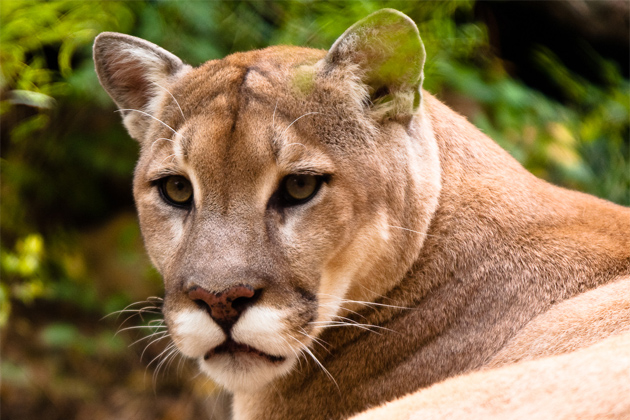
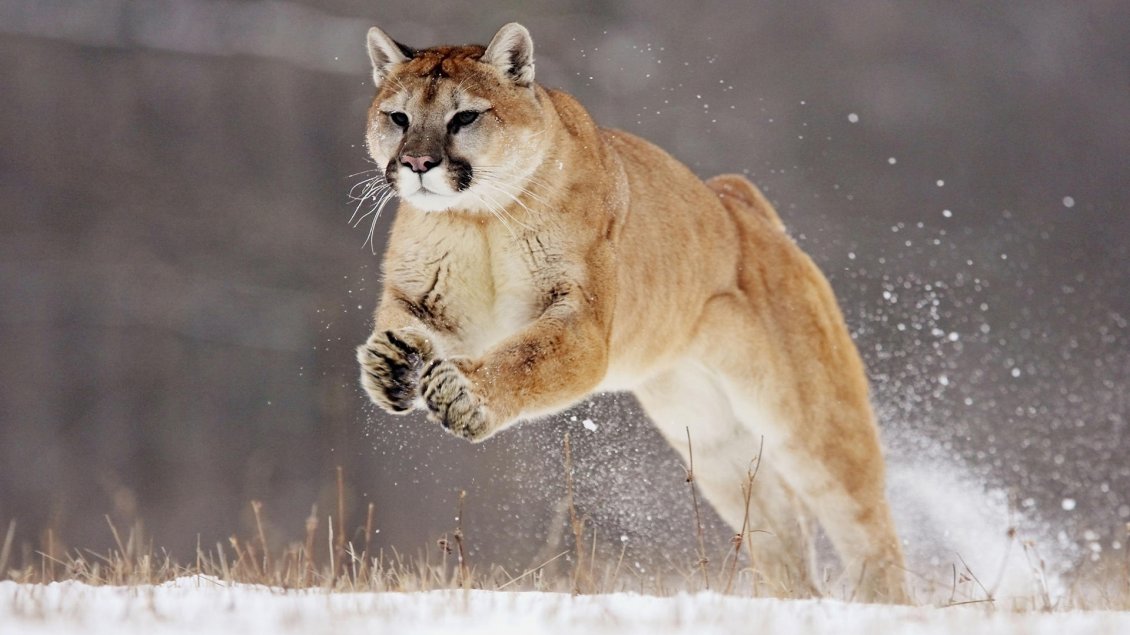
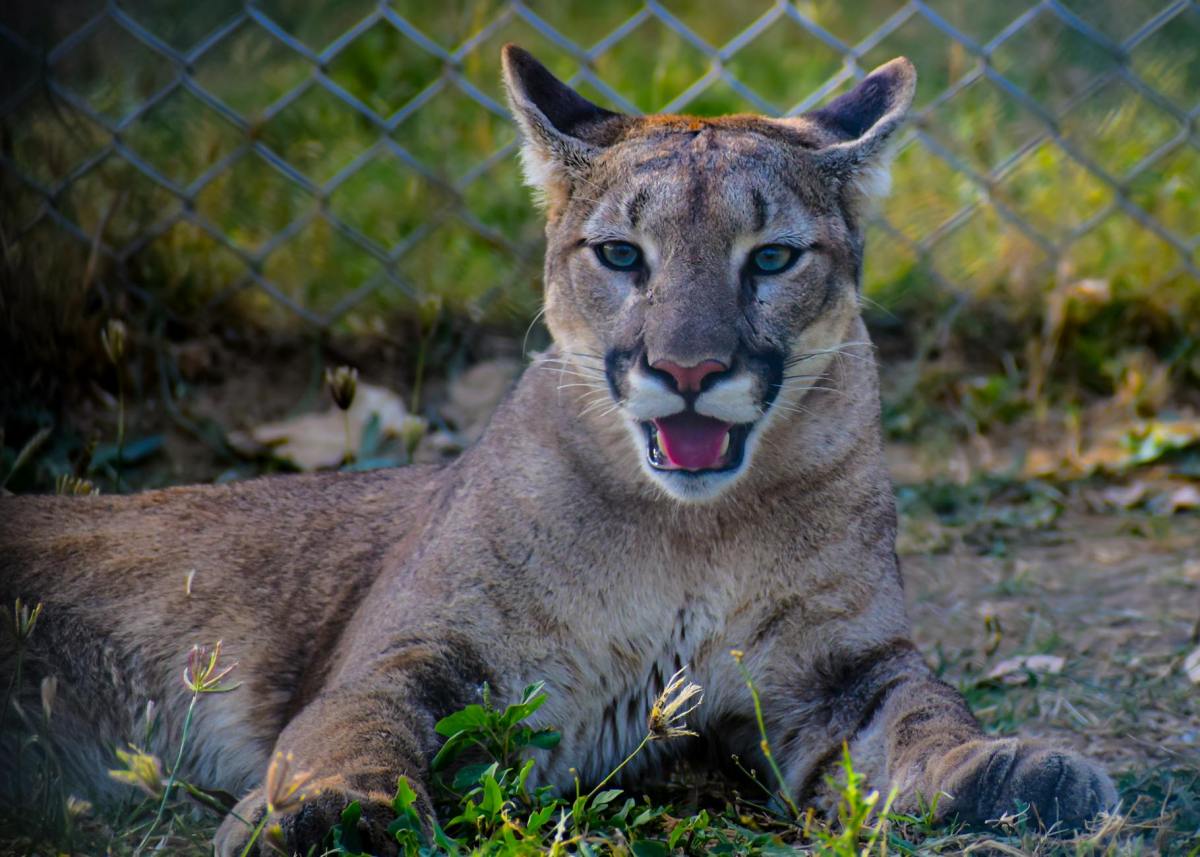
But the feline’s size, gait and tail are dead giveaways, despite the dark footage and fleeting glimpse: it’s a puma.

In the brief clip, the wild feline walks past a tree, giving the DEC an important context clue. Michael Palermo, a wildlife manager with the department, said his team measured the tree, allowing them to closely estimate the animal’s size by comparing the footage to their measurements.

“If, in fact, it is some large cat, we would want to question, how did it get here? It’s not impossible for a wild cougar to travel to New York; it’s happened before,” Palermo said. “Was it a captive one that may have been legal as a licensed facility, and if so, did it escape? We still need to do some work to verify anything like that.”

While pumas were once native to New York and thrived in the forested mountains of regions like the Catskills (“cat creek” in Dutch), the last verified sighting in New York was in 2011. That cougar crossed through the Empire State after an epic journey from the west coast, a stronghold for the species.

Some people who posted to a Rochester community group on Facebook are already freaking out, and pumas are widely misunderstood, so it’s important to note the facts:

  • Pumas are not African lions, are not closely related to them and do not behave like them
  • They’re not aggressive toward people. In fact, they try to stay away from humans and will go out of their way to avoid confrontation
  • The exceptions are when people threaten a puma’s cubs or corner the animal, giving it no opportunity to escape
  • Americans are 150 times more likely to be struck by lightning than killed by a puma. There are only 27 reported cases of people killed by pumas in more than a century. By contrast, an estimated 4,300 to 10,000 Americans have been killed by dogs in that same time span. (Higher estimates include people who did not die immediately from dog bites, and people who died of infections or complications from bites.)
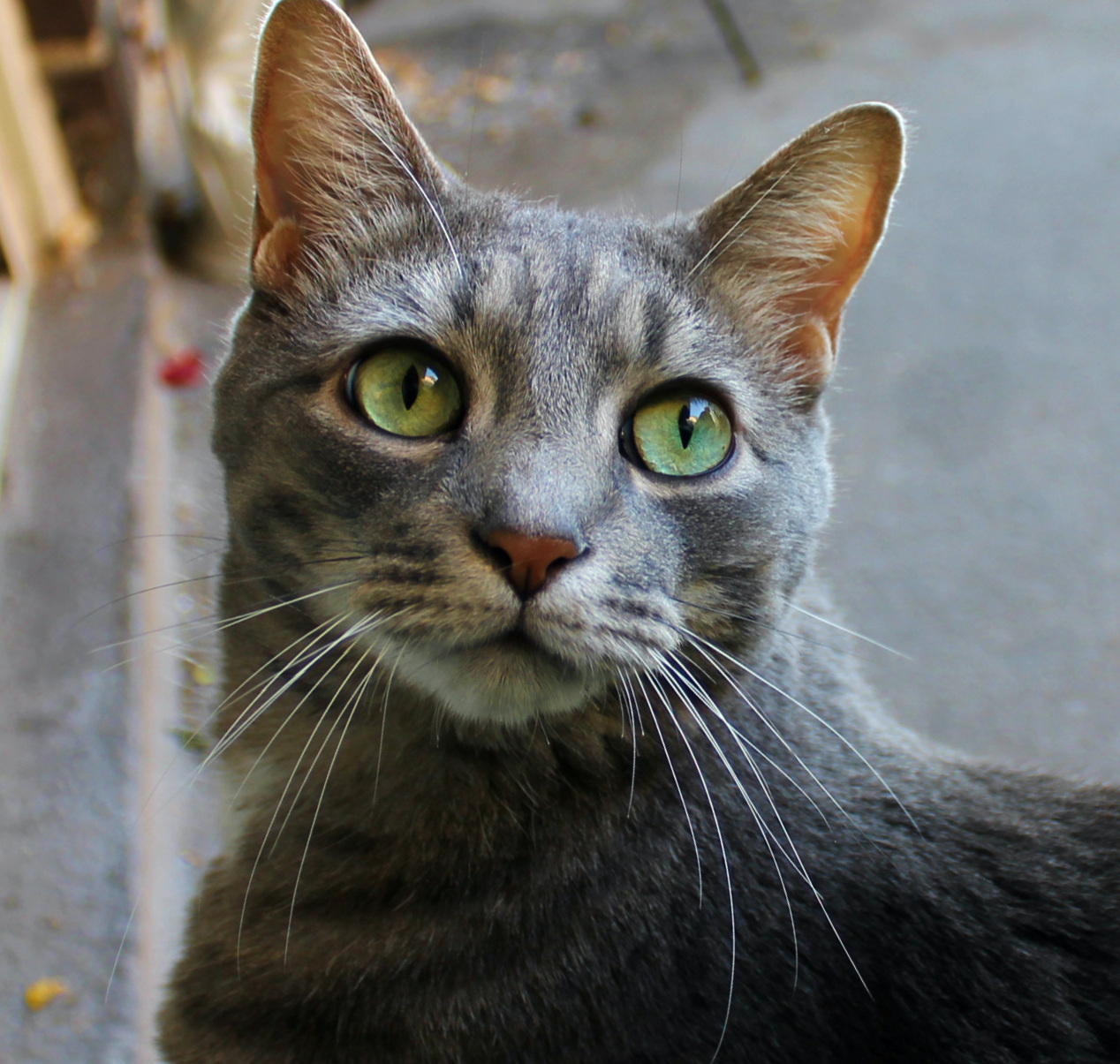
  • While some people and media reports erroneously call pumas “big cats,” they are not members of the panthera genus. They are felines more closely related to domestic cats and small wildcats. Accordingly, pumas can purr and meow, but they cannot roar

Pumas are also known as mountain lions, cougars, panthers, painters, screamers, catamounts, pangui, onca parda, cuguacuarana, katalgar, chimbica, shunta-haska, fire cats, California lions, ghost cats, and red tigers, among many other names.

In fact, the species has more names than any other animal. That’s because it’s adaptable with a historically wide and varied range. There are some 40 names for pumas in English and more than 80 in Spanish, Portuguese and the languages of indigenous Native American tribes.

The species is officially known as puma concolor, or “puma of one color” thanks to its typically biege fur that, unlike tigers, jaguars, leopards and even house cats, does not have stripes, spots or rosettes.

While it’s extremely unlikely the mystery cougar would pose a threat to people, Rochester police — who have fielded several reports of sightings in recent days — advise locals to keep their pets indoors and to exercise caution while walking their dogs.

Update: The DEC has officially confirmed the cat is a puma, although it was obvious from the footage.

In the meantime, a Rochester man says he saw the wild cat — and people running away from it — on Wednesday night.

Although that sighting has not been substantiated by authorities, it does illustrate the need to educate the public about these animals.

“You know, a mountain lion, it be ‘rawr.’ They be crawling and… serious,” Curtis Jones told WHAM, an ABC affiliate in Rochester.

“I am going to keep this bat right here, man, just in case,” he told a TV reporter. “I am going to protect us, I ain’t going to let nothing happen to us, nothing. OK?”

Let’s hope common sense somehow finds its way into the Facebook algorithm amid all the misinformation as the locals discuss the sightings online.

If you’re from the area, we beg you: please do not attack, shoot or chase after the puma with a baseball bat. The animal does not consider you food, is not a danger to you, and is probably scared and hungry.

That deserves special emphasis if, as the DEC’s staff have said, the puma is more likely an escaped captive than a long-wandering traveler from the western US.

Jones said he saw the puma “slithering” and hear it “rawr,” but it’s worth noting, again, that pumas are members of the genus felinae, meaning they’re genetically and behaviorally much closer to house cats and can meow and purr, but cannot roar. Despite their size, mountain lions are not true “big cats.”

As for Jones, we hope him and his neighbors give the cat a wide berth and let the authorities safely capture it, have a veterinarian evaluate, and figure out where it belongs.

“I don’t play with lions, I don’t play with tigers, bears, nothing in the wild, I don’t play with those, I promise you,” Jones told the station. “I don’t even do rollercoasters. I’m good.”
Amazing Cats: The Sunda Clouded Leopard

This singular species of wildcat exists only on two islands and has evolved to live a semi-arboreal existence deep in the jungle.

While tigers, lions and domestic cats are the stars of the felid world and command the lion’s share (pun intended) of the attention, even from cat lovers, there are obscure species living in far-off locations where they’re rarely glimpsed by human eyes.

There’s the fishing cat, the black-footed cat and the sand cat, and then there are species that are obscure even among the obscure. The Sunda clouded leopard fits into that category, inasmuch as the unique felid can fit into any category.

Like orangutans, the Sunda clouded leopard can be found in only two places in the world: the Indonesian islands of Borneo and Sumatra. They’re faced with the same existential threat that has pushed orangutans dangerously close to extinction, which is the relentless destruction of old-growth jungle to clear land for more palm oil plantations.

Sunda clouded leopard
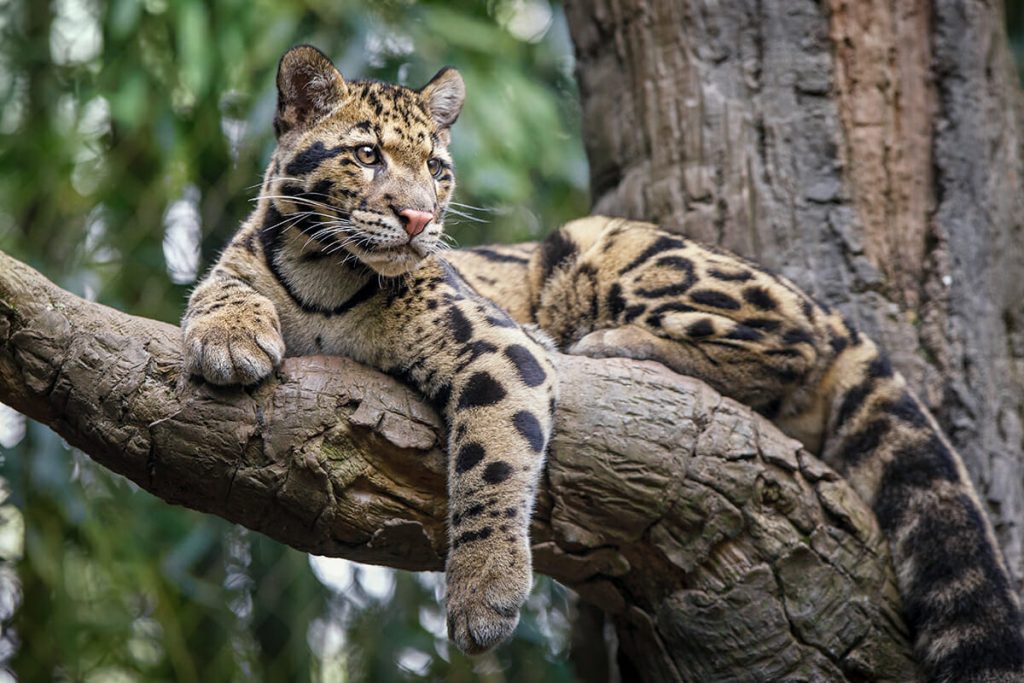
The species has an incredibly long tail that can match or exceed the length of its body. The large tail is crucial in a jungle environment, where it acts as a counterbalance high above the ground. Credit: Panthera

Palm oil is coveted by multinational corporations in the food and cosmetics businesses, and it’s in everything from chocolate and instant noodles to lipstick and margarine, according to the World Wildlife Fund.

The problem with razing old growth jungle and forest is that it doesn’t just grow back. They’re extremely delicate ecosystems that have arrived at a natural balance over thousands of years, with every species of animal and plant contributing something vital to the vibrant tapestry of life the jungles host and support. You can’t just plant trees and usher animals to a new home. It would take hundreds of years for those new jungles to even superficially resemble the lifegiving old growth jungle.

There are heartbreaking images of shocked orangutans sitting in the ruins of their former homes, with nothing but the stumps of trees and dozer-trodden vegetation as far as the eye can see.

Those are the lucky ones. The loggers who work for massive multinational corporations aren’t bound by rules or ethics, and they won’t wait for animals to clear out before they destroy.  They often shoot orangutans on sight regardless of whether the animals are carrying young.

Baby boot camp
Roux, a baby orangutan in a “boot camp” for orphans, learns how to walk. Credit: Phys.org

That’s the primary reason why Borneo and Sumatra are now home to entire academies for orangutan orphans, who spend at least eight years learning how to fend for themselves with the help of specialists who teach lessons that would normally be taught by the orphan orangutans’ mothers. They include the very basics, like how to move and climb through the jungle, as well as crucial information such as which berries to avoid while foraging.

While there’s no “academy” for clouded leopards and the felids are more adept at avoiding human wrecking crews, they’ve suffered the same fate as orangutans when it comes to dwindling jungles.

This is the situation Sunda clouded leopards find themselves in, so when a trail camera recently captured footage of a mother and her two cubs, conservationists were thrilled.

The footage comes from camera traps belonging to the Orangutan Foundation, and it’s the first time anyone’s managed to obtain video of the Bornean clouded leopards with cubs in tow. The brief video shows the little family bounding through the jungle. They quickly move past the camera, but not before one of the cubs stops to look right at it with typical kitten curiosity.

Sunda clouded leopards are extraordinary cats. Size-wise, they are firmly in the “medium size wildcat” category, with males weighing about 50 pounds. Despite that, they are members of pantherinae, the genus of big cats, having diverged from a common ancestor shared with tigers, leopards, lions and jaguars.

As further proof of their in-between status, Sunda clouded leopards can neither purr nor roar. Typically, each species of felid can do one or the other. Even the species’ scientific nomenclature, neofelis nebulosa, references its intermediate status. (If you encounter alternate taxonomy for them, it’s because the clouded leopards of Borneo and Sumatra are considered distinct subspecies.)

“Due to a different bone structure in their neck, the clouded leopard cannot roar like the larger cats, but also cannot purr because it lacks the fully ossified hyoid bone that allows small cats this ability,” the Smithsonian National Zoo’s keepers explain.

Sunda clouded leopards have several unique adaptations that allow them to thrive in arboreal environments. Their massive tails act as crucial counterweights, allowing them to traverse branches high above the ground without falling. Their paws and paw pads are specialized for gripping tree branches, and their ankles can articulate in ways other felid ankles cannot, allowing the jungle-dwelling wildcats to descend from trees head-first.

Domestic cats infamously lack this adaptation, which is why firefighters are also part-time cat rescuers, coaxing the terrified little ones down from trees, utility poles and rooftops.

sundacloudedleopard
Credit: Panthera

The clouded leopards of Borneo and Sumatra are also undeniably cute. People have noticed, which is why one of Google’s auto-complete suggestions for Sunda clouded leopard suggests the word “pet” as an addition. It’s okay to fantasize about having a clouded leopard buddy, but in addition to the fact that they are endangered, they’re also wild animals.

Consider the fact that across the estimated 200,000 years of our species’ existence, homo sapiens have domesticated precisely one felid species, and even that’s not entirely accurate. Felis catus played just as much of a role — and arguably more — than humans did in their own domestication. As predators and obligate carnivores, they are unique among domestic animals, and it took and equally unique set of circumstances to bring cat and man together.

Instead of lamenting the fact that Sunda clouded leopards can’t be pets, we can admire them in the best way possible, from a distance, while helping ensure the survival of this extraordinary, distinctive species by donating to groups like Panthera, the WWF and Global Conservation.

Previously:

Amazing Cats: The Mysterious Marbled Cat
Amazing Cats: The Rusty-Spotted Cat
Amazing Cats: ‘He Who Kills With One Bound’
Amazing Cats: The Puma

Buddy Scores Meowscular Victory Over Vakuum, That Infernal Machine

Vakuum, the terror of many a cat, was put on notice by Buddy’s display of astonishing bravery. If AI and robots ever try to take over the Earth, Buddy is a natural choice to lead the combined armies of cats and men to victory over the machines.

NEW YORK — Buddy the Cat was particularly pleased with himself on Thursday after he successfully scared off one of his mortal enemies by using his powerful roar.

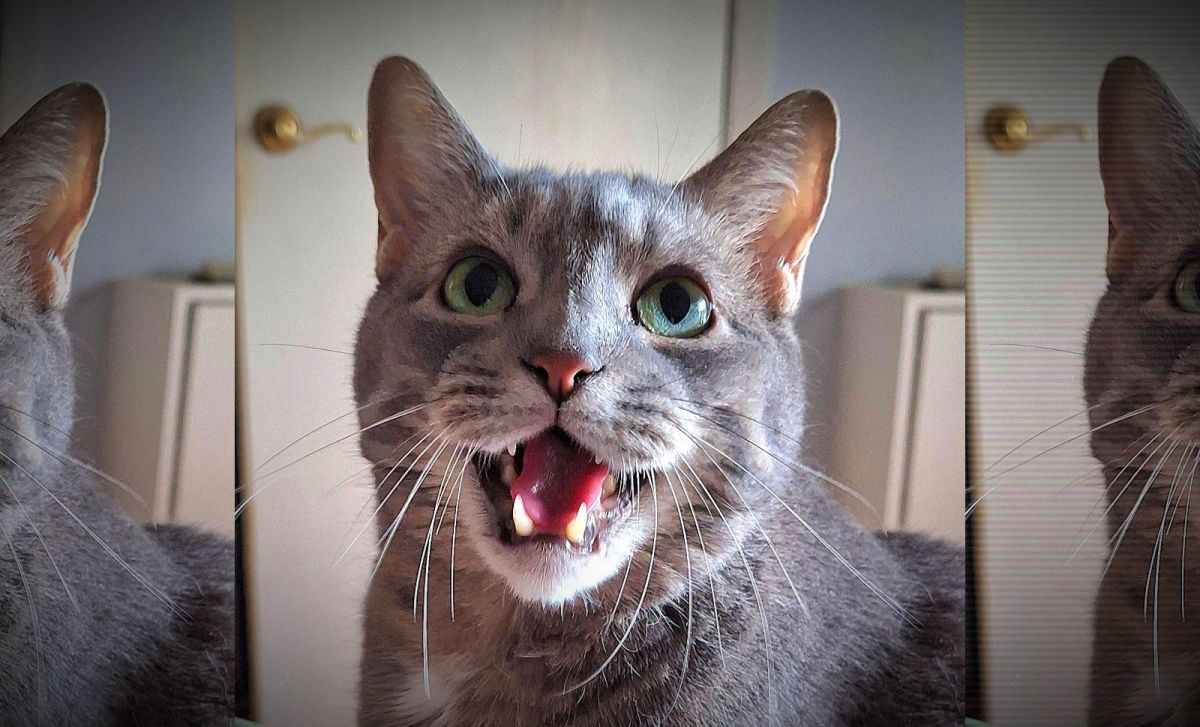
The gray tabby cat had just finished his second Food O’Clock meal of the day and was settling down for 5th Nap when the infernal machine known as Vakuum the Disturberizer encroached upon the Buddesian domicile and began its high-pitched shriek.

While previously he’d hiss at the accursed machine and retreat to the safety of the bedroom, Buddy decided to put his paw down, sources said. It was time to make a stand.

buddyvsvacuum
The heroic sequence of events that led to Vakuum beating a hasty retreat.

Rising up to his full height of almost a foot, Buddy let loose a mighty, blood-curdling roar — and was shocked when Vakuum immediately stopped making its pestiferous racket.

“That machine took one look at me and decided it didn’t want a piece of this,” Buddy said, his primordial pouch jiggling as he flexed. “It helps to be a meowscular and intimidating cat, you know. We jaguars are quite ferocious when we need to be.”

A spokescat for the Yguara Nation of the Americas confirmed that while Buddy is an honorary jaguar and was bestowed the name Kinich Bajo, meaning “Tiny Sun-Eyed One,” he is not in fact an actual jaguar.

Sir David Cattenborough’s Newest Documentary Reveals The Elusive Silver-Furred Buddy

The naturalist is excited to unveil his most striking documentary yet.

NEW YORK — All those hours trudging through the dense undergrowth of New York living rooms, hoping for a glance of an elusive feline, have finally paid off.

Speaking to reporters about his newest nature special, Sir David Cattenborough said he and his crew spent more than 200 hours in the natural habitat of the silver-furred Buddy.

Also known as the Buddinese tiger, the silver-furred Buddy is “native to the living rooms of New York” and, with his meowscular physique, “is the apex predator of his environment.”

“What a fascinating animal!” Cattenborough exclaimed.

The famous naturalist, conservationist and documentary narrator accompanied a camera crew into the thick jungles amid couches, pillows and carpets, where they observed the silver-furred Buddy at a safe distance as the fierce feline went about sleeping, eating and lounging.

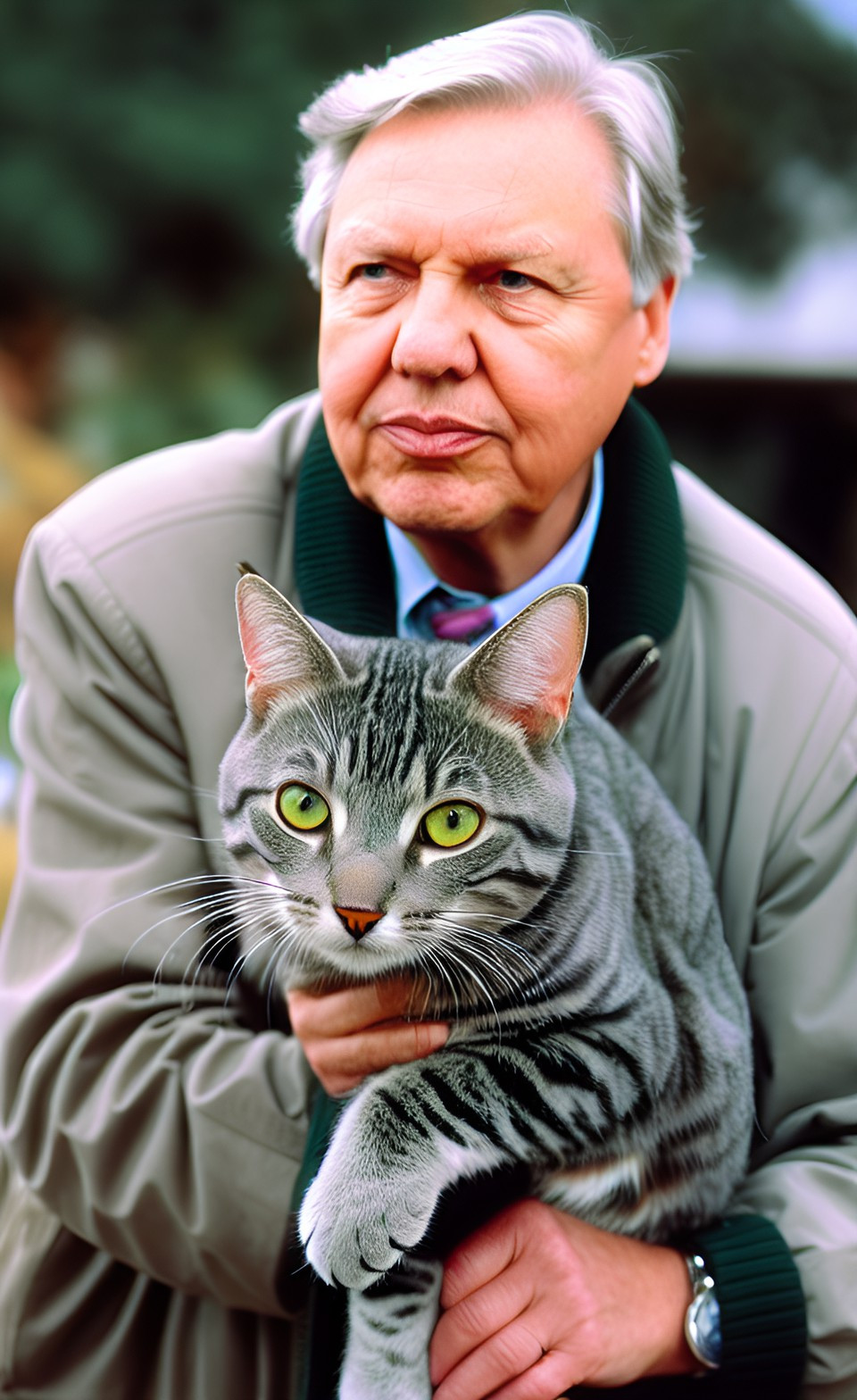
Cattenborough and Buddy
Sir David Cattenborough with Buddy the Cat.

Speaking excitedly in his familiar whimsical cadence, Cattenborough described the documentary crew’s luck in catching the Buddy on a hunt, when he ruthlessly brought down a red laser dot.

“People ask me, ‘Sir David, what makes the Buddy any different from other tigers and lions? Isn’t it basically the same animal?’ While they’re all famously fierce felids who strike fear into the hearts of other creatures, there are differences as well,” Cattenborough explained. “Thanks to the hard work of our dedicated crew, we’re able to bring our audience along as we take the closest look yet at this most elusive and fascinating beast.”

The new documentary, “Buddy: The Perfect Predator,” will be available to stream exclusively on Pain In The Bud, and was made possible by a grant from the Buddinese Foundation for Greater Buddesian Understanding, with additional financial support from the Coalition for Meowscular and Ripped Cats. Look for it this week on PITB!

Cattenborough and Bud
Sir David Cattenborough was able to earn the trust of a silver-furred Buddy.

Amazing Cats: The Puma

The puma is a majestic feline native to the Americas.

What would domestic cats be like if they were the same size as big cats?

It’s a question that seems to pop up often on cat-centric and Q&A sites and the answer is complex, but it turns out nature has given us a pretty good idea with the puma.

Also known as the cougar, mountain lion and the more generic panther (which can be a name for jaguars and leopards as well), the puma is big, but genetically it’s related to small cats and it shares some physical features with our familiar domestic kitties.

It’s capable of the intimidating wild cat scream often heard from the largest felines, but the puma can’t roar like big cats. Instead, it purrs like its smaller relatives, and it can even meow with the best of them!

Visually, the puma is a striking animal — it’s muscular with a shiny tan coat and facial features reminiscent of both panthera and felis. While its ears more closely resemble those of small cats (felis), the puma’s eyes have circular irises like its larger cousins.

The Majestic Puma
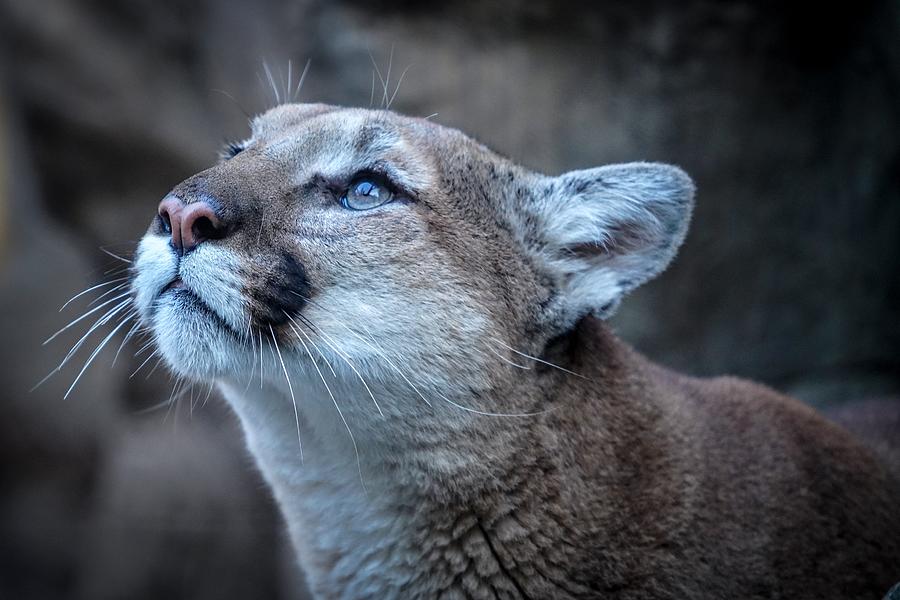
Pumas, also known as mountain lions and cougars, are the widest-ranging cats in the world.

It’s also remarkably adaptive. The puma boasts the largest range of any cat, and is found all throughout South and North America. Here in good ol’ ‘Merica, the cat ranges from the coastal mountains of California to the forests of New England, and a subspecies — the famous Florida Panther — occupies swampland and dense jungle habitats.

After the jaguar, it’s the second-largest cat in the Western Hemisphere.

The puma is a wild animal, meaning its place is out in the world fending for itself, protecting its territory, hunting, mating, grooming and sleeping a lot, like all cats do. Pumas are emphatically not pets.

Yet pumas have a disposition closer to house cats than big cats, meaning they’re not hostile to humans by default, and much like feral cats, they’ll go out of their way to avoid humans.

Again — and it cannot be emphasized enough — pumas are wild animals who belong in the wild, but there have been rare cases where the big-little cats have lived with humans when circumstances make it impossible to return them to their natural habitat.

In some cases it’s because the puma is maimed and can no longer hunt for itself, while others remain under human care because they were born into zoos or circuses and literally do not know how to live like wild cats. Those animals are better off in sanctuaries than left to fend for themselves, which they’re unable to do, but should only be cared for by professionals.

Puma leaping
While they aren’t hostile to humans by default, pumas can tip the scales at 220 pounds and are capable of rendering serious damage.

While pumas don’t have any interest in hunting or harming humans, that doesn’t mean they’re not dangerous. Males can tip the scales at up to 220 pounds, while females can weigh as much as 140.

That’s a LOT of cat: Most of us know the kind of damage 10-pound domestic felines are capable of rendering, especially with sharp claws and teeth that can shred delicate human skin. A 220-pound puma, while not as lethal as a tiger pushing 600-plus pounds, can fatally injure a human being.

Thankfully, these animals are famously elusive and confrontations with humans are exceedingly rare.

buddy_september2019_alt
That’s 10 pounds of pure muscle to you, mister! Everyone knows Buddy is ripped!