So far there are no cases of cats infecting humans, but a new study published Tuesday warns the virus easily mutates in infected felines.
Health officials have identified at least five cases of domestic cats infected with H5 bird flu in California, and they’re warning of multiple vectors of transmission now that both outdoor and indoor cats have been infected.
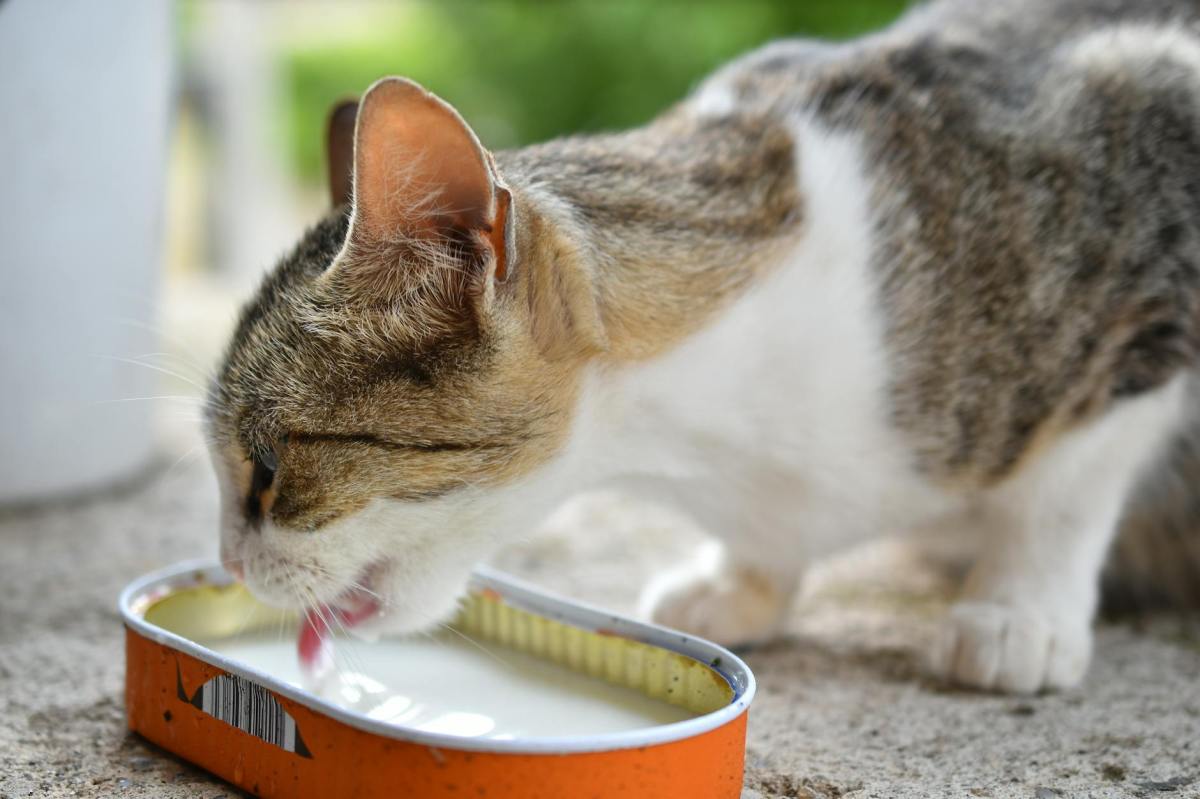
Two cats were infected after drinking raw milk from a dairy farm in Fresno, California, according to the Los Angeles Department of Public Health. That’s also how a dozen barn cats died in April after drinking raw milk from infected cows on a Texas dairy farm, the CDC said.
But three other cats who tested positive for bird flu were indoor-only, lived in the same home, and did not consume raw milk, authorities said. They’re looking into the possibility that the felines were infected through raw meat or by hunting mice.
So now it’s not only confirmed that cats are vulnerable to highly pathogenic avian influenza, or HPAI H5N1, but that they can be infected in different ways.
To be clear, it’s not a cause for panic and it doesn’t mean people should isolate from their cats, but it does mean we should be smart and considerate when it comes to protecting our pets and reducing the possibility that they can be infected.
Because millions of felines live with humans, the fear is that they can pass the virus onto us. So far there have been no confirmed cases, but a study published on Tuesday confirmed that the virus can easily mutate in cats. That means the more domestic cats are infected, the greater chance the virus mutates in a way that allows it to “bridge” to humans.
At least two people — one in Wisconsin and one in Louisiana — have tested positive for the virus and were hospitalized this week. One worked on a farm and the other may have consumed raw milk. In the meantime, health officials are monitoring the people whose three cats were infected, and they’re urging people to take precautions.
“To avoid the spread of disease, including H5 bird flu, we strongly encourage residents and their pets to avoid raw dairy and undercooked meat products, limit contact with sick or dead animals, report sick or dead birds, and keep pets or poultry away from wild animals and birds,” said Dr. Barbara Ferrer, director of the Los Angeles County Department of Public Health.
Some observers believe the drone sightings are merely the first stage in an all-out feline takeover of the US. So far, cats have remained mum on their motivations, preferring instead to sow panic among Americans.
WASHINGTON –The caller was breathing heavily and speaking in rapid-fire sentences as if he had only moments to get the words out over the air.
“I’m telling you, Art, it’s the cats — the cats are piloting these drones!” the caller told Coast to Coast AM radio host Art Bell shortly after 1 am ET on Friday.
“Hold on, hold on,” Bell said theatrically. “You’re saying this has nothing to do with aliens or the government?”
The caller sighed.
“The cats may very well be in league with aliens, but I’m telling you, felines are behind…oh God! They’re here!”
The radio broadcast crackled with distorted hissing and yowling, punctuated by the caller’s pleas for mercy.
“Caller? West of the Rockies, are you there?”
The caller screamed a final time and the line went dead.
“Wow,” Bell told his audience of several million overnight listeners. “There you have it, folks. You be the judge, but that sounded like the real deal to me. Cats are piloting the mysterious drones!”
For weeks, Americans have been asking for answers about swarms of suspicious drones operating above homes, businesses, military bases and government buildings at night.
After rampant speculation that the drones could belong to rogue states, or could be part of some secret government flight test, the FBI confirmed Friday that felines are behind the frequent sightings.
A drone flies above a farm and ranch as the sun fades. Drones have been spotted circling chicken and turkey coops, as well as fish markets.
Biden administration officials confirmed to several media outlets that intelligence supported the theory that cats — not Iranians, Russians or some secret Pentagon operation — are operating the drone swarms that have been lighting up the night sky in states like New Jersey and Maryland for several weeks, befuddling local and state officials.
“At first we thought the idea was absurd,” said a high-ranking official, who spoke on condition of anonymity. “Then we received reports of drone swarms circling several meat-packing plants, a Chewy distribution center in Trenton, and two PetSmarts in northern New Jersey.”
So far, the felines’ motivation remains shrouded in mystery, but experts on the small, furry animals ventured guesses on what may have motivated their sudden interest in aviation and airspace.
“No one’s claimed responsibility, so we’re left to speculate,” said Norah Grayer, a feline behaviorist with NYU’s Gummitch School of Veterinary Science. “But it may be that felines, as a whole, have decided the meow is insufficient for getting their demands across. Humans have become adept at tuning out those vocalizations, so this may be the next step in an attention arms race, so to speak.”
Noted cat expert Jefferson Nebula offered a different explanation.
“Cats are notoriously subject to FOMO, which is one reason why they can’t abide closed doors,” he said. “If someone managed to convince them that we humans were holding out on them, and there are entire worlds of yums we keep for ourselves, well, that would spark the wrath of these otherwise friendly little guys.”
Felines have mastered control over aerial drones despite their lack of thumbs.
For his part, Bell consulted with Michio Kaku, the physicist and science communicator who has been a regular presence on Coast to Coast.
“We physicists have been saying for decades that cats are much more intelligent than we give them credit for,” Kaku said. “This could be retribution for the Schroedinger’s cat thought experiment, or felids may be looking to surpass humanity’s understanding of 11-dimensional hyperspace.”
“Professor, we’ve spoken quite a bit about the Kardashev scale [of civilization progress] in the past,” Bell said. “If we separated human and feline societies, where would we each fall on the scale? Humans are about a zero point seven, are we not?”
“That’s right,” Kaku said. “We physicists believe humanity is on the cusp of a Type I civilization, with things like the internet as a Type I telecommunications system and fusion power on the horizon. However, if you break it down and cats were separated into their own civilization, cats could plausibly already be a Type I civilization.”
“They’re ahead of us?”
“That’s right,” Kaku said. “We physicists believe cats can tap directly into primordial energies and have mastered quantum teleportation. In Star Trek, the Federation is a Type II civilization, and the Caitians — a species of alien cats — are part of the Federation. Yet it’s widely understood that the only reason the Caitians haven’t conquered entire swaths of the galaxy, like the Borg and the Klingons, is because of their strict adherence to their napping schedule and their inherent laziness. These drone swarms may be a signal that real-life cats are fed up enough to disturb their napping schedules, in which case we should all be terrified.”
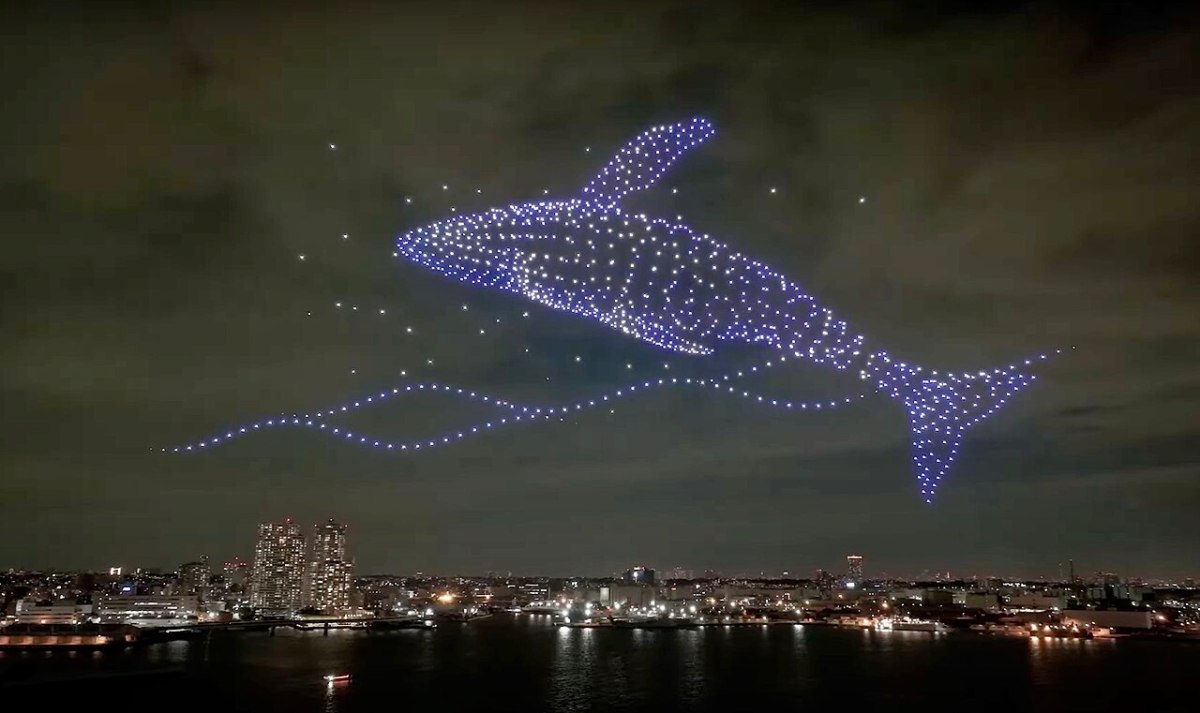
Header image of drone light show credit Wikimedia Commons
More Americans say they can’t afford to keep their cats because of inflation, leading to an increase in surrendered and dumped cats in some places.
More than 110 years ago, American geneticist Clarence Cook Little developed a theory explaining why some cats have orange coloring and some don’t.
Now Little has been proven correct thanks to the work of separate teams in Japan and the US, which discovered the mechanism that leads to orange coloring, including fully ginger felines as well as calicos and tortoiseshells.
The explanation may be a bit too heavy on genetics for some readers, but essentially the researchers found the specific gene that leads to the growth or orange fur. They’ve known about the gene for a long time, but didn’t realize the totality of its function. Its official name is ARHGAP36, but for the sake of simplicity, scientists are calling it “the orange gene.”
“The orange gene has a known role in hair follicle development, but scientists didn’t previously know it is also involved in pigment production,” a team of geneticists and biotechnologists wrote in The Conversation, a science publication. “This means that a new pathway for pigment production has been discovered, opening the way for exciting and important research into a basic biological process.”
In partially orange cats like calicos and tortoiseshells, the blotches of color are the result of imperfect gene copies and a secondary pigment-related gene switching “on and off.” Credit: Mehmet Guzel/Pexels
Ginger cats are usually male, but the pigmant can also appear in female cats due to an error in gene copying which deletes one segment of the orange pigment-producing genetic code.
That’s why calicos and tortoiseshells have orange blotches or mixed orange fur. “[T]he orange gene is persistently switched on in orange areas but is mostly switched off in non-orange areas of a cat’s coat,” the authors wrote.
Are there more strays in 2024?
Time magazine has a story examining the problem of stray cats in America’s urban and suburban population centers, why it’s happening, and what can be done about it.
First, might as well get this out of the way: We don’t know if there are “more” cats. The claim that there are more relies on anecdotes, and there’s no hard data to back that up. You have to be highly motivated to invest the time and money into a proper census like the D.C. Cat Count, and it’s an understatement to say most towns and cities are either not willing to do that, or don’t have the resources.
What we do know is there may be more cats in certain areas, with individual shelters in some places reporting record numbers of surrenders and cats scooped up by animal control.
Rescuers say people who can’t afford food, supplies and veterinary care are surrendering or dumping their cats in larger numbers than in years past. Credit: Dou011fu Tunce/Pexels
The story quotes rescuers who say they’ve seen more surrendered pets, as well as data from Shelter Animals Count, which tallies self-reported information from shelters and rescues. The latter says 32 percent of cats taken in were owner surrenders in 2024, compared to 30.5 percent in 2019.
“It’s a combination of people surrendering their pets and people not adopting because they’re not sure they can take on the financial commitment,” Animal Care Centers of NYC’s Katy Hansen told Time.
Rescuers say that’s reflected in their experiences trapping the felines, who are friendly and acclimated to humans.
The people surrendering their pets cite inflation, not only impacting the cost of essentials like food and litter, but also more expensive veterinary care.
The story additionally includes this eye-popping detail:
“At Veterinary Care Group, a private equity-owned practice in Brooklyn, the cost of spaying or neutering a cat has soared to $850 per animal. By contrast, at the nonprofit veterinary clinic Zweigart recently founded in Brooklyn, the cost of spaying or neutering a cat is $225 and a mid-sized dog is $300.”
The lesson here: Steer well clear of veterinary clinics that aren’t vet-owned or are obtuse about their ownership. Private equity groups don’t buy clinics out of love for animals.
The cost of spay/neuter procedures ranges dramatically at different veterinary practices. Credit: Tima Miroshnichenko/Pexels
As for solutions to local spikes in stray populations, the story doesn’t offer any. It mentions TNR (trap, neuter, return) but only in the context of a lawsuit against the San Diego Humane Society for its neuter/vaccination program.
That said, there probably isn’t a one-size-fits-all technique. What works for a small town won’t necessarily work in a city, and there are dozens of factors that could influence the prevalence of stray cats and colonies. Still, city councils and town boards don’t need to reinvent the wheel. Chances are if they look, they’ll find a municipality similar to their own where locals have successfully stabilized feline populations.
As for the Buddies, I’d live in my car before giving Bud up. He wouldn’t be thrilled about that situation, and we’d have to head south because the winters here are brutal, but as long as Bud has his servant, he’s good.
A previous version of this post incorrectly described cat chromosomes. The story has been updated to remove the error.
Buddy’s personality is galactic in size, his emotions emblazoned in neon, his opinions shared through a bullhorn.
I used to hate cats.
When I’d hang out at my friend Dave’s house as a teenager, the little shits were everywhere, climbing all over everything with no boundaries and apparently no limit to their numbers.
Dave’s family had between 10 and 12 cats at any particular time, a small army, and as far as I could tell they were little more than inscrutable, uncommunicative tribbles, barely sentient animals who didn’t listen to anyone, could not be told “no,” and were going to stick their little faces in your food or drink no matter how many times you told them to get lost.
Worse, I’d have to dose up on Benadryl just to last a few hours and often left because my eyes were gumming up and my nose was clogged.
There were times when I sat in my car, idling for a half hour with the windows down and heat on blast on frigid nights, waiting for the worst allergic symptoms to subside. I was worried I’d be pulled over and a cop, seeing my half-shut, bloodshot eyes, would decide I was driving stoned or drunk.
Even when another friend adopted a friendly, cuddly tuxedo who became the first cat I truly interacted with, even when I realized I could safely play with one or two cats without getting sick, and even as I was actively looking for a feline of my own, I didn’t think they were intelligent or that it was really possible to meaningfully communicate with them.
At best I’d get a tribble of my own, something to feed and care for in my black depression to take me mentally out of myself.
My little pal, probably around 10 weeks old.
Then Buddy came striding out of his carrier like a furry little Genghis Khan and started conquering shit.
The furry little conqueror
I was prepared for a kitten who might dive under the bed and refuse to emerge except to sneak a bite or take a sip when the coast was clear. Lots of guides for first-time adopters warned the adjustment period for a new cat or kitten could be extensive.
What I got was a boisterous, bold, imperious little dude who was kind enough to allow me to continue sleeping on my bed, which was now his bed. I got a companion who demanded my attention, wanted to be involved in everything, and was going to let me know loudly and unambiguously what he liked and what he didn’t. He took up a regular position on my shoulder, like a parrot with a sea captain. We were — and still are — inseparable.
Buddy’s personality is galactic in size, his emotions emblazoned in neon, his opinions shared through a bullhorn. There’s a vibrant mind in his little head.
If they met Bud, even the most stubborn animal haters, the kind of people who refuse to acknowledge animal intelligence because they think it diminishes our own, would know they’re dealing with a person even if they may not admit it.
That is why this site exists. It’s why I write about cats, why I’m invested in their welfare and why it hurts my soul to hear about so many casual incidents of cruelty committed by humans toward felines.
When I hear about people gunning down cats or pouring lighter fluid on them, I think about what might have happened if Bud ended up with someone else, and I think about the cats who are just like Bud who are killed or seriously injured by cruel humans engaging in senseless violence.
There is no question that those cats suffer, that they feel pain, anxiety and terror as seriously disturbed people inflict pain on them for “lulz,” or because they think hurting cats might earn them Internet Points in the bowels of the web where diseased minds congregate to share shock videos.
“Dude, you can’t be serious.”
The fact that Buddy thinks he’s a hulking tiger is a running joke here, and it’s true. He thinks he’s the baddest boy on the block, and he doesn’t see any dissonance between cosplaying as the Buddinese Tiger one minute, and running behind my legs when he gets scared the next.
Mighty and brave!
It’s been 10 years now, and I’ve pretty much accepted the fact that he can’t be stopped from pawing at the big screen door leading from the living room to the balcony.
But every time he gets his claws caught and he’s left hanging, he starts crying for me. He sounds like a baby, and all he wants in that moment is his Big Buddy to come and pick him up, gently slide his claws out, and rub his head while telling him what a brave and tough little guy he is.
He responds by puffing his chest out and purring. He’s probably thinking “Yes, I am brave, aren’t I? I endured that ghastly ordeal and only cried a little bit!”
Buddy with a very Buddy look on his face.
It’s not all wonder and awesomeness, of course. I never would have guessed an animal could be so resourceful and clever when it comes to being annoying. Bud graduated from cackling gleefully in the dark as he terrorized my feet at night, to repeatedly punching the flap on his litter box because he knows the squeak drives me crazy. He’s also fond of standing on my head and shrieking at full volume into my ear. Not “fill my bowl” or “I need water,” because those needs are taken care of immediately before bed.
The reason he wakes me up, why I’m ripped out of restful slumber by his high-pitched kitten voice, is because he wants me to wake up and be Buddies with him. He wants to hang out.
So as annoying as he can be, and as much as I really, really hate losing sleep, I can’t be mad at him. If only humans were so pure in their intentions and non-judgmental.
Cats are social animals
A lot of people say their cats ignore them or at best acknowledge them with a twitch of their radar ears. When I call Bud, he responds by happily padding up to me, tail raised straight up or curled like a question mark.
That’s because he knows I’ll never hurt him. He knows I’ll never force him to do anything he doesn’t want to do, nor will I grab him, subject him to unwanted petting and refuse to let him go. Trust goes a long way in human-feline relationships. In some ways, it’s everything.
Schemeowtics for Buddy the Cat. Note the huge meowscles.
Part of earning that trust means understanding my little pal, learning from him and learning about him. I’ve read more about felis catus than I ever imagined I would, and Bud’s smarts sparked a years-long deep dive into animal cognition that still has its hooks in me.
The belle epoque of feline research
For decades, dogs were the only domestic pet scientists bothered with. Cats were legendarily uncooperative, and the general consensus was that trying to wrangle them wasn’t worth it. If a research team managed to get 150 people to bring their cats into the lab, they were fortunate if a third or a fourth of them worked out.
Over the past 10 years or so, that’s changed as a new generation of scientists began to think in feline terms. Now the research teams come to the cats instead of the opposite, in recognition of how important territory and surroundings are to the species. They’ve also taken study formats originally built for children and dogs, and modified them for moggies.
Thanks to their efforts, we’ve learned a great deal.
Studies have found that, contrary to popular belief, cats really are social animals. If they’re bonded to a person, they value affection more than food or toys! They pay close attention to our whereabouts at all times, even though they’re masters at appearing ambivalent.
They know their names, they know the names of other cats they live with, and studies suggest they may be an even quicker study than toddlers when it comes to basic word association with items and concepts.
The meow isn’t a part of their regular communicative repertoire when they’re strays or ferals, and vocal communication doesn’t come naturally to them, but meows are embedded with meanings we’re only just beginning to understand.
Most amusingly, they’re capable of being dishonest with us and modifying their meows to manipulate us. But don’t let that fool you into thinking cats are real liars: it seems the one and only thing they’re dishonest about is food, probably because they realize we’re suckers.
During our time as inseparable pals, Bud and I have developed our own human-feline patois, a way of communicating that involves verbal and non-verbal cues. I pride myself on knowing what he wants the vast majority of the time, but I also realize the majority of the credit goes to little man for meeting me more than half way.
Sometimes Bud is so insistent, his meows apparently so urgent, that I don’t know what he wants. I can rule out food, water, a foul litter box or demands for pets. If he wants to snuggle or lay in my lap, he doesn’t need to ask. If he wants to play, he lets me know.
So what’s he saying? What could possibly be so important? Is he trying to tell me he’s reconciled quantum mechanics with general relativity? Has he gotten word of an anti-Buddesian plot by the devious neighbor cat, Smudge?
I don’t know. But one thing I do know, that I’m absolutely confident about, is that there are real thoughts scrolling through that little head, and a rich, authentic inner existence.
I’m lucky I’ve gotten to be his buddy, and to learn from him that animals are so much more than vacant-brained automatons I used to think they were.
In a tragedy for the baseball world, the hated Dodgers defeated the beloved Yankees in the World Series. Buddy the Cat is NOT happy about the outcome.
Freddie Freeman, Dodgers first baseman, infuriating hit-celebrator, and Yankee killer, has adopted a kitten.
The evil Freeman has named his new kitten Champ, in a not very subtle nod to his team winning the World Series with a game five victory over the Bronx Bombers on Oct. 30.
“Freddie Freeman thinks he can buy his way into my good graces by adopting a cat, and a gray tabby, no less,” Buddy the Cat, president-elect of the Americats, told reporters. “Well, I have news for you, Tom Brokaw — you’re still on my poop list!”
Freeman with Champ. Credit: Freddie Freeman/Instagram
Buddy cited the considerable distress Freeman’s five home runs and 12 RBI caused Buddy’s human, including the “despicable” game one walk-off grand slam that shocked the Yankees. He also blasted Freeman for “doing a stupid little dance” every time the Dodger reached base.
But most of all, Buddy said, he blamed Freeman for cutting short the celebratory treats he enjoyed at every previous stage of the playoffs, when the Yankees were on a roll en route to the World Series.
“In the American League Division series against the Kansas City Royals, snacks rained down from the heavens as the Yankees took the series 3-1,” he said. “In the American League Championship Series, I feasted like a viking in Valhalla as the Yankees crushed the Cleveland Indians.”
But tragically, the silver tabby said, there was only one game in the World Series that merited celebration at Casa de Buddy.
“One measly game!” Buddy raged. “So no, you’re not on my good side, Freeman!”
Freeman should be kicked out of the league just for doing this dance on the bases, Buddy said.
Asked about Freeman’s teammate, Shohei Ohtani, and his dog, Decoy, Buddy claimed the canine “lives by my forbearance alone, and it would be a shame if he found his home raided by Feline Bureau of Investigation (FBI) agents.”










 Pain In The Bud