You’re No One Without A Pet Tiger: How The Gulf’s Rich Kids Show Off

Cheetahs are on the precipice of extinction because of relentless poaching on behalf of the children of oligarchs, and showing off collections of rare big cats has become de rigueur on social media.

Imagine you’re an obscenely wealthy Emirati heir, a Saudi prince, or the scion of a global business empire in Dubai.

You started an Instagram account, but sadly photos of your Lamborghinis and McLarens aren’t really moving the needle. In the circles you run in, everyone has those. Likewise, your $20 million digs are pedestrian by the standards of Gulf opulence, and showing off private jets is so 2023.

You need something to stand out, to show the peasants that you’re not just a fabulously affluent heir, you’re also really cool and everyone should envy you.

You need a big cat.

Maybe even cats, plural, if you can’t swing an ultra rare white lion or an 850lb liger on the illegal wildlife market.

“I’m not trying too hard in this photo, am I?”

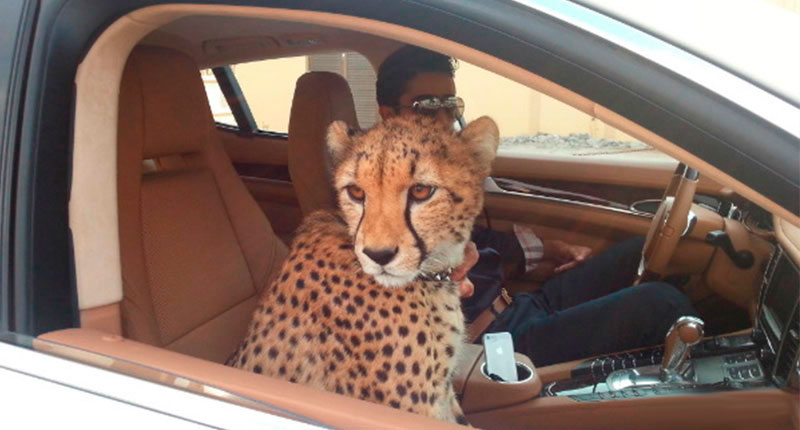
Just imagine your follower count blowing up, and how jealous the peasantry will be when you post images of your apex predator pet chillin’ in the passenger seat of your Sesto Elemento, with a pair of $20,000 sunglasses on his head for the lulz.

That’s what’s currently happening in the Gulf among the incredibly well-off children of royalty, aristocrats, oil oligarchs, shipping magnates and other bigwigs, a report in Semafor notes.

“Of course you can’t put them in the Lamborghini, beratna! You don’t want those claws near your leather seats. Besides, my liger shall have his own custom made Koenigsegg with a gear shift he can operate by paw!”

In addition to providing compelling ‘tent to their social feeds in the form of photos and videos, it’s clear the owners believe big cats offer a kind of osmotic badassery: if you have your very own lion, you must be a powerful and interesting person!

This kind of thing is not new. Years ago there was a brief outcry when wildlife groups begged authorities to protect cheetahs, who are already critically endangered and risk extinction if global elites are allowed to continue to poach them and their cubs from the wild.

As CNN noted at the time:

“While many of these states – including the United Arab Emirates and Saudi Arabia – ban the private ownership and sale of wild animals, enforcement is lax.

The overwhelming majority of these cheetahs end up in Gulf Arab mansions, where Africa’s most endangered big cats are flaunted as status symbols of the ultra-rich and paraded around in social media posts, according to CCF and trafficking specialists.”

The trend is of “epidemic proportions,” according to CCF, an organization devoted to saving cheetahs in the wild. At the current rates of trafficking, the cheetah population in the region could soon be wiped out.

“If you do the math, the math kind of shows that it’s only going to be a matter of a couple of years [before] we are not going to have any cheetahs,” said Laurie Marker, an American conservation biologist biologist and founder of CCF.

Youtube has its share of dauphins showing off cats and cars, and Instagram has an entire sub-genre of pages featuring men in pristine white robes posing in million-dollar hyper cars next to cheetah cubs or tigers who have been sedated to their eyeballs.

As the Semafor report explains, technically keeping big cats is illegal in most Gulf states, except for the super rich. They can skirt existing wildlife laws by getting permits as private “zoo” and “sanctuary” operators, and who’s to say a good zookeeper can’t keep his jaguars in an enclosure with Maseratis and Aston Martins?

One guy even runs a place called Fame Park, a private zoo. The only way to get in is if he deems you famous enough, and thus worthy, to gaze upon his wondrous menagerie of endangered beasts.

The park’s motto is “Where luxury meets wildlife wonder,” and its operator styles himself as a conservationist who just happens to enjoy rubbing elbows with esteemed figures like Andrew Tate and Steven Seagal.

“What pet? I am a licensed zookeeper! In my zoo, enrichment is provided by Ferrari.”

Things really haven’t changed much in the last few hundred years, have they? One way royals and aristocrats amused themselves was by sending explorers to far off lands and instructing them to bring back strange animals.

That’s how elephants ended up in the courts of European kings, and how Hanno the Navigator found himself in mortal danger when he tried to capture gorillas, then decided they were “too violent” to drag back home and had them executed.

A court elephant photographed in 1851 by Eugene Clutterbuck Impey, an English administrator in the British Raj. This elephant is pictured in regalia used for royal processions and other ceremonies. Credit: National Gallery of Scotland

These days, the centers of power have shifted, but human behavior has not. Part of me still has hope, but the cynic in me fears people with the means to exploit rare and endangered animals will continue to do so until there are no more animals left to exploit.

Another critically endangered pet cheetah in a hyper car. Credit: Some clown’s Instagram
Everyone knows that in the wild, big cat cubs nurse from Ferraris and Lamborghinis, and cheetahs learn to run fast by participating in drag races against the hyper cars. Credit: Another clown’s Instagram

Happy Thanksturkey From The Buddies!

There’s a lot to be grateful for.

Before we get into the most important day of the year (according to Bud), I wanted to share that we’ve been watching the wonderful Earth At Night In Color.

The title pretty much sums it up: teams of intrepid videographers went to some of the most remote locations on Earth armed with new camera tech that can peer deep into the night, revealing an entire world we can’t see and colors we don’t have names for.

The result is astonishingly crisp and clear images of the nocturnal world, offering opportunities to see things we’ve never glimpsed.

Earth At Night In Color
It might be difficult to belive, but this image was shot at night near the banks of the Amazon with only starlight providing minimal illumination.

One episode, Jaguar Jungle, follows a six-year-old male named Juru whose kingdom is an idyllic stretch of the Amazon River where capybaras frolic and caiman are plentiful.

Serendipitously, the crew also encounters a young female jaguar in heat, following the scent trail of a male and calling out. The resulting courtship is fascinating and in the words of narrator Tom Hiddleston, “surprisingly tender.” It’s exactly the sort of thing that would have been impossible to film with regular or even night vision cameras.

1.86.0-CT7GQQX2JD4GP5FQU7LV6BSOEM.0.1-0

Another episode, Puma Mountain, follows a cub on the cusp of adulthood as she learns to survive in Patagonia. The vistas are remarkable in a virtually untouched land far from human light pollution, where wildlife thrives and the glowing ribbon of the Milky Way straddles the horizons at night.

I appreciated the focus on pumas, who are often overlooked in wildlife documentaries, and Earth At Night is perfect for them since the vast majority of their activity happens in the overnight hours.

The series also has episodes dedicated to lions and cheetahs, so there’s lots here for cat lovers. Other highlights include episodes following African elephants, polar bears and tarsiers, which are liliputian primates that look almost like Jim Henson creations.

Aqua!

I move quite a bit when I’m sleeping, and since Bud literally drapes himself over me, you’d think he’d be used to it. I must have shocked him awake with a sudden movement a few nights ago, because he bolted up, freaked out and yelled “AQUA!”

I busted out laughing despite him catching my leg with a claw when he was startled. Then I rubbed his head to let him know all was well, and we went back to sleep dreaming of oceans.

Buddy
“Aqua?!?”

The Great Day of Turkey

Happy Thanksgiving!

It’s good to have a day dedicated to being grateful, and I think that’s especially important in an era of hyper-commercialism, when the accidentally fortunate use Instagram to rub their wealth in other people’s faces, dueling billionaires vie for political influence and the adoration of the public, and most people conflate what they have with who they are.

My family has banned talk of politics this year, which I think is the smart and mature thing to do.

As for Bud, he’ll have to endure most of the day on his own before I come home with his favorite food in the universe.

I hope everyone out there has a great Thanksgiving and gets to spend it with family and/or friends.

Elephants Call Each Other By Name, Study Says

Elephants encode names and other information in low-frequency rumbles that can be heard miles away. For social animals who live in large herds, it’s crucial to be able to address individuals.

Elephants are famously social animals, moving in matriarchal herds that can consist of as many as 70 of their kind.

They also communicate over long distances, emitting rumbles that can be heard miles away.

Because of their social and nomadic existence, it makes sense that elephants would need a way to single out individuals and address each other, and for the first time researchers say they’ve found evidence of Earth’s largest land animals calling each other by name.

“If you’re looking after a large family, you’ve got to be able to say, ‘Hey, Virginia, get over here!’” Duke University ecologist Stuart Pimm told the Associated Press.

The research involved field work and analysis using artificial intelligence. To record samples of elephants communicating, teams followed herds with recording equipment. Notably, elephant rumbles include sounds in frequencies lower than the human ear can detect.

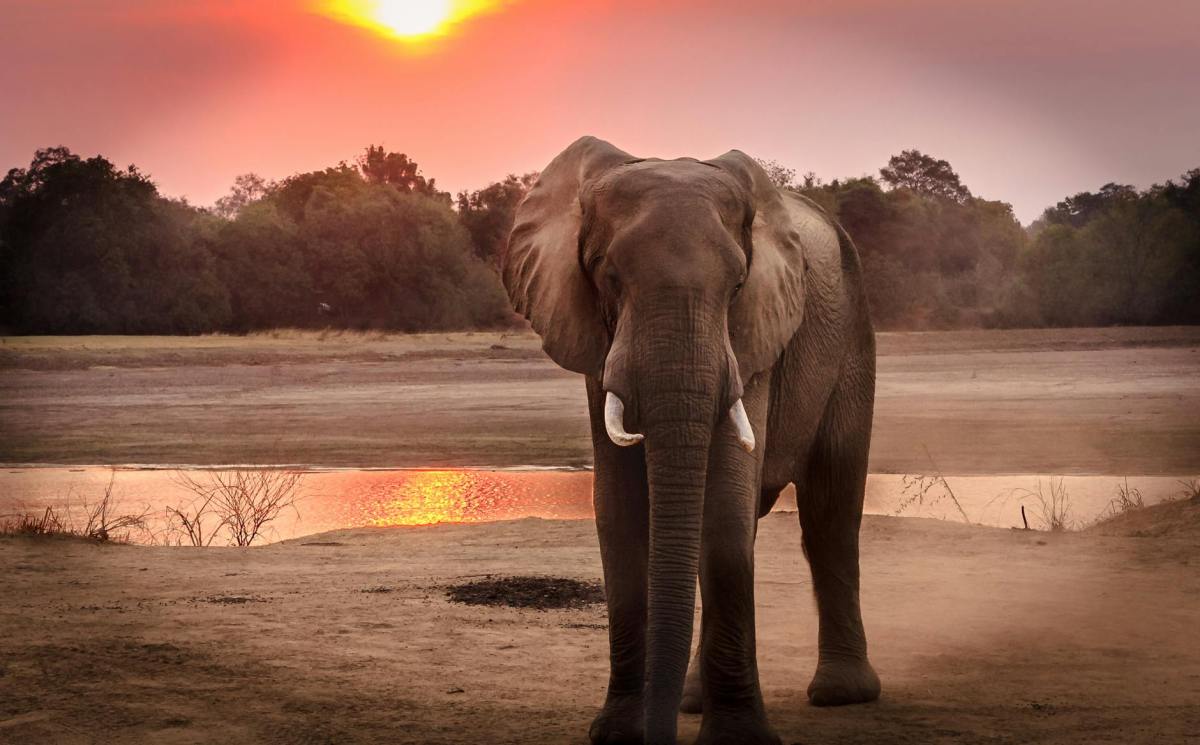
large elephants near lake
Credit: Pixabay/Pexels

The team paid close attention when one elephant vocalized and another responded, and recorded who initiated each rumble and who it was meant for.

Although elephants are best known for making loud “trumpeting” sounds, experts say those are more like exclamations while rumbles contain encoded information that African savanna elephants would need to communicate to each other.

“The rumbles themselves are highly structurally variable,” said Mickey Pardo, a biologist from Cornell University and co-author of the study. “There’s quite a lot of variation in their acoustic structure.”

A machine learning algorithm was then used to sort and categorize the large number of audio samples, looking for patterns that are difficult for human minds to detect.

“Elephants are incredibly social, always talking and touching each other — this naming is probably one of the things that underpins their ability to communicate to individuals,” said George Wittemyer, an ecologist at Colorado State University and co-author of the study. “We just cracked open the door a bit to the elephant mind.”

elephant-cub-tsavo-kenya-66898.jpeg
A female elephant with her young offspring in Kenya. Credit: Pixabay/Pexels

Notably, the elephant “names” are identifiers that they created for themselves, and are not the kind of human-bestowed names that cats and dogs respond to. The list of animals who have names for themselves is short, although likely to expand with further study. Dolphins, for instance, identify themselves with unique whistling patterns, and parrots have a similar method, but both species address individuals by imitating their calls. Elephants use their name analogs the way humans do, to directly address each other.

The research has the potential to raise public awareness of elephant intelligence and their plight as they face threats to their continued existence. Like almost all of the Earth’s iconic megafauna, elephants will become extinct if we don’t do a better job protecting them and ending the ivory trade. Every year about 20,000 elephants are slaughtered for their tusks to feed the demand for ivory, especially in China where it’s considered a status symbol, according to the World Wildlife Fund.

Yang Feng Glan, known as the”Queen of Ivory,” was sentenced to 15 years in prison by a Tanzanian court in 2019. Yang smuggled some 860 elephant tusks worth $6.5 million from Tanzania to China as the leader of one of the world’s most extensive poaching and ivory smuggling organizations.

During her years operating the smuggling ring, Yang presented herself as a successful businesswoman and ran in elite circles within China, authorities said. Two of her accomplices were also given 15-year sentences for their roles, but since then others have filled the vacuum left by Fang’s conviction, and elephant preserves are constantly under threat from heavily armed poachers.

Which Animal Would You Compare Yourself To And Why?

There’s a lot to admire about tigers, jaguars and other big cats, and a lot we need to do to safeguard their existence in the future.

Daily writing prompt
Which animal would you compare yourself to and why?

This momentous occasion marks only the second time PITB has participated in the daily writing prompt via WordPress, and the reason we’re participating is to bring more awareness to the meowscular and powerful Buddinese Tiger — and its threatened cousins, the majestic tigers, jaguars, lions and leopards.

Known in scientific nomenclature as panthera tigris muscularis handsomus, the Buddinese Tiger is an apex predator who rules over his natural habitat, the living room, with an iron paw. No one is safe from the Buddinese Tiger’s charms or its rage when sufficient snacks are not provided.

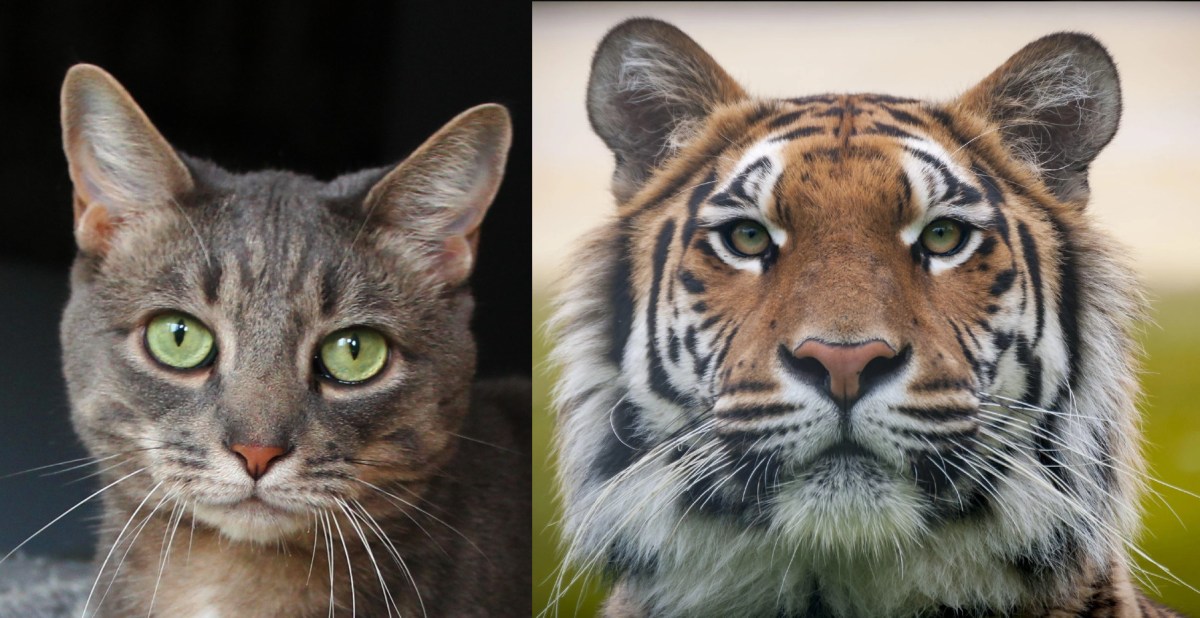
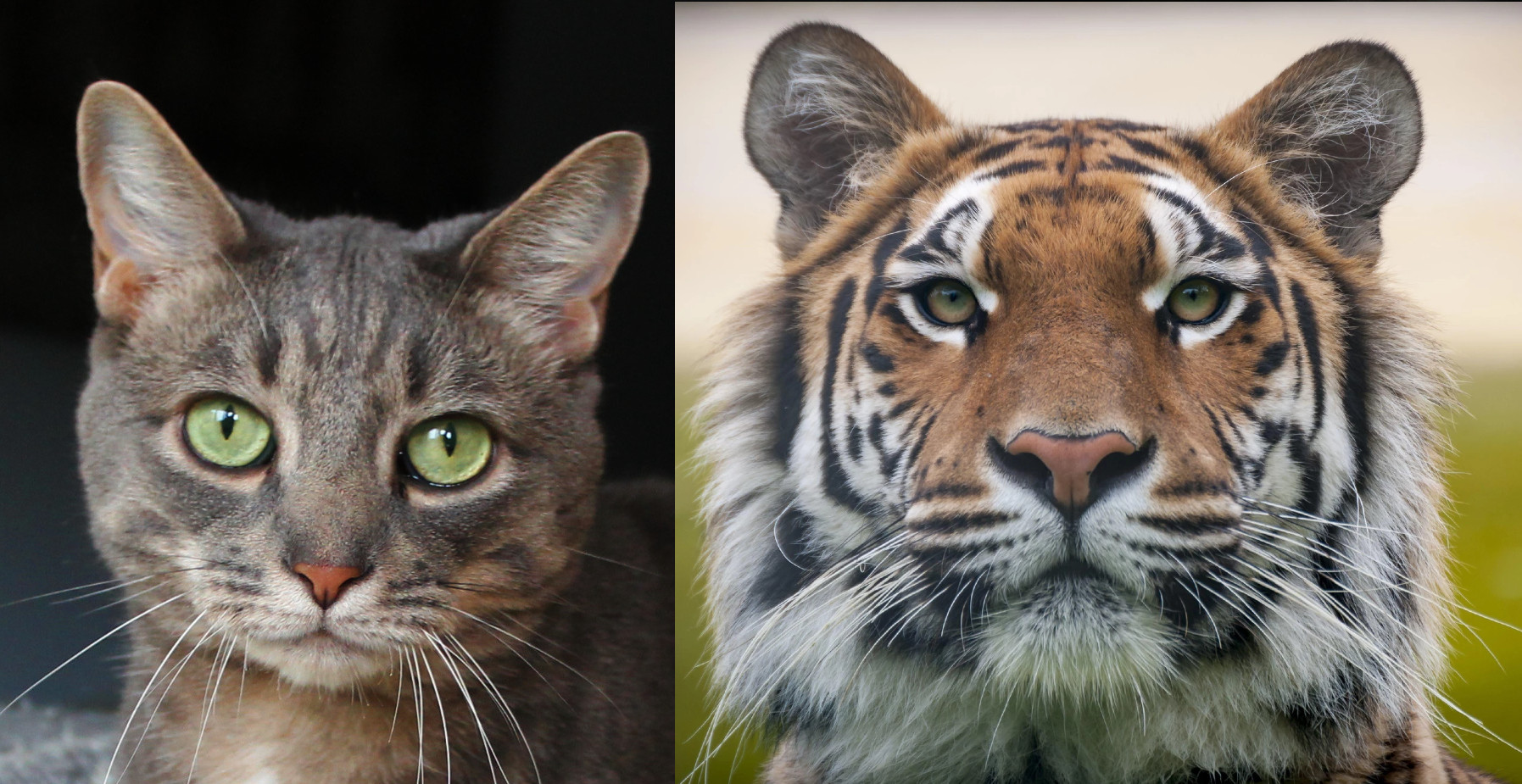
Buddy and a Tiger
You can’t tell the difference, can you? I mean, they’re virtually identical!

All jokes aside, I’d compare myself to tigers and jaguars because they’re awesome and they’re my favorite cats, aside from the above-mentioned panthera tigris muscularis handsomus. Cats are solitary hunters, they don’t like to be disturbed when they’re sleeping, and they appreciate the value of a good nap as well as a good snack. They are creatures of extraordinary taste!

Most of all, we need more people to appreciate big cats because the future doesn’t look good for them if we don’t do more to save them. Although tiger numbers have rebounded somewhat thanks to concerted conservation efforts in places like India (Bengal) and Russia (Amur), they’re still extremely vulnerable to habitat loss, poaching and revenge killing by farmers and rural villagers who often blame the big cats for being cats and going after livestock.

Likewise, while jaguars were once the sole success story in the big cat world thanks to their isolation deep in the Amazon rainforest and their elusive nature, they face a massive threat to their existence from deforestation and from the Chinese presence in countries like Brazil and Peru, where Chinese nationals poach the majestic felids to fuel the destructive Chinese traditional “medicine” market.

Just as TCM has devastated tiger, lion, elephant, rhinoceros and pangolin populations, it’s moved on to jaguars. Even vast “tiger farms” in places like South Africa, which cater to canned hunts and the TCM market, aren’t enough to meet the demand for big cat parts for use in folk “medicine,” in which ground tiger bones, fur, claws and other body parts are included in various elixirs people believe will cure everything from baldness to sexual dysfunction.

Check out Panthera for more information on conservation efforts and how you can help.

buddinesetiger_script
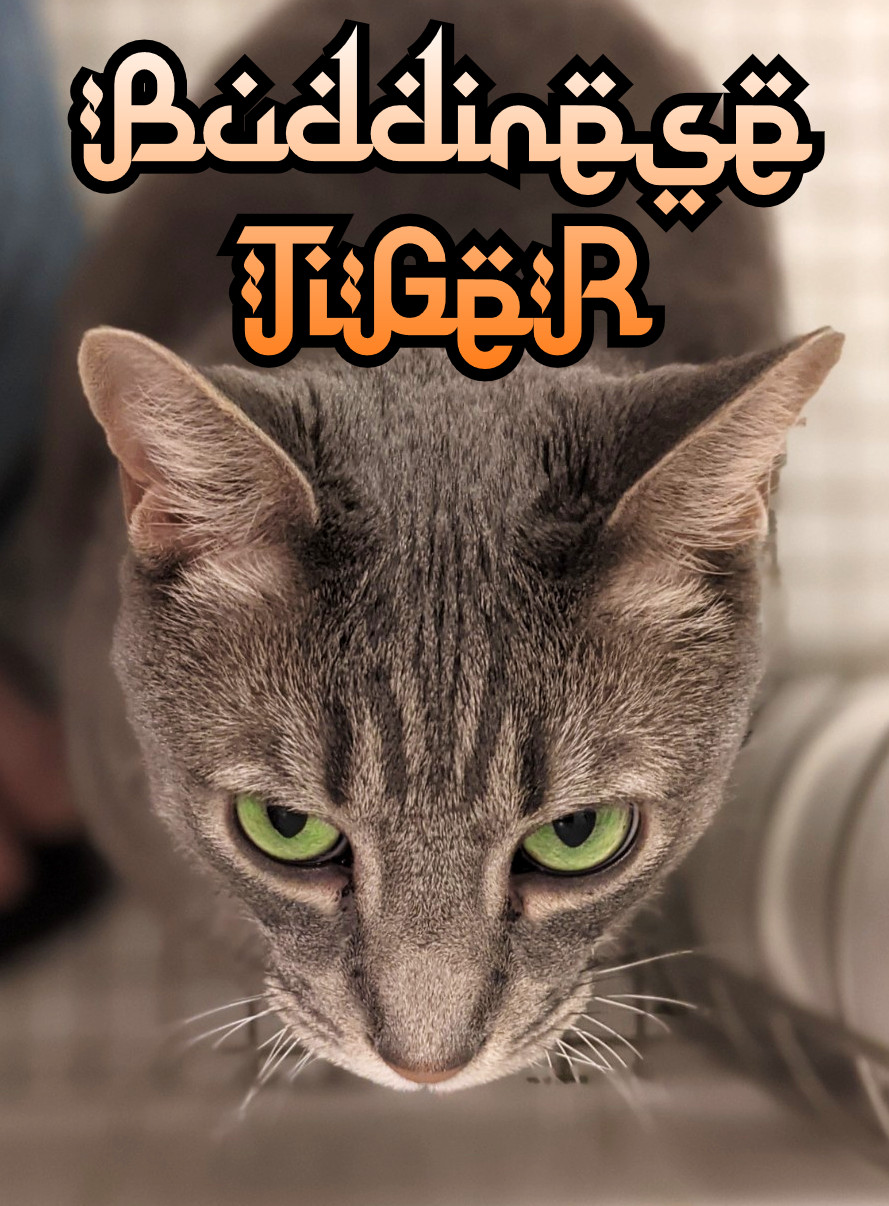
The Buddinese Tiger

Humans Are An Alien Invasive Species, New Study By Feline Science Institute Finds

Humans are an invasive species who are spectacularly adept at destroying life, a new study has found.

Homo sapiens are an invasive species who do irreparable harm to the environment and other animals on an unprecedented scale, a new study by the Feline Science Institute has found.

The results prompted feline scientists to add homo sapiens, commonly known as humans, to a database of destructive and invasive animals maintained by the Academy of Scientific Studies.

Cat scientists have only just glimpsed the breadth of human-initiated impact on other animals, Dr. Oreo P. Yums, lead author of the newest research paper, told reporters.

“We found humans are astonishingly, almost indescribably destructive,” Yums said. “For instance, although they fret about birds, humans kill more than a billion of them a year just with their skyscrapers, which birds are prone to fly into due to their mirrored surfaces. Add in wind turbines, cell towers, power lines, habitat loss and slow die-offs due to chemicals, and by conservative estimates we’re talking about billions of birds killed by humans every year without even tallying active measures like hunting.”

Humans have killed off an estimated 70 percent of the world’s wildlife in the last 50 years alone and show no sign of stopping. Oceans are overfished, animals like pangolins and big cats are ruthlessly hunted to extinction to feed demand within the Chinese traditional medicine market, and human addiction to palm oil means the “two-legged demon monsters don’t even have sympathy for their fellow primates,” mewologist Charles Clawin said.

“In Borneo and Sumatra there are entire schools, filled to capacity, for critically endangered orangutan babies who were orphaned by human contractors clearing ancient jungles to make room for more palm oil plantations,” he said. “Often, the humans use industrial equipment to tear down trees while the orangutans are still in them. Other times, they dispatch the mothers with pistols, not realizing there are babies clinging to them.”

In Africa, where the elephant population has plummeted in the last century, more than 110,000 elephants have been slaughtered in the past 10 years alone for their tusks. The elongated incisors are used to make jewelry and piano keys, and items made from ivory have become a status symbol in China, where growing middle and upper classes seek to show off their wealth with luxuries.

In 2019, Chinese businesswoman Yang Felan, dubbed the “Ivory Queen,” was arrested and charged with smuggling $2.5 million worth of tusks from Tanzania to her home country. Yang, “a key link between poachers in East Africa and buyers in China for more than a decade,” was a respected businesswoman, investor, restaurateur and vice chairwoman of the China-Africa Business Council.

“Poachers continue to slaughter elephants and our big cat brothers and sisters,” said Luna Meowson, who tracks the illegal wildlife market for the University of Nappington. “Having extirpated tigers from virtually their entire range, poachers are turning to South America, where jaguar poaching increased 200 fold between 2015 and 2020. It never stops.”

Big Bruce the Lion Slayer
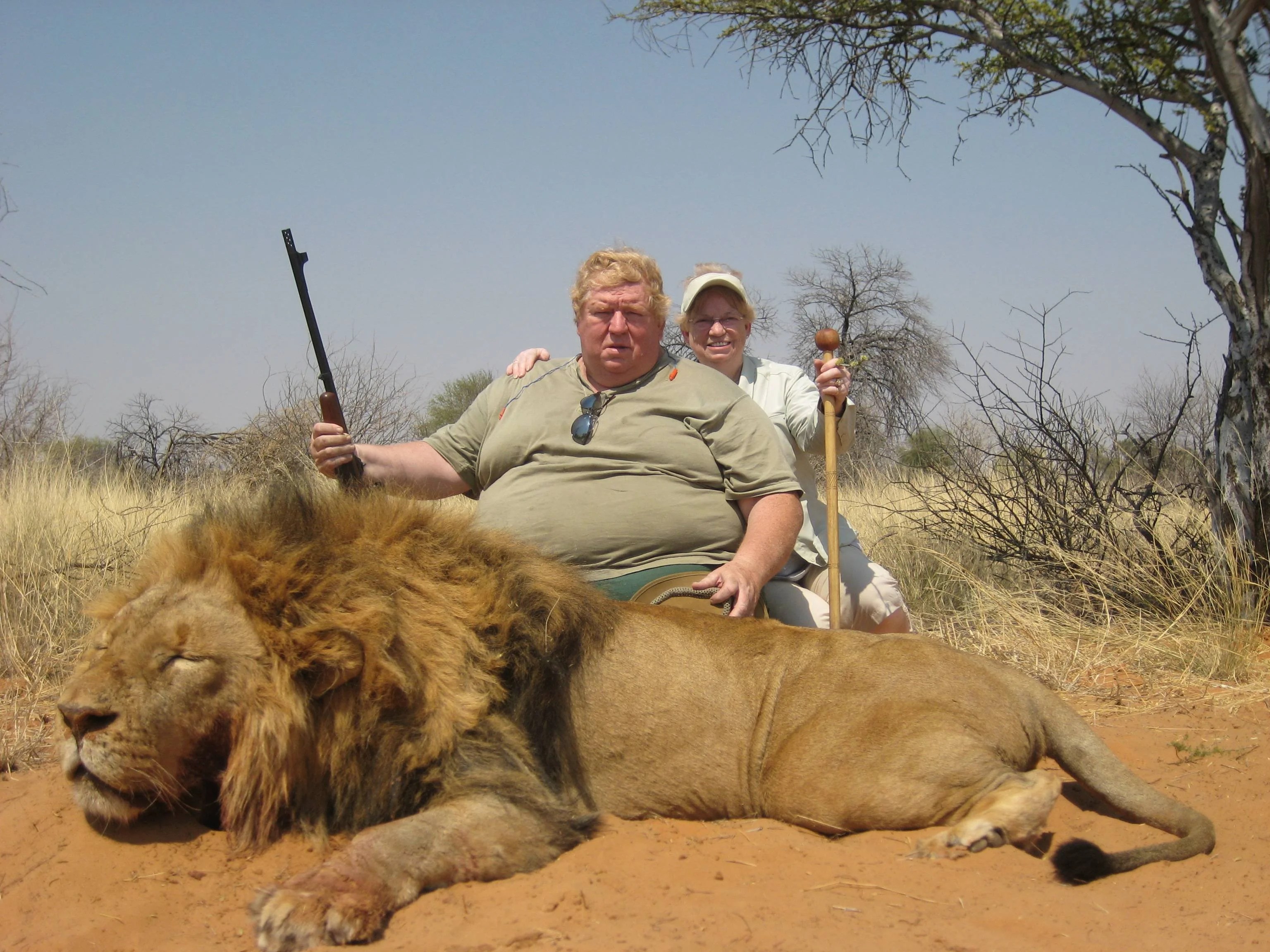
A human hunter poses victoriously after heroically slaying a lion (panthera leo) from atop his trusty steed, a mobility scooter, after a team of guides drove him around the bush in an air-conditioned SUV, then lured the animal directly into his line of sight. A female of the species, presumably his mate, looks on proudly.

Although the earliest details remain murky, fossil records show Homo sapiens first emerged in Africa about 200,000 years ago. The invasive species, which has a gestation period of about nine months, began rapidly breeding and immediately went to war with fellow members of the genus Homo.

After wiping out two-legged rivals including Homo neanderthalensis, Homo altaiensis, Homo denisova and Homo bodoensis, the victorious Homo sapiens set their eyes on other species. Throughout their history they’ve also proven remarkably adept at murdering themselves and continue to hone their skills.

“Those OG humans, they had to really work at slaughtering other species and extirpating wildlife,” said Chonkmatic the Magnificent, King of North American cats. “They didn’t have attack helicopters, stealth bombers, tanks, carrier battle groups, daisy cutters, artillery, mortars, phosphorous, napalm, biological weapons, or even small arms like rifles. In those days a pimply kid from Oklahoma sitting in an air-conditioned base in Virginia couldn’t wipe out an entire city 5,000 miles away by pressing a button ordering a drone to drop a nuke. They had to put some sweat into violence, you know?”

522616
Breakthroughs in recent centuries have led to innovative and more convenient ways for Homo sapiens to author mass destruction and render entire sections of the Earth lifeless.

The species, known for its aptitude for tool-making in addition to eating ultra-processed foods and staring at screens, began with simple tools of destruction like the Mark I Spear, early bows and even torches. Over the centuries they innovated, coming up with clever and inventive new ways to inflict pain and end life until the advent of electricity, the industrial era and the brutally destructive war machines of modern times.

Human scientists have tried to obscure their species’ impact on wildlife and the planet by declaring species like felis catus “invasive” and “alien,” but even if cats are “guilty of grabbing a forbidden snack every now and then,” they don’t have the coordination, technology or will to carve up habitats, render entire swaths of the Earth uninhabitable with nuclear fallout, create Everest-size mountains of garbage, or effortlessly drive millions of species to extinction, Clawin said.

“They’re so good at it, they don’t even have to try,” he noted, pointing out human accidents or incidents of negligence like oil spills and chemical run-off into rivers. “We tend to think of humans out there with shotguns and rifles, cackling maniacally as they shoot anything that moves. And, sure, they do that, especially in places like Texas where the sight of any animal always prompts the question ‘Should we shoot it?’ But our research shows they can wipe out entire categories of fauna in their sleep. It’s remarkable.”

Additional reading: Polish institute classifies cats as alien invasive species