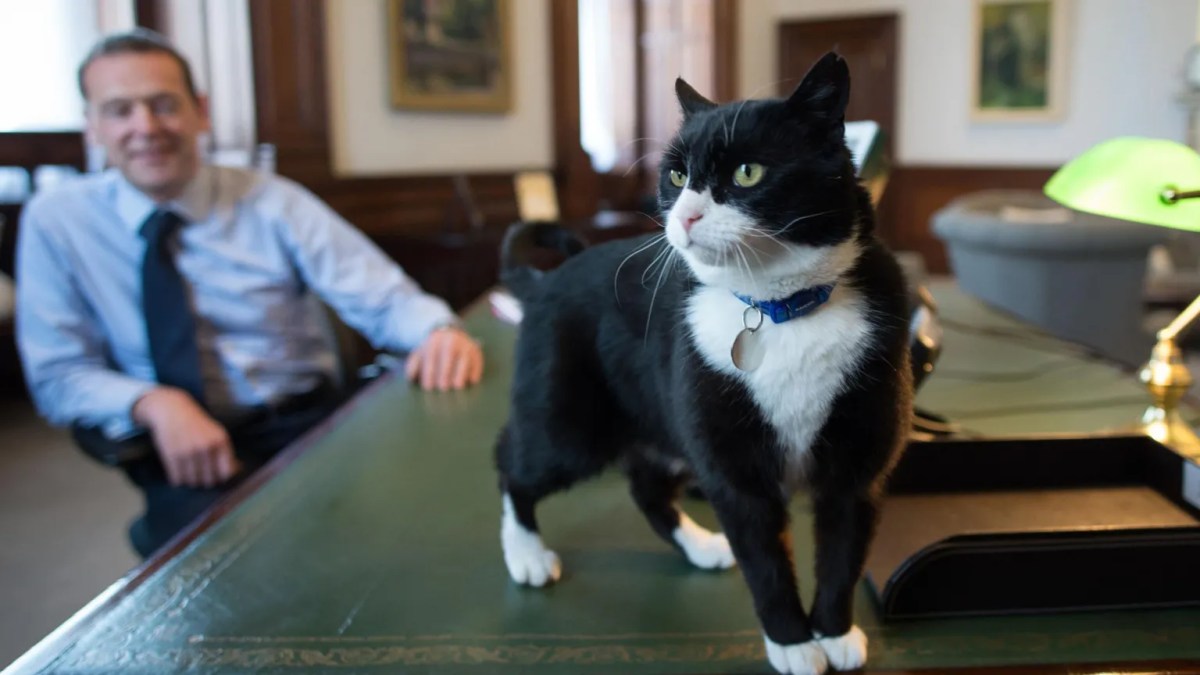
Named after a powerful prime minister, Palmerston was a hungry stray who was found on the streets of London and quickly made his mark when he was appointed mouser to the UK’s Foreign Office.
Some sad news today: Palmerston, the UK Foreign Office’s strong-willed mouser and foil to Larry the Cat, has passed away.
Palmerston was scooped up in 2016 “as a hungry, underweight stray wandering the streets of London, with no owner traced and no microchip,” London’s Battersea Cats and Dogs noted in a post.
The Foreign Office staff were looking for a new mouser to keep rodents at bay in Whitehall when Battersea recommended the cute tuxedo, and recognizing greatness, the staff brought the little guy on immediately and named him after Henry John Temple, better known as Lord Palmerston, who served as prime minister in the 1850s during the height of the British Empire.
Palmerston the cat, just two years old at the time, took to his new job with enthusiasm — perhaps too much so. The territorial tuxedo quickly developed a reputation for turf battles with his rival mouser, No. 10 Downing St.’s Larry the Cat.
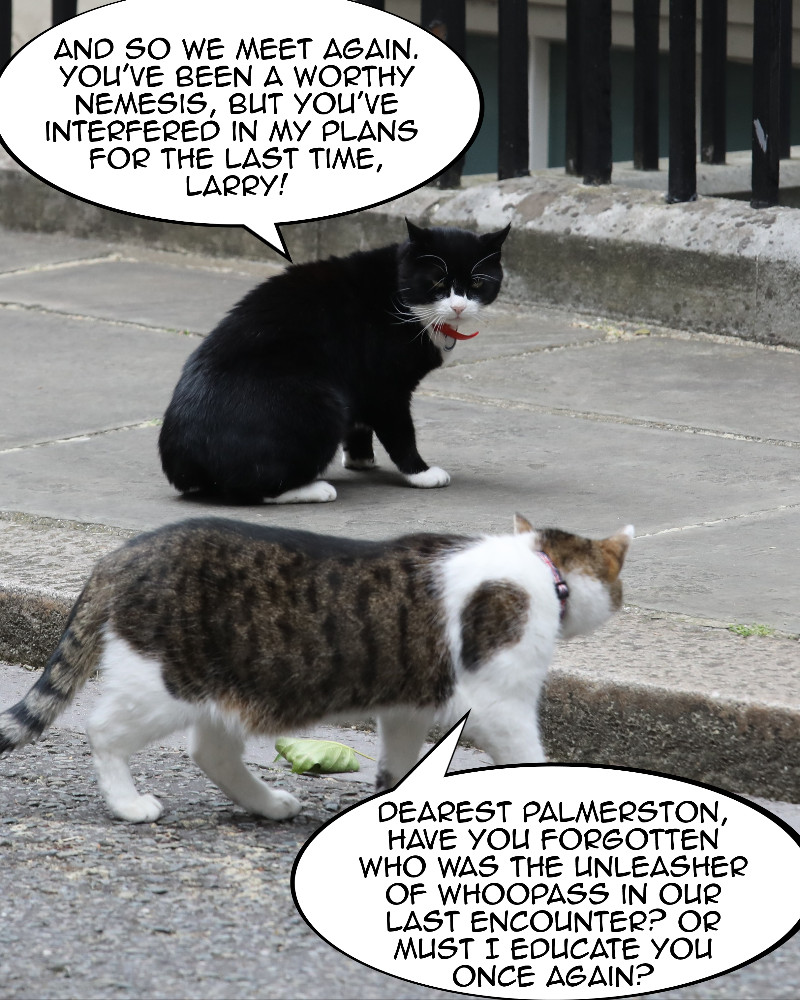
Their skirmishes, which often occurred within the full view of reporters and photographers covering UK government, soon became the stuff of legend, producing several iconic images of the two felines in battle in their eternal struggle for status as top cat in the UK government.
The fearless feline’s hijinx included invading Larry’s inner sanctum in 2016 when he snuck through an open door at No. 10, and while Larry was known for visiting his “lady friend,” Maisie, Palmerston struck up a relationship with Freya, another mouser with a post on Downing Street.
When society’s gears grinded to a halt with the 2020 lockdowns in response to the COVID pandemic, Palmerston “retired” to the countryside with his loyal human, former Royal Navy officer Andrew Murdoch.
Little Lord P enjoyed the quiet life for several years before thrilling fans a year ago with his announcement that he was returning to public life as “feline relations consultant” to Murdoch in his new post as governor of Bermuda.
Admirers followed Palmerston’s antics in the tropical locale via updates on social media. He was living the high life, free of Larry’s evil machinations.
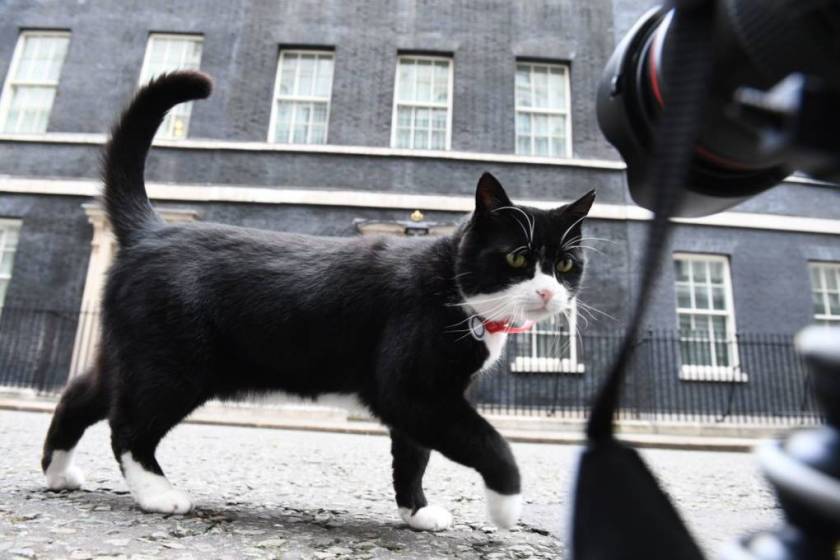
Palmerston patrolling Downing Street.
Palmerston died on Feb. 12, Murdoch wrote in a post on the famous feline’s X account.
“‘Palmy’ was a special member of the Government House team in Bermuda, and a much loved family member,” the post reads. “He was a wonderful companion, with a gentle nature, and will be sorely missed.”
A reply from Larry’s account indicated the former rivals had called a truce: “Farewell old friend,” Larry’s servants wrote on his behalf.
Palmerston, left, and Larry, right, during one of their epic battles while Palmerston was still top cat at Whitehall.We had a lot of fun with the Palmerston-Larry rivalry here on PITB, admiring both mousers.
While this is sad news, Palmerston will not be forgotten, and we’re confident he’ll take to his new post across the rainbow bridge with the same zeal he applied to his work on behalf of the people of the UK. RIP, little guy.
Hat tip to our friend Platypus Man, who notified us of today’s sad news. If you enjoy photos of far-flung locales, check out his blog, which features posts about his many travels around the world. Thanks, P!
Badlands is a romp through a vividly realized alien world filled with danger. It’s also a film with heart.
Hollywood pumps out so much disappointing content, especially in the age of streaming, that it’s easy to become disillusioned with movies altogether.
But every once in a while there’s a film that reminds you how much fun movies can be, hitting all the right emotional notes while taking you completely out of this world for two blissful hours.
Predator: Badlands is that kind of movie. Unexpectedly funny and poignant, it also delivers the kind of action audiences have come to expect from the Predator franchise — and then some.
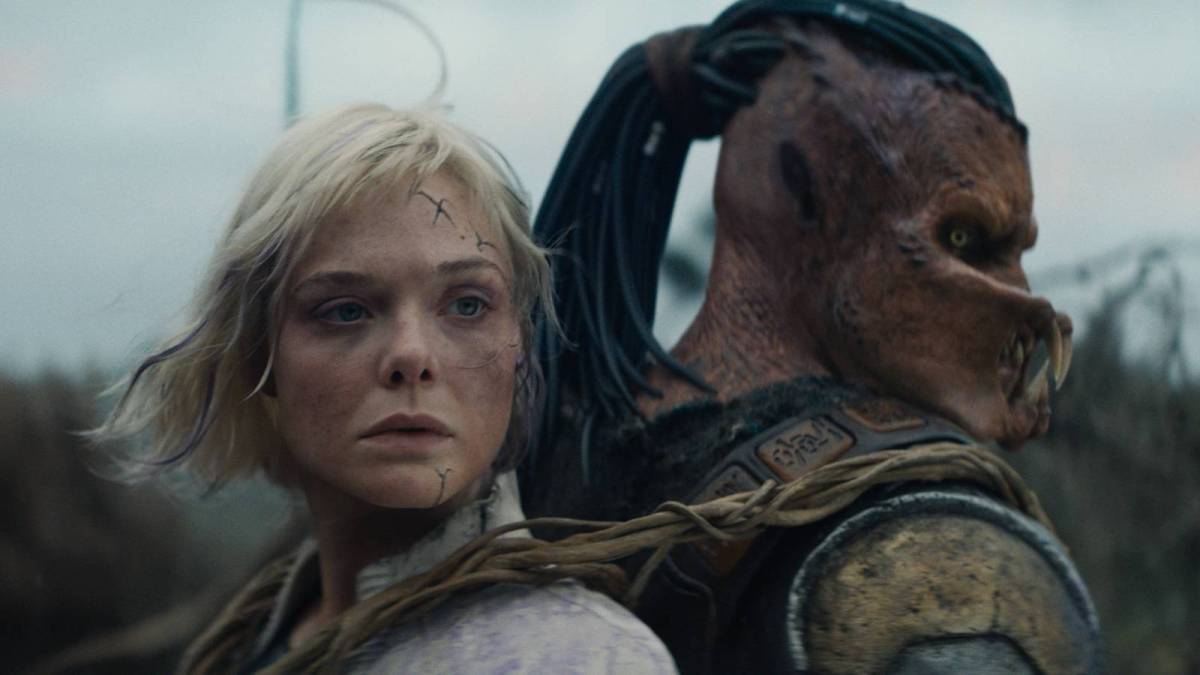
The biggest change here is that, for the first time, a Yautja (the alien species we call the Predators) is the protagonist.
Njohrr is a Yautja clan leader who believes Dek is not strong enough to earn his place in the clan.
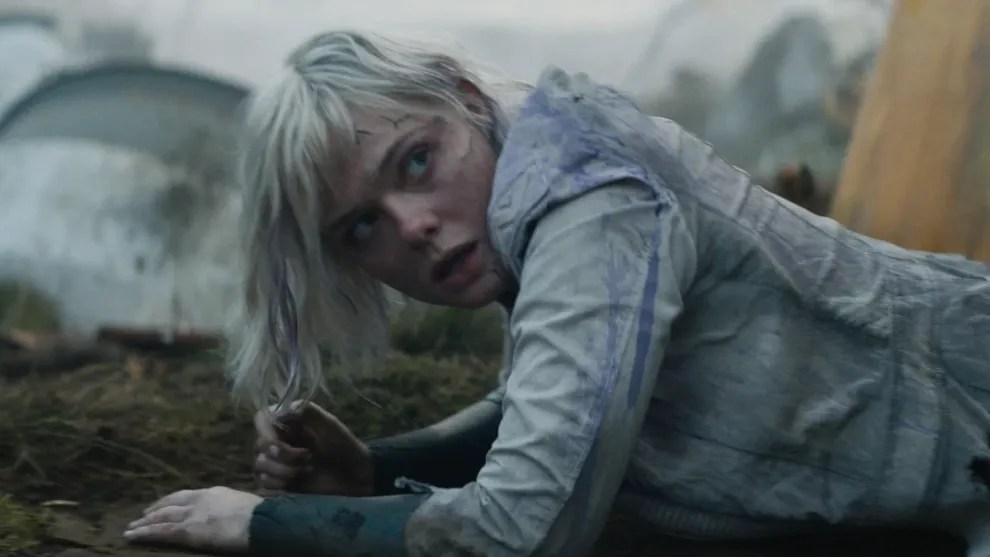
Dek isn’t just any Yautja. He’s a youngster who is horribly wronged in the opening minutes of the film and sent to Genna, a place his species calls the “death planet” because virtually every form of life there is monstrous and spectacularly lethal.
His own death is a foregone conclusion on the brutal world until he meets two unlikely allies: Thia, a damaged synthetic (android) built by the notorious Weyland-Yutani corporation, and Bud.
Bud steals the show, but I wouldn’t dream of robbing anyone of the pleasure of experiencing Bud the way writer/director Dan Trachtenberg intended, so I will say no more.
Elle Fanning and Dimitrius Schuster-Koloamatangi play Thia and Dek, respectively. Fanning adds a human element as she and Dek team up initially for survival, then out of loyalty to each other.
Badlands has a lot of heart and a script that knows just when to slice the tension. In one quiet scene after surviving an encounter with a particularly nasty creature, Thia (an energetic Elle Fanning) raves about the experience and the excitement of accompanying Dek and Bud on a hunt.
“The Dynamic Trio! Remember when we went down the tree? That monster’s mouth? I mean… Uggh. Didn’t smell great, didn’t smell great, but we got him. We got him! Thank you, seriously, for that experience. Truly amazing. Thrilling! Truly thrilling.
“What was your favorite part?” she asks the young Yautja.
“When my sword pierced the creature’s skull and its blood ran down my face,” Dek deadpans.
Dek is not invincible, and he’s without the vast majority of his arsenal, with only his trusty heat sword to defend against the hyper-aggressive fauna of Genna.
This is Trachtenberg’s second Predator film, and Badlands exists because he proved there was life still left in the franchise with 2022’s Prey.
That movie was unfortunately streamed direct to Hulu without a theatrical release, as were several big time films that year, because of a resurgent COVID wave. (Remember the Delta variant?)
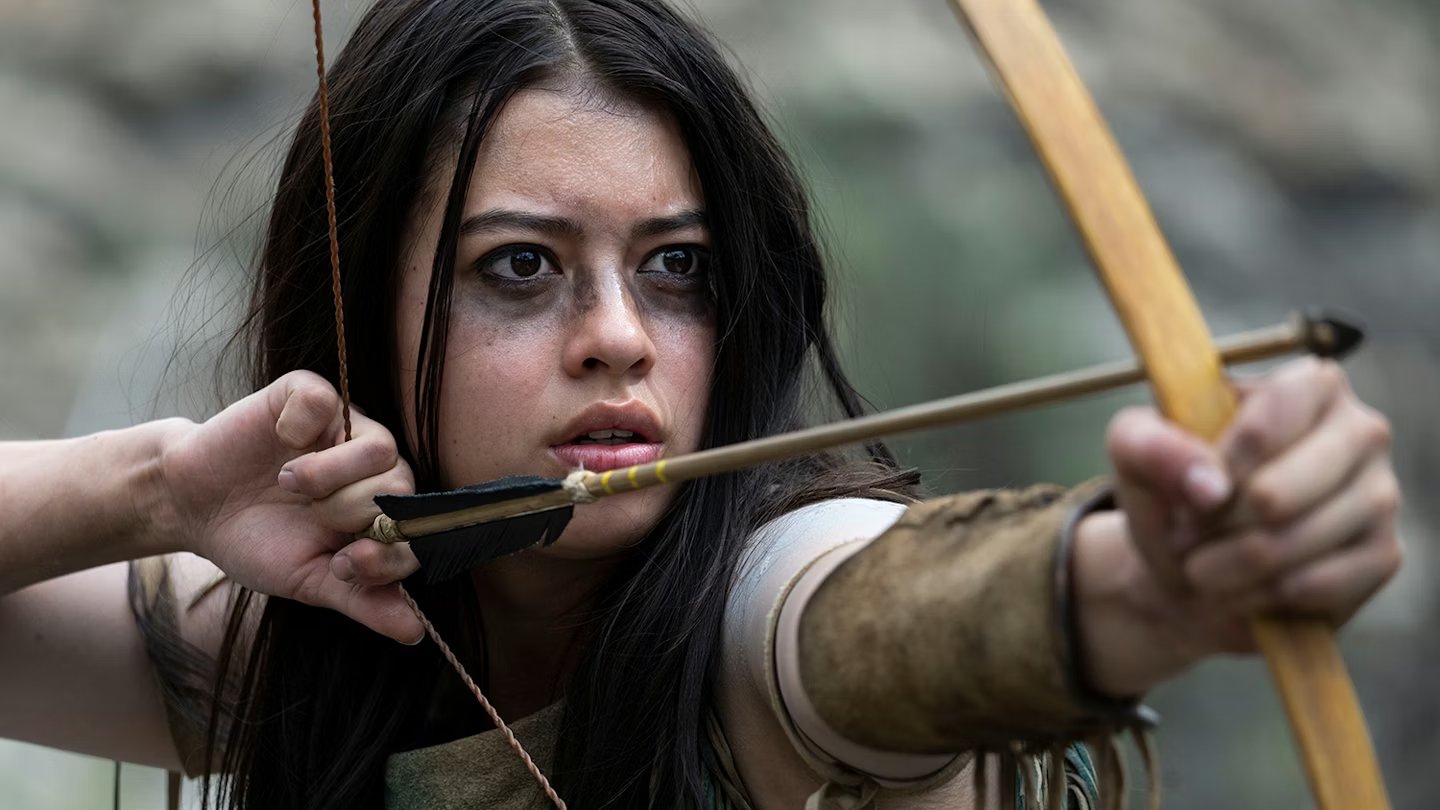
But critics and audiences, including your humble Buddesian correspondents, found a lot to like in the story of Naru (Amber Midthunder), a young Comanche woman living on the Great Plains in 1719. After encountering a Yautja, Naru warns her tribe that a mysterious and dangerous creature is stalking their lands, but they laugh at her and accuse her of telling tall tales — until they see the Yautja for themselves, at which point they don’t find it amusing anymore.
Midthunder was fantastic, and Prey balanced its historical setting with stunning action sequences and quiet character moments.
Amber Midthunder as Naru in 2022’s Prey.
In earlier installments, including Prey, the Yautja were always the antagonists. We knew they were a warrior culture, that they followed an honor code and possessed fantastically advanced technology, but for the most part the Yautja remained a blank slate aside from some non-canonical media (mostly novelizations, comics and games) that attempted to expand the universe.
Badlands demystifies the Yautja somewhat out of necessity, which is always a dangerous gamble (just ask the xenomorph of Alien fame, which lost its mystique half a dozen sequels ago), but significantly raises the emotional stakes.
Dek isn’t invincible. Circumstances have robbed him of most of his arsenal, he’s thrown into a perilous and unfamiliar world, and he’s haunted by the fresh memories of the tragedy that sets off the events of the film.
That makes it easy for the audience to identify with and root for Dek, despite the difficulty of conveying emotions with alien facial features. Dimitrius Schuster-Koloamatangi deserves credit not only for imbuing Dek with physicality, but also for getting the most he can out of the Yautja youngster’s brooding body language, howls of frustration and slowly dawning realization that he can choose his own path in life.
It may take a planet teeming with horrors to make an underdog of a Yautja, but Badlands succeeds on that count.
Predator: Badlands set a record for the franchise with a $40 million opening weekend, and pulled in $184 million total at the box office. It was made available for streaming this week. With the financial success, and the positive reviews from critics and fans alike, it’s possible we’ll see Dek, Thia and Bud continue their adventures in a sequel.
Convinced that culling cats will prevent local wildlife from going extinct, despite no evidence supporting that idea, New Zealand’s authorities have pledged to wipe out ferals and strays.
A recent RNZ story about efforts to exterminate cats in New Zealand starts with an anecdote about a man named Victor Tinndale, describing the way he bludgeons a cat to death as casually as if he’s sipping a cup of coffee.
Tinndale has taken it upon himself to kill cats even though the country’s wildlife management authorities told him not to. Why? Because he thinks cats are responsible for driving native species toward extinction.
He doesn’t know that, of course. No one does. No one’s bothered to do the research, and the driving force behind the claim that cats are responsible is a series of meta-analyses by birders who literally invented numbers to align with their predetermined conclusions about predatory impact.
To date there is not a single study that accurately measures feline predatory impact, nor is there a shred of evidence that slaughtering cats — whether beating them to death, shooting them with shotguns or poisoning them — has any beneficial impact on endangered bird species.
Yet there are vigilantes aplenty slaughtering cats across New Zealand, youth hunting contests encouraging kids to shoot cats and kittens, and government-sponsored extermination programs, like a particularly ghastly effort on a small island off New Zealand’s coast, where members of a team tell themselves they’re doing good work by sniping animals who are doing what they were born to do.
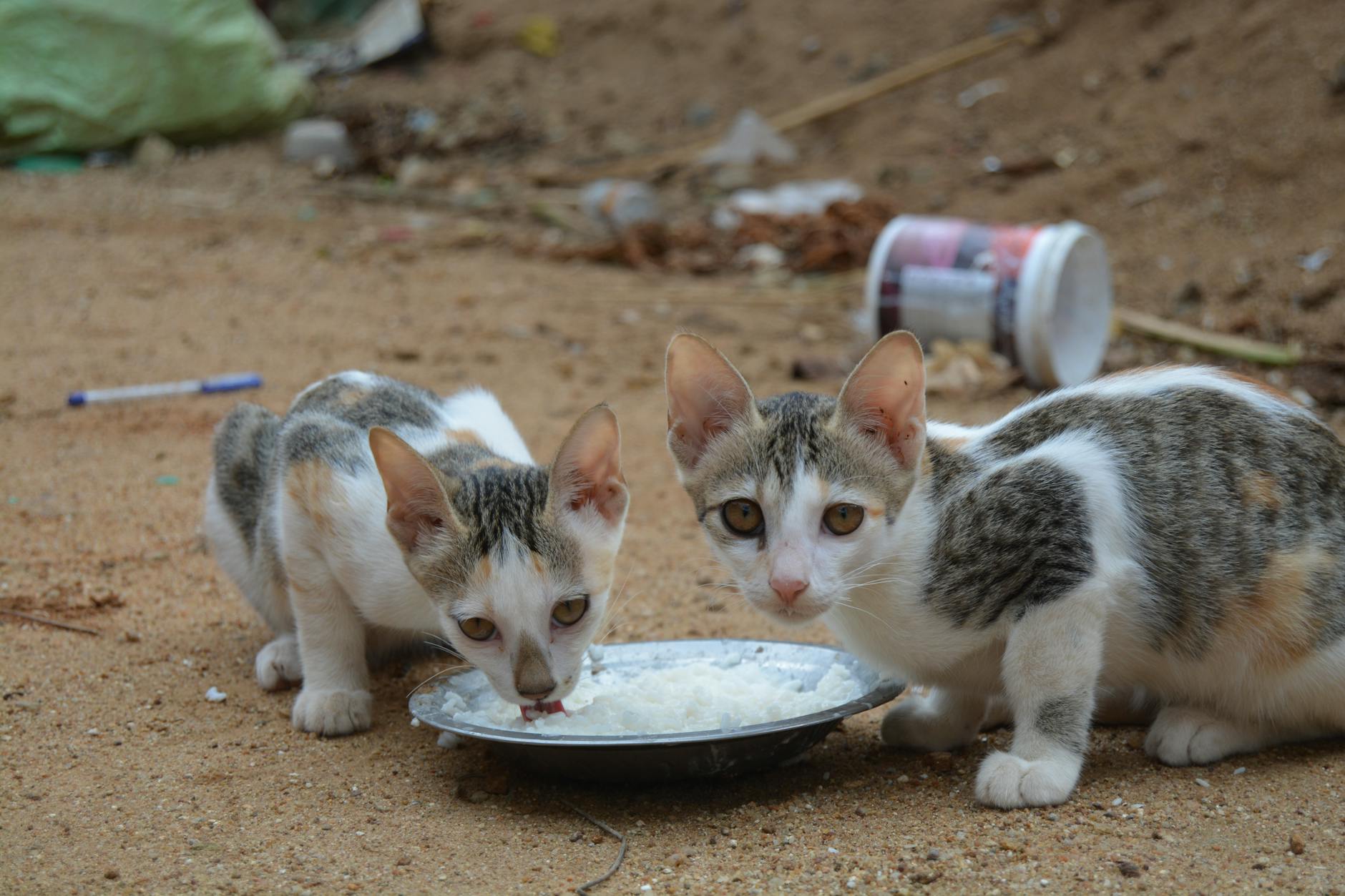
Ferals and strays already have tough lives without being hunted for sport or at the behest of government officials who aren’t in full possession of the facts. Credit: Mohan Rai/Pexels
The RNZ story describes Tinndale merrily skipping through the Aotearoan wilderness, singing songs and cracking jokes like a perverse Tom Bombadil as he murders cats unfortunate enough to get caught in his traps.
RNZ cameras follow Tinndale as he finds a terrified feline in one of the his traps. Tinndale describes the cat’s impending death at his hands as some sort of inevitable cosmic justice. He didn’t sentence the cat to die, he argues. He’s just the man who carries out the sentence.
“This cat is just an utter killing machine,” Tinndale says, addressing a camera as he repeats rhetoric from birder Peter Marra — who has advocated for the destruction of the entire species — almost word for word. “I’d hate to think what this cat has slayed to survive. So this guy has got to go, you know?”
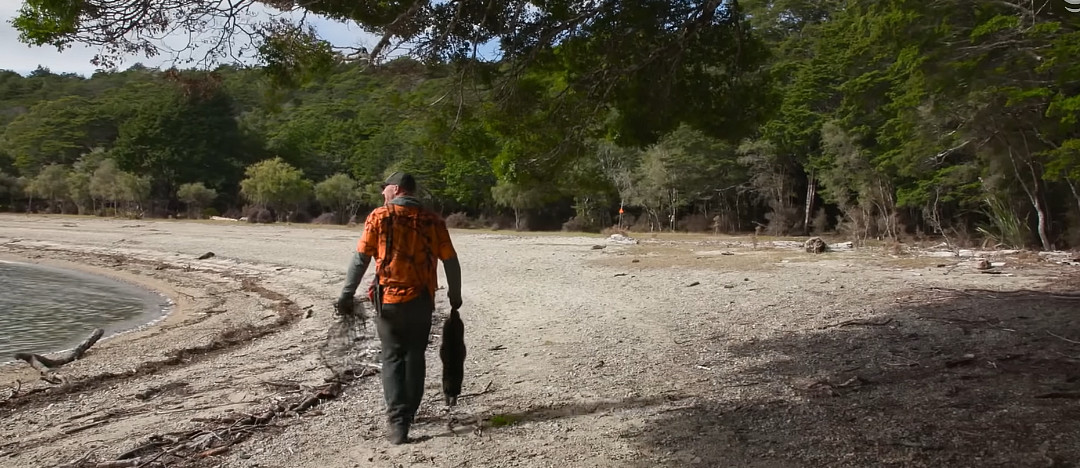
The next scene shows Tinndale walking along the shore, the cat now hanging dead in his hands. He is judge, jury and executioner.
Tinndale buries his victims in a “graveyard” he made near a hut, admitting the graveyard is a “little bit of a laugh.” Tinndale was shocked, the story says, when New Zealand’s Department of Conservation didn’t pat him on the head for his vigilante efforts.
“I thought they’d have a chuckle, you know, and be pleased, but it was nothing of the sort,” he told RNZ.
Thought they’d have a chuckle?
This man thinks bludgeoning animals to death is hilarious. He is a psychotic vigilante who has taken it upon himself to violently end life. Why is he allowed to own weapons? Why is he not in prison or on a court-mandated mental illness management program?
Brad Windust with a trophy hunter’s expression as he shows off a Maine Coon mix he killed with the help of his hunting dog. Credit: Supplied to NRZ
The story goes on to quote Jessi Morgan of the Predator Free New Zealand Trust, who flat-out admits she can’t say how many cats there are in the country, let alone measure their predatory impact.
“I’ve seen estimates from two-and-a-half million to 14 million, which basically tells us we’ve got no idea what those numbers are,” Morgan said before immediately relaying anecdotes from hunters and farmers who say they’re “seeing more.”
This is not how we make decisions between life and death! This is not science, not by any definition of the word. This is not public policy. This is vigilantism and a mob mentality, amplified by the fact that it’s easier to blame a defenseless species for our own conservation failures and humanity’s impact on wildlife.
It is gross, utter disrespect for life under the guise of conservation, by people who not only can’t articulate what sort of damage they think felines are doing to their country, but have not a scrap of evidence that vigilantes running around bludgeoning cats to death are doing anything other than causing needless suffering.
Worse, it’s clear at least some of these self-appointed nature guardians are enjoying the task of murdering cats. It’s evident in their smiles as they show off their prizes and in the way they talk about their “work” — not as a solemn duty after all other options have been exhausted, but as something to “have a chuckle” over.
Credit: Dianne Concha/Pexels
This is also a failure of journalism, a failure to follow the most basic best practices and rules, to ask for proof when people assert opinions and call them facts. Those who call themselves journalists, who credulously spread the bunk studies about feline impact on native species, should be ashamed of themselves for not even taking a few minutes to read the studies they cite. Anyone who reads the research would immediately understand that the “studies” — which are really meta-analyses of old data — don’t provide any proof that cats are responsible for pushing endangered species toward extinction. They do nothing of the sort.
What we do know, and have confirmed over more than half a century of rigorous science, is that we are responsible for wiping out wildlife — more than 73 percent of the world’s monitored wildlife populations in the past 50 years alone, according to the World Wildlife Fund’s annual report.
Aside from the fact that they don’t have homes, these cats are no different than pet felines. They are the same species. Credit: Wikimedia Commons
Animal welfare groups have never disputed the idea that cats probably do have a part in endangering small mammals and bird species. They are predators. Hunting is their role.
But that is a far cry from proving they have a measurable impact, let alone are the primary drivers. In rare cases when research teams did the hard work of taking a feline census, as Washington, D.C.’s Cat Count did, the population numbers turn out to be considerably lower than expected.
Data from the Cat Count also confirmed what we know, that cats do not stray more than a few hundred feet from their territory, whether it’s a human home or a small shelter in a managed colony. In urban and suburban environments, the study found, cats have minimal impact through hunting unless they’re living directly adjacent to wooded areas.
Sending a bunch of lunatics out, dancing and skipping as they arbitrarily slaughter sentient creatures with real emotions, is the kind of monstrous behavior only humans are capable of.
Human-made devices and structures kill innumerable birds annually, a fact that isn’t accounted for in studies and news stories blaming cats for bird species extinctions. Credit: Amol Mande/Pexels
But it isn’t enough for New Zealand’s government to have vigilantes killing cats, or community-sponsored cat hunts. Now the government has pledged to eradicate feral cats by 2050. Because feral cats are the same species as stray and pet cats, and there is no way to determine by sight if a cat is feral or just frightened, that means any feline found outdoors will be killed.
“In order to boost biodiversity, to boost heritage landscape and to boost the type of place we want to see, we’ve got to get rid of some of these killers,” says Tama Potaka, the country’s conservation minister.
Note the language in the linked story, which describes domestic cats as if they’re a separate species. That’s the kind of ignorance that drives these cruel efforts.
New Zealand is heavily reliant on tourism, with visitors accounting for almost six percent of the country’s GDP before COVID-19, a number the country’s leaders expect to match in late 2025 as the tourism industry recovers. It’s part of New Zealand’s overall shift to services instead of products in an effort to diversify its economy.
Anyone who loves cats, who thinks men shouldn’t play God, who thinks we ought to demand at least something in the form of proof before allowing socially maladjusted vigilantes to brutally kill animals, should boycott New Zealand as a travel destination.
If you enjoy PITB’s content and want to help us keep the lights on, please consider whitelisting this site on your ad blocker.
Header image: Tinndale walking with a cat he killed via RNZ
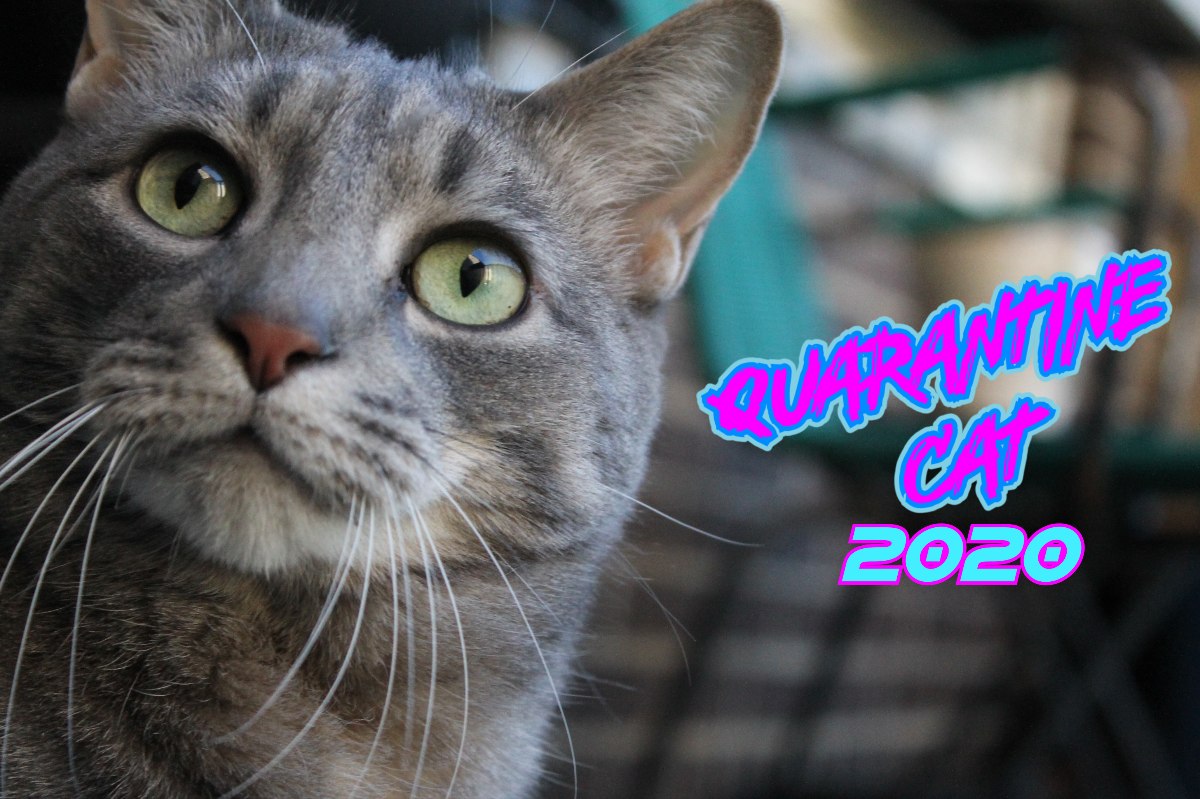
Flashback photos from the spring of 2020 when most cats were wondering why their people were huddling at home and only venturing out cautiously with masks and gloves.
Taken during the spring of 2020 during the height of the quarantine, which Bud was blissfully oblivious to!
Big Buddy is convalescing with the help of our hero, Little Buddy.
Hello admirers of the most handsome and meowscular cat in the world!
I’ve gotten some messages from people asking if Bud and I are okay and just wanted to let you know we are, and we’ll be back soon.
I planned a brief hiatus, no more than a few days to recharge the creative batteries. That hiatus was extended when I flew to Washington to hang out with my brother, his wife and the kiddos.
Then I returned home, assisted with a family emergency, got sick shortly afterward and tested positive for COVID.
It feels kind of strange to have lived through the original COVID wave that brutalized New York in 2020, as well as the subsequent delta and omicron waves, managing to avoid infection only to get COVID now in the summer of 2023. But if getting it was inevitable, I’m grateful it happened after I’ve been vaccinated and boosted, and not in those chaotic, horrific early waves when doctors weren’t sure what they were dealing with.
COVID hit me hard, like an extremely intense flu with a grab bag of other symptoms thrown in for good measure, but I’m very grateful I haven’t suffered major upper respiratory distress. Likewise, I’m grateful that my congenital heart problem — an extremely rare valve deformation — was not a factor, because that was my biggest worry.
I am aware that cats can catch COVID, and in the back of my mind I always imagined quarantining myself from Buddy if I came down with it, but cats have their own plans for things and Bud, who is already famously intolerant of any distance or closed doors between us, has a longstanding policy of never leaving my side when I’m sick. Quarantining from Bud was not an option. There’s no way to communicate the why of it to him, and on the practical side I have not had the energy to cordon him off, assuming that’s even possible. Knowing him, he’d quickly find a way to circumvent any barriers and, failing that, he’d meow incessantly and refuse to allow me a minute’s peace until this farce (“Closed doors between us, can you believe it?!?”) was ended.
Just one more reason to love the little guy and be grateful for him, but of course I’ll be watching him closely.
For now I’ll be happy to see the other side of this. Getting really sick is always a good reminder to be grateful for health, and in particular this experience helped me understand that despite vaccines, masks, air filters, hand sanitizers and careful behavior, so much is left to chance.
So that’s what’s happening here. I apologize for our extended absence, and I look forward to returning to our regularly scheduled cat content — same Buddy time, same Buddy channel — in the near future.









 Pain In The Bud