Newest TikTok Trend Has People Terrorizing Their Cats To Taylor Swift Songs

TikTok is a major security risk to the country, a danger to the people using it, and a platform that encourages animal abuse. It’s time for the US government to take action.

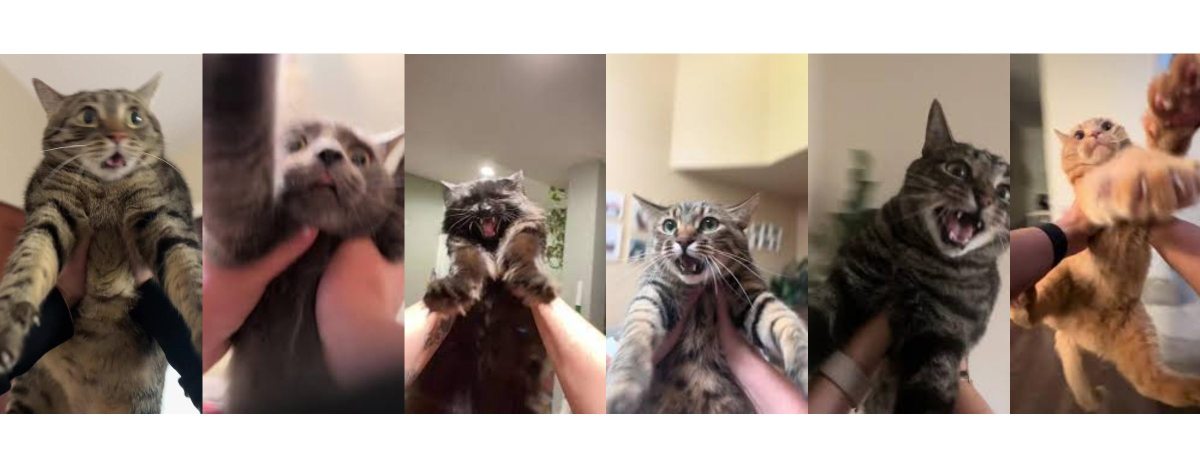
The cat is wide-eyed with terror, his mouth moving in protest as his human picks him up.

“Spock already hates me so why not torture him more?” reads the caption on the TikTok video as the woman spins him around to Taylor Swift’s saccharine ballad August.

In another, a man in his 40s stares into the camera, snatches his cat up in one quick motion and then cackles gleefully as he spins his cat, who squirms in his grip and meows plaintively. One woman admitted her cat “hated every second of this” as she twirled her to the Swift track.

tiktokcatstrend
Cats subjected to the Taylor Swift “cat spinning” trend on TikTok.

There are hundreds, perhaps even thousands of these videos on TikTok, the Chinese government-controlled social media platform. Inexplicable as the trend is, it’s far from the first time people have abused and terrorized their cats for “lulz” and the approval of strangers on TikTok.

Previous trends had TikTok users picking their cats up upside-down and one-handed, then “answering” them as if they were telephones while reciting a line from the movie The Princess Diaries.

The 2021 holiday season saw the invention and propagation of a “hack” by someone who claimed that if you chase your cat around and brandish your Christmas tree like a weapon so the cat thinks you’re going to hit her with it, “it’ll be too scared to f**k with” the tree. Classy. The video of the woman terrorizing her cat piled up more than 25 million views and spawned innumerable imitators.

Then there was the “influencer” who smacked his cat around and uploaded footage of it, not by accident but because he says that’s how people properly “discipline” their pets. There are one-off abuse videos, and then there are trends that just won’t die, like the “prank” in which people frighten their cats half to death by placing cucumbers behind them while they’re eating.

TikTok is legitimately evil

More than any other platform, aided by an insidious algorithm that expertly keeps its users glued to the screen and scrolling, TikTok is a vehicle for social contagion, elevating the crass, the outrageous and the destructive as it lavishes clicks and revenue on people who behave abominably.

Just look at the case of Chloe Mitchell, the popular TikToker who nearly destroyed a non-profit animal shelter single-handedly when she threw a tantrum earlier this year. Mitchell enjoyed in excess of 50 million views on videos in which she invented wild stories painting the shelter as some sort of criminal operation run by “scammers” who, she claimed, enrich themselves by adopting out animals.

It would almost be funny for its absurdity if not for the fact that the shelter’s operations were crippled for two months as Mitchell’s followers called in death threats, review-bombed the shelter to ruin its reputation online and made its volunteers fear for their safety.

A major security risk

It baffles me why anyone would continue to use TikTok — or sign up to use it in the first place — when its operators admitted under oath that sensitive data belonging to American users is routinely accessed by the company’s headquarters in Beijing, despite many public assurances that the data was compartmentalized and available only to software engineers in TikTok’s US offices.

The company was also caught spying on journalists and is the subject of a Department of Justice investigation into its misuse of user data.

And if that isn’t reason enough for some people to uninstall the app, consider the fact that TikTok’s Beijing-based parent company, ByteDance, added code that makes the app an extremely malicious piece of spyware software capable of capturing every tap or keystroke by its users.

For those who aren’t well-versed in technical matters, this means having the app on any of your devices is tantamount to handing China’s government the keys to all of your online accounts, including banking and credit, as well as all your text, email and in-app correspondence. ByteDance can read the private texts you exchange with family members, see precisely what you’re doing on sites like Facebook and Youtube, and help itself to users’ most private information.

Some people might not understand the scope of the security risk because they may not know that every organization in China is subservient and ultimately accountable to the Chinese government and the communist party. The communist government can access data from Chinese companies at any time, force them to hand over their proprietary technology and research, and compel them to cooperate with cyber attacks on US citizens and infrastructure. In fact, it’s written into Chinese law. The government has total control over every Chinese corporation and, under President Xi Jinping, has tightened its grip on every layer of society.

It’s not difficult to imagine the Chinese government using the wealth of data collected by TikTok to compromise the devices of people who work on critical US infrastructure, like the power grid or defense systems, and use that access to retrieve their employee login credentials, providing access to the systems they work on.

Imagine cyberattacks that shut down power plants in Texas and across the southern US during severe weather like the deadly heat dome the country experienced this summer. Or Chinese government-sponsored hackers crippling US banking systems, leaving Americans without access to currency for days or weeks.

Then there are the “smaller” risks that are devastating on an individual level: A hacker compromises your devices and locks photographs of deceased loved ones that are priceless to you, or threatens to blast details about your private life to everyone in your contact list if you don’t pay them $10,000 in cryptocurrency.

Or maybe your information isn’t used in any particularly dramatic way, but in the aggregate becomes part of the great data pool the Chinese government uses to build and refine the most invasive social surveillance system in human history.

All that to use an app that promotes videos of people abusing their pets? No thanks. I hope the US government comes to its senses and bans the app from the US entirely before something catastrophic happens because if they don’t, it’s not a matter of if something disastrous will happen, but when.

Fred The Cat Is Back With His Human And His Brother, Thanks To Police

Fred went missing last summer and another person tried to claim ownership of the little guy by attempting to change details on his microchip.

Beryl Edwards was overjoyed when her microchipping company contacted her to inform her that her cat Fred, missing since the summer of 2022, had been found.

Then her joy turned to frustration as the company asked her to confirm a change in Fred’s ownership.

“Can you imagine the range of emotions from, ‘Fred! He’s alive, he’s OK’ to ‘transfer of ownership? What’s this all about?’” the UK woman told the BBC earlier this week.

A rep from Identibase told Edwards the company couldn’t provide any information on the person or people who currently had Fred due to data privacy laws, so Edwards called the police, who handled it swiftly.

“I’m totally over the moon,” Edwards told the BBC on Wednesday. “I can’t praise Market Drayton police enough, they got on to the case on Sunday, contacted the people on Monday, and by 10:45 on Monday evening they brought Fred home.”

The police are able to access data the public cannot if it pertains to an investigation, and law enforcement had said earlier they considered Fred’s predicament a case of theft. It’s not clear if they charged the other party with a crime.

As for Fred, Edwards said he’s happy to be home with her and his litter mate, Gino.

“He’s roaming around the house, obviously he’s kept in doors,” she said. “He’s playing, he’s eating, having lots of cuddles, lots of love, he’s great.”

UK legislators recently passed a law that will require all cat owners to have their felines microchipped by June 10, 2024. Advocates say the law will greatly increase the chances that missing cats are reunited with their people. It will also help hold people to account if they abandon their pets, and will help authorities settle questions of ownership in cases where it’s disputed. Edwards said she’d like to see changes to the way information is shared as well so people in her situation can more easily resolve their problems.

Cat On The Street: What Do You Think About The Rise Of AI?

As the supreme species on this planet, cats have a lot to lose if AI seeks to supplant them as Earthly rulers.

With artificial intelligence making rapid progress over the past year, we asked cats what they think about a future where we depend on intelligent machines.

The ‘Snake Cat’ Is A Bad AI Fake

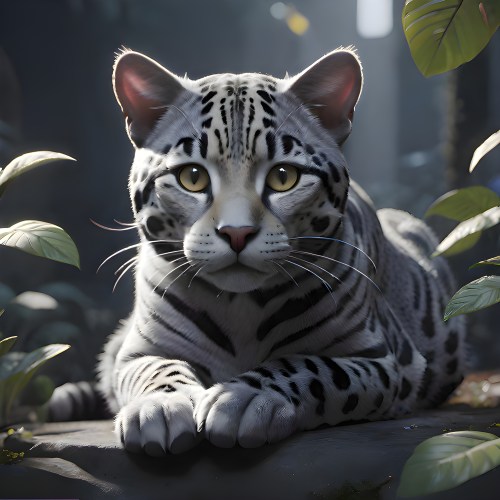
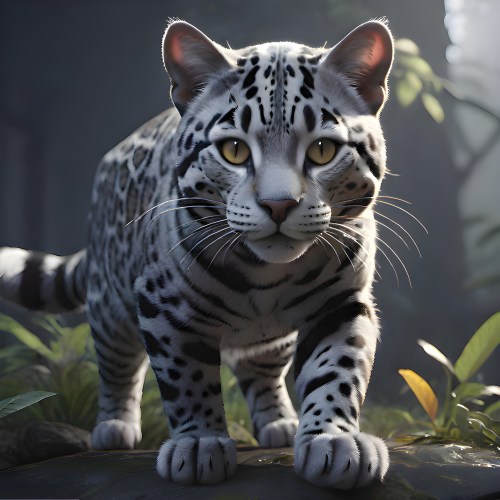
A viral image allegedly depicts a “snake cat,” described as an extremely rare species native to the Amazon rainforest.

Say hello to felis retrowavus, commonly known as the synthwave cat, one of the rarest species of felid on Earth.

Using the same technique GloFish employed to create bioluminescent neon fish for the pet market, scientists engineered felis retrowavus by extracting fluorescent proteins from jellyfish and inserting them into cat embryos, which incorporated the new proteins into their genome.

The result? A new species of cat that glows in fabulous colors like Tigerbrite Orange™, Electro Azure™, RadarGlo Green™, 1984 Pink™ and SithRed™!

Your brand new Neon Feline™ will run, jump and meow just like a regular cat, but unlike a plain old kitty, your Neon Feline™ will snuggle up with you at night and serve as your personal biological night light! Collect them all!

If that sounds like BS, that’s because it is.

Obviously.

Likewise, it should only take a second or two to realize the widely disseminated photo of a “snake cat” is a fake rendered by an AI.

The image has all the hallmarks of an AI generated image fail: Anatomical errors, fuzzy pixels where the AI struggled with the way light hits fur, a misshapen head and a nebulous, blurry background.

Although the media seems to be more obsessed with the snake cat hoax than people are (the snake cat image “mystified the internet,” the New York Post claims), after years of witnessing people take Onion stories seriously and confidently repeat misinformation online, I’m not really surprised when something like this makes the rounds.

The image was accompanied by a clever bit of writing claiming the cat isn’t well known because it’s native to the deep jungle of the Amazon, where scientists have difficulty tracking it. The text even offered a taxonomical name for the cryptid animal.

Enough people apparently fell for it that the staff at Snopes felt the need to debunk the image, even going as far as to check with a biologist who specializes in tropical fauna.

The original author of the snake cat post says he created the image and accompanying text to prove how easy it is for people to be fooled by AI-generated fakes. A noble goal if true, but I’m not sure everyone got the message.

In any case, the “snake cat” proves once again that AI, like all innovations, isn’t inherently good or bad. It’s what we do with the technology that counts.

Now can I interest anyone in a brand new Purple Velvet or Flaming Hot Cheetos SnuggleCat™?

PITB Reviews: ‘The Peripheral’ Is A Refreshingly Original Science Fiction Thriller

Amazon’s newest streaming hit is heady, fast-moving and a lot of fun. There’s nothing else on TV like it.

Amazon’s newest big-budget prestige drama, The Peripheral, imagines a near future when technology has become even more deeply embedded in every day life.

Flynne Fisher (Chloe Grace Moretz) is a young woman who lives in North Carolina’s rural Blue Ridge Mountains, works in a 3D print shop by day and plays virtual reality games by night.

The story is set a decade from now in 2032, and while Flynne’s brother, Burton (Jack Reynor), plays startlingly realistic VR games for fun, Flynne plays them for money. Although Burton is a former United States Marine Corps infantryman and war veteran, his sister is the superior player when it comes to video games, and she’s so good that well-heeled players across the world pay her to carry them through high-difficulty levels.

If that seems fanciful, consider that it already happens in real life: some people fork over big bucks to highly skilled players who can help them win in multiplayer video games like Fortnite, or run them through the most challenging missions in online role playing games to get coveted in-game gear.

Flynne’s side hustle allows her to afford expensive medication for her sickly mother. Apparently in 2032, Democrats and Republicans are still squabbling over how to pass meaningful prescription drug reforms while remaining in the good graces of the corporate behemoths who finance their campaigns. Some things never change.

When a Colombian company called Milagros Coldiron offers Flynne a hefty chunk of change to beta test their newest game — and the incredibly immersive new headset it comes with — Flynne thinks she’s just taking a lucrative but routine job, one that will help pay for her mom’s meds for at least a few weeks.

What she doesn’t know is that her life is going to change drastically the moment she steps into the newest form of virtual reality, revealing things about her world and herself that she never imagined.

The Peripheral
Jack Reynor as Burton Fisher and Charlotte Riley as Aelita West in The Peripheral.

There’s so much more to the story, and in fact we’ve barely scratched the surface, but The Peripheral is the kind of show best appreciated by knowing as little as possible going in.

The ambitious new series is based on a 2014 novel by technoprophet William Gibson of Neuromancer fame. Gibson envisioned the concept of cyberspace in 1981, more than a decade before the first mass market commercial dial-up services were available.

At the time, the idea of exploring almost photorealistic worlds in virtual reality was a radical new idea, and it took more than 35 years for technology to catch up by making it feasible. (We’re still not quite there yet. VR tech has improved by leaps and bounds, and we’re beginning to see the first deeply immersive VR games, but Mark Zuckerberg’s much-hyped version of the metaverse, for example, has fallen flat and been pilloried by press and players alike.)

By choosing to adapt Gibson’s work, Amazon has dipped into the largely untouched world of literary science fiction.

While the science fiction of movies and TV has been treading the same worn ground and returning to the same tired concepts for decades, SF novels are a rich source of astonishingly inventive big ideas, from the existential stories of Liu Cixin (The Three Body Problem) to the galaxy-spanning space opera of the late, great Iain M. Banks, to the gothic horror-tinged, wildly imaginative universe of Revelation Space by Welsh astrophysicist Alastair Reynolds.

Indeed, Netflix is developing a series based on The Three Body Problem, with Game of Thrones showrunners David Benioff and D.B. Weiss taking the helm. Amazon has acquired the rights to Banks’ first Culture novel, and Netflix’s highly-praised anthology series Love, Death + Robots adapted two of Reynolds’ short stories as episodes.

Finally we’ve moved beyond the Alien clones, Star Wars sequels, prequels, spinoffs and crossovers, as well as the unfulfilling JJ Abrams mystery box offerings that have made up the bulk of live action science fiction on the big and small screens.

There are no candy-colored light swords in The Peripheral, nor are there spandex-clad superheroes or franchise installments designed with merchandise sales in mind. Instead, we get a story for adults, one that gives the audience a lot to think about while also holding a mirror up to our own world, as the best science fiction always does.

After all, technology changes but people don’t. Human nature is a constant. What we do with our shiny new toys says a lot about us as a species and civilization.

Although The Peripheral begins with the comparatively low-stakes world of virtual reality, its scope rapidly expands until, by the end of the first episode, it becomes clear the show is asking its audience to grapple with existential questions about humanity and our future.

The Peripheral demands its audience’s full attention as it introduces concepts like the parallel universes of M-theory, nanotechnology and the idea that even if matter can’t be shifted between time and space, information in the form of photons can.

Gibson uses these heady concepts in his narrative sandbox, forcing his characters to consider wild concepts like the possibility that there may be infinite versions of themselves existing in infinite branching realities.

How would you react knowing there’s a version of yourself who chose to study classical literature and move to Athens, or a version who became a software programmer, authored a lucrative app and lives in a Manhattan penthouse? Can you imagine having a different wife or husband, or a different child? (Are there realities in which I am not the loyal and loving servant of Buddy? In that case, who is feeding him snacks, and are they doing it promptly?)

Cherise Nuland
T’Nia Miller radiates malice as Cherise Nuland.

Of course, none of this stuff would matter without interesting characters and a compelling narrative. Moretz and Reynor have the chemistry of a real brother and sister in the way they regularly bicker but ultimately love each other. Eli Goree’s Connor is a man of wonderful paradoxes, and T’Nia Miller steals every scene she’s in as the delightfully malicious Cherise Nuland, an antagonist who loves making her enemies squirm while dispensing witticisms in cut glass RP.

For longtime SF fans, there’s another compelling reason to give the series a shot: Canadian writer-director Vincenzo Natali, best known for his mind-bending 1997 indie film Cube, is an executive producer and directs four of the season’s episodes. Natali is a pro at incorporating heady ideas in ways that enhance his narratives instead of weighing them down.

The first season just concluded, and you can stream all eight episodes on Amazon Prime. Bud and I are already looking forward to The Peripheral’s return.

cube-pic-6
Cube writer-director Vincenzo Natali is behind the lens for half of The Peripheral’s episodes.