How Four Wildcats Co-Exist In The Jungles Of Guatemala

Jaguars, pumas, ocelots and margays are able to thrive in the same jungles, a unique arrangement that sheds light on how each species lives.

The jungles of Guatemala are teeming with life.

The guttural calls of howler monkeys haunt the rainforest from above, where scarlet macaws hop branches in flashes of red, yellow and blue.

On the forest floor opossums, peccaries, and oversize rodents called pacas move through dense brush, occasionally picked out by the few shafts of light able to break through the canopy. Ocellated turkeys plumed in iridescent copper and emerald advertise themselves to potential mates with thumping sounds, while spider monkeys perch on the weathered stones of long-forgotten Mayan cities that were swallowed by the jungle centuries ago.

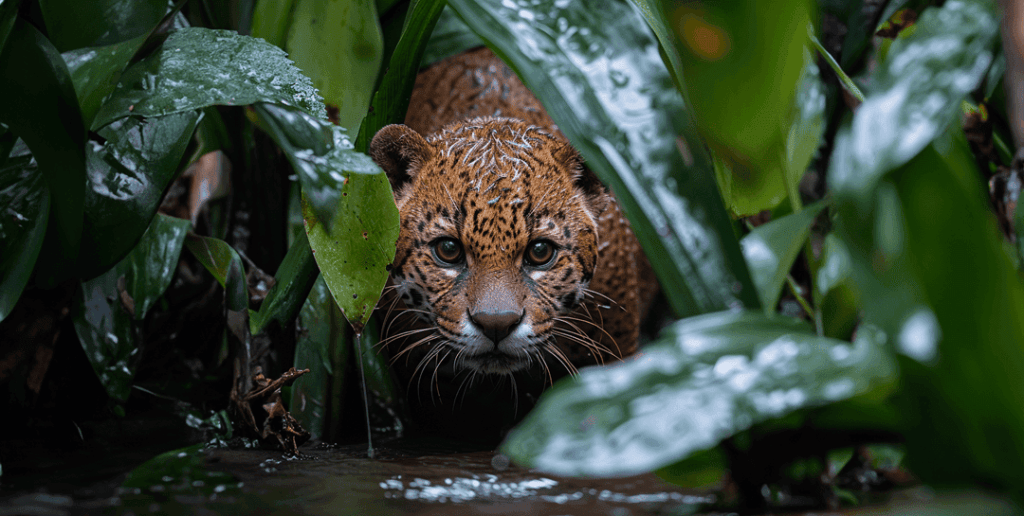
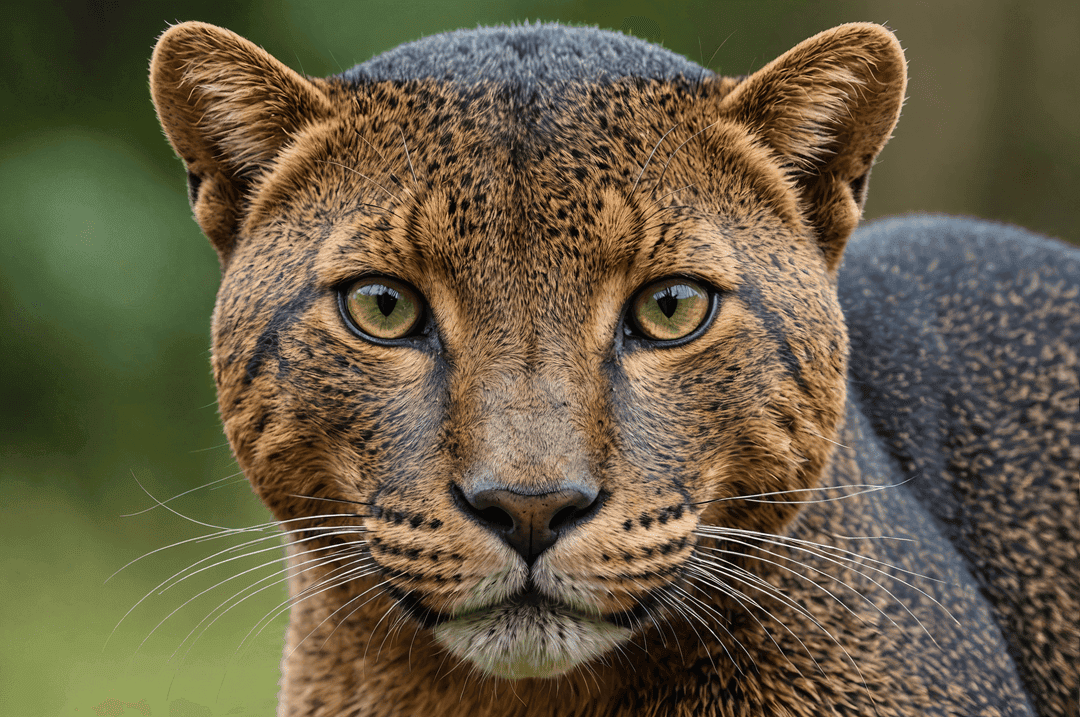
As in most tropics, the apex predators are cats — four different species, to be exact. Jaguars sit at the top, unchallenged. Pumas, close in size if not ferocity, also find sustenance in the rainforest alongside ocelots and margays.

Margays are smaller than house cats and resemble tiny ocelots. They’re outstanding climbers, expert hunters, and spend most of their time in trees. Unlike most cat species, which are crepuscular, margays are nocturnal. Credit: Clement Bardot/Wikimedia Commons

How do four medium carnivorous species exist side by side?

By dividing time, space and items on the menu, according to a new study.

Ocelots are extremely adaptable: they’re excellent climbers and swimmers, and can thrive in various environments. Credit: Victor Landaeta/Pexels

The felids hunt at different levels of the jungle at different times of day, and while there’s overlap between prey, each species has its own distinct diet, according to a research team from Oregon State University. Their paper, Niche partitioning among neotropical felids, was published earlier this month in the Journal of Animal Ecology.

As the big kids on the block, jaguars primarily eat peccaries (pig-like ungulates that weigh up to 88 pounds), armadillos, deer and, sadly, ocelots. Apparently membership in Club Felid does not grant the smaller wildcats a pass. Ocelots top out at about 35 pounds, while the largest jaguars weigh in at about 350 pounds, making the smaller cats easy prey.

Pumas opportunistically prey on peccaries and brocket deer, but the majority of their diet is composed of monkeys, both spider and howler. Ocelots and margays naturally go for smaller prey, sticking mostly to rodents and opossums.

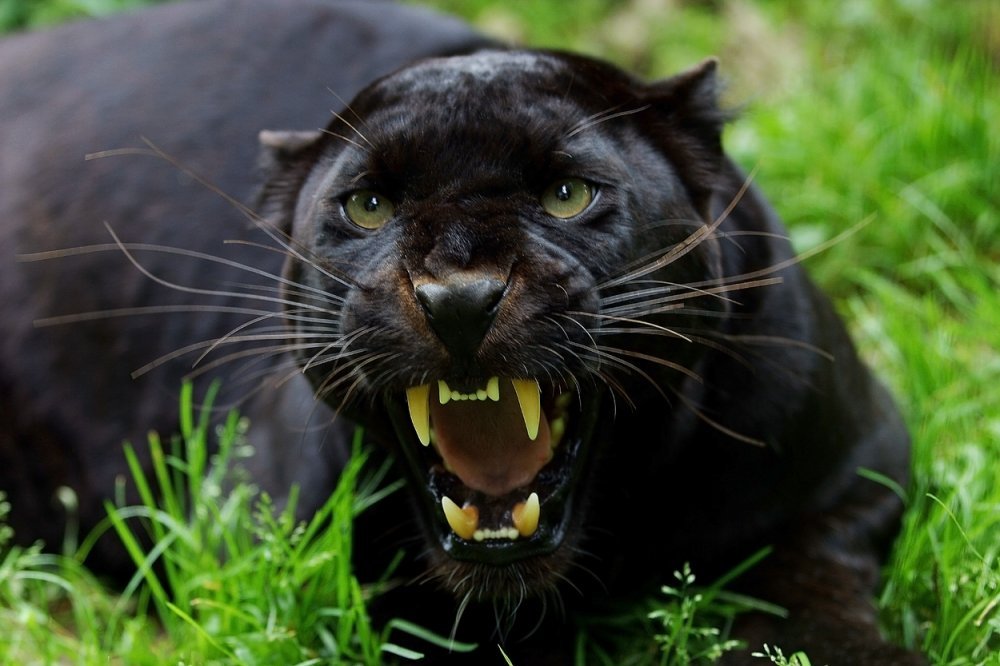
As the largest and most powerful cats in the western hemisphere, jaguars are the apex predators of their environment. Credit: Atlantic Ambience/Pexels

While jaguars hunt on the ground and have a well-documented habit of slipping into the water to prey on caiman and crocodiles, pumas, ocelots and margays take advantage of their climbing abilities and lighter frames to reach arboreal prey. That allows pumas, for example, to snag monkeys and arboreal opossum species from the canopy, so they don’t have to compete with jaguars.

The team verified the “spatial, temporal, and dietary niche partitioning” within the Maya Biosphere Reserve by using ground camera traps, arboreal camera traps and fecal samples, which allowed them to confirm the prey each species has been consuming.

Interestingly, margays are the pickiest — or perhaps most limited — of the bunch, preying on only seven species, while the other three cats regularly hunt between 20 and 27 different kinds of animals.

The information gleaned from the study not only helps researchers understand how these species interact with their environment, but also can help guide conservation decisions to safeguard them against extinction.

Pumas, also known as cougars and mountain lions, are adaptable and elusive. Credit: Catherine Harding Wiltshire/Pexels

https://news.oregonstate.edu/news/vertical-hunting-helps-wild-cats-coexist-guatemala%E2%80%99s-forests-study-finds

People Think This Nebula Resembles A Smiling Cat, PLUS: What Kind Of Music Soothes Felines?

Your cat’s taste in music may or may not align with your own.

Before we get into today’s cat news, I received an email asking why there hasn’t been much Buddy on the site lately.

Fear not, friends of Buddy! The little guy is down in the Amazon visiting his jaguar pals, but he’ll be home in time for the most important holiday of the year, Turkey day. He wouldn’t miss it for the world!

Buddy with a jaguar buddy in the Amazon, where there’s a special felid conference on new napping techniques.

A smiling cat?!

A story on Space.com says people see a “smiling cat” in images of a nebula, although we’re not so sure.

The nebula in question is Sh2-284, or Sharpless 284. It spans about 150 light years and sits about 15,000 light years from our star system near the edge of the Milky Way, in an outer spiral arm.

From a certain orientation, there may be suggestions of cat-like ears and eyes, although if there is a smile, it’s crooked and deranged-looking. Maybe the cat’s on pain pills from the vet?

There’s an opportunity here, since the nebula doesn’t have a nickname. The Buddy Nebula has a nice ring to it!

Here’s an image from NASA:

This spectacular picture of the Sh2-284 nebula has been captured in great detail by the VLT Survey Telescope at ESO’s Paranal Observatory. Sh2-284 is a star formation region, and at its centre there is a cluster of young stars, dubbed Dolidze 25. The radiation from this cluster is powerful enough to ionise the hydrogen gas in the nebula’s cloud. It is this ionisation that produces its bright orange and red colours. This image is part of the VST Photometric Hα Survey of the Southern Galactic Plane and Bulge, led by Janet Drew at the University of Hertfordshire in the UK.

And here’s an annotated image from astrophotographer Jim Thommes that shows us what we’re looking at and the immediate galactic neighborhood:

In Star Trek there’s always a convenient nebula nearby when the Enterprise — or Voyager, Titan or Discovery — needs to “hide” from some well-armed belligerent, and science fiction in general creates the impression that they’re like space swamps.

In reality nebulas are regions where the interstellar medium — the space between stars — is filled with gas, cosmic dust and inert matter. Some are stellar nurseries — places where stars are “born” — and some are the remnants of dead stars and the planets that orbited them.

They can seem to glow red, orange, green or blue depending on the elements present. Some of them reflect starlight while others are like filters, with the gases and dust lending their color to the nebulae structure.

Cats are pretty well-represented in the cosmos, from a human perspective. From the cat’s paw nebula to the Cheshire Cat galaxies, to the Lynx, Leo and Leo Minor constellations, astronomers have seen cats in the sky for millennia.

Does music help cats relax?

Although the research is limited, some studies have indicated certain genres of music can help our little buddies chill out. And if research into the canine response to music is any indication, we should expect to see more evidence for cats enjoying tunes.

When it comes to what kind of music is most effective, studies point to classical music with a slow tempo, as well as reggae and soft rock “with simple rhythms, slower tempos and no heavy percussion,” according to a new story from the BBC.

Just listening to some meowsic!

A 2016 study looked at the effect of music on 12 female cats who were recovering from spay surgery. The research team played “three different genres of music: classical music (CM), ‘Adagio For Strings (Opus 11)’ by Samuel Barber; pop music (PM), ‘Torn’ by Natalie Imbruglia; and heavy metal (HM), ‘Thunderstruck’ by AC/DC.”

The team measured heart rate, breathing rate and pupil dilation, concluding that classical music was most effective, followed by the Imbruglia song and AC/DC last. (Maybe next time they can slide The Tony Danza Tapdance Extravaganza in there for some extra fun.)

Anecdotally, Bud did not respond well to composer David Teie’s Music for Cats, but he hangs out and nods along to funk, classic 90s New York hip hop, retrowave, nu-disco, reggae and certain kinds of rock, which is almost certainly because he grew up hearing that stuff with me.

So maybe there’s a nature vs nurture element to feline musical preferences, although I wouldn’t hold out hope for cats who enjoy the Tony Danza Tapdance Extravaganza. Some things are best left alone.

Happy National Black Cat Day!

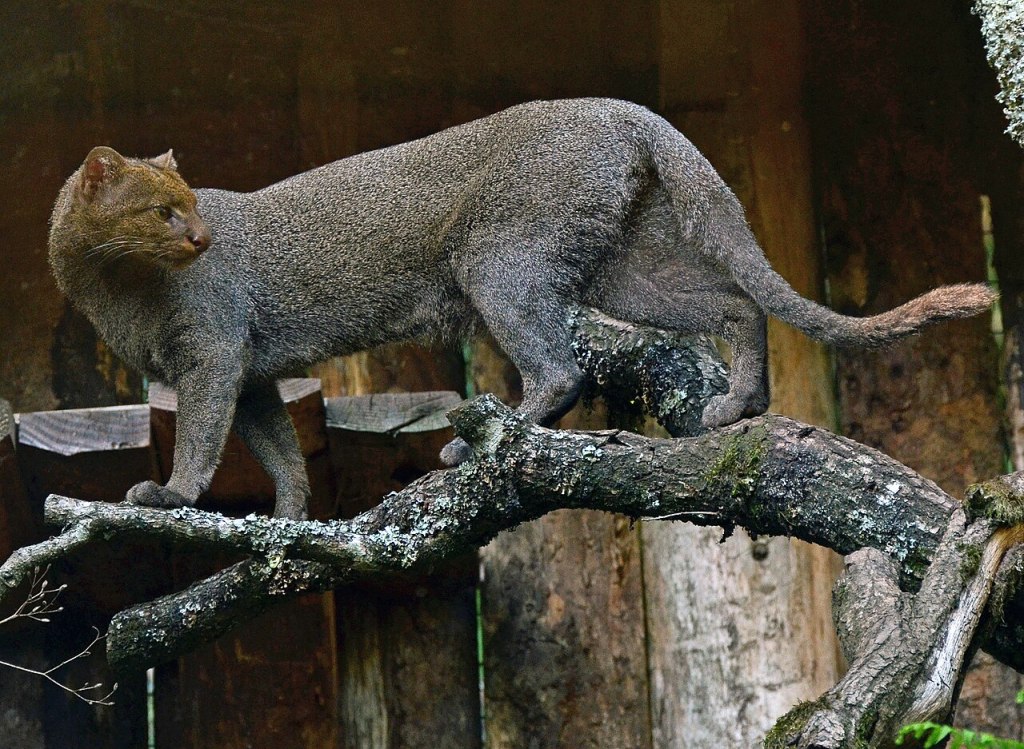
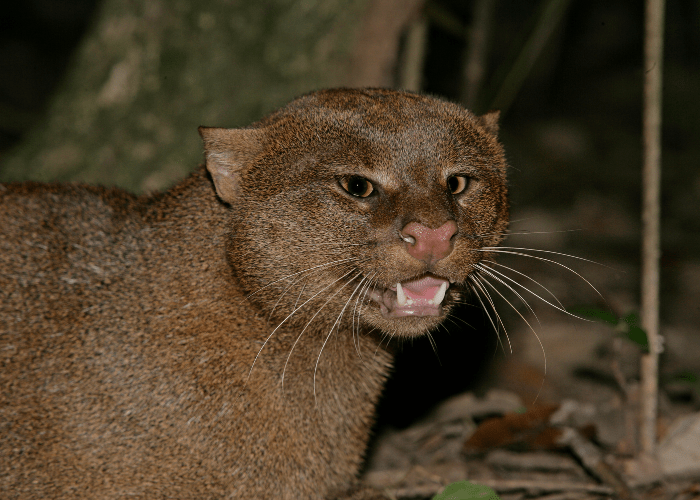
House cats, jaguars, leopards, Servals and jaguarundi are just some of the species that have melanistic (black) color morphs.

Everyone knows house cats, jaguars and leopards can be voids, but did you know other cats have black color morphs too?

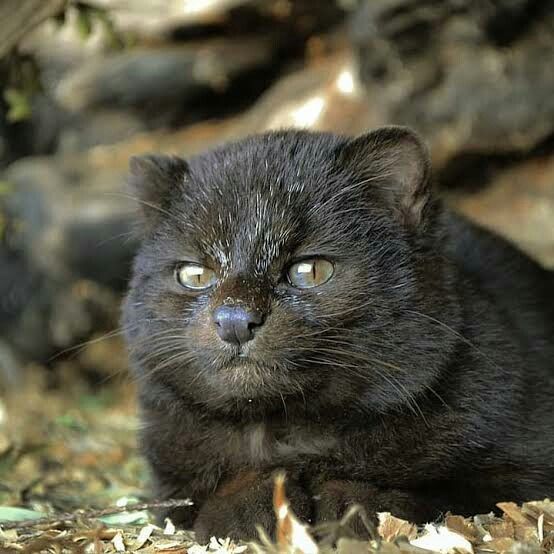
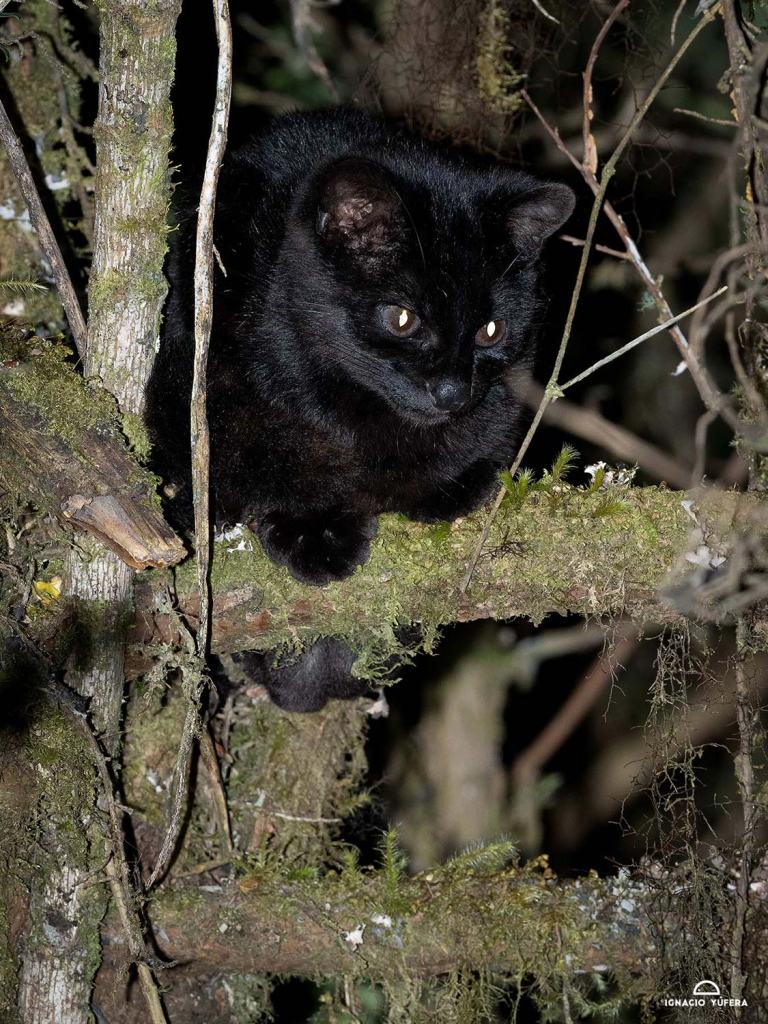
The Asian golden cat, the Serval, jaguarundi, Margay, kodkod, Geoffrey’s cat, oncilla, Pampas cat, and bobcat all have melanistic variants.

Unfortunately when it comes to house cats, research supports the longstanding claim that black cats are adopted at lower rates, and are euthanized in greater numbers, than other felines. Part of that can be chalked up to superstition. It’s also due in part to the fact that black cats are more difficult to photograph.

But as these photos prove, all you need is some decent ambient light, smart framing and maybe a bit of shadow/highlight correction to help bring out a black cat’s natural features.

Melanistic kodkod.
Melanistic oncilla. Credit: Ignacio Yufera

Image credits: Top two rows via Pexels, with photographers listed in the captions. All other photos via Wikimedia Commons. Last image (melanistic oncilla) credit Ignacio Yufera

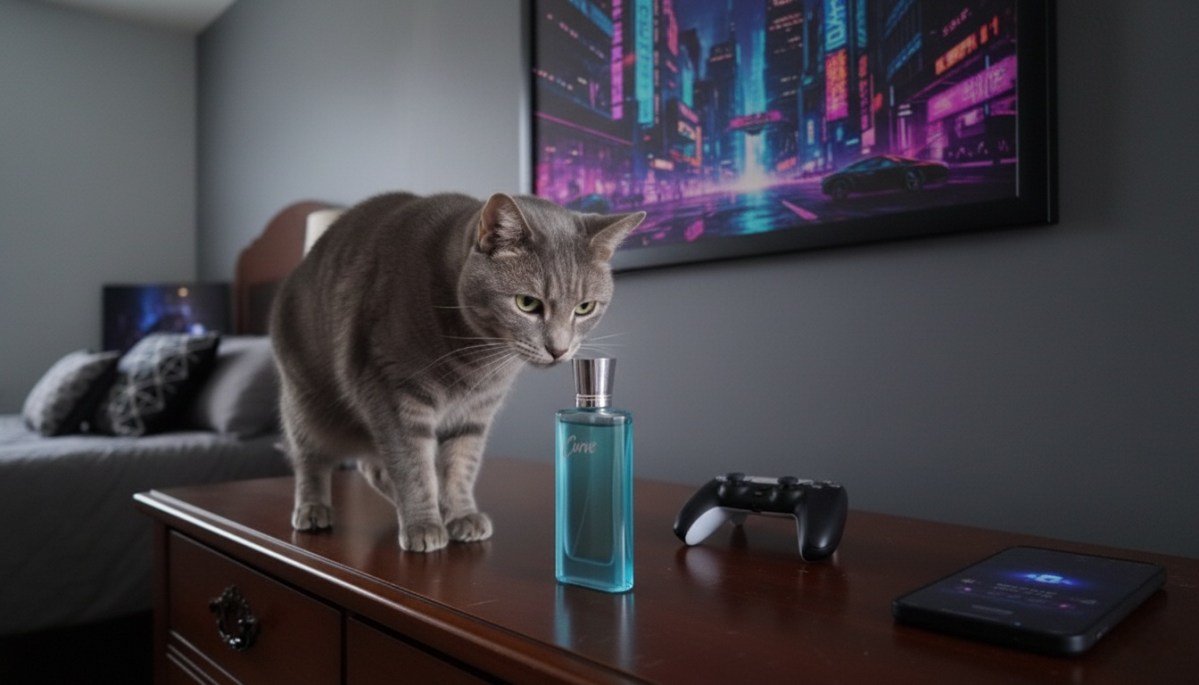
Which Colognes Drive Cats Crazy? Buddy The Cat Investigates!

After learning that wildcats — including jaguars, tigers and ocelots — love Calvin Klein’s Obsession for Men, Buddy the Cat explores the world of colognes to find one that drives domestic kitties crazy.

Earlier we wrote about the accidental discovery that ocelots respond enthusiastically to Calvin Klein’s Obsession for Men. Subsequent experiments proved jaguars and tigers are particularly fond of the scent as well.

Then a reader’s comment posed a question so obvious, we’re ashamed we didn’t think of it ourselves: do domestic kitties like colognes?

To find out, we asked Buddy the Cat, aka Little Buddy, to evaluate several fragrances. He’s taken the assignment seriously and provided thoughtful analysis, giving us just a hint of what it’s like to have an incredibly keen feline sense of smell.

Dolce and Gabbana Pour Homme

“The first ecstatic whiff takes me back to kittenhood. Days napping in the sun and chasing flies. Fresh cut grass and fragrant foliage. I was so deep into my reverie that the base notes nearly bowled me over when they arrived suddenly in their regal glories, like a king’s entourage without a herald. Rich cedar and musk evoke hours spent luxuriating in the potent funk of my human’s sneakers. Quiet woods and spices, like a litter box a day after feasting on rabbit, gently whisper of naps. Buddy likes this one!”

Cool Water by Davidoff

“Its initial briny hints conjure impressions of a dock at low tide, fish baking in the sun while a graybeard captain lights his pipe. Through confident middle notes, its warm embrace gently tugs you inward, like an antiquarian beckoning you inside a rare book shop with a rodent infestation. Aged leather book bindings and dark oak react provocatively with the paw-licking intensity of decadent mouse urine. Meowgnificent!”

Jaguar by Jaguar

“A carnival of candy for the nose, like accompanying your human to the bathroom post-Chipotle! The first hints arrive furtively, like a disguised aristocrat casting nervous glances as he makes a beeline for a brothel. Then it asserts itself in force: an army of jaguars advancing in the moonlight, their meowscles rippling in the silver mist, scent-marking in unison! Musk, civetone, ammonia. Pheromonic bliss!”

Drakkar Noir by Guy Laroche

“Powerful but restrained, like a certain silver tabby in his carrier, a single spritz of this magnificent scent conjures memories of halcyon days as a young feline. Mid notes whisper of woods and spices, a grove of wild catnip undulating in a summer breeze. Underneath it all is an unshakable foundation of warmth, like being swaddled in my human’s t-shirt after it’s been worn on a humid 97 degree day.”

Tyrannosaurus Rex by Zoologist

“Bergamot and verdant iridescence arrive as our olfactory escorts, ushering us in to a delectably frisky gourmand accord. It’s as if we’re drifting on chocolate seas with vanilla currents playfully nudging us to shore where beefy undertones await. Umami! Steaks sizzle, beckoning our noses toward the grill, stomachs rumbling. A most delicious scent!”

So there you have it. T Rex emerges as the winner in this round, but can it compare to mainstays by Yves Saint Laurent and Giorgio Armani? Only Buddy can tell us. Tune in next time as we accompany the Budster on an aromatic journey!

Amazing Cats: Ocelots Love Trees, Water And Calvin Klein’s Obsession For Men

Ocelots, one of the western hemisphere’s most adaptable cat species, are often mistaken for young jaguars.

In 1999 biologists from the Dallas Zoo were lending a hand on a project to monitor and protect America’s ocelots, who primarily range in southern Texas.

With limited resources, the team was trying to keep the wild cats in a protected area and get them to use paths where camera traps had been installed. One tried and true method was to use scents, but what could attract ocelots?

“Sort of on a lark, one of our research assistants produced a bottle of Obsession,” Dallas Zoo’s Cynthia Bennett said at the time.

The felines loved it. Members of the research team watched astounded as the scent magically transformed previously ignored objects into items of sudden fascination.

The cats happily rubbed their cheeks and bodies against anything sprayed with the stuff.

“It´s a little embarrassing to watch, actually,” Bennett said. “It does make you wonder what´s in the perfume.”

(It’s probably civetone, a synthetic version of a pheromone produced by civets used as a binder in the Calvin Klein scent.)

Credit: Victor Landaeta/Pexels

In addition to their predilection for cologne, ocelots are known for enjoying water, hunting by twilight, and napping in trees. The medium-size felids, who weigh up to 40 pounds in the wild, are also easily recognizable by their big eyes, the dark rings that surround them, and the way those markings become twin stripes that sweep over their foreheads.

Perhaps most striking are their large, wavy rosettes, which sometimes get them confused for young jaguars. In several indigenous South American languages, ocelots and jaguars share a name or have very similar names.

An ocelot kitten. After a gestation period of about three months, ocelot moms give birth to as many as three kittens. Credit: Wikimedia Commons
An ocelot resting in a tree. Like other leopardus species, ocelots are proficient climbers. Credit: Wikipedia Commons

Ocelots have another quality that may lead people to confuse them with jaguars: they’re fond of water and they’re considered strong swimmers. That allows them to master their habitats, which often include rivers winding through rainforests and mangrove swamps.

The resourceful cats are adept predators on land and they can also pluck fish out of rivers.

An ocelot going for a dip. Credit: yellowlime_des/Reddit

Ocelots are categorized as a species of “least concern” by the IUCN (International Union for Conservation of Nature) but that doesn’t mean they’re thriving. Like pumas, the species is adaptable and can survive in varied surroundings. Still, ocelots contend with the same pressures other species experience, including habitat loss and fragmentation, hunting and poaching.

And while they can’t get enough of Calvin Klein’s Obsession for Men, maybe that’s a good thing.

According to zookeepers and wild cat experts, ocelots have a uniquely funky body odor which is amplified by their prodigious scent-marking. They want everyone to know where their territory is.

For zookeepers, the cats’ Obsession obsession could pull double duty as olfactory enrichment in their habitat — and a way to mitigate the stink.

Credit: Wikimedia Commons

Name: Ocelot (leopardus pardalis)
Weight: Up to 40 pounds, with limited sexual dimorphism (males are slightly larger)
Lifespan: Up to 20 years in captivity
Activity: Crepscular, nocturnal
Habitat: Claims territory in places where prey, water and dense ground cover are plentiful but the species is adaptable and survives in varied biomes

Want more Amazing Cats?

Amazing Cats: The ‘Fire Tiger’ Is The Stuff Of Legend
Amazing Cats: The Adorable Colocolo, Feline Of The Pampas
Amazing Cats: The Sunda Clouded Leopard
Amazing Cats: The Mysterious Marbled Cat
Amazing Cats: The Rusty Spotted Cat
Amazing Cats: The Jaguar, ‘He Who Kills With One Bound’
Amazing Cats: The Puma, Adaptable Survivor