‘School With Paws’: Cats In Class Help Kids Readjust After Pandemic

The kids are so smitten, many of them come to the school on weekends to care for the cats.

When teacher Evrim Mutluay welcomed her students back to school after a long period of remote learning, she noticed they were different.

The kids, who hadn’t physically been to school for more than a year due to the pandemic, were “colder” and less engaged with their lessons and with each other. Many were either ambivalent or didn’t want to be there.

So Mutluay, who teaches at Adagüre Primary School in the rural outskirts of Turkey’s Izmir region, had an idea that might seem radical in most countries, but not in the famously feline-loving nation: She cleaned out an old storage building on school grounds and turned it into a shelter for 12 neighborhood cats.

It was the first step in her “Patili Okul” (“School With Paws”) project aimed at getting kids reinvested in their studies.

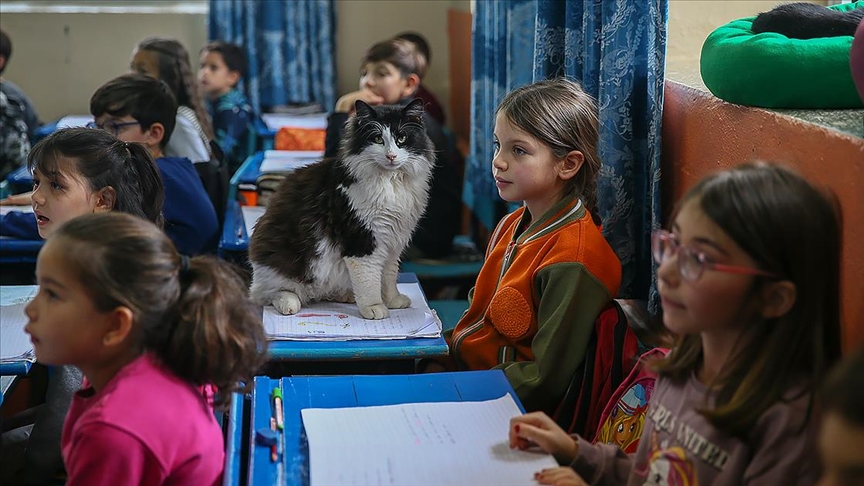
The cats — who have been given names like Alaca (“twilight”), Sun and Panther by the kids — have free run of the school during the day, and Mutluay’s elementary school-age students can not only pet and cuddle with them during class, they help take care of the former strays by cleaning their shelters and feeding them. The students “love the cats so much,” Mutluay said, and the program has “endeared the school to the children.”

School With Paws
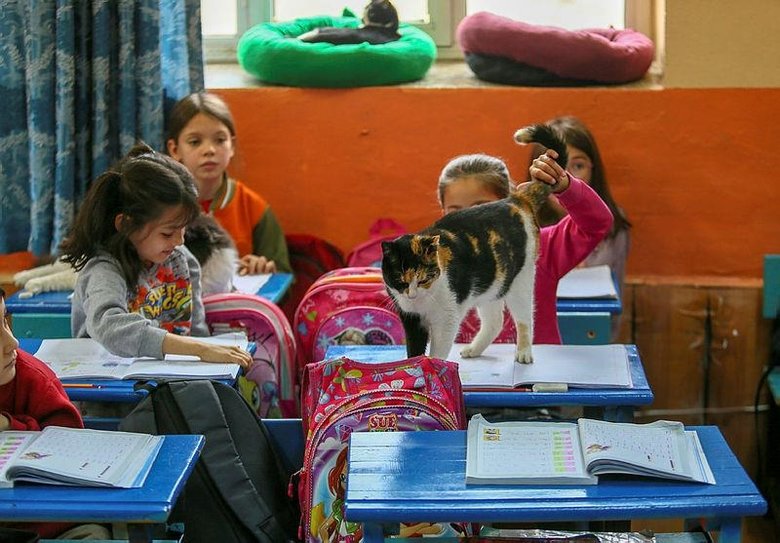
A student cuddles a calico cat in class. Credit: Adagüre Primary School

The students have become so invested that many of them now show up on weekends voluntarily to feed and play with the cats.

“It also helps them to develop a sense of responsibility, by caring for others,” Mutluay told Turkey’s Anadolu Agency, a wire service similar to the Associated Press. “In a way, cats and children grow up together.”

The school, which also has a community garden tended by the kids and holds classes outdoors when the weather permits, offers a chance for children to form bonds with the animals.

Mutluay described one student who was so affected by his time stuck at home that he “didn’t even make eye contact” when the school resumed in-person learning. Except for his nascent connection with a cat named Pied, he was distant and seemingly disinterested. When the student’s attendance fell off, Mutluay appealed to that connection to bring him back: “If you don’t come, Pied will cry,” she told him.
School With Paws
Credit: Adagüre Primary School

Student Cemre Şen is one among many of her classmates who have brought stray cats to the school. There are now 30 cats living on the school grounds, including the lost kitten Şen found. She and her fellow students even incorporate the cats and kittens into games they play during recess, she said.

The cats are not kept against their will: If they want to return to their colonies or street life, they are allowed to leave. Most choose to stay, enjoying the affection and attention from the kids and the guarantee of solid meals every day. (The kids feed them before classes begin and after school before heading home.) It’s an arrangement that works in a nation where caring for cats is seen as a community responsibility, as opposed to the network of shelters, rescues and colony managers who care for cats on behalf of a generally indifferent public in countries like the US.

In Turkey, the idea of cats in classrooms isn’t controversial because the little ones are everywhere — they’re allowed to wander in and out of shops, homes and even office buildings at their whim, and the streets of cities like Istanbul are lined with miniature cat houses for neighborhood felines.

The allure of cats in the classroom is so strong, Mutluay’s program has even attracted transfers like newcomer Ata Yıldırım, who switched schools after he read social media posts about the program.

“I have two cats at home,” he said, “and when I saw so many cats here, I convinced my parents to send me here.”
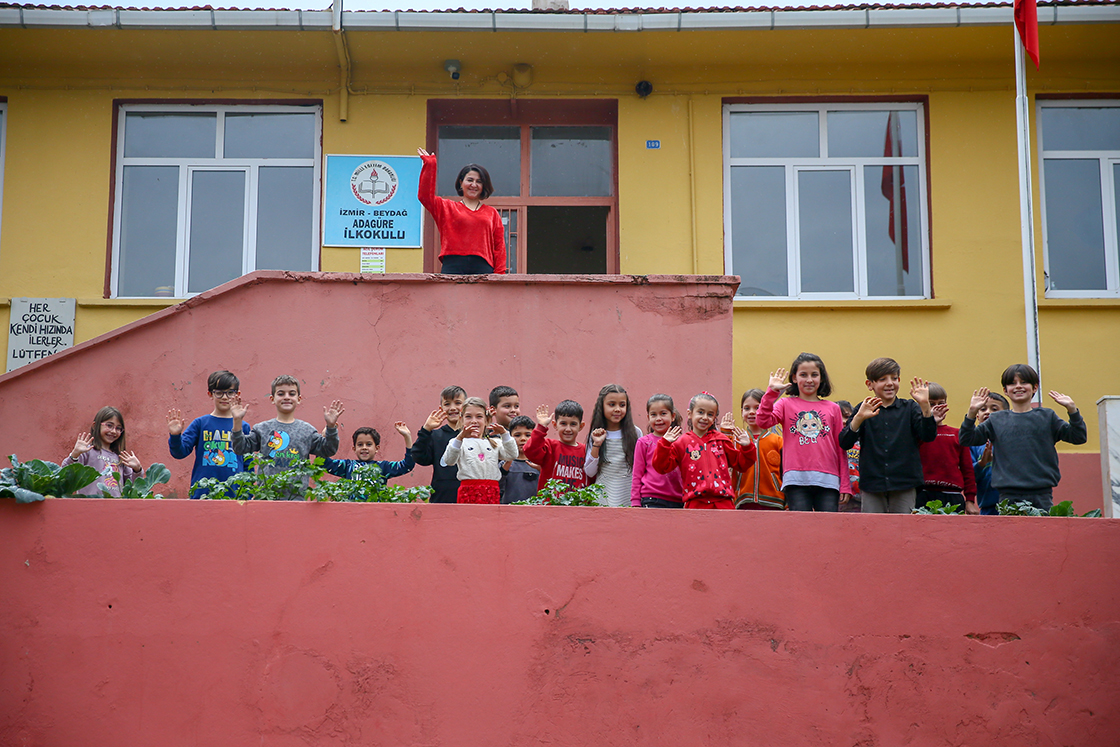
School With Paws
Evrim Mutluay and her students at Adagüre Primary School. Mutluay has been a teacher for 16 years. Credit: Adagüre Primary School

TSA Baggage Scan Reveals Kitty Stowaway In Luggage

Smells loves boxes just as much as any other cat, but his affinity for tight spaces almost landed him in Florida, a long way from his home in Brooklyn.

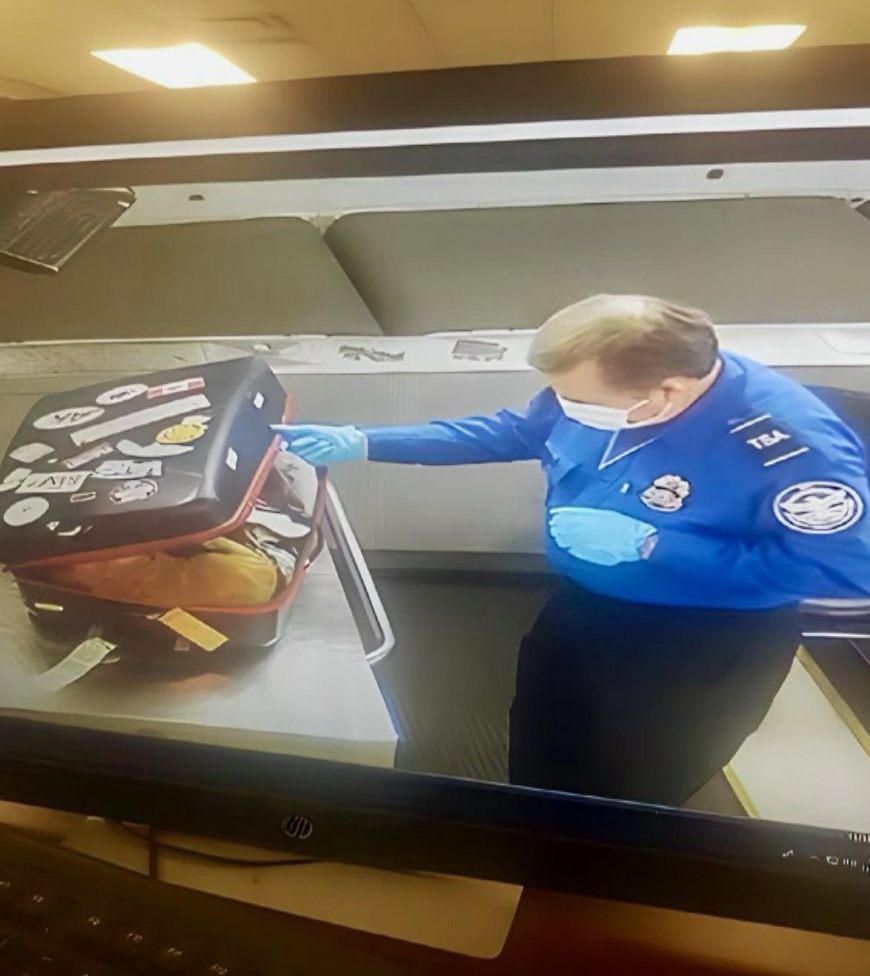
It was a tuft of orange hair poking out from the zipper of a carry-on suitcase that first alerted a TSA agent that something weird was going on.

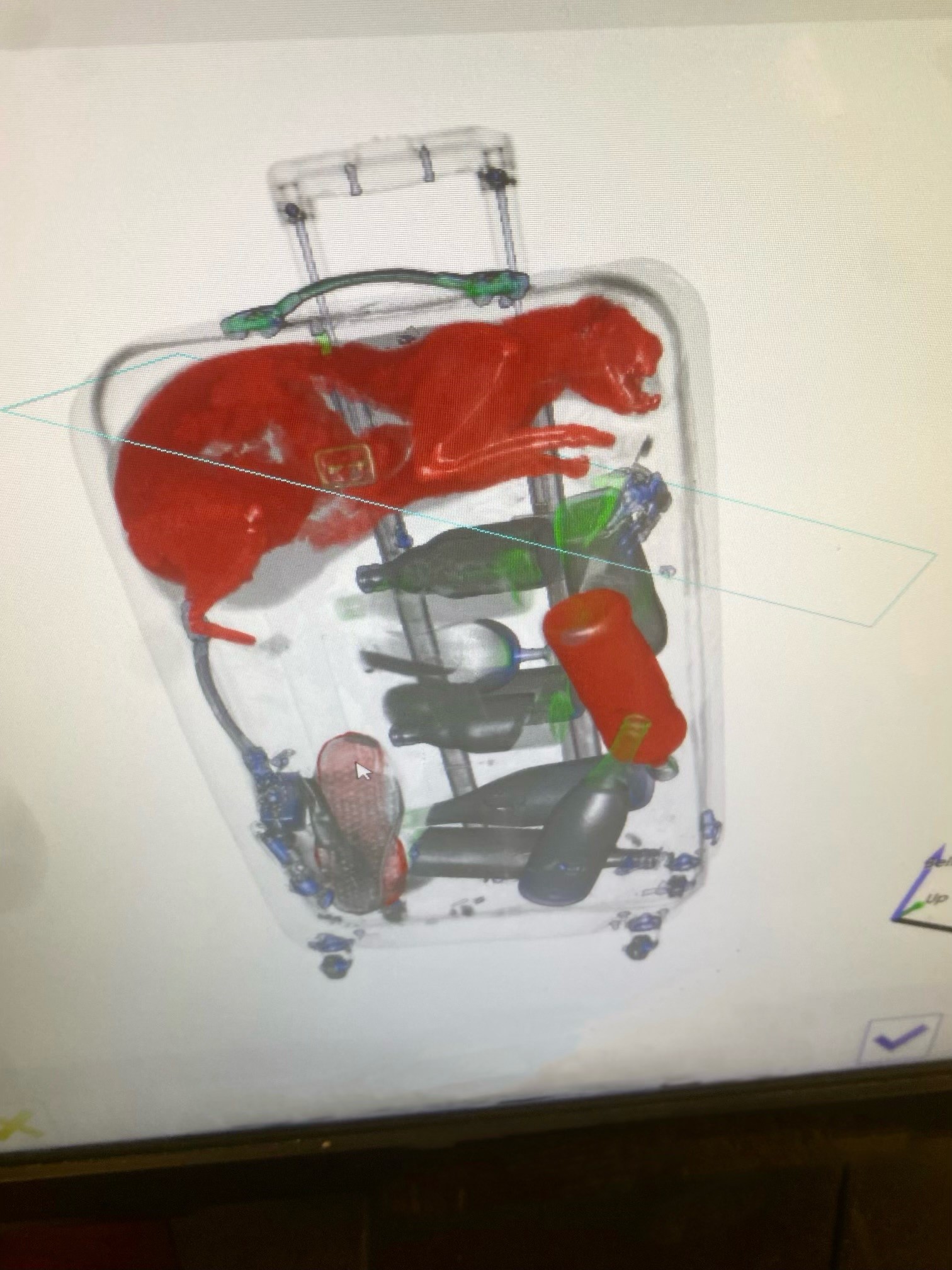
The agent, who was processing a traveler departing from New York’s JFK airport on Tuesday morning, then consulted an x-ray scan, confirming the suitcase contained some unusual cargo — a ginger tabby cat tucked in among toiletries, snug and napping comfortably in the enclosed space.

X-Ray TSA scan
An x-ray scan revealed Smells tucked snugly into the suitcase. Credit: TSA

tsasmellycat
The incriminatory tuft of orange hair that gave away Smells’ hiding spot. Credit: TSA

As for the traveler, the cat didn’t belong to him, nor was he aware kitty had climbed inside. It turned out he had been a house guest of friends living in Brooklyn, and the cat named Smells had slipped into the luggage before he left for home, for what is a suitcase if not just another box?

The TSA confirmed the story with the cat’s owner before letting the traveler board his Florida-bound flight.

“An officer called and asked if I wanted to press charges” said Alix, Smells’ 37-year-old human. “He wanted to know if there was any reason [the passenger] was trying to steal my cat and go to Florida.”

Smells the Cat
A TSA security agent opens the suitcase to reveal its unauthorized would-be stowaway. Credit: TSA

After Alix assured the TSA agent that Smells “really likes to check out boxes” and definitely would have climbed in on his own, she hired a driver to retrieve the kitty, who was unperturbed by the adventure.

“I was worried he’d be freaked out but he wasn’t even meowing on the way back,” Alix told the New York Post. “I went to give him some extra treats and he acted like nothing had happened.”

As for the TSA — which often deals with more serious finds like guns and drugs secreted into passengers’ luggage — the saga of Smells was a welcome change that gave them a good story and some laughs.

“On the bright side,” TSA spokesman Lisa Farbstein wrote on Twitter, “the cat’s out of the bag and safely back home.”

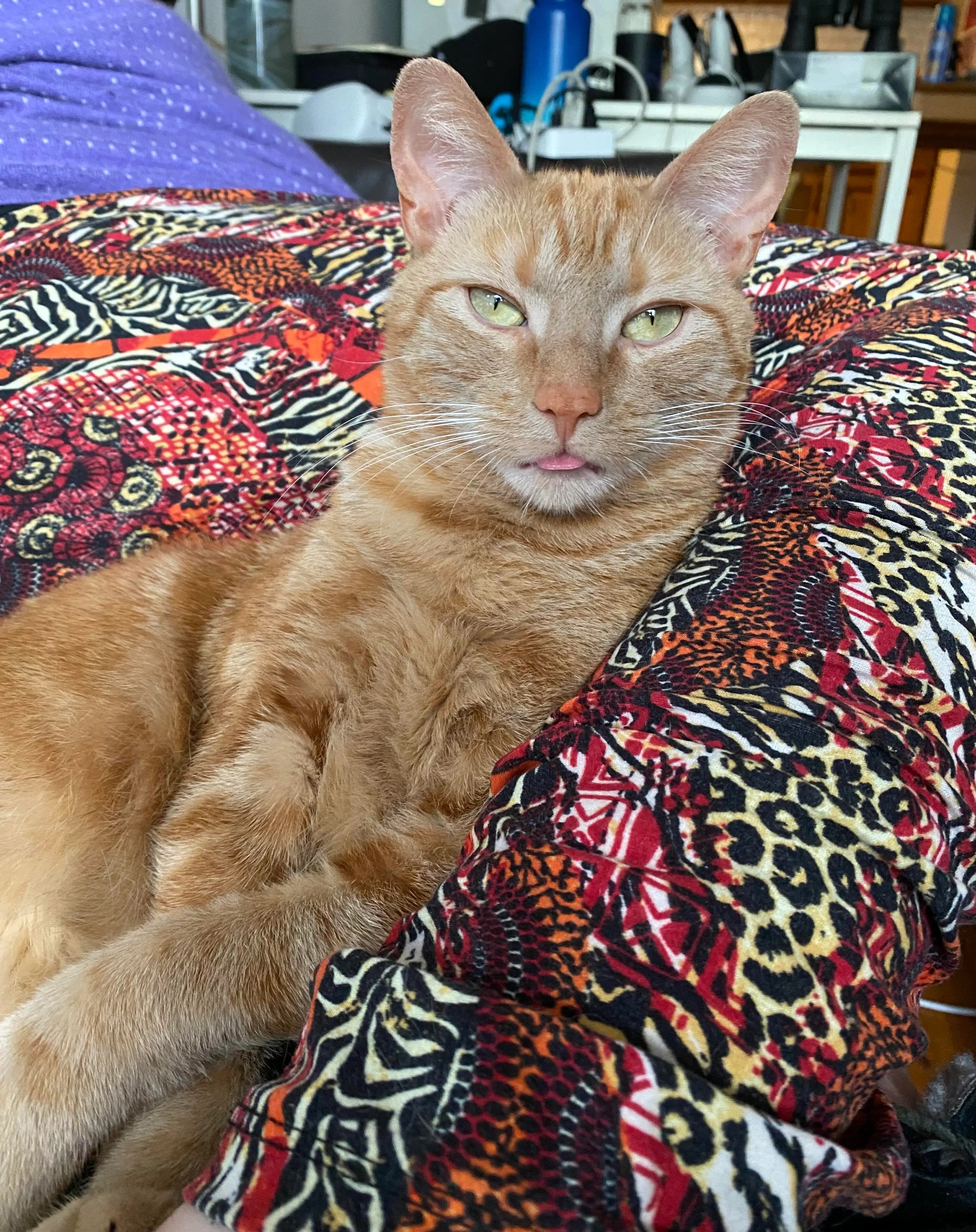
Smells the Cat
Smells the cat. Credit: His humans

“I was worried he’d be freaked out but he wasn’t even meowing on the way back,” she said. “I went to give him some extra treats and he acted like nothing had happened.”

OwlKitty Becomes Tom Cruise’s Wingman In ‘Top Gun With A Cat’

The famous cat takes to the skies in her latest movie cameo.

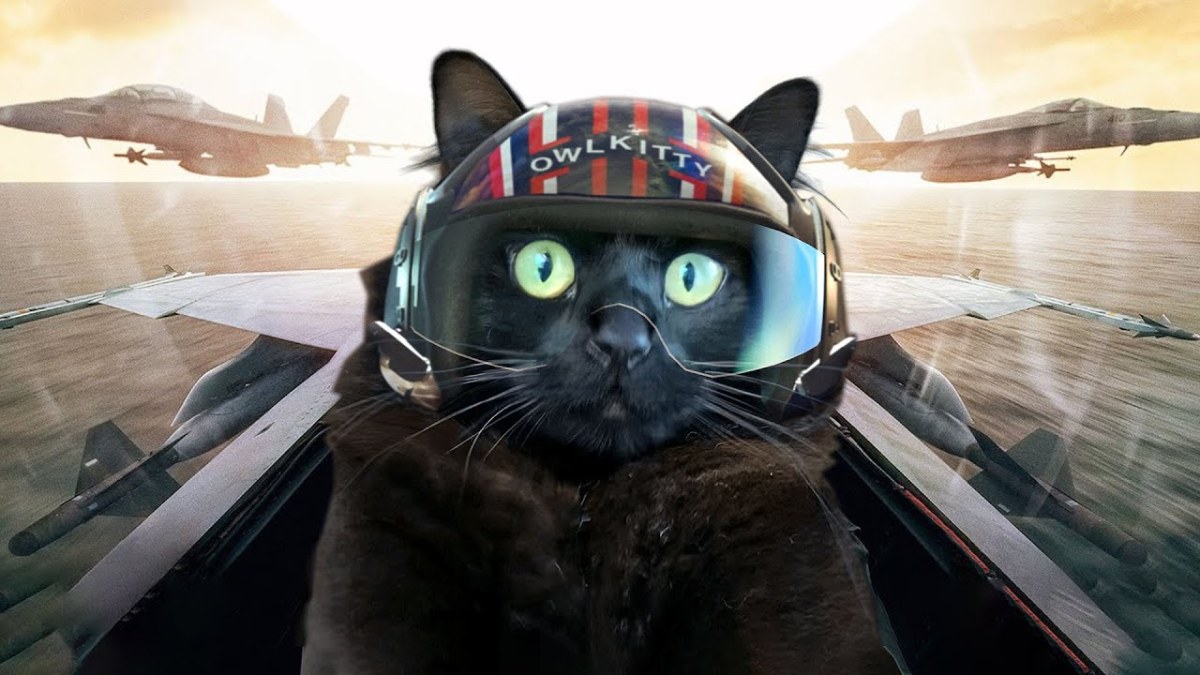
The infamous OwlKitty has returned to the big screen, this time flying wing alongside Tom Cruise’s Maverick in a meowified version of Top Gun.

OwlKitty’s patient humans are known for meticulously filming their beloved black cat in front of green screens and inserting the cute moggie into various movies and TV shows, from Jurassic Park to Titanic, Home Alone and even Netflix’s The Witcher.

OwlKitty’s female, so technically she’s Cruise’s wingwoman, and we see her in the cockpit of an F-18 Super Hornet, with Cruise getting a dressing down by the admiralty, and in the iconic beach volleyball scene.

10 Signs From Your Cat You’ve Misinterpreted As Love

Buddy the Cat clears up common misconceptions people have about cats expressing affection for their loyal human servants.

The internet is awash with listicles claiming your cats love you, insisting you’ll know for sure once you’re able to recognize the signs.

Well we’re here to tell you that love is a strong word, and if you’re lucky your cat merely acknowledges your existence, human. Here are the 10 feline behaviors most commonly mistaken for love:

  1. Grooming: “Grooming means one thing, and one thing only: We think you’re gross and you need a bath,” Buddy the Cat says. “You’re disgusting creatures, allowing your dead skin cells to accumulate all over you without washing them off until you take those horrific ‘showers.’ I could take a claw right now, run it down your arm, and come up with enough dead skin cells to season a salad. Now that’s nasty.”
  2. Kneading: “The Feline Propaganda Ministry seeded a story that kneading is some sort of affectionate behavior left over from kittenhood, and that by kneading you, we’re identifying you as our surrogate moms. That’s hilarious,” says Buddy. “We’re simply tenderizing our meat.”
  3. Head boops: “In ancient Rome, slaveowners would mark their property with brands or tattoos saying ‘PROPERTY OF POMPEY MAGNUS’ and that sort of thing. That’s what we’re doing with head boops. We’re using the pheromone glands on our heads and cheeks to mark you as our slaves, so other cats don’t try to lay claim to you.”
  4. Bringing you presents: “You humans eat the most disgusting food, like broccoli, potatoes and oranges, which are particularly revolting. When we bring you presents, we’re trying to fatten you up for later when we eat you.”
  5. Sleeping on you. “You’re warm. End of,” Buddy explains. “By sleeping on top of you, we also ensure you aren’t going anywhere, and will be available to fetch us snacks should we wake up hungry.”
  6. Putting our butts in your face: “You like that? Sniff it, human servant!”
  7. Tails held straight up: “The tips of our tails are actually quite sharp, and we brandish them like weapons. Weapons that say ‘There will be no disobedience or dilly-dallying here. Run along now and fetch us some yums.'”
  8. Meowing: “There is no equivalent for ‘please’ in meowenese. We meow because we know you’re hopelessly obtuse creatures and you can’t read the simplest tail, ear or whisker movements. Meowing is like speaking slowly to a child who’s had too many head injuries. ‘Massage…my…head…human. That’s a good human!'”
  9. Purring: “A purr is just a quiet roar. It means we’re happily thinking of ways to kill you.”
  10. Tolerating you: “Humans often mistake grudging acceptance for love. Just because we tolerate you doesn’t mean we love you. It means you provide useful services, but if that calculus should change — say, by providing subpar treats or not serving wet meals as delicious as the ones served by the neighbor two houses down — then we’ll simply move house.”

Kitten With No Sex Organs Up For Adoption, Plus: Cat Proves The Dog Is HIS Pet (VIDEO)

Hope the Cat’s condition is so rare it doesn’t have a name, but her rescuers say it won’t lead to health complications and Hope is otherwise a very normal and friendly cat.

We all know what it’s like — you’re trying to get something done when your pet, beloved as he or she is, has decided to be really annoying in insisting on treats.

Finn the cat was in this position recently when his pet, Piper the Cavalier King Charles Spaniel, had her eye — or more likely her nose — on a small bowl of Cinnamon Toast Crunch on the kitchen counter. Piper couldn’t reach the tasty snack, so Finn climbed up, fished out a piece of cereal one at a time and dropped them for his loyal canine companion. (Finn himself had no interest in the sugary cereal, lacking in meat as it is.)

This should settle any remaining questions about where cats and dogs stand relative to each other:

Homeless kitten from UK has rare condition, is neither male nor female

A kitten rescued by a shelter in Warrington, about 20 miles west of Manchester, was originally listed as female and given the name hope. However, during a routine exam, a veterinarian found Hope does not have reproductive organs, according to The Guardian.

“There’s an outside possibility of some ectopic ovarian tissue hiding away internally but we think this is extremely unlikely … This is so rare that there isn’t really a commonly used term for this condition, but it is effectively sexual organ agenesis,” said Fiona Brockbank, senior veterinarian at Cats Protection in Warrington. “While this means we don’t have any previous cases [on which] to base our knowledge of how this will affect Hope in the future, we spent time monitoring this cat to ensure they can urinate and defecate appropriately before they were considered ready for rehoming.”

Hope’s condition is so rare it doesn’t have a name, but shelter manager Beni Benstead told the newspaper that shouldn’t dissuade potential adopters. Hope is very friendly with other cats at the shelter and “has been a delight to care for.”