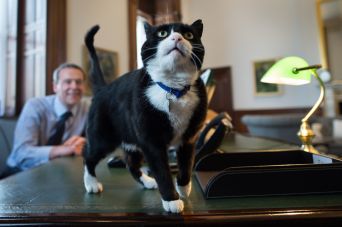
Palmerston is the former chief mouser at the UK’s foreign office, and is infamous for his numerous clashes with No. 10 Downing Street’s chief mouser, Larry the Cat.
Palmerston is back!
In 2020, after years of internecine conflict between mousers in service to Queen Elizabeth II, Foreign Office Chief Mouser Palmerston “retired” to the countryside where he could enjoy nature, and most importantly, get away from archrival Larry the Cat.
Larry, a favorite of the British press in his role as chief mouser at No. 10 Downing St. (the UK equivalent of the White House), was aggressive about defending his territory. Brawls between Larry and Palmerston became the stuff of legend as media photographers documented the frequent clashes between the felines.
Palmerston vs Larry: the chief mousers clashed often during Palmerston’s time as the foreign office cat. In the 2016 brawl pictured here, Larry lost his collar in what media photographers called the “most brutal” clash between the two felines.
Now Palmerston has returned to serving his country, and his reward is a cushy gig in an island paradise.
The famous tuxedo is accompanying his human, Andrew Murdoch, who has been named governor of the British overseas territory.
Palmerston, in his role as “first feline diplomat” will “attend only the meetings he deems important, offering advice when necessary and indulging in well-earned naps,” per the BBC.
Palmerston should be having the time of his life, provided Larry doesn’t suddenly resign his post at Downing Street to take a job in Bermuda.
Palmerston vs Larry: Larry is on his sixth prime minister since taking over as head honcho at No. 10.
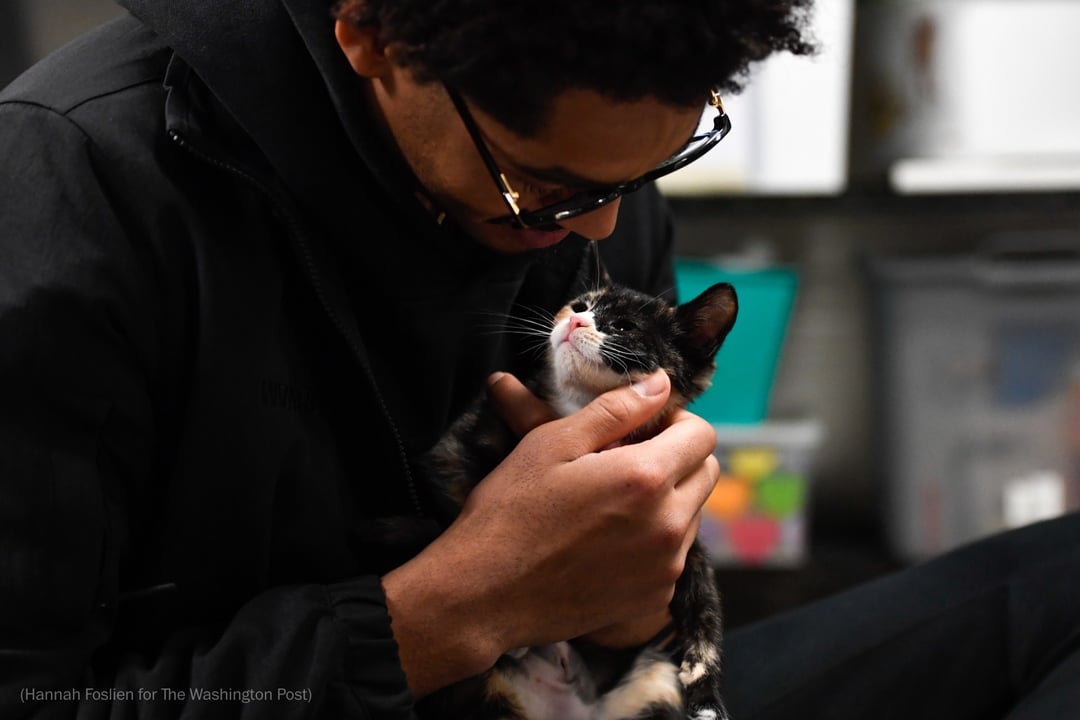
The Washington Wizards’ Jordan Poole loves cats, and he’s showing his fellow NBA players what awesome little buddies they can be.
Jordan Poole finds it difficult to leave the Falls Church, Va., animal shelter where he volunteers.
He likes the staff and fellow volunteers, but most of all he hates leaving while knowing the cats he’s interacted with still need homes.
“Every time I come, it’s: ‘Let me leave with all of them! Give me 14 of them right now!’” he joked to the Washington Post’s Candace Buckner, who calls him “the lead crusader of the Secret Society of NBA Cat Dads.”
Some aren’t so secret: teammate Tristan Vukcevic recently adopted a cat after Poole converted him to the dark side, and a coy Poole says he “may have” convinced NBA superstar Stephen Curry to adopt a feline friend.
Poole with one of his tabby cats, brothers he adopted together from a California shelter when he was with the Golden State Warriors. Credit: Jordan Poole/Instagram
In a 2022 profile in The Athletic, Poole’s mother Monet says her son adopted his first cat when he was in high school.
“And when I tell you he fell in love with cats,” she said. “He loves his cats. … And he’s got some pretty cats too.”
When Poole was drafted by the Golden State Warriors in 2019, his cat stayed with his mom back in Michigan because she wouldn’t have adjusted well to the move to the west coast, as well as an empty apartment when Poole was on road trips with the team. Later that year, the then-rookie adopted brother cats who had been abandoned by their former owner.
Since he was traded to the Washington Wizards, Poole has volunteered at a Virginia shelter.
His enthusiasm is one reason why he’s been able to get teammate and friends interested in adopting. The NBA has other notable cat dads, including twins Brook and Robin Lopez, whose cats hilariously can’t stand each other. But Poole takes it to another level.
“A lot of guys are dog people, but just the energy [and] the way I talk about [cats], the pictures and videos and stuff that I show them, it just gives them a little bit more interest,” Poole told the Post. “So I give them a different perspective. Maybe they’re not as much maintenance, but they’re still a really dope companion and friend to have. You don’t have to really take them out three or four times a day. You can still get your rest. Normally [my peers] like to explore it. I’ve had a lot of friends and teammates who are also cat people.”
Former Knicks center Robin Lopez, pictured with his cat Edward, says his brother’s cat is sneaky and evil for attacking Edward: “The second I lay eyes on him, he’ll act like, ‘I’m a cherub. I’m innocent.’ I’m not buying it.”
The 25-year-old Poole is averaging 20.3 points, 4.8 assists, 3.1 rebounds and 1.5 steals per game this season while shooting an excellent .391 on three-point attempts. The 6’4″ guard spent his first four seasons with Golden State before he was traded to Washington.
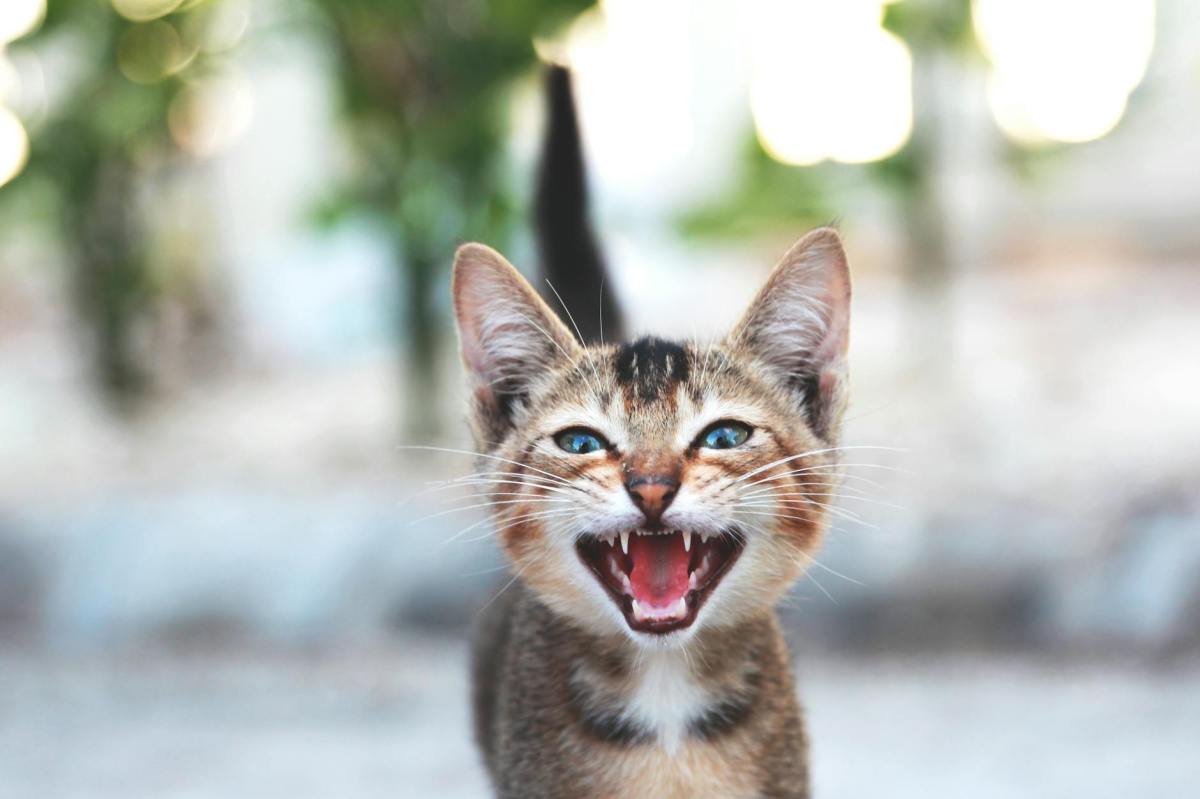
A 23-second clip of a cat growling and yowling has become one of the most-used sound effects over the past three decades. The Guardian traced the clip back to the man who recorded it and got the full story.
We’ve all heard Cheeta the cat yowling, we just don’t know it.
Cheeta was a house cat who belonged to Wylie Stateman, a sound engineer who lives in LA.
In 1988, Stateman recorded an argument between Cheeta, a “remarkably small” half-Siamese void, and her mate, a tomcat named Sylvester.
The 23-second clip made it onto The Premiere Edition, a 20-CD library of sound effects Stateman produced in 1990.
Stateman, called “one of the great recorders of the time” by a colleague, told The Guardian he brought his sound recorder with him everywhere he went for three decades, recording thousands of sounds that have been used in movies for 35 years.
Buddy is also an accomplished sound effects cat.
Cheeta’s yowls are one of his greatest successes. The cranky cat can be heard in Toy Story, Home Alone 3, Les Miserables, Pet Sematary, 101 Dalmations, Venom: Let There Be Carnage, Babe, End of Days, How The Grinch Stole Christmas, and many more.
Although it’s difficult to get an exact count, it’s believed Cheeta’s distinct voice can be heard in some 330 films over the years. If you’re interested in learning more, check out The Guardian’s deep dive into the sound effect and its origins.
Buddy the Magnanimous
I went to visit my brother and his family in Washington this past week, leaving Buddy in the care of my mom.
Regular readers will recall that Bud has a bad reputation for trying to maul his cat sitters, which obviously complicates things.
The incorrigible little lunatic.
Sue, his regular sitter, has known Bud since he was a kitten. She’s literally one of the first humans he met, yet that has not stopped him from ambushing and attacking her. Incredibly, she still agrees to care for him in my absence despite his belligerence, though she’ll no longer play with him. She feeds him and gets out ASAP. I can’t blame her.
This time my mom cared for the little stinker. He’s also tried to murder her when she’s watched him on previous occasions, including one incident in which his bites and scratches necessitated a trip to urgent care and a round of antibiotics.
So yeah, the happy news is that he didn’t attack her this time, although she told me every time she came back, he’d be waiting right by the door, and when he saw it wasn’t me, he would sniff derisively before turning and padding away.
They have an uneasy truce, but I’ll take it. You know you have small dreams when you celebrate a trip in which your cat doesn’t try to maul anyone in your absence.
On a tangential note, I had a first phone interview with a wild cat conservation organization this week, and for the first time in a long time, Bud didn’t make a peep.
He’s meowed loudly during other phone interviews, he’s put his butt in front of the camera like it’s his job during video calls, and he won’t shut up at any other time, but the one time when having a cat might benefit me, he decides to be silent. Thanks, Bud. You’re the best.
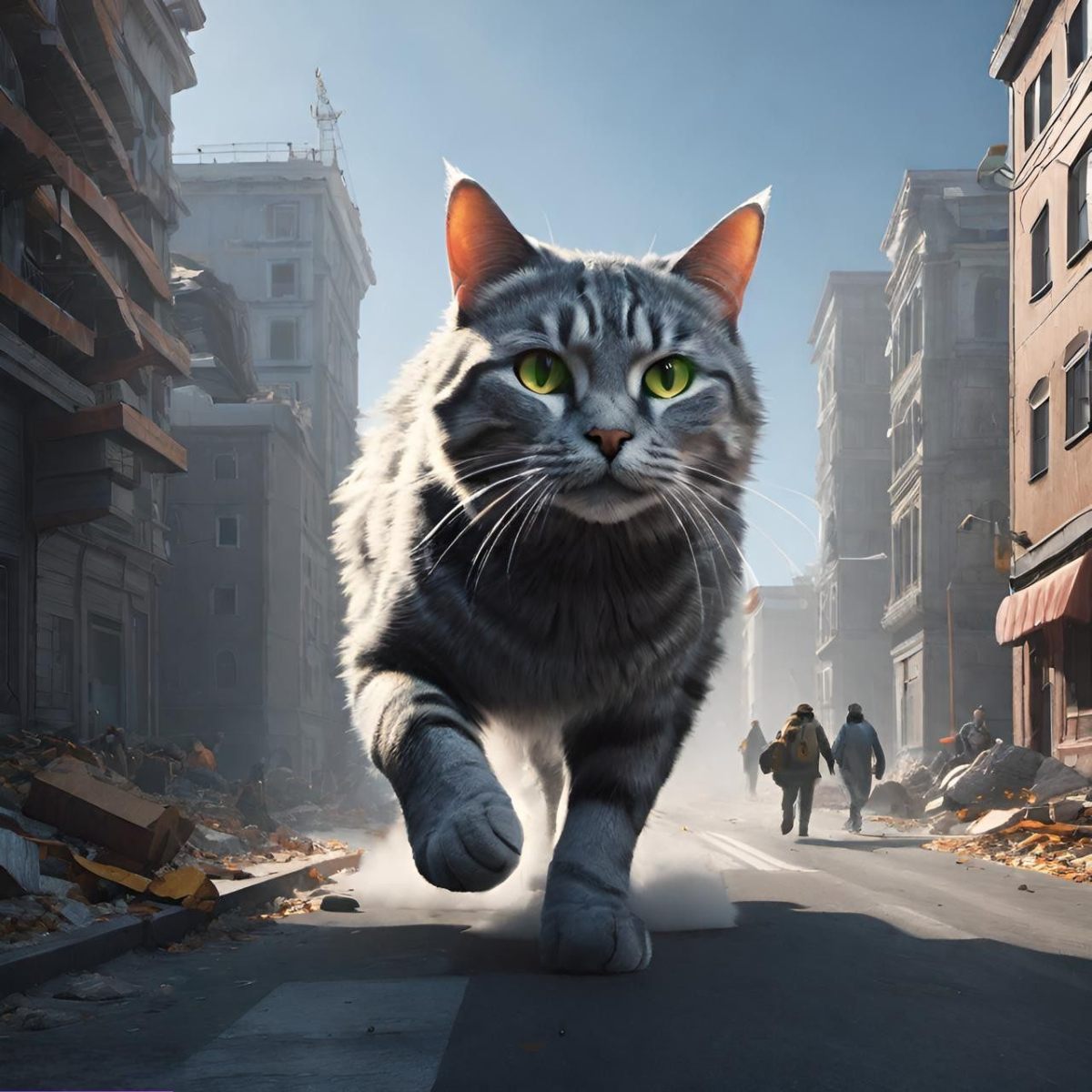
The feline laid waste to entire restaurants and food stalls during his rampage through the city, sending residents running for cover.
NEW YORK — The island of Manhattan was brought to a standstill this week after a massive and menacing wildcat was seen stalking the streets.
The first reports came in Wednesday afternoon after panicked callers told 911 dispatchers a “yuge gray tiger” had barreled into Gray’s Papaya on Broadway and 72nd, gorging itself on the eatery’s famous hot dogs.
Social media posts timestamped an hour later showed clips of the terrifying felid running full speed toward an Atomic Wings, where it tore through the entire inventory of chicken and hamburgers.
“Holy [bleep], that’s not a tiger, that’s a kaiju!” one TikTok user said in a video uploaded to the popular social media site.
The TikToker’s footage showed the gargantuan cat emerge from the Atomic Wings, hot sauce dribbling down the fur on its chin, and belch with such force that car alarms began shrieking in a three-block radius.
“We’re receiving reports that the colossal cat’s name is Buddy, and he escaped earlier Wednesday from an apartment where some lunatic was illegally keeping him as a pet,” Fox News’ Brett Baier told viewers. “A law enforcement source says the man has been taken into custody as a person of interest, and will likely face charges of harboring a dangerous wild animal.”
Detectives were seen escorting the cuffed man, who screamed incoherently that Buddy is allegedly “just a house cat.”
“He invented a laser that increased his size 70 fold!” the deranged man shouted as news cameras followed the detectives from the squad car. “He’s a wimp! Rustle a paper bag! Bring out a vacuum! You’ll see!”
New York Mayor Eric Adams dismissed the man’s claims as “the rantings of a clearly insane person,” and assured residents that the so-called Buddinese tiger would be “swiftly caught and dealt with by the brave men and women of the NYPD.”
“You’ll be able to make your dinner reservations, folks,” Adams said as an interpreter translated his words into American sign language behind him. “In the meantime, keep your doors and windows locked, and don’t cook anything pungent. This is a hungry beast who has eaten his way through dozens of restaurants.”
Police had set up a trap in midtown, with more than 900 pounds of roast turkey and baseball-size Temptations to lure the rampaging tiger.
The ill-fated turkey trap.
But the plan went horribly wrong on Thursday evening when the tiger approached.
“This beast is truly gargantuan!” ABC reporter Stephan Kim whispered during a live broadcast. “Each footfall seems to shake the earth. Look! The concrete is cracking and spidering beneath his paws as if it were brittle ice!”
The Buddinese Tiger stopped, sniffed, then launched himself at the pile of turkey, not even registering the tranquilizer darts fired by NYPD snipers stationed on top of nearby buildings until one hit him in the buttock.
The vicious cat roared and looked as if he would take down the building where the offending officer stood until he was distracted by the smell of Peruvian food wafting from a nearby Pio Pio.
“Arroz chaufa!” the tiger yelled, turning his enormous frame and stomping off into the distance.
City leaders admitted they’d underestimated the threat and had officially requested the National Guard, which was being mobilized late Thursday evening.
But an NYPD detective, speaking on condition of anonymity, said authorities were beginning to reconsider the claim that the rampaging animal could be a house cat.
“One of our officers called him a ‘good boy’ in a last, desperate attempt to save his own life when he was cornered by the beast,” the detective said. “To his surprise, the tiger pounced on him, licked his face, then went on his way, repeating ‘I’m a good boy!’ Maybe there’s some truth to this claim about the size-increasing laser.”
Rep. Marjorie Taylor-Greene of Georgia siezed on the story, posting a message on X claiming credit for “warnin’ ya’ll about these space lasers.”
“One of these lasers has turned a cuddly little house cat into a terrifying tiger,” Greene wrote. “So who’s a conspiracy theorist now?”
Tiger attacks are a real danger in rural India, where the big cats kill people and livestock. To protect the species, the government pulls off a difficult balancing act aimed at minimizing inter-species conflict.
In his memoir, Man-Eaters of Kumaon, legendary tiger hunter (and later staunch conservationist) Jim Corbett described how he and his men arrived to find a ghost town when they tracked a man-eating tiger to a rural village.
Every door was closed and locked, shutters were closed tight, and despite the fact that it was harvest time, not a single person was working the nearby fields.
The people who lived there had good reason to be petrified. The infamous Champawat tigress had killed more than 430 people by that point, including a young woman from the village just a few days earlier. Usually the tigress would vanish from an area after a kill, frustrating locals and hunters by popping up virtually anywhere in a 50-mile radius, but for some reason she stuck around the village and sat on the outskirts at night, keeping the local people awake with her calls.
Corbett’s famed hunt of the “demon of Champawat” happened in 1907, and although it might sound like a problem from the past, it’s current reality for people in parts of India, Nepal and, to a lesser extent, the sparsely populated mountain forests in eastern Russia.
In Garwha and Ranchi, two towns in eastern India about 215km (133 miles) apart, “villagers have stopped using forest routes to reach markets and are reluctant to leave their homes for work,” the Times of India reported on Monday.
That’s because hungry tigers have been on the prowl, demonstrating little fear of people as they help themselves to livestock. Between Jan. 1 and Jan. 6, the tigers killed and ate three cattle and a buffalo.
Tigers require large, contiguous tracks of land measuring in the hundreds of square miles. India and Russia have both set aside massive preserves for the apex predators to increase their numbers in the wild. Image credit: Wikimedia Commons
So far they’ve eluded camera traps, but forest rangers say they believe there are two tigers because of the distance between Garwha and Ranchi, which is almost three times the typical tiger range.
In places where big cats live in proximity to humans, especially farmers, the government pays compensation to the owners of livestock killed and eaten by the predators.
There’s also a separate, more controversial compensation program for the families of people killed by tigers. Recent court cases in the country have hinged on the cold calculations of attaching monetary value to human life, and whether families are owed compensation if their relatives knowingly entered tiger preserves.
For India, it’s part of a delicate balancing act between conserving the country’s national animal and one of nature’s most beloved species, and avoiding the ire of people who are impacted by their presence. When big cats prey on livestock, if the government does not address the situation, locals will eventually take matters into their own hands and try to kill the apex predators. That usually doesn’t work out well for either side.
On average, about 60 people are killed each year by tigers in India, according to government statistics. There’s been a sharp increase in victims in recent years, with tigers taking 110 human lives in 2022 and 83 in 2023, although it’s not yet clear why.
As for livestock, a 2018 study by wildlife biologists with the Corbett Foundation documented 8,365 reported instances of big cats killing cattle, buffalo and other animals between 2006 and 2015. That works out to about 830 per year, with tigers responsible for 570 livestock kills on average and leopards responsible for the rest.
To reduce the number of inter-species conflicts, the government of India has relocated thousands of families away from the country’s 27 tiger preserves in addition to compensating farmers for their losses.
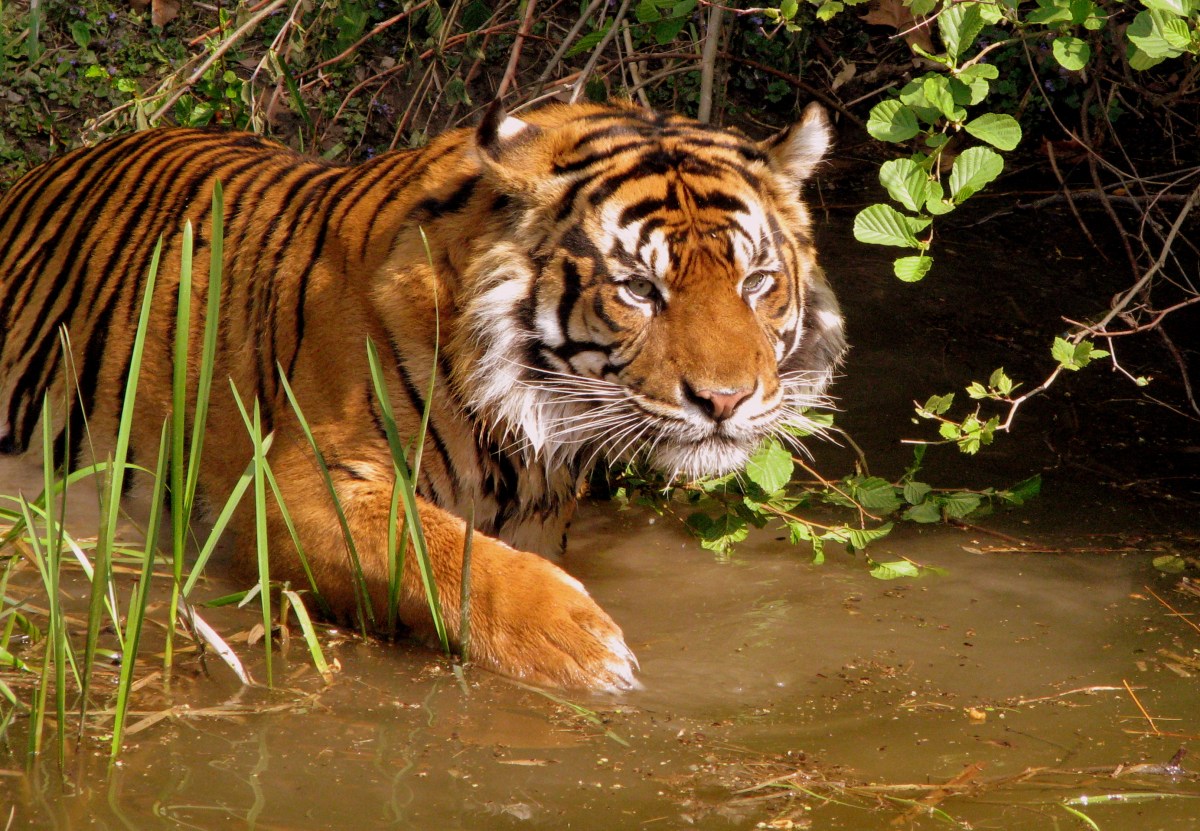
A tiger cub on a preserve in India. Credit: Wikimedia Commons
On a tangential note, this is another reason why the persistent claims of big cats stalking the British countryside strain credulity.
To paraphrase wildlife conservationist Egil Droge of the University of Oxford, when big cats live in an area, you know it because the signs are everywhere — massive and unmistakable pug marks (paw prints) on the ground, trees left with deep gauges by males marking their territory, and dung also serving as a territorial marker.
“I’ve worked with large carnivores in Africa since 2007 and it’s obvious if big cats are around. You would regularly come across prints of their paws along roads. The rasping sound of a leopard’s roar can be heard from several kilometres,” Droge wrote in a 2023 post about alleged big cat sightings in the UK.
Last but not least, big cats eat. A lot. A reliable supply of large prey animals is necessary to support even the smallest of breeding populations, and felids of all species are known to go for easy meals — in this case livestock — when the opportunity presents itself.
Still, the idea refuses to die, and there are still regular reports from people who have seen large cats and insist they’re not our domesticated friends.
“So we left the sheep there at the edge of the field and made sure the lady saw us before we buggered off over the fence. Next day, we was in all the papers! A right laugh that was, mate.”










 Pain In The Bud