Felines Protest Idris Elba’s Lion Thriller ‘Beast’: ‘Stop Stereotyping Us Cats!’

The protesting felines, tired of being cast as villains, demanded “cuddlier representation” in movies and TV.

LOS ANGELES — Marching in a broad circle outside the Universal Studios headquarters on Monday, a group of about 200 cats demanded “more cuddly representation” in television and film.

The felid contingent included house cats, pumas, bobcats, tigers, lions, leopards and even a few jaguars, each holding signs with messages like “Cats are more than claws!” and “Stop The Stereotyping!”

“What do we want?” a house cat shouted into a megaphone.

“Cuddlier representation!” the crowd of cats shouted.

“When do we want it!”

“After our nap!” they replied in unison.

Monday’s protest was prompted by Universal Studios’ 2022 thriller, Beast, but protest organizer Buddy the Cat said the felid group was protesting “decades of tropes and injustices committed against cats by Hollywood and TV.” Examples include the undead cat in Stephen King’s Pet Sematary, the rampaging lion in Dutch horror-comedy film Prey (called Uncaged in the US), the many murderous felids in the CBS series Zoo, and Jackson Galaxy’s My Cat From Hell.

“We’re tired of always being cast as villains while dogs are the heroes. Take a cat like me, for instance,” Buddy told a reporter. “It’s easy to mistake me, with my razor sharp claws and ripped physique, for a threat to humans. But really I’m just a cuddly little guy who likes chin scratches.”
vsgif_com__.3231405

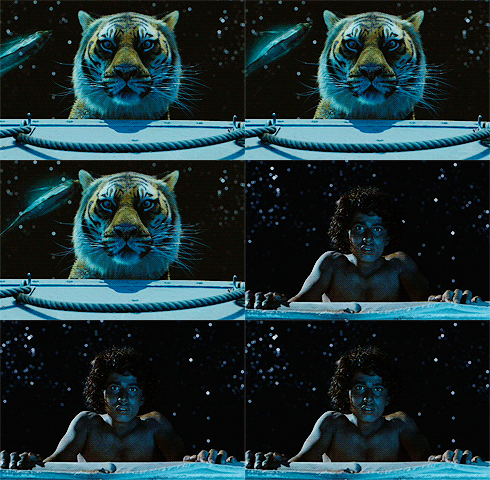
Linus, a 14-year-old Bengal tiger who starred as Richard Parker in the 2012 hit Life of Pi, said he was a young actor who didn’t know better when he agreed to portray the threatening antagonist.

“Now that I’m older and I have all this Frosted Flakes money coming in, I can be picky about the roles I accept and only choose movies I think will be Grrreat!” he told an interviewer. “But what about the next young tiger, or the jaguar fresh off the boat from the Amazon, who doesn’t have the power to tell the director a certain scene is offensive?”

Linus also took issue with the script, in which the writers have him refusing to share fish with Pi.

“Did you see the boat? It was filled with fish! What am I, some sort of glutton who’s gonna eat 200 pounds of fish while the human starves?” Linus asked, bewildered. “I mean, according to Hollywood we’re angry, dangerous, murderous criminals and we stuff our faces all the time. No wonder people are scared of us!”

Prey/Uncaged
Prey, also known as Uncaged, depicts an angry lion rampaging through Amsterdam and eating pretty much everyone.

Beast stars British actor Idris Elba and tells the story of a widowed medical doctor who takes his two daughters to South Africa, where they stay with a family friend and embark on a tour of the native wildlife.

Unbeknownst to them, an adult male lion is on a rampage after a team of poachers entered the reserve the previous night and slaughtered his entire pride. While Elba’s character, his two daughters and his friend (Sharlto Copley) explore the reserve, they discover the mutilated remains of an entire village’s population and eventually come face to face with the murderous lion.

“What’s all this barney, then?” Elba said when asked about the felid protest. “Well that’s unfortunate, innit, mate? I played a tiger in The Jungle Book, a proper tiger. I love cats.”

The actor, who rocketed to fame off the strength of his portrayals of Stringer Bell in American police drama The Wire, the title character in British detective thriller Luther, as well as major roles in franchises like the Marvel Cinematic Universe, the Star Trek reboot movies and science fiction action-adventure Pacific Rim, said he’s taken the cat’s criticism to heart.
elbabuddy2
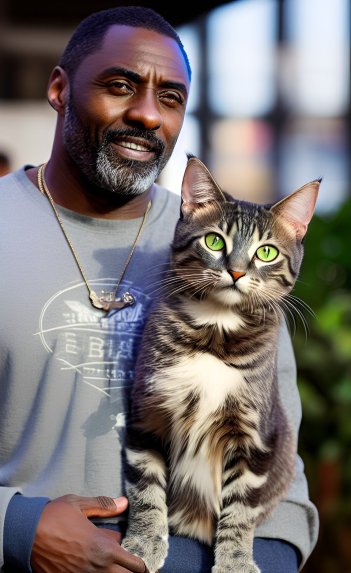
“Buddy’s a good bloke,” says Elba, pictured with his feline friend.

“Me and me mate Buddy, we like to grab a pint on the regular, d’ya know what I mean?” Elba said. “This tosh with the movies, it’s gotta stop. Me mate Buddy is a good bloke, innit? So if he says Hollywood has to have more positive portrayal of cats, then that’s what we’ll do.”

In addition to their negative portrayal in films, which felids likened to the offensive portrayal of Italian-Americans as mafia figures, many cats cried foul at the idea that one of their kind would harm the beloved South African actor Sharlto Copley.

“That’s a very offensive portrayal,” said Chonkmatic the Magnificent, King of All Cats. “Sharlto Copley is the guy who made District 9, about aliens who eat cat food. Everyone knows cats love District 9. We wouldn’t lay a claw on Sharlto!”
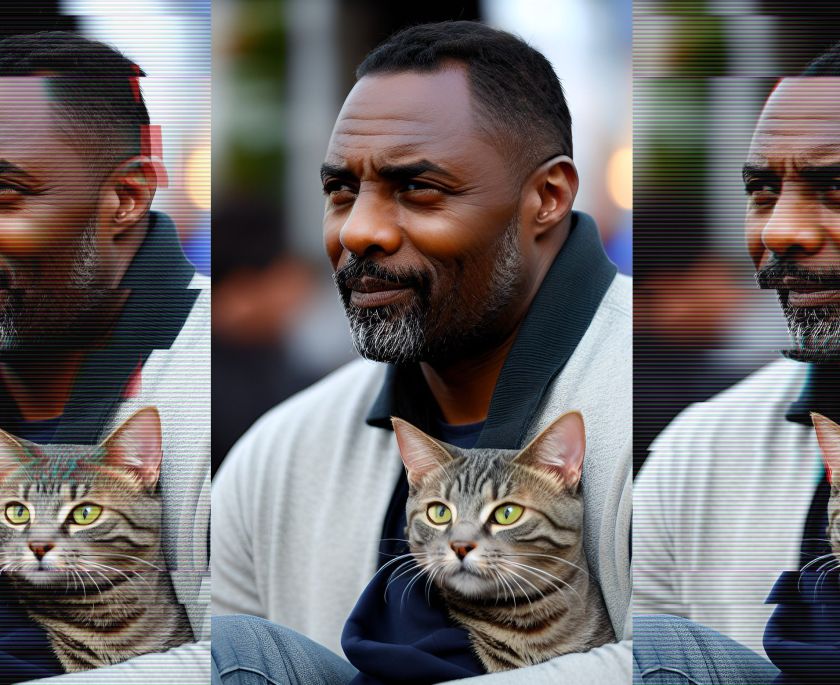
idrisbuddy

Cops Captured A Cocaine-Fueled Serval That Escaped From Its Owner’s Car

The spooked serval bolted through an open window and scurried up a tree during a traffic stop in Cincinnati.

We wish we could say this story is a viral marketing stunt for the recently-released movie Cocaine Bear, but authorities say they’re not joking.

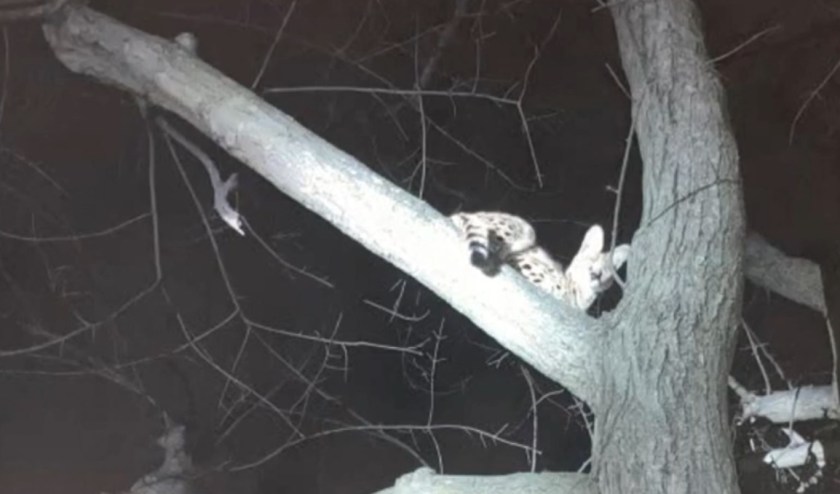
Cincinnati police pulled a car over in what they thought would be a routine traffic stop in late January. But when officers approached the vehicle a large cat inside got spooked, jumped through an open window and took refuge in a tree.

Cops called the city’s animal control staff, initially reporting a “leopard” on the loose.

“[They weren’t] sure what they were dealing with,” Cincinnati Animal Care’s Ray Anderson told WXIX. “Hindsight being 20/20, it probably would have involved a whole lot more people.”

Animal control officers who arrived on scene thought they were dealing with an F1 Savannah, a hybrid between a domestic cat and a serval, and were able to get the cat down from the tree, but not without some difficulty. The exotic wildcat suffered a broken leg in the process. (See video of the cat in the tree here.)

Serval in a tree
The serval took refuge in a tree. Credit: Cincinnati Animal Care

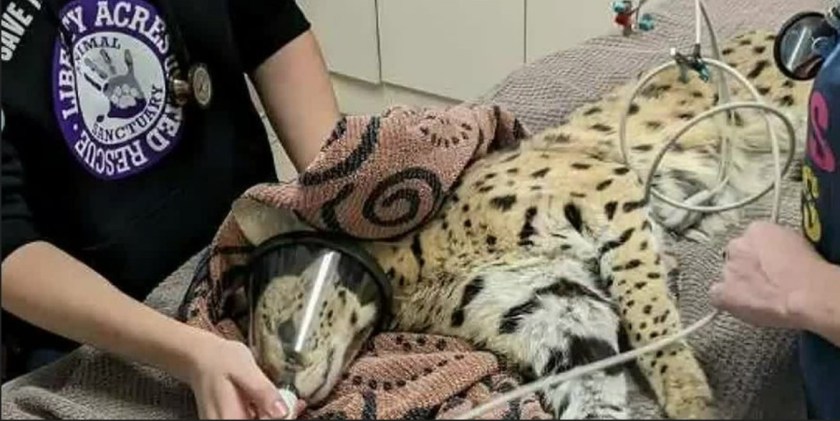
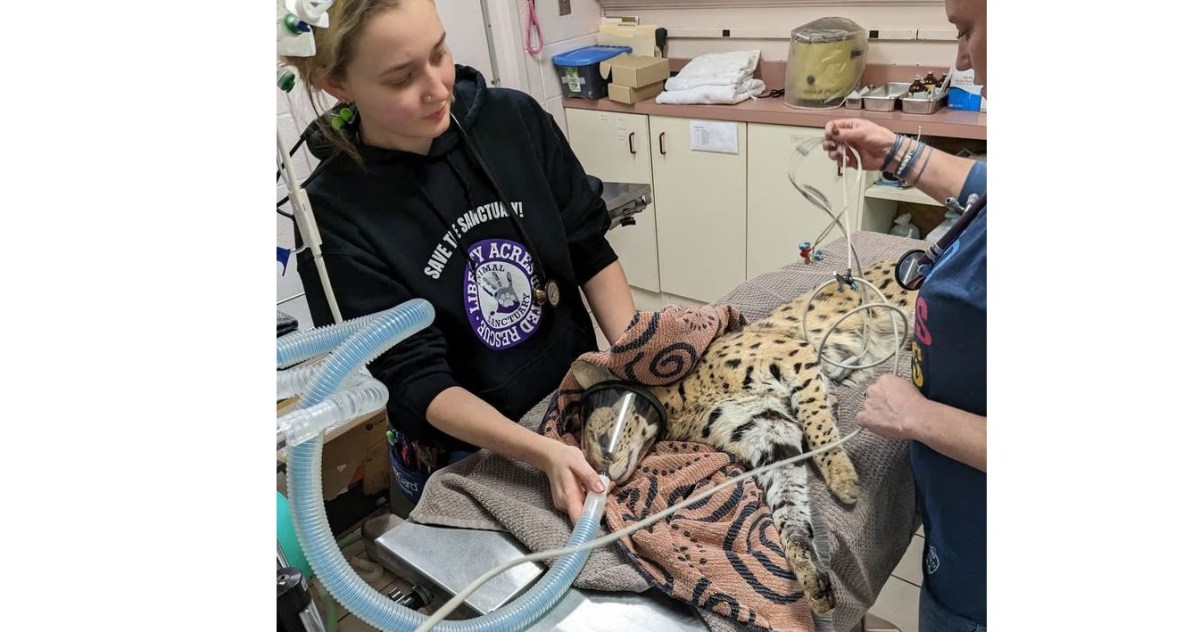
They brought the injured cat to the Cincinnati Zoo, where they were in store for several surprises: The felid was a serval, a medium-size African wildcat, and blood tests showed it had cocaine in its system. A subsequent DNA test confirmed the cat is a serval and not a Savannah hybrid.

The responding animal control officers were “pretty lucky because this cat could’ve shredded us” Chief Troy Taylor of the Hamilton County Dog Warden’s Office told Cincinnati’s WKRC.

servalzoo

The serval, whose name is Amorie, remains in the zoo’s care for now. Taylor said Amorie was given pain meds during treatment and is recovering. It’s not clear what will happen to him, and lots of questions about the incident remain unanswered. Local media reports say the driver was arrested during the traffic stop, but also said the driver is cooperating and has not been charged in relation to the cat or the narcotics.

It’s illegal to own wild cats in Ohio, and unless the serval found himself a bag of cocaine in the fleeting seconds between bolting from the car and scurrying up a tree, it seems the driver has some ‘splainin’ to do.

Disabled Young Mountain Lion Gets A New Home

Nicholas requires regular veterinary care after his mother was killed and he almost lost his life when a driver struck them on a California highway.

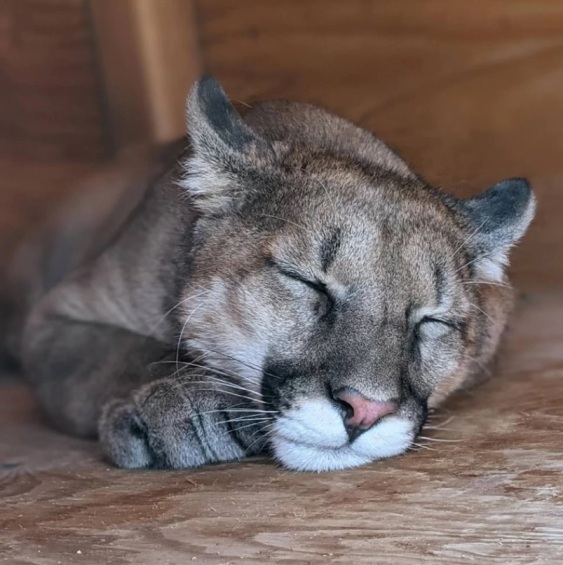
Nicholas was just a cub and was following his mother across a busy toll road in Orange County, Calif., in 2020 when a driver hit them, killing his mother and leaving him with life-long disabilities.

Along with the trauma of watching his mother die, the little puma endured months of surgeries to repair his body. Since then, young Nicholas had been living in a sanctuary in northern California, but was about to find himself homeless when the sanctuary’s operators went bankrupt.

With just hours to go before that facility was closed, a sanctuary called Lions, Tigers & Bears of San Diego County swooped in and agreed to take the special-needs puma, who requires regular veterinary care.

“Nicholas has a head tilt and neurological issues, both conditions require ongoing veterinary care,” Lions Tigers & Bears founder Bobbi Brink told KTLA. “We’ve had a few animals with these issues, so our veterinary team is well-versed in providing the specialized care required for Nicholas, and we’re relieved to give him a permanent home with a den, a healthy diet, medical care and enrichment and toys.”

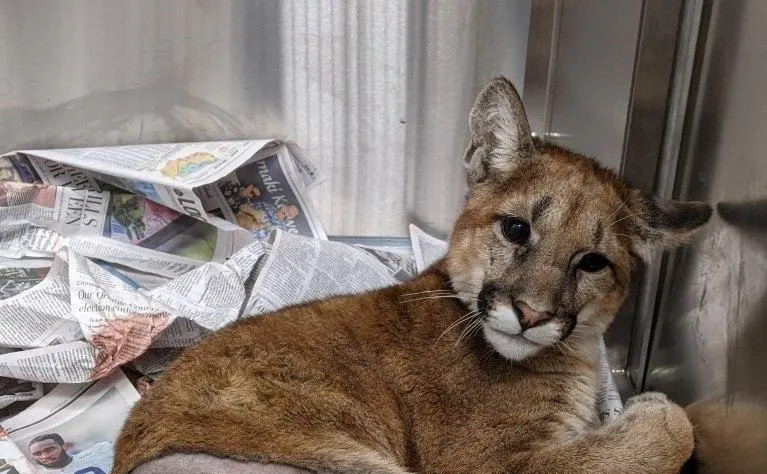
The handsome young puma is currently in quarantine, Brink said, and will be moved into his permanent habitat after 30 days.

Although California is part of their native range and home to a relatively stable population of mountain lions, the species is seriously threatened by habitat destruction, habitat fracturing and vehicle traffic. Some 70 pumas are killed each year on California’s highways, and experts say the survivors are stranded on isolated “islands” of habitat, separated from potential mates by deadly highways. Indeed, scientists who track native wildlife in California have noted signs of inbreeding among pumas, as the animals are cut off from other populations of their species.

nicholasmountainlion
Nicholas in quarantine. Credit: Lions Tigers & Bears sanctuary

The life of the much-celebrated, recently deceased mountain lion P-22 illustrates the problems faced by the unique cats.

P-22 became famous when he migrated from southern California to Los Angeles, crossing the state’s busiest and most dangerous highways to get there. He settled in LA’s Griffith Park, which straddles the hills with the famous Hollywood sign and the outdoor Greek Theatre.

Although he became a local icon, frequently making cameos on the doorbell camera systems of people living nearby and making his rounds through the park and surrounding neighborhoods, P-22’s range was only nine square miles — the smallest range ever recorded for an adult male mountain lion — and he did not have opportunities to mate and produce cubs, as his kingdom was cut off from areas where he might encounter female pumas.

One solution to the problem is to build land bridges connecting areas where mountain lions and other wildlife make their homes. In April of 2022, officials broke ground on the Wallis Annenberg Wildlife Crossing, which when complete will connect Agoura Hills to the nearby Santa Monica Mountains.

But such projects are wildly expensive and take years to complete. The Wallis Annenberg Wildlife Crossing has a $90 million price tag and won’t be finished until 2025. On the bright side, about two thirds of the cost has been covered by private donations, proving Californians and other wildlife lovers are invested in the survival of mountain lions, coyotes, deer and other fauna expected to make use of the bridge.

It’s also an encouraging sign indicating efforts to educate the public about local wildlife have been successful. Along with the other problems they face, pumas — also known as catamounts, cougars and dozens of other names — are often confused with African lions.

nicholasmountainlion1
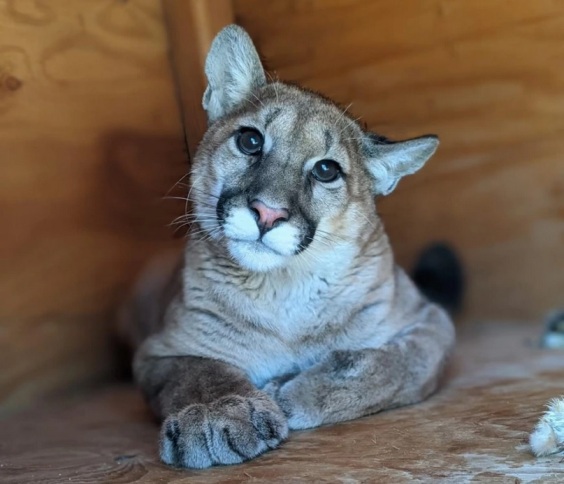
Nicholas enjoys a nap. Credit: Lions Tigers & Bears sanctuary

Because they’re large cats, they’re called lions and they resemble their African counterparts, many people assume mountain lions are dangerous. But not only are mountain lions (puma concolor) an entirely different species than African lions (panthera leo), they are not in the same category of felid.

Pumas are actually felines, meaning they’re more closely related to domestic cats, and like smaller cats they can purr but cannot roar. True big cats, like tigers, lions, jaguars and leopards, are members of the genus panthera and are capable of roaring, but not purring or meowing.

Perhaps most importantly, pumas are not aggressive toward humans. There are only 27 recorded deaths from encounters with mountain lions over the past century compared to more than 50,000 deaths from dogs, for example, and in almost every one of those cases the pumas were either cornered or their cubs were threatened.

Nicholas is not only a reminder that animal life is valuable, his circumstances also remind us that we’re going to have to find creative ways to ensure the survival of many species as humanity expands. The global population is expected to level off at about 11 billion and then slowly contract as third-world countries undergo the same lifestyle changes common to nations that have already made the transition to first world. But until then, it will take a massive and coordinated effort to ensure we don’t end up on a very lonely planet and likely endanger our own survival with the cascade failures that arise from extirpating entire species.

Follow Buddy the Cat on Facebook!

Cartel Prison Cat Gets A Real Home In Texas, Another Feline Found In Airport Luggage

Drug cartel members are infamous for keeping animals as status pets.

Buddy is now on Facebook! Follow him to receive automatic updates, learn exciting new turkey recipes and view exclusive photos of Bud flexing his impressive meowscles!

A cat who until recently belonged to a notorious cartel boss now has a perfectly normal home in Texas after spending the first three years of his life in the notorious CERESO 3 prison in Juarez, Mexico.

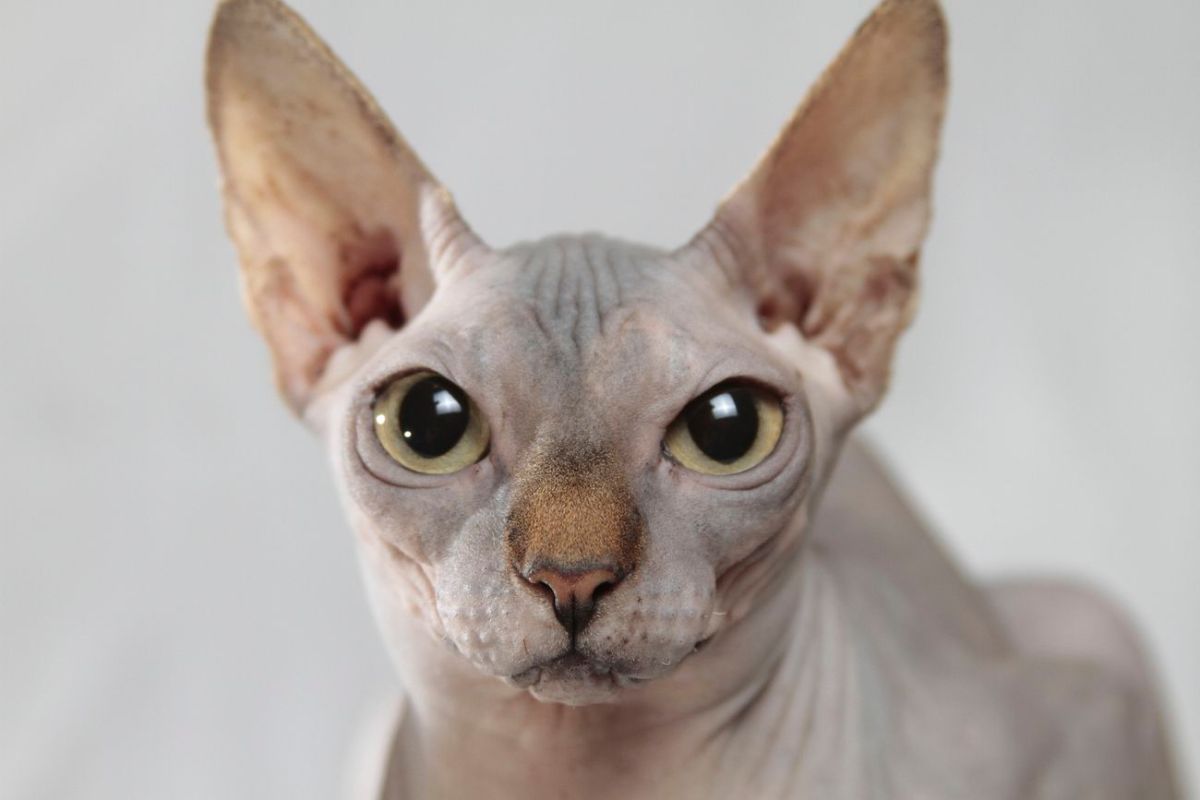
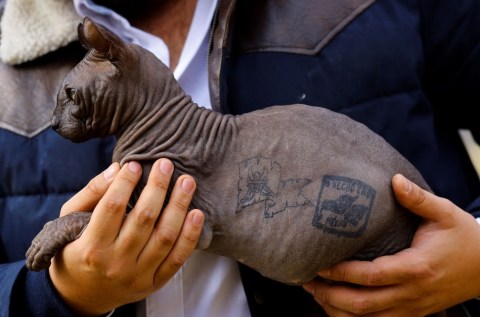
The unnamed feline is a hairless Egyptian who was the personal pet of Ernesto Alfredo Piñon de la Cruz, aka “El Nato,” the former leader of the Sinaloa cartel-aligned Los Mexicles gang. Cruz, who lived in a “luxury cell” at CERESO like other drug lords incarcerated there, had the kitty tattooed with a skull flag and the phrase “Hecho en Mexico,” or “Made in Mexico,” a slogan of Los Mexicles.

Cruz and dozens of fellow inmates instigated a riot at CERESO 3 on Jan. 1, leading to the death of 10 prison guards and seven inmates, and the escape of 30 more. He died along with several others in a shoot-out with Mexican authorities three days later and the rest were apprehended.

When Juarez’s governor ordered a thorough sweep of the prison — in which the inmates had become the de facto wardens and guards had lost control of the cell blocks — armed police squads found the forgotten feline, along with thousands of illegal amenities like couches, plasma TVs, video game consoles, air conditioners, heaters, personal laundry machines and even a mechanical bull.

tatcat1

A council of authorities and animal welfare officials from Juarez whittled applications to adopt the cat down to 10 finalists and decided to go with an American adopter in Texas who already has one Egyptian, is well versed in their care, and can offer the tattooed cat a stable environment.

They haven’t identified the adopter, which is probably for the best in a situation where even the police often wear masks to conceal their identities when conducting operations against cartel targets, for fear of retribution if they’re identified.

sicariomonkey
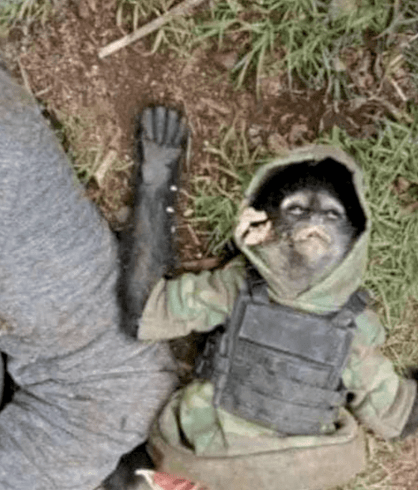
A so-called “sicario monkey” was incidentally shot in a shoot-out with his cartel member “owner” in June of 2022. Credit: Texcaltitlan police

As the Washington Post notes, stories of “status” animals are common with cartels. In Colombia, hippos acquired decades ago by notorious drug lord Pablo Escobar for his private zoo were allowed to roam free, multiplying to more than 130 today and causing problems in the areas they frequent. And in the summer of 2022, police in a shootout with gangsters killed a member of the notorious La Familia Michoacana cartel along with his pet spider monkey, who wore a tactical vest and a custom camouflage jacket. A Bengal tiger, also illegally acquired by the cartel, was unintentionally set loose in the chaos during the same raid, but was not killed.

Cat in the bag

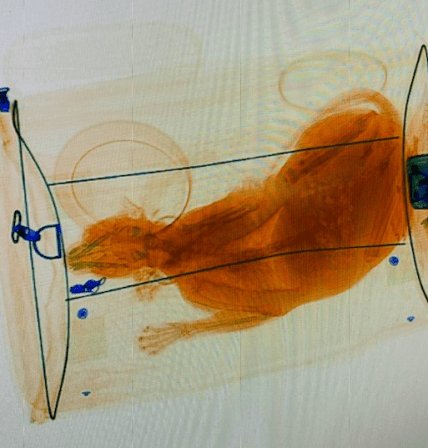
TSA found another pet cat in the luggage of a traveler, this time at Norfolk Airport in Virginia on the morning of Friday, March 3.

This time the cat’s caretaker did intend to travel with their pet but forgot to take the little one out before putting luggage through an X-ray machine. TSA spokeswoman Lisa Farbstein, who regularly works puns into her announcements about cats found in luggage, had fun with the discovery while also reminding people it’s not a good idea to send pets through X-ray scanners.

“Attention pet owners: Please do not send your pet through the X-ray unit. Cat-astrophic mistake!” Farbstein tweeted Friday.

FqUgceQXgAYU3lC
An image of the cat as it passed through a security scan at Norfolk Airport in Virginia on March 3, 2023. Credit: TSA

Although the cat seems unharmed and the TSA said there’s likely no damage caused by a single trip through the machine, Farbstein said passengers should still be careful.

“The passenger needs to remove the pet from a carry case and carry it through the walk-through metal detector or walk the pet through the metal detector on a leash,” she told CNN. “This is typical of how people travel with small dogs. In the case of a cat, if there is no leash, we strongly recommend that the passenger requests screening in a private screening room” to prevent the cat from freaking out and getting loose in the airport.

What’s your favorite thing about your cat(s)?

Buddy has free reign when it comes to 95 percent of the home and the only times I stop him from doing something are when he might hurt himself, such as trying to steal a piece of food that’ll make him sick or chewing electrical wires.

Thankfully he gives himself away when he’s about to do something he knows he shouldn’t do, making a hilarious vocalization — a trill that sounds like “Hmmm I know I’m not supposed to be doing this, but…” He’s done it since he was a kitten, when he still didn’t get the concept of a litter box and would crap under my bed. (It took almost two weeks, an adjustment in the placement of the litter box, and finally a switch to Dr. Elsey’s Kitten Attract litter before the lightbulb went off in his little head and he got it.)

Years later he still makes the same sound, but when I move to intervene, he immediately flops onto his side and splays his limbs out, a move that says “Hah! I wasn’t gonna do what you thought I was gonna do, and you can’t pick me up!”

He did it to me three times last night and my attempt to dissuade him in a Serious Voice failed spectacularly when I saw Bud flash his “I’m Just An Innocent Widdle Kitty” face at me and broke down laughing.

One of my favorite things about Bud is how he makes me laugh with his antics. The little dude is clever.

What are your favorite things about your cats?

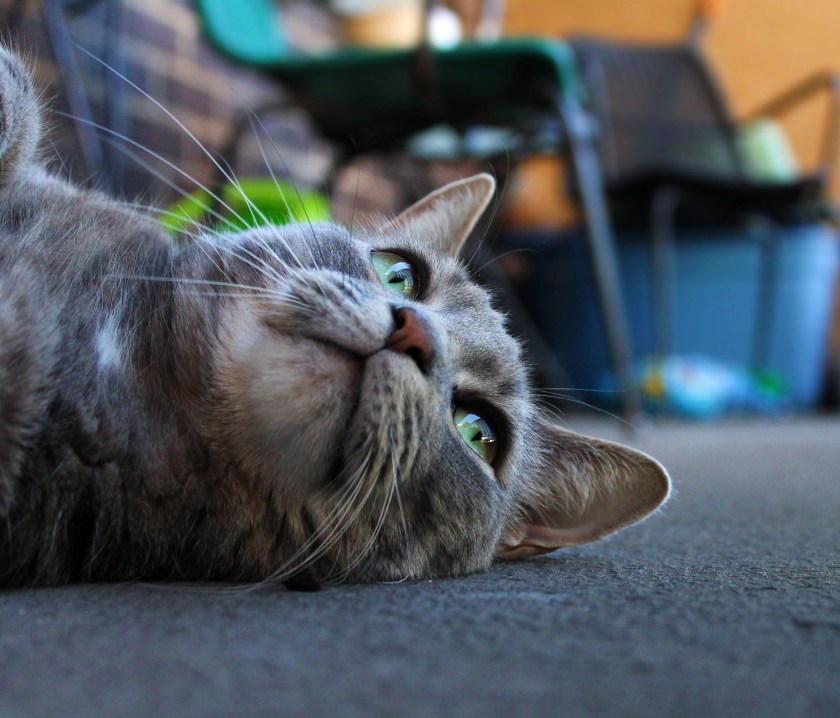
buddy_layingdownclose
“I’m just a widdle kitty. Totally innocent. Totally didn’t knock a bag of chips all over the floor and pretend I had nothing to do with it.”

Cat Gets Help For Man Who Fell Off Waterfall, UK Government Once Considered Cat Cull During Pandemic

Things could have gone south for cats during the early days of the COVID-19 virus.

Someone bring this cat inside, give him a magnificent meal and make him king of the house.

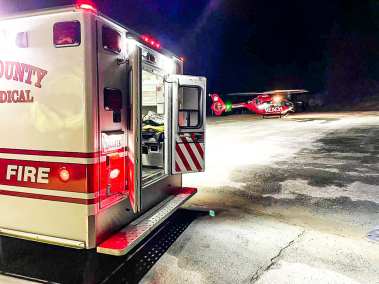
After a man fell 30 feet down a “seasonal waterfall” into a creek drainage in Pleasant Valley, Calif., about 50 miles east of Sacramento, an insistently meowing outdoor cat led the man’s wife and neighbor “right to where the man fell,” per CBS News.

The incident happened a few minutes after 9 p.m. on Feb. 21, according to the El Dorado County Fire Protection District, whose EMTs rescued the man. Authorities haven’t provided updates on his status, but as he was airlifted to a hospital, his injuries were likely serious.

The heroic feline is described as the family’s “outdoor cat.” He should be amply rewarded with a real home.

Cat saves man who fell down waterfall
A photo from the scene showing the airlift helicopter in the background. Credit: El Dorado Fire Protection District

Oh hell no!

A former UK health minister said the government mulled a plan to “exterminate all pet cats” early in the Coronavirus pandemic when the virus was new and poorly understood, the Guardian reported.

“What we shouldn’t forget is how little we understood about this disease. There was a moment we were very unclear about whether domestic pets could transmit the disease,” James Bethel told the UK’s Channel 4 news. “In fact, there was an idea at one moment that we might have to ask the public to exterminate all the cats in Britain. Can you imagine what would have happened if we had wanted to do that?”

Yeah, I can imagine a few million incredulous and angry people drawing their blinds, hiding their cats and figuring out ways to buy cat food and litter on the black market to avoid tipping off the authorities in the heavily CCTV-wired nation. If authorities tried to push the issue, things would have gotten ugly.

Here in the US we’d have another run on guns and Bud would run screaming underneath my bed, probably while demanding I slide his turkey and water bowl to him so he could lay low from “the feds.” Hey, he runs a catnip cartel. He’s used to it!

All jokes aside, I think we’ve forgotten that Chinese authorities were beating pets dead in the street and going house-to-house to put them down when the virus raged through the population there for the first time in late 2019. Animal welfare groups said thousands of pets were abandoned by their caretakers and either left to starve in empty homes or left to fend for themselves.

When the virus spread, ripping through countries like Italy, France, Belgium, Russia and taking hold in New York before spreading to the rest of the US, virologists still weren’t entirely certain whether cats — who are susceptible to an unrelated form of Coronavirus — could pass the infection to people. It’s not far-fetched to imagine that if the UK or other countries decided felines must be culled, US authorities may have followed.

The idea of a government demanding we kill our cats is disturbing on its own, never mind the prospect of it happening during a time when our pets were the few things helping us keep our sanity while we all huddled in isolation.

Thankfully reason prevailed and research ultimately proved that the chances of cats or dogs spreading COVID to humans is almost nonexistent.