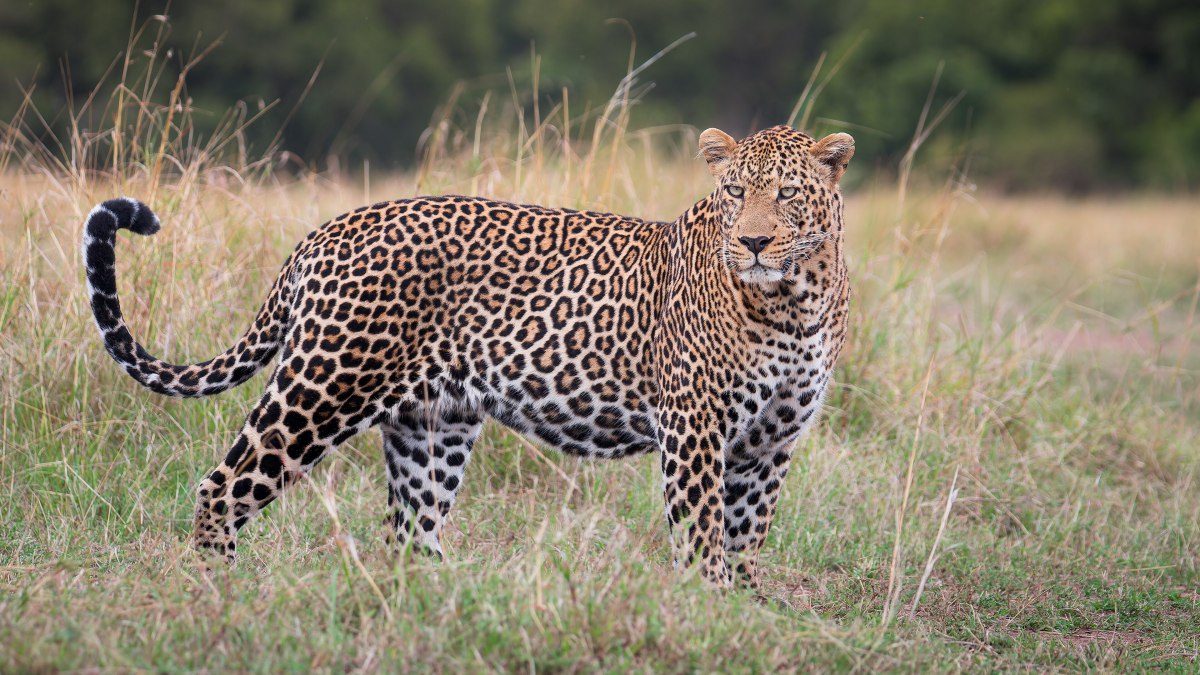
Taxonomic name: Panthera pardus
Genus: Panthera (big cats)
Weight: Between 82 and 198 pounds with typical felid sexual dimorphism
Lifespan: Between 12 and 15 years in the wild and up to 23 years in captivity
Gestation: 90 to 105 days, or about three months
Litter size: Two to four cubs who remain with their mothers for up to two years
Distribution: Leopards boast the widest range of any big cat, with populations in at least 62 countries spanning from sub-Saharan Africa to Russia, China and the Koreas
IUCN Red List Status: Vulnerable
Leopards occupy a precarious position in the hierarchy of predators.
They’re true big cats who are extraordinarily dangerous and skilled hunters, but they’re never the baddest on the block by measures of pure size or strength.
Throughout their range, which stretches from the savannas of Africa to the verdant jungles of Asia, they are forced to compete with animals who exceed them in raw physical power, or derive their advantage through strength in numbers.
In Africa leopards, known as panthera pardus in binominal nomenclature, play second fiddle to their sturdier, more intimidating cousins, panthera leo. Lions aren’t just bulkier and brawnier, they’re also unique among big cats because they live in social groups. Lions cooperate on hunts, allowing them to take down anything they come across, and the entire animal kingdom gives them a wide berth.
In Asia leopards bow to the biggest, baddest cats on the planet, panthera tigris. While lots of people mistakenly believe lions are the kings of the cat world, that distinction goes to their striped, stealthy cousins. Tigers are the heaviest, physically largest and most powerful cats, making them the apex predators on land.
It’s not just other cats who put pressure on leopards. Hyenas, wild dog packs, dangerous herd animals and colossal animals like elephants and rhinos pose a danger to the spotted big felids, if not directly then in competition for food and territory.
So for leopards to successfully thrive, they’re forced to rely on their other unique skill sets, including impressive adaptability and intelligence. They hunt when others rest, eat in places out of reach of their competitors, and know when to cut their losses.
While tigers hunt in daylight, leopards stalk their prey in the darkness. Tigers and lions have the luxury of eating out in the open, as wild dogs know it would be suicidal to lay claim to kills belonging to a pride or a tiger pushing 700 pounds. Leopards aren’t guaranteed that luxury.
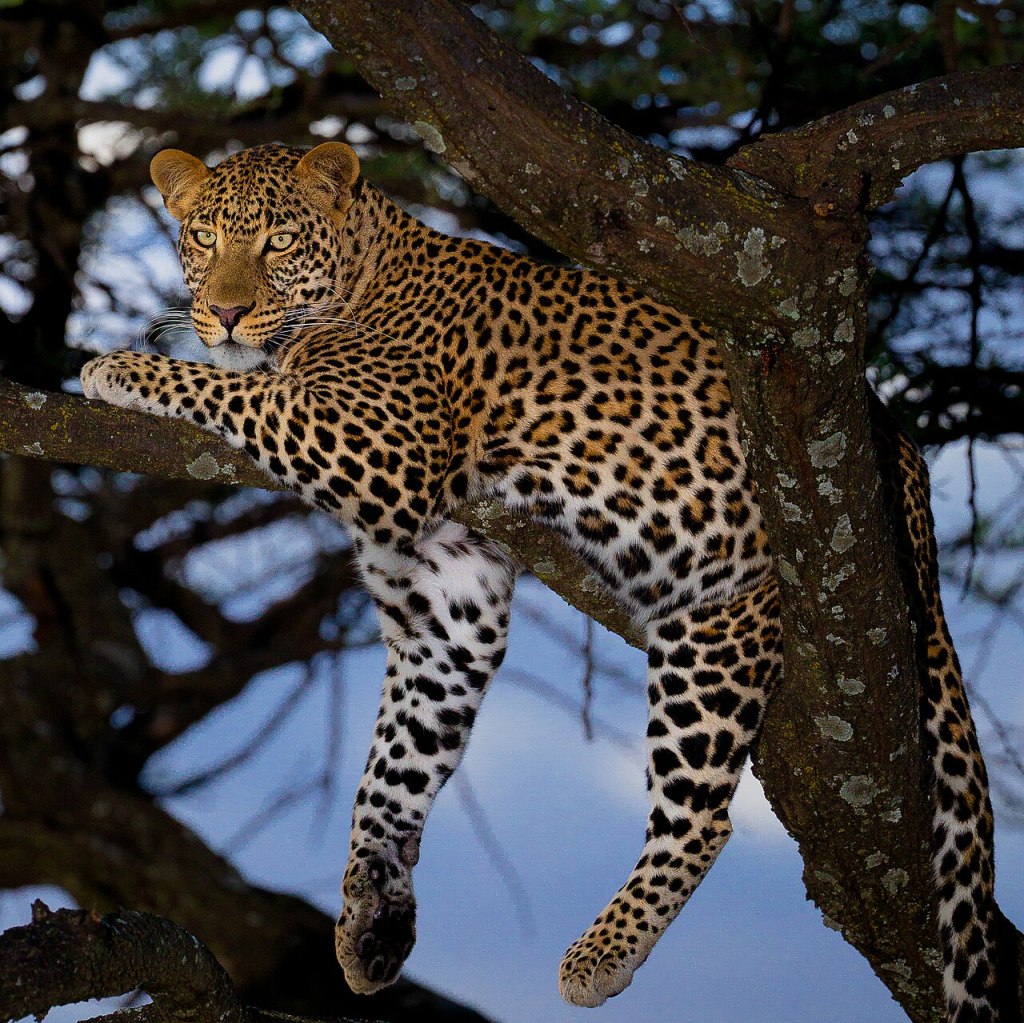
Leopards aren’t just physically vulnerable to species they share a range with, they’re also at risk of going hungry. Leopards can expend their finite energy on successful hunts only to be forced to abandon their kills to lion prides and canine packs. They can mitigate the risk by dragging their kills up into trees using their powerful limbs and sure footedness, or taking them into the tangle of the underbrush, though neither method is fool-proof.
Perhaps that’s one reason why, despite being the smallest and lightest of the big cats, leopards have a reputation for being particularly ferocious.
The Champawat tigress, also known as the Demon of Champawat, is history’s most notorious man-eater, but the lesser-known Panar Leopard was equally deadly, with more than 400 confirmed kills. The Leopard of Rudraprayag, contemporary with both, had a shorter reign of terror but took 125 human lives.
All three were killed by the legendary hunter Jim Corbett, whose name was synonymous with taking out man-eaters for decades before he became a big cat conservationist later in life. In his book Man-Eaters of Kumaon, Corbett described leopards as the trickiest big cats to track, and hunting them — as opposed to the canned kills favored by modern “sportsmen” — presents significant physical danger and risk of death even to experienced hunters.
Considering the level of self-awareness, understanding and deceptiveness displayed by animals like the Champawat tigress, who changed her tactics several times as Corbett tried to close in on her and nearly killed him by setting up a clever ambush, for Corbett to attribute even greater wiles to leopards speaks to their extraordinary ability to adapt on the fly and anticipate what their enemy might do.
When it comes to hunting man, there are two things that distinguish leopards from their tiger and lion counterparts. (And if you’re wondering where jaguars fall on the list, they don’t. There are no recorded cases of prolific man-eating jaguars, a fact often attributed to the animals’ tightly controlled abilities and reputation for calmly assessing situations. Jaguars very rarely kill humans, and when they do it’s because people have threatened them or their cubs, leaving them no chance to withdraw safely.)
As disruptive as man-eating tigers are, people living in areas stalked by them can find refuge indoors. Tigers hunt by day and won’t enter human-built structures, but leopards have no such limitations.
Both the Panar and Rudraprayag leopards, as well as other man-eaters of their species, were known to barrel through doors or leap through windows at all hours to catch sleeping humans unaware and drag them screaming into the night. It’s pure nightmare fuel and has a profound psychological effect. When man-eating leopards terrorize an area, there’s no true sanctuary.
While lions and tigers become man-eaters due to injuries — broken teeth most commonly — and old age, leopards do so because of opportunity and convenience.
For example, the man-eating leopards who terrorized India in the late 1910s and early 1920s acquired a taste for human flesh because the Spanish flu ripped through regions where they range. Survivors were hesitant to handle their bodies to bury them, and leopards found easy meals. From there, experts believe the big cats realized hunting humans is often easier than hunting agile ungulates and other typical prey — at least in the short term, before humans organize and retaliate.
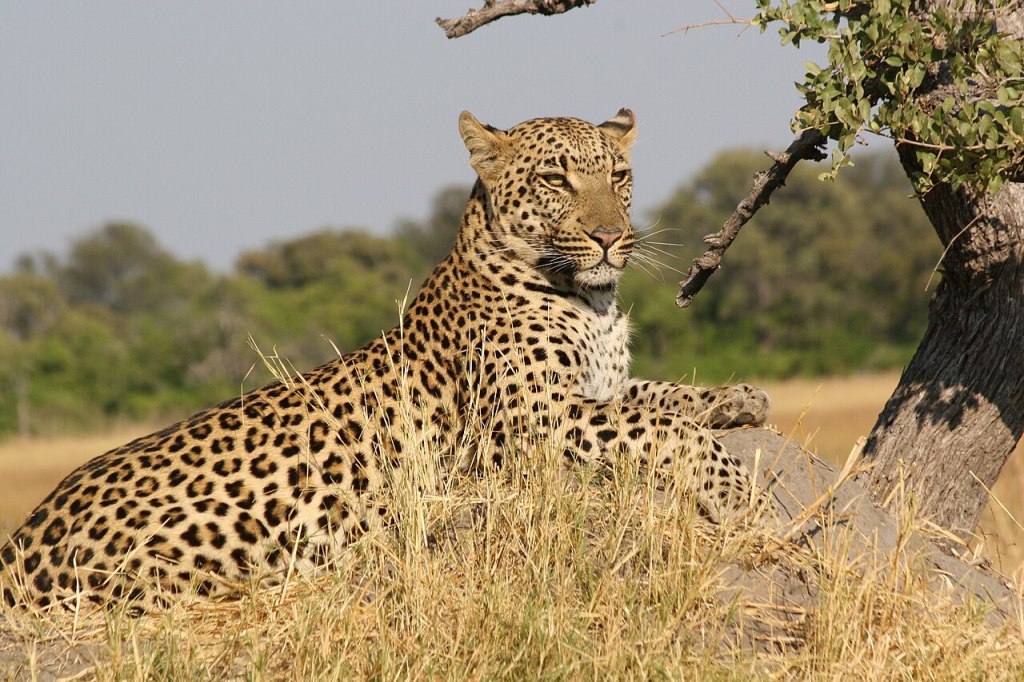
Leopards are often confused with at least two other cat species, jaguars and pumas. It may be somewhat difficult to tell leopards and jaguars apart in a zoo without the benefit of signage, but in the wild they don’t co-exist. Anyone who encounters a spotted cat in the wild in Africa or Asia is looking at a leopard, while jaguars are native to the Americas, ranging across most of South America and the southern US.
Otherwise, there are visual differences. Jaguars are bulkier and more muscular, with shorter limbs, and their rosettes or “spots” have small flecks inside them. Leopards have longer limbs and may have broken rosettes, but generally do not have the small flecks and dots within their rosettes.
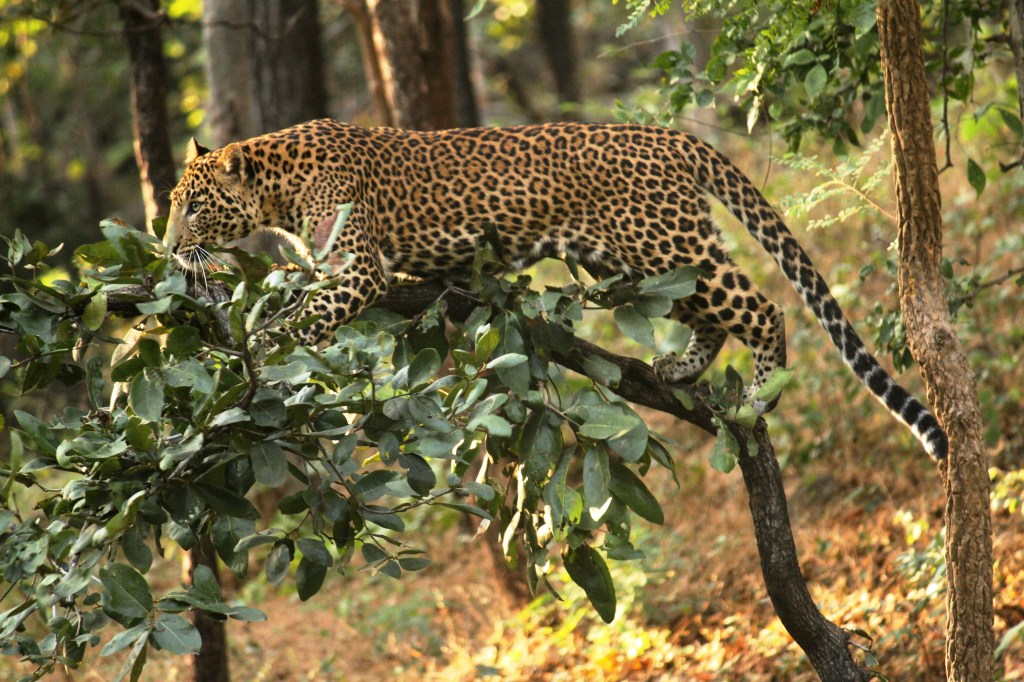
As for pumas, they look nothing like panthera pardus or panthera onca (jaguars), and they are not true big cats, lacking the ability to roar and boasting a different lineage. But because pumas, jaguars and leopards are all colloquially called “panthers,” some people confuse them.
Both leopards and jaguars have melanistic (black) variants, but their coats are not entirely black. Under the right lighting conditions their rosettes are visible, making it possible to differentiate them visually. There are legends of melanistic pumas, but no one’s been able to verify them.
As opportunistic hunters, a leopard’s lunch or dinner is whatever it can reasonably catch, and along with pumas they’re generalists and will eat just about anything despite their individual preferences.
They’re masterfully stealthy and can ambush prey in a multitude of ways, including from above thanks to their excellent climbing abilities. Leopards are exceptionally strong despite their relatively small size compared to other big cats, and they’re able to drag carcasses larger and heavier than themselves up trees. They can descend from trees head-first, giving them an enormous advantage when attacking from elevation.
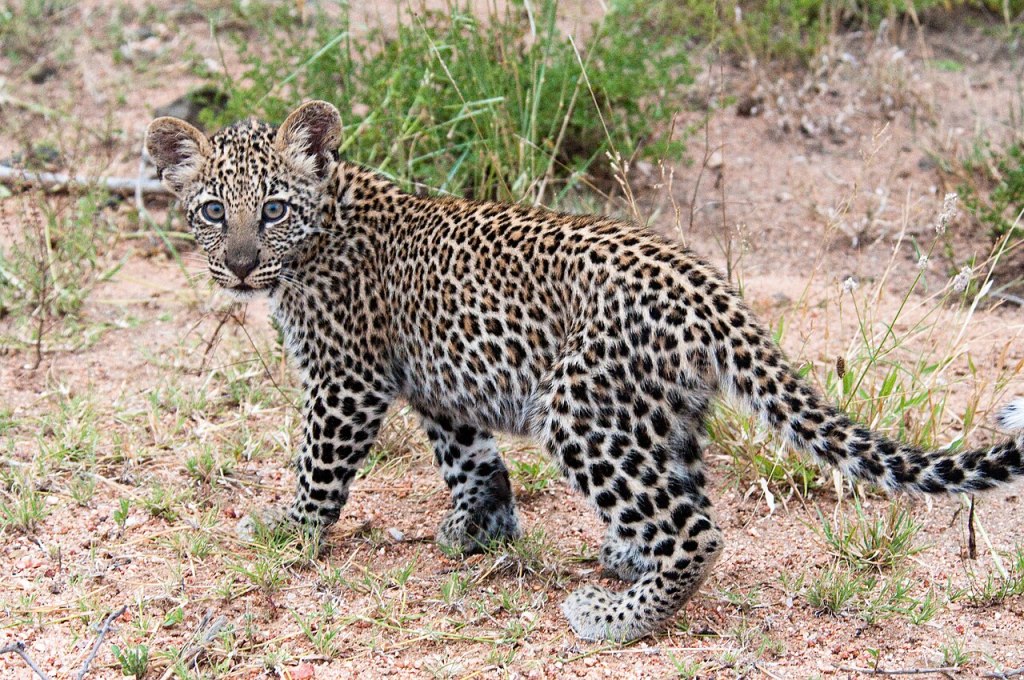
Sadly, leopards numbers are in decline across the world. Habitat fragmentation plays a major part, as does poaching to feed the insatiable Chinese traditional “medicine” market for big cat parts, which are used in tonics and folk recipes. They’re also hunted by nomadic tribes in Africa for their skins.
Then there’s the cruelty of nature itself. As adaptable and successful as adult leopards are, getting to that point involves trial and error, lots of learning and luck. By some estimates fewer than half of leopard cubs reach adulthood, with the others succumbing to other predators, poachers and illegal wildlife traders who sell the cubs to people who buy them as status symbol pets.
For more information about conservation efforts, visit the WildCat Conservation Alliance and Panthera, two of the largest global organizations dedicated to preserving leopards and other wild cat species.
Previously:
Amazing Cats: Dwilling In Dense Jungles, Margays Are Tricksters And Champion Climbers
Amazing Cats: The Mysterious Marbled Cat
Amazing Cats: The Rusty-Spotted Cat
Amazing Cats: The Jaguar, ‘He Who Kills With One Bound’
Amazing Cats: The Puma
Amazing Cats: The Sunda Clouded Leopard
Amazing Cats: The Adorable Colocolo, Feline of the Pampas
Amazing Cats: The ‘Fire Tiger’ Is The Stuff Of Legend
Amazing Cats: Ocelots Love Trees, Water And Calvin Klein’s Obsession For Men
Amazing Cats: Pallas Cats Are The Grumpy Little Hobbits Of The Feline World
Amazing Cats: The Jaguarundi Is Adept, Adaptable And Mysterious