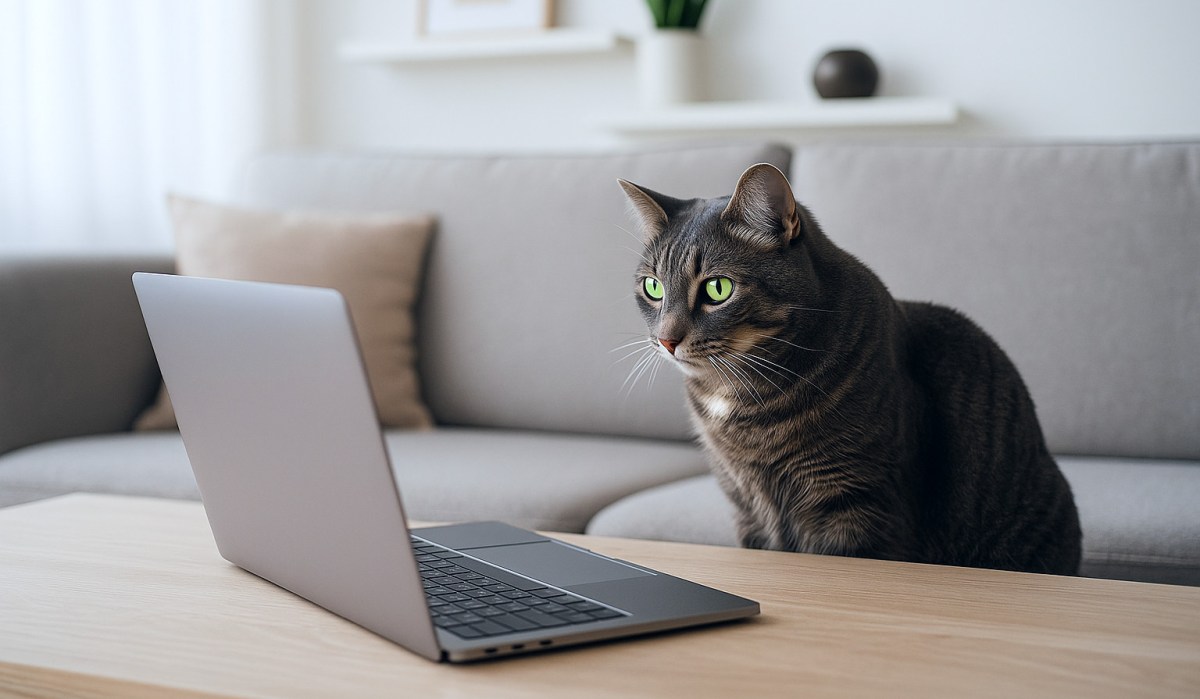
Buddy’s Browser History: Ozempic For Cats And Sexy Calicos

Buddy’s browser history provides a window into the depraved mind of everyone’s 683rd favorite feline named Buddy.

Monday, June 9, 2025:

Google search, 6.56am: oh zempic

Google search, 6:57am: ozempic

Wikipedia: Ozempic (pharmaceutical), 7:02am

Google search, 7:07am: ozempic 4 cars

Google search, 7:07am: ozempic 4 cats

Google search, 7:12am: why no ozempic 4 cats?

Pain In The Bud: Latest Stories, 7:44am

Pain In The Bud: Submit Comment: “LIES!!! BUDDY WOULD NEVAR RUN FROM A MOUSES! WHO WRITES THIS RAG?!?”, 7:49am

Google search, 2:33pm: how to get human to give more snax

Google search, 3:11am: hot calico

Google search, 3:14am: sexy calico

Google search, 3:21am: sexy calico new York area

Wednesday, June 11, 2025

Google search, 4:12pm: when do cats get growth spurt

Google search, 4:12pm: when do cats grow into tigers

Google search, 4:15pm: tiger meowscle workout

Thursday, June 12, 2025:

Google search, 1:03pm: turkey

Google search, 1:14pm: turkey

Wikipedia: Turkiye (country)

KFC.com: Order Online, 2:22pm

KFC.com: Colonel’s Original Recipe Bucket, 2:23pm

KFC.com: Confirm Your Order

Friday, June 13, 2025

Google search, 7:16pm: fursat the 13

Google search, 7:16pm: Friday the 13th

Wikipedia: Friday the 13th (film), 7:16pm

Google search, 7;21pm: is jason real?

Google search, 8:16pm: how 2 make human lay on couch

Google search, 8:19pm: how 2 lure human to couch

Google search, 8:23pm: 2nd best thing besides human to sleep on

Google search, 8:29pm: how 2 make human obey

Google search, 8:30pm: r humans stupid?

Google search, 8:44pm: stoopid sport ppl stand in field

Google search, 8:47pm: stoopid sport ppl stand in field and one guy waves stick try to hit ball

Wikipedia: Baseball, 8:52pm

A cat who ran onto the field at Yankee Stadium during a Yankees-Oriolesgame on Aug. 2, 2021. Since the feline, dubbed “rally cat” by the fans, interrupted the game, the Orioles endured a miserable stretch, losing 19 games in a row, while the Yankees went 18-3, including an 11-game win streak. Credit: Bronx Times

Google search, 10:15pm: buddy

Google search, 10:15pm: buddy the cat

Google search, 10:16pm: other buddy the cat

Google search, 10:17 pm: other buddy the cat famous

Google search, 10:19pm: FAMOUS BUDDY THE CAT

Famous Felines: A Site Dedicated To The Biggest Cat Celebrities On The Internet, 10:26pm

/Famous Felines: Buddy (Philadelphia cat)

/Famous Felines: Buddy (cute tabby from Florida

/Famous Felines: Buddy (Phoenix Zoo ocelot)

/Famous Felines: Buddy (TikTok star)

/Famous Felines: Buddy (fictional cat)

/Famous Felines: Buddy (other)

/Famous Felines: Buddy (500 to 599)

/Famous Felines: Buddy (600 to 699)

/Famous Felines: Buddy #683 (New York cat)

Google search, 11:01pm: how 2 get more famous
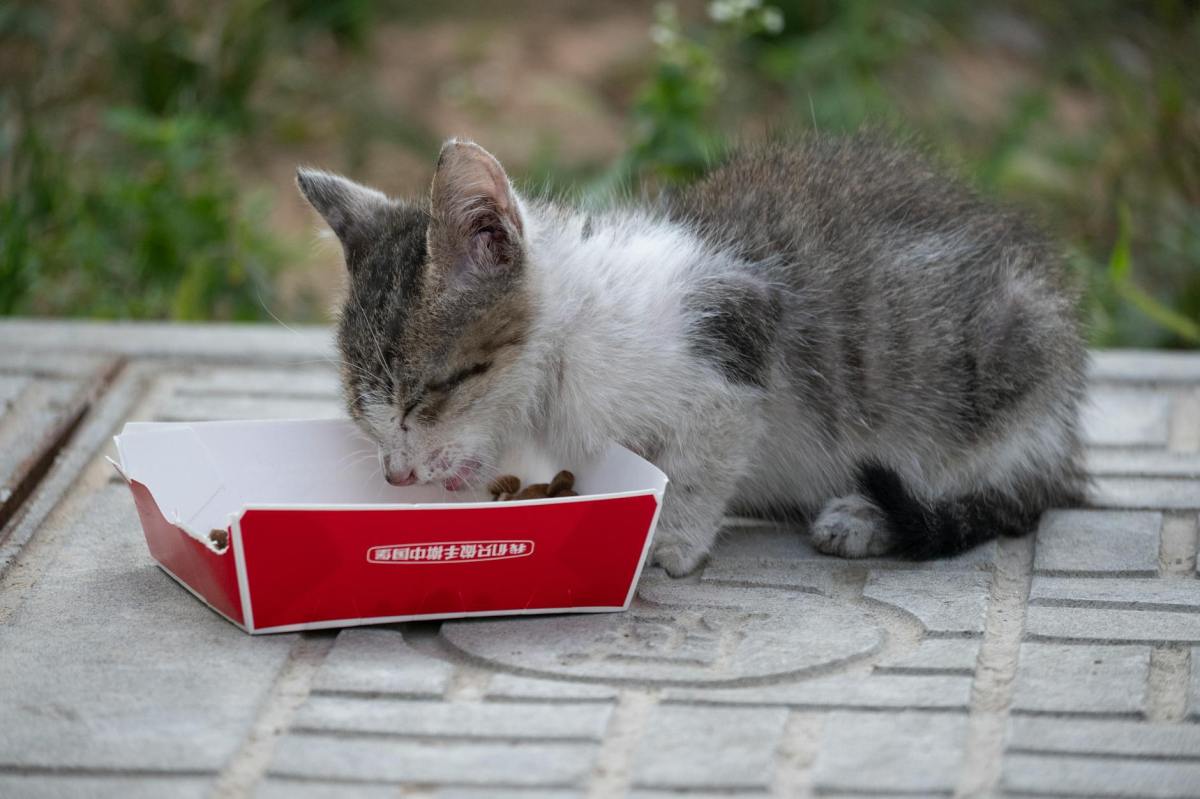
Local Politicians Have No Clue How To Manage Cats

Feeding strays is now punishable by a $150 fine in an Ohio town, the latest municipality whose elected leaders chose to ignore expert guidelines on managing feline populations.

Every time the stray cat issue comes up, local town boards and city councils act as if they need to reinvent the wheel.

Imagining that they are the first to deal with this extremely common problem, they make decisions from positions of ignorance, dismissing the concerns of people who actually work with cats. Or they “do the research” and come up with their own ineffective policies instead of simply looking at what other towns and cities have tried in the past.

At least that way, you know what works and what doesn’t, and how much your decision’s going to cost taxpayers.

But that would be the smart thing to do, which is why our local elected leaders don’t do it. Instead they pull stunts like the village board of Mogadore, Ohio, a town of 3,700 about 10 miles east of Akron.

The Mogadore board just passed a law that makes feeding strays and ferals punishable by a fine of up to $150, as if that will stop cats from finding food and breeding.

Tellingly,  Mogadore’s elected leaders say their ordinance applies to “wild, stray, or un-owned” cats, which means they don’t understand they’re all the same species.

Apparently neither do the reporters at WOIO, a local news station in Cleveland. A story from the station is confidently incorrect in telling readers “[d]omestic cats that have become wild, meaning live outdoors, roam free, and rarely interact with humans, are also considered feral.”

Stray cat and kitten
Credit: Sami Aksu/Pexels

Felis catus is a domestic animal. By definition a domestic cat is not wild and cannot become wild. Evolution cannot happen to a single animal.

While evolution is a constant process, speciation — wolves becoming dogs, wildcats becoming house cats, wild boar becoming docile farm pigs — is a species-wide shift that takes at least a few hundred years but often much longer, “from human-observable timescales to tens of millions of years” depending on the species.

The whole process results in changes at the genetic level. The transition from wildcats to domestic cats, for example, involved changing only 13 genes.

This is not rocket science, it’s basic stuff we all learned in high school science classes.

But that’s almost beside the point.

Fining people for feeding stray cats, including caretakers who voluntarily manage cat colonies, will not solve the problem. It doesn’t work. It has never worked in any town anywhere in the world.

It also creates a needlessly adversarial relationship with the passionate people doing the hard work of managing the feline population, often thanklessly and at their own expense. Why make enemies of them when they’re doing a public service?

Mogadore’s village board had a representative from Alley Cat Allies and people from local rescues on hand to inform them that fines don’t work, and to offer the humane and effective option of trap, neuter, return. TNR may not be perfect, but it’s better than anything else people have tried.

Mogadore’s board and mayor ignored the experts and went ahead with their plan to fine people instead.

They’re not alone. This happens thousands of times across the US, Europe, Australia and most other places where domestic cats live. Japan and Turkey take a more humane approach, and they’re better for it. But here in the US, we often deal with issues by ignoring precedent and engaging in wishful thinking.

If the residents of Mogadore are lucky, their elected officials will realize their mistake sooner rather than later.

Stray cat eating
Stray and feral cats already have a difficult existence without ill-advised laws making it illegal to care for them. Credit: Mehmet Fatih Bayram/Pexels

Tokyo’s ‘Waving Cat’ Temple, Gōtoku-ji, Has Run Out Of Cats

The world-famous cat shrine has experienced a surge in tourism, leaving it bereft of the familiar statues that are inspired by the legend of a friendly cat.

Gōtoku-ji temple has a unique problem.

The complex, where legend says a friendly waving cat led a Japanese feudal lord and his men to warmth and safety ahead of a brutal storm, has seen an influx of travelers since Japan relaxed its COVID-era restrictions and tourists have returned.

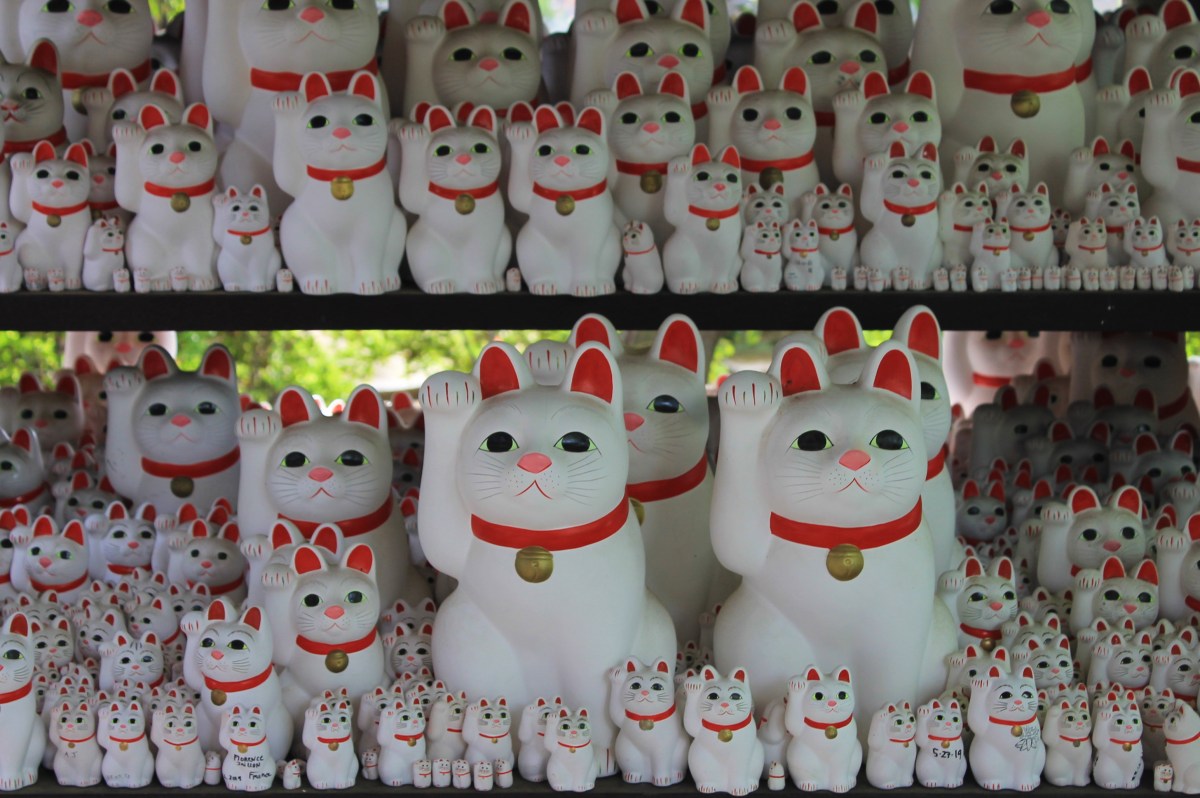
Now Gōtoku-ji can’t keep up with the demand for maneki neko, the ubiquitous “beckoning cat” statues that visitors purchase at the shrine’s tiny gift shop, the Washington Post says in a new report. People who come to the temple write prayers on the statues and place them in a perpetually-expanding section of the shrine grounds.

The cats are said to bring good luck, with variations in their designs and colors: red for health, pink for love, gold for success and so on. White maneki neko, which are sold at the shrine, are the original and “all purpose” prayer cats. The shrine is Buddhist, but practitioners of Shinto, Jainism, Christianity and other religions write prayers on the little cats, hoping they’ll be heard by whichever version of God they believe in.

The manufacturer, which also makes statues for the Lunar New Year and other festivities, can’t keep up with the demand. Now staff at Gōtoku-ji have put up signs apologizing to visitors. They say they don’t know when they’ll get more maneki neko.

When I visited in 2019 there were many thousands of the iconic statues, but the photos from Monday’s WaPo story show thousands more placed on recently-built shelves. Temple staff have begun asking visitors to take their maneki neko home with them instead of leaving them at Gōtoku-ji. They clean, shelve and organize the thousands of statues currently there and won’t dispose of them because they represent the prayers of visitors, but the volume has become unmanageable.

Maneki Neko at Setagaya Tokyo
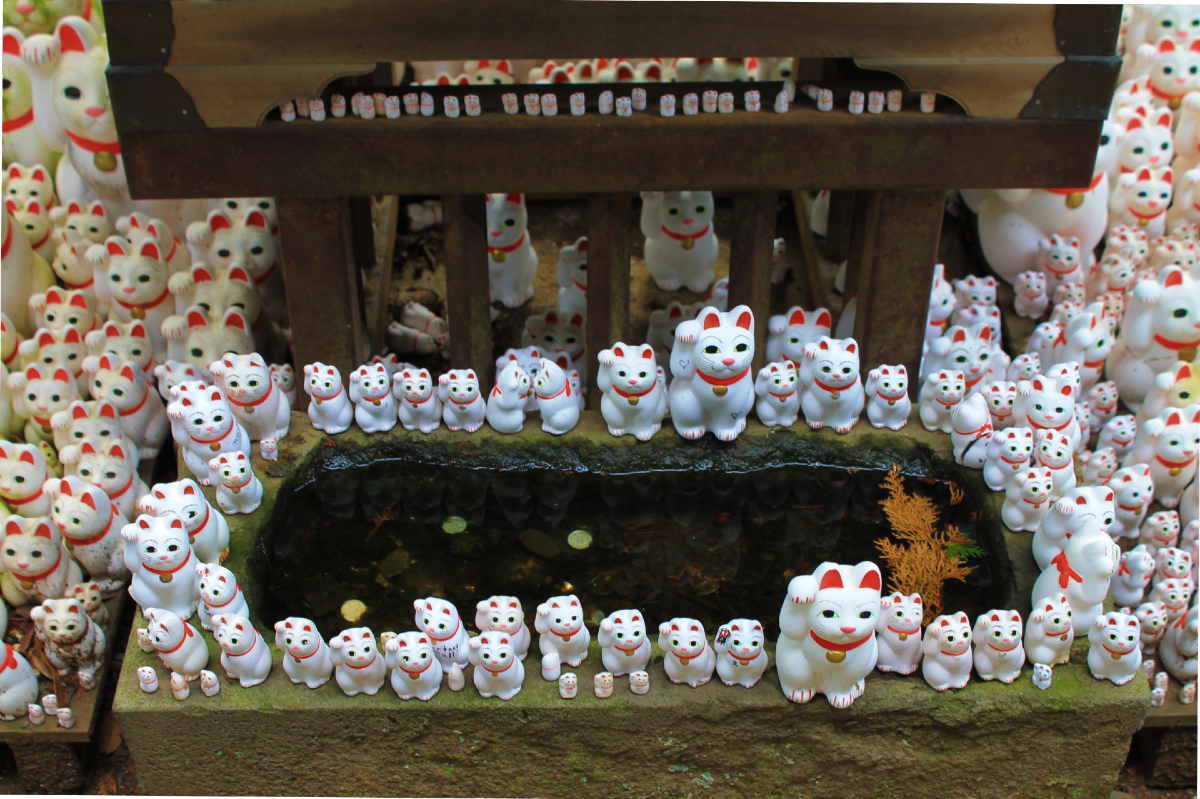
Visitors leave their own maneki neko statues at the shrine, often with personal messages asking for different blessings and written in black marker on the back of the statues. Credit: Pain In The Bud

Despite Gōtoku-ji’s rise in popularity, I still recommend checking it out, especially for cat lovers who are headed to Japan. While most of Tokyo’s most famous shrines are located in the city proper, with modern skyscrapers looming above temples that date to pre-modern Japan — never letting you forget you’re in a bustling metropolis — Gōtoku-ji is in Setagaya, a mostly-residential ward.

The temple grounds are surrounded by homes and they’re quiet in a way that others aren’t. The shrine is well-manicured and beautiful, dotted with statuary as well as centuries-old wooden temple structures.

When I was there a smiling elderly docent walked the grounds carrying a photo album that showed the temple and its structures over the years. With my sister-in-law’s rudimentary Japanese we were able to get a bit around the language barrier, and he told me one of the most striking buildings, a three-story tiered wooden tower, was home to one of the resident cats who liked to sleep on its second floor.

I wasn’t able to catch a glimpse of the little one but I imagine Gōtoku-ji is one of the best places on the planet a stray cat could call home. Like the people of Turkey, respect for cats is ingrained in Japanese culture and temple cats in particular are treated extremely well. Some even have their own Instagram pages and fan clubs, becoming tourist draws in their own right.

Maneki Neko Setagaya Tokyo
Maneki Neko statues at Setagaya shrine. Credit: PITB

‘School With Paws’: Cats In Class Help Kids Readjust After Pandemic

The kids are so smitten, many of them come to the school on weekends to care for the cats.

When teacher Evrim Mutluay welcomed her students back to school after a long period of remote learning, she noticed they were different.

The kids, who hadn’t physically been to school for more than a year due to the pandemic, were “colder” and less engaged with their lessons and with each other. Many were either ambivalent or didn’t want to be there.

So Mutluay, who teaches at Adagüre Primary School in the rural outskirts of Turkey’s Izmir region, had an idea that might seem radical in most countries, but not in the famously feline-loving nation: She cleaned out an old storage building on school grounds and turned it into a shelter for 12 neighborhood cats.

It was the first step in her “Patili Okul” (“School With Paws”) project aimed at getting kids reinvested in their studies.

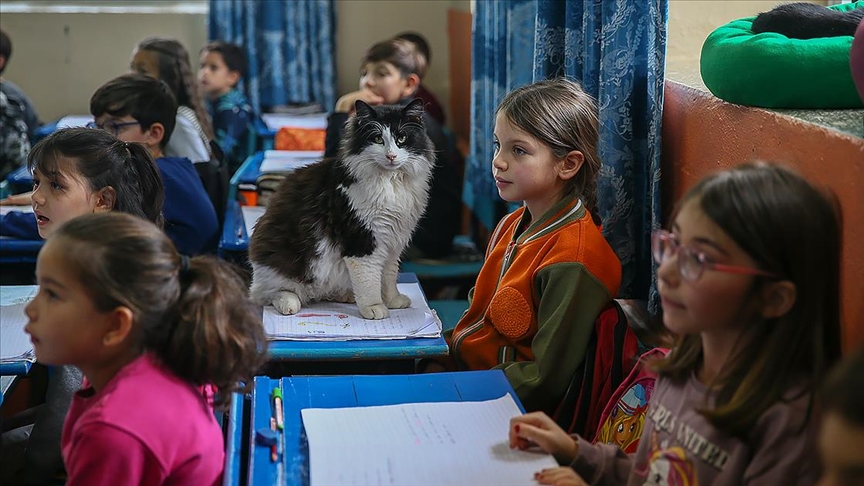
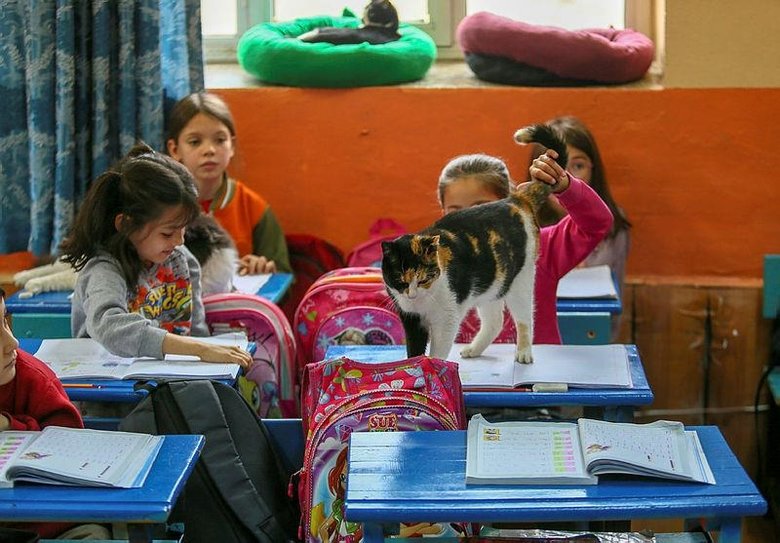
The cats — who have been given names like Alaca (“twilight”), Sun and Panther by the kids — have free run of the school during the day, and Mutluay’s elementary school-age students can not only pet and cuddle with them during class, they help take care of the former strays by cleaning their shelters and feeding them. The students “love the cats so much,” Mutluay said, and the program has “endeared the school to the children.”

School With Paws
A student cuddles a calico cat in class. Credit: Adagüre Primary School

The students have become so invested that many of them now show up on weekends voluntarily to feed and play with the cats.

“It also helps them to develop a sense of responsibility, by caring for others,” Mutluay told Turkey’s Anadolu Agency, a wire service similar to the Associated Press. “In a way, cats and children grow up together.”

The school, which also has a community garden tended by the kids and holds classes outdoors when the weather permits, offers a chance for children to form bonds with the animals.

Mutluay described one student who was so affected by his time stuck at home that he “didn’t even make eye contact” when the school resumed in-person learning. Except for his nascent connection with a cat named Pied, he was distant and seemingly disinterested. When the student’s attendance fell off, Mutluay appealed to that connection to bring him back: “If you don’t come, Pied will cry,” she told him.

School With Paws
Credit: Adagüre Primary School

Student Cemre Şen is one among many of her classmates who have brought stray cats to the school. There are now 30 cats living on the school grounds, including the lost kitten Şen found. She and her fellow students even incorporate the cats and kittens into games they play during recess, she said.

The cats are not kept against their will: If they want to return to their colonies or street life, they are allowed to leave. Most choose to stay, enjoying the affection and attention from the kids and the guarantee of solid meals every day. (The kids feed them before classes begin and after school before heading home.) It’s an arrangement that works in a nation where caring for cats is seen as a community responsibility, as opposed to the network of shelters, rescues and colony managers who care for cats on behalf of a generally indifferent public in countries like the US.

In Turkey, the idea of cats in classrooms isn’t controversial because the little ones are everywhere — they’re allowed to wander in and out of shops, homes and even office buildings at their whim, and the streets of cities like Istanbul are lined with miniature cat houses for neighborhood felines.

The allure of cats in the classroom is so strong, Mutluay’s program has even attracted transfers like newcomer Ata Yıldırım, who switched schools after he read social media posts about the program.

“I have two cats at home,” he said, “and when I saw so many cats here, I convinced my parents to send me here.”

School With Paws
Evrim Mutluay and her students at Adagüre Primary School. Mutluay has been a teacher for 16 years. Credit: Adagüre Primary School

Sunday Cats: Moggie Chases Off Coyote, Sick Cat Enjoys Spa Time, Plus A 4-Eared Kitty!

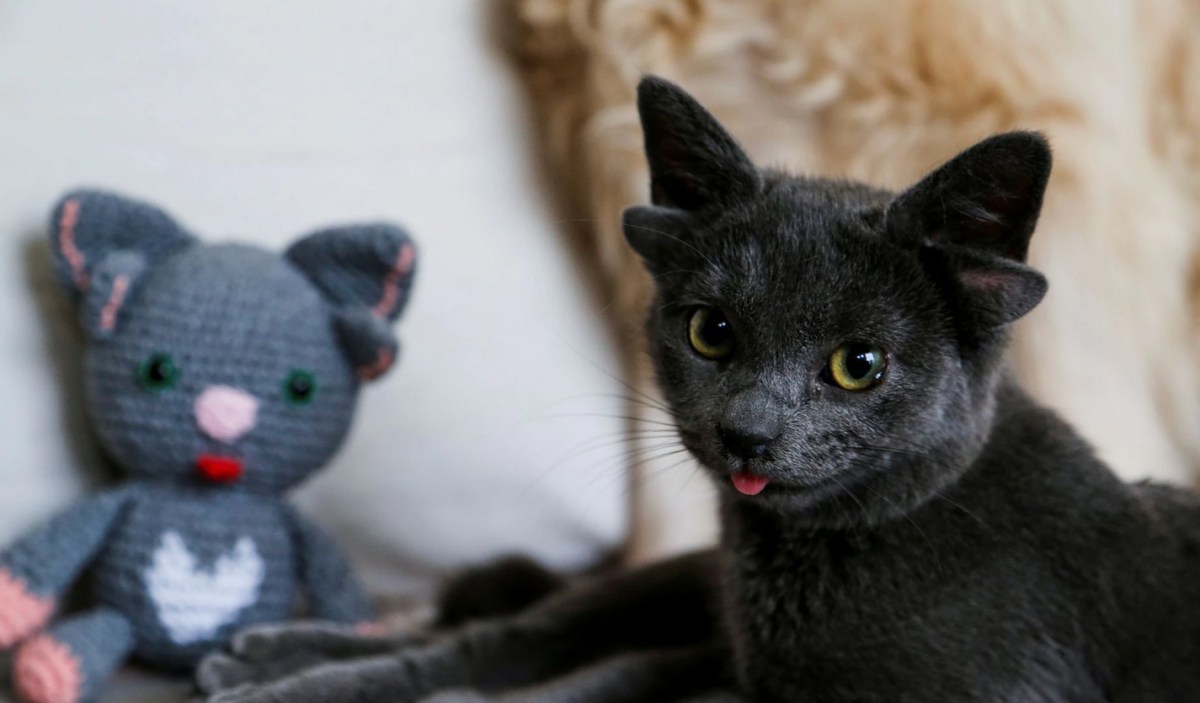
A new list features gray cats for those who want their own Buddy. Meanwhile, a four-eared kitten in Turkey is capturing hearts around the world.

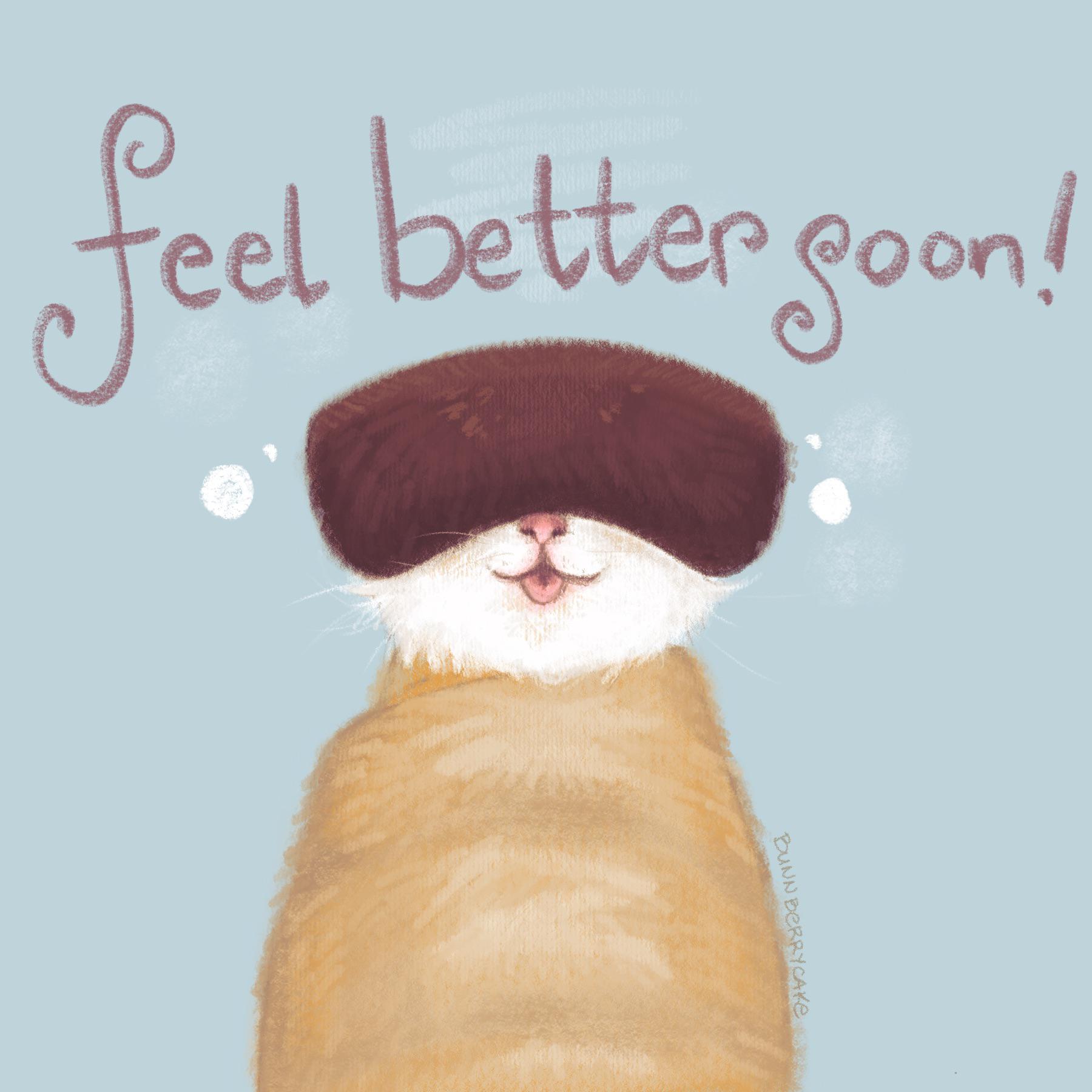
This cat is, uh, catatonic after his loving human wrapped him up snug in a towel and put a hot compress on his little head to help him feel better after he caught a cold. Look at his tongue! He loves it! (Click the image if the video doesn’t auto play.)

A fellow Redditor was so taken with the video that she sketched a get-well card for the sick-but-happy furball:

oh8u0ydqi0081

The Midas Touch

Little Midas was born in a backyard in Ankara, Turkey, and her unusual appearance could have led to a hard life, but she was adopted by a loving family. The gray kitten, who is now four months old, has a genetic mutation that resulted in her developing four ear flaps. She’s also got a deformed jaw, likely due to the same mutation, but that hasn’t stopped her from living like a typical energetic and curious baby cat.

Her family named her after Midas, the Greek king who was cursed with donkey ears by an angry Apollo.

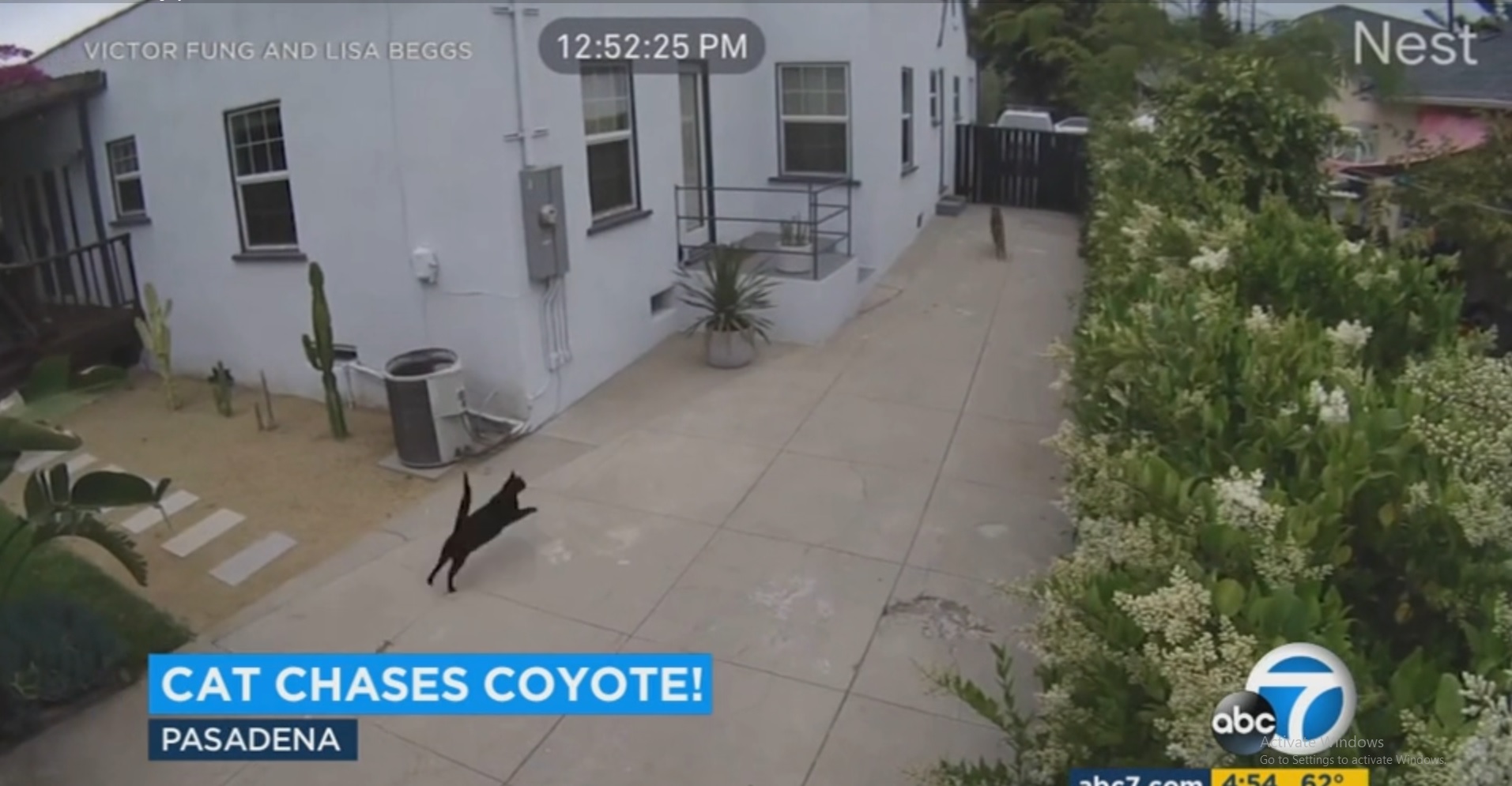
Get off my lawn, coyote!

Coyotes are infamous predators of felines and small dogs, but cats can and do fight back, like this fearless kitty who didn’t appreciate the interloper straying into her territory. The coyote wanted no part of her.

We can’t embed the video, unfortunately, but you can click here to watch the 16-second clip in real time and slow motion.

catchasescoyote
“Get off my damn lawn!”

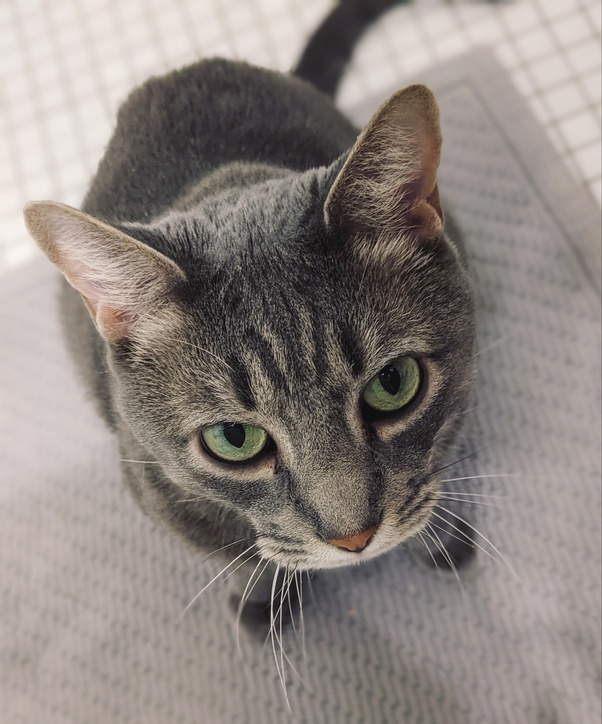
Gray is the warmest color

We all know gray is an awesome coat color for cats, as demonstrated by the Budster. If you’ve got your heart set on a slate Chartreux, a golden-eyed Korat or a silver tabby a la Bud, this list covers 15 breeds “worth purring over.” Note that it doesn’t include the Buddinese Tiger, probably because it’s illegal to own such a muscular and handsome cat in most jurisdictions.

main-qimg-71545019fd341552e20753a1743f261f