Cats Are 342% More Awesome If Given Regular Snacks, Study Says

The study was conducted by the Buddy Institute of Science and Stuff.

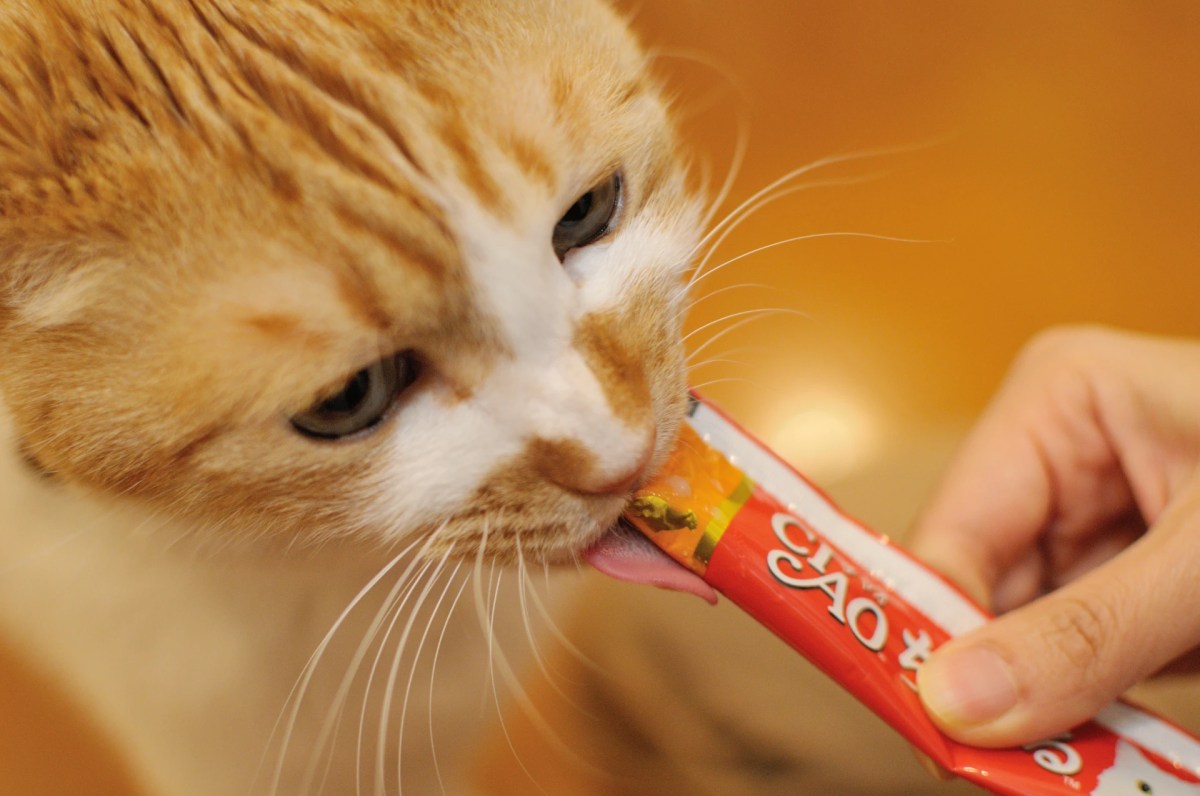
NEW YORK — Domestic cats benefit from an incredible increase in awesomeness if they’re regularly served delicious snacks, a new study found.

Researchers from the Buddy Institute of Science and Stuff designed an experiment involving two groups of cats. The control group was not given any snacks, while the second group was given treats upon request at all times.

“The results were astonishing and should be of interest to any human ser– … ah, human person who cares for cats,” said Buddy the Cat, the study’s lead author. “Cats who were given complete access to snacks rated higher in delightfulness, amusingness, charm and even fluffiness.”

As a “hands-on scientist,” Buddy put himself in the second group and personally confirmed that constant access to yummy treats does indeed lead to a wide range of positive effects.

Felines who were given catnip along with snacks rated highest on the awesomeness scale.

“The data is conclusive,” Buddy said. “For optimal results, cats should be given a combination of deliciously crunchy dry treats and soft, satisfyingly flavorful moist treats. In fact, we recommend humans provide access to treats at all times, even while they are sleeping. It’s okay, we can get them ourselves!”

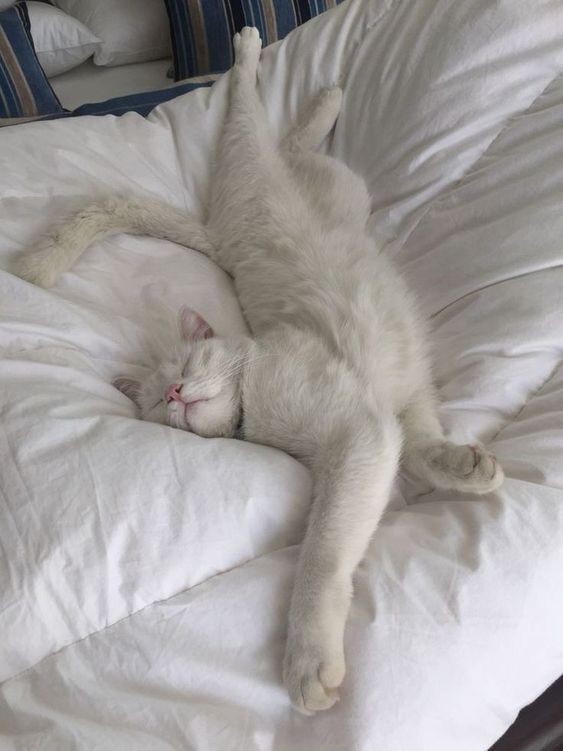
The study follows Dr. Buddy’s earlier paper, “Feline Quality of Sleep Linked to Percentage of Occupied Bed Space,” which found that cats should get at least 60 percent of the bed when they sleep with their humans.

Hogging the bed
Cats need at least 60 percent of bed space, according to a totally scientific study.

What’s The Real Reason Cats Love Boxes?

It’s about more than just having a cozy place to sit.

Buddy is not overly obsessed with boxes.

I think that’s because he feels safe here, he’s got plenty of places to hide if he wants, and he’s got a big cat tunnel with four ways in or out. He doesn’t need another little space to crawl into.

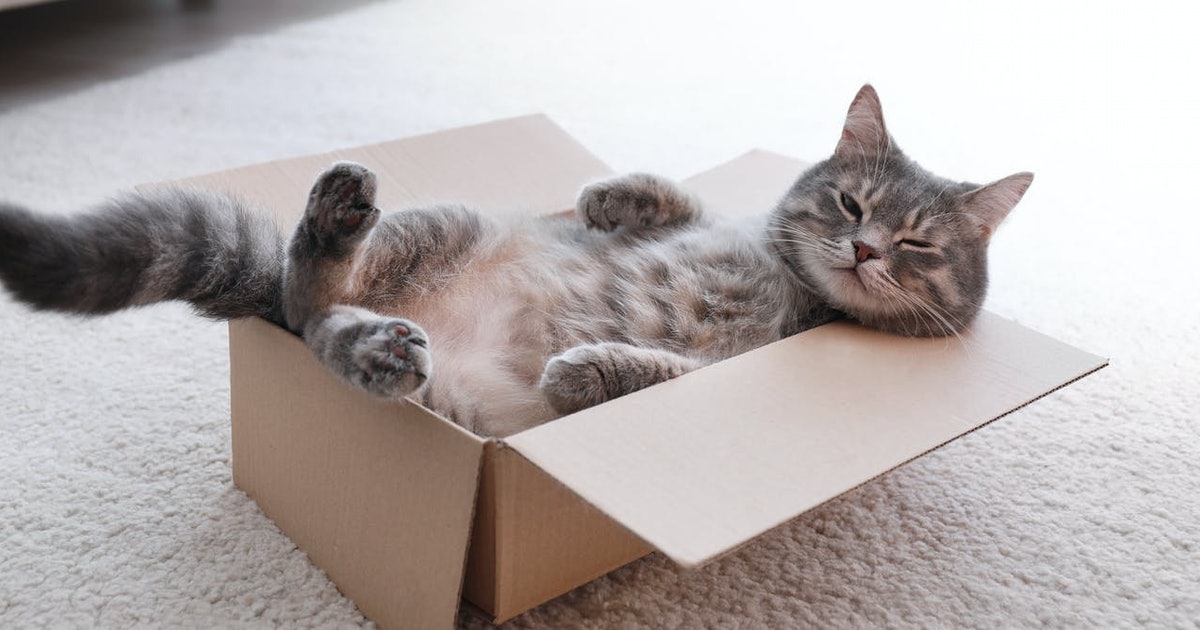
Still, like any cat, the little dude likes a good box. When he gets to play with a new box he likes to sniff it, rub against it once or twice, then jump inside and determine if it’s comfortable. Then he gets serious, looks around, and slowly sinks down below the top of the box…

…and remains there for a few seconds before cautiously raising his head and looking around. Usually this is accompanied by a delighted trill, and I get the strong sense that he thinks he’s invisible to anyone outside the box while he has the advantage of seeing them.

“You cannot see Buddy, but Buddy sees you!”

Does he ambush me from the box? Does a bear crap in the woods?

There isn’t an abundance of research into why cats love boxes so much, but the existing data combined with what we know about the feline mind strongly suggests that, first and foremost, boxes have a strong psychological effect. They make cats feel secure and well-protected.

Anyone familiar with cats knows the little furballs like to wedge themselves into hideaways, scurry under tables and hide in laundry baskets. The behavior starts in kittenhood when they’re tiny enough to crawl into shoes and sneakers.

In 2021, animal cognition grad student Gabriella Smith conducted a study in which she found cats will happily sit in Kanizsa contours with the same enthusiasm they have for boxes.

Kanizsa contours are two-dimensional. The participants created them by using tape and paper to make the shapes on the floor. They’re not even proper boxes, just the illusory suggestion of boxes or general square shapes. That doesn’t seem to matter to cats:

Of course pieces of tape or paper on the floor do not afford any real protection, so the feline affinity for boxes seems to be more about feeling protected.

Since cats are territorial, it could be that they also like clear boundaries around their personal space.

The key here seems to be having the boundary without blocking access, as cats are notoriously not cool with closed doors or being confined. If they want to spend an hour in a tiny space and it’s their idea, they’re fine with it, but they don’t like to be restricted by when they can come and go.

Notably, this isn’t behavior limited to felis catus. So far there doesn’t seem to be any exception to the box-loving rule among felines and felids of any species. Tigers, lions, jaguars, leopards, snow leopards and pumas seem just as fond of them as their smaller cousins, as you can see in this video from Big Cat Rescue:

Boxes are comforting, cozy, fun to explore and make the perfect hiding spots for ambushes. If you’re a cat big or small, what’s not to like?

Sunday Cats: FitBit For Felines, Plus CFA’s Top Breeds For 2021

Now you can track how much time your cat spends exercising, grooming herself and sleeping.

A Japanese company that sells FitBit-like devices for cats released its first data-driven report this week and promises new revelations to come as more people buy the devices for their cats, leading to more data.

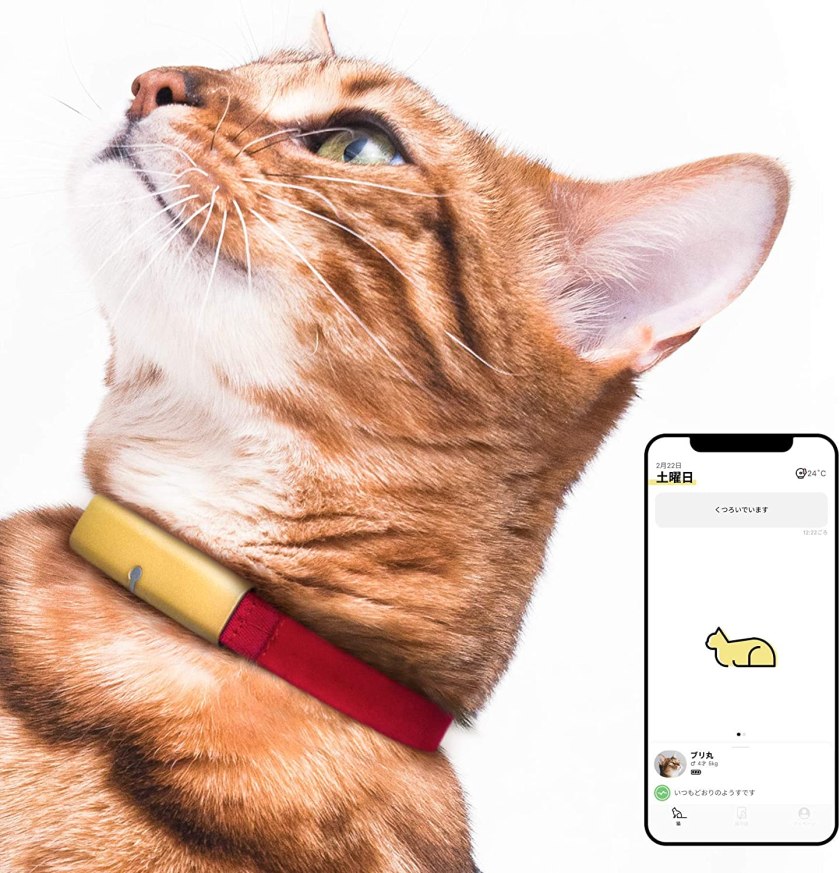
The company and its device are both called Catlog. To mark “Cat Day” in Japan, which falls on Feb. 22, researchers at the Shibuya, Tokyo-based firm issued a report saying data shows cats sleep progressively longer as they age, and cats in general sleep longer in winter.

Yeah. Not exactly a whopper.

Still, it’s one thing to know something anecdotally and another to prove it, and there are tantalizing possibilities as more kitties are equipped with Catlog. The collar-like device uses “biologging” technology to record and sort data on things like eating, drinking, sleeping, grooming and exercise. The data is relayed to caretakers via a mobile app and added to the information coming from every other Catlog, giving the research team behind the app hard data for cats across all ages and breeds.

The Catlog has received Japan’s Good Design Award, a sought-after mark of excellence among Japanese products.

Catlog
Catlog looks like a regular collar with an unobtrusive device attached.

Unfortunately Buddy won’t be contributing to that data even if Catlog pushes into the US market. Little dude won’t tolerate a collar at all and is not shy about loudly, repeatedly, incessantly communicating when he doesn’t like something. 🙁

Most Popular Cat Breeds of 2021, According to CFA

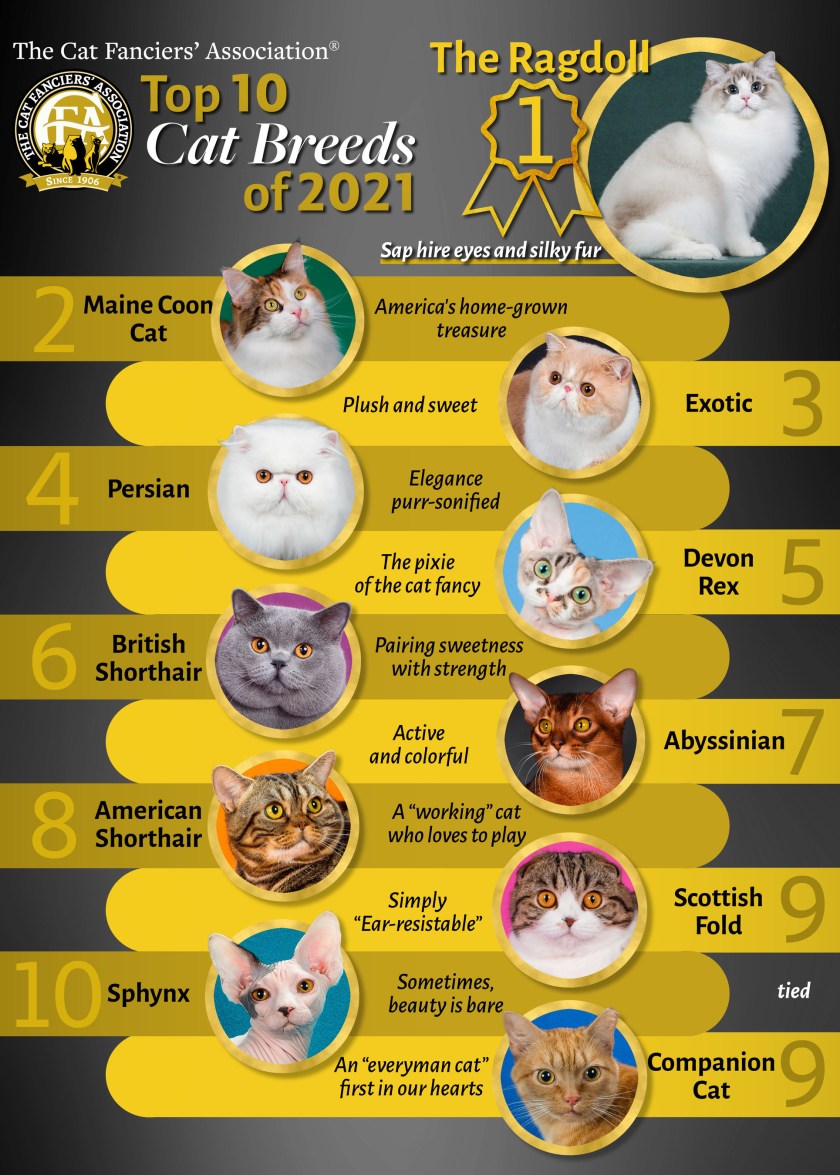
The Cat Fanciers’ Association has released its annual list of the most popular cat breeds. While the CFA recognizes 45 breeds and registers “non-pedigreed” cats as well, the list is based only on CFA registered cats. That means it provides a good snapshot of which breeds are trendy, but it’s not a definitive most popular breeds list.

Cats without a particular breed still account for the vast majority of all pet felines, but among people who registered their cats with CFA, Ragdolls were the most popular in 2021, followed by gentle giant Maine Coones and exotic shorthairs. (Note that this list does not include the fearsome and elusive Buddinese Tiger.)

2021-breeds-with-CC
The world’s largest registry of pedigreed cats has again determined the world’s most popular cat breeds, based on registrations. This year’s Top 10 list reflects the increasing popularity of certain breeds. However, registrations of ALL cats have increased substantially, reflecting the growing popularity of pet cats since the beginning of the pandemic.

Why Do Americans Love Shooting Cats?

Americans are exceptionally cruel to cats, especially strays and outdoor kitties. Why?

Seriously, what the hell is wrong with people in this country?

American cruelty to cats is even more upsetting within the context of human behavior elsewhere. In Turkey, where it’s practically a national pastime to care for felines, people build shelters for strays, welcome them into their shops with food and affection, and kitties are so trusting of humans that mother cats have on several instances brought their kittens into human hospitals and clinics for help.

Then we have ‘Merica, where apparently it’s a sport for people to sit on their front porches drinking beer and shooting stray cats with pellet guns.

Like, for instance, in Long Island this past weekend, where some stain on the human race shot a ginger tabby named Abraham and left him with a pellet lodged in his spine. Or in northern California, where a couple brought their cat to the vet because they thought he’d been attacked by a coyote, only for x-rays to show the little one had been shot several times by someone with a pellet gun. Or Augusta, South Carolina, where a cat was shot with what appears to be a bullet from a 9mm handgun. Or tiny Brookville, Pa., where a man shot his neighbor’s cat for the unthinkable crime of exploring his porch.

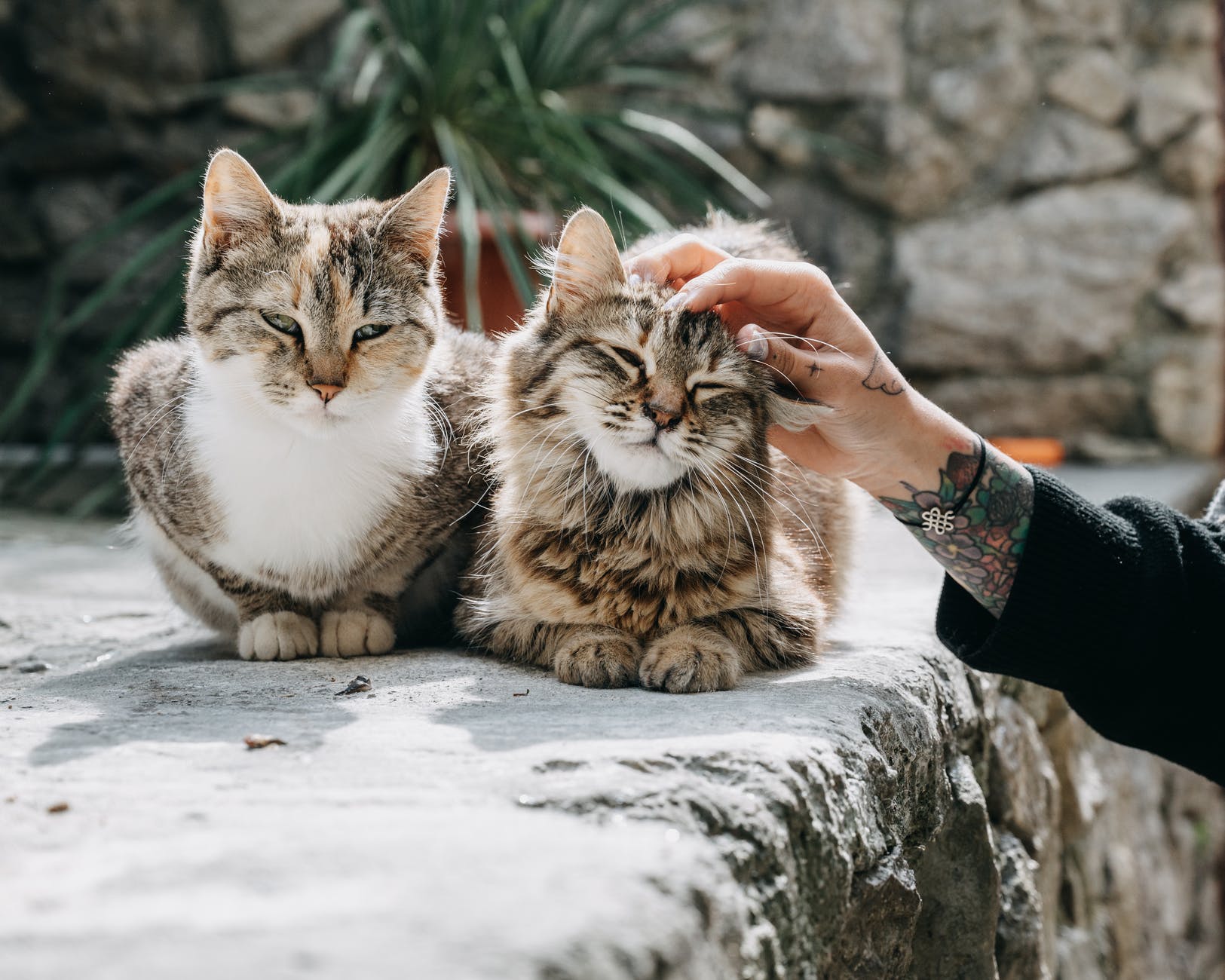
hipster with tattoos stroking cute cats on stony fence
Credit: Dmitriy Ganin/Pexels

I have Google News alerts set up for cat-related stuff to mention here on PITB, and a lot of it is great: Compassionate rescues, feline hi-jinx, heroic cats saving kids.

But those stories are always sandwiched in between articles about people shooting cats. Constantly, incessantly, apparently without a thought about the suffering they’re causing sentient animals who have feelings just like we do and experience pain, anxiety and fear the same as us. That’s not conjecture, contrary to what some people might believe, but objective scientific fact as proven experimentally many times over in recent years.

When Americans aren’t shooting cats they’re stealing them, mutilating them and killing them, like the recent nightmare case out of Tennessee: A woman left her cat in the care of a friend while she was traveling, and the friend allowed the cat to roam outside. Another woman saw the cat wandering, didn’t like what she saw and stole the kitty, eventually giving it away to 19-year-old Deamion Robert Davis via Craigslist. Davis now faces charges of animal cruelty for allegedly binding the cat’s paws and stabbing it to death with a screw driver, according to police. Detectives said they traced the killing to Davis by lifting fingerprints from the tape Davis allegedly used to bind the cat.

So because some busybody saw a pet cat on the street and decided a random, sketchy 19-year-old who responded to a Craigslist ad would provide a better home, a woman’s cat was brutally killed.

Meanwhile hatred for cats continues to be driven by bad science, like this meta-analysis of 202 toxoplasma gondii studies by researchers who need to be reminded that correlation does not imply causation. The research team looked at data on toxoplasma infections recorded in wild animals, then with no evidence whatsoever framed their study around the suggestion that cats “may” be and “probably” are transmitting the parasite to wild animals because the rates of infection are higher in urban areas.

Never mind that humans are much more likely to be infected by eating under-cooked food, certain meats, touching contaminated soil, or using utensils that were used to cut contaminated meat and shellfish. The study ignored that fact and posited — again without evidence — that cats are the primary vector for other animals and humans.

It would be nice if people in the scientific community took responsibility for the fact that their research influences the behavior of others, and blaming cats for everything from bird extinctions to parasite infections drives people to do cruel things like cull cats or poison their food. If they’re going to publish studies drawing a link between cats and extinctions or diseases, scientists have a responsibility to make sure there’s a connection more substantial than “we think, therefore we publish.”

That will conclude this rant on human cruelty to animals.

Reason #488 To Keep Your Cats Indoors: They Hunt Whether They’re Hungry Or Not

Cats who have regular outdoor access and hunt wildlife still get 96 percent of their nutrition from pet food, a new study found, suggesting their predatory behavior is driven by instinct, not hunger.

A new study from the UK debunks the claim that cats need access to the outdoors to supplement their diets with wild kills.

Cats who spend a significant amount of time outdoors and regularly kill local wildlife still get 96 percent of their nutrition from meals provided by their humans, according to research by a team at the University of Exeter.

The scientists connected with cat owners through ads on social media, TV and in print publications, specifically seeking out “cat owners living throughout southwest England whose cats regularly captured wild animals and brought them back to the house,” the study’s authors said.

They gave the owners a questionnaire to collect some basic information on the kitties — age, sex, breed, whether they had unrestricted access to the outdoors, and how much time they spend outside — then split the 90 participating cats into six groups.

Cat hunting
A domestic tabby cat stalking in the grass. Credit: Wikimedia Commons

To set a baseline, the scientists trimmed small sections of whisker from each of the cats, then trimmed a second sample at the end of the study.

By comparing stable isotope ratios in the whisker samples, they were able to determine what the cats were eating. Despite regular access to the outdoors and successful hunts, pet food accounted for the vast majority of their diets.

As a result, the researchers concluded, outdoor cats hunt because they’re driven by predatory instinct, not hunger.

“When food from owners is available, our study shows that cats rely almost entirely on this for nutrition,” said Martina Cecchetti, the study’s lead author.

“Some owners may worry about restricting hunting because cats need nutrition from wild prey, but in fact, it seems even prolific hunters don’t actually eat much of the prey they catch,” Cecchetti said. “As predators, some cats may hunt instinctively even if they are not hungry – so-called ‘surplus killing’ – to capture and store prey to eat later.”

A second component of the study was designed to find the best mitigation strategy to change the behavior of outdoor cats.

Each group was given a different strategy: In one group, cats were outfitted with bells on their collars, while another group wore reflective break-away collars and cats from a third group were fitted with BirdBeSafe collars. The other groups were told to make habit changes inside the home. For example, one set of cats was fed a higher-protein diet without grain filler, another group was fed with puzzle feeders, and the last group was given extra interactive play time.

While high-protein diets and play time helped cut down on hunting, the BirdBeSafe collars had the biggest impact on hunting success. The collars come in bright colors designed to stand out to avian eyes, taking away stealth and the element of surprise from cats.

The study was sponsored by Songbird Survival, a British non-profit that funds bird conservation research and looks for ways to mitigate the dwindling numbers of many avian species.

Susan Morgan, Songbird Survival’s executive director, said her group hopes cat owners will do their part to help: “Pet owners can help us reverse the shocking decline in songbirds via three simple, ‘win-win’ steps: fit collars with a Birdsbesafe cover; feed cats a premium meaty diet; play with cats for five to ten minutes a day to ‘scratch that itch’ to hunt.”

Of course there’s an obvious solution the study didn’t include: Keeping cats indoors. While keeping cats indoors is common in the US, cat ownership culture in the UK is different — another subject for another post.

Read the full text of the study here. Header image credit Pexels. Body images credit BeSafeCollar.

Previously:

1024px-Florida_panther_kittens
A pair of young mountain lions in Florida. Credit: Wikimedia Commons/WOConservation